
Beko appliance guidance
Beko Dishwasher Repair Guides
Troubleshooting and repair guidance for published Beko Dishwasher problems, symptoms, and maintenance questions.
Published Beko Dishwasher guides
Choose the guide whose symptom or condition most closely matches what you are seeing.
-
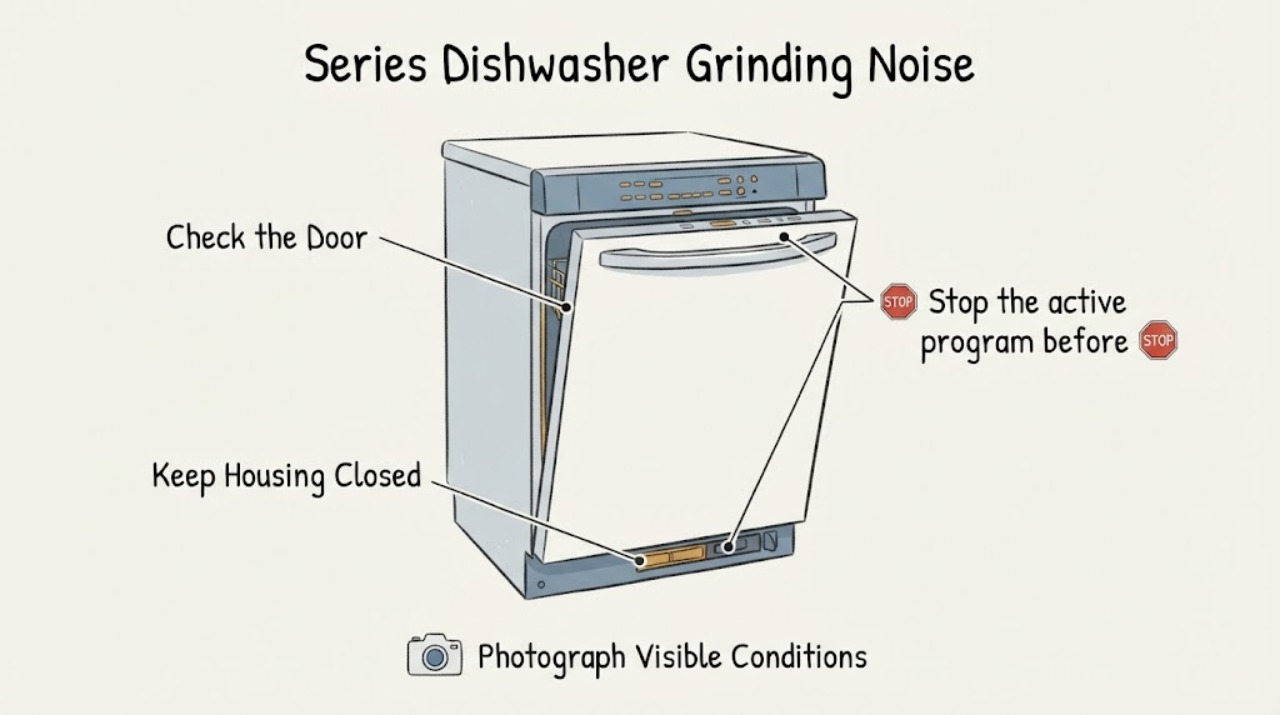
Beko 300-Series Dishwasher Grinding Noise: Confirm the Exact Model First
“Beko 300” is a family description, not enough to identify one dishwasher manual or one pump, spray-arm assembly, filter, or other part. Beko’s opened US dishwasher catalog lists many separate model codes, and Beko says dishwasher programs and features depend on the model.
-
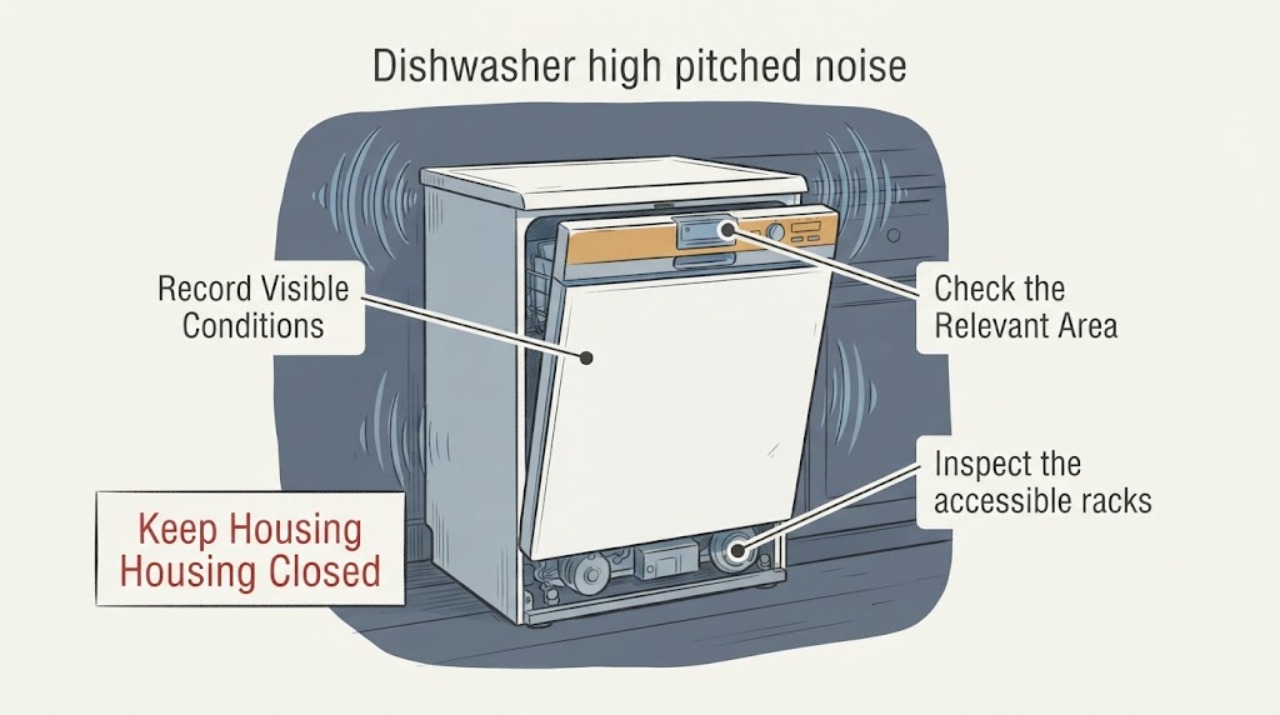
New Beko BDFN26640WC Dishwasher Makes a High-Pitched Noise at Night: Is 7 kHz a Fault?
A 7 kHz reading by itself does not establish that a Beko BDFN26640WC is defective. Beko publishes 44 dBA airborne noise for this exact model, but that is an overall noise specification, not a 7 kHz pass/fail limit.
-
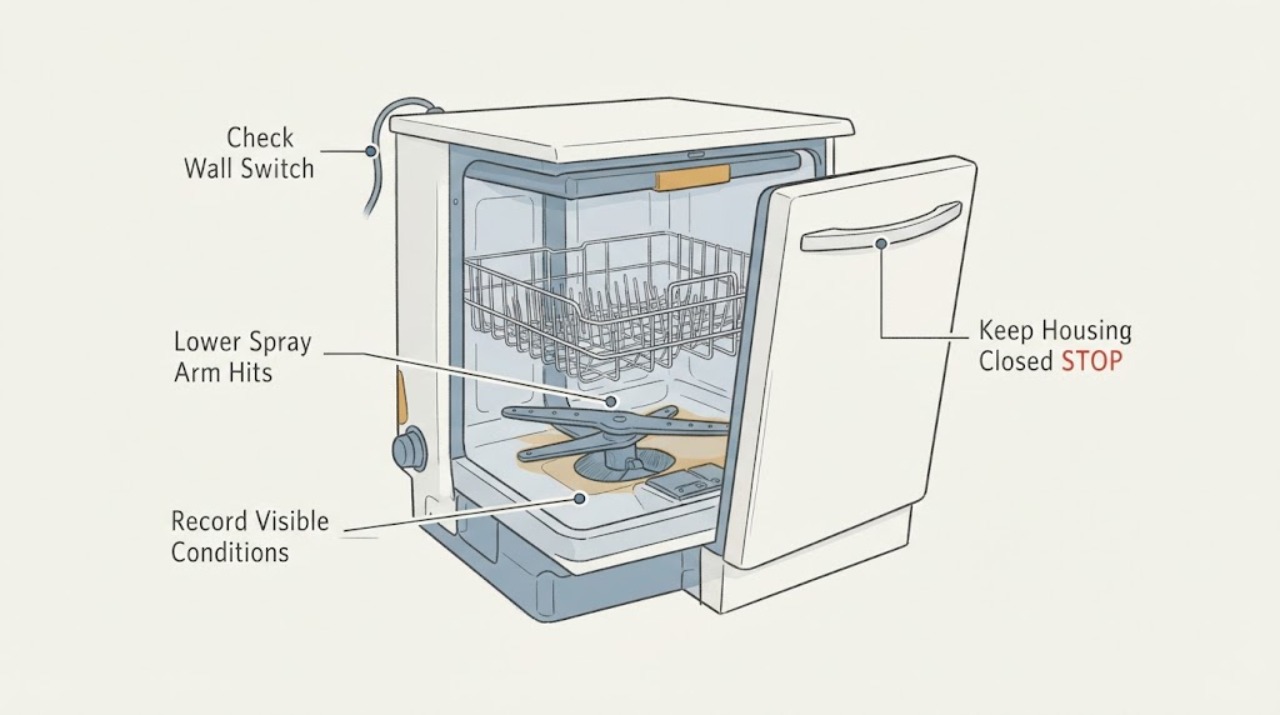
Beko BDIN38640F Lower Spray Arm Hits the Basket When Empty
On the UK-market Beko BDIN38640F, a lower spray-arm assembly that catches the basket while the dishwasher is empty should be treated as a clearance or fitment problem first, not as a drain-pump diagnosis. Beko identifies this exact model as an integrated dishwasher with CornerIntense rotating spray arms, and its loading guidance says to rotate the upper and lower arms by hand before a programme and prevent any rack or item from touching them.
-
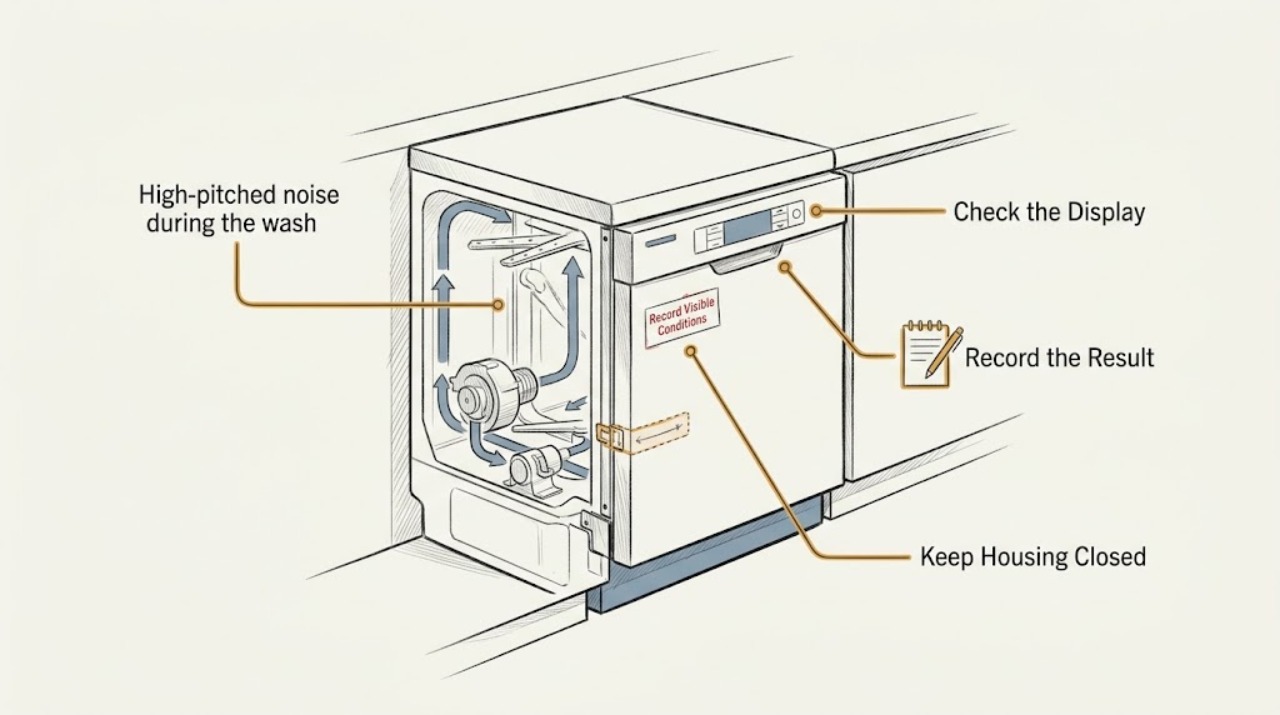
Beko BM6046 high-pitched noise during the wash sequence
For the Beko BM6046, a constant high-pitched whine during washing should not be declared normal from the sound alone. Beko's official BM 6046 product page identifies the model and lists a 46 dBA noise rating, while Beko's dishwasher guidance treats ordinary clicks, clunks, and hums as possible cycle sounds and sends persistent abnormal operation to service.
-
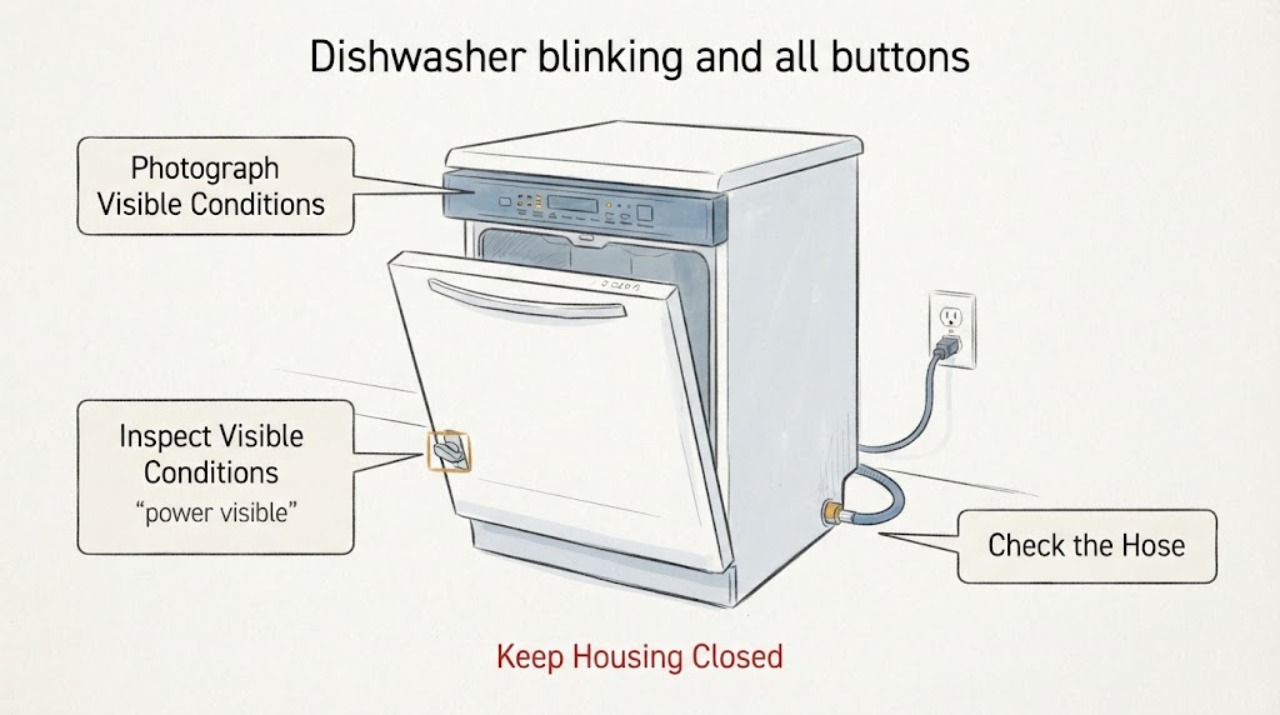
Beko DDT36430XIH dishwasher blinking and all buttons unresponsive
For a Beko DDT36430XIH whose lights blink and buttons do not respond, first confirm the exact model and whether the display is lit, then check household power without opening the dishwasher, confirm the water-supply tap is open, and close the door firmly until the latch engages. Beko identifies power loss, a faulty appliance fuse, an open or damaged door/latch, and a closed water supply as no-start branches.
-
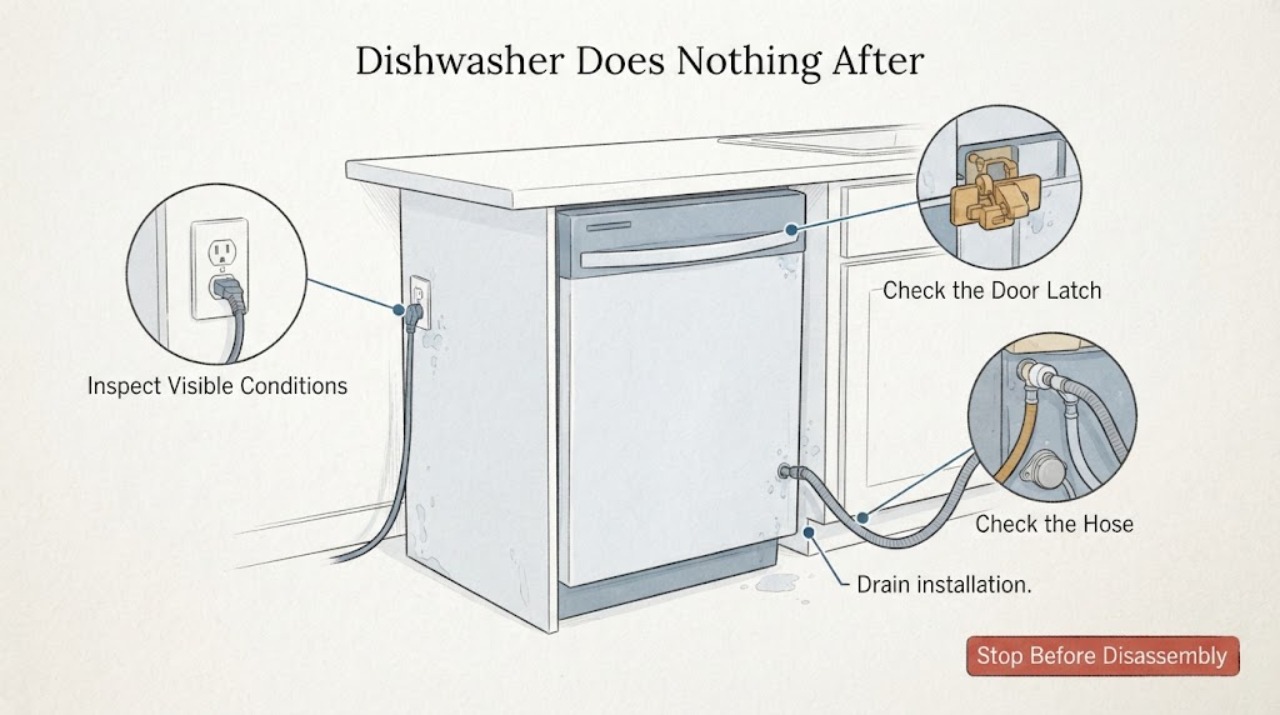
Beko DFN05320W Dishwasher Does Nothing After the First Successful Wash
For a Beko DFN05320W that worked once and then appears to do nothing, first separate a dead control panel from a selected programme that has not started, a door that is not registering closed, and an installation path that is stopping the machine at water entry or drainage. This model is a freestanding DFN05320 variant with a programme knob, no remaining-time display, one cold-water supply, and a drain route that must not be kinked when the machine is pushed back.
-
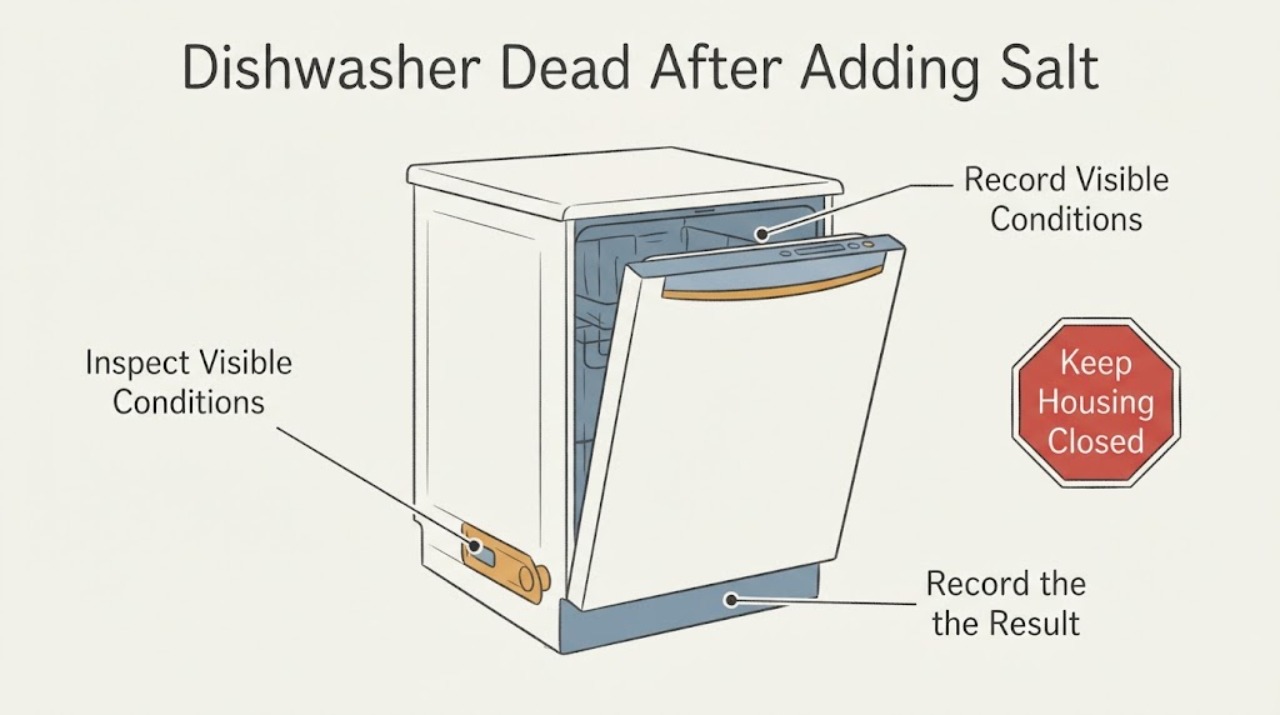
Beko DFN05X11S Dishwasher Dead After Adding Salt: Separate Spill From Power Fault
The timing after adding salt does not prove that salt caused a completely dark Beko DFN05X11S. Beko's UK product page lists DFN05X11S as the silver DFN05X11 dishwasher, and the matching manual lists household power, the appliance fuse, water supply, the door, and the On/Off control as separate reasons a machine may not start.
-
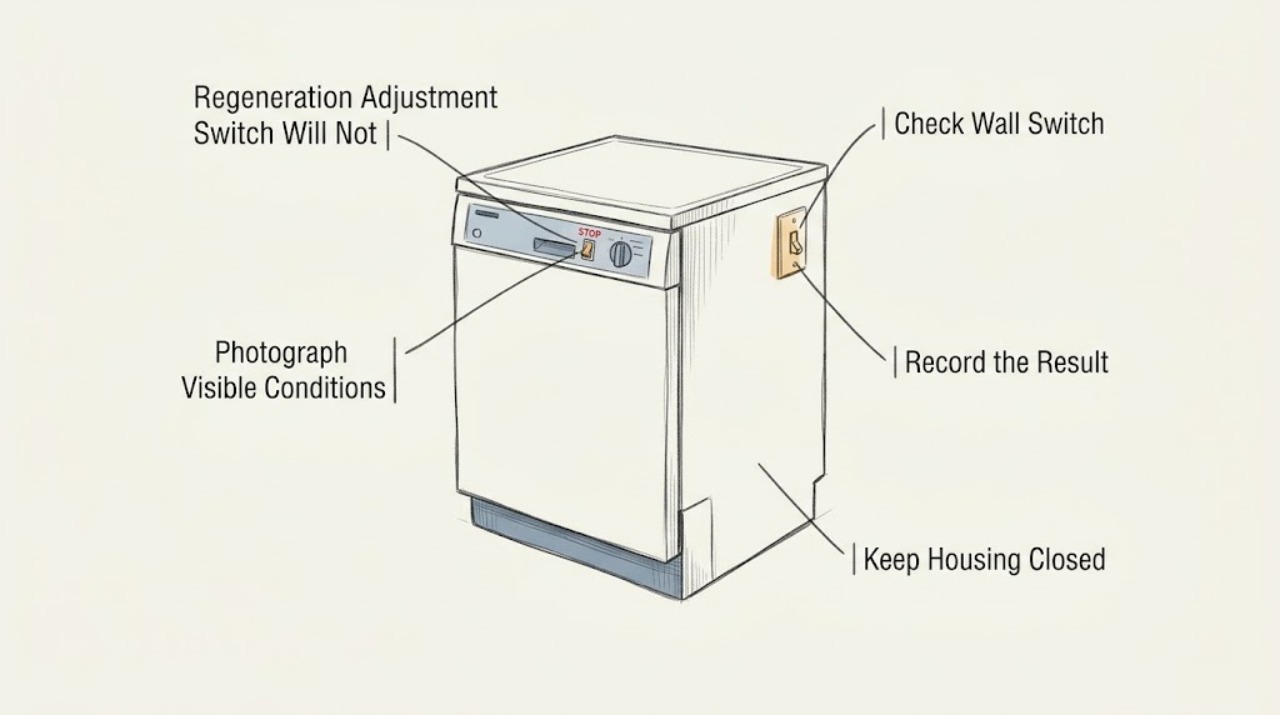
Beko DFS26024W Regeneration Adjustment Switch Will Not Turn: Do Not Force It
On a new Beko DFS26024W, the small regeneration adjustment switch is part of the water-softening setup, not the dishwasher's main programme selector or the salt-fill cap. Beko's exact-model Quick Guide says to first determine local water hardness, set the matching hardness level on the control panel, and then set the regeneration adjustment switch to the same level.
-
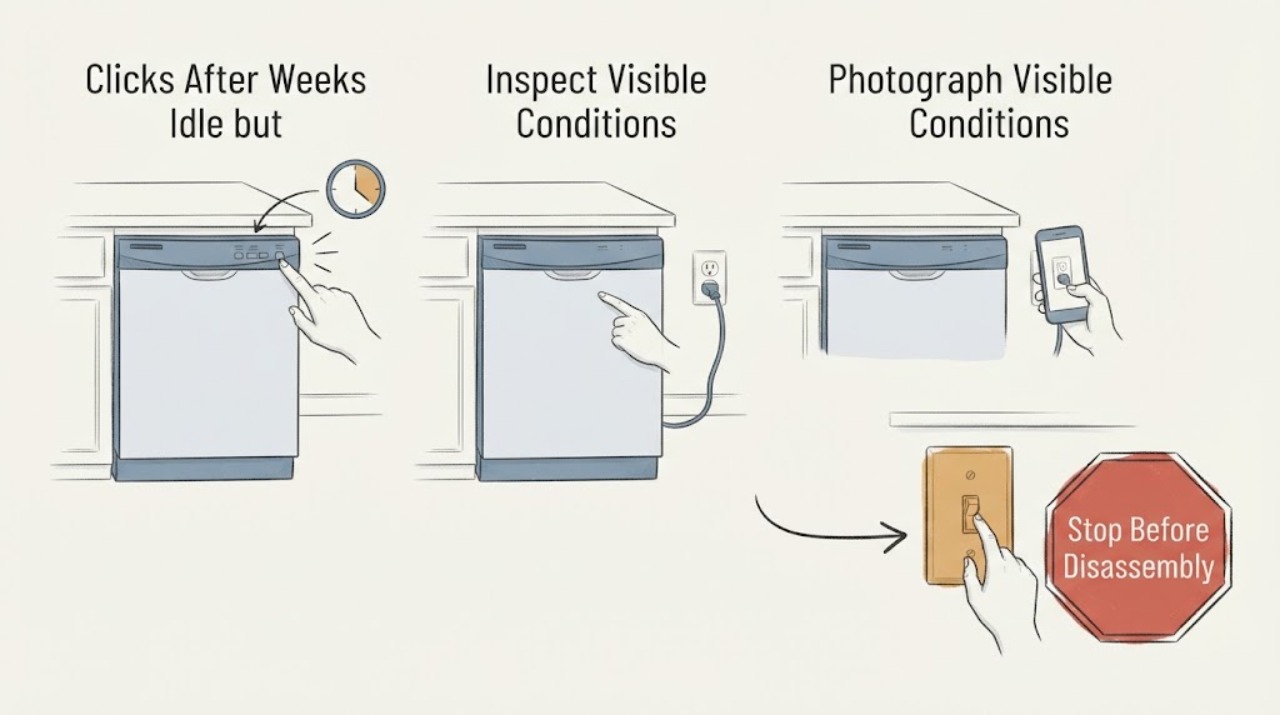
Beko DIN25310 Clicks After Weeks Idle but Will Not Turn On
If a Beko DIN25310 dishwasher clicks as soon as it is energized after being idle but the display stays dark, stop repeating the power cycle. First decide whether the whole home has power, whether the dishwasher is completely dark, and whether there is any water, burning odor, heat, sparking, or visible damage.
-
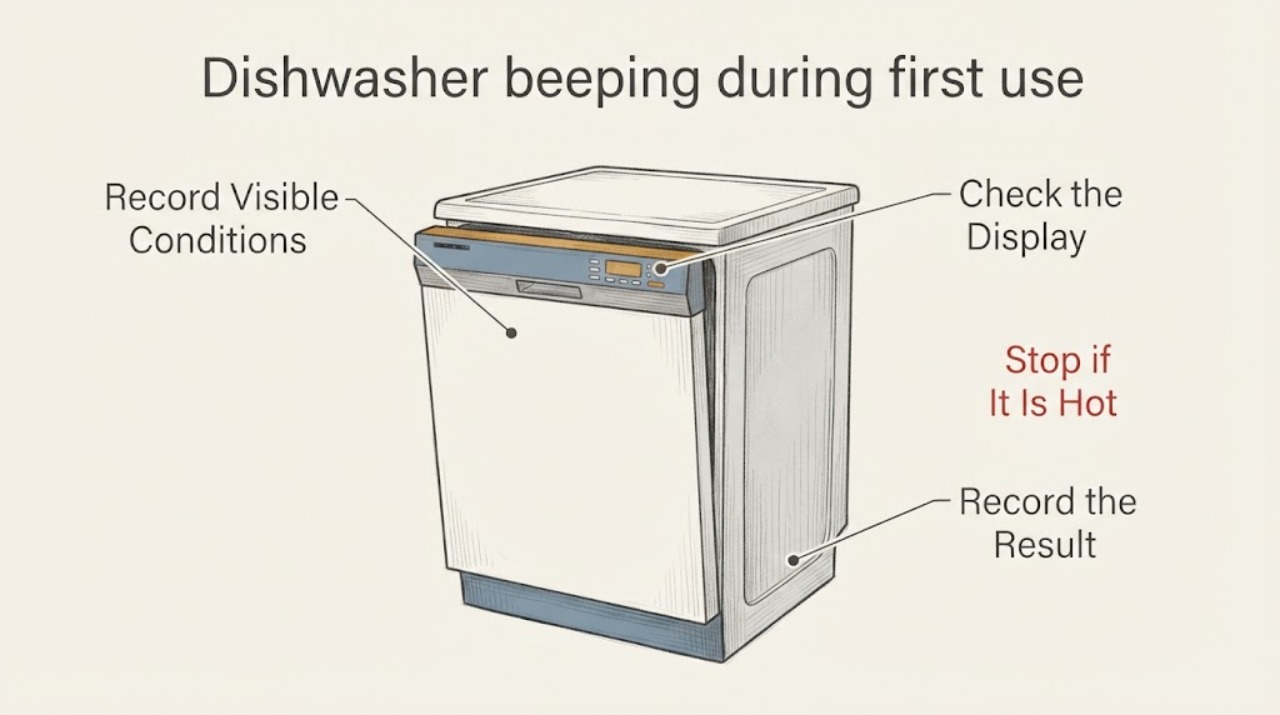
Beko DIS16R10 dishwasher beeping during first use
A beep from the Beko DIS16R10 on first use is not automatically a fault. In the exact DIS16R10 manual, an audible warning is expected when a selected programme ends, while the control panel separately provides salt, rinse-aid, water-cut-off, and water-overflow indications.
-
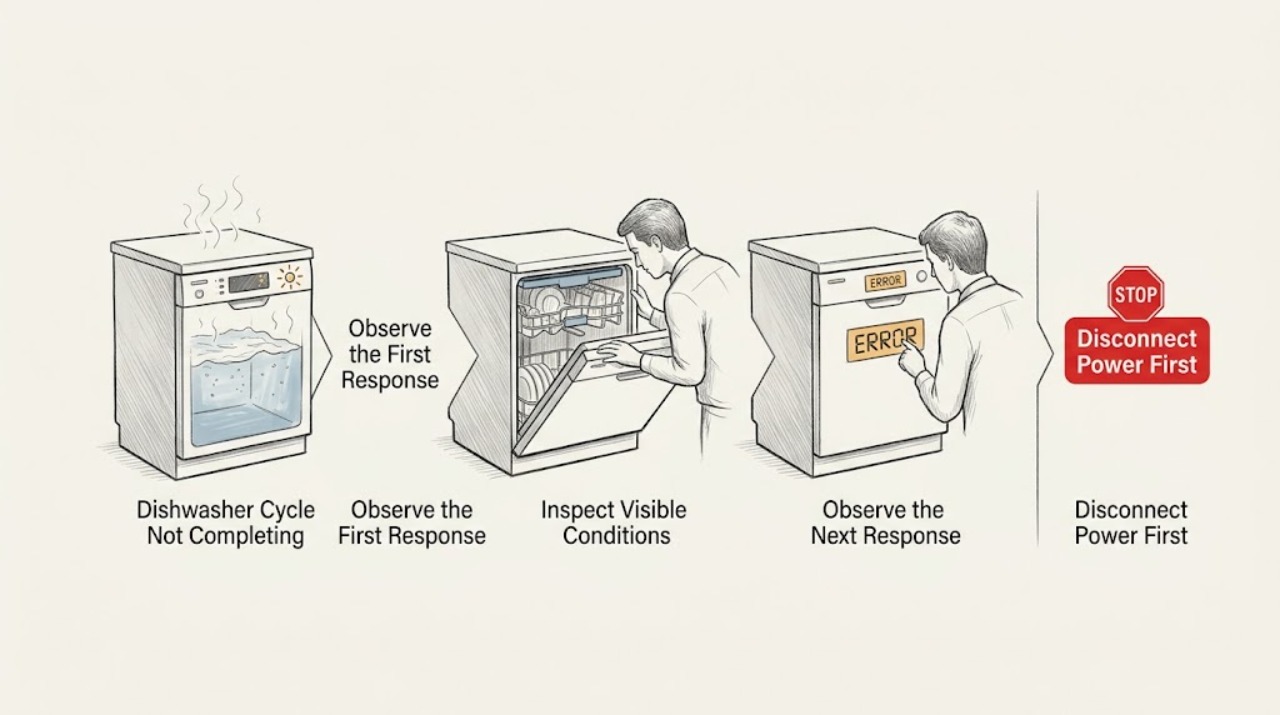
Beko Dishwasher Cycle Not Completing
First determine whether the Beko dishwasher is still within the selected programme time, waiting on a delay setting, or genuinely stopping before the end. If water remains in the tub, clean the accessible drain filters and check the drain hose for a kink or blockage with the appliance switched off.
-
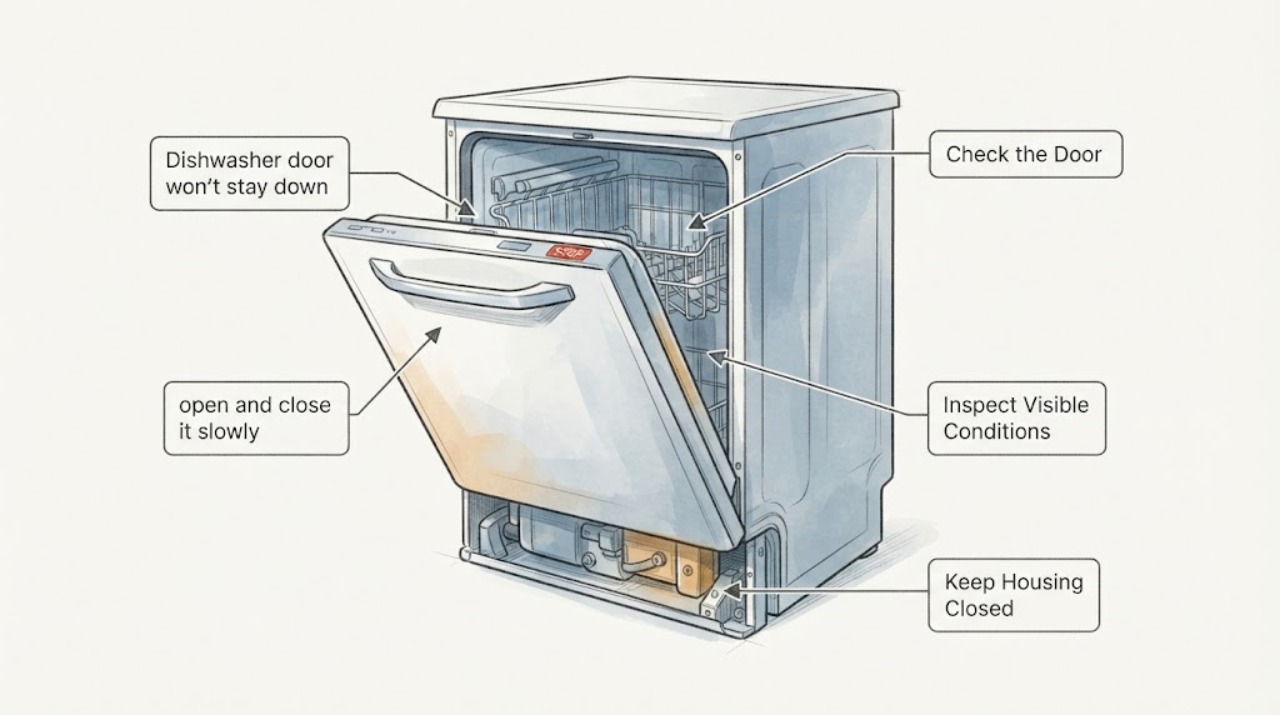
Beko dishwasher door won't stay down after a new installation
On a newly installed Beko integrated dishwasher, a door that will not stay down should be treated first as an installation, décor-panel, hinge or alignment issue. Beko says an integrated dishwasher uses a custom cupboard door, that the supplied brackets and screws must be used, and that the panel and hinges must be aligned using the model’s installation guide.
-
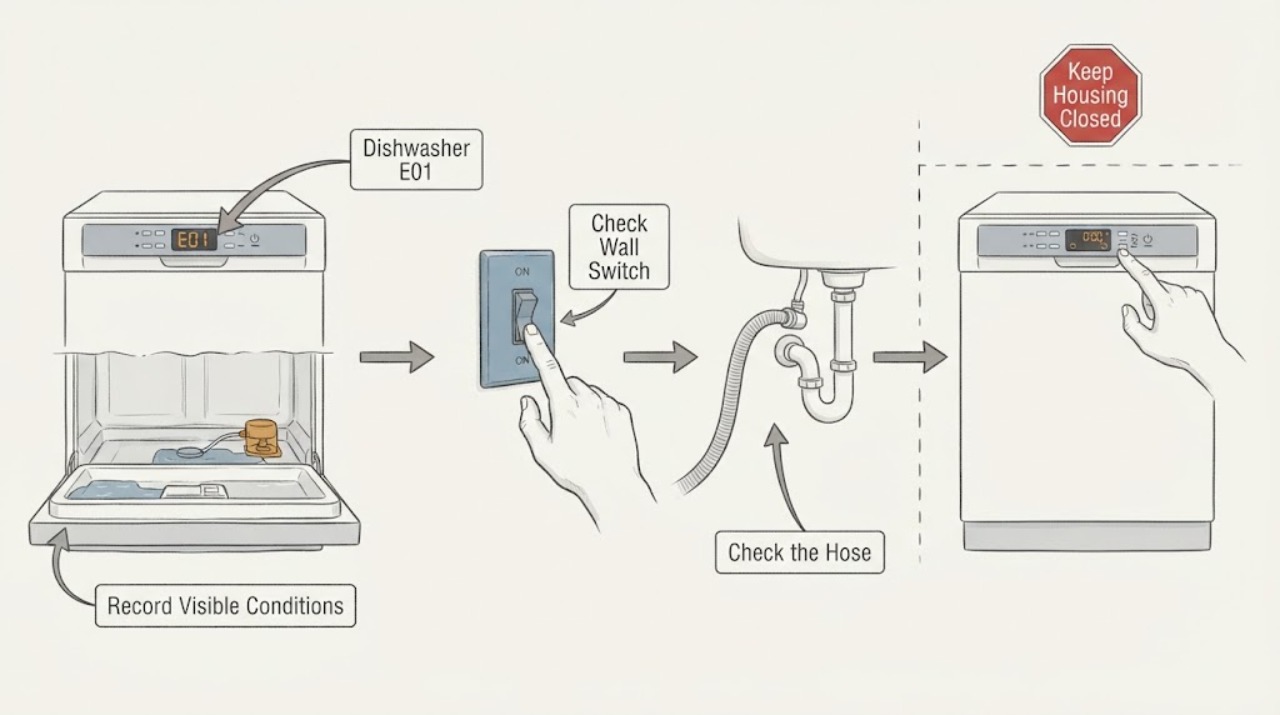
Beko Dishwasher E01: Treat It as a Water-Safety Warning
Do not apply a Bosch or another brand's E01 meaning to a Beko dishwasher. Beko Australia's opened dishwasher help page maps P1/E01 to a too-much-water or leak condition and says the safety algorithm attempts to discharge water; that evidence is region- and model-scoped.
-
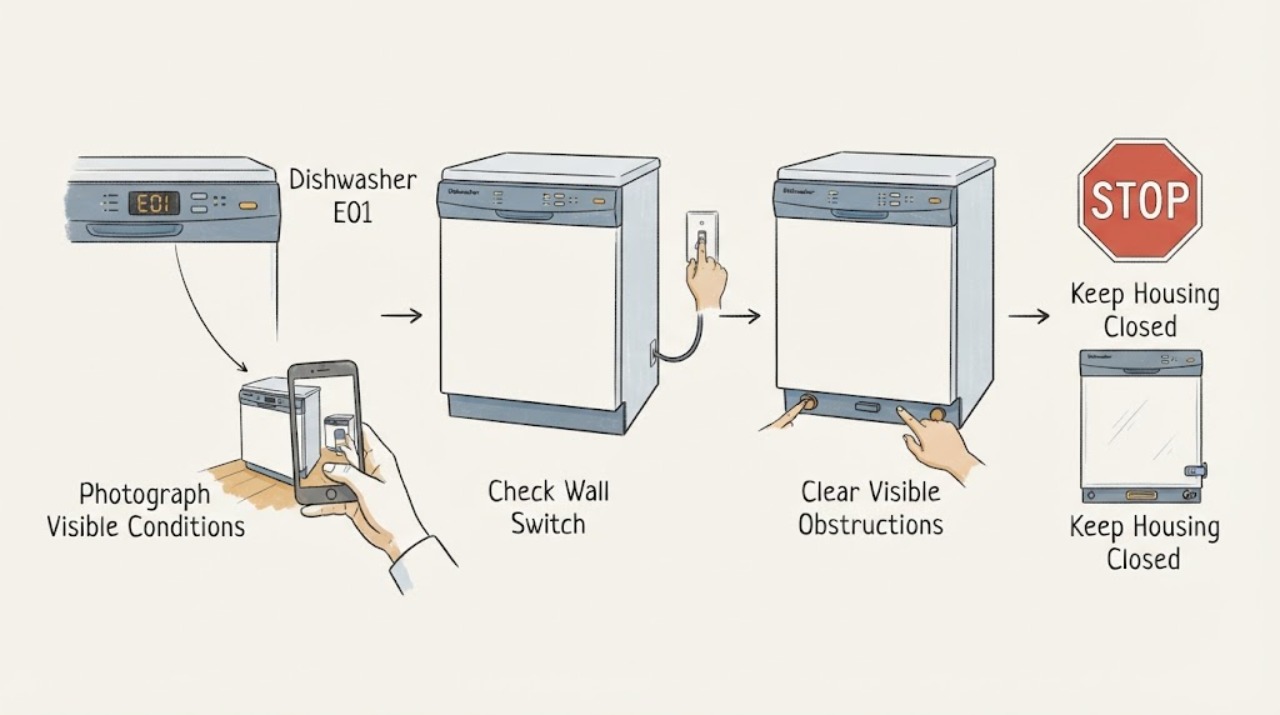
Beko Dishwasher E01: Safe Checks When the Model Is Missing
Do not treat Beko dishwasher E01 as a universal code without the model and market. Beko Australia's opened dishwasher help page uses a P1 indicator together with E01 for a water-safety condition involving too much water or a leak, but that regional guidance cannot establish the meaning for every Beko platform.
-
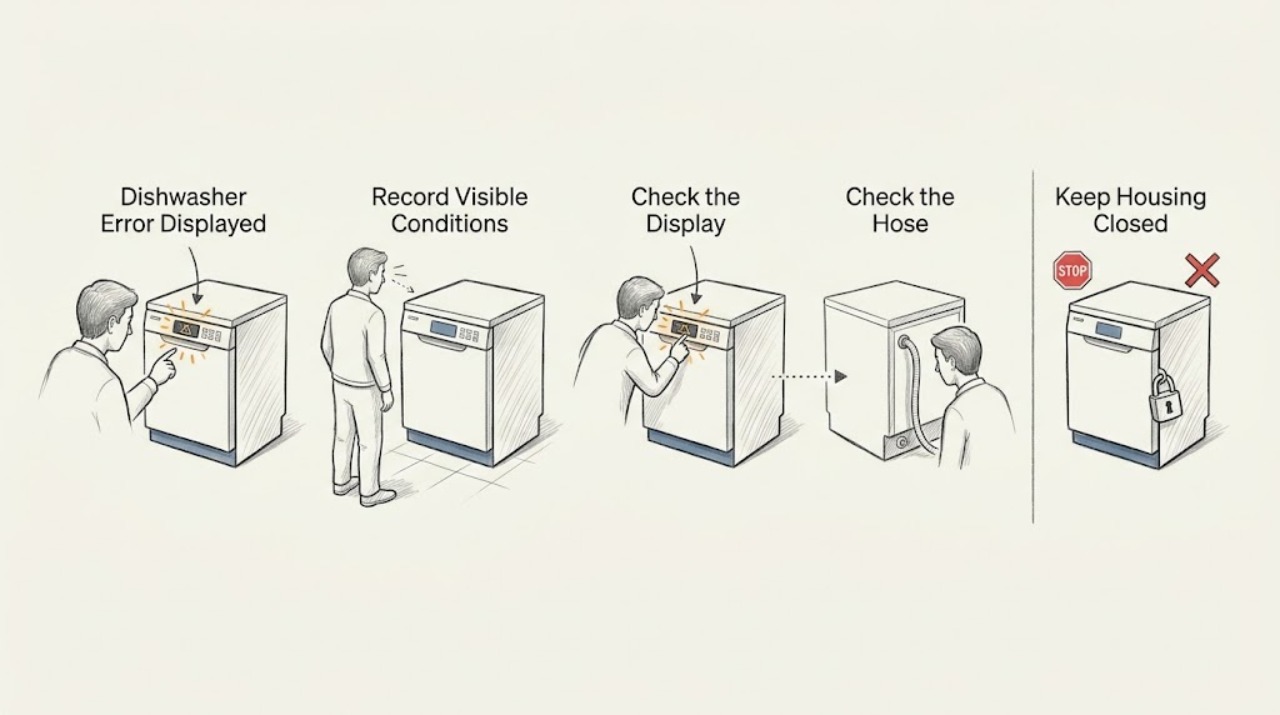
Beko Dishwasher Error Displayed
Treat a Beko dishwasher error display as a clue, not as a universal code: write down the exact characters or lights and the dishwasher model before choosing a fix, because the code table is model-specific. Check only the external power, door, and water-supply conditions described in your model manual.
-
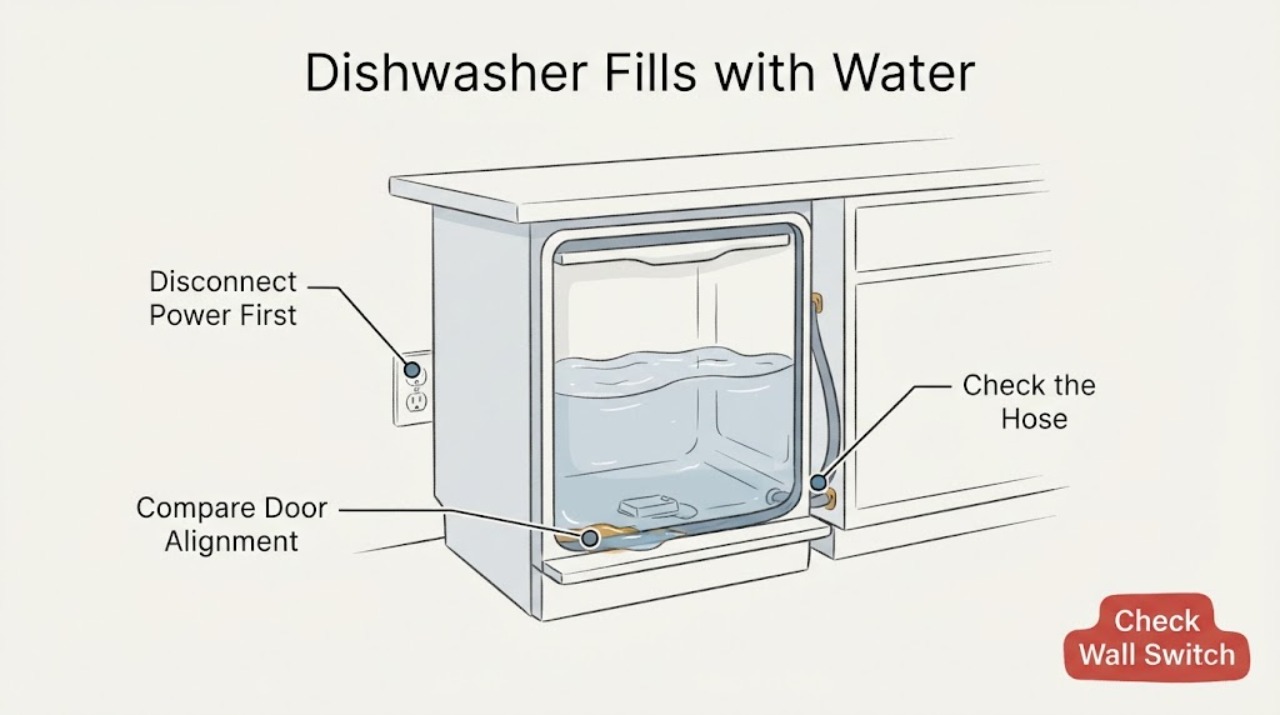
Beko Dishwasher Fills with Water and Leaks: Safe Checks
If a Beko dishwasher is gaining water while it is off or is leaking, close the dishwasher's water-supply tap immediately, switch off and unplug it when safe, and mop up the water. Do not run another cycle to locate the leak.
-
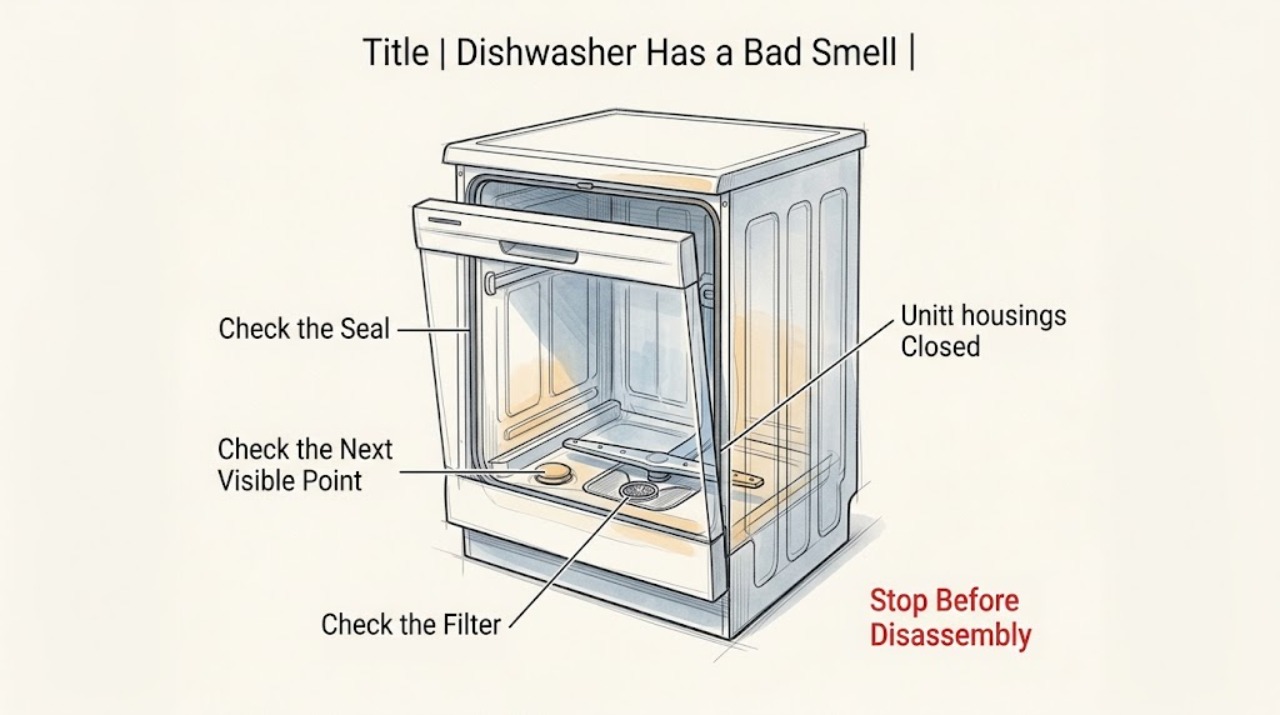
Beko Dishwasher Has a Bad Smell: Find the Source
A bad smell from a Beko dishwasher most often starts with food residue trapped in the drain filter, but residue in spray-arm holes, dirty door seals, limescale, or moisture left after a cycle can also contribute. Start with the power off and the filter at the bottom of the tub, then inspect the spray arms, seals, and drainage symptoms.
-
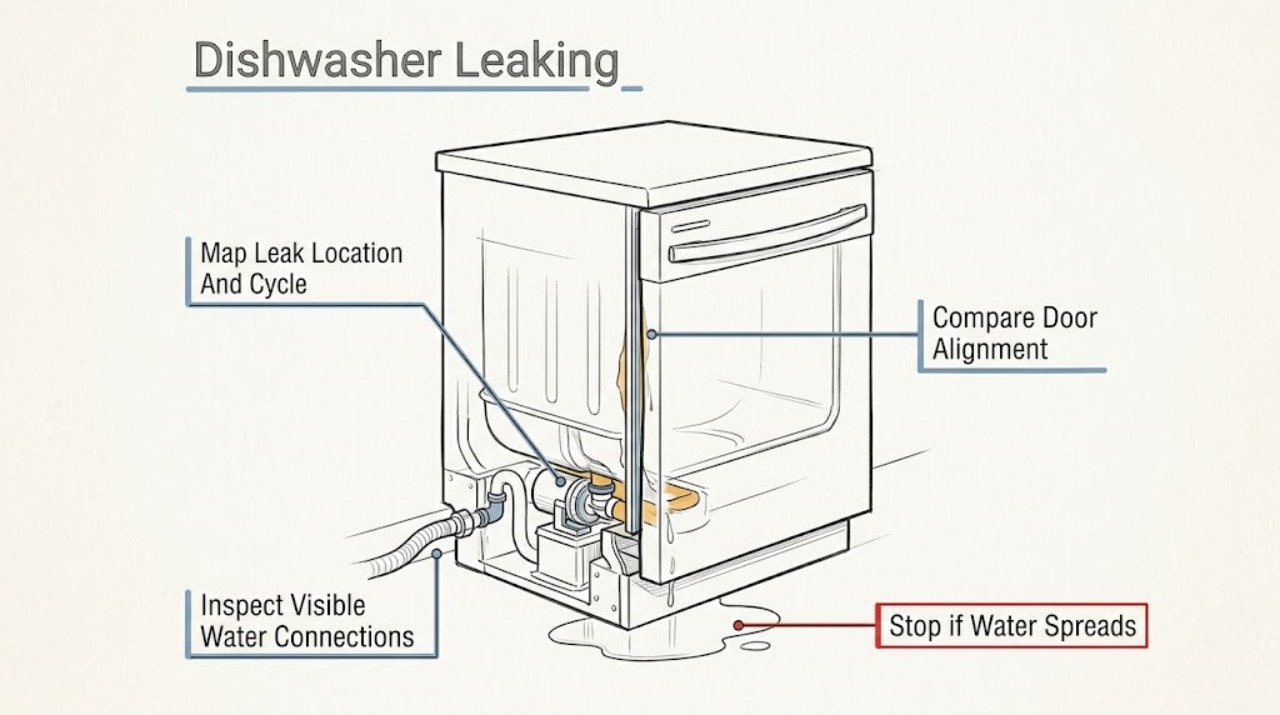
Beko Dishwasher Leaking
Stop using a leaking Beko dishwasher until you know where the water is coming from. First note whether the leak appears at the door, under the sink or behind the appliance, or only during filling, washing, or draining.
-
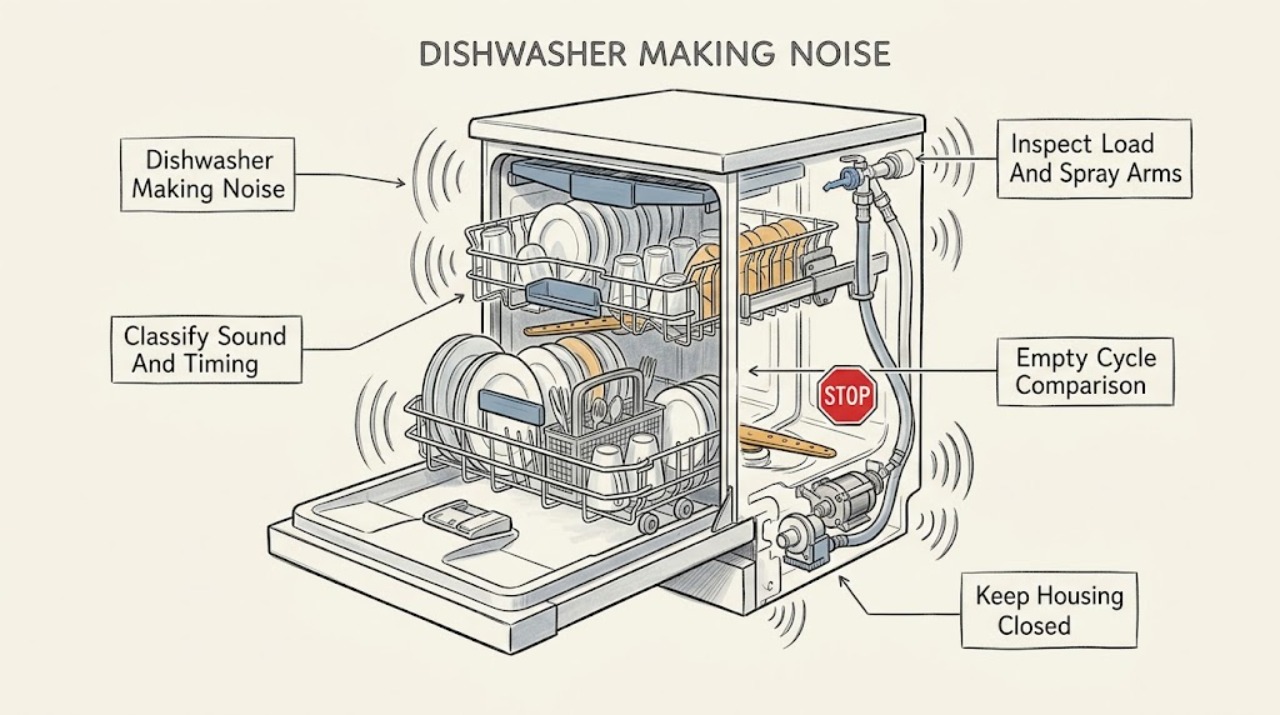
Beko Dishwasher Making Noise
A Beko dishwasher can click, clunk, hum, or snap as its controls, detergent dispenser, drain pump, or other cycle parts operate; those sounds can be normal when the dishwasher otherwise runs correctly. A continuous knock or rattle is more likely to involve dishes or a spray arm, while a bang or boom during filling can come from water hammer or a hose touching the appliance.
-
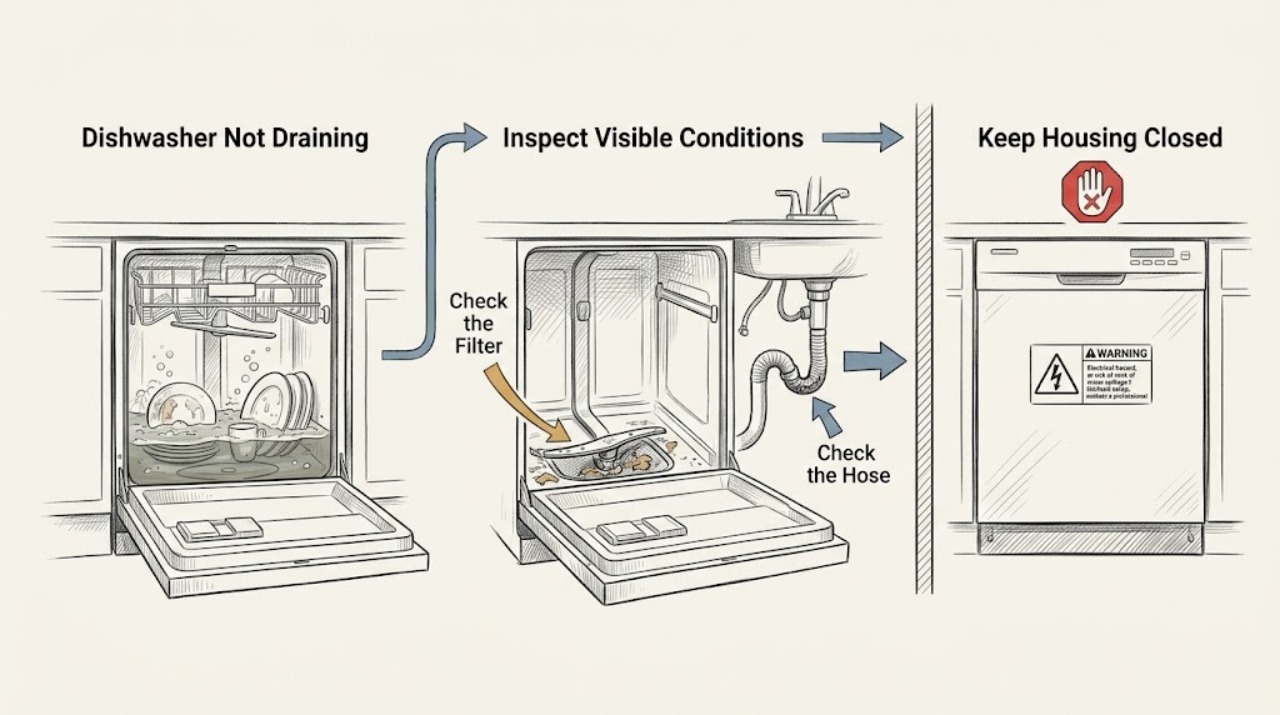
Beko Dishwasher Not Draining
If a Beko dishwasher is not draining, switch it off and disconnect it before checking the removable filters and the accessible drain route. Food debris in the filter, a crushed or twisted drain hose, an incorrectly positioned hose, or a blocked sink connection can hold water in the cabinet.
-
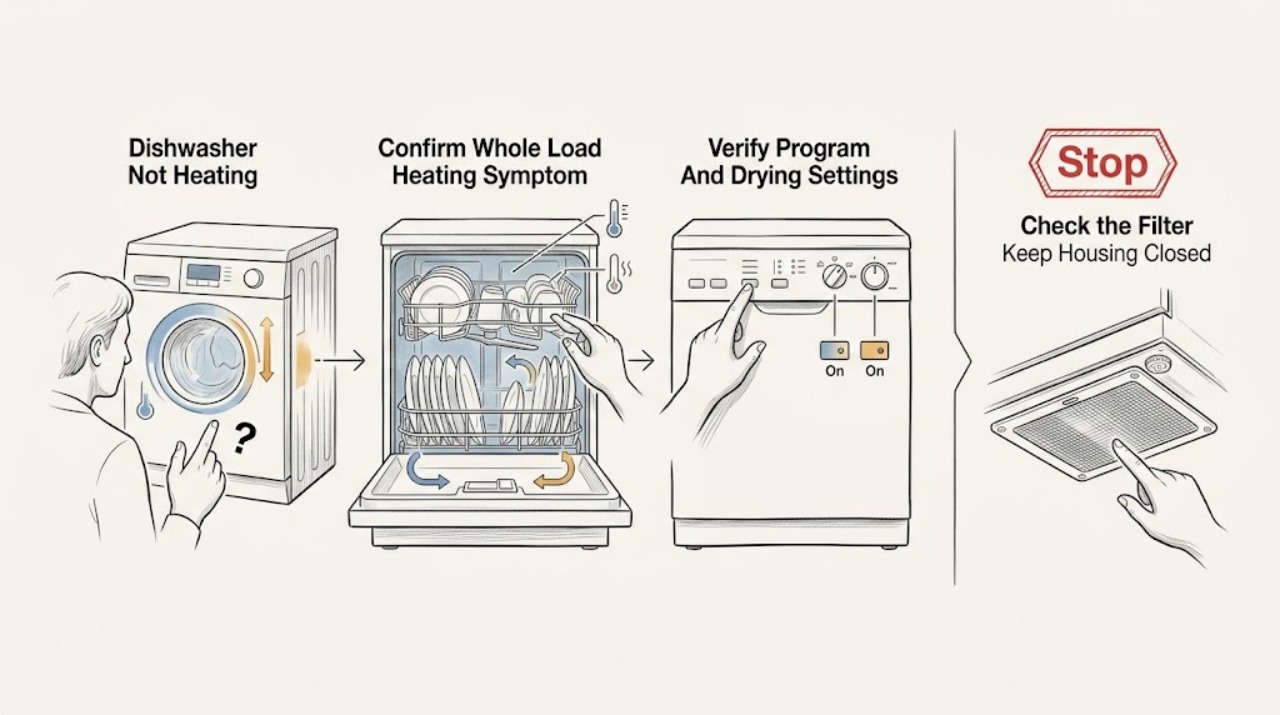
Beko Dishwasher Not Heating: Separate a Program Issue from a Heating Fault
A Beko dishwasher that finishes with cold water, undissolved detergent, dirty dishes, and poor drying may have a heating-element or thermostat fault, but those symptoms can also come from a short or unsuitable programme, poor loading, blocked spray arms or filters, inadequate filling, or a drainage problem. First use the exact model's programme guidance and check the user-accessible water path and filters.
-
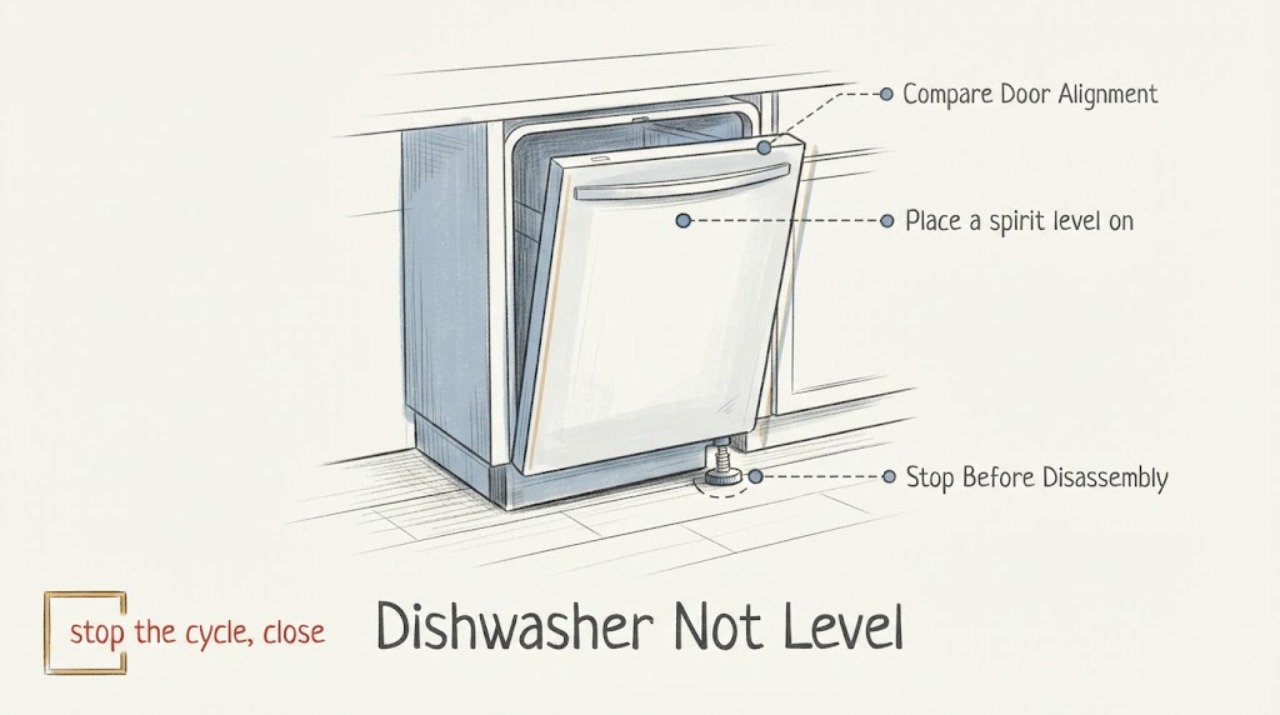
Beko Dishwasher Not Level: Safe Leveling and Stability Checks
Check a Beko dishwasher for level from front to back and side to side with a spirit level, then check for rocking. Beko says the appliance should stand level and balanced on its feet; its generic leveling guidance describes adjusting the feet until they firmly contact the floor and hand-tightening the lock nuts.
-
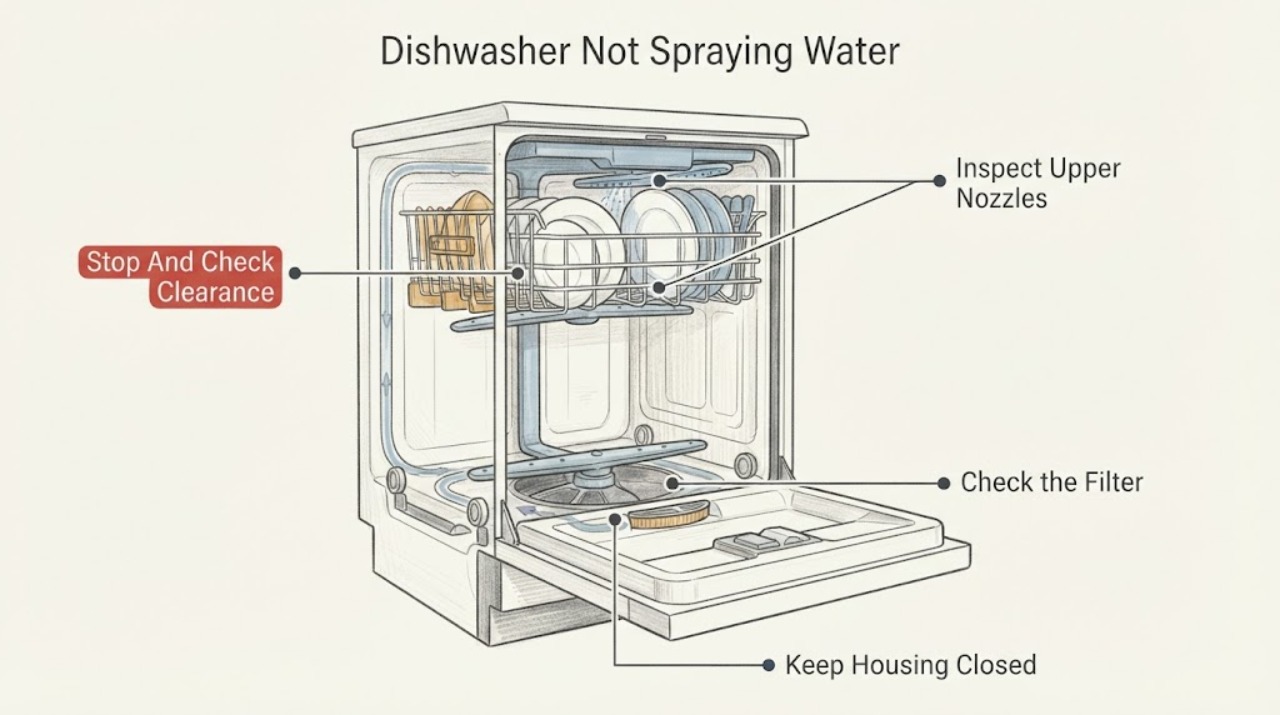
Beko Dishwasher Not Spraying Water From Upper Spray Arm | Fix Guide
First stop the dishwasher and let it cool before reaching inside. With the machine empty and off, check that the upper spray arm can turn freely, that dishes are not touching it, and that its holes are not blocked.
-
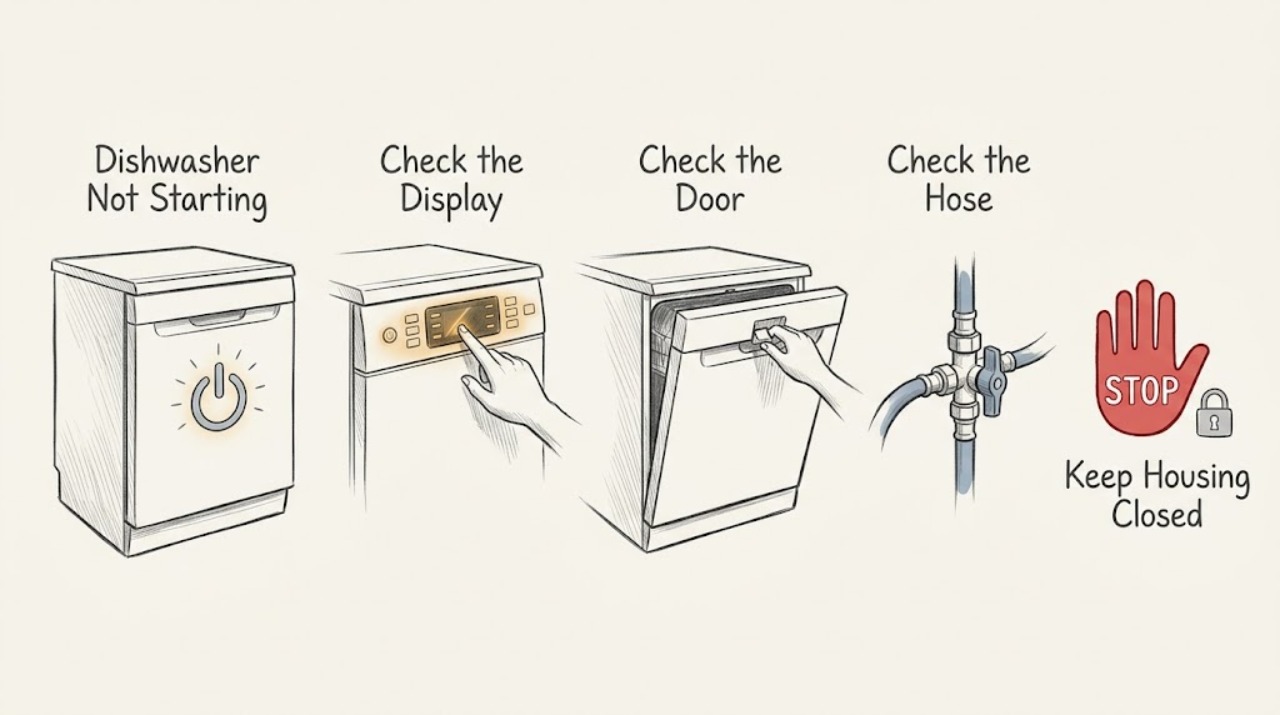
Beko Dishwasher Not Starting
Start by separating a power problem from a start-command or safety-interlock problem. If the control panel is dark, check whether other nearby electrical devices work and whether the dishwasher's supply has tripped; do not keep resetting a breaker that trips.
-
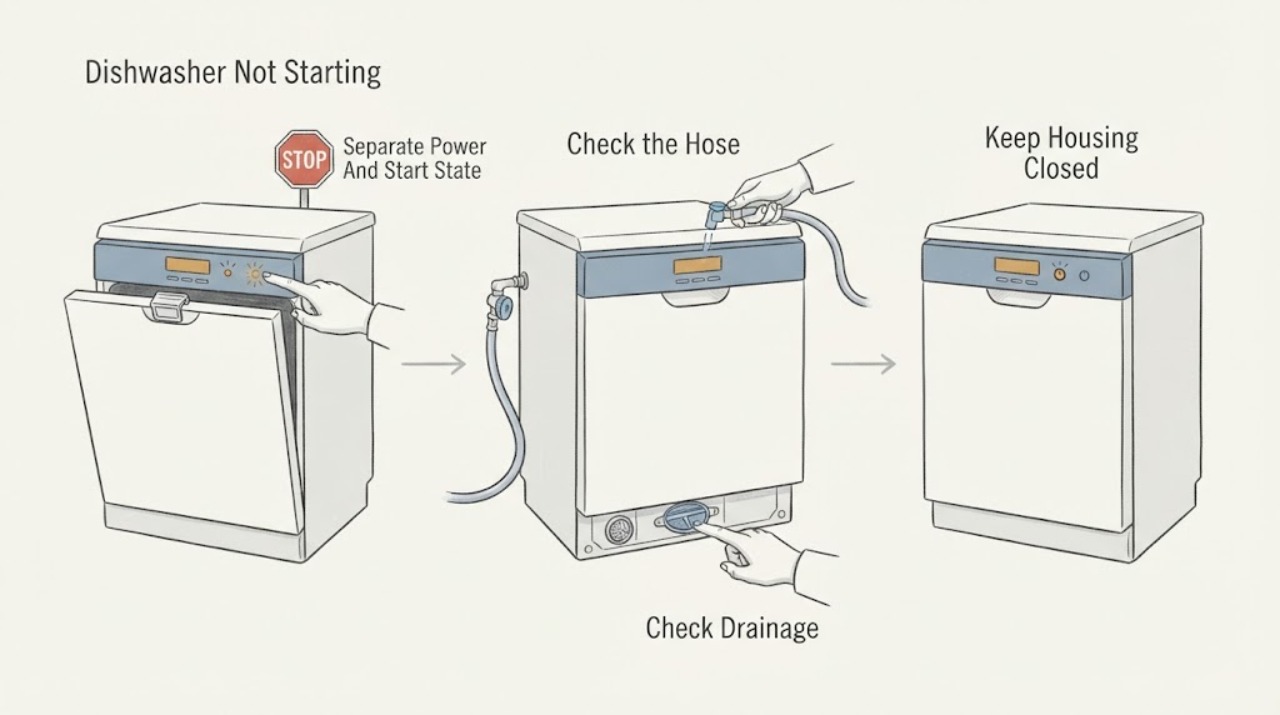
Beko Dishwasher Not Starting; Water-Inlet Fault | Fix Guide
First determine whether the dishwasher is completely dead or has power but will not begin the water stage. Beko's official start guidance supports checking household power, the water-supply tap and firm door closure.
-
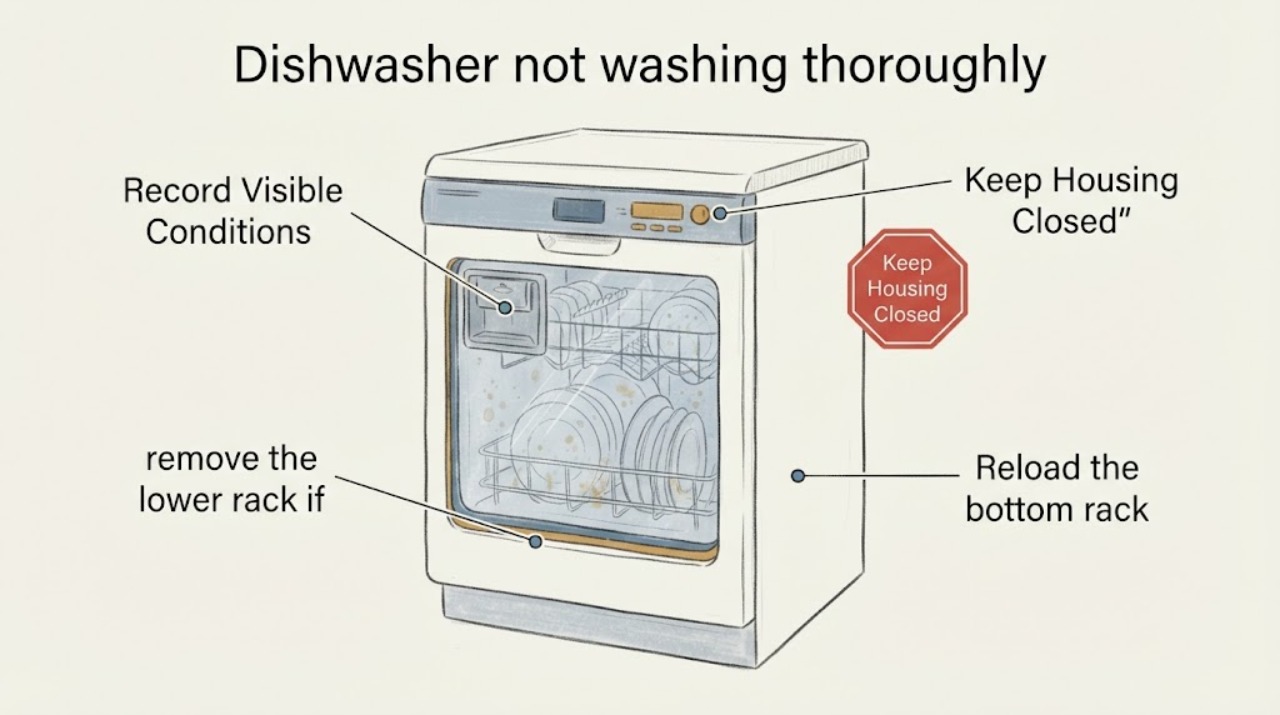
Beko dishwasher not washing thoroughly in the bottom rack
If a Beko dishwasher leaves food on the bottom-rack dishes while the upper rack is cleaner, start with the lower spray arm and the way the bottom rack is loaded. Beko says blocked spray-arm holes reduce water delivery, and its loading guidance says large or nested items can block spray movement and water flow.
-
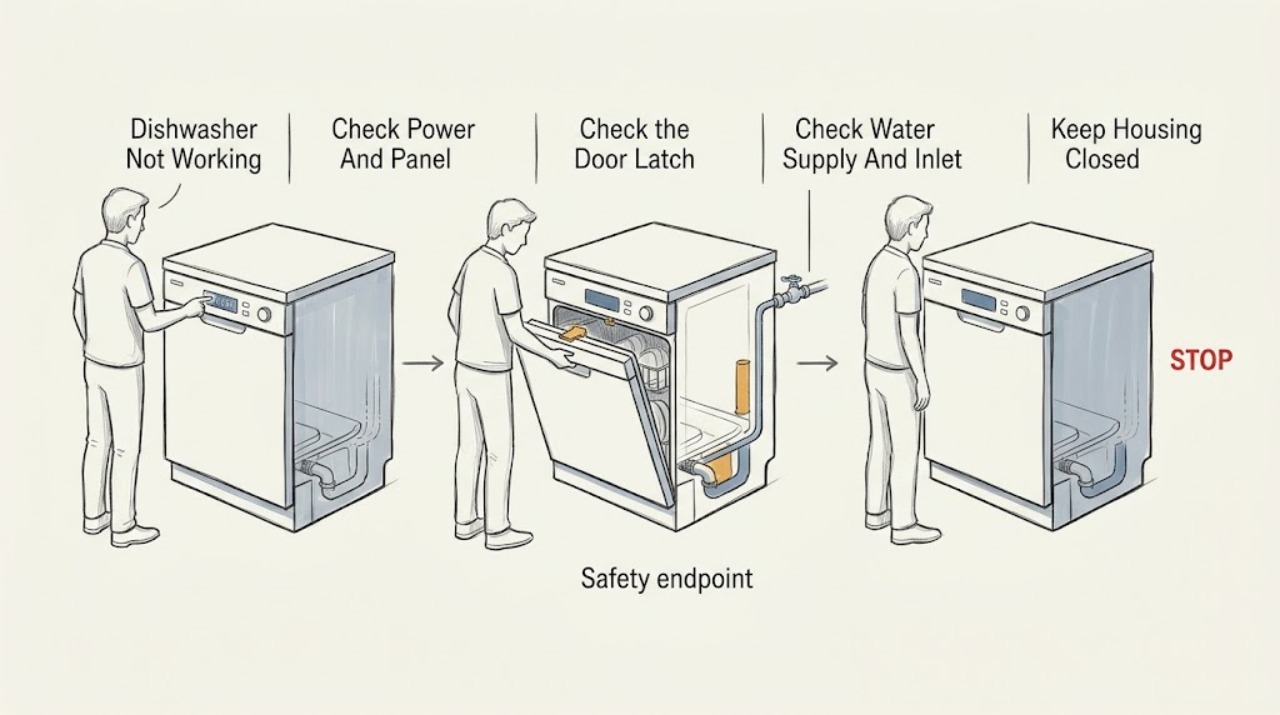
Beko Dishwasher Not Working: Checks and Next Steps
If a Beko dishwasher is not working, first check that the display or indicator lights respond, the plug and household power are available, and the selected program is not waiting on a delay or an interrupted cycle. Close the door firmly until the latch engages; Beko dishwashers will not start when the door is detected as open.
-
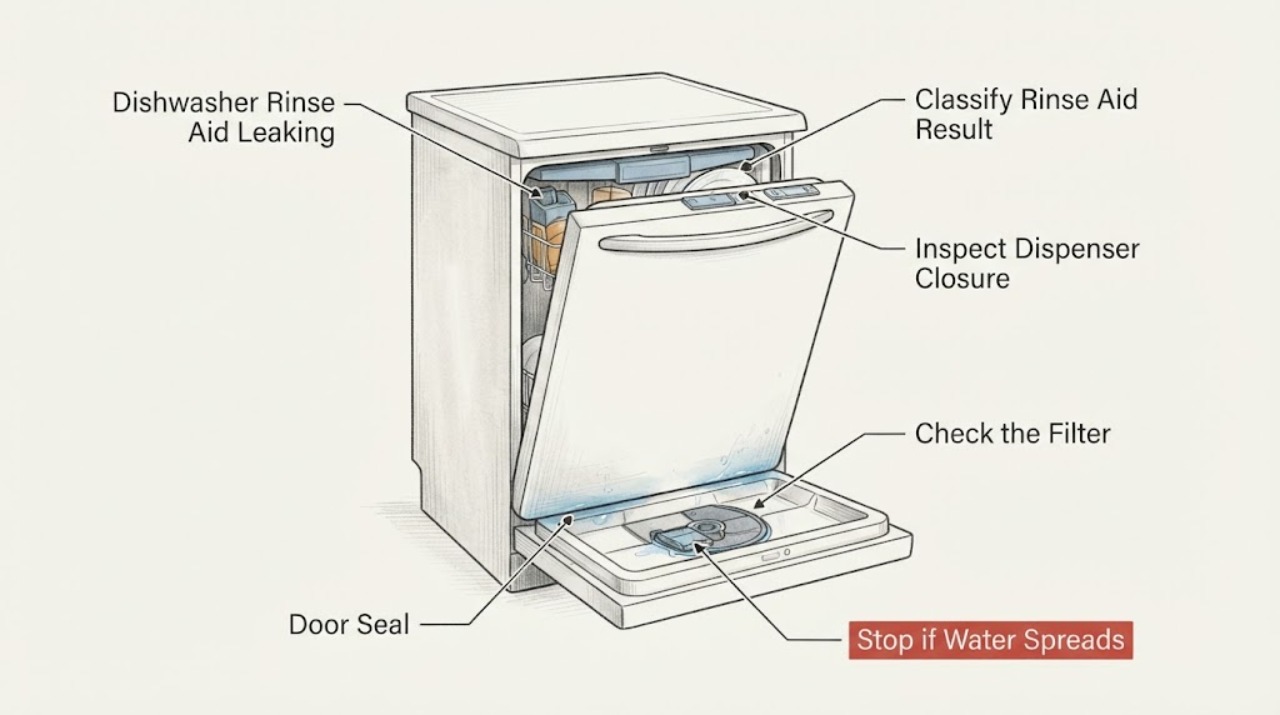
Beko Dishwasher Rinse Aid Leaking and Cleaning Poorly: Safe Checks
Treat the two symptoms separately. Rinse aid is released during the final rinse to help water leave the dishes; it is not the main detergent that removes food soil.
-
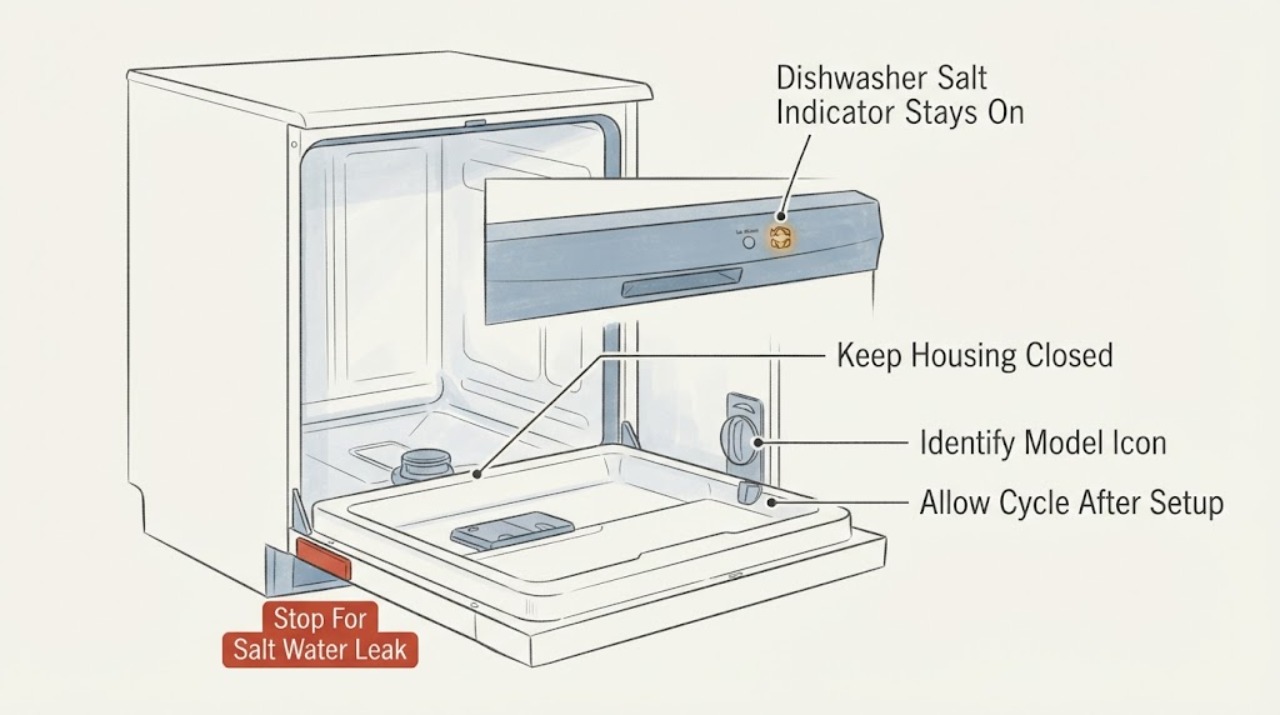
Beko Dishwasher Salt Indicator Stays On: Refill, Hardness Setting and Model Checks
Do not assume a continuously lit Beko salt icon means an electronic failure. First find the exact model and region manual, then confirm that the dishwasher uses a salt reservoir and that the reservoir contains dishwasher softening salt with its lid closed.
-
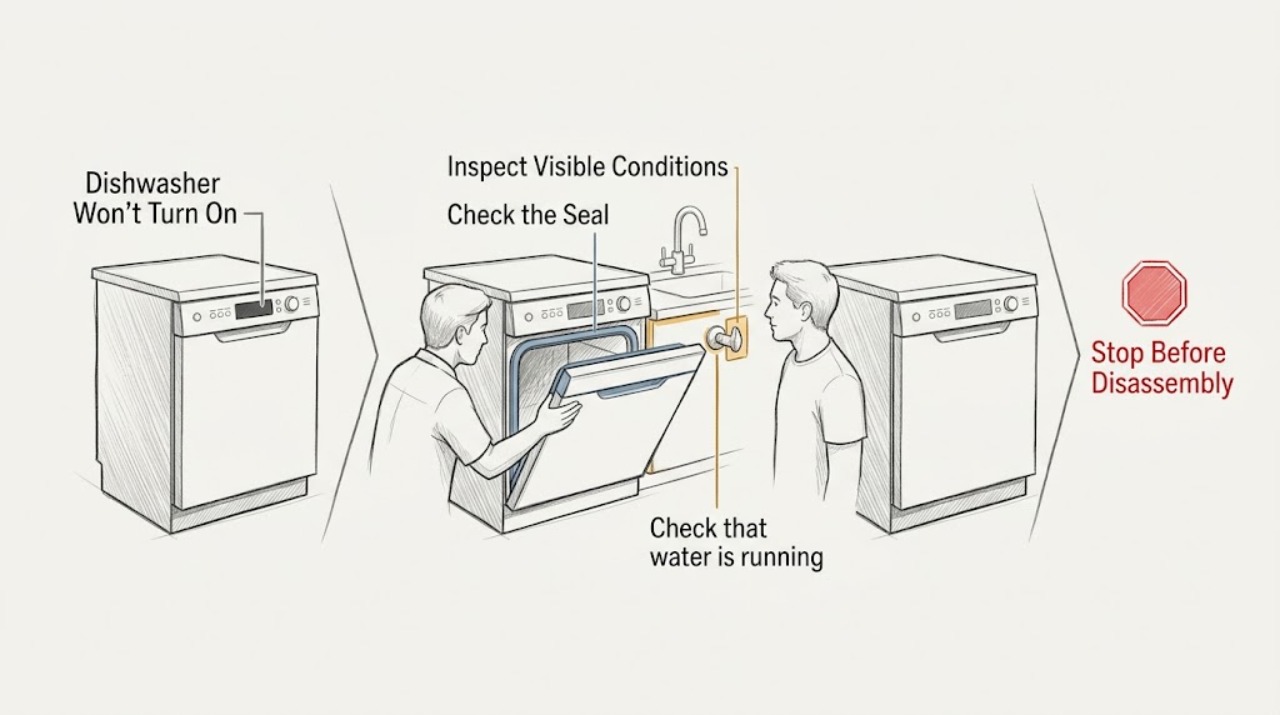
Beko Dishwasher Won't Turn On: Power, Door, and Start Checks
If a Beko dishwasher will not turn on, first separate a completely dark display from a dishwasher that has power but will not begin a cycle. Check the home's power at a safe, visible level, then confirm the dishwasher door closes firmly and the water supply tap is on.
-
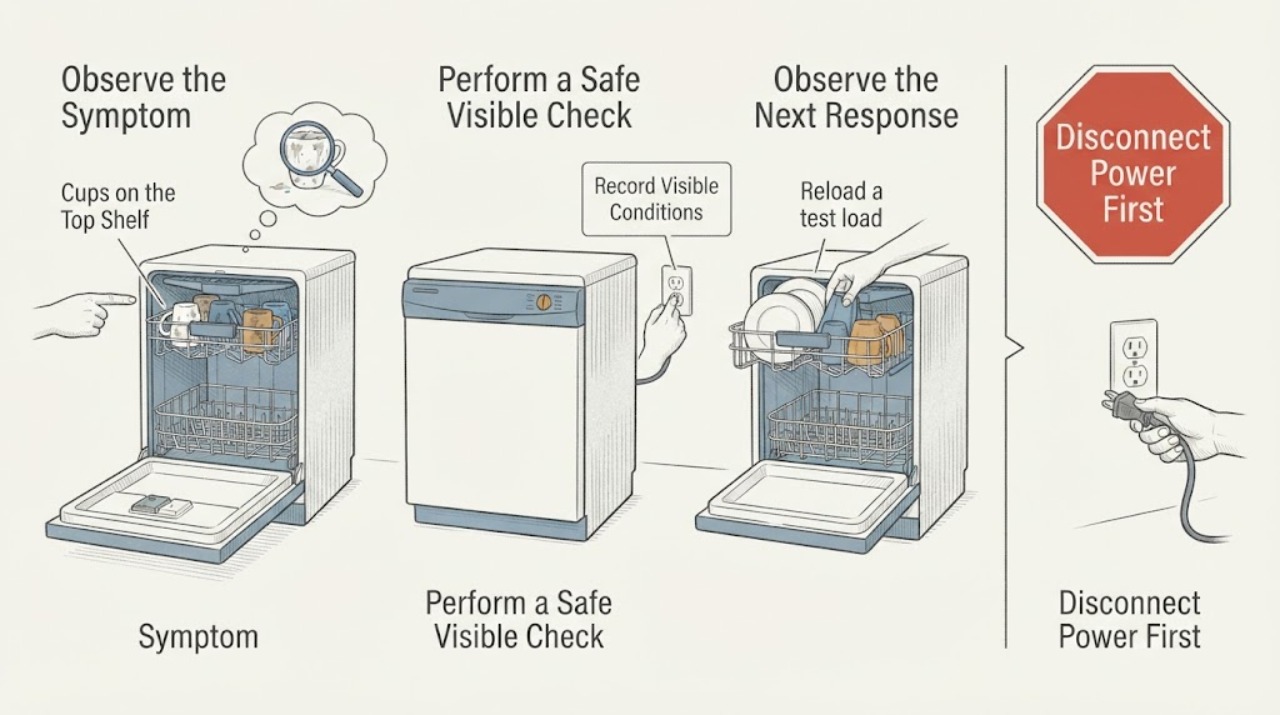
Beko DW450: Cups on the Top Shelf Still Dirty
On the discontinued Beko DW450, cups belong in the upper basket and the model has fixed upper-basket cup racks. When only the top shelf is dirty, first correct the cups' orientation and spacing, then check that the upper spray arm is not blocked and can rotate freely.
-
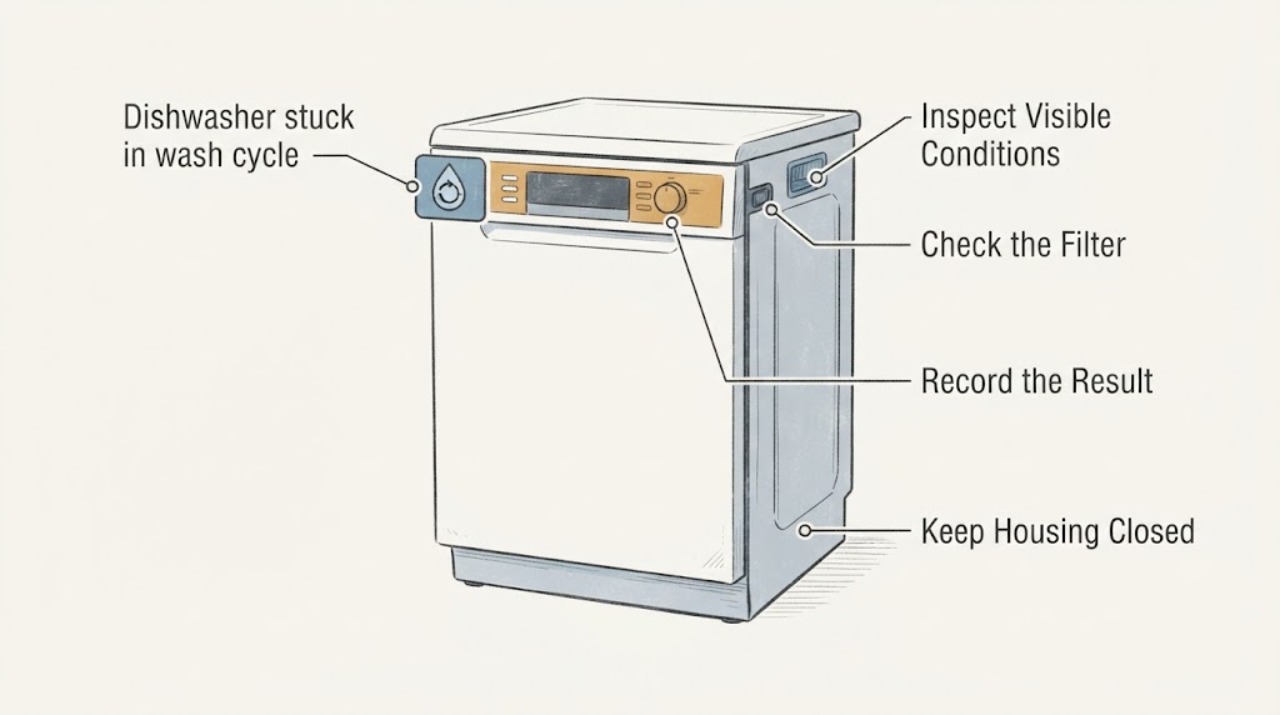
Beko DW451 dishwasher stuck in wash cycle: water not heating
The Beko DW451 product page and its matching user manual identify this as a slim-line integrated dishwasher, but the opened DW451 manual does not define “faulty NTC” as a user-facing code or provide an NTC test. Treat the phrase as an unconfirmed fault hypothesis.
-
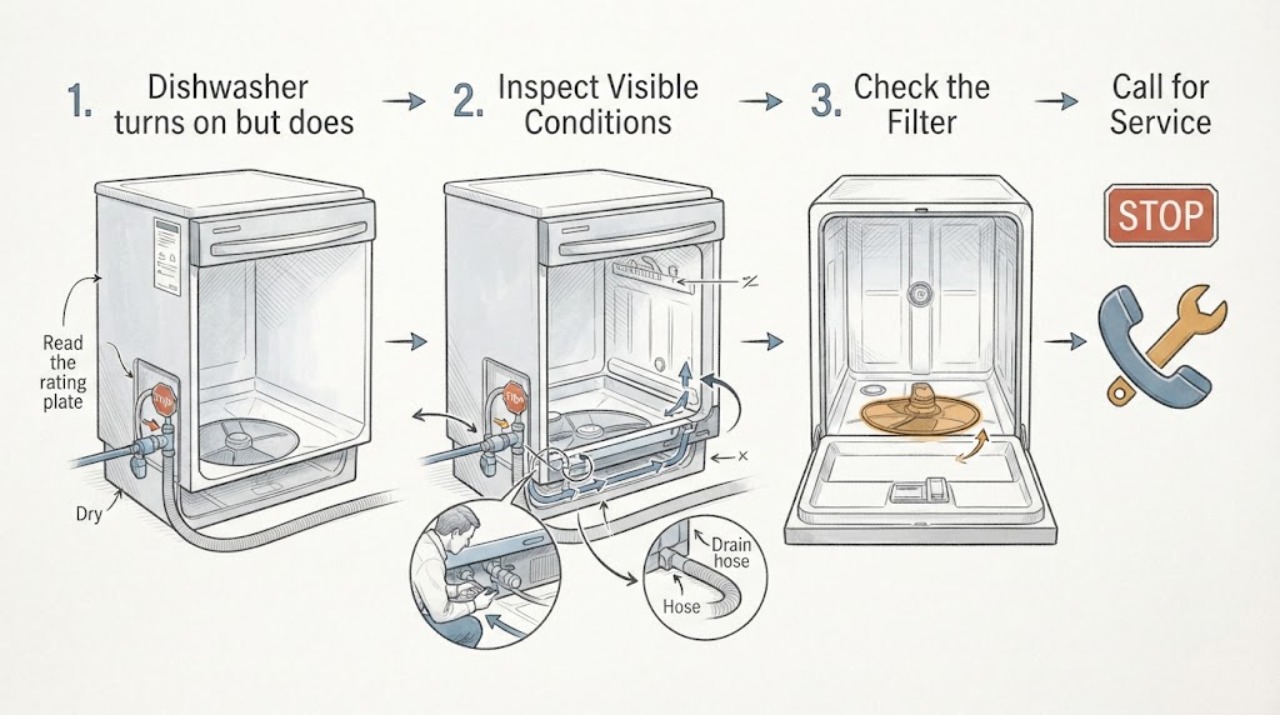
Beko DW451 dishwasher turns on but does not fill: safe checks before service
The Beko DW451 is a discontinued slimline integrated dishwasher, so first confirm the rating-plate model before applying this manual. If it turns on but does not take in water, look first for standing water or a drain pump that is still trying to empty the tub: Beko explains that a dishwasher that cannot drain may not proceed to filling.
-
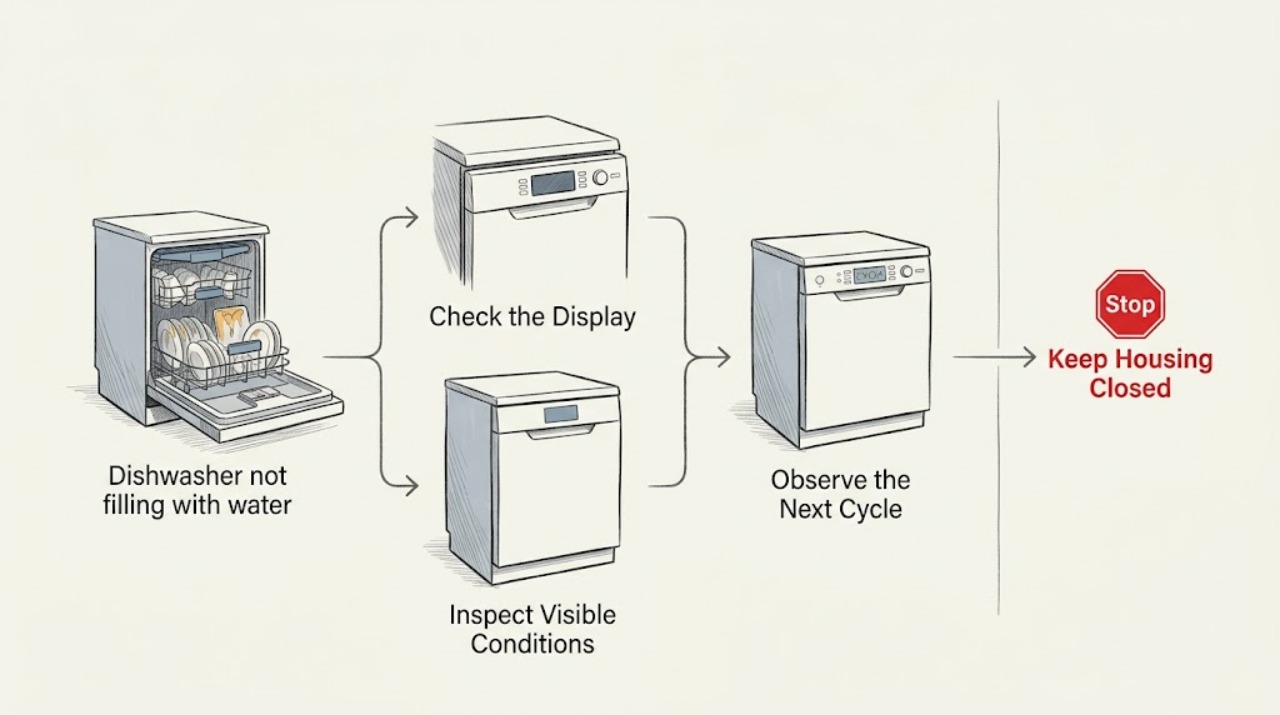
Beko DWD5414S dishwasher not filling with water: safe checks
For the Beko DWD5414S, start with the water tap, the visible inlet hose, the door closure, and any water already standing in the tub. Beko identifies a closed tap, restricted hose, inadequate water supply, or a drainage problem as possible reasons a dishwasher may not fill.