
On this page
Start here
Quick answer
On the discontinued Beko DW450, cups belong in the upper basket and the model has fixed upper-basket cup racks. When only the top shelf is dirty, first correct the cups' orientation and spacing, then check that the upper spray arm is not blocked and can rotate freely. With power disconnected, clean only the accessible spray arm and filters as the exact manual permits, verify the detergent and rinse-aid setup, and use a programme suited to the soil. If every upper-basket item remains dirty while the lower basket is clean, or the upper arm does not receive water or rotate, stop after these checks and arrange authorised service rather than guessing a pump or replacement arm.
Before you begin
Safety first
- Disconnect power before cleaning inside, use no sharp or metal tool in spray-arm holes, do not operate without correctly installed filters, and do not remove panels or open the circulation pump, inlet valve, wiring, or sealed water-distribution path as a user check.
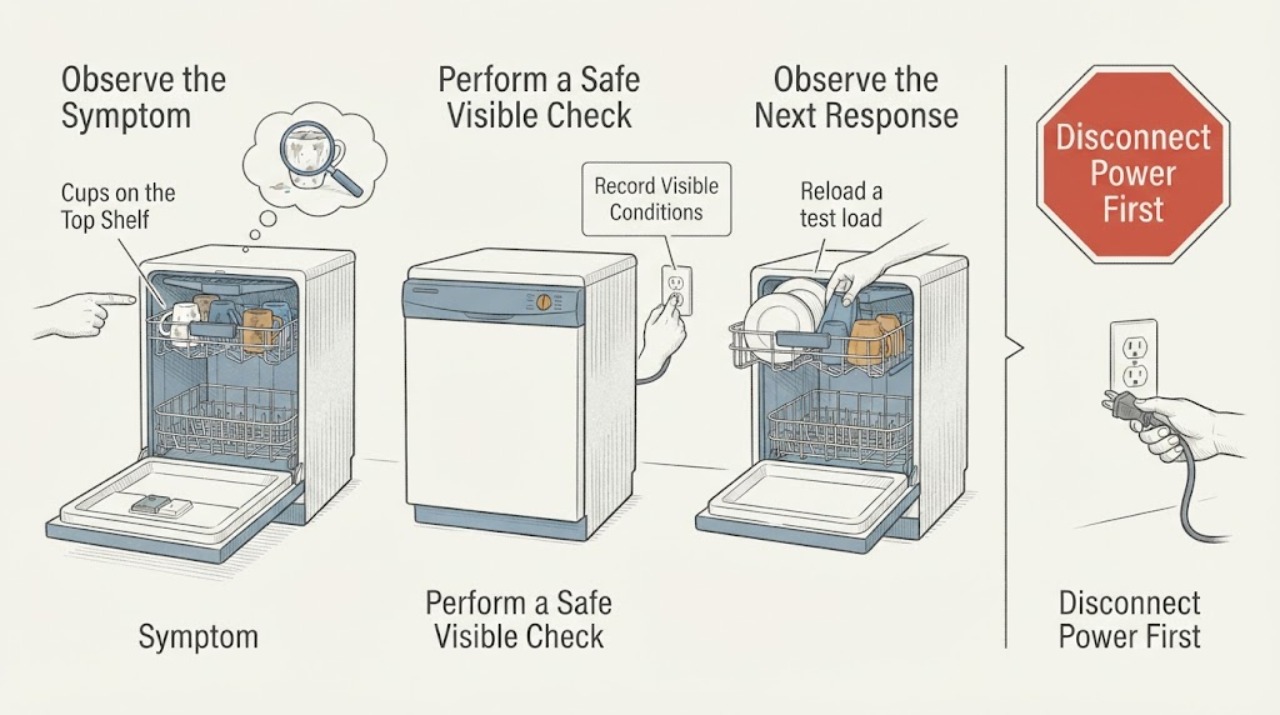
Work through in order
Diagnostic checks
Use only checks that match the exact appliance or system and its official guide.
-
Check 1
Confirm the rating-plate model is DW450 and record whether the problem affects every cup in the upper basket or only cups in particular positions. Compare the lower-basket result in the same completed load, and note whether the cups are wet but dirty or nearly dry.
Expected result: All upper-basket cups are dirty while lower-basket items are clean, only cups behind a tall item are dirty, or both baskets are dirty.
Next step: For a top-only pattern, continue with the upper-basket checks. If both baskets are dirty, include the detergent, programme, and filter checks and arrange service if the result persists.
Why this matters
Why: A top-only pattern makes loading or upper spray coverage the useful first branch; a whole-load problem is less specific and can also involve detergent, programme choice, filters, water supply, or an internal wash system.
-
Check 2
Reload a test load with cups upright but their openings facing down, leaving each cup separated rather than nested or pressed against another item. Keep tall plates, pans, or utensils below from covering the upper spray path, and do not overload the fixed cup racks.
Expected result: The cups have open downward-facing interiors with clear gaps and no item blocks the spray arm, or a cup is nested, tilted closed, or shadowed by a tall item.
Next step: Run one appropriate programme with the corrected load if there is no safety concern. If the same upper positions remain dirty, continue to the spray-arm and filter checks instead of adding more detergent blindly.
Why this matters
Why: Beko says top-rack cups and glasses should face down so water can reach and drain from their surfaces, and that obstructed spray-arm movement or disorderly loading causes uncleaned dishes. Improvement after reloading supports a coverage or loading cause.
-
Check 3
Switch the dishwasher off, disconnect power, and use the exact DW450 manual to access only the user-serviceable upper spray arm. Check its holes for food or scale residue and turn the arm gently by hand to confirm it is not rubbing or blocked; clean holes only with a small non-metallic brush and refit the arm exactly as shown by the manual.
Expected result: The upper arm has blocked holes, does not turn freely, is loose or mis-seated, or is clean, secure, and free to turn.
Next step: Correct only the accessible obstruction or seating allowed by the DW450 manual, then test once. If the arm remains dry, does not rotate, or the top rack is still dirty, stop and arrange service rather than opening the pump or water-distribution system.
Why this matters
Why: Beko's care guidance identifies residue in spray-arm nozzles as a cause of reduced spray and says the arm must be replaced correctly; a clean, freely turning arm makes a simple nozzle blockage less likely but does not prove water pressure is adequate.
-
Check 4
While power remains disconnected, inspect the accessible filter assembly for food residue and refit every filter section correctly; then check that the detergent dispenser closes and that rinse aid is present. Do not operate the dishwasher without its filters and do not put detergent directly into the tub unless the exact manual calls for it for that programme.
Expected result: The filter is clogged or incorrectly seated, the dispenser is not closing, rinse aid is empty, or these accessible items are clean and correctly fitted.
Next step: Correct only the visible filter, dispenser, or rinse-aid issue, then test one suitable cycle. If only the upper basket remains dirty, return to the upper-spray branch and arrange service if it persists.
Why this matters
Why: Beko links dirty or misplaced filters, inadequate detergent, and inadequate rinse aid with poor cleaning or drying. A clean, correctly fitted filter with a functioning dispenser makes those causes less likely, but it cannot prove the upper spray circuit is working.
-
Check 5
Choose a programme appropriate for the cups' soil level using the DW450 programme list and the exact manual; do not use a short or gentle programme as the only test for dried-on residue. Use only dishwasher detergent and the amount directed for that product and programme.
Expected result: The cups are lightly soiled and improve on the appropriate programme, or dried residue remains despite correct loading, a clear spray arm, a seated filter, and correct detergent.
Next step: Keep the programme that matches the load. If the lower basket is clean but upper cups still fail, stop changing settings and arrange authorised service to check upper water distribution.
Why this matters
Why: Beko lists five DW450 programmes and its dishwasher guidance says programme choice and soil level affect results. Improvement only after a stronger appropriate programme supports a programme or soil mismatch; persistent top-only failure after the accessible checks points beyond settings.
Use your observations
Decision map
Find the observation that best matches what you see, then follow the next safe action.
-
PATH 01Next step
What you see
All upper-basket cups are dirty while lower-basket items are clean, and the failure remains after correct downward-facing loading.
Do this next
Check the accessible upper spray arm and filter once with power disconnected. If the arm is clean and free but the top remains dirty, arrange authorised service; do not replace a pump or arm without a model-specific diagnosis.
Why this path and its safety boundary
Why it matters: The pattern is more consistent with upper-rack coverage, an obstructed or poorly seated upper spray arm, or an internal water-distribution issue than with a general drain problem.
-
PATH 02Next step
What you see
Only cups behind a tall item, nested cups, or cups with openings facing upward are dirty, while exposed cups clean after a corrected load.
Do this next
Keep cups separated with openings downward and leave the upper spray path clear. No part replacement is justified by this pattern alone.
Why this path and its safety boundary
Why it matters: The result supports a water-shadow or trapped-water loading problem rather than an appliance-wide wash failure.
-
PATH 03Next step
What you see
Both baskets are dirty, detergent is undissolved, the filter is soiled, or the programme was too short or gentle for the soil.
Do this next
Correct the accessible filter, dispenser, detergent, rinse-aid, and programme conditions once. If poor cleaning persists, stop and arrange authorised service rather than escalating to a guessed component.
Why this path and its safety boundary
Why it matters: A whole-load result makes loading the upper rack alone less likely to be the main cause and keeps detergent, filter, programme, or water-quality issues in scope.
-
PATH 04Next step
What you see
The upper spray arm does not rotate freely, remains dry or weak after the accessible checks, or the dishwasher leaks, smells of burning, trips power, or needs a sealed-panel inspection.
Do this next
Keep the appliance off, disconnect power, and close the water tap if there is a leak. Arrange authorised service and provide the exact DW450 model, affected rack, loading result, and checks already completed.
Why this path and its safety boundary
Why it matters: The remaining possibilities include internal water distribution, circulation, wiring, or structural faults that cannot be safely confirmed from the rack or filter.
Helpful context
Understand the symptom
Why a top-shelf-only problem matters
The DW450 is a slimline integrated dishwasher with a separate upper basket and fixed cup racks. If plates in the lower basket are clean but cups on top are not, start with the path that can affect the upper basket: cup position, obstructions, and the upper spray arm. A whole-machine drain checklist is less informative unless the wash water is also standing or the lower rack is affected.
Keep the model boundary
Beko marks the DW450 as discontinued and provides model-specific specifications and a manual link. Use the rating-plate model and the matching manual for any rack-height or spray-arm procedure; similar-looking Beko dishwashers can have different controls and fittings.
Stop before internal repair
Disconnect power before cleaning inside, do not use a sharp or metal tool in spray-arm holes, and do not remove sealed panels or diagnose the circulation pump from a dirty cup alone. Stop and arrange authorised service for a leak, smoke, burning smell, electrical fault, or a consistently dry upper spray arm.
Only after diagnosis
Potential parts
- Upper spray arm or upper water-feed assembly
Consider this category only if service confirms a blocked, damaged, missing, or incorrectly seated upper spray component after the exact model and water-distribution path are verified.
Confirm the complete rating-plate model and the manufacturer's fit information; DW450 appearance or a generic Beko listing is not sufficient.
When checks do not resolve it
Need a professional?
Arrange authorised service when the upper basket remains dirty after correct loading, accessible spray-arm and filter checks, suitable detergent, and an appropriate programme; call sooner for a dry or non-rotating arm, leak, burning smell, smoke, electrical trip, or any need to remove sealed panels.
Safety scope: Disconnect power before cleaning inside, use no sharp or metal tool in spray-arm holes, do not operate without correctly installed filters, and do not remove panels or open the circulation pump, inlet valve, wiring, or sealed water-distribution path as a user check.
Have this ready
- Provide the exact DW450 rating-plate identity, whether the lower basket cleans normally, which upper positions fail, a photo of the loading pattern if useful, and whether the upper arm and filter were clean, secure, and free to move with power disconnected.
Common questions
FAQ
Why are only the cups on the top shelf dirty?
That pattern points first to cup orientation, nesting, a tall item blocking the upper spray path, or a blocked or poorly seated upper spray arm. If all upper items fail while the lower basket is clean after those checks, arrange service for the upper water-delivery path.
Should cups face up or down in the Beko DW450?
Place cups in the upper basket with their openings facing down, leaving space between them so water can reach the inside and drain away. Keep tall items from interfering with spray-arm movement.
Can I replace the pump because the top shelf is not cleaning?
Not from this symptom alone. Check the load, accessible spray arm, filters, dispenser, rinse aid, and programme first. A pump or water-distribution part should be considered only after authorised diagnosis confirms the exact DW450 fault and fit.
Read the exact guide
Official sources
- CARE AND MAINTENANCEBeko · Beko dishwasher care document used for family-level cleaning procedures; exact DW450 access and fittings remain manual-controlled
- How to use a dishwasher?Beko UK · Beko dishwasher guidance; programme availability varies by model
- Slim Line Integrated Dishwasher DW450Beko UK · Exact Beko DW450 slimline integrated dishwasher product page
- QUICK REFERENCE GUIDEBeko · Beko manual states it covers several machines; used only for general upper-basket, spray-arm, filter, detergent, and safety guidance, not unsupported DW450-specific controls
Community feedback
Share a repair observation
Share a plain-text repair observation. Accepted observations are published automatically; this page may take a moment to update.