
On this page
Start here
Quick answer
A Beko refrigerator compressor is not something to tighten or reposition from the outside. Beko explains that the motor is mounted on springs and can rattle when it starts or stops, while a humming or pulsating sound can be normal. With the refrigerator safely disconnected only when a qualified person advises it and the appliance cool, check external clearance, level, rear spacers, nearby objects and whether cooling is normal. A compressor that appears physically loose, contacts the cabinet, becomes louder, overheats with poor cooling, or is accompanied by electrical symptoms needs Beko or qualified appliance service; do not loosen fittings, move the compressor, open the sealed system or change its mount.
Before you begin
Safety first
- Do not tighten or reposition the compressor, change springs or mounts, remove the rear cover, probe live wiring, open the sealed refrigerant system, or order a compressor/mount part from the symptom alone.
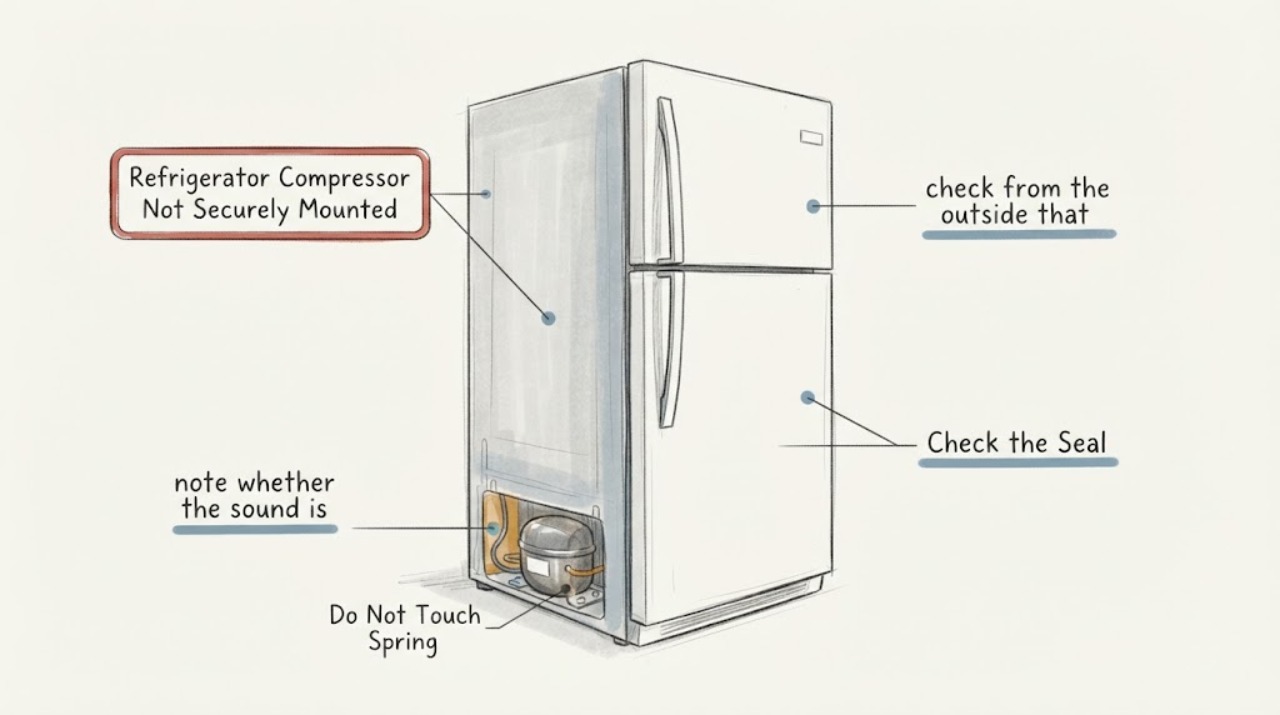
Work through in order
Diagnostic checks
Use only checks that match the exact appliance or system and its official guide.
-
Check 1
From outside the closed appliance, note whether the sound is a brief rattle at compressor start/stop, a steady hum or pulsation while running, or a new loud clunk, scrape or rattle that is getting worse. Do not reproduce a severe noise by repeatedly cycling the refrigerator.
Expected result: The sound is brief and tied to start/stop, remains a normal hum, or is loud/persistent and worsening.
Next step: For a brief or ordinary sound, continue with external placement checks. For a worsening or severe sound, keep the appliance under observation without opening it and arrange service.
Why this matters
Why: Beko says spring-mounted motor movement can rattle at start or stop and that humming or pulsation can be normal; louder compressor noise over time needs customer-service guidance.
-
Check 2
With the refrigerator stationary, check from the outside that the cabinet is level, the back and sides are not pressing against a wall or furniture, and no bottle, tray, tubing or other object is vibrating against it. Use only the clearance and rear-spacer instructions in the product manual.
Expected result: An external object/contact, an unstable cabinet or missing installation spacer is found, or the exterior placement is clear and stable.
Next step: Remove only the plainly external contact and correct leveling or documented spacer placement. If the sound remains, do not reach through the rear cover; request service.
Why this matters
Why: Beko links rattling to the appliance position and ventilation clearance, but correcting a cabinet contact does not diagnose the compressor mount.
-
Check 3
Use the refrigerator’s normal user controls or an independent thermometer to note whether food compartments are maintaining their usual temperature. Do not change sealed-system settings, remove panels or touch the compressor to judge its temperature.
Expected result: Cooling is normal, the compressor runs for long periods but temperature is stable, or cooling is poor/warming.
Next step: If cooling is normal, continue only with external observation. If cooling is poor or food is warming, protect perishable food and arrange prompt service rather than tightening or moving the compressor.
Why this matters
Why: Beko says a compressor may run longer while working to maintain temperature, whereas abnormal cooling can indicate a fault requiring support; temperature results do not identify a loose mount.
-
Check 4
Stop using the appliance and keep clear if there is an electrical shock, repeated breaker trip, damaged cord, smoke, refrigerant/oil-like leak or water near electrical parts. Do not touch the compressor, wiring or plug if hot or damaged.
Expected result: A critical electrical, smoke, leak or water symptom is present, or none is present.
Next step: If a hazard is present, use only a safely accessible disconnect if this can be done without contact with the hazard and contact emergency/electrical/appliance professionals as appropriate. Otherwise continue only with the external checks.
Why this matters
Why: Beko treats shocks and breaker trips as electrical risks requiring immediate professional attention; leaks and worsening cooling/noise also need repair assessment.
-
Check 5
Give Beko or a qualified appliance technician the model/serial label, sound timing, cooling result, installation-clearance observations and any visible contact or safety symptom. Do not order a mount, spring, compressor or other part from the wording “not securely mounted.”
Expected result: The noise persists after external placement checks, or the appliance has poor cooling, abnormal heat, electrical symptoms or visible compressor contact.
Next step: Keep the refrigerator out of service if it is unsafe or cannot maintain food-safe cooling, and arrange model-specific diagnosis. Do not alter the refrigeration circuit or mounting hardware.
Why this matters
Why: The official pages support service escalation but do not identify which internal part or mounting arrangement is involved.
Use your observations
Decision map
Find the observation that best matches what you see, then follow the next safe action.
-
PATH 01Next step
What you see
The sound is a brief rattle at compressor start/stop or an ordinary hum/pulsation, cooling is normal, and no external contact is found.
Do this next
Do not tighten anything. Monitor only through normal use and consult Beko if the sound becomes louder, persistent or disturbing.
Why this path and its safety boundary
Why it matters: This matches Beko’s description of spring-mounted motor movement or normal compressor operation more closely than a confirmed loose mount.
-
PATH 02Next step
What you see
The cabinet is touching a wall/object, is unstable, lacks a documented spacer, or an accessible item is vibrating against it.
Do this next
Correct only the external position or manual-described leveling/spacer condition. If noise remains, stop and arrange service without removing a cover.
Why this path and its safety boundary
Why it matters: An installation or cabinet vibration is plausible, but this result does not prove the compressor itself is insecure.
-
PATH 03Next step
What you see
The sound is loud, scraping, clunking or worsening, remains after external clearance checks, or is accompanied by poor cooling.
Do this next
Protect food if cooling is affected, avoid further test cycles and contact Beko or qualified appliance service.
Why this path and its safety boundary
Why it matters: Beko treats worsening compressor noise and unusual refrigerator noises as support/service issues; the sound cannot select a compressor mount, fan or sealed-system part.
-
PATH 04Next step
What you see
There is a shock, repeated breaker trip, smoke, damaged cord, water near electrical parts or another immediate hazard.
Do this next
Keep clear, disconnect only from a safe accessible point if possible, and contact the appropriate emergency, electrical or appliance professional. Do not touch or open the refrigerator.
Why this path and its safety boundary
Why it matters: This is a safety response, not a mounting adjustment. Beko says electrical shocks or breaker trips require immediate professional attention.
Helpful context
Understand the symptom
A spring-mounted motor can sound loose without being loose
Beko explains that the compressor contains an electric motor mounted on springs, which can produce a rattle when the motor starts or stops. It also describes humming or pulsating while the compressor runs as normal. Those statements explain why a movement or rattle observation alone cannot confirm that the compressor is not securely mounted.
Use the outside of the appliance to separate cabinet vibration from a compressor diagnosis
With the refrigerator stable and not being moved, check that it is level, not touching a wall or nearby object, has the ventilation clearance specified in its own installation instructions, and has any supplied rear spacers fitted. Beko says poor position and insufficient ventilation can contribute to rattling and recommends using the product manual for spacer installation. These checks concern the cabinet and installation; they do not authorize reaching the compressor.
Check cooling and safety symptoms without touching the compressor
Note whether the refrigerator is maintaining its normal temperature, whether the noise is only at start or stop, and whether it has become louder over time. Do not touch a hot compressor, probe wiring, remove a rear cover, or attempt to hold the compressor still while energized. Beko says the compressor body can run very hot during normal operation and directs owners away from self-repair.
When the “loose mount” concern needs service
If the compressor visibly contacts the cabinet, the sound remains a loud clunk or scrape after external clearance and leveling are correct, cooling is failing, the appliance trips a breaker, or there is an electrical shock or leak concern, stop experimenting and contact Beko or qualified appliance service. A technician must determine whether the issue is a mounting, suspension, fan, cabinet or sealed-system problem.
When checks do not resolve it
Need a professional?
Contact Beko or qualified appliance service if the noise is loud or worsening, external placement is correct but the vibration persists, cooling is poor, the compressor appears to touch the cabinet, or there is a shock, breaker trip, smoke, damaged cord, leak or water near electrical parts.
Safety scope: Do not tighten or reposition the compressor, change springs or mounts, remove the rear cover, probe live wiring, open the sealed refrigerant system, or order a compressor/mount part from the symptom alone.
Have this ready
- Provide the full model/serial label, country, when the sound occurs, whether cooling is normal, whether it changed over time, installation clearance/spacer observations and any visible external contact.
Common questions
FAQ
Does a rattle prove that the Beko compressor is not securely mounted?
No. Beko says the compressor motor is mounted on springs and may rattle when starting or stopping. A sound alone cannot distinguish normal spring movement from cabinet contact or an internal fault.
Can I tighten the compressor or change its springs?
No. The opened Beko guidance recommends professional help for noisy refrigerators and does not provide a user procedure for compressor mounting. Do not remove covers, alter mounts or open the sealed refrigeration circuit.
What can I check safely?
Check only external position, leveling, ventilation clearance, supplied rear spacers, nearby contact and normal cooling. Stop for electrical symptoms, leaks, poor cooling or worsening loud noise and arrange service.
Read the exact guide
Official sources
- Why does my fridge make noise? | Beko UKBeko UK · The opened Beko FAQ says humming or pulsating compressor noise can be normal, louder compressor noise over time needs customer service, rattling can relate to fan obstruction or appliance position, ventilation clearance matters, and Beko does not recommend self-repair. It is family-level guidance and does not prove a particular mounting fault.
- How does a fridge work? | Beko UKBeko UK · The opened Beko guide explains the compressor’s refrigeration role, says its motor is mounted on springs and may rattle at start/stop, says the compressor body can run very hot normally, and recommends professional support rather than self-repair. It does not support changing a mount or opening the sealed system.
- How to Tell If Your Fridge is Dying | Beko UKBeko UK · The opened Beko guide distinguishes normal humming from loud clunks, buzzing or rattling, lists poor cooling and water pooling as warning signs, and says shocks or breaker trips require immediate professional attention. It does not diagnose a mounting fault or authorize internal testing.
Community feedback
Share a repair observation
Share a plain-text repair observation. Accepted observations are published automatically; this page may take a moment to update.