
On this page
Start here
Quick answer
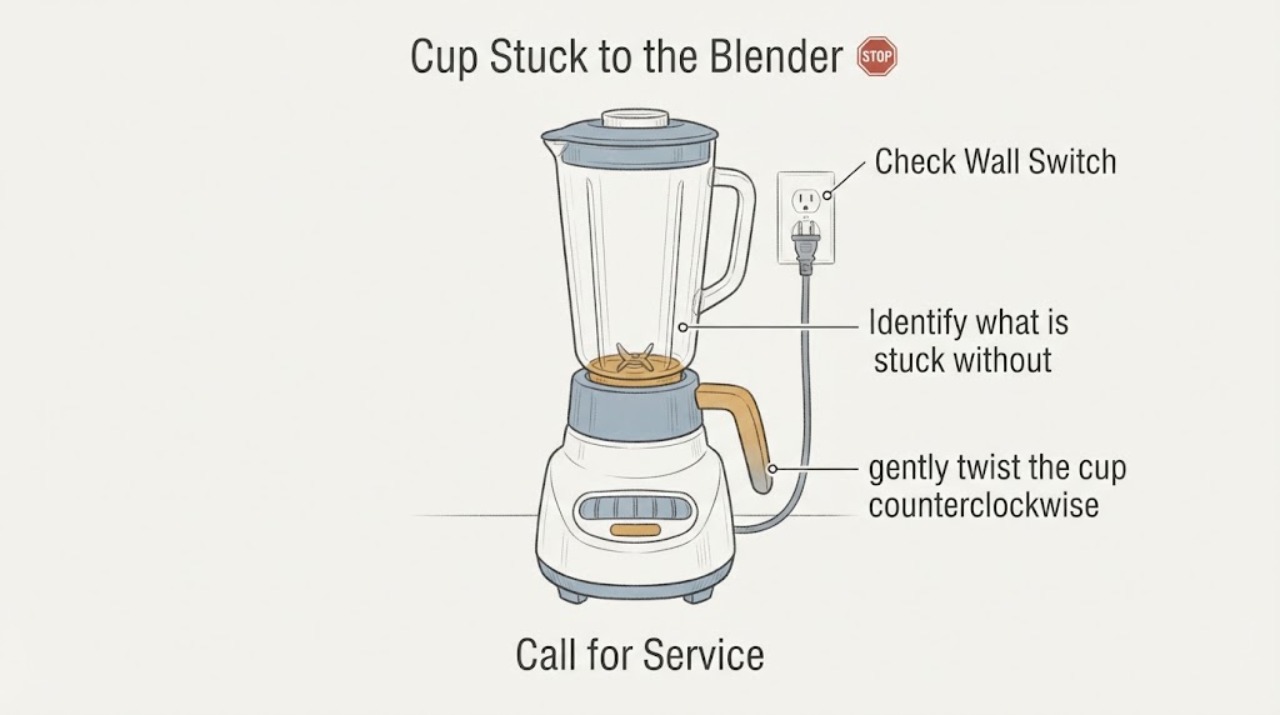
Unplug the NutriBullet and stop trying to power or force the cup free. First determine whether the cup is locked to the motor base or the blade is stuck to the cup. If the cup is not hot, swollen, leaking or pressurized and the exact model uses the standard Bullet lock, hold the base stable and gently twist the cup counterclockwise; NutriBullet says this is the normal stop motion and the cup should pop up. Do not use pliers, knives, a strap wrench, impact, heat or water around the base. If the cup is hot, bulged, hissing, leaking, contains hot or carbonated ingredients, has a cracked cup or damaged blade, or will not release with gentle hand pressure, leave it unplugged and contact NutriBullet or qualified service.
Work through in order
Diagnostic checks
Use only checks that match the exact appliance or system and its official guide.
-
Check 1
Switch the NutriBullet off and unplug the motor base. Keep fingers away from the blade edge, place the base on a stable surface, and let the assembly cool without shaking, squeezing or pressing the cup down.
Expected result: The cup or contents are hot, swollen, hissing, leaking or visibly cracked, or the assembly is cool and stable with no pressure warning.
Next step: For heat, swelling, hissing, leakage or damage, leave the unit unplugged and do not twist, puncture, open or force the cup; contact NutriBullet support or qualified service. If cool and intact, continue only with the identification and gentle-release checks.
Why this matters
Why: NutriBullet warns that hot or carbonated ingredients and prolonged blending can build pressure in a sealed cup and cause injury when components separate. A cool, undamaged assembly permits a limited gentle release attempt; a pressure or damage warning does not.
-
Check 2
Identify what is stuck without trying to separate it: cup locked into the motor base, extractor blade stuck to the cup, or a cup/blade assembly that is tilted or damaged. Do not grip the blade, reach under the cup, insert a tool into the base, or twist the blade housing to release a cup from the motor base.
Expected result: Only the cup is locked in the base and the cup/blade assembly is straight, or the blade is stuck to the cup, the cup is tilted, or plastic, threads, gasket or base contacts are damaged.
Next step: For a damaged, tilted or blade-to-cup assembly, stop hand removal and arrange service or model-specific support. For a cool, straight cup locked in the base, use only the normal counterclockwise release described next.
Why this matters
Why: The normal NutriBullet stop action applies to the cup-to-base lock. NutriBullet separately attributes difficult blade removal to pressure and says gaskets are not designed to be removed, so the two problems must not be treated as the same release task.
-
Check 3
With the base unplugged and held steady, gently twist the cup counterclockwise, using the cup body rather than the blade or a tool. Do not press the cup farther down, rock it side to side, strike it, heat it or use pliers. Stop immediately if the cup does not move with light hand pressure.
Expected result: The cup rotates counterclockwise and pops up as the motor base disengages, or it remains locked, binds, cracks or moves only with force.
Next step: If it releases normally, keep the blade pointed away from hands, remove it carefully and inspect the cup, gasket and base contacts. If it remains stuck or shows damage, leave it unplugged and contact NutriBullet support or qualified service rather than escalating force.
Why this matters
Why: NutriBullet’s getting-started guidance says counterclockwise cup rotation is the normal stop motion and the cup should pop up. Resistance that requires force is outside that user-level instruction and may damage the cup, blade, base or locking actuators.
-
Check 4
After release, inspect the cup, blade, gasket and base contacts for cracks, clouding, warping, leaks, dried material, loose gasket or obstruction. Clean the cup and blade separately by hand as the official care guidance allows; wipe the unplugged base with a damp cloth and never submerge or disassemble the base.
Expected result: The cup and blade are intact and compatible with the model, or a component is cracked, warped, leaking, worn, blocked or from a different NutriBullet model.
Next step: Use only intact, model-compatible parts and allow cleaned components to dry fully before use. Replace or service damaged or uncertain parts through NutriBullet; do not glue, sand, bend or modify the locking surfaces.
Why this matters
Why: NutriBullet says damaged containers or blades should not be used, gaskets are not designed to be removed, and cup/blade compatibility is model-specific. Residue can affect movement, but it does not make a damaged part safe.
-
Check 5
If the cup remains stuck after the gentle release attempt, record the model or serial label, the ingredients and approximate blend time, whether contents were hot or carbonated, and any leak, odor, noise or damage. Do not reconnect power to test the lock or motor.
Expected result: The cup releases normally with no damage, or it remains stuck or the base, cup or blade shows a safety concern.
Next step: Use the recorded information to contact NutriBullet or an authorized service provider. Leave the base unplugged and keep the blade protected until support gives a model-specific next step.
Why this matters
Why: A normal release does not prove that the assembly is undamaged, while a persistent lock or damage needs model-specific diagnosis. NutriBullet requires serial/model information for warranty or support verification.
Use your observations
Decision map
Find the observation that best matches what you see, then follow the next safe action.
-
PATH 01Next step
What you see
The cup is cool, intact, straight and only locked in the motor base; it turns counterclockwise with gentle hand pressure.
Do this next
Let the cup pop up, keep hands away from the blade, remove the blade carefully and inspect all parts before another use.
Why this path and its safety boundary
Why it matters: This matches NutriBullet’s documented normal stop and release motion.
-
PATH 02Next step
What you see
The cup is hot, swollen, hissing, leaking, cracked, or contains hot or carbonated contents.
Do this next
Do not twist, puncture, open, heat or force it. Leave the base unplugged, keep it away from faces and children, and contact NutriBullet or qualified service.
Why this path and its safety boundary
Why it matters: The sealed assembly may be pressurized or damaged, creating a burn, laceration or pressure-release hazard.
-
PATH 03Next step
What you see
The cup remains locked after gentle counterclockwise pressure, or the base, blade, gasket, cup or locking contacts are damaged.
Do this next
Keep the appliance unplugged and arrange model-specific support or authorized service. Do not pry, use pliers, run the motor, glue parts or disassemble the base.
Why this path and its safety boundary
Why it matters: The problem exceeds the normal user release and may involve a damaged or incompatible assembly; forcing it can worsen the hazard.
-
PATH 04Next step
What you see
The cup releases, but the blade or gasket is loose, damaged or difficult to remove from the cup.
Do this next
Keep fingers clear of the blade, do not remove the gasket or open the blade housing, and seek a compatible replacement or service using the exact model information.
Why this path and its safety boundary
Why it matters: NutriBullet treats blade removal as a separate pressure and sharp-edge issue and says the gasket is not designed to be removed.
Helpful context
Understand the symptom
A cup that will not turn is a sharp-blade and possible pressure problem, not a reason to run the motor or pry against the base. NutriBullet’s normal release is a counterclockwise cup rotation after blending. The safe path changes if the container is hot, swollen, leaking, damaged or holding contents that can build pressure.
No NutriBullet model was supplied. Product families use model-specific cups and blades, and NutriBullet says the parts are designed for each model. Use the complete model or serial information before ordering a replacement or applying a release instruction from another family.
Release the cup without opening a pressurized or energized assembly
When checks do not resolve it
Need a professional?
Use NutriBullet support or authorized service for a cup stuck after gentle release, pressure or leakage, damaged cup/blade/gasket/base, incompatible parts, or any locking-actuator failure.
Have this ready
- Provide the model and serial information, cup and blade type, ingredients and whether they were hot or carbonated, approximate blend duration, whether the cup is swollen or leaking, what counterclockwise release did, and photos of any damage with the base unplugged.
Common questions
FAQ
How should a NutriBullet cup normally come off the base?
NutriBullet’s getting-started guidance says to stop by twisting the cup counterclockwise; the cup should pop up and the motor should stop. Use only gentle hand pressure with the base unplugged, and stop if it remains locked.
Can I use pliers or a strap wrench on the stuck cup?
No. NutriBullet does not provide a tool-assisted release procedure in the opened guidance. Pliers or force can crack the cup, damage the locking contacts or release a blade unexpectedly; leave it unplugged and use model-specific support.
What if the contents were hot or carbonated?
Do not force the cup open. NutriBullet warns that hot or carbonated ingredients can build pressure and cause injury, and that pressure can make blade removal difficult. Leave the assembly unplugged and contact support if it does not release safely.
Can I use a different NutriBullet cup or blade to solve the problem?
Do not assume compatibility. NutriBullet says each product model has specifically designed cups and blades and that using the wrong parts can increase wear. Verify the complete model before buying or fitting a replacement.
Read the exact guide
Official sources
- nutribullet FAQs: Frequently Asked Questions & AnswersNutribullet · Opened official NutriBullet FAQ. It says blending creates pressure, hot or carbonated ingredients can cause injury, cups and blades are model-specific, gaskets are not designed to be removed, and model/serial information is needed for support.
- Getting Started: How To Use the nutribullet®Nutribullet · Opened official NutriBullet guidance covering multiple personal-blender families. It says the user stops by twisting the cup counterclockwise, after which the cup pops up and the motor stops; the article limits this to cool, intact assemblies and does not infer a model-specific lock design.
- How to Clean nutribullet® Blade, Base & CupsNutribullet · Opened official NutriBullet care guidance. It requires powering off and unplugging before cleaning, warns about sharp blades, says not to remove the gasket or disassemble the blade/base, and says to wipe a spilled base without submerging it.
Community feedback
Share a repair observation
Share a plain-text repair observation. Accepted observations are published automatically; this page may take a moment to update.