
Brand-independent appliance guidance
General Blender Repair Guides
Brand-independent troubleshooting and repair guidance for common blender problems and maintenance questions.
General blender guides
Use these guides when the problem is not limited to a specific manufacturer.
-
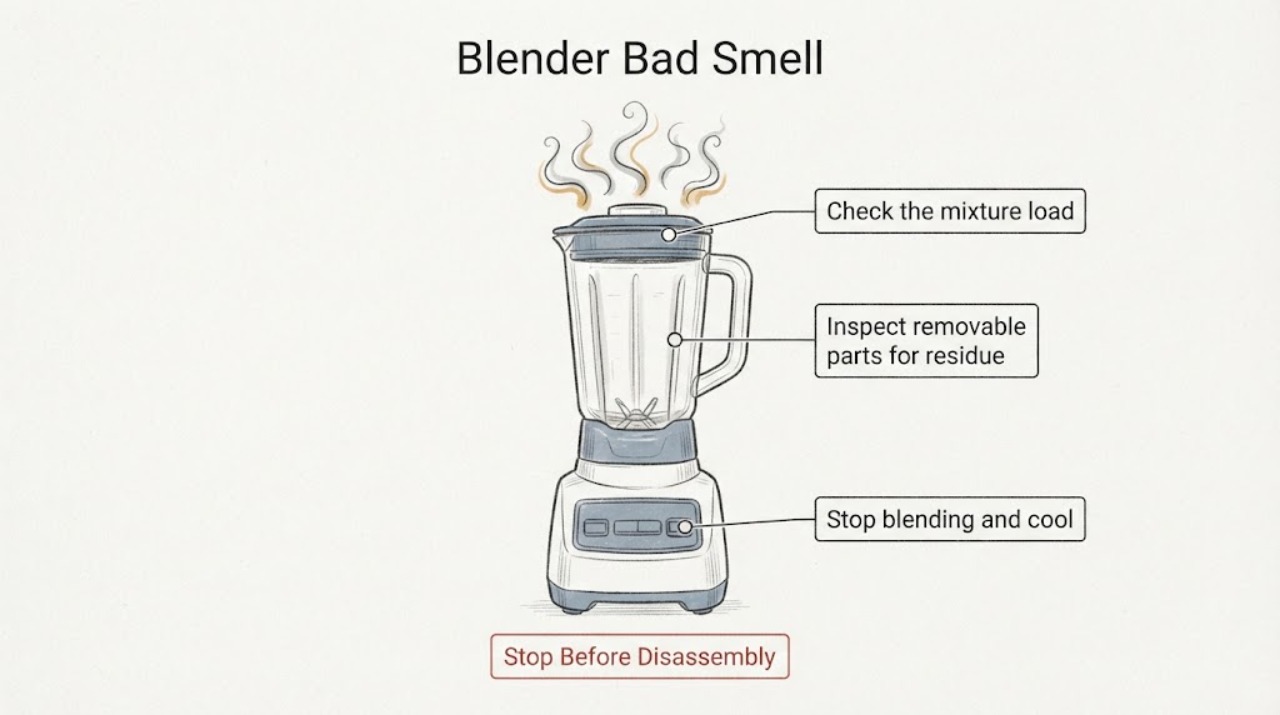
Blender Bad Smell
A blender’s bad smell can come from a new motor winding curing, a heavy or thick mixture triggering overload protection, residue around the container or blade bearing, or an electrical fault. Vitamix’s official guidance says to stop and cool the motor, reduce load or add liquid, and seek service when smell or failure persists.
-
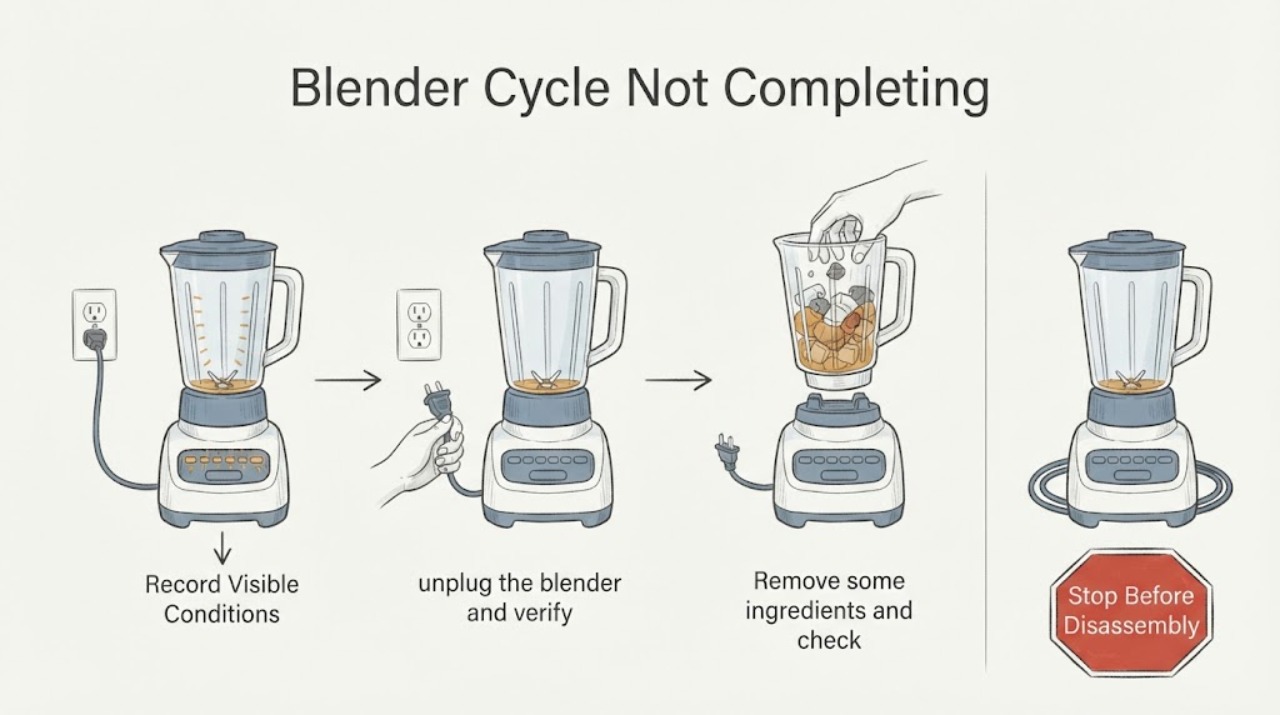
Blender Cycle Not Completing: Check Load, Lock, and Cool-Down State
A blender cycle that stops before completion is often responding to an overload, jam, heat protection, jar/lid safety lock, or a model’s automatic time limit. Note the exact stop point and display, then turn it off, unplug it, and clear/reduce the load only after the blades stop. Use the model’s documented cool-down period and never put hands into the jar; persistent stopping, burning odor, smoke, or damaged coupling needs service.
-
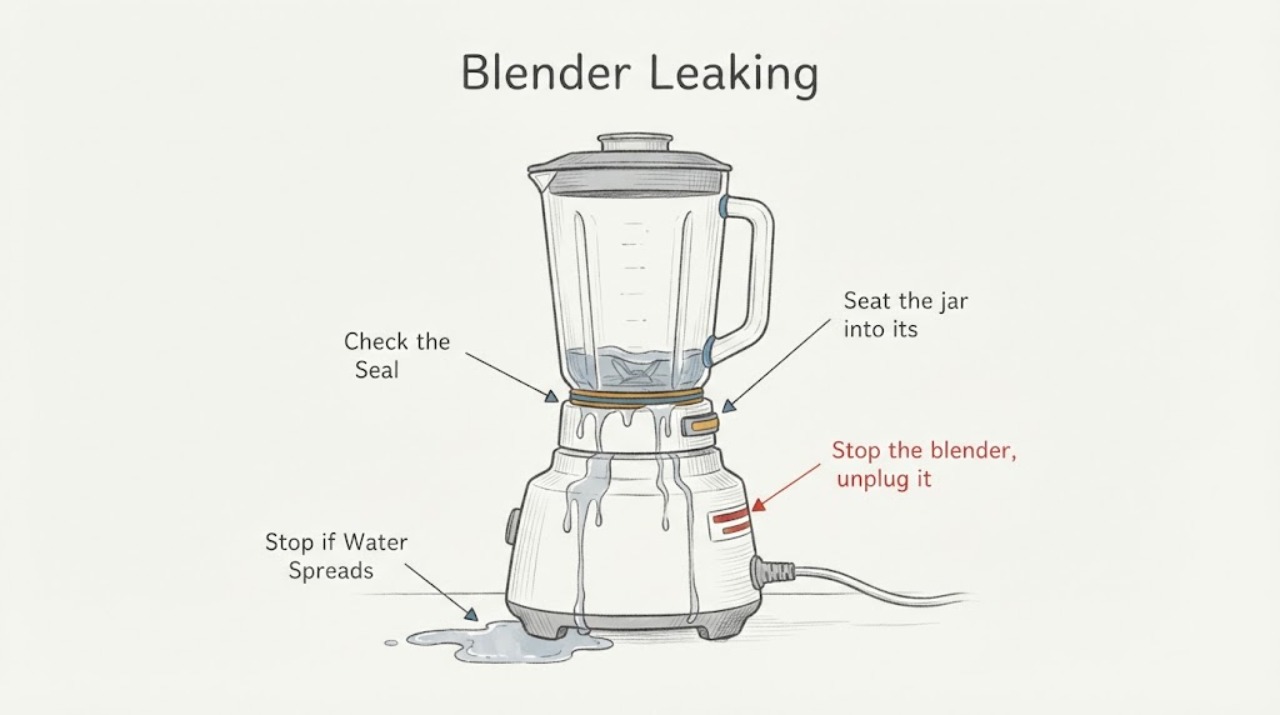
Blender Leaking
A leaking blender jar usually needs the jar assembly separated from the motor base, the gasket checked for damage or incorrect orientation, and the collar or blade interface seated correctly. Empty and unplug the blender before inspection. A cracked jar, damaged gasket, or leak that reaches the motor base requires the exact model part or service; do not run it to test a visible leak.
-
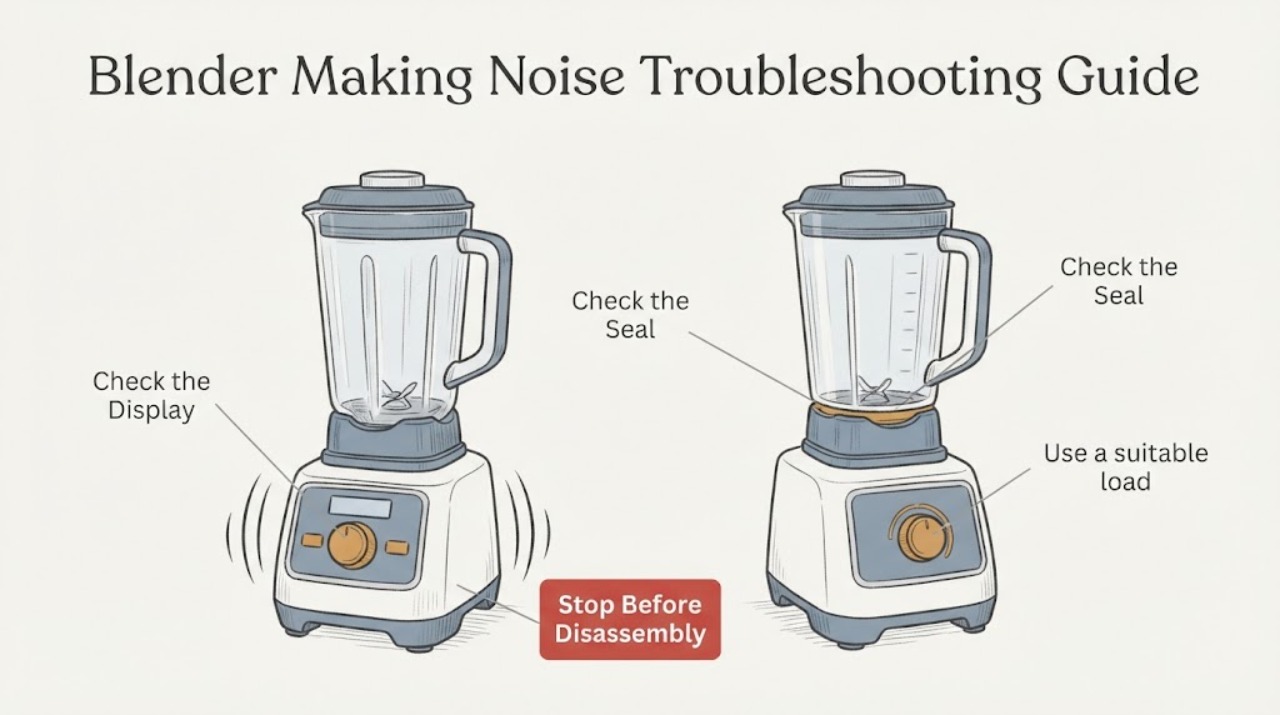
Blender Making Noise Troubleshooting Guide
A blender with making noise should be checked with power disconnected before inspecting the container, gasket, coupling, and blade area. Confirm container seating and load, allow overload protection to reset after a demanding blend, and stop for damage, smoke, sparks, or a burning smell.
-
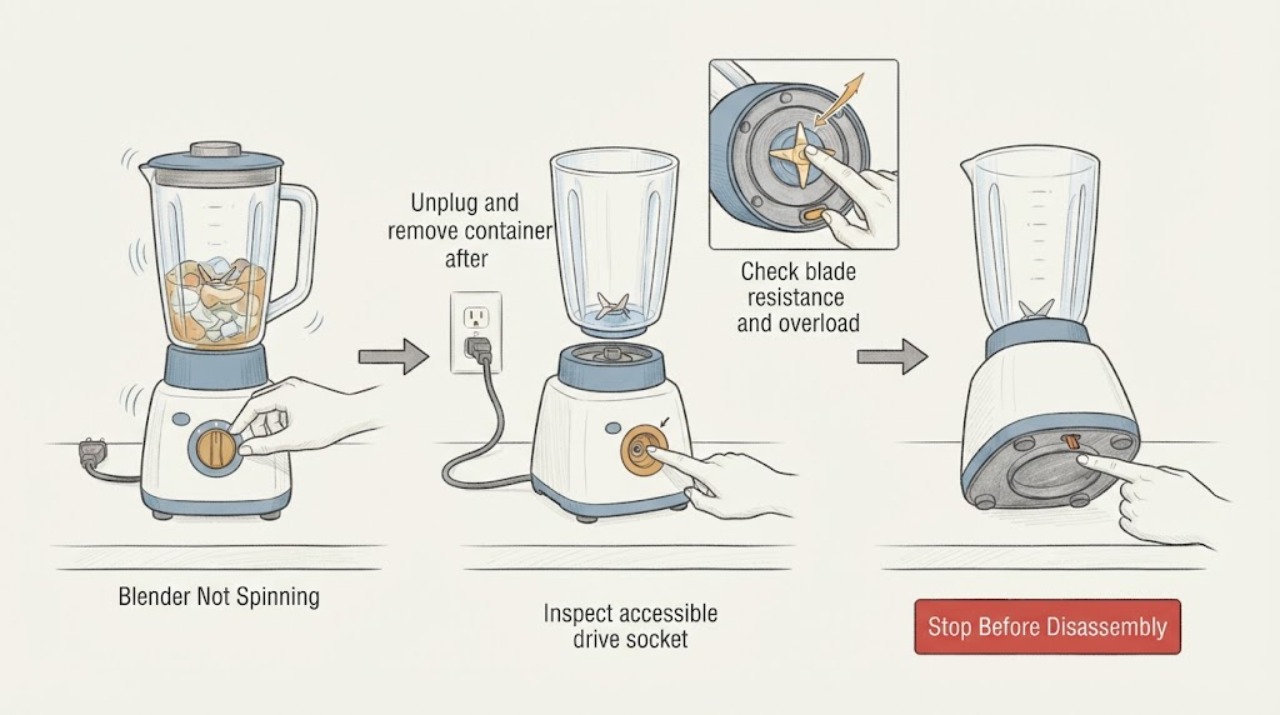
Blender Not Spinning
A blender that is not spinning may have a jammed/worn blade, failed drive socket, or motor overload. Unplug, remove the container, inspect the accessible coupling and blade condition, and stop for damage or repeat overheating.
-
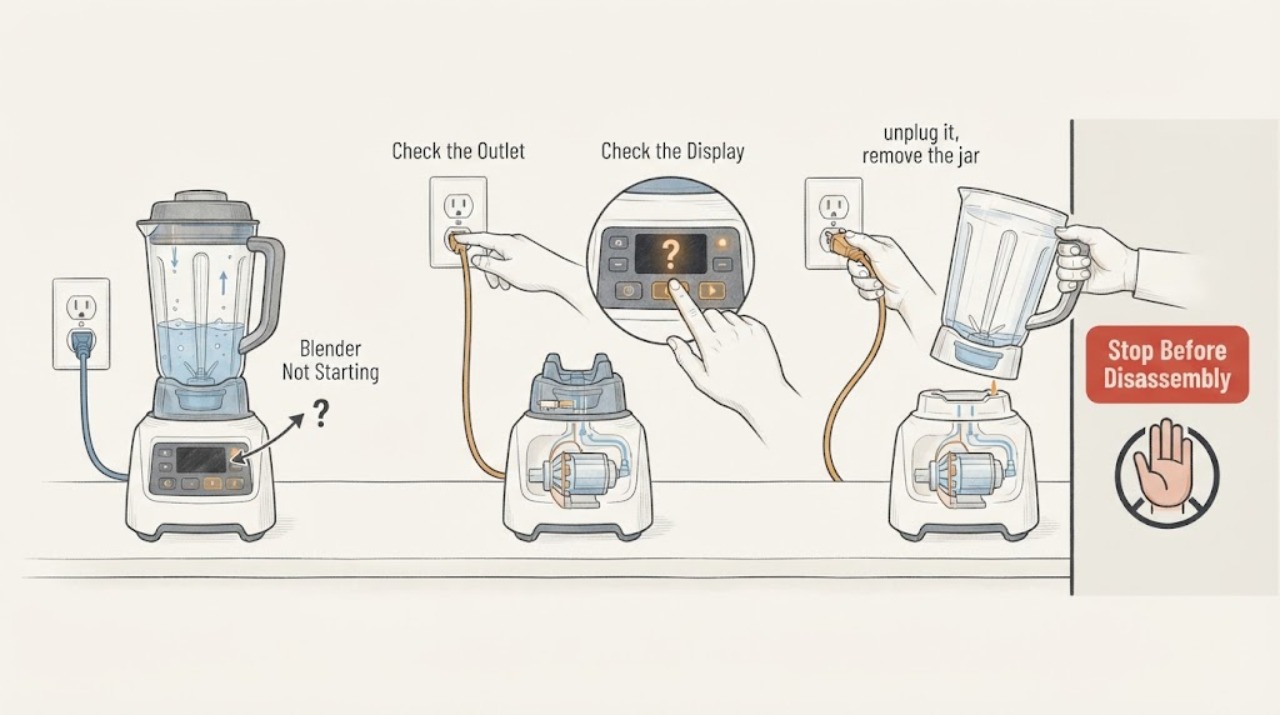
Blender Not Starting
For a blender that will not start, first separate no power from a control state or a motor protection stop. Check the grounded outlet and breaker, make sure the control is awake, and if it stopped under load unplug it before checking for a jam or overfilled jar. Do not use an adapter or extension cord, and arrange service if the outlet is good but the blender remains unresponsive.
-
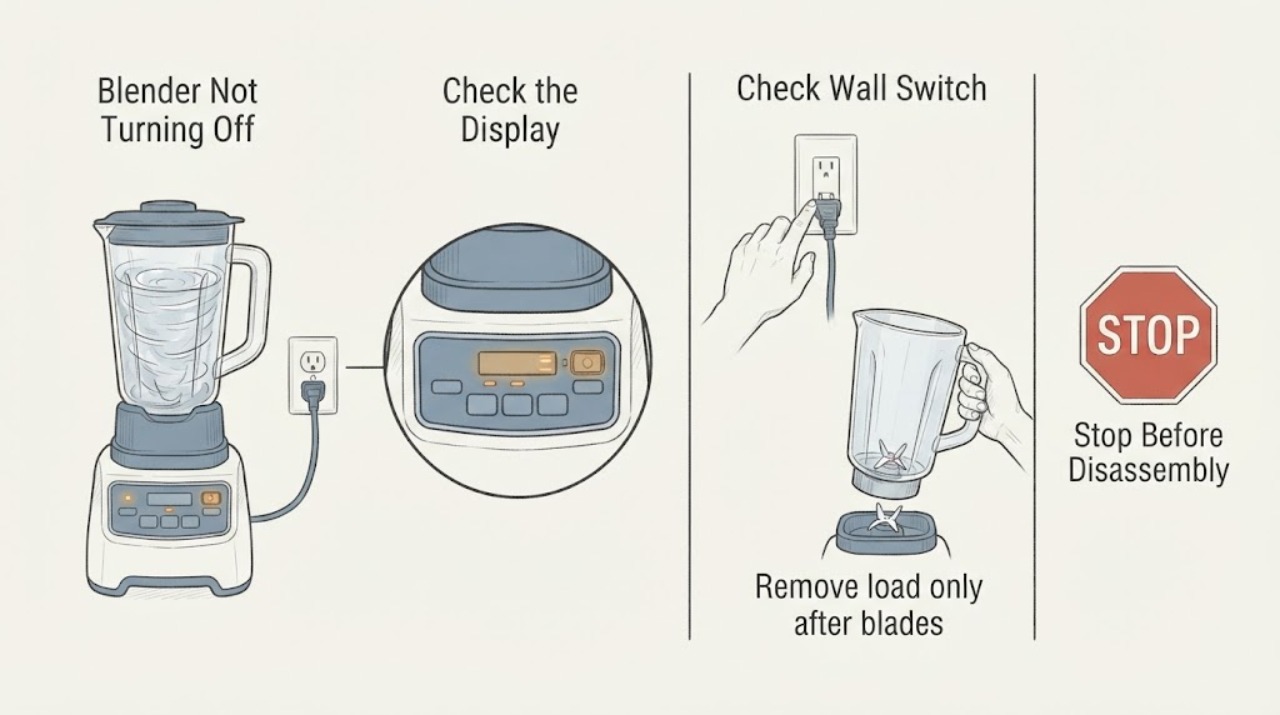
Blender Not Turning Off
If a blender will not turn off, release the control and unplug it if safe. Check whether a stuck switch, control lock, heavy load, or motor protection is involved; never reach into a moving jar. A blender that runs with controls released, smells hot, or has damaged wiring requires service.
-
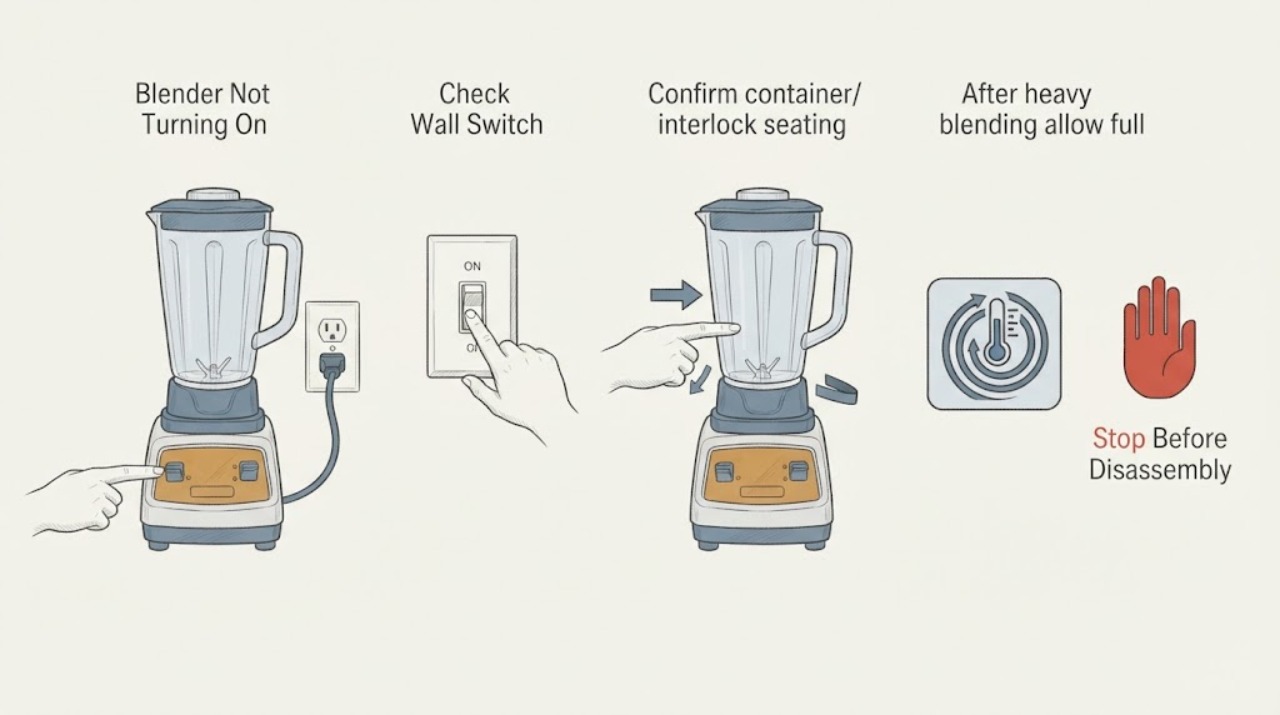
Blender Not Turning On
Check a blender that will not turn on at the outlet, switch, container seating and thermal-protection levels. Keep the base dry and allow a hot motor to cool before one restart; a known-good outlet with a dead base needs service.
-
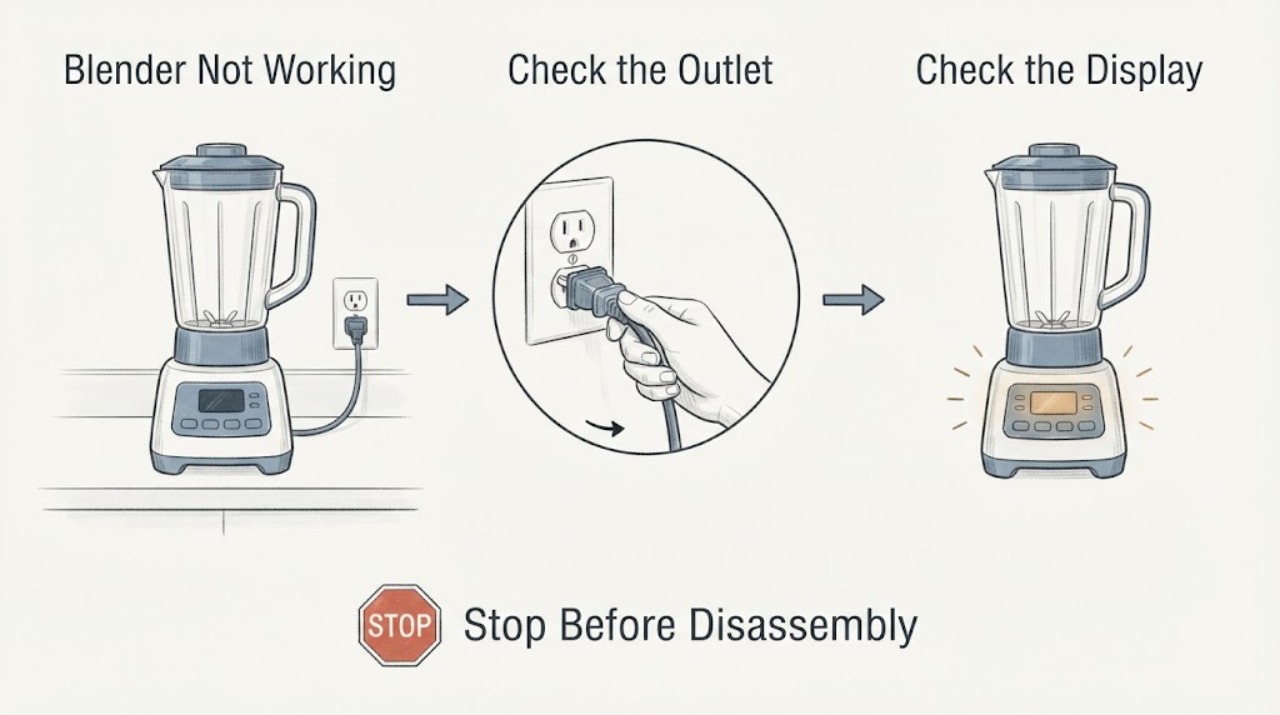
Blender Not Working
A blender that will not run needs a sequence that separates power and control state from a seated jar or an overload. Check the outlet and breaker, return the control to OFF, confirm the jar and lid are seated, and then observe the indicator. KitchenAid’s guidance also treats a jam or overload as a reason to stop, unplug, and clear the jar safely. The exact model manual controls the button sequence and any reset behavior.
-
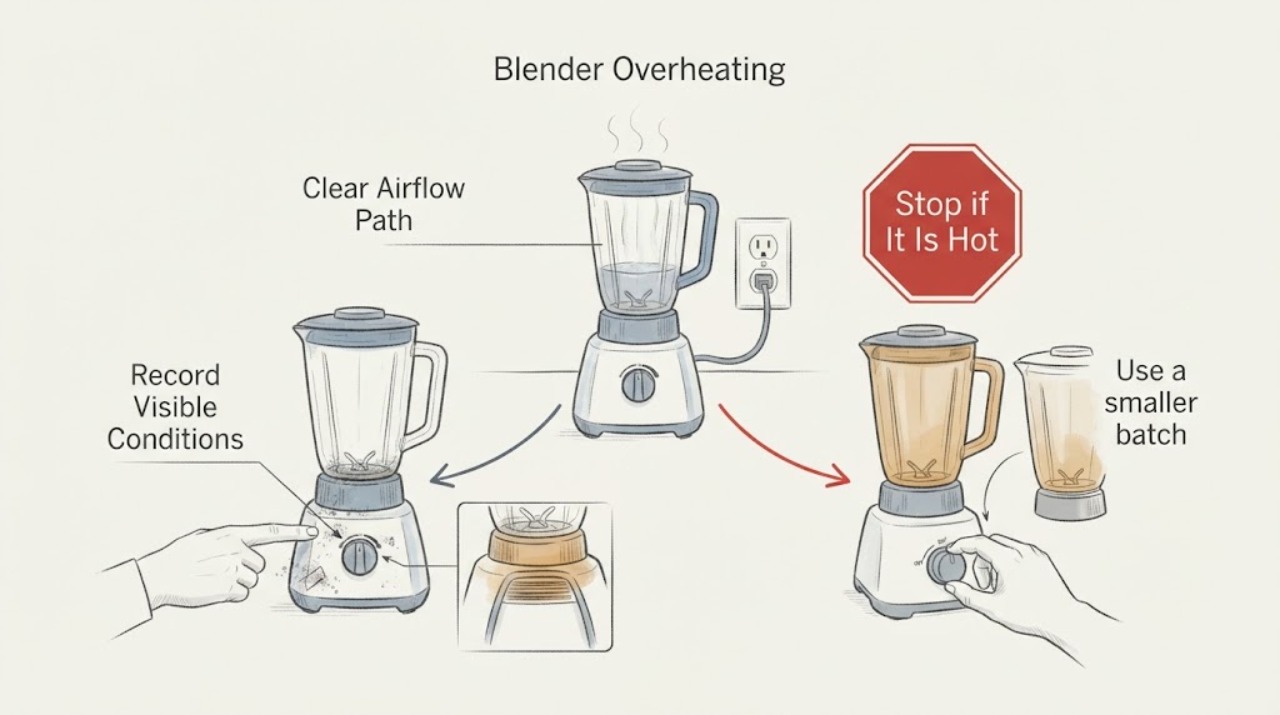
Blender Overheating
If a blender overheats, stop blending, switch it off, and let the motor cool according to its manual. Then reduce load or blending time, use the recommended speed and enough liquid for the recipe, and keep the motor base vents clear. A repeated thermal shutdown, burning smell, smoke, or hot electrical cord needs service.
-
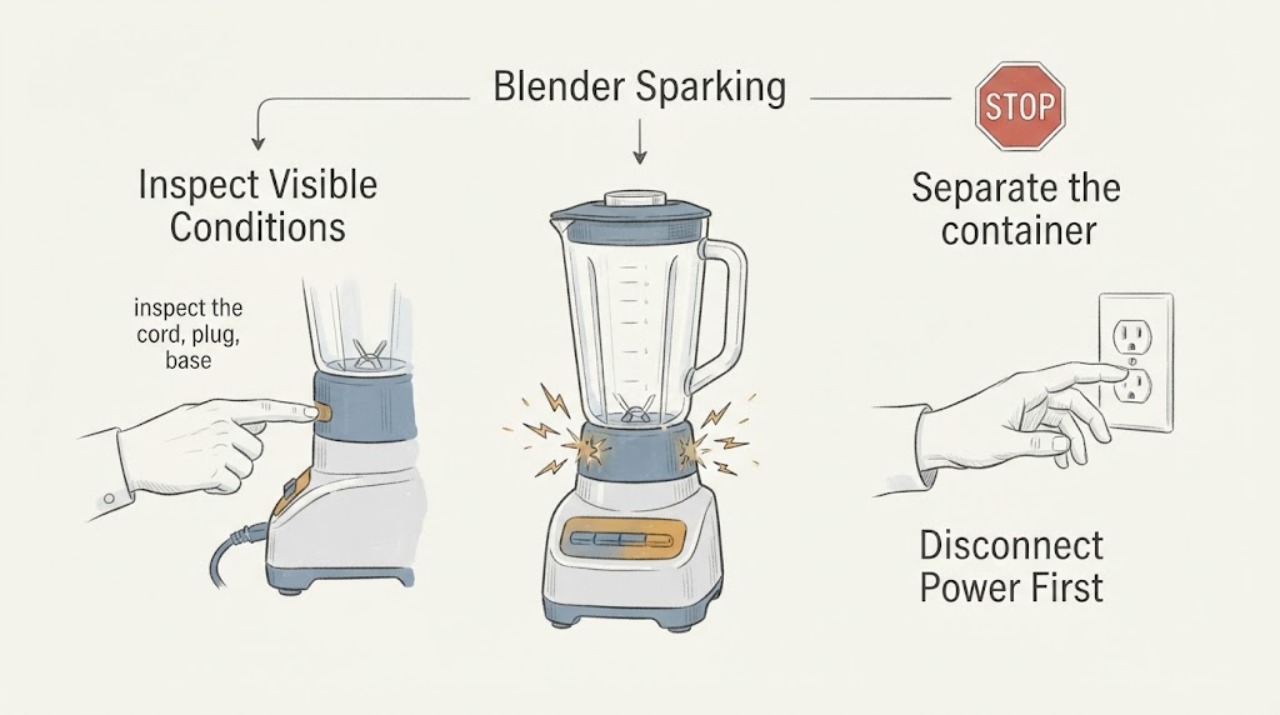
Blender Sparking: Stop Using It and Check Only External Signs
Visible sparking from a blender is an immediate stop symptom. Switch it off, disconnect power from a dry safe position, and keep the container and motor base apart until cool. Look only for external signs such as a damaged cord, burned smell, cracked drive socket, or liquid on the base; do not run it again to reproduce sparks. Arrange manufacturer or qualified small-appliance service.