
On this page
Start here
Quick answer
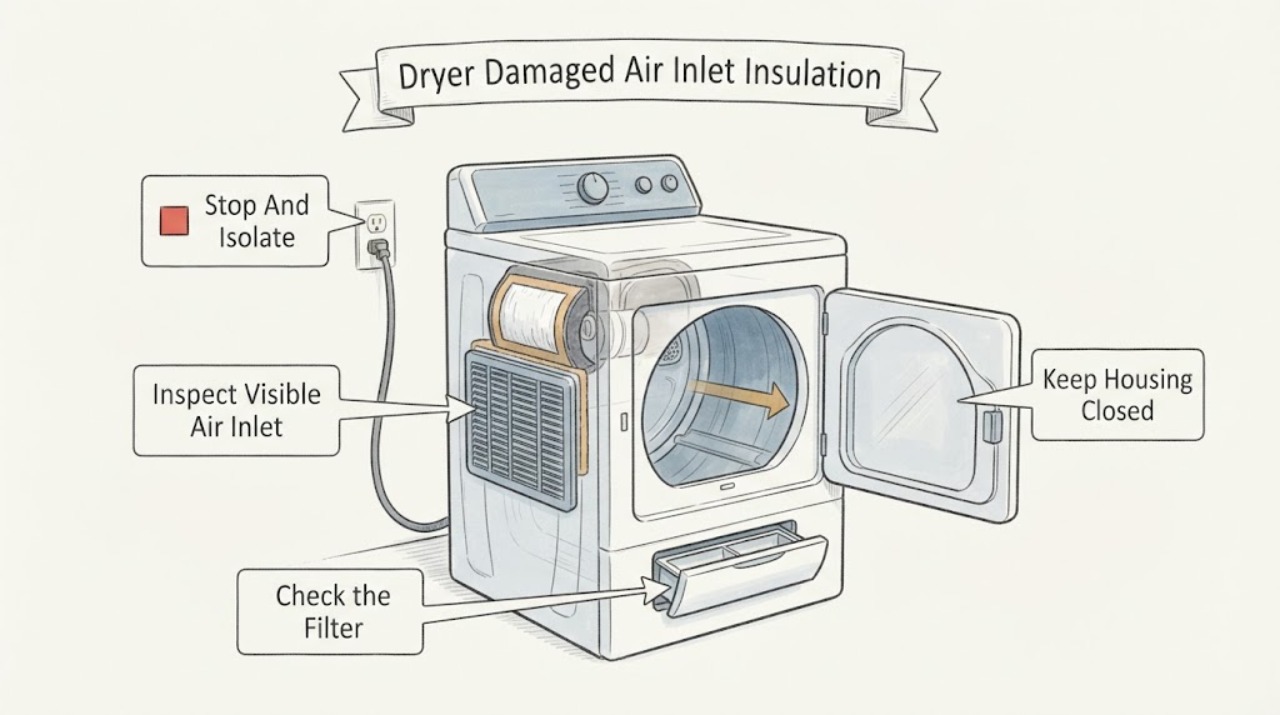
Stop using the Bosch dryer if insulation is loose, frayed, displaced, missing or being drawn toward an air inlet. Let it cool, disconnect power from a safe location, and inspect only the visible inlet and lint-filter area. Keep the front air inlet unobstructed, clean the lint filter only as Bosch describes, and check that the room can supply fresh air. Do not tape, glue, trim, pull or replace insulation, open the cabinet, use sharp tools or run the dryer to reproduce the symptom. Record the exact model and arrange Bosch or qualified appliance service, especially if there is heat, a burning smell, smoke, restricted airflow or longer drying.
Before you begin
Safety first
- Do not operate a dryer with visible inlet-area insulation damage, tape/glue/trim/pull insulation, open the cabinet, perform energized testing, use sharp tools in the air path or substitute a part from another Bosch model. Keep the appliance cool and disconnected and use exact-model qualified service.
Work through in order
Diagnostic checks
Use only checks that match the exact appliance or system and its official guide.
-
Check 1
Stop the dryer, let it cool and disconnect power from a safe location when insulation is loose, frayed, displaced, missing, scorched or entering the air inlet.
Expected result: The material is visibly damaged or there is heat, a burning smell, smoke, restricted airflow or an electrical symptom.
Next step: Keep the dryer out of service and arrange Bosch or qualified appliance service; do not reproduce the event.
Why this matters
Why: The reported damage may affect an airflow or heat path, and the Bosch sources do not support continued operation or a user repair of unknown insulation.
-
Check 2
With the appliance cool and unplugged, inspect the visible front air inlet and surrounding opening from outside without opening panels or reaching into the path.
Expected result: The inlet is covered, blocked by lint or loose material, or the suspected insulation cannot be identified from the exterior.
Next step: Remove only a plainly external obstruction if it can be removed without tools; otherwise leave it off and send photos and the exact model to service.
Why this matters
Why: The inlet may be restricted, but a visual symptom does not establish whether the material is insulation, a seal or another model-specific component.
-
Check 3
If the model's filter is plainly user-accessible and intact, remove lint, wash the filter gently under running water, dry it completely and reinstall it.
Expected result: The filter is heavily loaded, damaged or cannot be removed as described for the exact model.
Next step: Stop if the filter or surrounding material is damaged or uncertain, and obtain model-matched service; never use a sharp tool in the opening.
Why this matters
Why: Lint can restrict airflow and contribute to long drying; a damaged filter or uncertain access is not a reason to improvise around the inlet.
-
Check 4
Verify from outside that the front inlet is not covered and that the room can provide fresh air; do not run the dryer while visible insulation damage remains.
Expected result: The inlet was obstructed or room ventilation is poor, or the inlet is clear but drying had become unusually long or hot.
Next step: Clear only an external obstruction that is safe to remove; keep the dryer off and call service if the symptom persists or any insulation damage remains.
Why this matters
Why: Bosch identifies insufficient air and a blocked front inlet as possible contributors to long drying, but these observations do not diagnose an internal fan, heater or insulation failure.
-
Check 5
Record the full model/serial information, damage location, photos and any heat, odor, smoke, lint or drying changes for Bosch or a qualified appliance servicer.
Expected result: Diagnosis would require removing the cabinet, handling insulation, accessing the heat or airflow path, or selecting a replacement part.
Next step: Use the exact model documentation and qualified service; do not tape, glue, trim, pull, substitute or install insulation based only on the Bosch brand name.
Why this matters
Why: The public Bosch sources do not provide a model-independent insulation part number or cabinet repair procedure.
Use your observations
Decision map
Find the observation that best matches what you see, then follow the next safe action.
-
PATH 01Next step
What you see
Insulation is loose, frayed, displaced, missing, scorched or being drawn into the inlet.
Do this next
Keep the dryer cool, unplugged and out of service; arrange Bosch or qualified appliance service with the exact model and photos.
Why this path and its safety boundary
Why it matters: The airflow or heat-path condition is not safe to confirm by continued operation, and the material cannot be identified from the symptom alone.
-
PATH 02Next step
What you see
The visible inlet is clear, the filter is intact and the suspected material is not moving, but drying has become unusually long or hot.
Do this next
Do not run a dryer with visible damage; provide the service technician the model, symptoms and photos for a model-specific inspection.
Why this path and its safety boundary
Why it matters: Airflow, ventilation or another model-specific fault remains possible; a clear exterior does not prove the insulation is sound.
-
PATH 03Next step
What you see
The filter is loaded but the surrounding inlet and insulation appear intact and the filter is clearly user-accessible.
Do this next
Clean and fully dry the filter using Bosch's procedure; if the inlet damage, long drying or heat remains, stop and call service.
Why this path and its safety boundary
Why it matters: Lint may be restricting airflow and is a documented user-maintenance issue, while the alleged insulation damage remains unconfirmed.
-
PATH 04Next step
What you see
The material cannot be identified without removing a panel, or the exact model and regional variant are unavailable.
Do this next
Do not open the cabinet or order a generic replacement; obtain the model/serial information and qualified service.
Why this path and its safety boundary
Why it matters: Safe insulation construction, part fit and access cannot be inferred from the Bosch brand or dryer family.
-
PATH 05Next step
What you see
Smoke, a burning smell, arcing, a breaker trip or other electrical warning accompanied the inlet/insulation symptom.
Do this next
Stay clear, isolate power only from a safe location and contact qualified appliance service or appropriate emergency help; do not test or reopen the appliance.
Why this path and its safety boundary
Why it matters: This is an urgent fire or electrical stop-use condition beyond external airflow checks.
Helpful context
Understand the symptom
Treat loose or missing insulation as a stop-use condition
Leave the dryer off if the material at or near the air inlet is loose, frayed, displaced, missing, hot, scorched or being pulled toward the opening. Allow the appliance to cool and disconnect power from a safe location. Do not run a cycle to see whether the material moves, and do not try to make the area safe with tape, glue, trimming or pulling. The Bosch material reviewed here supports visible-damage checks and service escalation, not a universal insulation repair.
Inspect only the visible inlet and filter opening
With the dryer cool and unplugged, look from outside for loose material, lint buildup, an obstruction or evidence that material has been drawn into the front inlet. Do not remove panels, reach into the air path or use a tool. Bosch's instructions say not to cover or restrict the front air inlet; a damaged appearance near that path cannot identify whether the material is insulation, a seal or another model-specific part.
Clean the lint filter using Bosch's user procedure
If the filter is accessible and the suspected insulation is not loose or entering the opening, pull out the lint filter, remove lint, wash it gently under running water, dry it completely and reinstall it. Stop instead of cleaning further if the filter or surrounding material is torn, deformed or not clearly removable on your model. Do not use a sharp object to clear the inlet or filter housing.
Check airflow without operating a damaged dryer
Confirm from outside that nothing covers the front air inlet and that the room has a way to supply fresh air. Record whether the appliance had longer drying, unusually high heat, a burning smell or material movement before it was stopped. Bosch lists insufficient air and an obstructed front inlet among long-drying checks, but those observations do not prove a failed fan, heater or insulation part.
Give the exact model and photos to service
Record the complete E-Nr/model and serial information, the location and appearance of the damage, and whether there was lint, heat, odor, smoke or a drying change. Send clear photos of the visible area without removing anything. Bosch's public material does not establish a cross-model insulation part or safe cabinet procedure, so any repair requiring housing access, material removal or an airflow-path decision should be handled by Bosch or qualified appliance service.
When checks do not resolve it
Need a professional?
Use Bosch support or qualified appliance service for any suspected insulation or heat/airflow-path damage, persistent long drying, unusual heat or odor, smoke, electrical symptoms or any repair beyond the plainly accessible lint filter.
Safety scope: Do not operate a dryer with visible inlet-area insulation damage, tape/glue/trim/pull insulation, open the cabinet, perform energized testing, use sharp tools in the air path or substitute a part from another Bosch model. Keep the appliance cool and disconnected and use exact-model qualified service.
Common questions
FAQ
Can I tape or glue the damaged insulation back in place?
No. The Bosch sources reviewed do not identify the material or authorize a model-independent adhesive, tape, trimming or replacement method. Keep the dryer off and have the exact model and damage assessed by qualified service.
Can I keep using the Bosch dryer if only the air inlet insulation looks damaged?
Do not run it while insulation is loose, missing, scorched, moving into the inlet or accompanied by heat, odor, smoke, restricted airflow or longer drying. Cool and disconnect it, then arrange model-specific service.
Does a clean lint filter prove the insulation is safe?
No. A clean filter addresses one airflow condition; it cannot identify insulation, a seal or another hidden component. If the inlet-area material is visibly damaged or the dryer has changed behavior, keep it off and provide the model and photos to service.
Read the exact guide
Official sources
- How to Clean & Maintain Your Dryer | Bosch Home AppliancesBosch Home Appliances · Bosch dryer maintenance overview; owner manual controls exact access and procedure.
- How to Clean Your Dryer’s Condenser | Bosch Home AppliancesBosch Home Appliances · Only where the exact Bosch model has the documented accessible condenser; not evidence for inlet-insulation repair.
- Cleaning Your Dryer’s Filter | Bosch Home AppliancesBosch Home Appliances · Bosch dryer lint-filter care; confirm the filter layout in the exact owner manual.
- Bosch dryer operating instructions (9001300484_A)Bosch Home Appliances · Bosch dryer operating instructions; exact model/region must be checked before model-specific repair.
Community feedback
Share a repair observation
Share a plain-text repair observation. Accepted observations are published automatically; this page may take a moment to update.