
Bosch appliance guidance
Bosch Dryer Repair Guides
Troubleshooting and repair guidance for published Bosch Dryer problems, symptoms, and maintenance questions.
Published Bosch Dryer guides
Choose the guide whose symptom or condition most closely matches what you are seeing.
-
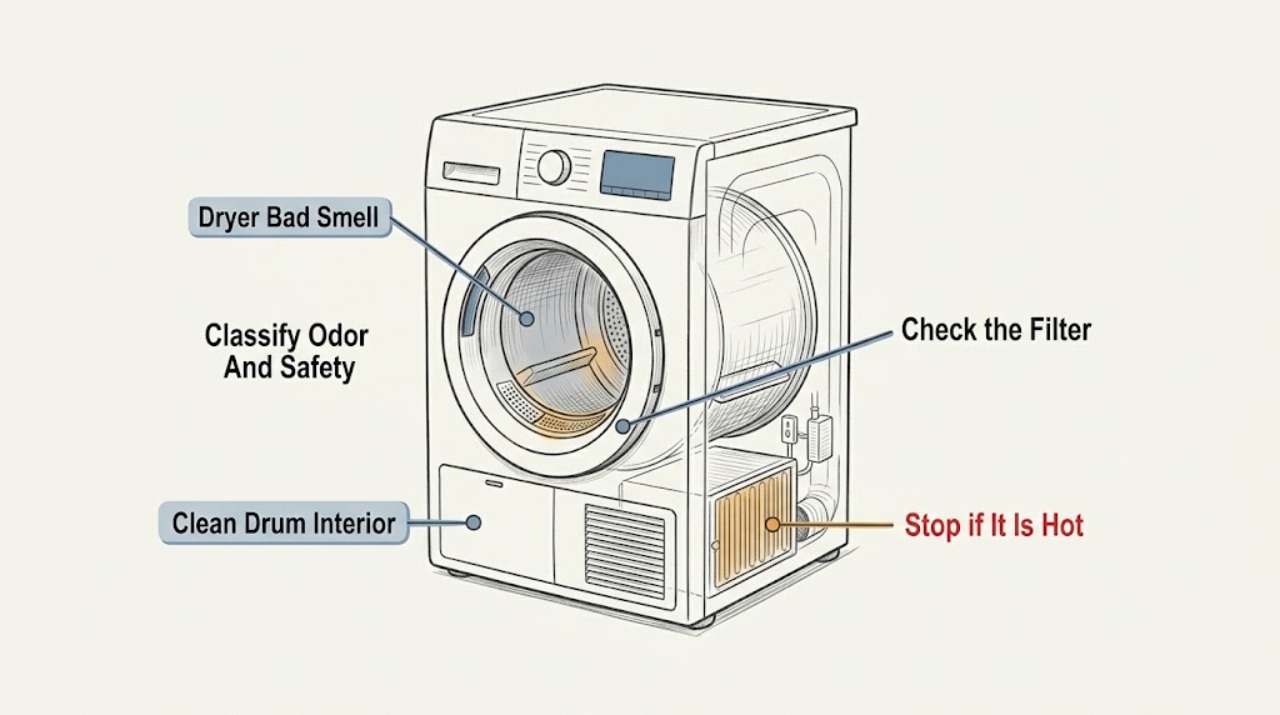
Bosch Dryer Bad Smell: Clean the Safe User-Accessible Areas
If your Bosch dryer smells bad, stop the cycle and let it cool, then identify whether the odor is musty or residue-like from the drum, lint filter, condenser, or moisture sensor, or is burning/electrical. Bosch recommends wiping the drum, cleaning and fully drying the lint filter, cleaning the condenser as the model manual directs, and wiping the moisture sensor with a damp cloth and a little white vinegar.
-
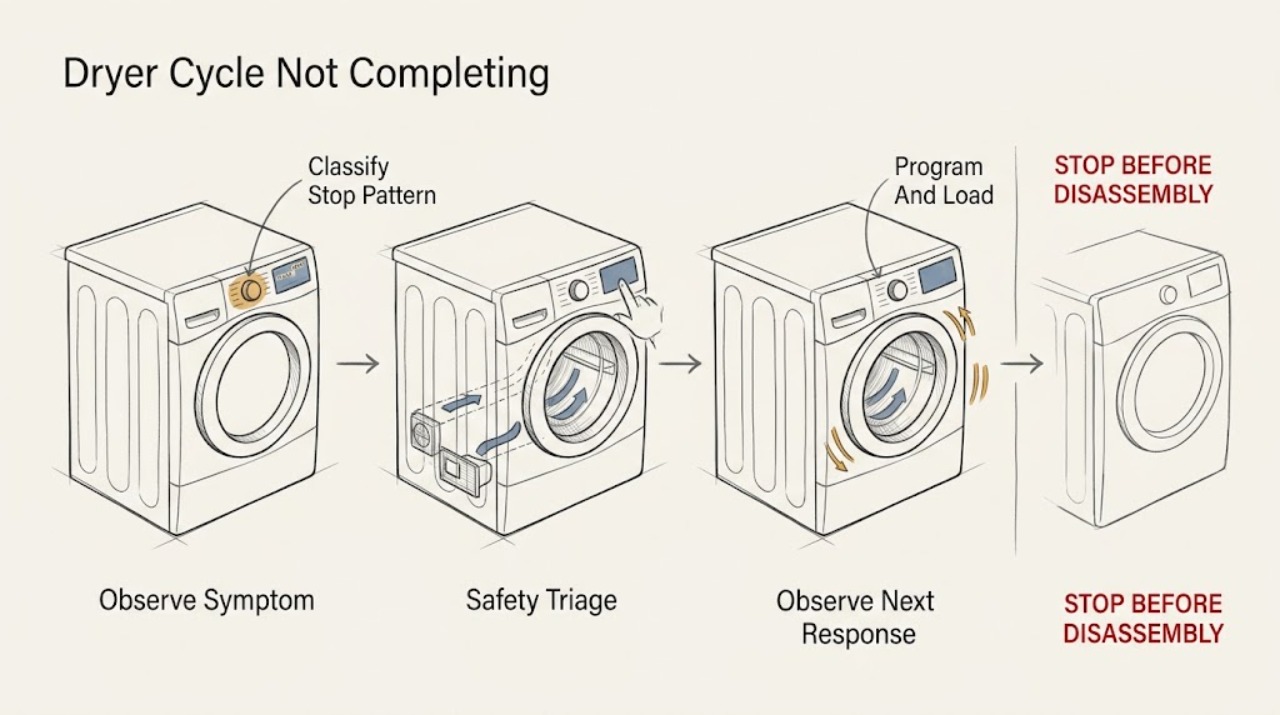
Bosch Dryer Cycle Not Completing: Safe Checks Before Service
If a Bosch dryer stops before the load is dry, first note whether it ends early, stops mid-cycle, or completes with damp clothes. Use the intended program and an appropriate load, clean the lint filter, wipe the accessible moisture sensors near the filter with a damp cloth and a little white vinegar, and check the outside vent for obstruction.
-
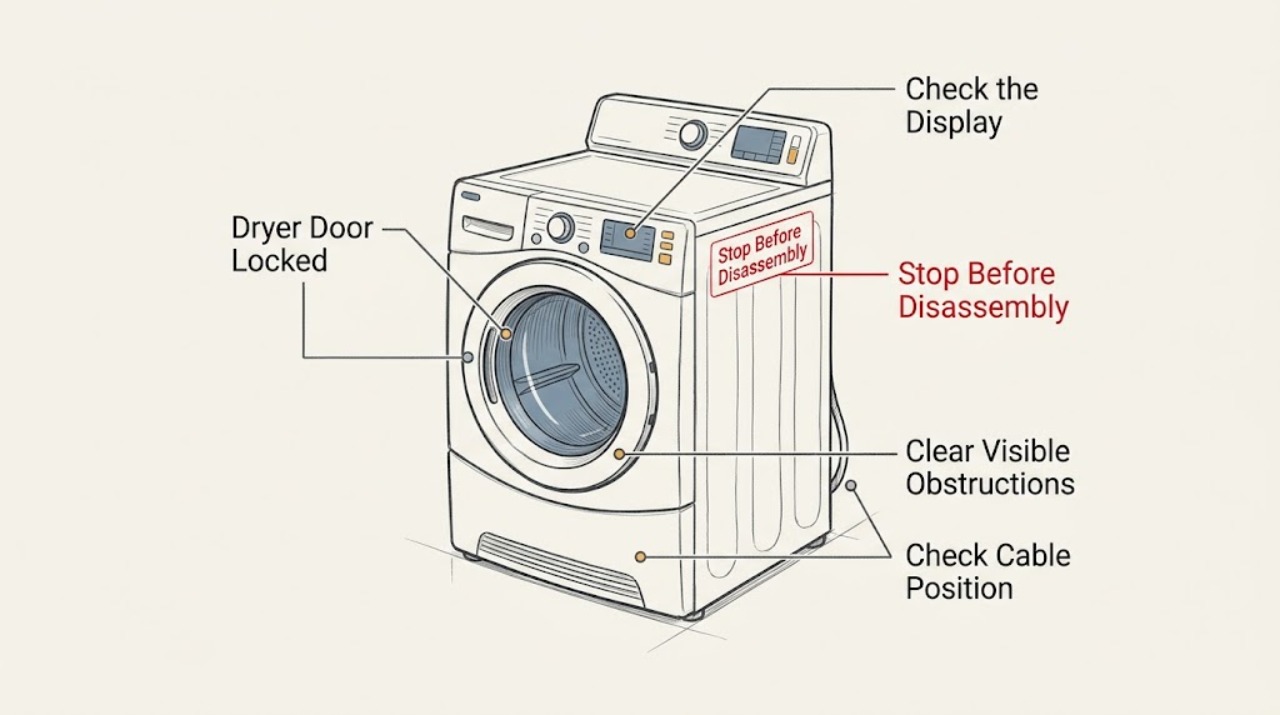
Bosch Dryer Door Locked
If your Bosch dryer door is locked, read the display before trying to open it. A key or lock symbol usually indicates that the child/control lock is active, while DR points to a door-closure or door-switch problem.
-
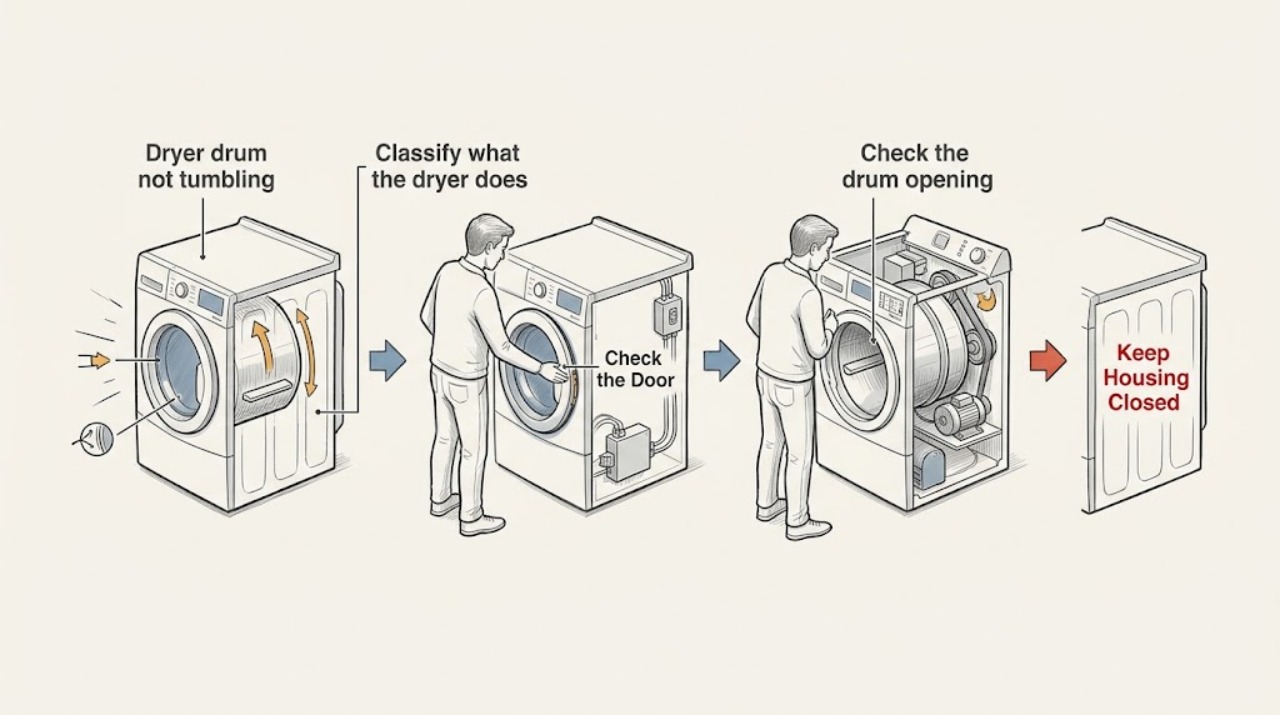
Bosch dryer drum not tumbling: What to Check and What to Do Next
If a Bosch dryer powers on but the drum does not tumble, first stop the cycle and check the simple operating conditions Bosch lists: the power connection, a fully closed door, and a selected drying program. With power isolated, remove only an accessible load obstruction and turn the drum gently only if the model manual permits; abnormal resistance, scraping, a loose feel, or a drum that will not move points toward a mechanical drive problem rather than a setting.
-
Bosch dryer drum scraping: What to Check and What to Do Next
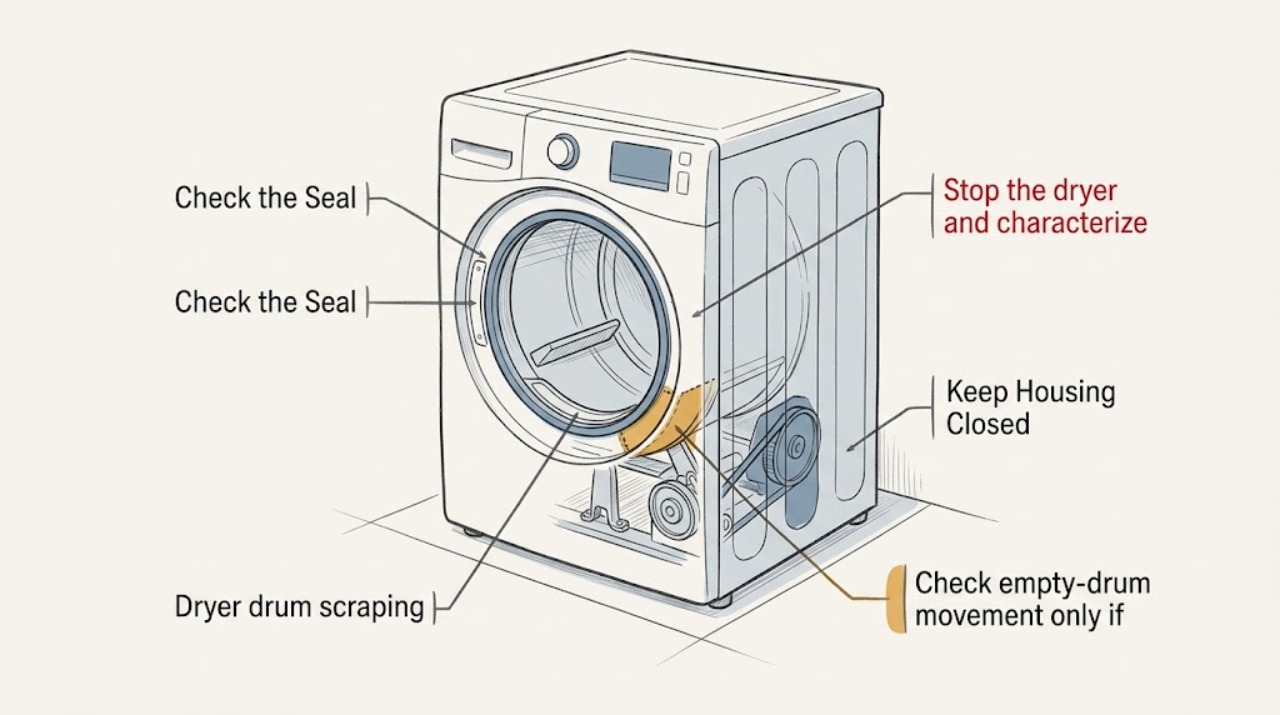
A Bosch dryer drum that scrapes needs to be stopped and localized before another load is run. With the dryer cool and power isolated, check the drum opening and door seal for a coin, zipper, bra wire, or other loose object, and note whether the sound is present when the empty drum is moved gently only as the exact manual permits.
-
Bosch Dryer Error Displayed: Read the Code and Choose the Safe Next Step
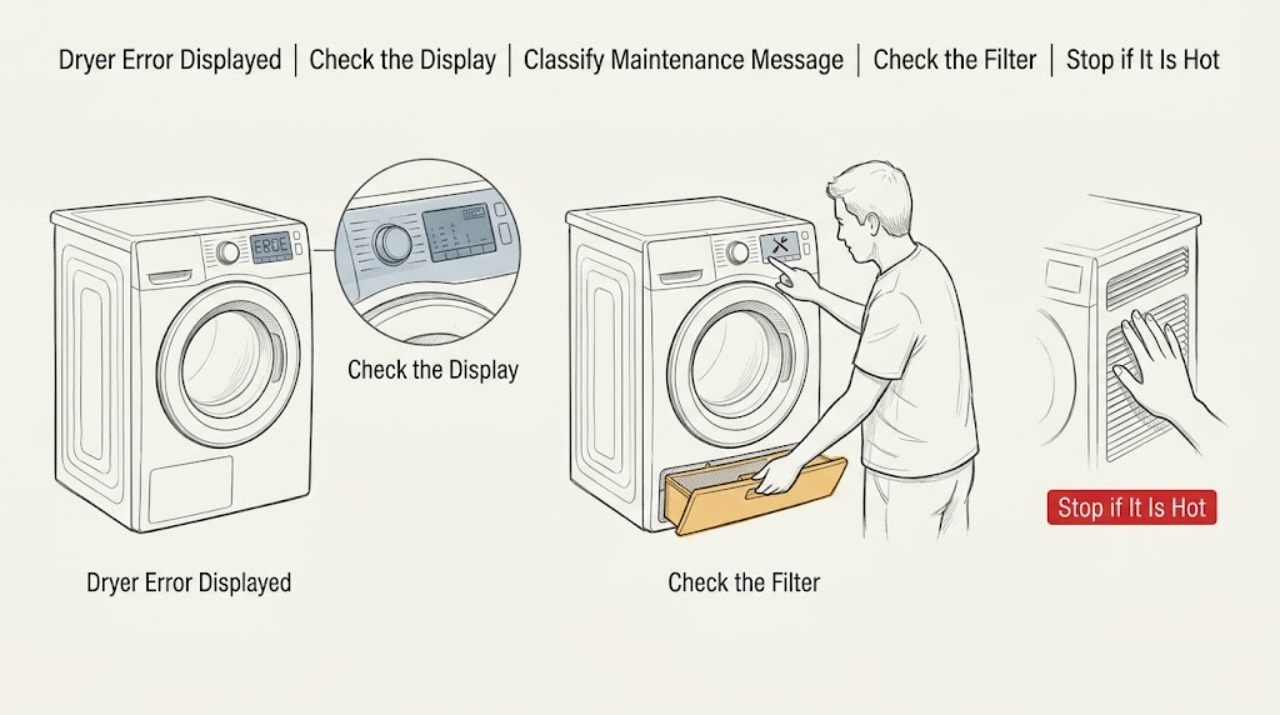
When a Bosch dryer displays an error, photograph or write down the exact code and model before resetting anything. The code may be a maintenance prompt rather than a failure: Bosch identifies E01/E02 on its current error page with a blocked lint filter, E03 with a kinked or blocked condensation-drain hose, E04 with overloading, E16 or DR with a door condition, and CrE as a care-program reminder rather than an error.
-
Bosch Dryer Gas Smell: Stop Use and Get Gas-Safety Help
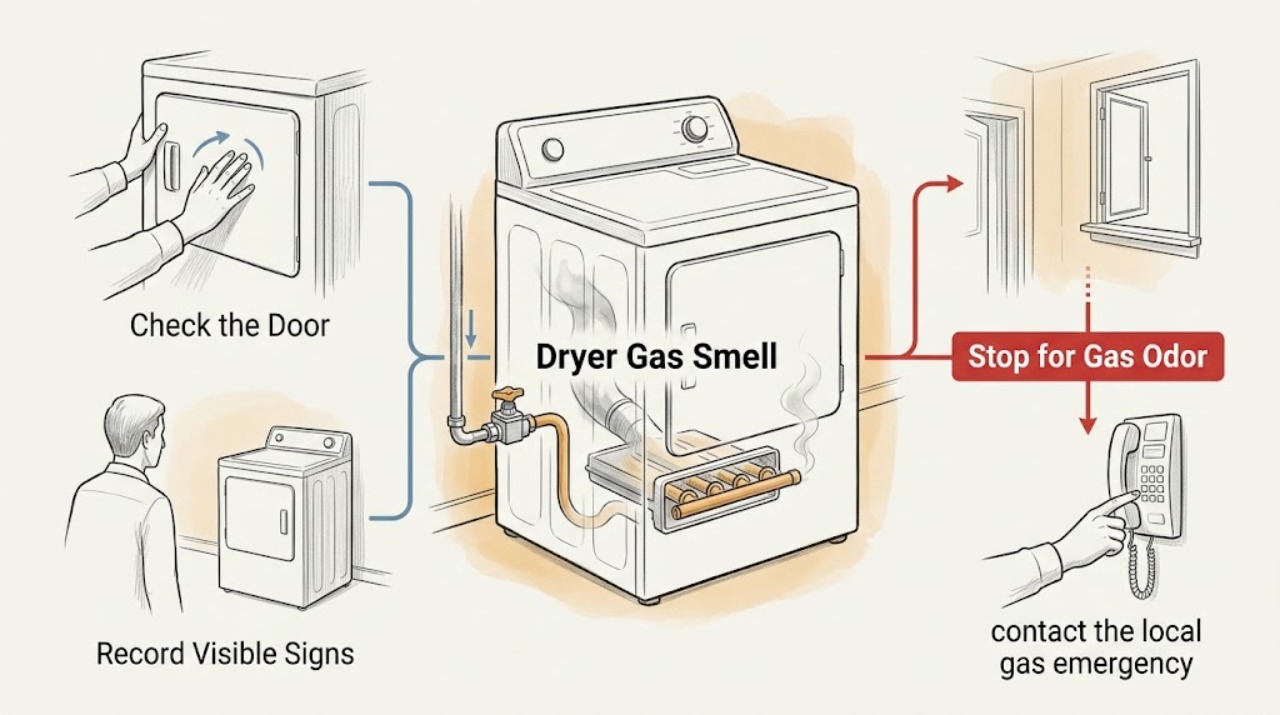
If you smell gas near a Bosch dryer, do not try to start, relight, or troubleshoot it. Do not use a flame, operate electrical switches, unplug the dryer, or use any device in the area; leave the room or building and contact the local gas emergency service or gas supplier from outside, following local instructions.
-
Bosch dryer has a burning smell: What to Check and What to Do Next
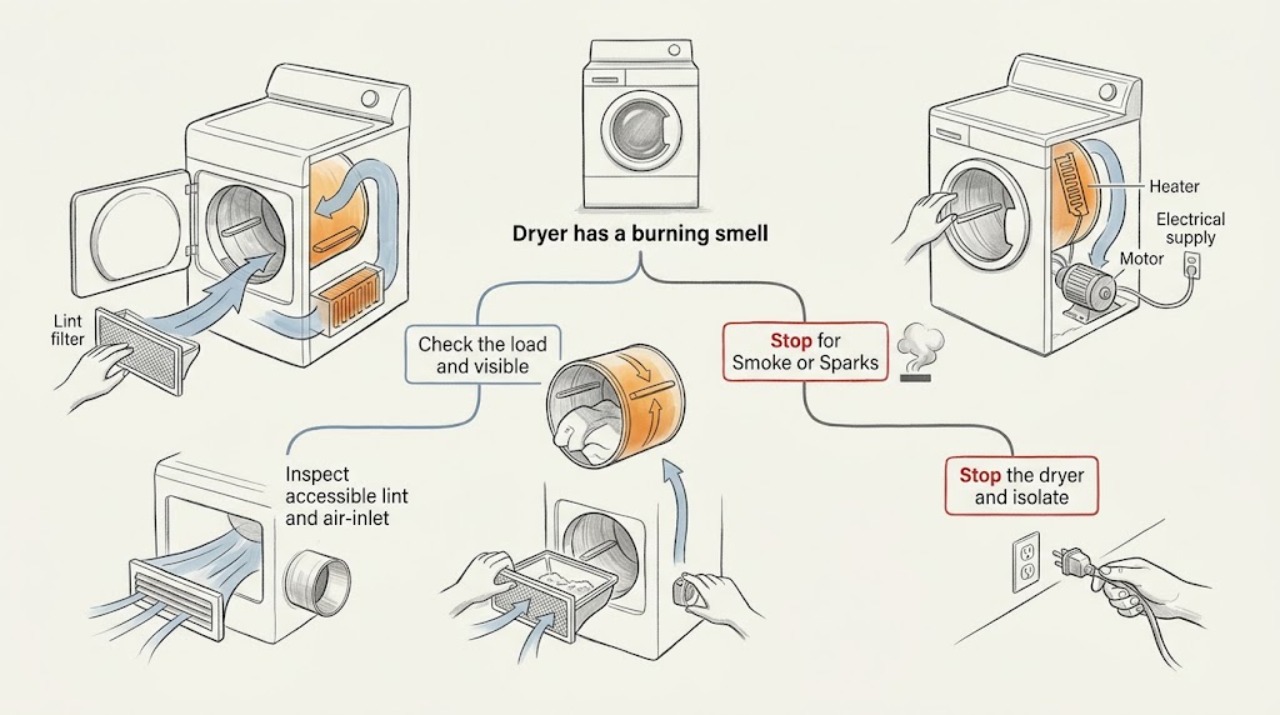
A burning smell from a Bosch dryer is a stop-and-isolate symptom, not a routine odor to mask with a cleaning cycle. Stop the program, remove laundry only if it is safe and cool enough to handle, and disconnect power or switch off the breaker when safe.
-
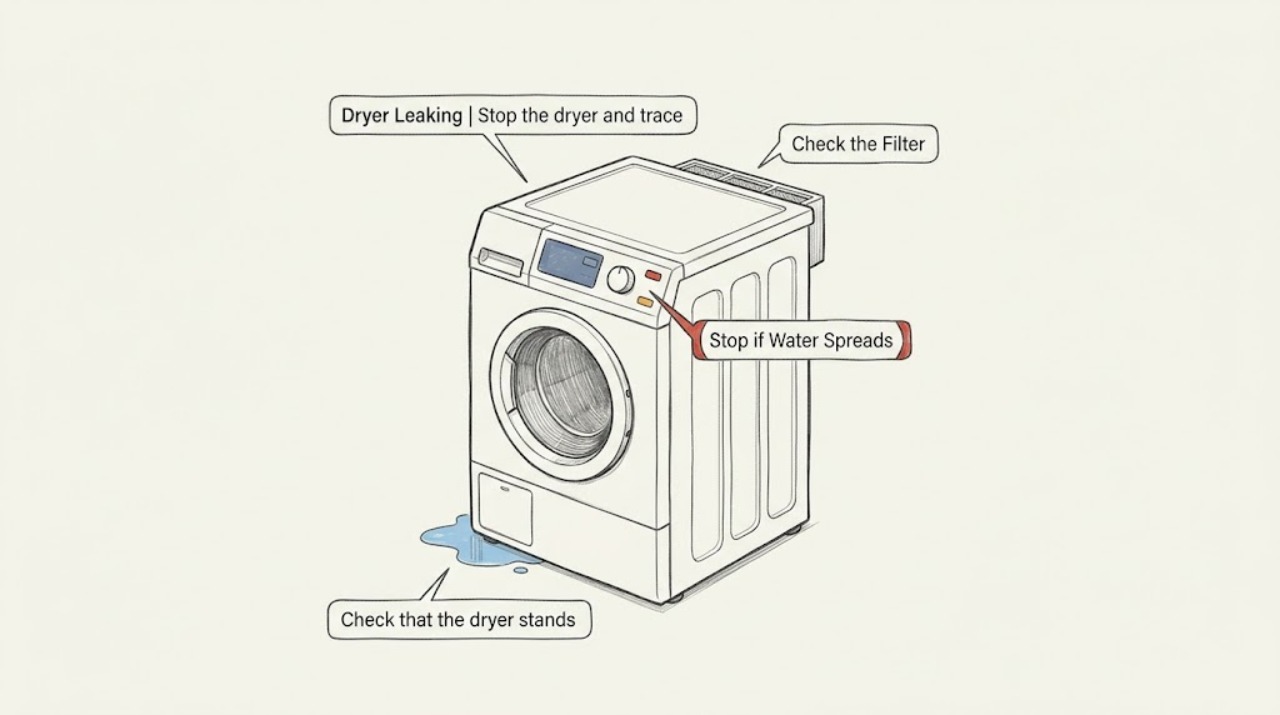
Bosch Dryer Leaking: Safe Checks for Water on the Floor
First identify where the water is coming from, then check the Bosch dryer is level, clean and refit the user-accessible fluff filter, and inspect any external condensation-drain hose for kinks, damage, or a slipped connection. If your condenser or heat-pump model uses a water container, empty it carefully and seat it fully.
-
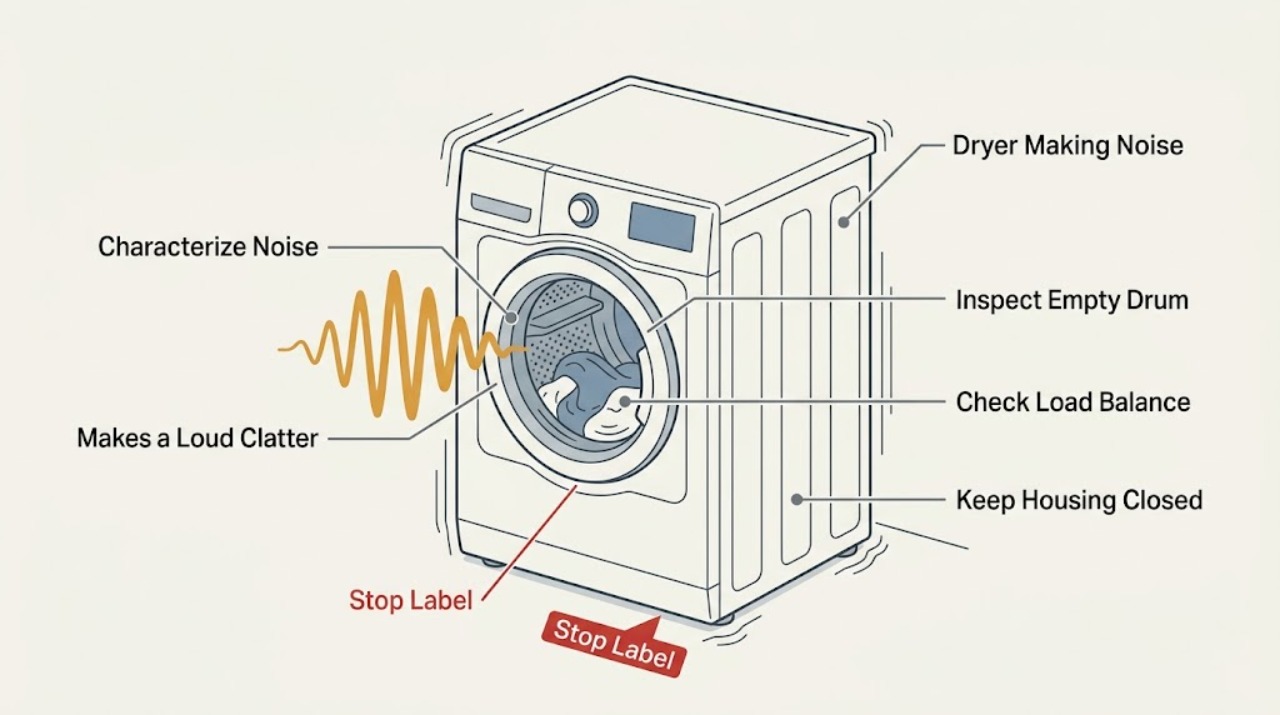
Bosch Dryer Making Noise: Find the Cause Safely
Stop the Bosch dryer and remove the laundry before investigating the sound. First check the empty drum for a coin or another object from a pocket, then check whether the load is uneven and whether the dryer is aligned on a stable surface.
-
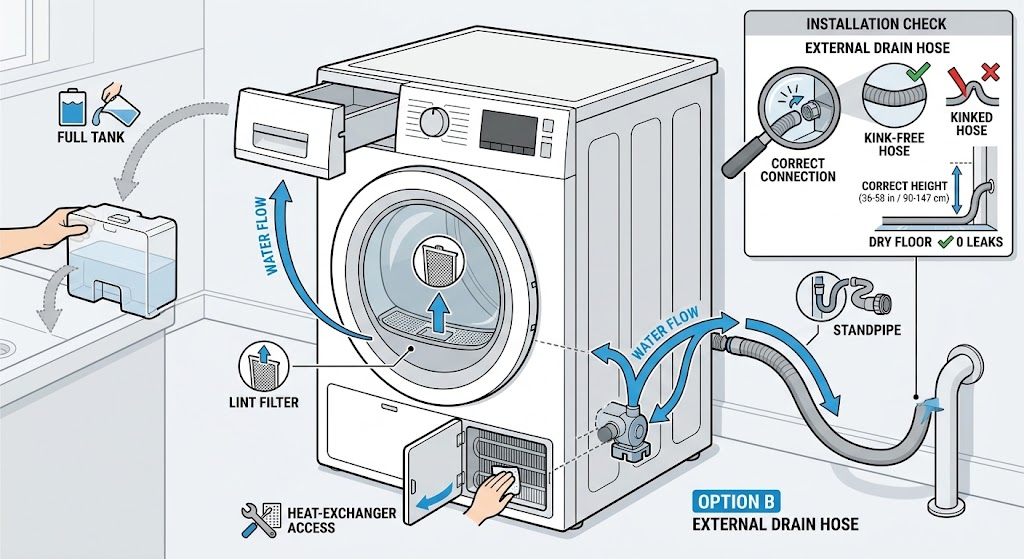
Bosch Dryer Not Draining: Check the Condensation Path Safely
A Bosch dryer that is not draining needs an architecture check first. Condenser and heat-pump dryers remove moisture from the load and send it either to a condensation container or, on models equipped for it, through a drain hose; a vented dryer instead exhausts moist air and does not use that same water path.
-
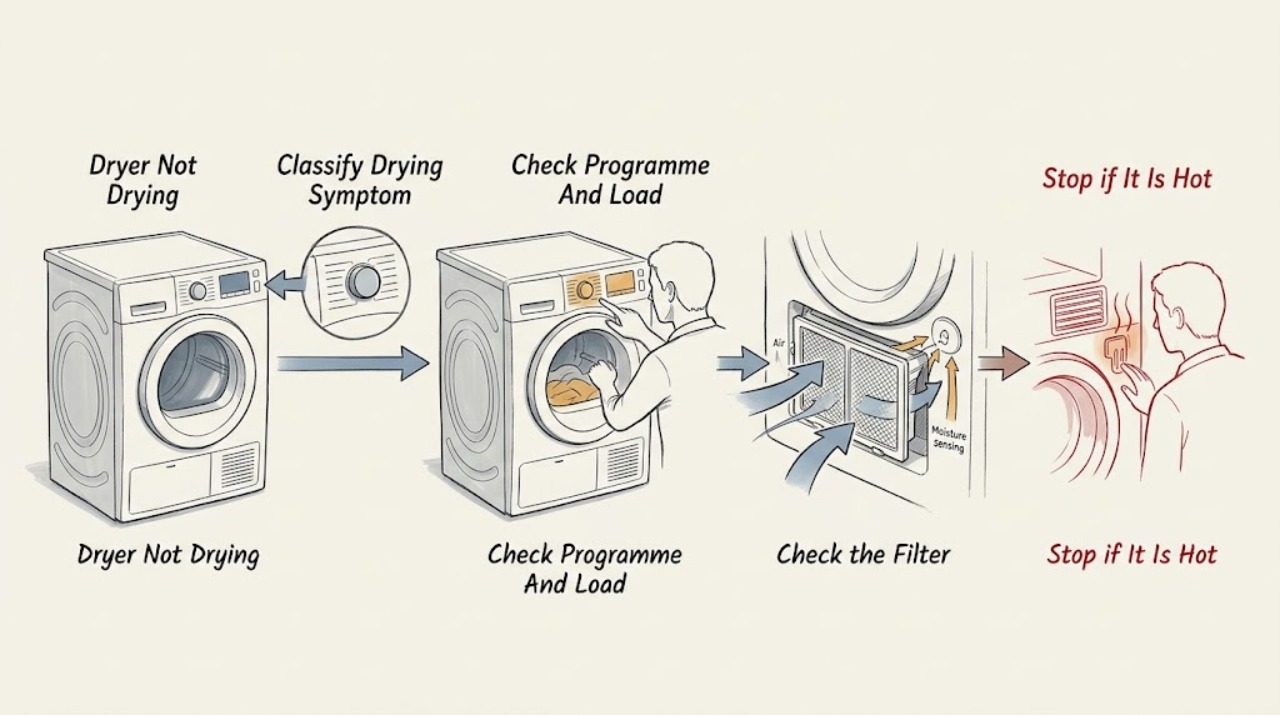
Bosch Dryer Not Drying: Safe Checks Before Service
If a Bosch dryer is running but leaves clothes damp, first use the programme intended for the fabric and load. Switch the dryer off before cleaning the lint filter, then inspect the moisture sensor near the filter and wipe away residue with a damp cloth; Bosch also identifies blocked vents or air inlets as causes of long drying times.
-
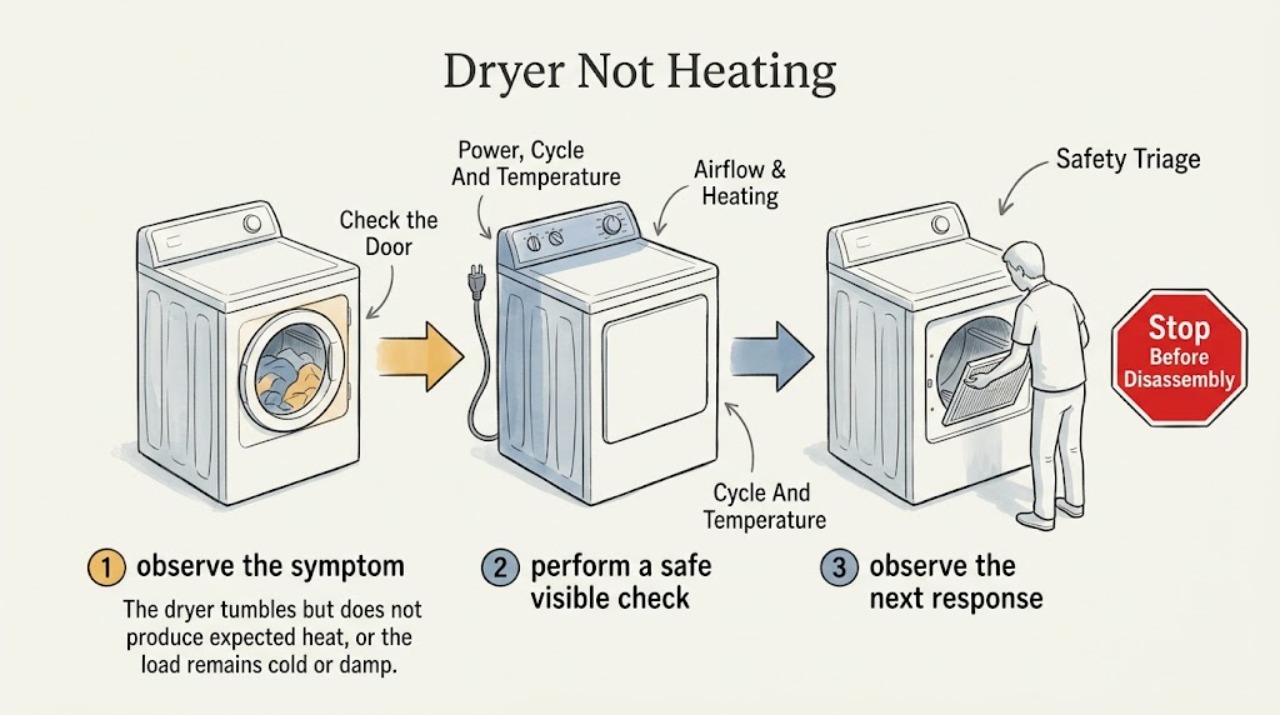
Bosch Dryer Not Heating: Check the Cycle, Airflow, and Fault Code
If a Bosch dryer is not heating, first make sure the selected program is a heat-producing dry cycle rather than an air or cool-down setting. Then clean the lint filter, check the external vent for blockage, and clean the moisture sensor near the lint filter with a damp cloth and a little white vinegar.
-
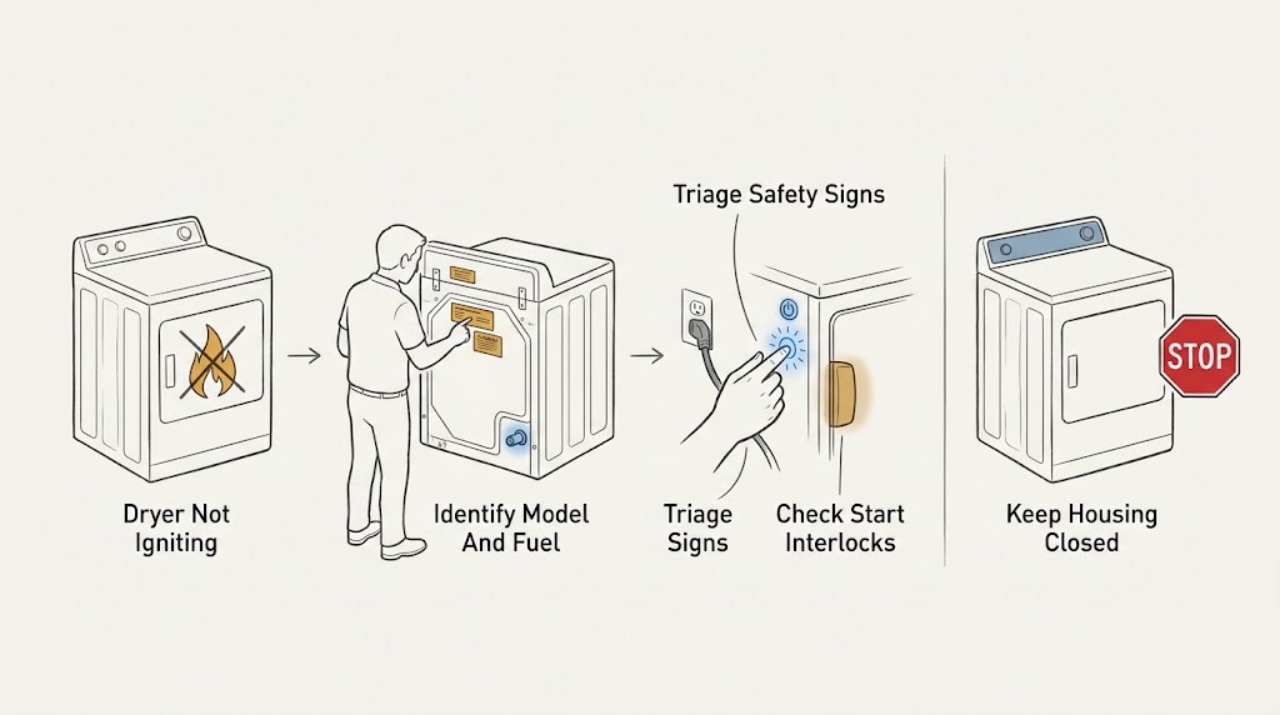
Bosch Dryer Not Igniting: Safe Checks Before Service
First confirm the exact Bosch model and whether the dryer is gas or electric: an electric dryer has no burner to ignite. If it is a gas model, do not try to light the burner, open a gas connection, or test for a leak with a flame.
-
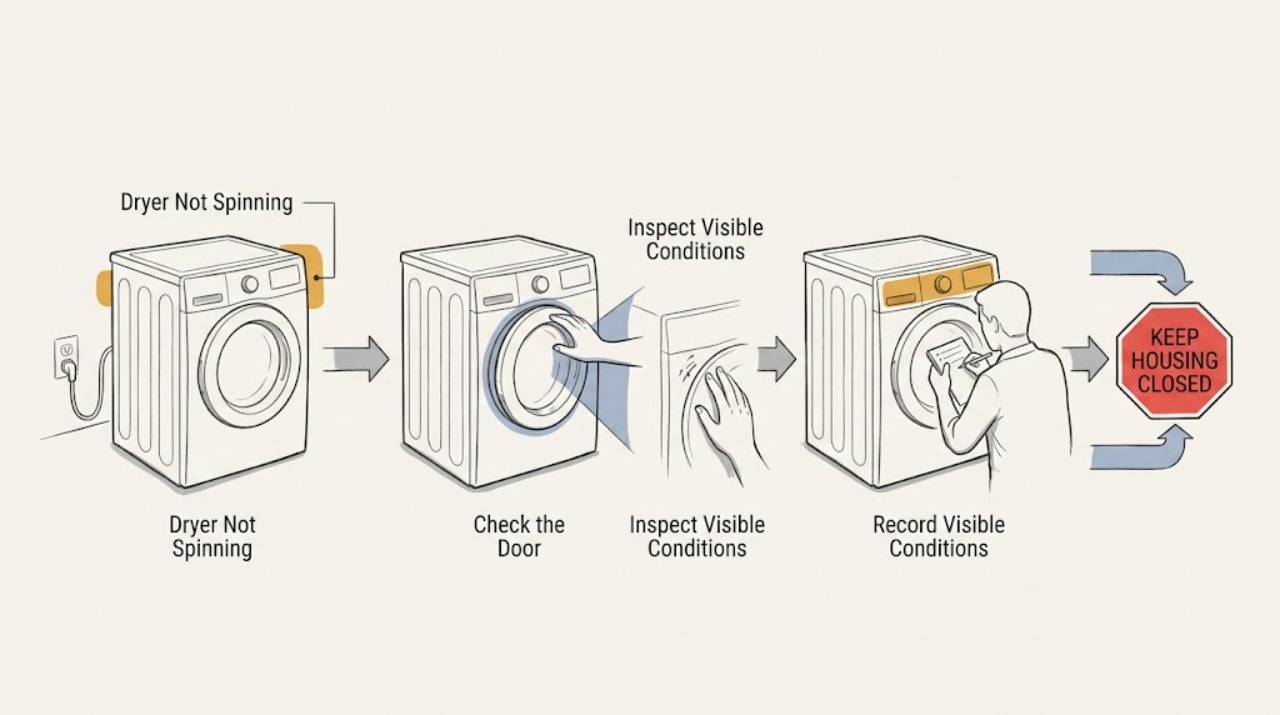
Bosch Dryer Not Spinning: Safe Checks Before Service
If a Bosch dryer is not spinning, first confirm that the power cord is fully inserted, the door is fully closed, and a drying program has actually been selected. Check the accessible fuse or breaker once; Bosch lists these as the first external checks for a dryer that will not start or whose drum will not spin.
-
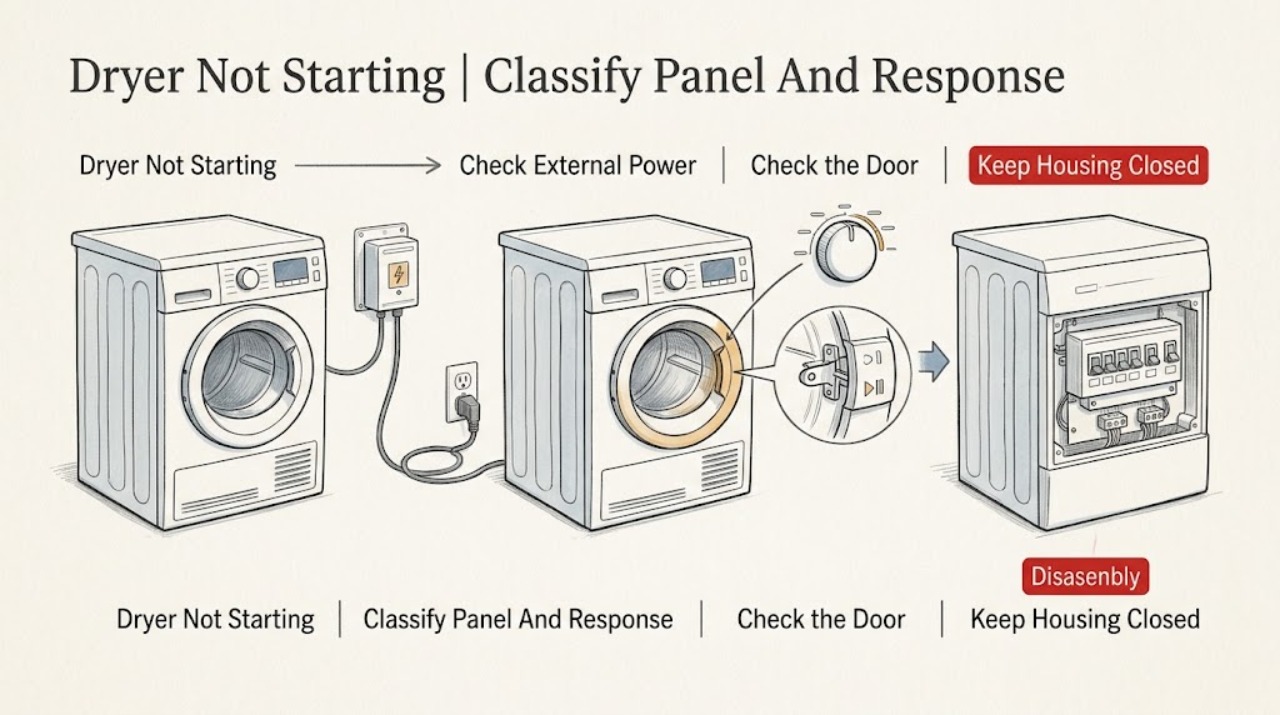
Bosch Dryer Not Starting: Check Power, Door, Programme, and Start Control
If a Bosch dryer will not start, first decide whether the control panel is dark or the panel is lit but the cycle does not begin. Bosch's official dryer guidance lists four first checks: the power cord must be inserted correctly, the door must be fully closed, a programme must be selected, and the household fuse or breaker must be intact.
-
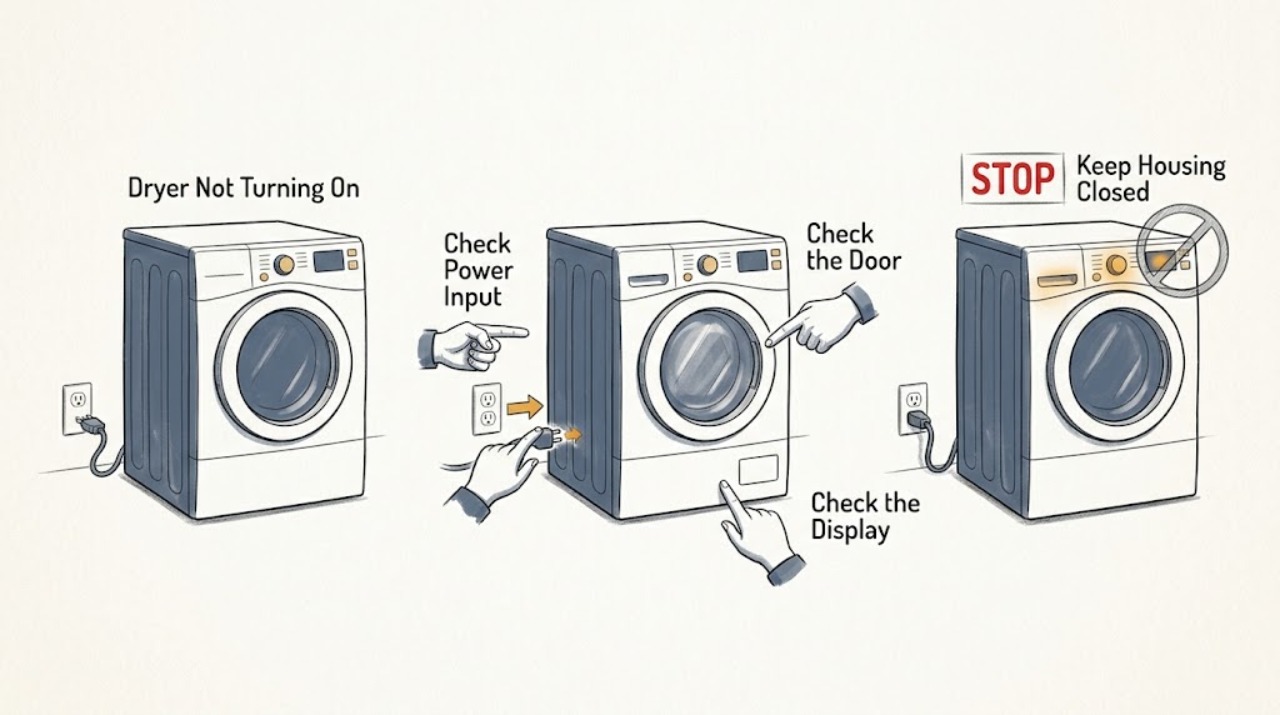
Bosch Dryer Not Turning On: Safe Checks and Service Boundaries
If your Bosch dryer is not turning on, first check that the power cord is fully inserted, the door is fully closed, and a drying program is selected. Check the accessible fuse or breaker; Bosch lists a blown fuse or tripped breaker as a possible reason a dryer will not start.
-
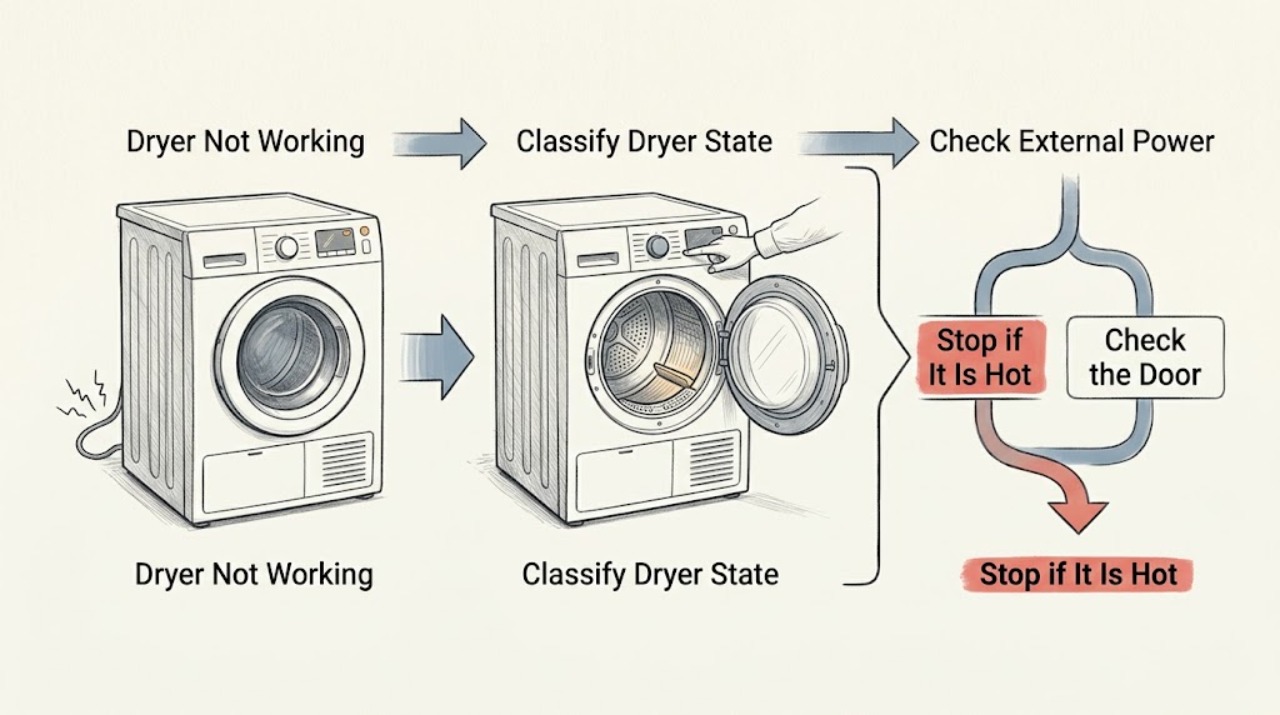
Bosch Dryer Not Working: Safe Checks Before Service
If a Bosch dryer is not working, first determine whether the display is completely blank, the controls light but the cycle will not start, or the drum starts and then stops. Check that the power cord is correctly inserted, the door is fully closed, and a programme is selected; then check the accessible fuse or breaker without opening the appliance.
-
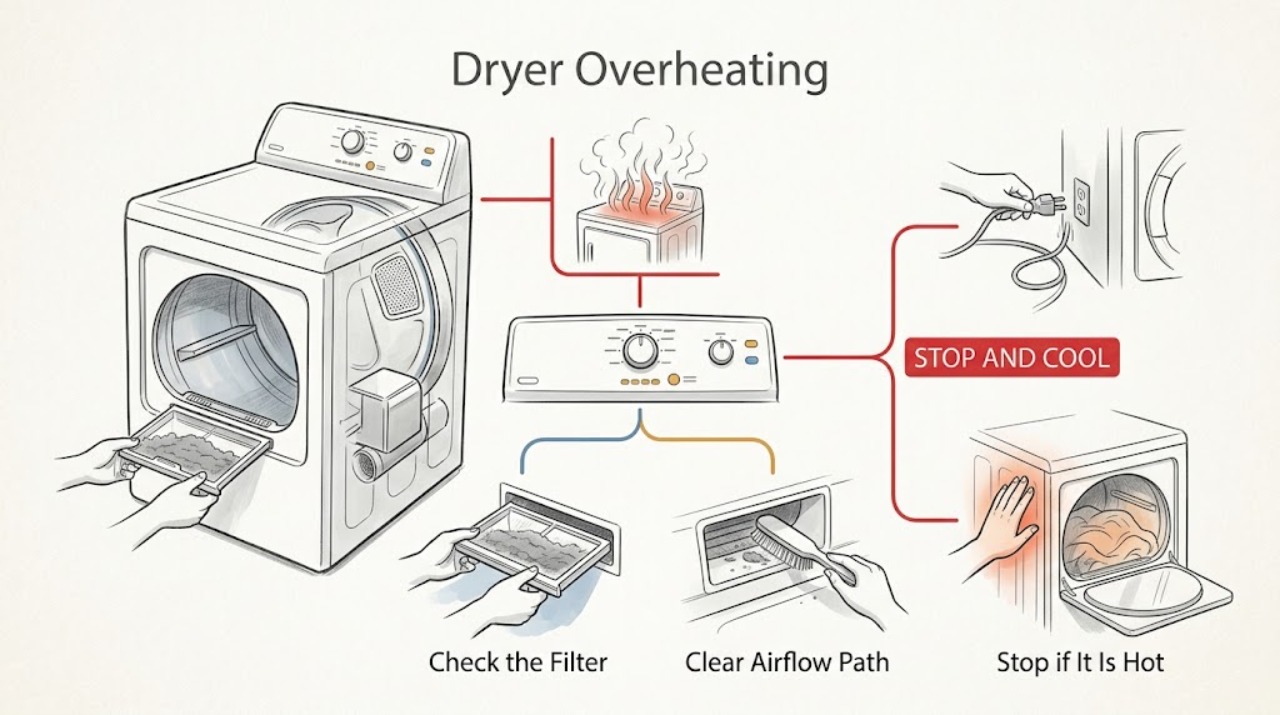
Bosch Dryer Overheating: Check Airflow Before Using It Again
Stop the Bosch dryer and let it cool if the cabinet, drum, or laundry is unusually hot. Do not keep running a dryer that has smoke, a burning or scorching odor, visible damage, or repeated overheating.
-
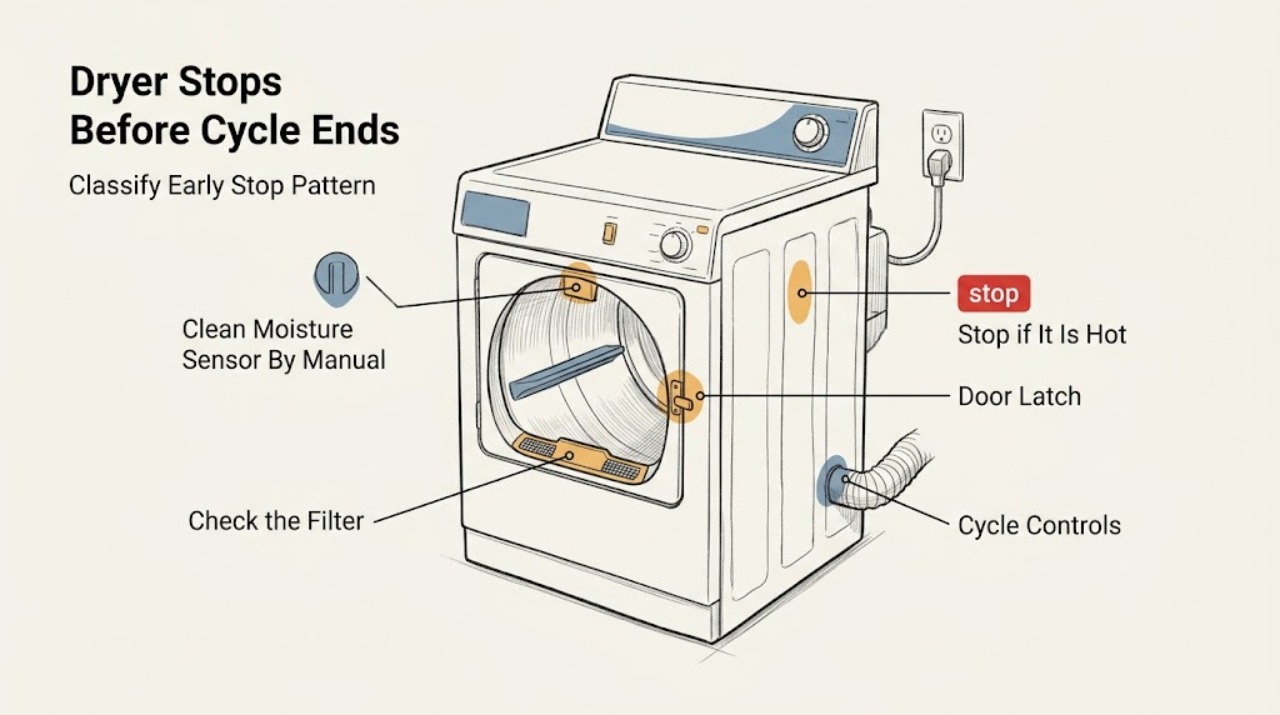
Bosch Dryer Stops Before Cycle Ends: What to Check and What to Do Next
If a Bosch dryer stops before the selected cycle ends, first note whether the clothes are actually dry, whether the display shows an error, and whether the stop occurs immediately or halfway through. A moisture sensor covered with limescale or detergent residue can make an automatic programme decide the load is dry too soon; clean the sensor only as the exact model instructions allow.
-
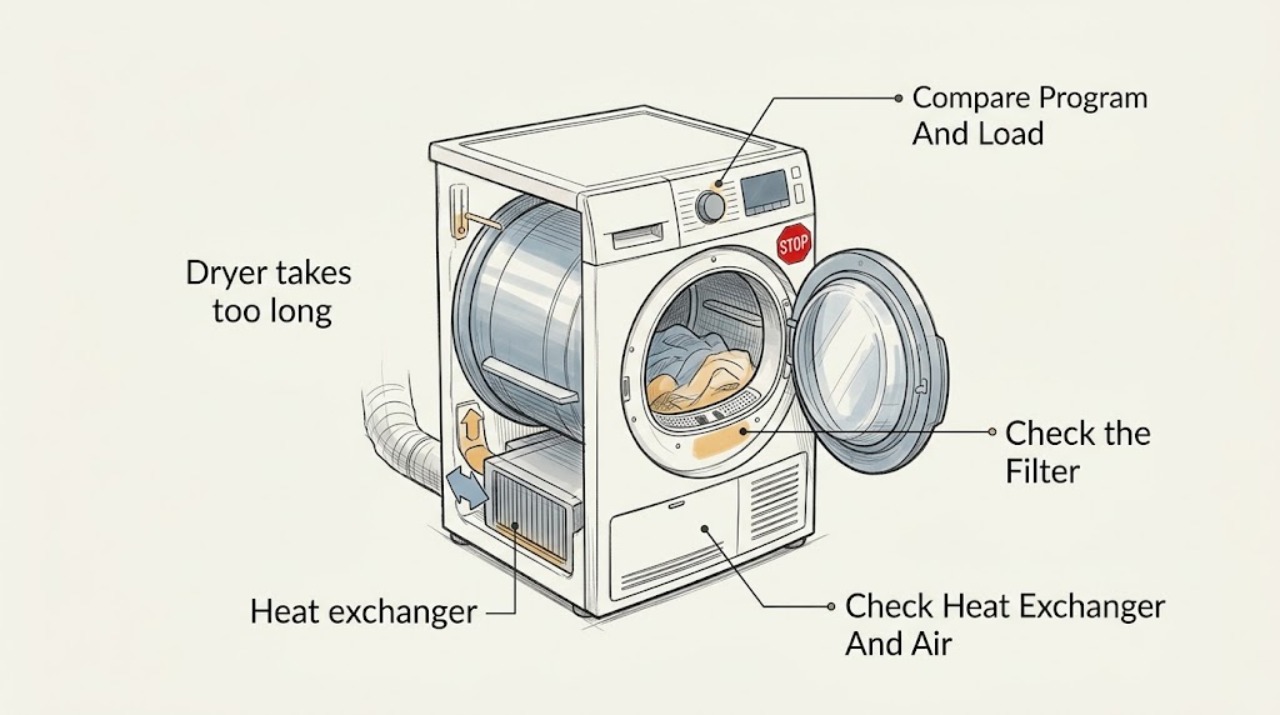
Bosch dryer takes too long to dry: What to Check and What to Do Next
A Bosch dryer can take too long when the lint filter, heat exchanger or condenser, moisture sensor, air inlet, or exhaust path needs attention; the selected program, an overloaded or very small load, high initial moisture, poor room ventilation, or a delayed or adaptive time display can also be involved.