
On this page
Start here
Quick answer
A bad smell from a coffee maker is first separated by timing and source. A smell on first use can be residual manufacturing coating on some models; a stale coffee or oily smell points toward the brew path and removable parts; a sharp electrical or burning smell is a stop condition. Empty the machine, clean the parts the manual identifies, and run the model’s cleaning or descaling cycle. Do not keep using it when odor persists after cleaning or suggests overheating.
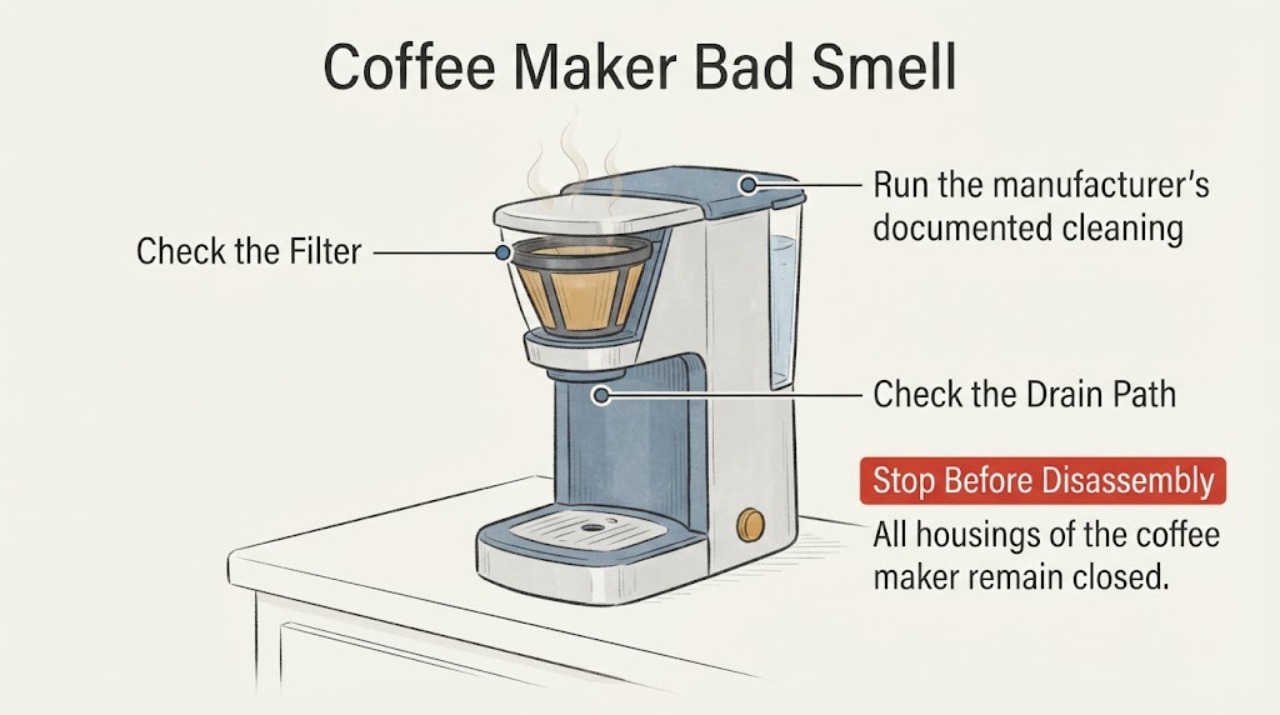
Work through in order
Diagnostic checks
Use only checks that match the exact appliance or system and its official guide.
-
Check 1
Turn the machine off, let hot surfaces cool, and inspect the carafe, filter basket, drip area, water tank and any removable brew-path parts for old coffee, oily film, stagnant water or visible residue.
Expected result: Residue or stale water is present; the smell is only on first use; or the smell is sharp, electrical, smoky or accompanied by unusual heat.
Next step: Discard old water and grounds and clean only removable parts allowed by the manual. For electrical or burning odor, unplug when safe and stop using the machine.
Why this matters
Why: Residue or first-use coating is more consistent with a cleanable odor. Sharp or smoky odor is not a cleaning diagnosis.
-
Check 2
Run the manufacturer’s documented cleaning or descaling cycle with the specified agent and then the required clear-water rinse; do not improvise a stronger mixture or immerse the appliance.
Expected result: The odor clears after the documented cycle, returns quickly, or remains unchanged.
Next step: Repeat only at the manual’s stated interval. If the smell remains, arrange manufacturer or qualified service.
Why this matters
Why: Improvement supports residue or scale as the source. Recurrence or no change leaves an internal contamination or heating fault possible.
-
Check 3
After cleaning and cooling, inspect the cord, plug, switch area and warming surface from outside for discoloration, melting, smoke residue or abnormal heat.
Expected result: No electrical sign is present and the odor is food or mineral-like; or any electrical sign is present.
Next step: Keep the machine unplugged and obtain service for any electrical sign; do not open the housing.
Why this matters
Why: A food or mineral odor can follow the cleaning branch. Electrical signs raise a safety boundary.
-
Check 4
Record whether the smell comes from brewed coffee, the reservoir, steam or the base, and whether it appears only during heating.
Expected result: The odor is localized to removable wet parts, appears only during heating, or cannot be localized.
Next step: Use the matching manual maintenance path for removable parts; stop and arrange service for heat-linked or unexplained odor.
Why this matters
Why: A removable-part source is more likely when the odor follows old coffee or water. Heat-linked or unexplained odor needs professional evaluation.
Use your observations
Decision map
Find the observation that best matches what you see, then follow the next safe action.
-
PATH 01Next step
What you see
The odor is stale coffee or mineral-like, residue is visible, and it clears after the model’s documented cleaning and rinse.
Do this next
Keep the brew path clean and follow the manual’s maintenance interval.
Why this path and its safety boundary
Why it matters: Brew-path residue or scale is more likely than an electrical fault.
-
PATH 02Next step
What you see
The machine is new and the smell is mild, non-electrical, and fades after the first documented rinse or use.
Do this next
Follow the manual’s first-use rinse and monitor; seek service if it persists or changes character.
Why this path and its safety boundary
Why it matters: Some manuals describe a temporary first-use coating smell.
-
PATH 03Next step
What you see
The smell is burning, electrical, smoky, or linked to abnormal heat, or it remains after cleaning and descaling.
Do this next
Unplug when safe, stop using the coffee maker, and arrange qualified service.
Why this path and its safety boundary
Why it matters: A heating, wiring, or internal contamination issue remains possible.
Helpful context
Understand the symptom
Identify the odor before adding any cleaner: a new-appliance smell, old coffee residue, sour water or mineral buildup, and an electrical or burning odor lead to different decisions.
Use only the cleaning and descaling procedure in the owner’s manual because coffee makers differ in removable parts, cleaners, and heating arrangements.
When checks do not resolve it
Need a professional?
Provide the exact model and a concise record of what happened, which controls or indicators responded, and which safe checks changed the symptom.
Common questions
FAQ
Can descaling remove a bad coffee-maker smell?
It can help when mineral buildup contributes to the odor; use the exact model cycle and rinse instructions. Bosch advises support if the smell remains.
Is a smell on first use always dangerous?
Midea documents that some models can emit a temporary coating smell on first use. Stop immediately for smoke, burning odor or abnormal heat.
Read the exact guide
Official sources
- Coffee Maker Troubleshooting: Coffee machine smells badBosch · Bosch coffee machine odor troubleshooting
- coffee maker users manualMidea · Midea coffee maker operation and care
Community feedback
Share a repair observation
Share a plain-text repair observation. Accepted observations are published automatically; this page may take a moment to update.