
On this page
Start here
Quick answer
A coffee-maker door that will not close is usually a seating or obstruction problem, not a reason to force the latch. Disconnect power before cleaning, remove the pod or grounds holder through the normal release, check for a mis-seated holder, trapped pod, full drawer, or reservoir position, and keep fingers away from puncture needles. If the door still will not latch, is cracked, leaks, or the cord is damaged, stop and use model-specific service.
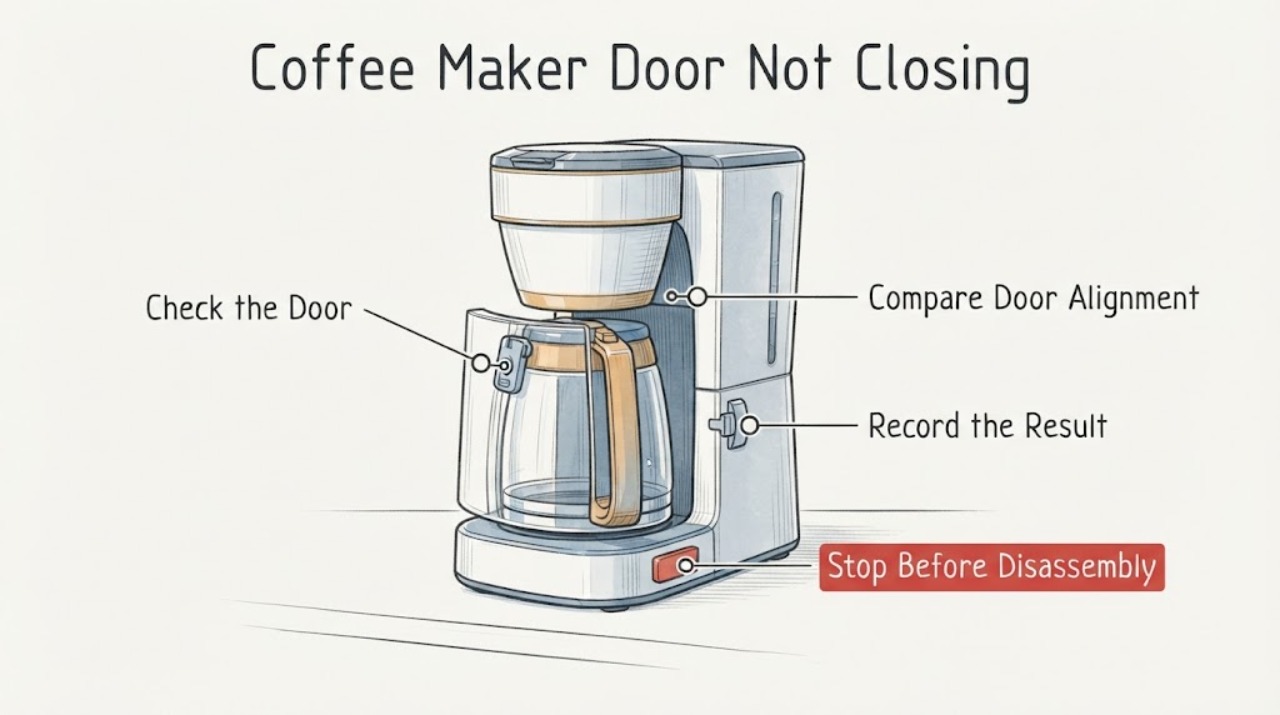
Work through in order
Diagnostic checks
Use only checks that match the exact appliance or system and its official guide.
-
Check 1
Turn the coffee maker off, disconnect it, and let hot water or coffee cool before opening the door.
Expected result: The machine is hot, wet, pressurized, or cool and dry.
Next step: Do not force the door or put fingers into the pod holder or needle area.
Why this matters
Why: Heat, liquid, and sharp pod needles make forced closure unsafe.
-
Check 2
Remove the pod or holder only by the normal release and inspect the door track, holder rim, and hinge area for a trapped pod or coffee debris.
Expected result: A pod is caught, the holder is out of position, debris is present, or the path is clear.
Next step: Clean accessible residue with power disconnected and reseat the holder; stop if removal needs tools or force.
Why this matters
Why: A holder that is not seated or an object in the closing path can stop the latch.
-
Check 3
Check that the reservoir, drip tray, and removable drawer are seated and not protruding into the door path.
Expected result: A reservoir, tray, or drawer is misaligned, full, or correctly seated.
Next step: Empty or reseat only the accessible part described by the manual, then close gently once.
Why this matters
Why: Some machines interlock operation with removable parts; misalignment can feel like a door fault and cause leaks if forced.
-
Check 4
With the machine cool and empty, close the door without a pod and observe whether it clicks evenly or one side lifts.
Expected result: The door closes smoothly, catches unevenly, remains open, or the hinge/latch is cracked.
Next step: Do not bend the hinge or bypass the interlock. Photograph the mismatch and request service.
Why this matters
Why: Smooth empty closure supports an obstruction; uneven closure or cracked hardware indicates alignment or latch damage.
Use your observations
Decision map
Find the observation that best matches what you see, then follow the next safe action.
-
PATH 01Next step
What you see
The door closes after the holder or a trapped pod is correctly reseated, with no leak or crack.
Do this next
Run only the manual-approved rinse or brew check and stop if the door reopens or leaks.
Why this path and its safety boundary
Why it matters: The original obstruction or seating condition explains the symptom.
-
PATH 02Next step
What you see
The door will not close when empty, or one side is lifted or cracked.
Do this next
Keep the coffee maker disconnected and arrange model-specific service.
Why this path and its safety boundary
Why it matters: The latch, hinge, housing, or alignment is damaged beyond safe cleaning.
Helpful context
Understand the symptom
The Keurig manual links secure door closure to a correctly seated pod holder and warns about sharp entrance and exit needles.
When checks do not resolve it
Need a professional?
Arrange model-specific service when the empty door will not latch, hardware is cracked, the machine leaks, a sharp part is exposed, or closing requires force. Keep it disconnected while waiting.
Common questions
FAQ
Can I press harder on a coffee-maker door that will not close?
No. Remove the pod or holder through the normal release, inspect for obstruction, and reseat accessible parts. A door needing force needs service.
Why keep fingers out of the holder?
Keurig’s manual warns that the pod holder and machine contain sharp puncture needles. Disconnect and cool before cleaning.
Read the exact guide
Official sources
- TroubleshootingKeurig · Coffee maker pod door, holder, reservoir, and safe cleaning
Community feedback
Share a repair observation
Share a plain-text repair observation. Accepted observations are published automatically; this page may take a moment to update.