
On this page
Start here
Quick answer
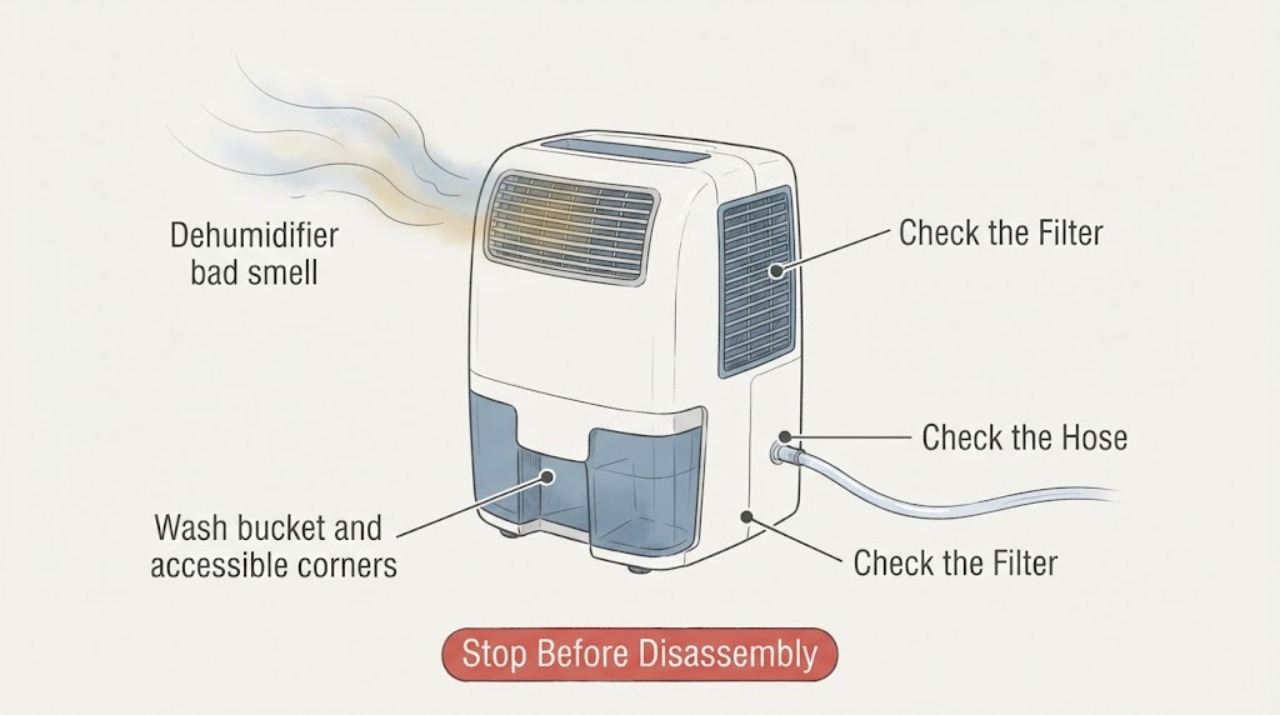
A bad smell from a dehumidifier usually comes from a dirty bucket, wet filter/air path, standing water, algae or mould, or a damp drain hose. Unplug before cleaning, wash the bucket with mild soap and water, clean/dry the filter as the manual allows, and retest once. Burning or electrical odor requires immediate stop-use and service.
Work through in order
Diagnostic checks
Use only checks that match the exact appliance or system and its official guide.
-
Check 1
Unplug and identify odor character/source: bucket, exhaust air, hose, or cabinet.
Expected result: Musty/algae-like or burning/smoky/sharp odor.
Next step: For burning/smoke/heat, keep unplugged and arrange service.
Why this matters
Why: Wet organic residue supports cleaning; burning odor is not maintenance.
-
Check 2
Wash bucket and accessible corners with mild soap/water; inspect slime or standing water.
Expected result: Residue is present or bucket is clean but odor remains.
Next step: Rinse/dry/reinstall; keep cleaners away from controls.
Why this matters
Why: Frigidaire links bucket cleaning with reducing algae odor.
-
Check 3
Clean accessible filter/cabinet surfaces with power disconnected and dry the filter fully.
Expected result: Filter is dusty/damp and improves, or clean but odor persists.
Next step: Follow model filter interval and do not run without a required filter.
Why this matters
Why: Dirt/moisture can hold odor in airflow; persistence shifts to hose/internal source.
-
Check 4
Inspect drain hose/pump routing for standing water, kink, slime, or poor drainage, then run one supervised test.
Expected result: Hose blocked/wet, odor gone, or odor returns from airflow/cabinet.
Next step: Clear only accessible routing and stop if odor returns strongly.
Why this matters
Why: Stagnant water can preserve odor; cabinet recurrence requires model service.
Use your observations
Decision map
Find the observation that best matches what you see, then follow the next safe action.
-
PATH 01Next step
What you see
Bucket/hose has algae or stale water and odor improves after cleaning.
Do this next
Keep parts emptied and dry.
Why this path and its safety boundary
Why it matters: Local moisture/organic residue is likely.
-
PATH 02Next step
What you see
Filter/air path is damp or dirty without electrical symptom.
Do this next
Clean/dry as directed and monitor one run.
Why this path and its safety boundary
Why it matters: Accessible airflow surfaces may carry the odor.
-
PATH 03Next step
What you see
Odor returns after cleaning or room remains damp with visible moisture.
Do this next
Check drainage/room moisture and arrange service if internal access is needed.
Why this path and its safety boundary
Why it matters: Recurring source moisture or internal contamination remains possible.
-
PATH 04Next step
What you see
Burning odor, smoke, sparks, heat, or repeated trips occur.
Do this next
Stop, isolate power only if safe, and obtain qualified service.
Why this path and its safety boundary
Why it matters: Immediate safety boundary.
Helpful context
Understand the symptom
Separate musty/algae odor from burning/electrical odor. Do not spray cleaner into controls or vents.
Recurring mustiness can come from standing water, hose blockage, or room moisture.
When checks do not resolve it
Need a professional?
Arrange service when odor persists after bucket/filter/hose cleaning, returns from inside the cabinet, or accompanies poor drainage or water near electrics.
Common questions
FAQ
How do I remove musty smell?
Unplug, wash bucket, clean/dry filter and accessible surfaces, and dry hose. Persistent odor needs drainage/room checks and possibly service.
Can room conditions cause odor?
Yes. Frigidaire links damp/wet rooms with musty smell and visible moisture.
Can I use bleach?
Follow the model manual; the opened guidance specifies mild soap/water and keeping bleach/ammonia away from controls.
Read the exact guide
Official sources
- Dehumidifier - Clean and CareFrigidaire · dehumidifier odor cleaning and storage
- Dehumidifier Sizing GuideFrigidaire · damp-room musty smell context for dehumidifier
Community feedback
Share a repair observation
Share a plain-text repair observation. Accepted observations are published automatically; this page may take a moment to update.