
Brand-independent appliance guidance
General Dehumidifier Repair Guides
Brand-independent troubleshooting and repair guidance for common dehumidifier problems and maintenance questions.
General dehumidifier guides
Use these guides when the problem is not limited to a specific manufacturer.
-
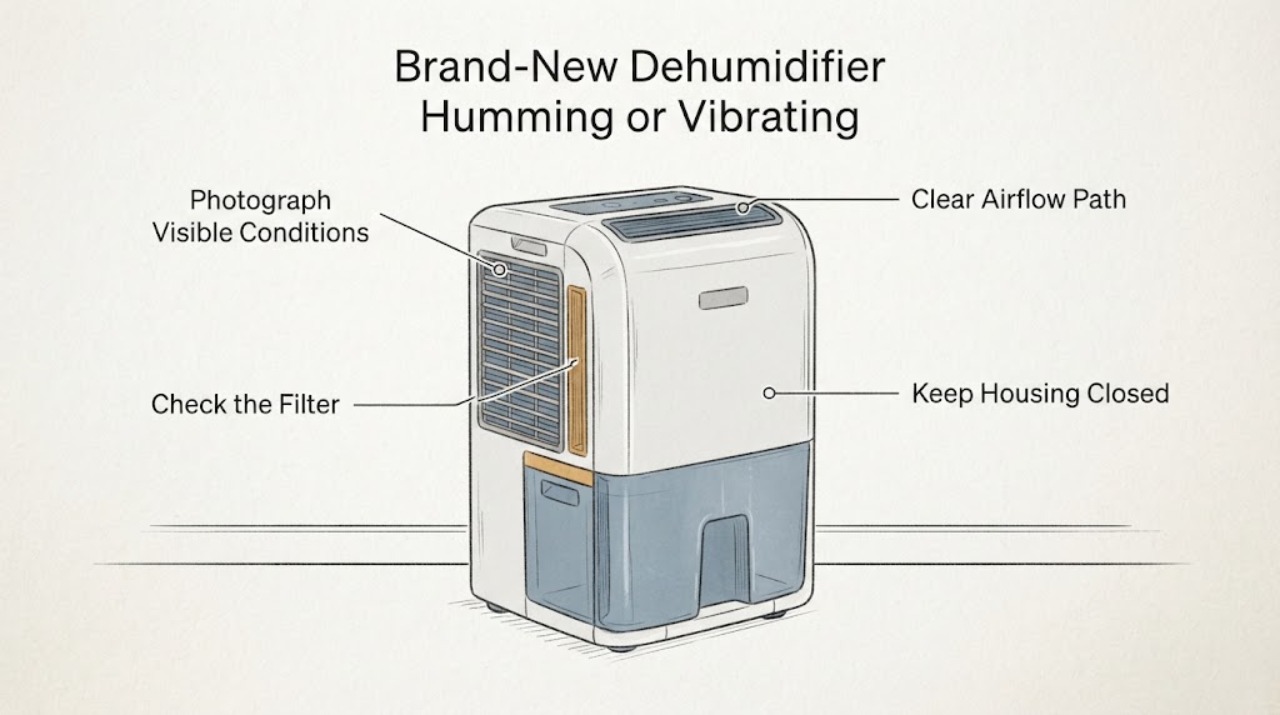
Brand-New Dehumidifier Humming or Vibrating: Safe Checks Before Service
A low hum, fan sound, clicking during compressor cycling, or water dripping can be normal on some dehumidifiers, but a new unit that vibrates, rattles, or grinds deserves an external setup check. Turn it off and unplug it from a dry, safe location before moving it; place it on a firm level surface, make sure the bucket and filter cover are seated, and keep the air path clear.
-
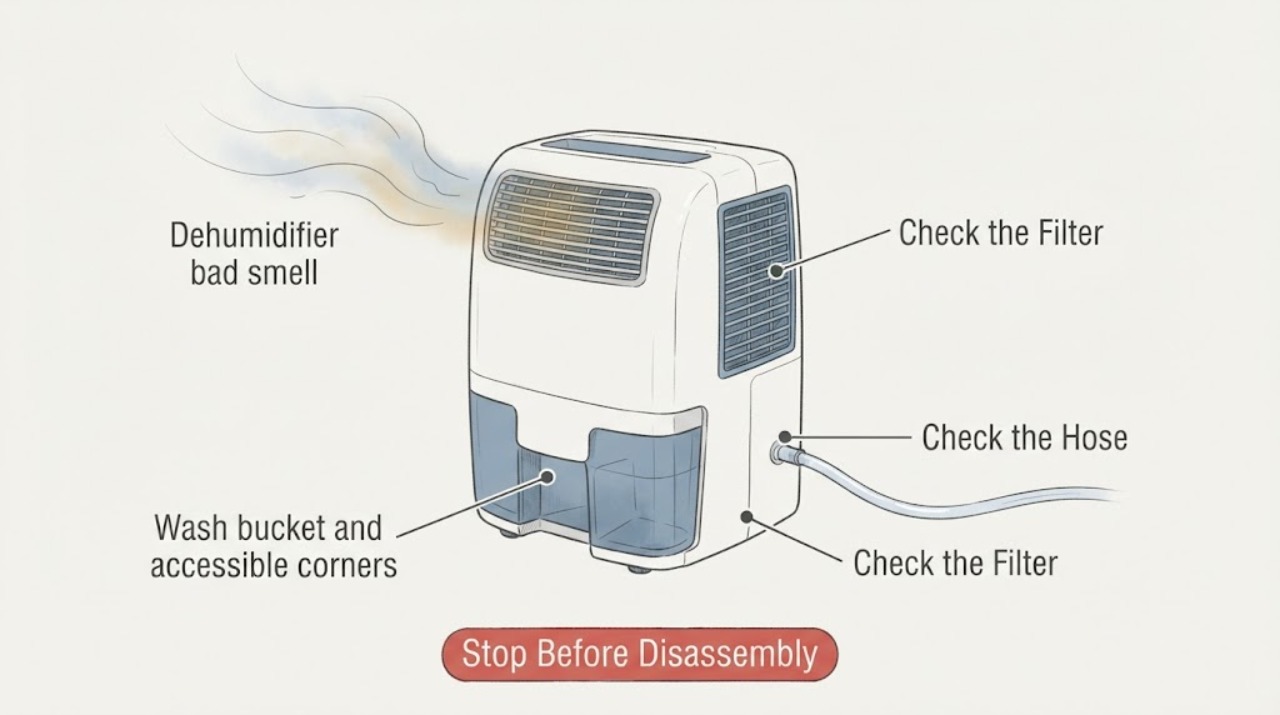
Dehumidifier bad smell
A bad smell from a dehumidifier usually comes from a dirty bucket, wet filter/air path, standing water, algae or mould, or a damp drain hose. Unplug before cleaning, wash the bucket with mild soap and water, clean/dry the filter as the manual allows, and retest once. Burning or electrical odor requires immediate stop-use and service.
-
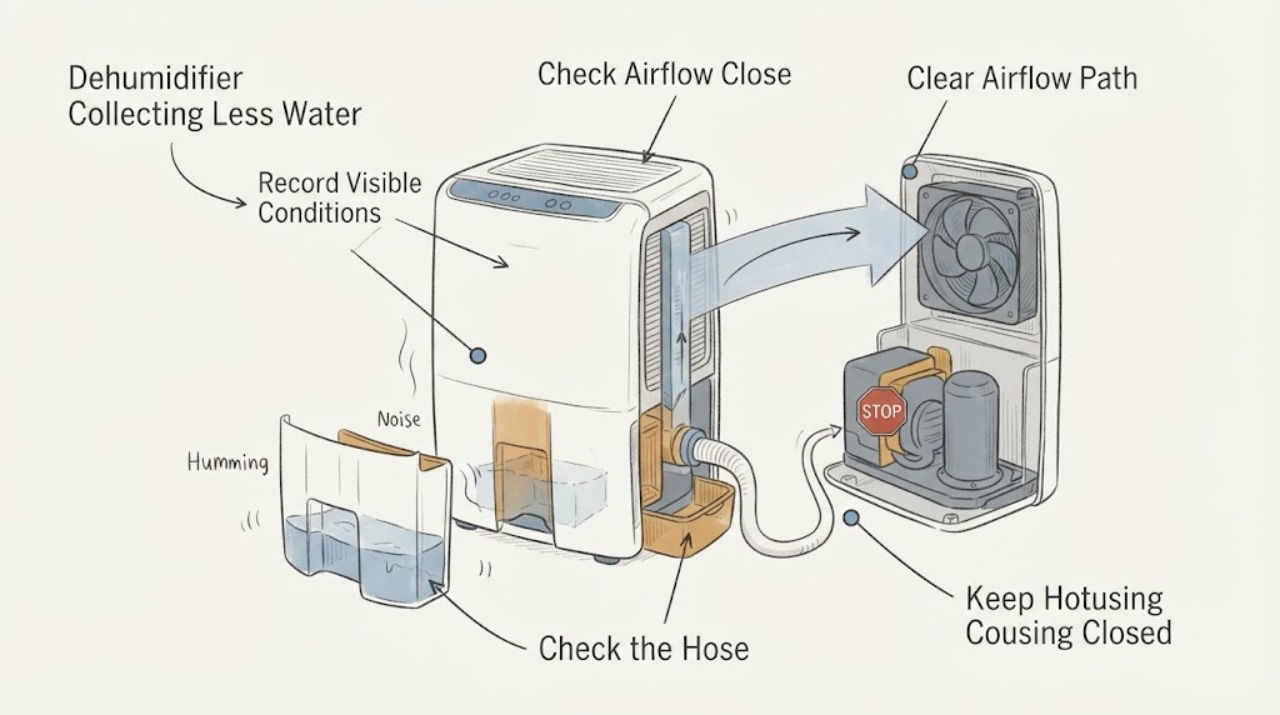
Dehumidifier Collecting Less Water and Humming: Check Conditions Before Blaming Age
A dehumidifier that collects less water is not automatically becoming inefficient because it is older. Water yield changes with room humidity, temperature, the setpoint, open windows or doors, room size, airflow and filter condition; if the room is already below the selected humidity, little water is expected.
-
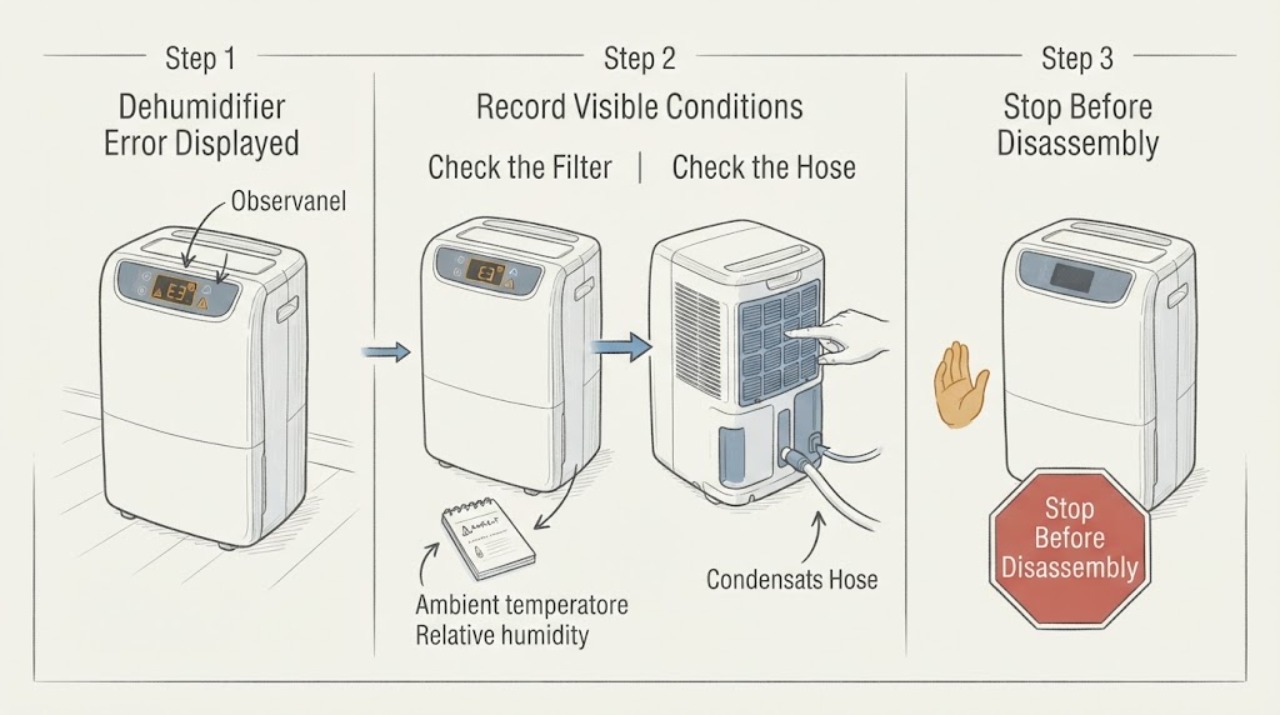
Dehumidifier Error Displayed: Record the Code Before Resetting
A dehumidifier error display is only useful when the exact code and behavior are recorded. Frigidaire’s official guide routes sensor, sealed-system, and electronic-control codes to service, while some overload or pump-out codes allow filter, clearance, hose, bucket, cool-down, or one restart check. Use the exact model manual and do not open the sealed system.
-
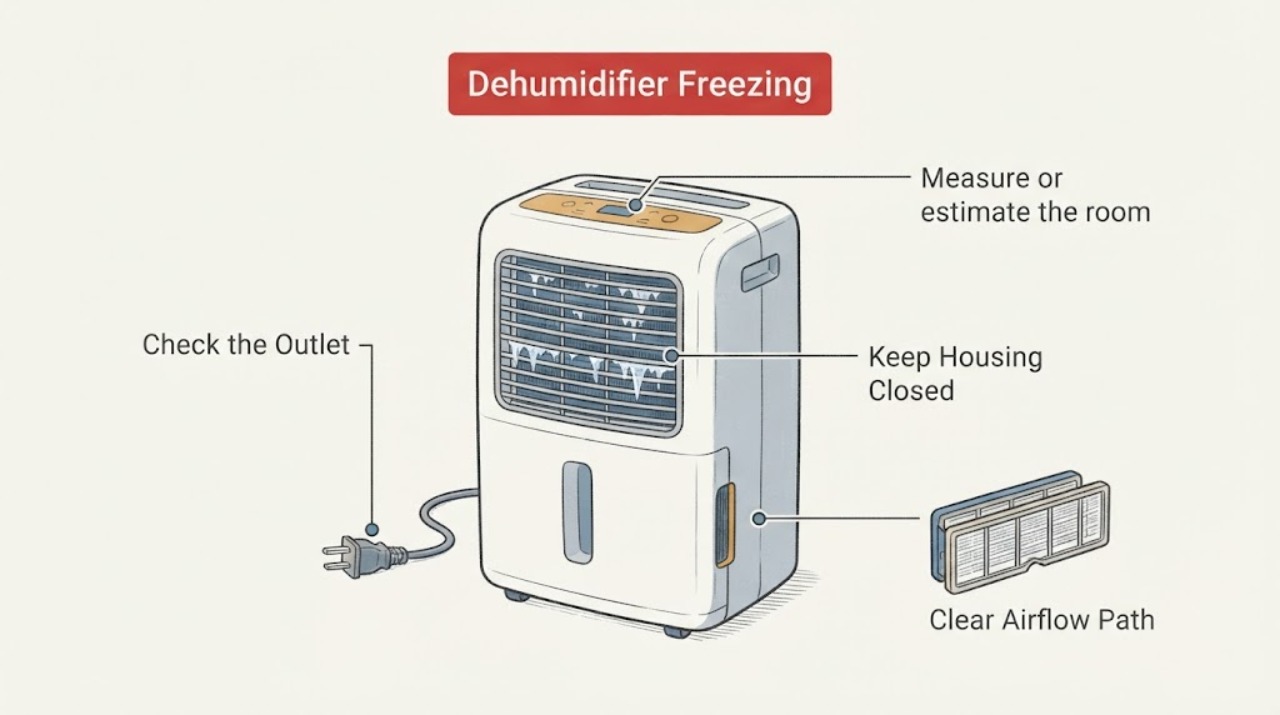
Dehumidifier Freezing
Ice on a dehumidifier usually means the coil is colder than the room conditions allow, especially in a cold room or with restricted airflow. Turn the unit off and let the ice melt naturally; do not chip at the coil. Check the room temperature, filter, and clear airflow, then use the exact model manual because Wood’s says low-temperature performance depends on the dehumidifier technology and its MRD22 manual warns that ice can build below +5°C.
-
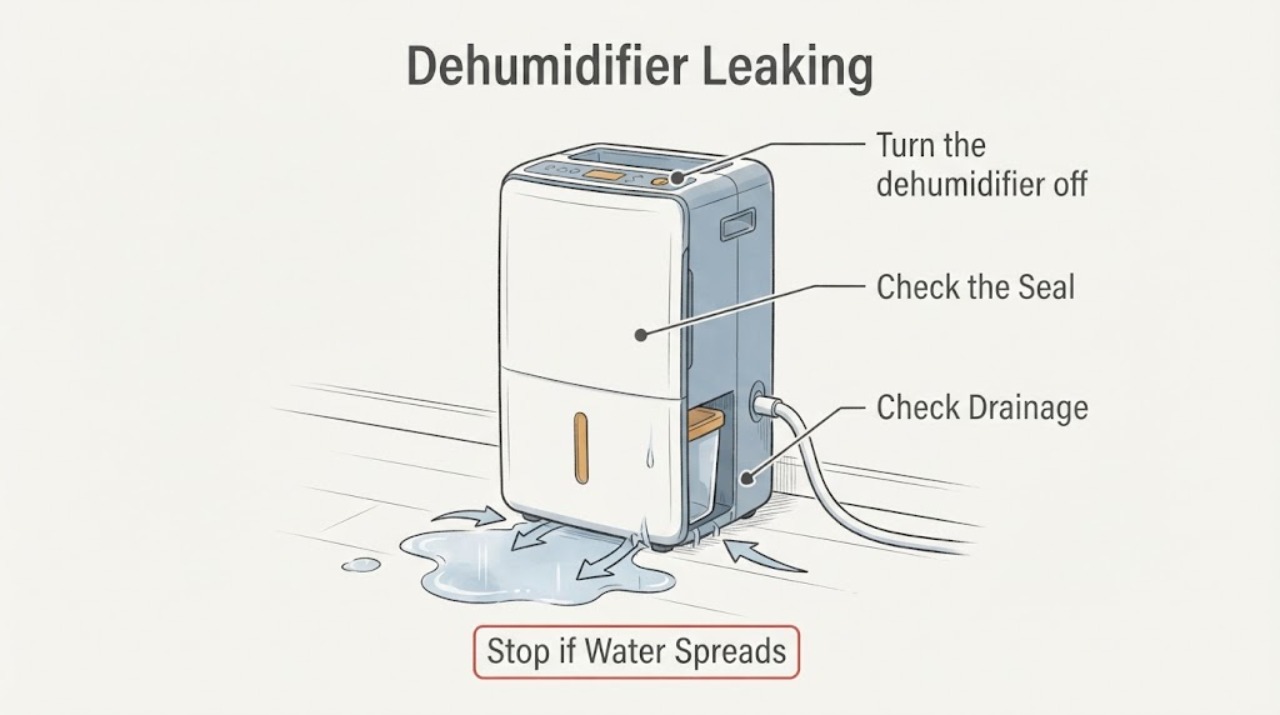
Dehumidifier Leaking
A leaking dehumidifier is first separated by location: bucket, continuous-drain connector, or base. Turn it off and keep water away from electrical parts, place the unit on a level floor, inspect the bucket for cracks or tilt, and check the drain-hose connector washer and downhill routing. Heavy frost can overflow the base; a cracked bucket, recurring leak, or leak from inside the cabinet needs service.
-
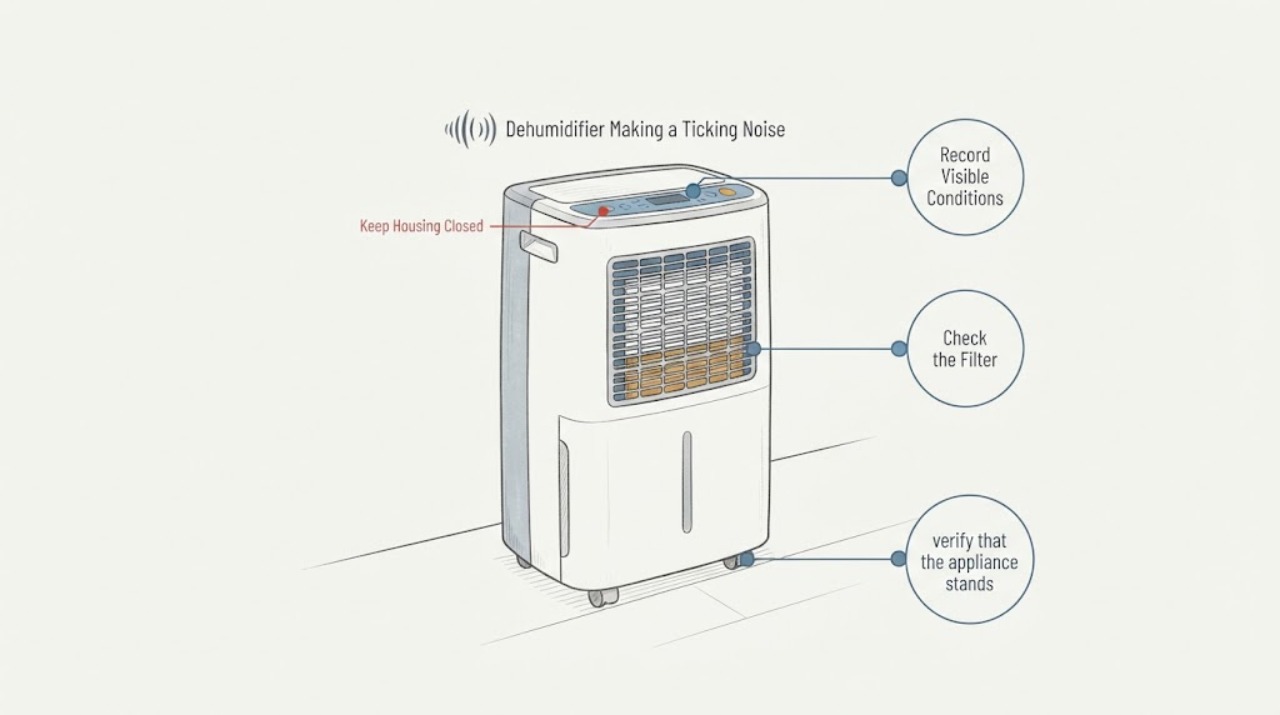
Dehumidifier Making a Ticking Noise: Safe Checks
A ticking noise by itself does not identify a failed compressor, fan, relay or other part. First note whether it occurs only as the dehumidifier starts or cycles, or continues while the unit is stopped; GE says compressor, condenser-fan, dripping-water and normal on/off cycling sounds can occur during operation.
-
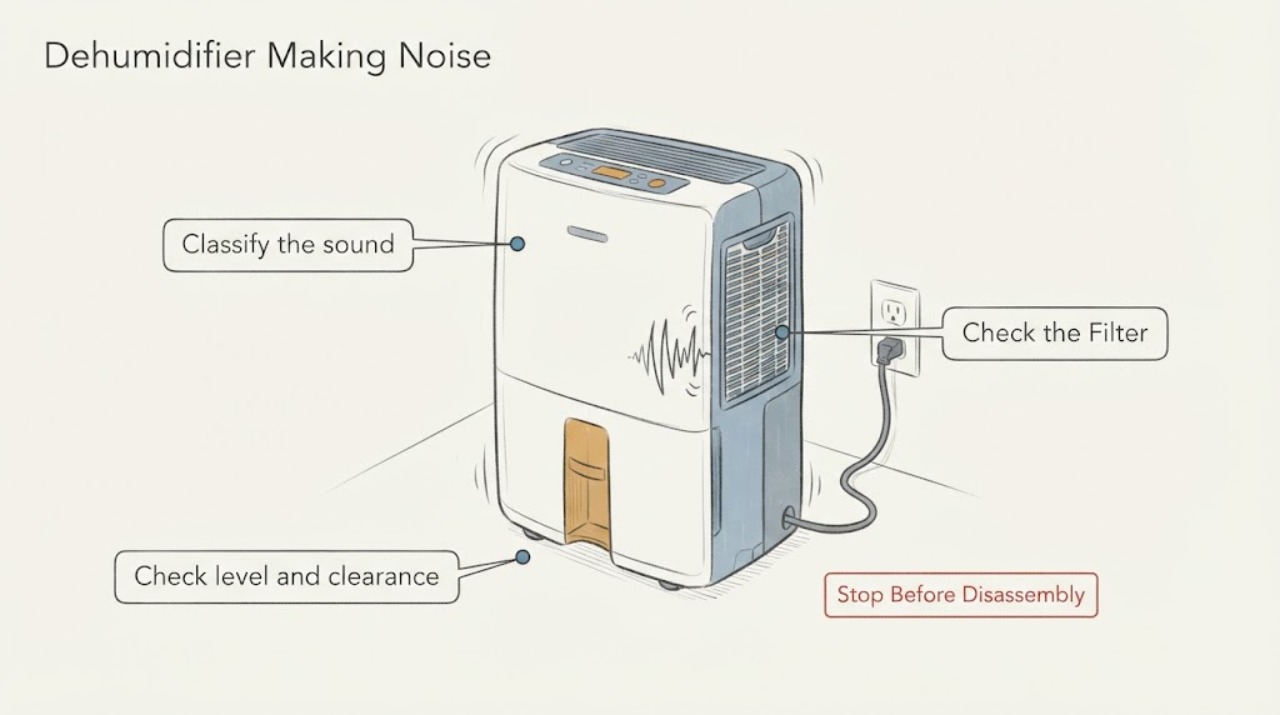
Dehumidifier Making Noise
For a dehumidifier making noise, identify whether the sound is fan airflow, compressor hum, vibration, rattling, or scraping. Check level, clearance, filter, bucket, and hose externally after unplugging. Persistent loud noise, overheating, leak, or damaged fan needs service.
-
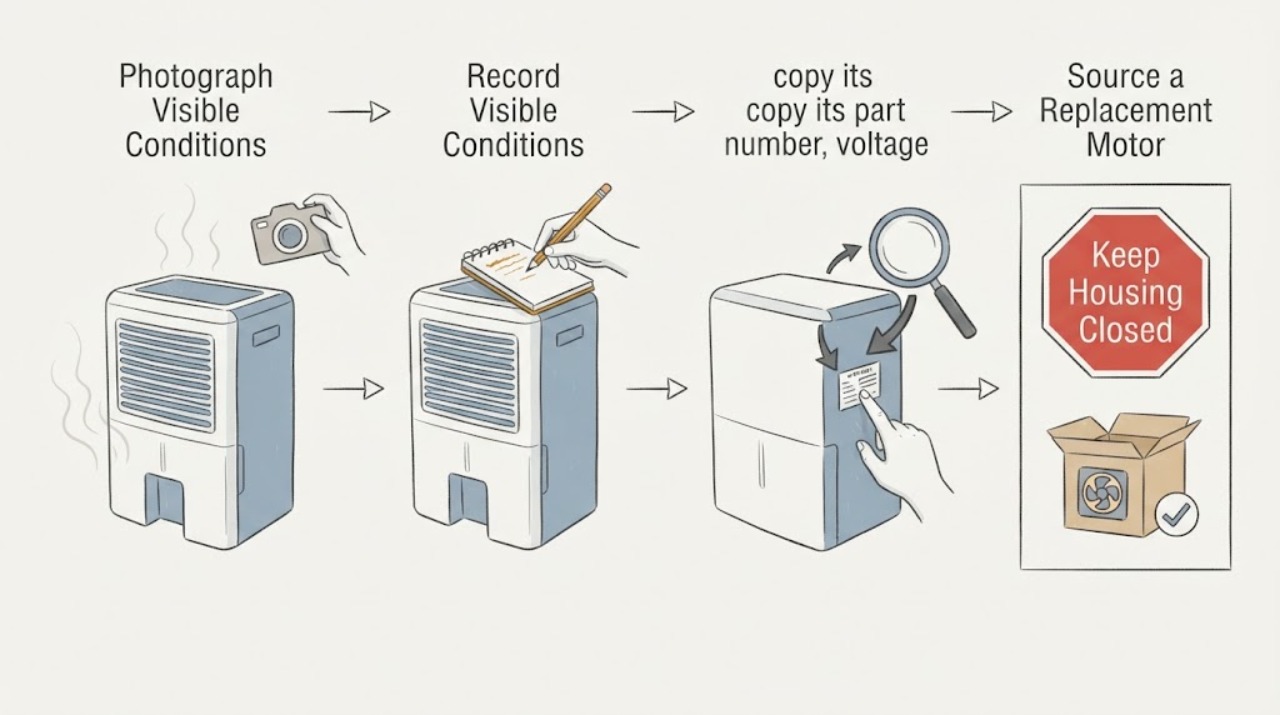
How to Source a Replacement Motor for a Whole-House Dehumidifier
Do not order a generic dehumidifier motor from the symptom or a voltage label alone. First identify the whole-house unit's exact manufacturer and model, confirm that the failed item is the fan or blower assembly, and copy the original motor or assembly part number and nameplate information.
-
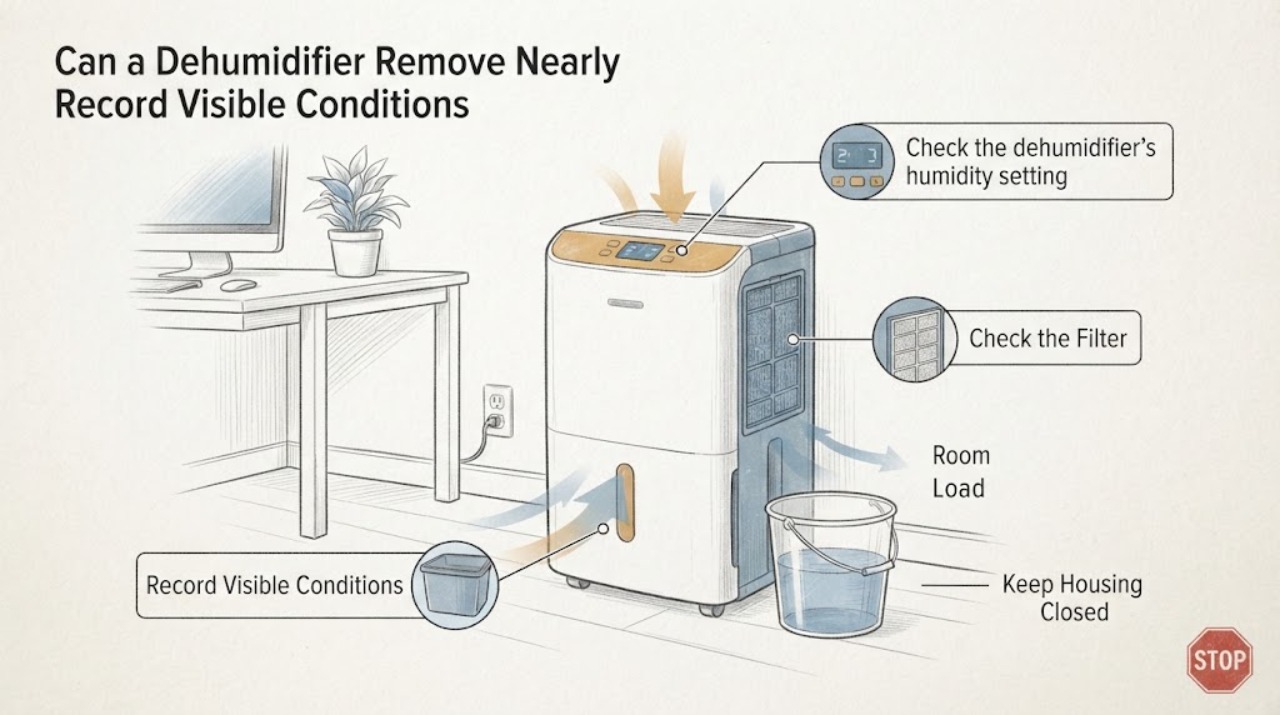
Can a Dehumidifier Remove Nearly 100% of Moisture?
A portable dehumidifier is not expected to remove nearly 100% of the moisture from room air. The practical question is whether it can reach the humidity range required by the room and the sensitive equipment, measured with a separate hygrometer.
-
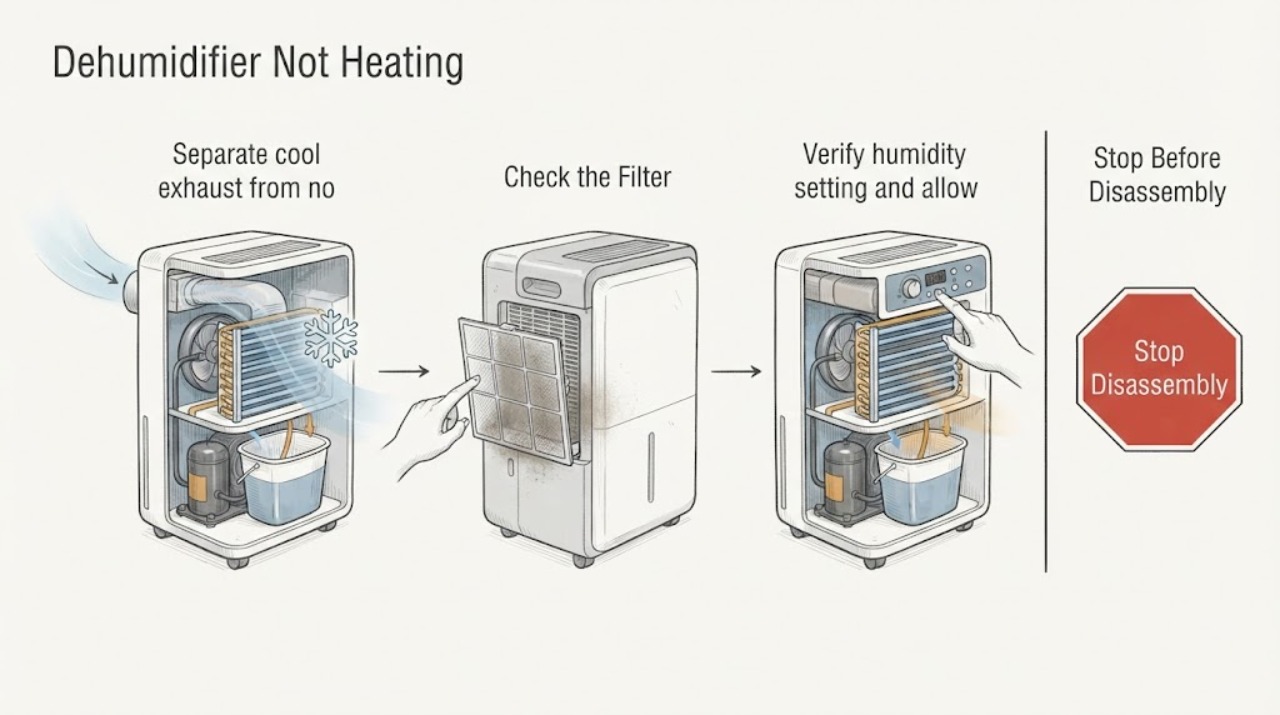
Dehumidifier Not Heating
A dehumidifier removes moisture rather than providing room heat, so cool exhaust may be normal defrost behavior. Check room temperature, airflow/filter, bucket and humidity setting. A warm room with clear airflow and an inactive compressor, odor or repeated failure needs service.
-
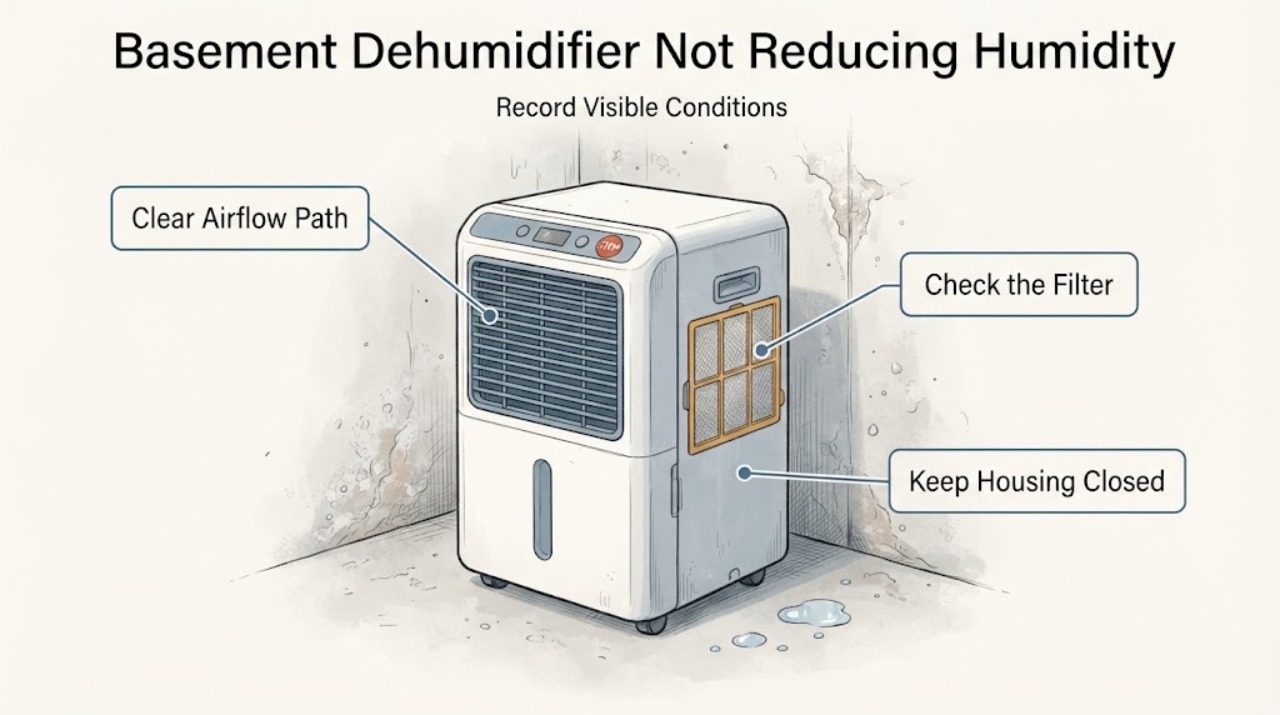
Basement Dehumidifier Not Reducing Humidity: Measure the Load Before Calling It Worn Out
A dehumidifier that is not lowering basement humidity is not automatically worn out. First compare the room's relative-humidity reading with the unit's setpoint using a separate hygrometer, then check whether doors and windows are closed, airflow is clear, the filter and bucket are in the correct condition, the unit is large enough for the room's moisture load, and the basement is warm enough for the model.
-
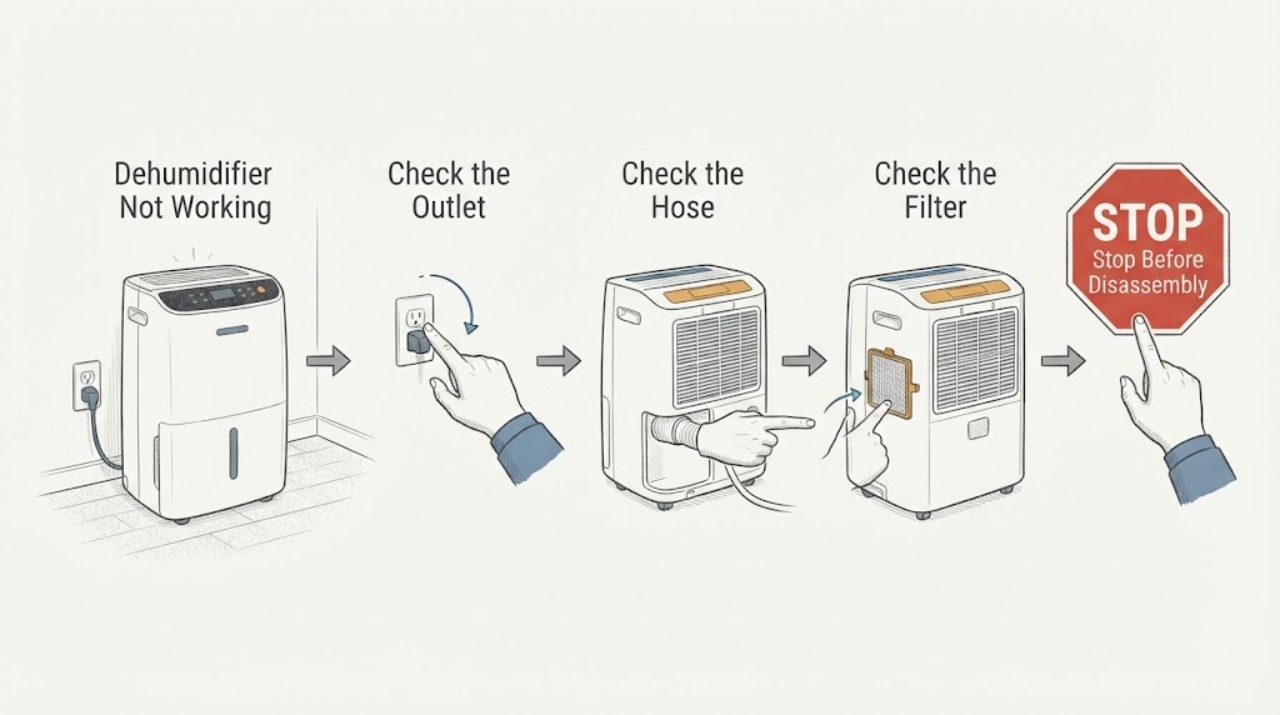
Dehumidifier Not Working: Safe Checks
Start by deciding whether the dehumidifier is completely dark, powers up but does not run, runs without collecting water, or stops with a code or full bucket. Check the cord, outlet, breaker or GFCI, bucket seating, filter and hose only from outside and according to the manual. Frigidaire’s guidance treats sensor, sealed-system and electronic-control codes as service matters; it also links pump behavior to a connected, unobstructed hose and bucket pickup.
-
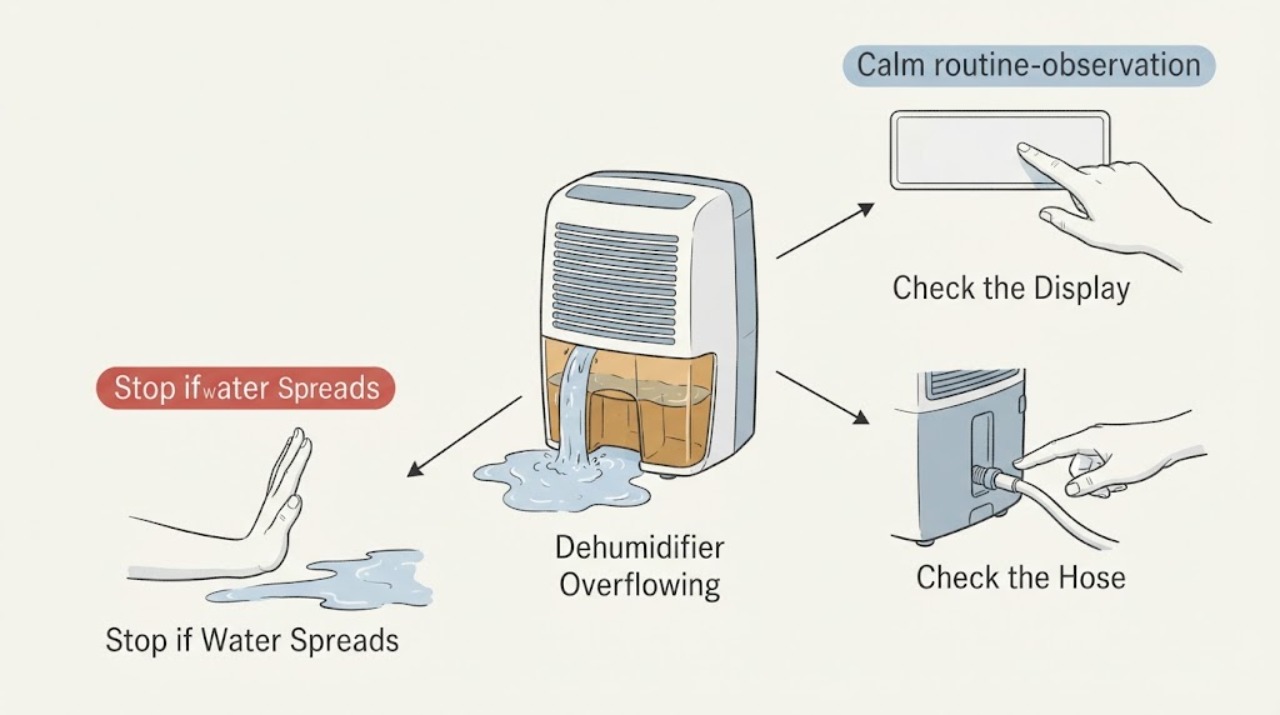
Dehumidifier Overflowing
To troubleshoot a dehumidifier that is overflowing, first identify the exact stage and accompanying signs, then make only the safe external checks supported by the owner guidance. Stop for hazards or recurrence and arrange qualified service.
-
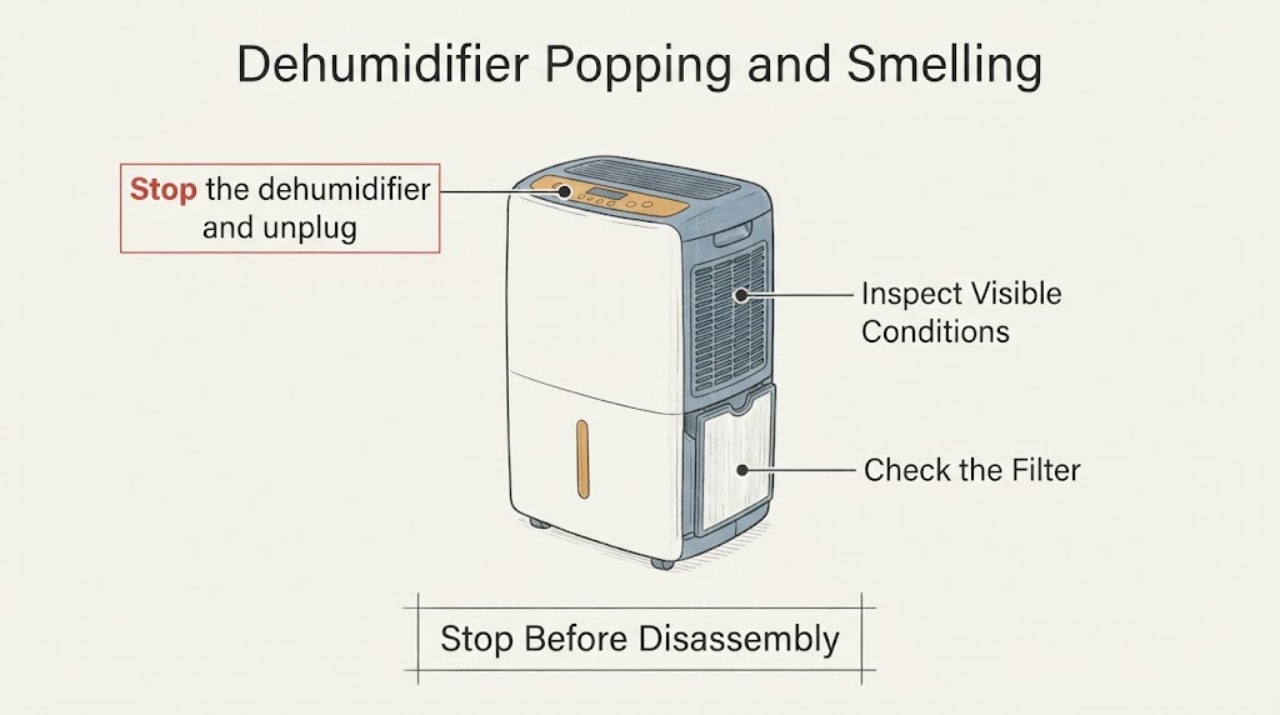
Dehumidifier Popping and Smelling: Safe External Checks
A dehumidifier can make normal compressor, fan, water-dripping, and cycling sounds, but the opened official guidance does not establish a popping noise together with an odor as a normal condition. Turn it off and unplug it safely; do not power it back on just to reproduce the sound.
-
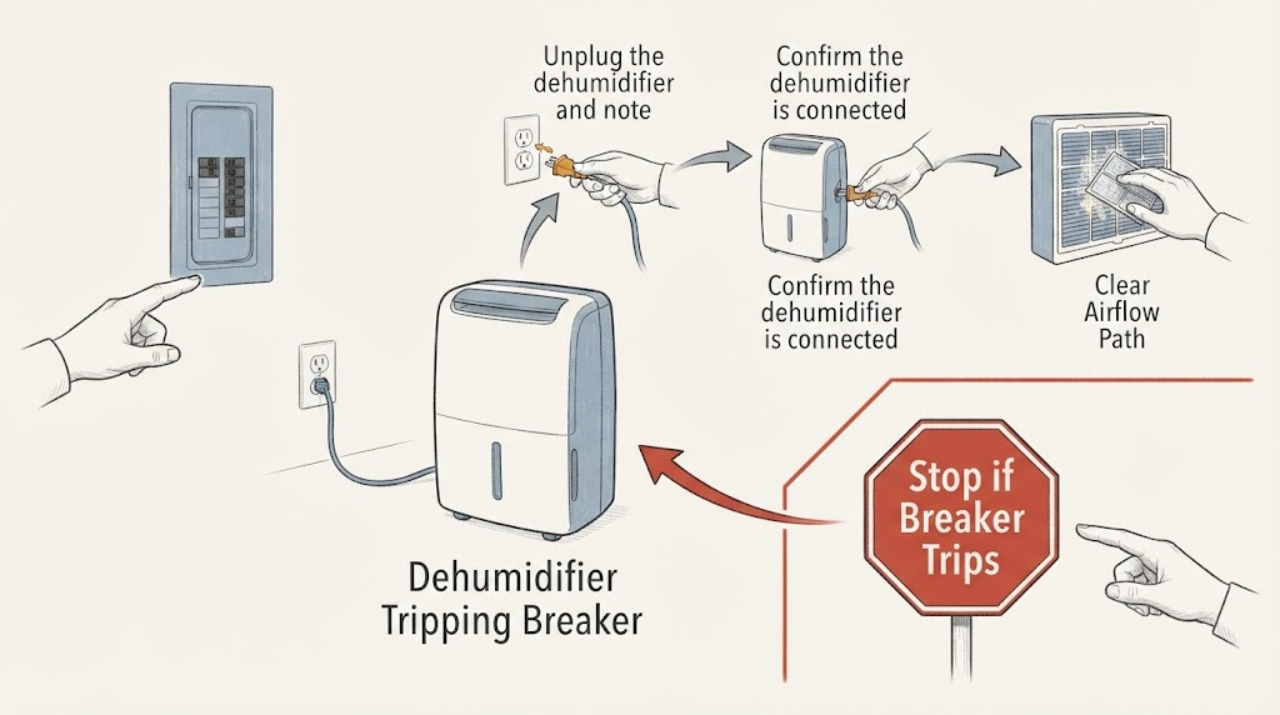
Dehumidifier Tripping Breaker
If a dehumidifier trips the breaker, unplug it and first determine whether the trip follows the receptacle, the cord, or the appliance. Do not use an extension cord or power strip. Once the circuit is stable and the unit is cool, check only external airflow, filter, and room conditions. A repeat trip or hot, wet, or damaged unit needs qualified service.
-
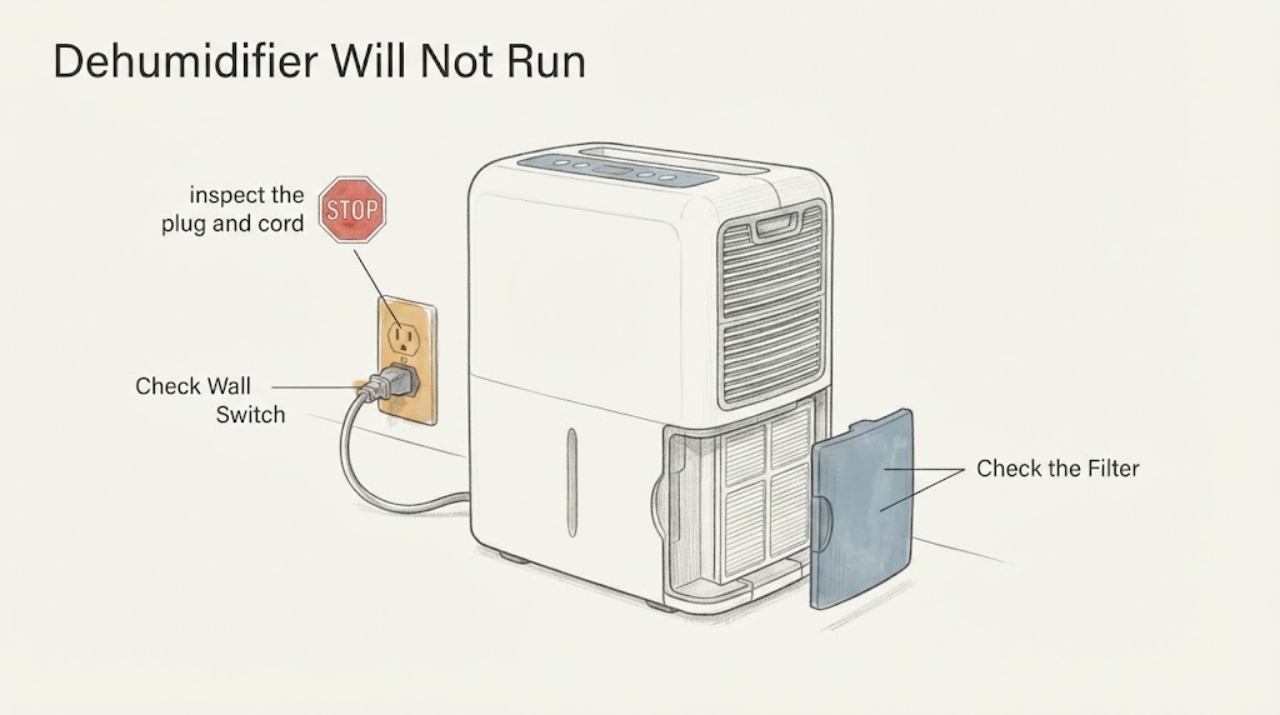
Dehumidifier Will Not Run: Safe External Checks Before Service
Do not start by choosing a capacitor value: this task has no brand, model, schematic, or confirmed failed component, and a dehumidifier capacitor or control board can be part of a hazardous electrical circuit. First check only the outside of the unit: a sound power connection, a tripped breaker or GFCI, a damaged cord, a full or poorly seated bucket, blocked airflow, the humidity setting, and a dirty filter.