
On this page
Start here
Quick answer
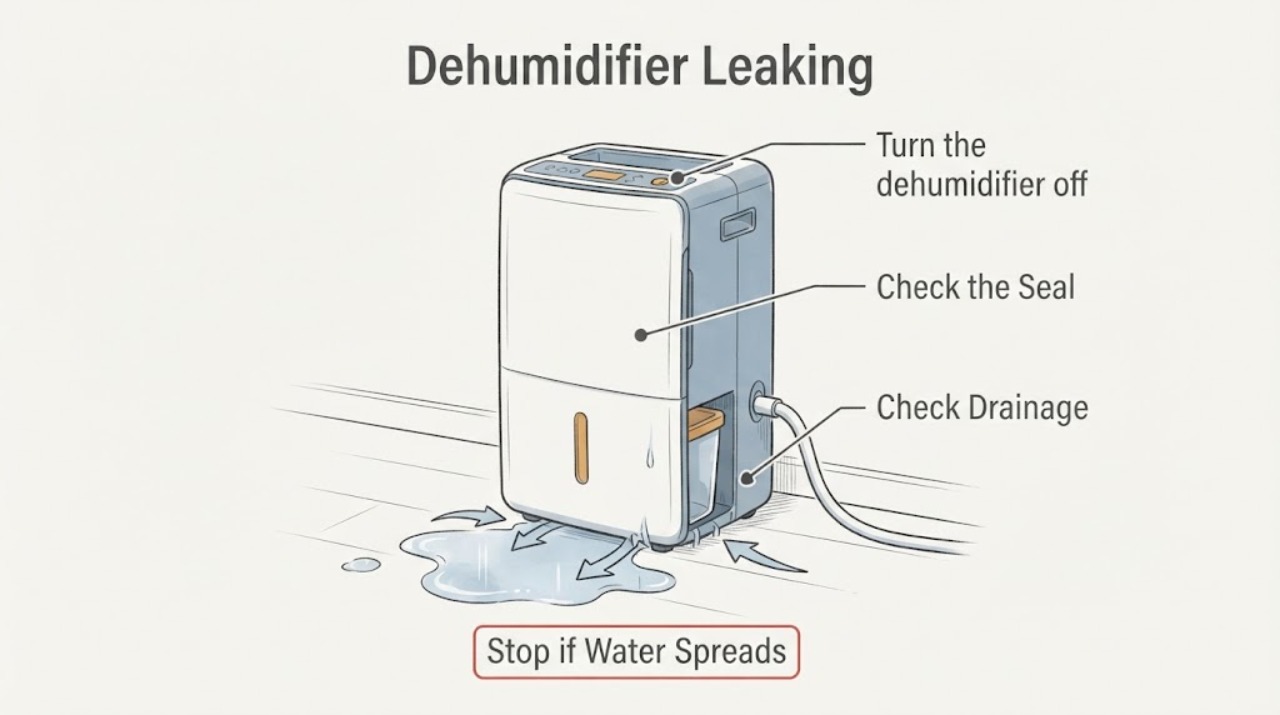
A leaking dehumidifier is first separated by location: bucket, continuous-drain connector, or base. Turn it off and keep water away from electrical parts, place the unit on a level floor, inspect the bucket for cracks or tilt, and check the drain-hose connector washer and downhill routing. Heavy frost can overflow the base; a cracked bucket, recurring leak, or leak from inside the cabinet needs service.
Work through in order
Diagnostic checks
Use only checks that match the exact appliance or system and its official guide.
-
Check 1
Turn the dehumidifier off and identify whether water is around the removable bucket, at the continuous-drain connector, or beneath the cabinet; dry the surrounding floor from a safe position.
Expected result: The leak is at the bucket, hose connector, or unit base.
Next step: Keep the unit off while checking the matching external path.
Stop if: Do not touch wet electrical connections or continue operation if water reaches the cord, outlet, or controls.
Why this matters
Why: Frigidaire separates bucket, continuous-drain, and base leak paths, which require different checks.
-
Check 2
Check the unit is on a flat, level floor and that the bucket is fully seated; inspect the bucket and lid area for a crack, distortion, or damaged seal.
Expected result: The unit is tilted, the bucket is misseated, or a crack/leak is visible.
Next step: Correct only seating/leveling or replace the exact model bucket; do not run with a cracked container.
Stop if: Stop for cabinet damage or water near electrical parts.
Why this matters
Why: Frigidaire identifies a damaged or tilted bucket as a direct leak cause.
-
Check 3
For continuous drainage, inspect the garden-hose style connector for a missing, worn, or cracked rubber/plastic washer and confirm the hose is correctly attached and routed downward without kinks.
Expected result: The washer is missing/damaged, the connector leaks, or the hose path is obstructed.
Next step: Replace only the matching washer or hose part and follow the exact model drain setup.
Stop if: Do not force a damaged fitting or use a pressurized connection.
Why this matters
Why: Frigidaire says the connector can leak when its washer is bad; a hose route that cannot drain can back water up.
-
Check 4
Check for heavy frost or ice at the accessible air path after the unit is off and follow the use-and-care manual for defrosting; do not chip ice or open the sealed system.
Expected result: Frost is present and later melts into the base, or no frost is visible but the base keeps leaking.
Next step: Allow the model-approved defrost process and arrange service if the leak returns.
Stop if: Do not use sharp tools, heat guns, or refrigerant-system repairs.
Why this matters
Why: Frigidaire identifies heavy frost melting over the catch tray as a possible base leak; persistent base water needs service diagnosis.
Use your observations
Decision map
Find the observation that best matches what you see, then follow the next safe action.
-
PATH 01Next step
What you see
Water is around a tilted or cracked bucket.
Do this next
Level the unit, reseat the bucket, and replace a damaged exact-model bucket before operation.
Why this path and its safety boundary
Why it matters: The bucket seating, level, or structure is the likely source.
-
PATH 02Next step
What you see
Water is at the continuous-drain fitting and the connector washer is missing, worn, or cracked.
Do this next
Install the correct washer or hose setup and confirm gravity drainage before restarting.
Why this path and its safety boundary
Why it matters: The drain connector seal is the documented leak path.
-
PATH 03Next step
What you see
Water comes from the base, especially with heavy frost, or persists after bucket and drain checks.
Do this next
Keep the dehumidifier off and arrange qualified service if the model-approved defrost does not resolve it.
Why this path and its safety boundary
Why it matters: Melted frost or an internal leak is possible.
Helpful context
Understand the symptom
What the symptom tells you
A leaking dehumidifier is first separated by location: bucket, continuous-drain connector, or base. Turn it off and keep water away from electrical parts, place the unit on a level floor, inspect the bucket for cracks or tilt, and check the drain-hose connector washer and downhill routing. Heavy frost can overflow the base; a cracked bucket, recurring leak, or leak from inside the cabinet needs service.
Use the exact model information
Controls, code meanings, safe access, and replacement parts vary by model. Record the model and the exact symptom before requesting service.
When checks do not resolve it
Need a professional?
Give the manufacturer or a qualified appliance technician the exact model, serial information, symptom timing, and all observations. Do not open sealed, refrigerant, gas, high-voltage, or energized assemblies.
Common questions
FAQ
Why does a dehumidifier leak from the bucket?
Frigidaire identifies a tilted or damaged bucket and an unlevel floor as common bucket-leak causes. Check level and bucket condition before replacing other parts.
Can I keep running it with water under the base?
No. Keep water away from the electrical supply and stop operation until the leak source is corrected or the unit is serviced.
Read the exact guide
Official sources
- Dehumidifier - Water Leaking IssuesFrigidaire · Dehumidifier bucket, level, continuous drain connector, washer, frost, and service checks
Community feedback
Share a repair observation
Share a plain-text repair observation. Accepted observations are published automatically; this page may take a moment to update.