
On this page
Start here
Quick answer
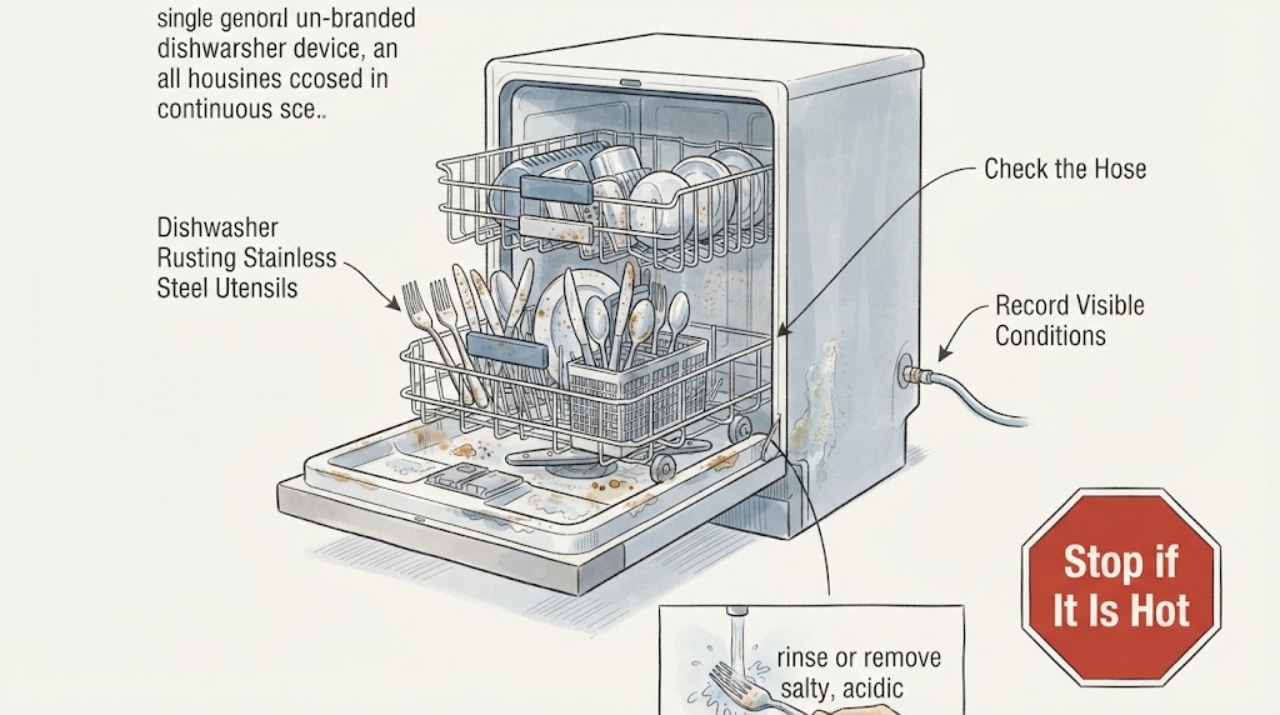
First determine whether the brown marks are on the stainless steel utensils, the dishwasher rack or tub, or both. GE says dishwasher interiors do not typically rust and that rust stains are often introduced by an object or the water supply; Whirlpool lists non-dishwasher-safe metals, low-quality stainless, salty or acidic food, leaving items wet too long, and contact between silver and stainless as contributors to utensil pitting or rust. Remove any already-rusting iron, tin, cast-iron, old grater, or damaged item from the load, keep silver away from stainless, rinse salty or acidic residue when the load will wait, and unload promptly. Inspect the rack coating and other items for a source of rust transfer. Do not conclude that the dishwasher's stainless tub has failed from utensil spots alone, and do not use a guessed chemical or replacement part until the source is identified.
Work through in order
Diagnostic checks
Use only checks that match the exact appliance or system and its official guide.
-
Check 1
Remove the affected utensils after the cycle and inspect them in good light. Record which pieces are marked, whether the mark wipes away or leaves a pit, whether the pieces are truly stainless or mixed-material, and whether the dishwasher rack or tub also has brown marks.
Expected result: Only a few pieces are affected, many different items are affected, the mark wipes off, pits are visible, or the rack/tub has matching stains.
Next step: Keep affected pieces out of the next load while tracing the source. Photograph the utensil and any matching rack/tub mark, and do not order dishwasher parts from the appearance alone.
Why this matters
Why: Whirlpool distinguishes pitting/rust causes tied to item material, quality, food residue, and wet dwell time; GE distinguishes object-introduced stains from stains appearing at interior parts or the water supply. A spot on one utensil does not prove the tub is corroding.
-
Check 2
Remove items that are not dishwasher-safe or are already prone to rust, including iron or tin items, cast iron, old graters or peelers, and any utensil whose coating or finish is damaged. Keep sterling silver or silver-plated pieces from touching stainless steel in the basket.
Expected result: A rust-prone item, damaged utensil, silver item, or dissimilar metal was in the same load, or the load contained only confirmed dishwasher-safe stainless pieces.
Next step: Run the next load without the suspect or mixed-metal items and keep them separated for hand washing or their own manufacturer instructions. If only the suspect pieces stop marking, the utensil/load identity is more likely than a tub failure.
Why this matters
Why: Whirlpool says non-dishwasher-safe metals and already-rusting items can create rust or transfer it during the cycle. Whirlpool and GE both warn that silver and stainless contact can cause pitting or damage to the silver.
-
Check 3
Before the next load, rinse or remove salty, acidic, or strongly pigmented food from the affected utensils if they will sit in the dishwasher, and unload the completed cycle promptly rather than leaving wet metal in the closed tub for an extended period.
Expected result: The marks follow salty or acidic residue, items sat wet after the cycle, or the same marks appear despite prompt unloading and clean loading.
Next step: Change only the loading and dwell-time condition first. If confirmed stainless utensils continue to pit or rust promptly, preserve samples and investigate the rack, detergent/water conditions, or a professional appliance/water assessment instead of guessing a part.
Why this matters
Why: Whirlpool identifies high salt or acid and leaving items in the dishwasher too long as contributors to pitting or rust. These conditions can affect utensils without showing a dishwasher mechanical fault.
-
Check 4
With the dishwasher empty and cool, inspect the rack wires, vinyl coating, exposed metal, tub floor, and visible heating-element support areas for chips, cracks, loose rust, or a foreign rusting object. Do not scrape the tub, remove the heating element, or use a strong cleaner or chemical treatment based on a generic recommendation.
Expected result: A rack coating is chipped or cracked, a rust-prone object is present, brown residue is localized to the rack/element area, or the interior appears clean while utensils alone mark.
Next step: Remove the source object and keep sharp or rusting items away from damaged coating. If rack damage is extensive, interior metal is deteriorating, or the source cannot be isolated, stop using the affected load pattern and request model-specific service.
Why this matters
Why: Whirlpool says damaged rack coating can expose metal and bleed rust, and GE says rust stains can come from objects or interior parts while the stainless tub itself typically does not rust. A visual source does not identify a repair kit or replacement rack without the dishwasher model.
-
Check 5
Compare the dishwasher's water and detergent conditions with the timing of the marks. Record whether every load is affected, whether the problem began after a water or detergent change, and whether rust-colored staining also appears on the tub, rack, or other dishes; do not change multiple variables at once.
Expected result: Marks appear only with a particular utensil group, only after the dishwasher sits wet, across all loads, or together with broader interior or water staining.
Next step: Use the documented pattern to contact the utensil maker, dishwasher manufacturer, appliance technician, or plumber as appropriate. Keep affected utensils out of service if they are pitted or heavily rusted and do not claim a dishwasher component failure without diagnosis.
Why this matters
Why: Utensil-specific marks point toward item material or load contact; broad staining can implicate an interior source or water supply. GE says rust from household water may indicate a plumbing issue, while Whirlpool recommends service when user-level causes do not resolve the problem.
Use your observations
Decision map
Find the observation that best matches what you see, then follow the next safe action.
-
PATH 01Next step
What you see
Only one or a few low-quality, mixed-material, damaged, or rust-prone utensils show marks, especially after sitting wet or carrying salty/acidic food residue.
Do this next
Remove those pieces from dishwasher use, follow the utensil maker's care instructions, rinse residue when a load will wait, and unload promptly.
Why this path and its safety boundary
Why it matters: Whirlpool's documented utensil causes fit an item or loading condition better than a dishwasher-tub diagnosis.
-
PATH 02Next step
What you see
Sterling silver or silver-plated items touched stainless utensils in the basket, or iron/tin/cast-iron or an already-rusting object was washed with them.
Do this next
Separate the metals and remove the rust-prone object from future loads. Inspect the rack and tub for transferred residue before the next cycle.
Why this path and its safety boundary
Why it matters: Dissimilar-metal contact or rust transfer can damage or stain items during the cycle; this does not prove a dishwasher failure.
-
PATH 03Next step
What you see
Brown residue is visible on a chipped rack coating, around an interior support, or in the tub while multiple clean utensils acquire matching marks.
Do this next
Stop loading valuable or heavily affected utensils, keep the damaged area from contacting them, and arrange model-specific appliance service or rack evaluation. Do not scrape or coat an interior part with an unapproved product.
Why this path and its safety boundary
Why it matters: Whirlpool documents rust bleeding from exposed rack metal, and GE identifies objects or interior areas as possible stain sources; the source is broader than one utensil.
-
PATH 04Next step
What you see
Utensil and interior marks affect most loads, persist after suspect items and mixed metals are removed, or rust appears to come from the household water supply.
Do this next
Document the load, water, detergent, and interior pattern and contact the dishwasher manufacturer, appliance technician, or plumber. Keep visibly pitted utensils out of food use until assessed.
Why this path and its safety boundary
Why it matters: The issue is not scoped by item care alone; GE says rust in the water supply can indicate a plumbing problem, and Whirlpool routes unresolved cases to service.
Helpful context
Understand the symptom
Start with the utensil, not the dishwasher tub
The supplied topic is about stainless steel utensils coming out with rust-like marks. That does not by itself mean the dishwasher's stainless interior is rusting. GE says interior rust stains are often introduced by an object or water supply, while Whirlpool lists item material, quality, food residue, wet dwell time, and mixed-metal contact as possible utensil causes. Compare the affected pieces with the rack, tub, and other load items before choosing a dishwasher repair path.
Use the distribution of marks to separate item corrosion from rust transfer
Record whether one type of knife or utensil is affected, whether marks wipe off or leave pits, whether silver or another rust-prone item was in the load, and whether the rack coating is chipped. Whirlpool says rust from already-prone items can circulate and stain racks, while GE says rust can originate from objects, interior parts, or water. These observations narrow the cause without claiming that every stainless mark is a dishwasher failure.
When checks do not resolve it
Need a professional?
Request appliance or plumbing service when rust persists across loads after suspect utensils and mixed metals are removed, when a rack or interior support is visibly deteriorating, when staining appears in the incoming water, or when the source cannot be isolated without opening the dishwasher.
Common questions
FAQ
Does rust on stainless utensils mean the dishwasher tub is rusting?
Not necessarily. GE says dishwasher interiors do not typically rust and that stains are often introduced by objects or the water supply. Inspect the utensils, rack coating, tub, and other load items separately before blaming the tub.
Why are only some stainless utensils rusting?
Whirlpool lists item quality, non-dishwasher-safe metals, salty or acidic residue, and prolonged wet contact as possible causes. Different alloys, finishes, and mixed materials can therefore react differently in the same load.
Can silver and stainless utensils go in the same basket?
Whirlpool and GE warn against direct contact between sterling silver or silver-plated items and stainless steel because it can cause pitting or damage. Separate the metals and follow each item's care instructions.
What if the dishwasher rack has a rusted or chipped spot?
Whirlpool says a cracked rack coating can expose the metal and bleed rust onto items. Keep utensils away from the damaged area and use the dishwasher model to choose a rack repair or replacement path; do not assume a generic coating is safe inside the tub.
Read the exact guide
Official sources
- Is this Item Dishwasher Safe?Whirlpool Product Help · Used for stainless, silver, iron, tin, salty/acidic food, and mixed-metal contact guidance. It is not used to diagnose an unidentified dishwasher interior.
- Tines are Chips, Scratches or Damaged - DishwasherWhirlpool Product Help · Used for rust transfer from already-rusting items and chipped or cracked rack coating. It is not used to select a repair kit or rack for an unidentified model.
- Pitting or Rusting on Cooking UtensilsWhirlpool Product Help · Used for utensil-specific pitting/rust contributors, prompt unloading, item quality, food acidity/salt, metal separation, and the boundary between slight and heavy rust. It is not used to infer a particular dishwasher model fault.
- Dishwasher Washing FlatwareGE Appliances · Used only for the manufacturer distinction that stainless flatware is normally dishwasher-safe and should not contact sterling silver or silver plate. It is not used to diagnose the assigned dishwasher.
- Dishwasher - Interior Rust StainingGE Appliances · Used to distinguish interior staining from utensil/object or water-supply sources, and to state that dishwasher interiors typically do not rust. It is not used to transfer GE cleaning chemistry or parts to another model.
Community feedback
Share a repair observation
Share a plain-text repair observation. Accepted observations are published automatically; this page may take a moment to update.