
On this page
Start here
Quick answer
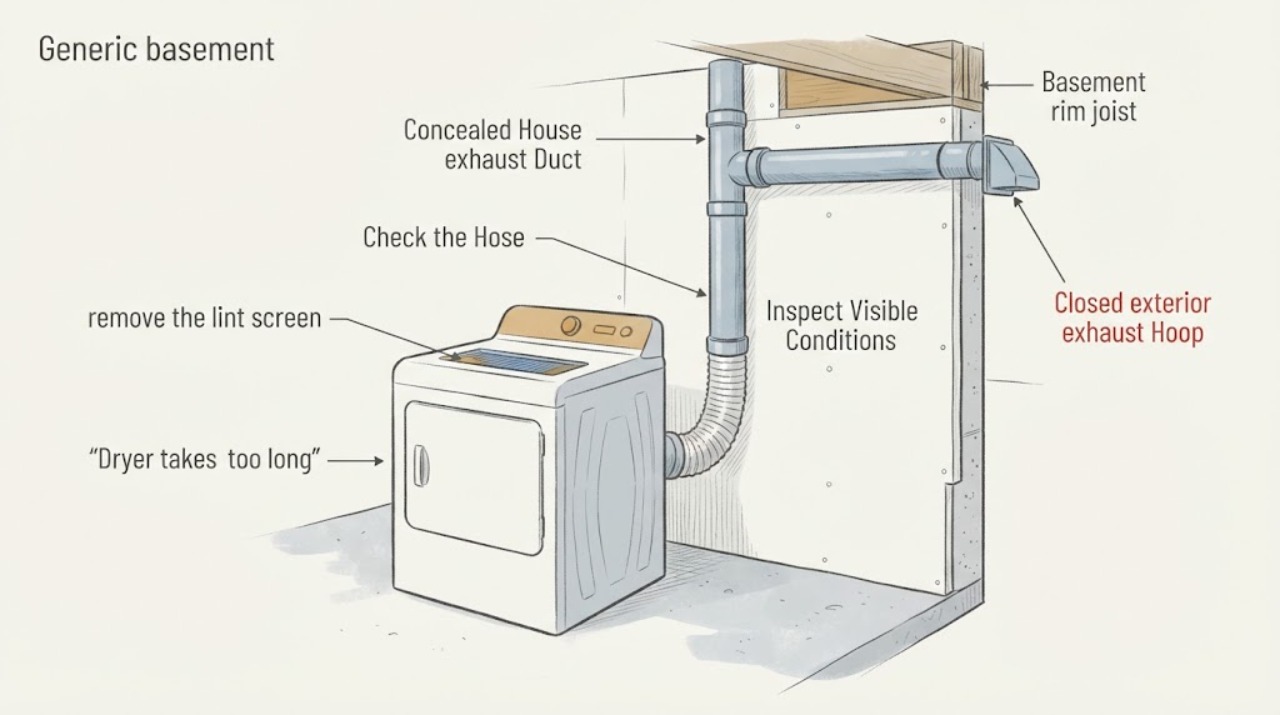
A basement dryer with a long or concealed exhaust run can take longer when airflow is restricted, but the drywall means the hidden duct should not be opened or brushed by a homeowner. Start with the lint screen, load/cycle and the outside hood: look for lint, a stuck damper, weak visible exhaust or a crushed transition section that can be seen without moving or dismantling the dryer. Manufacturer guidance says that long dry times with a hot dryer commonly point to restricted venting, and that a severely restricted vent can create a fire risk. Stop using the dryer if there is a burning smell, smoke, excessive heat, lint escaping into the room or no meaningful exterior airflow; arrange professional vent inspection/cleaning for the concealed run and qualified dryer service if the vent is clear but the dryer still performs poorly.
Work through in order
Diagnostic checks
Use only checks that match the exact appliance or system and its official guide.
-
Check 1
Stop the dryer immediately if there is smoke, a burning or hot-lint smell, unusual heat in the room, lint escaping around the appliance, or no meaningful exhaust outside. If none of those warnings is present, use the dryer only long enough for a safe exterior observation; do not open panels or enter the wall.
Expected result: A warning sign is present, or the dryer is warm and the outside hood has weak/no airflow.
Next step: Stop using the dryer and arrange professional vent inspection/cleaning. If smoke or fire is present, leave the area and contact emergency services; do not continue testing.
Stop if: Stop for smoke, flames, persistent burning odor, hot surfaces, lint in the room or unsafe access to the power/vent connection.
Why this matters
Why: These findings increase concern for restricted exhaust and fire risk; they do not identify the location of the restriction or a failed dryer part.
-
Check 2
With the dryer off and cool, remove the lint screen and inspect it under a light. Clean visible lint and residue as the owner manual permits, then check the accessible transition area behind/next to the dryer only for an obvious crush or kink; do not pull the dryer or disconnect concealed ductwork.
Expected result: The screen is coated or blocked, the visible transition is crushed/kinked, or both visible areas look clear.
Next step: Correct only the plainly accessible lint-screen or visible obstruction condition. If the concealed run remains suspect, schedule professional vent cleaning/testing rather than pushing tools into the wall.
Why this matters
Why: Whirlpool says a blocked screen can increase drying time and that crushed or undersized venting reduces airflow; clear visible conditions do not rule out a hidden restriction.
-
Check 3
From a safe outdoor position, inspect the exhaust hood while the dryer is operating normally and observe whether the damper opens and a steady stream of warm, moist air exits. Do not place a hand or tool inside the hood, climb, remove the hood or continue a cycle solely to test it.
Expected result: Airflow is strong and the damper opens, or airflow is weak/absent and lint/debris or a stuck damper is visible.
Next step: If weak/absent, stop the dryer and have the exterior hood and concealed run professionally inspected. If strong, continue with the load/cycle check and service the dryer if long times persist.
Why this matters
Why: Weak or absent exterior airflow supports an exhaust restriction, while strong airflow makes a severe whole-run blockage less likely but does not prove that the concealed section meets the dryer requirements.
-
Check 4
Compare the load and cycle with the symptoms: avoid packing one large load, separate heavy fabrics from light items, and confirm the selected cycle is intended for the load. Note whether clothing enters the dryer unusually wet from the washer.
Expected result: The load is oversized/mixed, an energy-saving or air-fluff cycle is selected, or clothing is wetter than usual before drying; alternatively the load and cycle are appropriate.
Next step: Use the correct cycle and load once, without bypassing safety controls. If the symptom remains, have the concealed vent professionally tested and request dryer service if airflow is confirmed adequate.
Why this matters
Why: GE and Whirlpool note that load size, fabric, cycle choice and incoming moisture can lengthen drying independently of a vent fault. Persistent long times with an appropriate load keep airflow or dryer performance in question.
-
Check 5
Provide the vent-cleaning professional or appliance servicer with the dryer model, basement route, approximate visible duct path, exterior hood location, recent lint/airflow observations and whether the dryer heats. Do not cut drywall, insert a brush into the concealed route or perform energized electrical tests.
Expected result: The vent professional finds a restriction/installation issue, or airflow is adequate but drying remains slow.
Next step: Repair/clean the vent through the qualified professional and retest only after the exhaust is safe. If airflow is adequate, arrange model-matched dryer service rather than replacing a heater or sensor by guesswork.
Why this matters
Why: A confirmed vent issue belongs to the building exhaust path; adequate airflow shifts the unresolved question toward dryer heating, sensing or other model-specific service without proving a component.
Use your observations
Decision map
Find the observation that best matches what you see, then follow the next safe action.
-
PATH 01Next step
What you see
The dryer is hot but the outside hood has weak or no airflow, or a vent warning appears.
Do this next
Stop using the dryer and arrange professional inspection/cleaning of the concealed run and exterior hood.
Why this path and its safety boundary
Why it matters: Restricted exhaust is the leading supported direction and can create a fire risk; the source location is still unknown.
-
PATH 02Next step
What you see
The lint screen or visible transition is blocked/crushed, but the concealed duct has not been inspected.
Do this next
Correct only the visible condition and have the behind-drywall route professionally checked; do not open the wall or insert a brush yourself.
Why this path and its safety boundary
Why it matters: A visible restriction can reduce airflow, while the hidden route may also contain lint, bends or a disconnection.
-
PATH 03Next step
What you see
The hood airflow is strong and the load/cycle is appropriate, but drying remains slow.
Do this next
Arrange qualified dryer service with the model and symptom history; do not guess at a heater, thermostat, sensor or control part.
Why this path and its safety boundary
Why it matters: A severe whole-run blockage is less likely, but adequate visible airflow does not prove the dryer heats, senses moisture or meets its model-specific installation requirements.
-
PATH 04Next step
What you see
Smoke, burning odor, lint in the room or excessive heat appears during any observation.
Do this next
Stop the dryer, leave the area if smoke/fire is present, and obtain emergency help. Do not restart it or attempt duct/wiring work.
Why this path and its safety boundary
Why it matters: This is a fire-safety condition rather than a routine performance complaint.
Helpful context
Understand the symptom
Why the basement and drywall change the next step
A long route through a basement wall can add bends, length and concealed joints, but the location alone does not prove the duct is blocked. The useful distinction is whether the dryer is heating while moist air exits weakly or not at all. Visible checks can narrow that decision; the section behind drywall belongs to a professional vent cleaner or qualified contractor, not a brush pushed into the wall.
Start with the parts you can see
Clean the lint screen and inspect the exterior hood from a safe position for lint, debris or a damper that cannot open. Observe the airflow only from outside while the dryer runs normally and stop if the room fills with heat, lint or burning odor. Do not move a heavy dryer, disconnect a hidden duct or open drywall to test airflow.
A clear visible hood does not clear the concealed run
Whirlpool and GE both identify vent material, length, bends, kinks, obstructions and airflow as contributors to long drying times. A basement duct behind drywall can still be restricted, disconnected or improperly routed even when the outside hood looks clean. A professional can inspect or clean the concealed route and compare it with the dryer installation requirements.
When checks do not resolve it
Need a professional?
Arrange professional dryer-vent inspection/cleaning when the exhaust route is concealed behind drywall, exterior airflow is weak/absent, a vent warning appears, lint accumulates unusually or long dry times persist. Arrange qualified dryer service if airflow is confirmed adequate but the dryer still dries slowly. Provide the model and the visible route; do not order a heater, sensor or vent part from long dry time alone.
Common questions
FAQ
Can I push a vent brush into the duct behind the drywall?
No. The concealed run should be inspected and cleaned by a professional with the right access and equipment. Visible lint-screen and exterior-hood checks are appropriate; cutting drywall or forcing a brush into a hidden route can damage the duct and leave a fire risk.
Does a clean outside hood prove the duct is clear?
No. A basement run behind drywall can still be kinked, too long, disconnected or restricted between the dryer and hood. Strong visible airflow makes a severe blockage less likely but does not certify the concealed route.
Should I keep running the dryer to see whether it eventually dries?
Do not continue testing if the dryer is very hot, airflow is weak, lint is escaping or there is a burning smell. Samsung warns that long cycles while a dryer is hot can indicate a clogged vent and increase fire risk.
Read the exact guide
Official sources
- Long Dry Times - DryerWhirlpool Product Help · Opened official Whirlpool Product Help. It is family-level guidance used for generic dryer airflow checks; no Whirlpool model or part is assigned and no Whirlpool-specific behavior is transferred to the unknown dryer.
- Dryer - Taking Too Long To Dry Clothes or Not Drying at AllGE Appliances · Opened official GE Appliances support page. It supports generic external checks and concealed-duct professional boundary; no GE model or part is assigned to the task.
- Run a Vent Blockage test on your Samsung dryerSamsung Support · Opened official Samsung support page. Its test procedure is Samsung-model-specific and is not prescribed for the unknown dryer; the page is used for the conditional warning that hot long cycles can signal clogged exhaust and require vent attention.
Community feedback
Share a repair observation
Share a plain-text repair observation. Accepted observations are published automatically; this page may take a moment to update.