
On this page
Start here
Quick answer
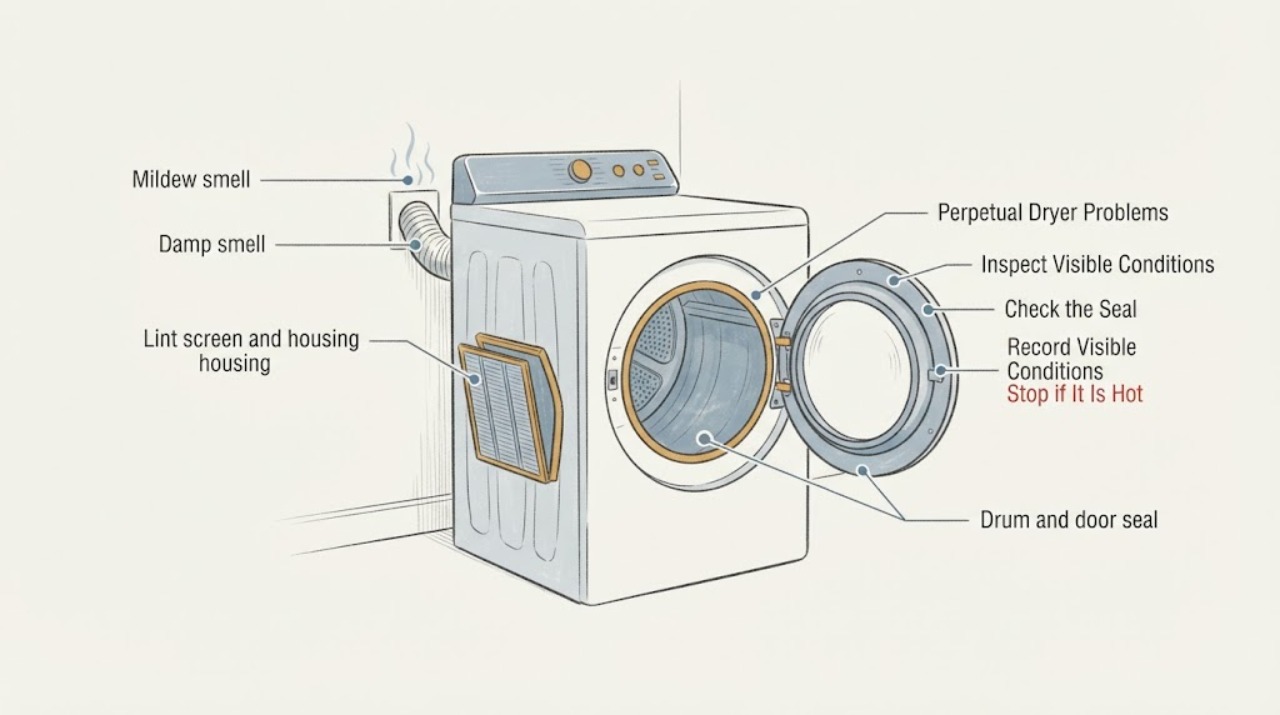
A recurring mildew or damp smell with condensation in an apartment usually means moisture is not being removed or drained as the dryer design expects, but the first check depends on whether the dryer is vented or ventless. Identify that design from the model label and instructions. For a vented dryer, clean the lint screen, inspect the accessible hose for kinks or collapse, and check for strong airflow at the exterior hood; weak airflow, steam, long dry times, or water behind the dryer point to a restricted building vent that may need landlord or vent-professional attention. For a heat-pump or other ventless dryer, check the model-documented condensate tank, drain hose, and filters instead; these dryers remove moisture into a tank or drain rather than an exterior exhaust. Clean only the cool, user-accessible drum, door-seal, lint-screen, and filter areas. Do not vent a dryer into the apartment, operate a gas dryer with its exhaust disconnected, open the cabinet, or assume mildew proves a failed internal part.
Work through in order
Diagnostic checks
Use only checks that match the exact appliance or system and its official guide.
-
Check 1
Read the dryer model label and owner instructions, then determine whether the unit is vented to an exterior duct or is a ventless heat-pump design with a condensate tank or drain. Note where the smell, visible condensation, or water appears: on clothing, inside the drum, on the controls, behind the dryer, or around a tank or drain.
Expected result: The machine has an exterior exhaust path, a condensate tank or drain, or the moisture path cannot be identified from the label and instructions.
Next step: Follow the matching branch below. If the model label or instructions are missing, stop at model identification and ask the manufacturer, landlord, or a qualified appliance technician before changing the vent or drain arrangement.
Why this matters
Why: Vented dryers must move humid air outdoors; heat-pump dryers remove moisture into a tank or drain. A missing design identity makes it unsafe to copy a vented or ventless procedure from another model.
-
Check 2
With the dryer stopped, unplugged if the manual permits safe cleaning, and fully cool, remove lint from the screen after the load and inspect the accessible drum rim, door seal, and lint-screen housing. Wipe the accessible drum with a soft cloth and mild detergent only as the model instructions allow, then dry it; do not spray into the cabinet or mix cleaning chemicals.
Expected result: Lint, fabric-softener film, residue, standing moisture, or a damp load is found, or the accessible areas are clean but the odor persists.
Next step: Remove loads promptly, rewash odor-affected items, and repeat only the model-approved cleaning. If odor returns with condensation, long dry times, steam, or water, continue to airflow or condensate checks rather than adding deodorizer.
Why this matters
Why: Whirlpool links residue and a musty smell to drum and lint-area buildup, and says a damp load left in the washer or dryer can develop mildew odor. A clean accessible area does not prove that a hidden duct, drain, or internal component is healthy.
-
Check 3
For a vented dryer, inspect only the visible hose from the dryer to the wall for crushing, kinks, lint, or water, and check the exterior exhaust hood during a normal cycle for clear, strong airflow. Do not disconnect a gas dryer or run it with the exhaust removed; if the hood or duct is inaccessible, record that limitation instead.
Expected result: Airflow is weak or absent, the hose is crushed or wet, the exterior hood is blocked, or airflow is strong and the duct is visibly clear.
Next step: Clean only accessible lint and debris and ask the landlord or a qualified vent professional to inspect a concealed or shared run. If airflow is strong but condensation or odor persists, identify the dryer-specific service path instead of replacing an unconfirmed part.
Why this matters
Why: Whirlpool and GE associate weak airflow, steam, water behind the dryer, sweating, and longer drying times with restricted or incorrectly installed venting. Strong visible airflow makes a simple outlet restriction less likely but does not rule out a concealed shared duct or an internal service issue.
-
Check 4
For a heat-pump or other ventless dryer, check the model manual for the condensate tank, drain hose, lint filter, and any user-accessible heat-exchanger or secondary-filter cleaning. Empty or reconnect only the documented tank or drain, and do not remove sealed panels or open the sealed cooling system.
Expected result: The tank is full, the drain hose is kinked or disconnected, a documented filter needs cleaning, or the documented moisture path is clear but dampness continues.
Next step: Correct only the tank, drain, or filter condition described by the exact manual. If the machine still accumulates water, smells musty, or shows condensation after the documented maintenance, stop using it and arrange qualified service.
Why this matters
Why: ENERGY STAR says heat-pump dryers condense water into a tank or drain rather than sending humid air through an exterior vent. A full tank or blocked documented drain can explain water and dampness; persistent moisture after those checks needs model-specific service.
Use your observations
Decision map
Find the observation that best matches what you see, then follow the next safe action.
-
PATH 01Next step
What you see
The dryer is vented, the exterior hood has weak airflow, or the hose is kinked, crushed, wet, or blocked, and the load is damp or the controls/door show condensation.
Do this next
Stop short of cabinet disassembly. Clear only accessible lint and debris, then request landlord/building or qualified vent-professional inspection of the concealed run and exterior termination.
Why this path and its safety boundary
Why it matters: The pattern is consistent with restricted moisture exhaust; the exact obstruction may be in an apartment or shared duct and is not proven to be an internal dryer failure.
-
PATH 02Next step
What you see
The dryer is ventless or heat-pump type and its documented tank is full, drain is kinked/disconnected, or user-accessible filter requires the manual's cleaning.
Do this next
Empty, reconnect, or clean only the documented user-accessible item. If moisture and odor continue, provide the exact model and service history to qualified appliance service.
Why this path and its safety boundary
Why it matters: The moisture collection or drainage path may be preventing normal condensate handling; an exterior exhaust cleaning procedure does not apply to this design.
-
PATH 03Next step
What you see
The accessible drum and lint areas are clean, the vented hood has strong airflow or the ventless tank/drain checks are normal, but mildew smell or condensation repeatedly returns.
Do this next
Stop repeated test cycles and arrange model-specific qualified service; in an apartment, also report concealed duct or moisture concerns to the building manager. Escalate immediately for smoke, burning or gas odor, a hot cabinet, water near electrical parts, or a tripped breaker.
Why this path and its safety boundary
Why it matters: The remaining cause could be a concealed duct or drain, building installation, or an internal appliance condition; the evidence does not identify a particular failed component or justify a generic part.
Helpful context
Understand the symptom
First identify where the moisture is supposed to go
An apartment dryer may be a conventional vented dryer connected to a building exhaust, or a ventless heat-pump model that condenses water into a tank or drain. ENERGY STAR describes these as different moisture paths. Do not apply an exterior-hood airflow test to a ventless machine or assume that the absence of an exterior duct proves a defect. Use the model label and owner instructions to identify the design before cleaning or requesting building work.
Separate a load odor from a moisture-removal problem
Whirlpool says a wet load left in a washer or dryer for a long time can grow mildew and cause odors. If the odor is on a load but the dryer otherwise dries normally, promptly remove loads, rewash affected items, and clean the cool accessible drum and door-seal area as the appliance instructions allow. If the odor comes with damp air, condensation, long cycles, steam, water behind the dryer, or a hot cabinet, treat airflow or condensate handling as the main decision point instead of repeatedly deodorizing the drum.
Apartment venting may be outside the resident's control
For a vented dryer, the short transition hose and outside hood may be visible, but a long or shared duct can run through walls or common areas. Whirlpool and GE tie weak airflow, moisture, condensation, and longer drying times to restricted or incorrectly installed venting. Check only accessible parts and give the building manager or a qualified vent professional the model, symptoms, and any airflow observation when the concealed run needs inspection.
Stop at the safe service boundary
Safe user work ends at identifying the dryer design, unplugging and cooling it, cleaning accessible lint and drum areas, checking a visible transition hose or exterior hood, and following the exact manual for a condensate tank or drain. Do not vent exhaust into the apartment, bypass a duct, open the cabinet, probe wiring, open sealed heat-pump panels, or operate a gas dryer with its vent disconnected. Burning or gas odor, smoke, a hot cabinet, water near electrical parts, repeated tripping, or persistent condensation requires stopping use and arranging qualified service or building-vent attention.
When checks do not resolve it
Need a professional?
Arrange qualified appliance or building-vent service when accessible cleaning and the correct vent or condensate checks do not stop recurring odor, dampness, or condensation; when a concealed or shared duct needs inspection; or immediately for smoke, burning or gas odor, a hot cabinet, water near electrical parts, repeated tripping, or any damaged exhaust connection.
Common questions
FAQ
Can a dryer create mildew smell even if it still heats?
Yes. Whirlpool says damp loads left in a washer or dryer can develop mildew odor, and restricted venting can leave humid air and moisture in the dryer. Clean the cool accessible areas, remove loads promptly, and check the correct vent or condensate path before assuming a failed heater or motor.
Why is there condensation around an apartment dryer?
On a vented dryer, a kinked, blocked, overly restricted, or concealed building exhaust can keep humid air from leaving. On a heat-pump dryer, moisture is supposed to collect in a tank or drain instead of an exterior vent. Identify the design first and follow its matching checks.
Should I run a gas dryer with the vent hose disconnected to test it?
No. GE warns that a gas dryer should not be operated without its vent because carbon-monoxide fumes could enter the room. Use only external airflow observations with the exhaust connected, and arrange qualified service when the duct cannot be safely checked.
Is a generic indoor vent kit a solution for an apartment dryer?
Do not assume so. Conventional dryers are intended to exhaust moisture outdoors, while heat-pump dryers use a manufacturer-designed condensate path. Changing the exhaust arrangement without the exact installation instructions can put moisture into the apartment and create a safety or building problem.
Read the exact guide
Official sources
- Clothes DryersENERGY STAR · ENERGY STAR official overview used for the high-level distinction between exterior venting and condensate tank/drain handling.
- Dryer - Things To Check For A Venting IssueGE Appliances · Official GE Appliances general dryer support page used for external venting and condensation principles; it does not establish a model-specific repair procedure.
- Condensation on Controls or Display - DryerWhirlpool Product Help · Official Whirlpool dryer support guidance used for general vented-dryer symptom interpretation and external checks; it does not establish a model-specific internal repair.
- Removing Odors or Smells - DryerWhirlpool Product Help · Official Whirlpool dryer odor guidance used for damp-load and room-air explanations; it does not identify an internal failure on the anonymous dryer.
- Heat Pump DryerENERGY STAR · ENERGY STAR official product explanation used to distinguish ventless heat-pump moisture handling from conventional vented dryers; exact tank, drain, and filter steps remain model-specific.
- Cleaning the Dryer DrumWhirlpool Product Help · Official Whirlpool cleaning guidance used only for accessible cleaning and odor/long-dry symptom context; exact model instructions govern any additional parts.
- Dryer Vent may be Blocked or RestrictedWhirlpool Product Help · Official Whirlpool support page used for common vented-dryer signs and accessible airflow observations, not for a specific unprovided model.
Community feedback
Share a repair observation
Share a plain-text repair observation. Accepted observations are published automatically; this page may take a moment to update.