
On this page
Start here
Quick answer
Treat “bearing noise” as a symptom description, not a confirmed diagnosis. Electrolux says washer noise can come from a heavy or unbalanced load, an uneven installation, transit bolts, loose hoses, objects in the drum or normal pump/motor operation. Stop the washer, remove the load and make only the manual-supported external checks: confirm level and stability, check that transit hardware is removed, secure hoses, inspect the visible drum/filter for foreign objects, and compare an empty cycle only if the manual permits. If the noise remains empty, is new or progressively louder, or comes with leaking, poor spinning, smoke, burning odor, sparking or other safety signs, stop using the washer and arrange qualified service. The sound alone cannot prove a failed bearing.
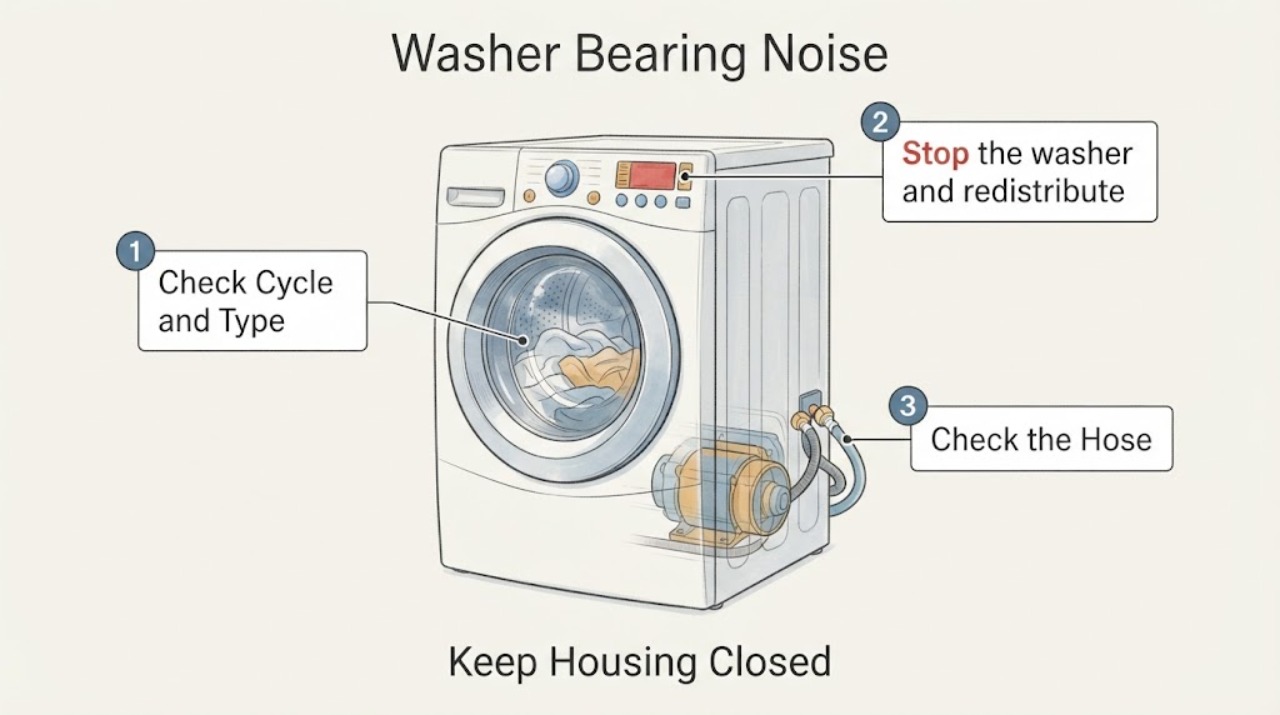
Work through in order
Diagnostic checks
Use only checks that match the exact appliance or system and its official guide.
-
Check 1
Record the complete Electrolux model/PNC, washer or washer-dryer type, cycle phase and the exact sound description. Note whether it occurs during filling, draining, tumbling, ramp-up to spin, high-speed spin or after the cycle; do not assume the word “bearing” identifies the source.
Expected result: The noise is tied to a particular phase, occurs only with a load, persists with an empty drum, or is accompanied by movement, leak, poor spin or an electrical warning.
Next step: Use the model manual for all permitted checks. If the model or phase is unknown, record a short safe description for Electrolux service instead of choosing a part.
Why this matters
Why: Different phases have different normal pumps, motors, water and balance sounds. Model identity is needed for the applicable manual and service path; a symptom label alone cannot confirm a bearing.
-
Check 2
Stop the washer and redistribute or remove the load, following the user manual. Check that the drum is not overloaded or left with a single heavy item; fasten zippers and metal fasteners and empty pockets before any further normal wash.
Expected result: The sound changes or disappears with a balanced, ordinary load, or it remains despite a correctly distributed load.
Next step: Use suitable load distribution and monitor only if the washer remains stable and safe. If the sound persists or worsens, stop repeated cycles and continue with the external installation checks.
Why this matters
Why: A load-related change supports imbalance or laundry noise as the immediate explanation; it does not prove the rotating assembly is healthy or damaged. Persistence with a normal load moves the check to installation and service triage.
-
Check 3
With the washer stopped, cool and accessible, check that transit bolts/packing were removed, the appliance is level on a solid floor, it does not rock, it has the manual-specified clearance, and accessible hoses are not loose or striking the cabinet. Do not pull out a built-in appliance or remove panels.
Expected result: The washer rocks, is on an unstable surface, retains transit hardware, touches surrounding cabinets/walls, or has a hose that can knock against the housing; alternatively the installation appears stable.
Next step: Correct only accessible installation conditions permitted by the manual, then monitor one normal cycle if there is no safety warning. If the washer remains noisy or movement is severe, arrange service rather than dismantling it.
Why this matters
Why: Electrolux lists these installation conditions as common causes of vibration or loud noise. A stable installation reduces those explanations but does not confirm or rule out an internal bearing.
-
Check 4
Stop and inspect only the visible drum opening and any user-accessible filter described in the manual for coins, straps, buttons or other foreign objects. If the manual permits, run an empty cycle only after the external checks and only when there is no leak, burning smell, sparking, damaged door or violent movement.
Expected result: A foreign object is found, the noise disappears with an empty drum, or the same noise remains without laundry.
Next step: Remove only an accessible object as the manual directs. For persistent empty-drum noise, stop using the washer and provide the model, phase and sound history to qualified service; do not reach behind seals or access the bearing.
Why this matters
Why: A found object or load-dependent result supports laundry/drum interference; a persistent empty-drum noise makes a machine-side fault more likely but still does not identify a bearing without inspection.
-
Check 5
Stop using the washer immediately for water leakage, sparking, smoke, burning odor, damaged power parts, a damaged door, violent movement or a sudden mechanical noise that affects safe operation. Do not keep running cycles to see whether the sound worsens.
Expected result: The noise is isolated and resolves with a safe external correction, or a hazard/performance symptom is present.
Next step: Switch off and isolate power only if safe and accessible, keep the washer out of use, turn off water for a leak if safely accessible, and arrange qualified service. Do not open the cabinet.
Why this matters
Why: Electrolux treats electrical/safety signs and recurring unusual noise as reasons for professional inspection; continued operation can increase damage or risk.
Use your observations
Decision map
Find the observation that best matches what you see, then follow the next safe action.
-
PATH 01Next step
What you see
The sound occurs only with a heavy, single-item or poorly distributed load and improves after the load is corrected.
Do this next
Use the manual’s load guidance, fasten hard items and monitor only while the washer stays stable and safe. Arrange service if the noise returns with ordinary loads.
Why this path and its safety boundary
Why it matters: Electrolux identifies load imbalance and clothing hardware as common explanations; the pattern does not prove a bearing fault.
-
PATH 02Next step
What you see
The washer rocks, retains transit bolts, touches a wall/cabinet, sits on an unstable floor or has a hose that strikes the cabinet.
Do this next
Correct only the accessible installation issue using the manual and stop if the appliance must be pulled out or opened. Use service/installation help if the condition persists.
Why this path and its safety boundary
Why it matters: The installation can create vibration and knocking independently of an internal bearing.
-
PATH 03Next step
What you see
The sound remains with an empty drum after the external checks, repeats across programs or becomes progressively louder.
Do this next
Stop repeated testing and arrange qualified Electrolux inspection with the model/PNC and sound timing; do not order or replace a bearing based only on the symptom.
Why this path and its safety boundary
Why it matters: A machine-side fault is possible, but the sound alone cannot identify a bearing, motor, pulley or another internal part.
-
PATH 04Next step
What you see
Noise is accompanied by a leak, smoke, burning odor, sparking, damaged cord/door or violent movement.
Do this next
Stop, isolate power/water only if safe, keep the washer out of service and arrange qualified repair. Do not remove panels or run another cycle.
Why this path and its safety boundary
Why it matters: This is a safety stop condition rather than a bearing-confirmation exercise.
Helpful context
Understand the symptom
Do not turn a noise label into a bearing diagnosis
A washer can sound different during filling, draining, washing and high-speed spinning. Electrolux identifies several normal sounds and common external causes, including pumps, motors, water flow, an unbalanced load, an uneven floor, loose hoses and objects in the drum. “Bearing noise” is therefore a working description until a qualified technician inspects the machine; no model is supplied here for a bearing-specific procedure.
Start with the load and installation
Electrolux recommends checking transit bolts, level and stable footing, clearance from cabinets or walls, hose security and load distribution. A single heavy item can unbalance a drum just as an overloaded load can, and higher spin speeds naturally make more noise. These checks can remove common causes without claiming anything about an internal bearing.
Separate laundry noise from machine noise
Zippers, buckles, coins and other hard objects can rattle or strike the drum or door. Electrolux advises stopping the washer and checking the drum for foreign objects; where the manual permits, an empty cycle can show whether the sound follows the appliance rather than the clothing. Do not run a damaged or unsafe washer just to reproduce a sound.
Persistent rotating noise belongs with service
If the noise remains after safe external checks, repeats across empty and normal loads, becomes louder, or is accompanied by poor spin performance, a leak or an electrical/burning warning, Electrolux directs the owner toward professional inspection. Do not remove panels, support the drum by hand, access a bearing, make energized measurements or order a bearing from a generic description.
When checks do not resolve it
Need a professional?
Arrange qualified Electrolux service when noise persists with an empty drum, repeats across programs, grows louder or affects spinning after installation/load checks., Stop immediately for leaks, smoke, burning odor, sparking, damaged electrical parts, damaged door or violent movement., Do not diagnose or replace a bearing, motor, pulley, belt or other internal part from the sound alone.
Have this ready
- complete Electrolux model/PNC and region
- washer or washer-dryer type
- cycle phase and whether the drum was loaded or empty
- whether the noise changes with load, speed or installation correction
- any movement, leak, poor spin, smoke, burning odor or electrical warning
Common questions
FAQ
Does loud spinning prove the Electrolux washer bearing is bad?
No. Electrolux lists load imbalance, uneven installation, transit bolts, loose hoses, foreign objects and normal pump/motor sounds among possible causes. A bearing cannot be confirmed from sound alone without model-specific inspection.
Can I test the washer with an empty drum?
Electrolux suggests an empty cycle in its noise guidance to distinguish laundry noise from machine noise, but only use the exact manual and do this only when there is no leak, smoke, burning odor, sparking, damaged door or violent movement. Stop if the noise remains.
What installation checks can reduce washer noise?
Check that transit bolts were removed, the washer is level and stable on a solid floor, it has the required clearance, and accessible hoses are secured. If the washer still makes new or unusually loud noise, arrange service instead of opening it.
Should I order a bearing because the drum sounds rough?
No. Record the model/PNC and sound timing and have a qualified technician inspect it. Electrolux’s user guidance does not establish a bearing from an external sound, and part fit cannot be inferred without the exact model.
Read the exact guide
Official sources
- How to stop your washing machine vibrating and reduce noiseElectrolux · Opened official Electrolux UK guidance. It supports transit-bolt, leveling, clearance and unusual-load checks; it does not establish a bearing or other internal fault.
- Washing Machine Noisy or Shaking During Spin Cycle?Electrolux · Opened official Electrolux UK support article applying to front-load and top-load washing machines. It lists common external causes and directs persistent noise to professional diagnosis; it does not diagnose a bearing.
- Noise from laundryElectrolux · Opened official Electrolux support article. It warns that coins, buckles and metal buttons can strike the door during spinning and recommends securing hard items; it does not support a bearing diagnosis.
- Is it normal for my washer to make sounds or noises?Electrolux · Opened official Electrolux support article for washers. It covers thumping, fasteners, foreign objects and an empty-cycle comparison; it is not used to diagnose an internal component.
- Washing machine tips: expert repair & maintenance adviceElectrolux · Opened Electrolux official repair/maintenance guidance. It says unusual recurring noise or poor performance warrants inspection and that internal repairs involving pumps, motors, wiring or components require a qualified technician.
Community feedback
Share a repair observation
Share a plain-text repair observation. Accepted observations are published automatically; this page may take a moment to update.