
On this page
Start here
Quick answer
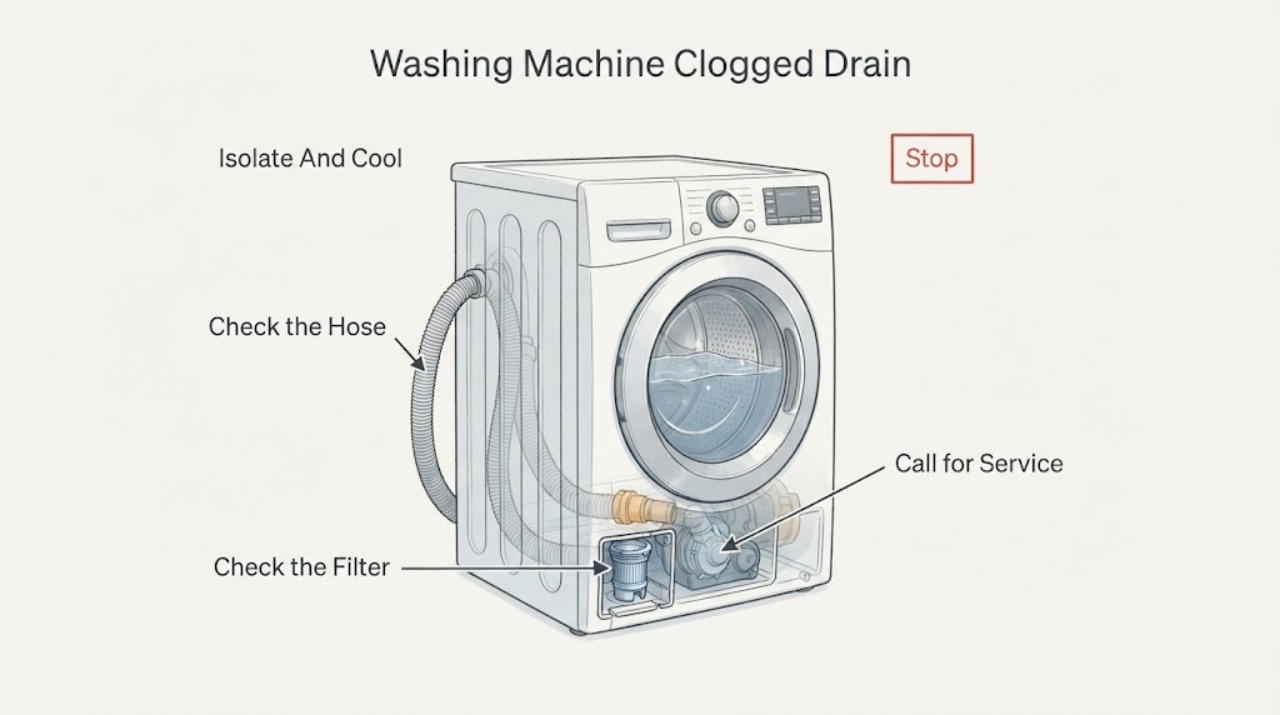
Disconnect the Electrolux washer from mains power and let hot water cool before handling a blockage. Check the accessible drain hose for a kink or blockage, then use only the filter or drain access described for the exact model: place a shallow tray under the filter, release standing water gradually, clear visible lint or objects, and refit the filter correctly to prevent leaks. Electrolux says top-load models may hide the filter behind a front flap, in the drum threshold, or use an automatically cleaned pump, so do not force an unconfirmed panel. If the washer still will not drain, water regularly remains, the pump area makes unusual noise, or a leak or electrical concern appears, stop using it and arrange professional service.
Work through in order
Diagnostic checks
Use only checks that match the exact appliance or system and its official guide.
-
Check 1
Stop the cycle, disconnect the washer from mains power, and wait for any hot water in the drum to cool before handling the drain area. Place a shallow tray and towels where water could escape.
Expected result: The water is cool enough to handle safely and the appliance is isolated, or the water is still hot or electrical safety is uncertain.
Next step: Continue only after safe isolation and cooling. If water is near electrical parts, there is sparking or a burning smell, keep the washer off and arrange qualified service.
Why this matters
Why: Electrolux requires power disconnection before starting and says hot water should cool before it is handled; an unsafe water or electrical condition is not a routine filter-cleaning step.
-
Check 2
From outside the appliance, inspect the accessible drain hose for a sharp kink, crushing or a visible blockage, and make sure its outlet has not been inadvertently closed or obstructed.
Expected result: The hose is visibly kinked or blocked, or it is clear and the drum still contains water.
Next step: Correct only the accessible hose routing and continue with the exact model's permitted drain check. If the hose is clear and the symptom persists, do not open the cabinet; use the filter/manual branch or service.
Why this matters
Why: Electrolux lists a clogged or kinked drain hose as a cause of poor draining; a clear hose shifts attention to the model-specific filter/drain access without proving a pump fault.
-
Check 3
If the exact model manual shows an accessible pump filter, place a shallow tray under it, release standing water gradually, remove visible lint or objects, rinse the filter and refit it in its guides, tightening it correctly.
Expected result: Debris is found and the filter can be refitted normally, or the filter is clear, jammed, missing or does not match the appliance layout.
Next step: For visible debris, refit the filter and use the documented spin/drain check. If it is jammed or the layout is uncertain, stop applying force and follow the exact manual or request service.
Why this matters
Why: Electrolux identifies a blocked or dirty filter as a common drain problem and warns that correct refitting helps prevent leaks; a clear, jammed or unverified filter does not establish a defective pump.
-
Check 4
For a top-load Electrolux washer, check only the filter location identified by the exact manual: a front flap, a drum-threshold recess, or a self-cleaning pump arrangement. Do not remove trim simply because a filter is not visible.
Expected result: The manual identifies a user-accessible filter, or no filter is provided in the listed locations and the manual describes automatic cleaning.
Next step: Follow the matching manual's user-care procedure. If the manual cannot be matched or the washer still will not drain, arrange service rather than opening the cabinet.
Why this matters
Why: Electrolux documents more than one top-loader drain-filter arrangement, including a filter coupled to an automatically cleaned outlet pump.
-
Check 5
After the hose/filter check has been completed and the filter cover is correctly closed, run one spin/drain programme described by the exact manual while staying nearby to watch for renewed standing water or leaks.
Expected result: The washer drains normally, drains only partly, leaves water again, leaks, or makes an unusual pump/mechanical noise.
Next step: If it drains normally, monitor the next cycle and follow the manual's maintenance interval. If it fails again or shows a leak, abnormal noise or electrical concern, stop using it and arrange professional service.
Why this matters
Why: A successful drain after removing a visible obstruction supports a cleared drain path; repeated failure, persistent water, leakage or unusual noise is outside a simple clean-and-monitor result.
Use your observations
Decision map
Find the observation that best matches what you see, then follow the next safe action.
-
PATH 01Next step
What you see
The drain hose was kinked or visibly blocked, and the washer drains after the accessible routing is corrected.
Do this next
Keep the hose routed as the exact manual requires and monitor the next cycle. Arrange service if the obstruction or symptom returns.
Why this path and its safety boundary
Why it matters: The observed result is consistent with Electrolux's documented external hose blockage cause; it does not diagnose a pump or internal part.
-
PATH 02Next step
What you see
Visible lint or an object is removed from a model-documented filter and one documented spin/drain cycle then empties the drum without leaking.
Do this next
Close the filter access correctly, follow the model's maintenance instructions and stop if the drain problem recurs.
Why this path and its safety boundary
Why it matters: A blocked or dirty filter was a plausible drain-path restriction, and the successful result supports monitoring rather than replacing a pump from the symptom alone.
-
PATH 03Next step
What you see
The Electrolux top-loader has no filter in the documented front or drum-threshold locations, and its manual identifies an automatically cleaned pump arrangement.
Do this next
Use the exact manual's user-care steps; if the washer still does not drain, request service rather than opening the cabinet.
Why this path and its safety boundary
Why it matters: Electrolux says some top-load designs couple the drain filter to the outlet pump, so the absence of a removable filter is a configuration difference rather than proof of a clog or failed pump.
-
PATH 04Next step
What you see
The hose is clear and permitted filter care does not restore draining, or water remains after repeated cycles.
Do this next
Stop using the washer and arrange qualified service. Do not diagnose or replace a pump, motor or wiring from this general symptom.
Why this path and its safety boundary
Why it matters: Electrolux lists pump issues, internal blockages and electrical malfunctions as possible causes, and its service guidance treats recurring drain failure as a professional inspection case.
-
PATH 05Next step
What you see
The symptom is accompanied by a leak near electrical parts, sparking, a burning smell or a new unusually loud mechanical noise.
Do this next
Keep the washer off and arrange qualified service; do not run additional cycles or open the cabinet.
Why this path and its safety boundary
Why it matters: Electrolux identifies electrical, internal-component and abnormal-noise conditions as service boundaries rather than routine filter care.
Helpful context
Understand the symptom
Make the washer safe before opening a drain path
Switch the washer off and disconnect it from mains power before working near standing water. Electrolux also says to let hot water cool and to check that the drain hose is not bent or blocked. Keep a shallow tray and towels ready; do not start by removing a panel or reaching into an unverified pump path.
Check the external hose before treating the pump as failed
Look from outside the appliance for a sharply kinked, crushed or visibly blocked drain hose and correct only an accessible routing problem. This can explain a slow or stopped drain, but it does not prove that the pump is damaged. If the hose is clear and the drum still holds water, continue only with the filter access shown for the exact model.
Clean an accessible filter without forcing it
Where the model has the documented pump-cover/filter arrangement, place a shallow tray below it and release the water gradually. Remove the filter only as the manual describes, clear visible fluff or objects, rinse it, and check only the visible impeller area. Refit the filter in its guides and tighten it correctly so the next drain test does not create a leak. Do not use force or tools to open a cover whose design is not confirmed.
Use the exact manual for top-load and no-filter layouts
Electrolux says a top-loader's filter may be behind a front flap, in a recess at the drum threshold, or coupled to an outlet pump that cleans itself. If none of those locations matches the appliance, use the exact user manual rather than removing trim or opening the cabinet. The absence of a user-accessible filter does not identify a pump failure.
Stop when the result points beyond user care
If the hose and permitted filter care do not restore draining, or the washer repeatedly leaves water in the drum, Electrolux recommends service. Its repair guidance reserves pump, motor, wiring and internal-component repairs for a qualified technician. Stop immediately for a leak that reaches electrical parts, sparking, a burning smell or a new mechanical noise; do not keep running cycles to force the blockage through.
When checks do not resolve it
Need a professional?
Arrange qualified Electrolux service when the washer still will not drain after the exact manual's accessible hose and filter checks, when water repeatedly remains, when the filter cannot be safely accessed or refitted, or when the symptom includes a leak, electrical concern or unusual mechanical noise. Do not select a pump or internal part without a model-matched diagnosis.
Common questions
FAQ
Where is the Electrolux washing-machine drain filter?
It depends on the configuration. Electrolux says top-load models may have a filter behind a front flap, in a recess at the drum threshold, or an automatically cleaned pump arrangement. Use the exact user manual rather than removing trim to search for a filter.
Can I clean an Electrolux washer filter with water left in the drum?
First disconnect power, let hot water cool, and place a shallow tray below the documented filter access. Release the water gradually, clear only visible lint or objects, rinse and refit the filter correctly. If the filter is not accessible or the layout is uncertain, stop and use the manual or service route.
When does a clogged drain need an Electrolux technician?
Book service when the washer still will not drain after the exact manual's accessible hose and filter checks, water keeps returning, or the symptom includes a leak, electrical concern or unusual mechanical noise. Electrolux reserves pump, motor, wiring and internal-component repairs for qualified technicians.
Read the exact guide
Official sources
- Expert insights: answers to common questions about your Electrolux washing machineElectrolux Support · Official Electrolux expert guidance used for manual-only care, recurring drain symptoms, electrical/safety stop conditions and the boundary around pumps, motors, wiring and internal components.
- Top loading washing machine does not have a filter/filter cannot be locatedElectrolux Support · Official Electrolux configuration guidance for top-load washers; used only to scope possible filter locations, automatically cleaned pump arrangements and the need for the exact user manual.
- How to Drain a Washing Machine or Washer Dryer (Step-by-Step Guide)Electrolux Support · Official Electrolux drainage guidance for washing machines and washer dryers; used for power isolation, cooling, external hose checks, documented accessible-filter care, the spin/drain check and persistent-failure escalation.
Community feedback
Share a repair observation
Share a plain-text repair observation. Accepted observations are published automatically; this page may take a moment to update.