
On this page
Start here
Quick answer
Dark mold on an Electrolux washer gasket is commonly associated with moisture, detergent residue and repeated low-temperature washing. Empty the washer, inspect the folds of the door seal, and clean the accessible seal with the soft, non-abrasive method allowed by the exact user manual. Electrolux recommends regular maintenance washing, drying the seal and leaving the door and detergent drawer slightly open between cycles. Do not use the appliance if the gasket is loose, torn, deformed or leaking; if mold remains after cleaning, Electrolux directs you to professional seal replacement rather than a guessed DIY repair.
Before you begin
Safety first
- Do not use a washer with a damaged or leaking door seal. Do not remove the gasket retaining ring, open the cabinet, test live wiring, or keep running the appliance when there is a leak, burning smell, electrical issue or unsafe temperature.
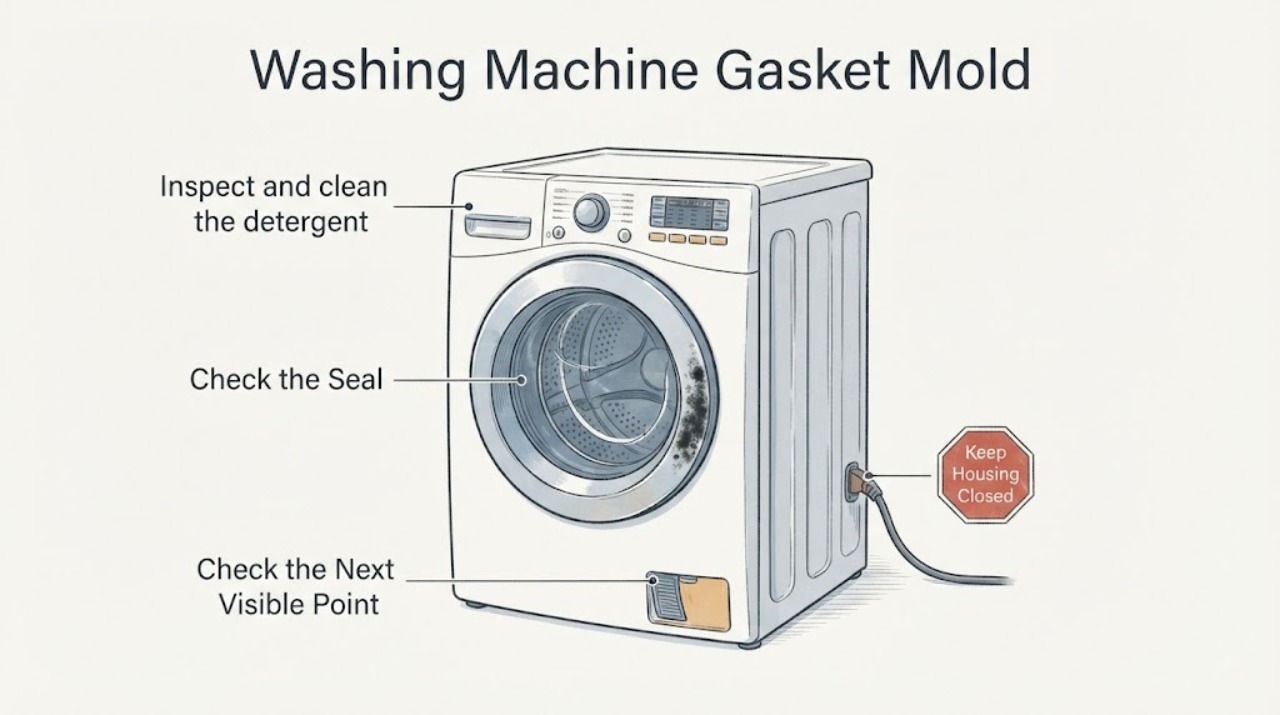
Work through in order
Diagnostic checks
Use only checks that match the exact appliance or system and its official guide.
-
Check 1
Empty and stop the washer, then pull back the door gasket folds and inspect the inner and outer seal surfaces for dark growth, residue, trapped objects, tears, cracks, holes, looseness or deformation.
Expected result: The rubber is intact with surface mold or residue, or it is damaged/loose/deformed and there may be water around the door.
Next step: If the gasket is damaged or leaking, keep the washer out of service and use the service branch; otherwise continue with the accessible cleaning check.
Why this matters
Why: Surface buildup can be approached as a cleaning and moisture-control problem. Damaged or deformed rubber can compromise the water seal and is not a safe cleaning-only diagnosis.
-
Check 2
For intact surface buildup, clean the accessible gasket with a clean soft damp cloth and the exact model-approved cleaning method; do not scratch the rubber or combine chemicals. If using a sodium-carbonate drum treatment described by Electrolux, follow its warning and the user manual rather than improvising a dose or mixture.
Expected result: The visible mold/residue lifts from the intact seal, or it remains after the permitted cleaning procedure.
Next step: If it remains, stop escalating chemicals and arrange professional seal assessment/replacement; do not cut, pry or remove the gasket retaining hardware from this general guidance.
Why this matters
Why: Removal supports surface buildup as the immediate issue; persistent mold after cleaning is the condition for which Electrolux says the seal may need replacement.
-
Check 3
Inspect and clean the detergent drawer and its recess only according to the exact Electrolux user manual, then run the permitted empty maintenance wash; use the correct detergent amount and avoid relying only on cold or quick cycles.
Expected result: The drawer has dried detergent or mildew buildup, the model has a maintenance program, or the mold/odor returns despite a clean drawer and completed maintenance wash.
Next step: Correct the documented cleaning and dosing routine if buildup is found. If the gasket mold or odor returns, provide the model/PNC and history to authorised service rather than guessing a pump, hose or seal part.
Why this matters
Why: Electrolux says drawer buildup can contribute to mildew, blockages and odor, and that regular maintenance washing helps control bacterial growth and mildew. A recurrence after those steps does not identify a specific internal part.
-
Check 4
After each wash, wipe the seal dry and leave the door and detergent drawer slightly open so the washer can ventilate; record whether mold or odor improves over the next maintenance interval.
Expected result: The gasket dries and the problem stops recurring, or moisture/odor and mold recur even with ventilation and correct detergent use.
Next step: Continue only the model-approved maintenance routine when the seal is intact. Book service if the recurrence persists, if the seal is damaged, or if the machine leaks or has an electrical/burning symptom.
Why this matters
Why: Electrolux identifies constant humidity as a contributor to mildew and odor. Recurrence despite ventilation and maintenance narrows the issue to a service assessment rather than proving a hidden component failure.
-
Check 5
Stop using the washer immediately if the door seal is damaged, water is leaking from the seal, or there is a burning smell, electrical symptom or unsafe temperature.
Expected result: A leak, damaged rubber, electrical/burning symptom, repeated fault or water appearing from inside the cabinet is present.
Next step: Disconnect power only when it is safe to do so, turn off the water supply for a water leak, keep the washer out of service and arrange qualified Electrolux service; do not open the cabinet or test live wiring.
Why this matters
Why: Electrolux warns that use with a damaged seal can cause appliance or property damage and directs users to stop and book service for leaks, electrical issues, burning smells or recurring faults.
Use your observations
Decision map
Find the observation that best matches what you see, then follow the next safe action.
-
PATH 01Next step
What you see
The gasket is intact and the dark material lifts with the model-approved gentle cleaning method.
Do this next
Finish the accessible clean, clean the drawer as the manual permits, run the permitted maintenance wash and dry/vent the machine after use.
Why this path and its safety boundary
Why it matters: The observed problem is consistent with removable surface mold/residue; it does not establish a failed pump, hose or control component.
-
PATH 02Next step
What you see
Mold remains after the permitted cleaning procedure, or the mold and odor return despite correct detergent use, drawer cleaning, maintenance washing and ventilation.
Do this next
Arrange authorised service with the model/PNC and cleaning history; do not remove the seal or retaining hardware from generic instructions.
Why this path and its safety boundary
Why it matters: Electrolux treats persistent mold as a possible seal-replacement/service condition rather than a reason to keep increasing chemical strength.
-
PATH 03Next step
What you see
The gasket is loose, torn, cracked, deformed or leaking, or water continues to escape from the door area.
Do this next
Stop using the washer, turn off water for a leak and arrange a service engineer for model-specific seal replacement.
Why this path and its safety boundary
Why it matters: A damaged seal can allow water and property damage, so the problem is no longer a mold-only maintenance issue.
-
PATH 04Next step
What you see
There is a burning smell, electrical damage, unsafe temperature or a leak from inside the cabinet.
Do this next
Keep the appliance off and arrange qualified service; do not run another cycle, open the cabinet or perform live electrical checks.
Why this path and its safety boundary
Why it matters: These symptoms require a professional safety boundary and cannot be diagnosed from gasket appearance.
Helpful context
Understand the symptom
A dark mark on the gasket is not by itself proof that a hidden washer part has failed. Electrolux identifies the door seal, detergent drawer and drum as humid areas where residue and mildew can build up, especially when the machine is run mostly at low temperatures or with too much detergent. The first decision is whether the mark is removable surface buildup or whether the rubber is physically damaged.
Inspect the gasket before choosing a cleaner
With the washer empty and stopped, look inside the seal folds for mold, lint, coins or other objects. Check for tears, cracks, holes, looseness, deformation and water escaping from the door area. A cleanable deposit and a damaged seal lead to different next steps; do not scrub a damaged gasket as if it were only a hygiene problem.
Clean the accessible buildup, then change the moisture pattern
Use the cleaning method and product allowed by the exact Electrolux manual. Electrolux describes a soft, damp-cloth cleaning path for the seal and separately warns that sodium carbonate can irritate skin and mucous membranes. Do not combine cleaning products or substitute an unverified chemical recipe. Afterward, clean the detergent drawer as the model manual permits and use an empty maintenance wash at the permitted temperature.
If the mold does not clear, the seal leaks, or the rubber is loose, torn or deformed, stop using the machine and arrange authorised service. The public guidance does not support removing the retaining ring or replacing the gasket without model-specific instructions and the required repair skill.
When checks do not resolve it
Need a professional?
Safety scope: Do not use a washer with a damaged or leaking door seal. Do not remove the gasket retaining ring, open the cabinet, test live wiring, or keep running the appliance when there is a leak, burning smell, electrical issue or unsafe temperature.
Have this ready
- Full Electrolux model number or PNC, serial number, gasket condition, whether mold lifts after the approved cleaning method, detergent and cycle pattern, drawer/filter cleaning result, maintenance-wash result, odor or leak details, and any electrical or burning symptom.
Common questions
FAQ
Can I remove mold from an Electrolux washer gasket?
If the gasket is intact, Electrolux supports cleaning the accessible seal with a non-abrasive method allowed by the user manual. If mold remains after cleaning, Electrolux says the seal may need professional replacement.
Why does mold keep returning on the door seal?
Electrolux links recurring mildew to constant humidity, low-temperature washing and excess detergent. Dry the seal, leave the door and drawer slightly open, use the correct detergent amount and run the model-approved maintenance wash.
Should I use the washer if the gasket is torn or leaking?
No. Electrolux recommends not using the appliance when the door seal is loose, damaged or deformed, and says a damaged seal that leaks should be replaced by a service engineer.
Do I need the exact model before replacing an Electrolux gasket?
Yes. Electrolux's maintenance and repair guidance sends users to the model manual and asks for the model number or PNC. A generic gasket or generic retaining-ring procedure does not establish fit or safe installation.
Read the exact guide
Official sources
- Washing machine repair serviceElectrolux Support · Electrolux repair-service page; it supports providing model/PNC and symptom history and stopping use for electrical issues, burning smells, leaks, unsafe temperatures and recurring faults.
- How to clean and maintain your Electrolux washing machine and extend its lifeElectrolux Support · Electrolux support article for washing machines; it covers seal inspection, gentle cleaning, drawer cleaning, ventilation and maintenance-wash cadence while directing model-specific details to the manual.
- Seal on the washing machine's door is damagedElectrolux Support · Electrolux support article for integrated and freestanding front-load washing machines; it covers loose, damaged, deformed or leaking seals and authorised service.
- Cleaning the washing machine’s rubber seal if it's dirtyElectrolux Support · Electrolux support article for washing machines; it covers dark mold spots, seal cleaning, maintenance temperature guidance, drying and professional replacement when mold persists.
- Washing Machine Smells? Causes and Proven Cleaning TipsElectrolux Support · Electrolux support article covering front-loaders, top-loaders and washer-dryers; it supports humidity, detergent, ventilation and maintenance-wash branches but does not identify a failed internal component.
- Electrolux Washing Machine Leaking Water – Causes and SolutionsElectrolux Support · Electrolux support article for washing machines and washer-dryers; it supports external hose/drawer/seal checks and the boundary to stop using a damaged leaking seal.
Community feedback
Share a repair observation
Share a plain-text repair observation. Accepted observations are published automatically; this page may take a moment to update.