
On this page
Start here
Quick answer
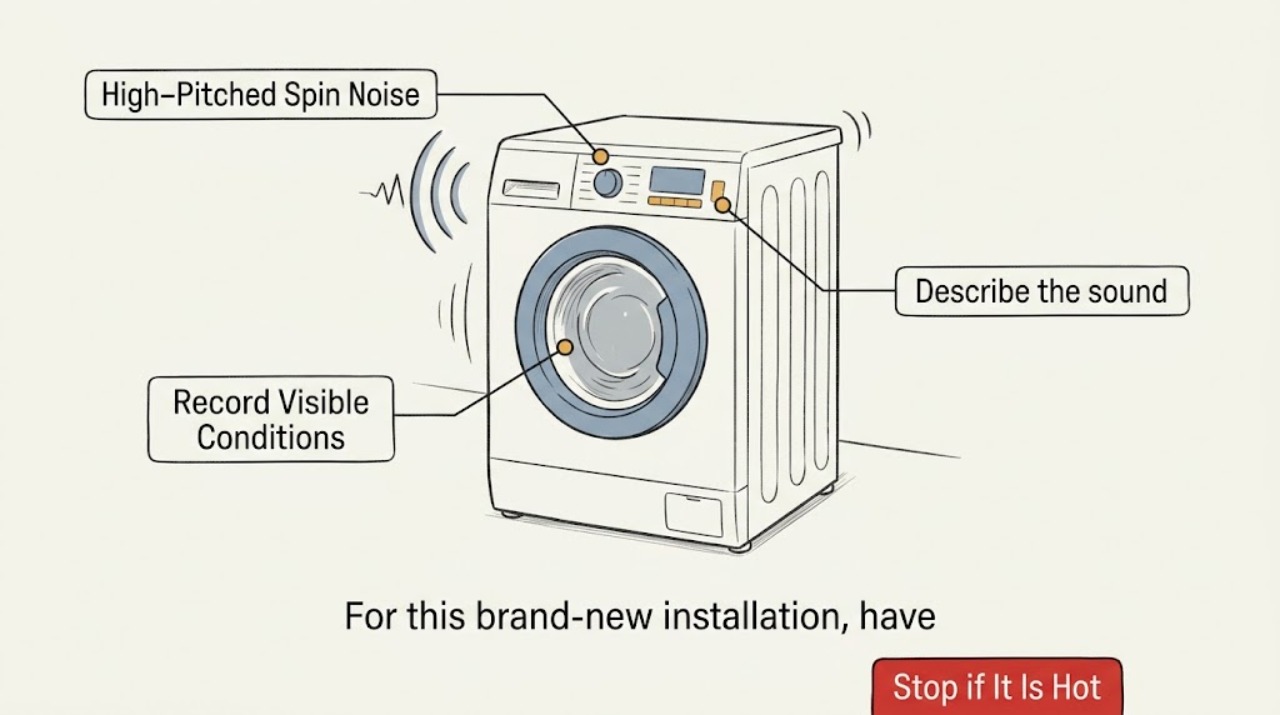
A high-pitched sound from a brand-new Electrolux EW6F5120WA during spin is not enough to identify a failed bearing, motor, or other part. First verify the rating-plate model and PNC, then stop extra high-speed testing and observe whether the sound is a moderate spin sound or is accompanied by walking, cabinet impact, scraping, burning odor, a leak, or a damaged cord. Before authorizing repair, have the installer or an adult helper check from a safe stationary position that all packaging and transit bolts were removed, the washer is level and stable on a hard floor, the feet are firmly set, and the hoses are not striking the cabinet. A balanced load can still make more sound at spin speed, while a persistent high-pitched or metallic sound with instability or with the installation confirmed needs Electrolux warranty or qualified service. Do not open the cabinet, reach into the drum, or run repeated high-speed tests to locate the sound.
Work through in order
Diagnostic checks
Use only checks that match the exact appliance or system and its official guide.
-
Check 1
Read the rating plate and record the complete model code, product number, serial number, country of purchase, and whether the washer is freestanding, integrated, or stacked. Confirm that the model is EW6F5120WA and, if available, that the PNC matches the Electrolux manual entry. Keep the new-machine delivery and installation date with the record.
Expected result: The rating plate matches EW6F5120WA and PNC 914916723, or the model, PNC, country, or installation arrangement is different or unclear.
Next step: If the identity matches, use the matching manual and continue with external observations. If it does not, stop the model-specific troubleshooting and ask Electrolux or the installer for the correct document.
Stop if: Do not remove panels, adjust hidden hardware, or order a component while the rating-plate identity is unresolved.
Why this matters
Why: Electrolux's manual database uses both model denomination and product number, and installation instructions can vary by market and configuration. An uncertain identity is not a safe basis for a bolt, leveling, cycle, or part instruction.
-
Check 2
Describe the sound from a safe position during the normal spin stage without starting another high-speed test: high pitched or jet-like, hum, rattle, clank, scrape, bang, or thump. Note whether it rises only with drum speed and whether the cabinet stays still, or whether the sound is accompanied by walking, wall contact, violent shaking, smoke, a burning odor, a leak, or a hot or damaged cord.
Expected result: The sound is a moderate spin-related increase with a stable, dry cabinet, or it is persistent, metallic, worsening, or paired with movement or a hazard.
Next step: Continue only with a stable, dry washer and no hazard. Stop the cycle and arrange service for instability, scraping, banging, burning odor, smoke, a leak, or electrical damage.
Stop if: Do not touch the washer while the drum is moving, open the door against a lock, or restart it to reproduce a concerning sound.
Why this matters
Why: Electrolux says some additional sound and vibration at higher spin speeds can be normal. Metallic contact, severe movement, or a hazard changes the decision from normal-sound observation to stop-use service; the sound label alone does not identify a bearing or motor.
-
Check 3
For this brand-new installation, have the installer or an adult helper inspect the visible rear and base installation only when the washer is stopped and stable. Verify that all shipping packaging and transit bolts were removed, that no temporary support remains underneath, and that the washer is not rocking on its feet. Do not tip or move a heavy washer alone.
Expected result: A transit bolt, packaging piece, or support remains; the washer rocks or a foot is not firmly seated; or the installation looks complete and stable.
Next step: Keep the washer out of high-speed use until the installer corrects retained shipping hardware or leveling according to the EW6F5120WA instructions. If the setup is already correct, continue with the visible hose and load checks without repeating high-speed runs.
Stop if: Do not remove a bolt that requires tipping or disassembly, place hands under the appliance, or continue operating with shipping hardware still installed.
Why this matters
Why: Electrolux identifies retained transit bolts and unstable or unlevel installation as common spin-noise causes. A confirmed installation fault explains the timing more directly than an internal-part theory; a stable installation shifts attention to load and service boundaries.
-
Check 4
Check level and surroundings without moving the cabinet: use the exact installation guidance and a spirit level if available, confirm the feet are firmly on a hard stable floor, and look for contact with a wall, cabinet, stacked unit, or loose bracket. If feet need adjustment, let the installer or a helper perform it with the washer supported as required by the manual.
Expected result: The washer rocks, a floor flexes, a foot is unloaded, the cabinet touches its surroundings, or the floor and clearances are stable.
Next step: Have the installer correct only the visible leveling or clearance condition, then monitor one ordinary balanced cycle. If the sound persists after a stable setup, use the warranty or service route.
Stop if: Do not wedge objects under feet, stack the washer without the approved kit, or move the appliance alone.
Why this matters
Why: A level, hard, stable floor and firm contact at all feet reduce spin vibration. If the machine remains stable and the high-pitched sound is still present, leveling is less likely to explain it and service should not be delayed by repeated adjustments.
-
Check 5
Inspect only the accessible inlet and drain hoses for contact with the rear housing, wall, or cabinet, and check for visible kinks, loose routing, or a leak. Keep the washer stationary; do not loosen hose fittings or open the drain filter just to investigate a sound. If a new machine has not yet passed its first leak check, let the installer handle that check.
Expected result: A hose is striking or rubbing during spin, a connection is wet, a hose is kinked or loose, or the hoses are secure and dry.
Next step: Have the installer secure or reroute only the visible hose under the exact installation instructions. Stop and arrange service for any leak, damaged hose, or connection that needs loosening.
Stop if: Do not pull the washer out, disconnect a water hose, open a filter housing, or continue with water on the floor or near electrical parts.
Why this matters
Why: Electrolux lists loose hose contact as a source of knocking or vibration and recommends checking for leaks during installation. A hose-related result is external and correctable by the installer; a dry, secure hose leaves the load and persistent-noise paths.
-
Check 6
After the drum is completely stopped, check the next load without opening the cabinet: empty pockets, fasten zippers and metal fasteners, avoid a severely overloaded or single bulky load, and distribute items as the EW6F5120WA manual allows. Do not use a deliberately unbalanced load or repeated empty high-speed cycles as a sound test.
Expected result: The sound follows one load or metal item, appears at the beginning of spin with a heavy or single bulky load, or remains with ordinary balanced loads.
Next step: Use one normal balanced load only if the washer is stable and quiet enough to operate. If the same high-pitched or metallic noise returns, stop normal use and submit the exact sound record for warranty or qualified service.
Stop if: Do not reach into a moving drum, pry out a trapped object, or remove panels, the belt, the drum, or the suspension.
Why this matters
Why: Electrolux associates rattling or clanking with loose objects or fasteners and occasional beginning-of-spin thumping with heavier loads. A noise that remains after the installation and load are appropriate is less likely to be a clothing or balance issue, but still does not select an internal part.
-
Check 7
Create a service record rather than another high-speed test: note the selected programme, load type, exact spin-stage timing, whether the sound changes with drum speed, the installation findings, any leak or movement, and a short recording made from a safe distance if permitted. Keep proof of purchase and the installation date for the new-machine warranty route.
Expected result: The sound disappears after the installer or load condition is corrected, or it persists with a stable installation and ordinary load.
Next step: For a new installation, contact the installer first when appropriate and use Electrolux's warranty or authorized service route if the sound persists. Give the provider the exact model, PNC, timing, recording, and completed checks.
Stop if: Do not authorize a shock absorber, pump, bearing, motor, or control part solely from the phrase high pitched noise.
Why this matters
Why: A corrected installation or load provides an observable explanation. Persistent noise after the external checks is the point where a technician should determine whether the motor, suspension, bearing, drum, or another internal system is involved; sound alone cannot do that safely.
Use your observations
Decision map
Find the observation that best matches what you see, then follow the next safe action.
-
PATH 01Next step
What you see
The sound is a moderate spin-related increase, the washer is stable and dry, there is no scraping or burning symptom, and the sound does not worsen.
Do this next
Continue normal use while observing for change. If the sound becomes metallic, persistent outside spin, or is joined by movement, leak, or heat, stop and arrange service.
Why this path and its safety boundary
Why it matters: This pattern is within Electrolux's stated normal-sound boundary for higher spin speeds and does not by itself indicate a failed part.
-
PATH 02Next step
What you see
A transit bolt or packaging piece remains, the washer rocks, a foot is not firmly seated, or a wall, cabinet, stacking bracket, or hose is contacting the machine.
Do this next
Keep the washer out of high-speed use and have the installer correct the documented installation condition with the exact model instructions. Do not tip or move the appliance alone.
Why this path and its safety boundary
Why it matters: The new-installation path is more likely than an internal component diagnosis, and continued spin can worsen vibration or damage.
-
PATH 03Next step
What you see
The sound occurs only with a heavy, single bulky, or metal-fastener load and is absent or reduced with a correctly distributed ordinary load.
Do this next
Follow the model's loading guidance, fasten or contain metal items, and avoid deliberately unbalanced loads. Request service if the sound returns with ordinary loads or the machine moves.
Why this path and its safety boundary
Why it matters: Load balance or clothing hardware is more likely than a persistent washer fault. This result does not justify an internal part replacement.
-
PATH 04Next step
What you see
The installation is stable, hoses are secure and dry, the load is appropriate, and the high-pitched or metallic sound persists during ordinary spin or is accompanied by scraping, cabinet impact, repeated movement, or a leak.
Do this next
Stop normal use and contact the installer, Electrolux warranty service, or an authorized technician. Provide the EW6F5120WA model/PNC, installation date, sound timing, recording, and completed checks.
Why this path and its safety boundary
Why it matters: The sound is no longer explained by the supported external checks and needs a model-specific technician diagnosis. It still does not identify a bearing, motor, pump, or suspension part from outside.
-
PATH 05Next step
What you see
There is smoke, burning odor, a hot or damaged cord, water on the floor or near electrical parts, violent walking, exposed wiring, or the drum does not stop normally.
Do this next
Keep clear until motion stops, isolate power only from a safe dry location if that can be done without moving the washer, and arrange qualified appliance or electrical help. Do not restart or open the cabinet.
Why this path and its safety boundary
Why it matters: This is an immediate stop-use condition, not a normal spin-sound decision and not a reason to run another test.
Helpful context
Understand the symptom
Why a new-machine spin sound starts with installation
Electrolux's model database identifies EW6F5120WA with PNC 914916723 and an English user manual. The public Electrolux noise guidance says that higher spin speeds naturally produce more sound and vibration, but it also separates retained transit bolts, leveling, load balance, loose hoses, and foreign objects as checks. That distinction matters on a new installation: confirm the setup before interpreting the sound as an internal fault.
Do not use repeated high-speed runs as the test
A single observation during an ordinary cycle is more useful than repeatedly forcing the washer to maximum spin. Keep the cabinet closed and classify the sound, timing, movement, and any leak or electrical symptom. If the machine walks, strikes the cabinet, scrapes, smells hot, or becomes unstable, stop rather than trying another spin cycle.
When checks do not resolve it
Need a professional?
Use the installer or warranty route first for a brand-new appliance, especially when transit hardware, leveling, hose routing, or a delivery-related concern is present. Arrange qualified service when the sound persists with a stable installation and ordinary load, or immediately for scraping, violent movement, burning odor, smoke, a leak, damaged wiring or cord, or abnormal stopping.
Have this ready
- Provide the complete EW6F5120WA model and PNC 914916723 if shown, serial number, country of purchase, installation date, installer details, programme and load, exact spin-stage timing, sound description or safe recording, transit-bolt and leveling result, hose result, and any movement or leak.
Read the exact guide
Official sources
- Is it normal for my washer to make sounds or noises?Electrolux · Official Electrolux washer support article opened for normal-sound comparison. It is general guidance and does not establish an EW6F5120WA part diagnosis.
- Washing Machine Noisy or Shaking During Spin Cycle?Electrolux · Official Electrolux washer support article opened for spin-stage noise. It is general washer guidance; exact EW6F5120WA controls and installation details remain manual-specific.
- Search for user manuals | ElectroluxElectrolux · Official Electrolux manual portal opened to support model and market verification. It does not provide a generic repair or component diagnosis.
- Laundry Washers Noises GuideElectrolux · Official Electrolux washer noise guide opened for sound classification. It applies broadly to laundry washers and does not diagnose an EW6F5120WA internal component.
- Washing Machine Installation GuideElectrolux · Official Electrolux installation guidance opened for washing machines and washer dryers. It is a general UK installation guide; the EW6F5120WA manual and installer control the exact market-specific procedure.
- Electrolux User Manuals Search — EW6F5120WAElectrolux · Official Electrolux documentation database opened for the exact model identity. The page identifies the model and manual record; use the market-specific manual for any detailed adjustment.
Community feedback
Share a repair observation
Share a plain-text repair observation. Accepted observations are published automatically; this page may take a moment to update.