
On this page
Start here
Quick answer
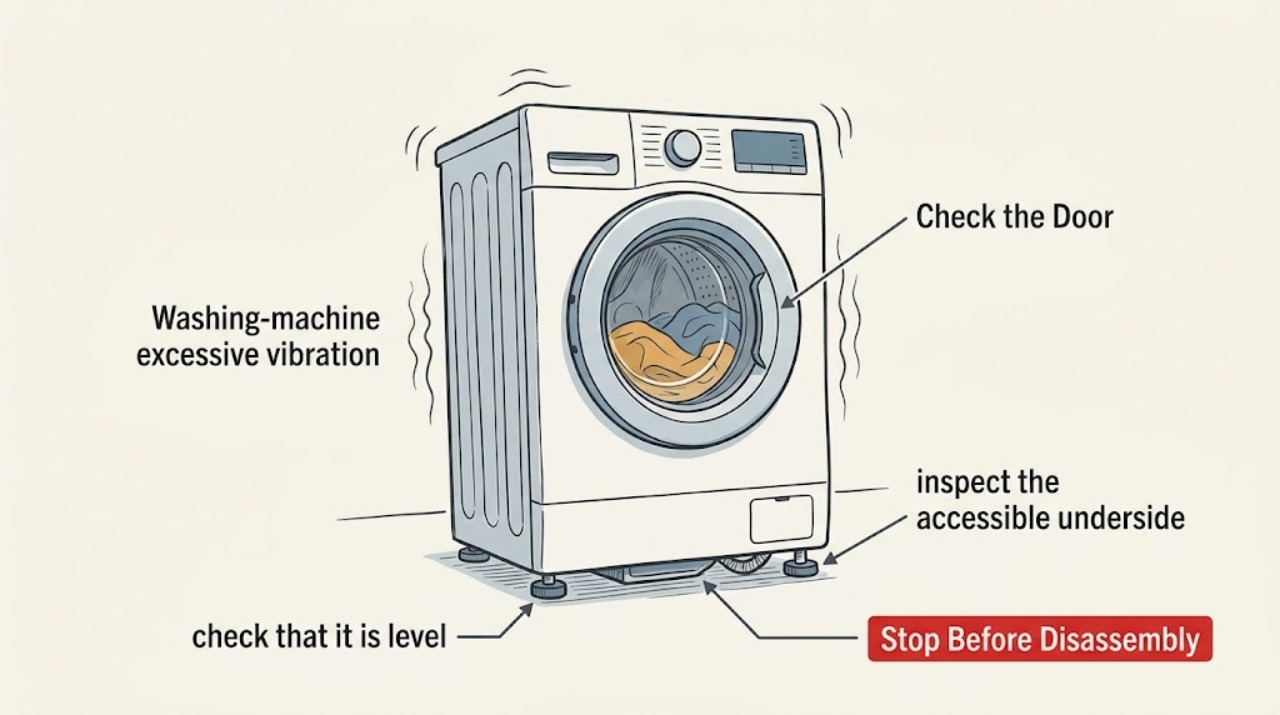
Excessive vibration during an Electrolux washer's spin is most often caused by an unbalanced load, an unlevel or unstable floor, or shipping material left after installation. Stop the cycle, switch the washer off, and wait for the lid or door to unlock before redistributing clothes. Then check that all shipping materials are removed, the washer is level with every foot firmly on a solid floor, and any stacking kit is secure. If it still walks, bangs, or vibrates with a balanced load, stop using it and arrange service because the suspension or another internal part may need inspection.
Work through in order
Diagnostic checks
Use only checks that match the exact appliance or system and its official guide.
-
Check 1
Stop the cycle when the washer begins to shake, turn the power off, and wait for the lid or door to unlock. From a safe position, note whether the movement began during low-speed tumble, high-speed spin, or immediately after installation, and whether the cabinet has walked, struck a wall, or caused a leak.
Expected result: The vibration is limited to spin and the washer remains in place, or it is severe enough to move the appliance, strike nearby surfaces, or create a leak.
Next step: For severe movement, impact, or leakage, keep the washer off and follow the service branch. Otherwise continue with the installation and load checks while the drum is stopped.
Why this matters
Why: Spin-only vibration commonly points to load balance or leveling. Walking, impact, leakage, or instability can damage hoses or the appliance and should not be tested repeatedly.
-
Check 2
If the washer was recently installed or moved, inspect the accessible underside and rear area for remaining shipping material, such as packing foam or shipping bolts, without removing panels. Check whether the washer sits on a solid, stable floor rather than carpet, loose plywood, or another flexible surface.
Expected result: Shipping material is still present, the floor is unstable, or the installation appears clear and solid.
Next step: If shipping material remains, stop and use the model's installation instructions or the installer to remove it correctly; do not run high-speed spin until it is resolved. If the floor is unstable or the unit has shifted, correct the installation or contact the installer. Otherwise continue to the leveling check.
Why this matters
Why: Unremoved shipping material can prevent the suspended wash group from moving normally, while an unstable base can amplify vibration. A clear, solid installation makes load balance and leveling the next checks.
-
Check 3
With the washer empty and stopped, check that it is level from front to back and side to side and that each leveling foot rests firmly on the floor. If the feet are accessible, adjust only as described for the exact model and tighten the lock nuts; do not use loose shims or allow a foot to hang below the base.
Expected result: The cabinet rocks when gently checked, one foot is not firmly planted, the unit is visibly out of level, or all feet are solid and the cabinet is level.
Next step: Correct the leveling and confirm the appliance is stable before any supervised test. If it cannot be leveled without moving the appliance or changing the floor, stop and involve the installer or service professional.
Why this matters
Why: A rocking or out-of-level cabinet can turn a normal imbalance into severe shaking. A firm, level base shifts the diagnosis toward the load or an internal suspension or drive problem.
-
Check 4
For the next load, stop the washer before opening it if it begins to shake, then spread the clothing evenly around the drum. A very small or single-heavy-item load can be redistributed; Electrolux also says one or two similar items may help a small load balance. Do not continue if the washer is walking or striking the cabinet.
Expected result: The vibration stops after the load is redistributed, returns only with a particular bulky or small load, or returns with an ordinary balanced load.
Next step: Use balanced loads and avoid overloading or washing one dense item alone. If the problem returns with balanced loads, keep the washer off and follow the internal-fault service branch.
Why this matters
Why: A result that changes with the load supports an imbalance rather than a permanent mechanical fault. Vibration with ordinary balanced loads after leveling points toward a problem that needs service.
-
Check 5
If the washer and dryer are stacked, inspect the installation from the outside: confirm the approved stacking kit is present, the washer and dryer feet are fully screwed in, and the brackets appear tight. Also check that the drain hose is secured and not striking the cabinet during operation.
Expected result: A stacking kit, foot, bracket, or hose is missing, loose, or visibly contacting the cabinet; or the stacked installation appears secure.
Next step: Stop using a loose or shifted stacked unit and have the installer or qualified service professional correct it. If the stack is secure and vibration persists with balanced loads, arrange appliance service.
Why this matters
Why: A loose stacked installation can amplify movement and create a falling or impact hazard. A hose striking the cabinet can sound like mechanical vibration, but it does not explain a washer that walks.
Use your observations
Decision map
Find the observation that best matches what you see, then follow the next safe action.
-
PATH 01Safety boundary
What you see
The washer was recently installed or moved and shipping foam, shipping bolts, or other transport material may remain.
Do this next
Do not run high-speed spin. Use the exact installation instructions or the installer to remove the transport material correctly, then verify leveling.
Why this path and its safety boundary
Safety stop: Stop if removal requires cabinet disassembly, lifting, or uncertainty about which hardware is transport hardware.
-
PATH 02Safety boundary
What you see
The washer rocks, is visibly out of level, has a foot off the floor, or stands on an unstable surface.
Do this next
Correct the floor or leveling-foot installation according to the model instructions and secure the lock nuts. If the appliance must be lifted or the floor cannot be corrected, call the installer or service professional.
Why this path and its safety boundary
Safety stop: Do not run the washer while it can walk or rock, and do not compensate with improvised loose materials.
-
PATH 03Safety boundary
What you see
Vibration changes with a small, bulky, or single-heavy-item load and stops after the load is redistributed.
Do this next
Use evenly distributed loads and stop the cycle whenever the washer begins to move violently. Avoid repeatedly washing a known unbalanced load.
Why this path and its safety boundary
Safety stop: If vibration returns with an ordinary balanced load, move to service rather than adding more items as a permanent workaround.
-
PATH 04Safety boundary
What you see
The unit still vibrates excessively after shipping material, floor, leveling, load, and stacking checks are resolved, or it has walking, impact, damage, or leaks.
Do this next
Keep the washer off and arrange qualified Electrolux appliance service. Tell the technician when the vibration starts, whether it changes with load, and whether the unit was recently moved.
Why this path and its safety boundary
Safety stop: Do not open the cabinet, replace suspension or drive parts based only on the symptom, or keep running cycles to reproduce severe movement.
Helpful context
Understand the symptom
A small thump at the beginning of a heavy spin can be normal, but a machine that repeatedly walks, strikes the cabinet, or shakes the room needs a controlled check. Start with the parts of the installation and load that can be inspected without opening the cabinet.
Do not hold the tub, defeat a lid or door lock, or reach into a moving washer. If the washer has shifted, is leaking, has a damaged hose or cord, or continues to become unstable after the basic checks, leave it off and arrange service.
Only after diagnosis
Potential parts
- leveling foot or lock nut
Consider this only if the foot or lock nut is damaged and a model-specific inspection confirms that it prevents the washer from sitting firmly on the floor.
Confirm the complete model number and manufacturer fit information before ordering; leveling problems can also originate in the floor or installation. - stacking kit or bracket
Consider this only when a qualified installer confirms that an approved stacking component is missing or damaged on a stacked pair.
Confirm the exact washer and dryer models and the approved kit before purchase; do not improvise a stack. - suspension damper or support component
Consider internal suspension parts only after service confirms that vibration persists with a balanced load on a correctly leveled, stable installation.
Use the technician's diagnosis and exact model information to verify compatibility; excessive vibration alone does not identify a part.
When checks do not resolve it
Need a professional?
Arrange service if the Electrolux washer vibrates violently, walks, strikes the cabinet or wall, leaks, remains unstable after leveling and load checks, or vibrates with a balanced load. A recently installed unit with possible shipping hardware, a stacked unit that has shifted, or any condition requiring lifting or cabinet access should be handled by the installer or a qualified appliance professional.
Have this ready
- Electrolux model and serial information
- Whether the washer was recently installed, moved, or stacked
- The cycle stage at which vibration begins and whether the drum is empty or loaded
- Whether the unit rocks, walks, strikes nearby surfaces, or leaks
- What was found about shipping materials, leveling feet, floor stability, load balance, stacking hardware, and drain-hose contact
Common questions
FAQ
Why does my Electrolux washer shake only during spin?
Spin magnifies an unbalanced load or an unlevel base. Stop the cycle safely, redistribute the clothes after the lid or door unlocks, and verify that every leveling foot is firmly on a solid floor.
Can I keep using the washer if it walks a little?
No. A washer that walks, strikes nearby surfaces, or leaks can damage itself or its connections. Leave it off until the installation is corrected or a qualified professional checks it.
Could shipping bolts cause excessive vibration?
Yes. Electrolux lists shipping materials and shipping bolts as checks for a newly installed unit. Use the exact installation instructions or the installer if you are unsure which parts must be removed.
What if leveling and load balancing do not fix the vibration?
Keep the washer off and arrange service. Persistent vibration with a stable, level installation and balanced load may require inspection of suspension, drive, or other internal components.
Read the exact guide
Official sources
- What should I do if my washer does not start?Electrolux · Electrolux washers and basic level, outlet, and operating checks
- Delivery and Installation Guide - LaundryElectrolux · Electrolux washer and dryer delivery and installation, including stacked laundry appliances
- Laundry Washers Noises GuideElectrolux · Electrolux laundry washers and washer vibration/noise troubleshooting
Community feedback
Share a repair observation
Share a plain-text repair observation. Accepted observations are published automatically; this page may take a moment to update.