
On this page
Start here
Quick answer
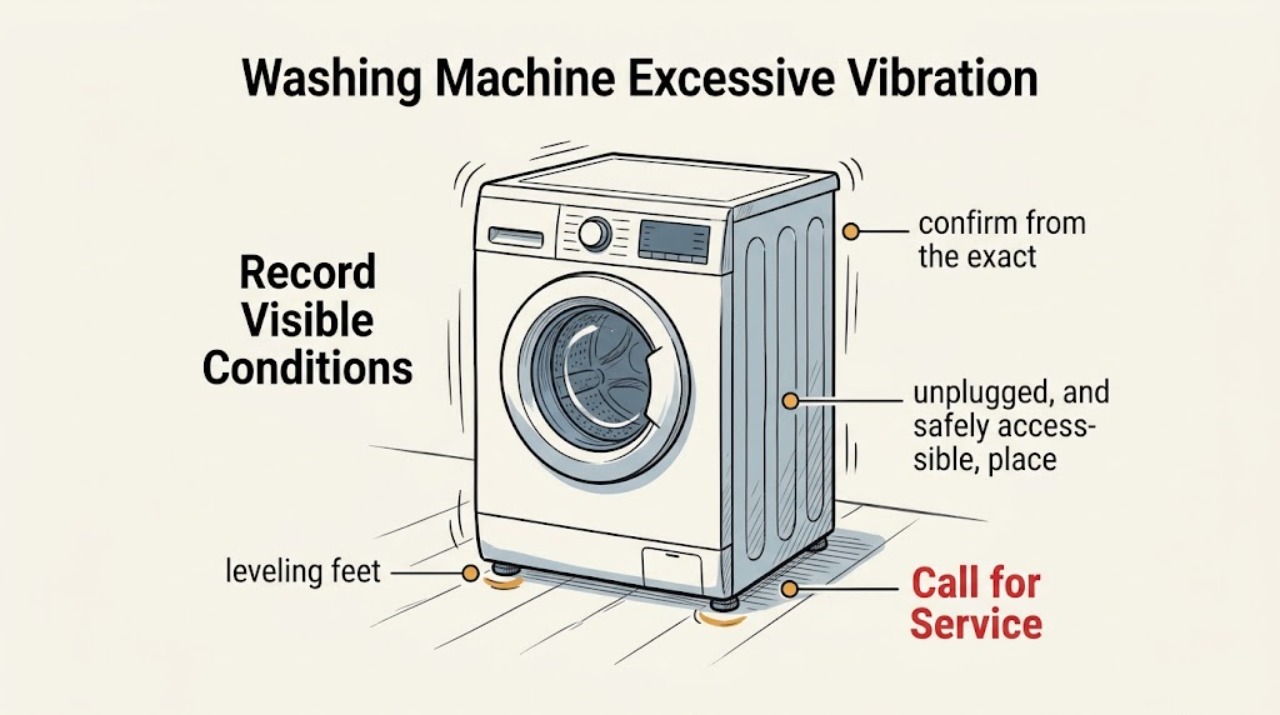
A Crosley washer that shakes or walks during spin is most often reacting to an unbalanced load, feet that are not all firmly on the floor, a damaged or unsuitable floor, or installation hardware that was not removed. Pause the cycle, keep hands out of the moving basket, redistribute the load, and check the exact model's installation instructions before moving the machine. Level the washer with a spirit level and secure the feet; Crosley's installation guidance says all four leveling legs must touch the floor and that excessive leg extension increases vibration. Stop for smoke, burning odor, sparks, a hot or damaged cord, a leak near electrical parts, repeated breaker trips, or a cabinet that strikes violently, and arrange qualified service.
Work through in order
Diagnostic checks
Use only checks that match the exact appliance or system and its official guide.
-
Check 1
Pause the washer and record whether vibration starts during agitation, draining, or high-speed spin; note whether the basket is visibly off-center, the cabinet walks, or the movement is accompanied by scraping, banging, leaking, or an alert.
Expected result: The washer only moves with one load or at spin speed, moves even when empty, or produces a new mechanical or electrical warning.
Next step: If there is smoke, burning odor, a spark, water near electrical parts, a hot cord, repeated breaker trips, or violent impact, stop and arrange service. Otherwise continue with the matching load or installation check.
Why this matters
Why: Movement limited to a particular load points first to load balance or loading. Movement with no clothes, violent impact, or a new warning raises the likelihood of an installation, floor, suspension, drive, or other fault that cannot be confirmed from the outside.
-
Check 2
If the washer was newly installed or moved, confirm from the exact Crosley manual that all shipping support hardware or transport restraints have been removed and saved. Do not dismantle the cabinet to search for hardware.
Expected result: The installation checklist confirms the supports were removed, the washer's history is unknown, or supports may still be fitted.
Next step: If the hardware status is unknown, stop using the washer and have the installer or a qualified technician verify it using the model instructions. If it is confirmed removed, continue to leveling and load checks.
Why this matters
Why: Transport hardware left in place can prevent the tub from moving as designed and can cause severe vibration or damage. The manual and model determine what hardware exists and how it is removed.
-
Check 3
With the washer empty, unplugged, and safely accessible, place a level on the top and gently push alternately on the corners. Check that all four rubber leveling legs firmly contact a solid floor, that no leg is damaged, and that the locknuts or retainers are secured as shown in the model instructions.
Expected result: The bubble is off, one corner rocks, a foot is not touching, a rubber foot is damaged, or the machine sits solidly on all four feet.
Next step: Adjust only the permitted leveling feet, keep extension to the minimum needed, recheck levelness and corner-to-corner stability, and tighten the model-specified retainers. If the floor is badly sloped, damaged, or cannot support the washer, stop and use a qualified installer.
Why this matters
Why: A rocking cabinet or a foot that is not bearing weight can amplify spin forces. Crosley also warns that extending leveling legs farther out increases vibration; a damaged leg can increase vibration.
-
Check 4
Inspect the installation clearance and contact points without removing panels: the washer should not be pressed against a wall, cabinet, drain pan edge, or loose object, and the inlet and drain hoses must not be trapped beneath it. Check the floor for flex, damage, or a slippery or unstable surface.
Expected result: A hose, wall, cabinet, or object is being struck; the floor flexes or is damaged; or there is adequate clearance on a solid surface.
Next step: Correct only safe external clearance and hose routing, then recheck levelness. Do not improvise a raised base or move a full washer alone; have an installer assess a weak or damaged floor.
Why this matters
Why: The floor transmits vibration and external contact can sound like an internal failure or push the appliance out of position. Crosley identifies unsuitable or weak floors as contributors to noise and vibration.
-
Check 5
Pause before spin, open the lid or door only when the machine has stopped safely, and redistribute clothes so heavy items are not gathered on one side. Avoid a single bulky item or an overloaded drum; use the exact manual's load guidance.
Expected result: The load is tangled, very small and heavy, bulky, overloaded, or visibly gathered at one side; after redistribution the basket settles normally.
Next step: Run one supervised appropriate spin or rinse-and-spin with a balanced load. If the machine still shakes with a normal balanced load, do not keep adding weight or repeatedly retry; continue to the empty-test and service boundary.
Why this matters
Why: An uneven mass can make the washer rebalance, slow or interrupt spin, and create strong vibration even when the feet are correctly adjusted. Crosley troubleshooting guidance says to redistribute an unbalanced load and compare a no-load rinse and spin when permitted.
-
Check 6
After the external checks, run one short supervised rinse-and-spin with no load or a small balanced load only if the exact model manual allows it. Stay nearby and stop at the first violent movement, scraping, leak, smoke, burning odor, spark, abnormal heat, or repeated electrical trip.
Expected result: The empty or balanced test is stable, vibration remains severe with no load, or a stop symptom appears.
Next step: Use the washer only if it completes normally and remains stable. Otherwise unplug it when safe, keep it out of use, and provide the exact model, load, test result, sounds, movement, and any code to qualified Crosley or appliance service.
Why this matters
Why: A stable empty test supports the load or installation as the immediate cause. Severe movement with no load, repeated scraping or banging, or an unsafe symptom points to a possible suspension, tub, bearing, drive, control, or electrical issue that cannot be diagnosed safely from the outside.
Use your observations
Decision map
Find the observation that best matches what you see, then follow the next safe action.
-
PATH 01Next step
What you see
Vibration appears only with one tangled, bulky, single-heavy, or overloaded load.
Do this next
Pause safely, redistribute or reduce the load according to the model manual, and run one supervised balanced test. Escalate if it shakes with an ordinary balanced load.
-
PATH 02Next step
What you see
The cabinet rocks, one foot is not touching, a foot is damaged, or the locknuts are loose.
Do this next
Unplug before access, level the washer with the exact installation instructions, keep leg extension minimal, and secure the retainers. Use a qualified installer if the floor is damaged or unstable.
-
PATH 03Next step
What you see
The washer was installed or moved recently and transport hardware has not been verified.
Do this next
Do not run another high-speed cycle. Have the installer or qualified service verify transport hardware removal for the exact model.
-
PATH 04Next step
What you see
Vibration remains severe during an empty permitted test or the basket produces scraping, repeated banging, or a recurring alert.
Do this next
Stop using the washer and arrange qualified appliance service; do not remove panels or guess at suspension, bearing, motor, or control parts.
-
PATH 05Next step
What you see
Smoke, burning odor, sparks, abnormal heat, visible electrical damage, a leak near electrical parts, or repeated breaker trips occurs.
Do this next
Stop immediately, disconnect power only if it is safe to do so, keep clear of damaged wiring or water, and seek qualified appliance or electrical service. Do not run another test.
Helpful context
Understand the symptom
First separate a load problem from a machine or installation problem
Pause the washer and note when the movement begins. A brief, small cabinet movement during a high-speed balance correction is different from repeated banging, walking, or a basket that cannot settle. Do not reach into a moving basket or hold the cabinet while it spins. If the washer is new or has recently been moved, treat installation checks as the first path; otherwise compare a redistributed load with an empty supervised rinse-and-spin only if the model manual permits that programme.
Use a hard stop for unsafe movement or electrical symptoms
Stop the cycle if the cabinet is striking a wall, hoses, or furniture, if the washer walks toward an edge, or if there is a leak. Unplug before moving the appliance or checking feet, and do not lift it by the door or dispenser. Do not remove panels, bypass a lid or door lock, or test internal suspension, motor, or controls without qualified service.
When checks do not resolve it
Need a professional?
Book service for persistent excessive vibration, movement with no load, an unresolved installation condition, recurring alerts, or any repair beyond the exact Crosley user manual.
Common questions
FAQ
Why does my Crosley washer vibrate only during spin?
Spin concentrates the force from an uneven load, so redistribute tangled or heavy items and check that all four leveling feet firmly touch a solid floor. If the washer still shakes when empty on a permitted test, arrange service.
How do I know whether my Crosley washer is level?
With the washer safely stopped, use a level on top and gently push alternate corners. It should not rock, and every leveling foot should remain firmly on the floor. Adjust only as the exact installation instructions show and secure the retainers.
Can an unbalanced load damage a Crosley washing machine?
A badly unbalanced load can cause strong movement and repeated rebalancing. Pause safely, redistribute or reduce the load, and do not hold the cabinet or reach into a moving basket. Persistent movement with a balanced load needs service.
When should I stop using a vibrating Crosley washer?
Stop for violent cabinet impact, smoke, burning odor, sparks, abnormal heat, a damaged cord, a leak near electrical parts, repeated breaker trips, or severe vibration during an empty permitted test. Disconnect power only if safe and seek qualified service.
Read the exact guide
Official sources
- Top Load Washer - Crosley Home ProductsCrosley Home Products · Use to confirm Crosley washer product context and locate the model manual; it is not a substitute for the exact model's instructions.
- Installation Instructions and Owner's Manual for Crosley YFW450 WasherCrosley Home Products · Official Crosley front-load washer manual; use its installation and troubleshooting principles while checking the exact model manual for differences.
- Crosley Washer Use and Care GuideCrosley Home Products · Official Crosley washer use-and-care guide; model-specific instructions take priority.
Community feedback
Share a repair observation
Share a plain-text repair observation. Accepted observations are published automatically; this page may take a moment to update.