
Repair problem
Excessive Vibration Troubleshooting Guides
Published FixGraph guidance for diagnosing and responding to excessive vibration.
Matching published guides
Choose a guide that matches the service, equipment, and conditions you are seeing.
-
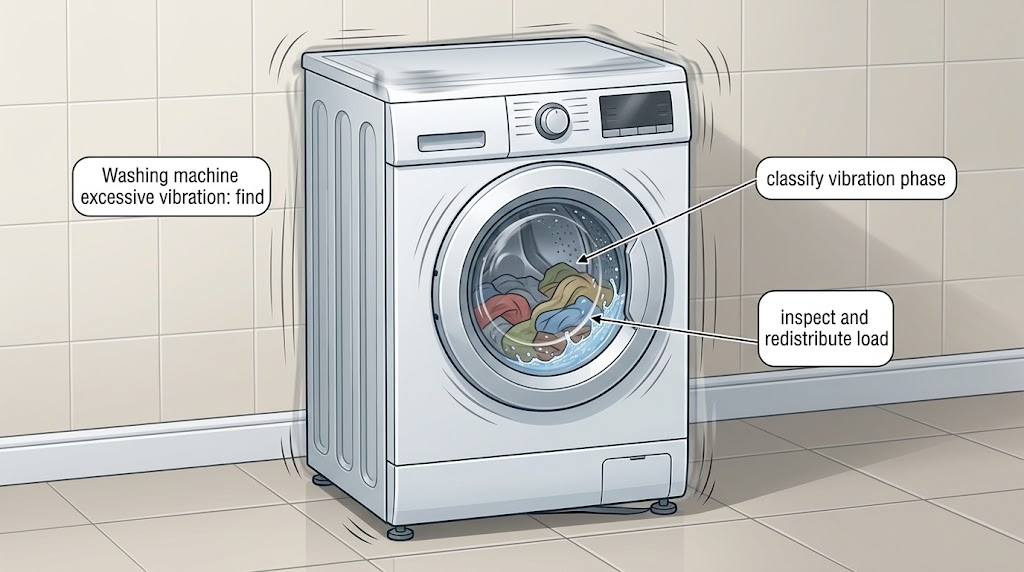
Admiral washing machine excessive vibration: find the load, level, or installation cause
An Admiral washer that shakes, rocks, or walks is most often reacting to an uneven load or an installation problem, but the exact model and cycle still matter. Stop the cycle before reaching near the basket, note whether the vibration starts only during spin, redistribute a dry load according to the model's instructions, and check that the washer is level with every foot firmly on the floor.
-
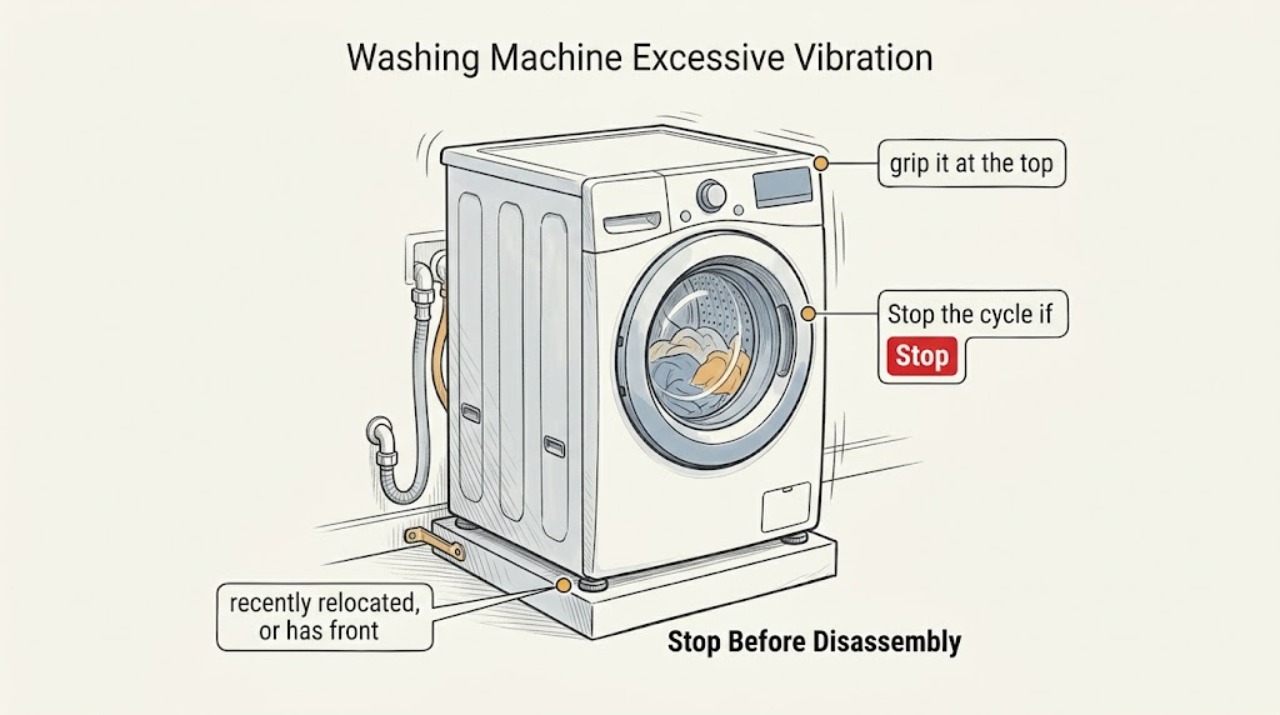
Amana Washing Machine Excessive Vibration: Balance, Level, and Check Installation
Stop a violent cycle and wait until the basket is still. Redistribute a tightly packed or single bulky load, then check that all four feet make firm contact and the washer does not rock.
-
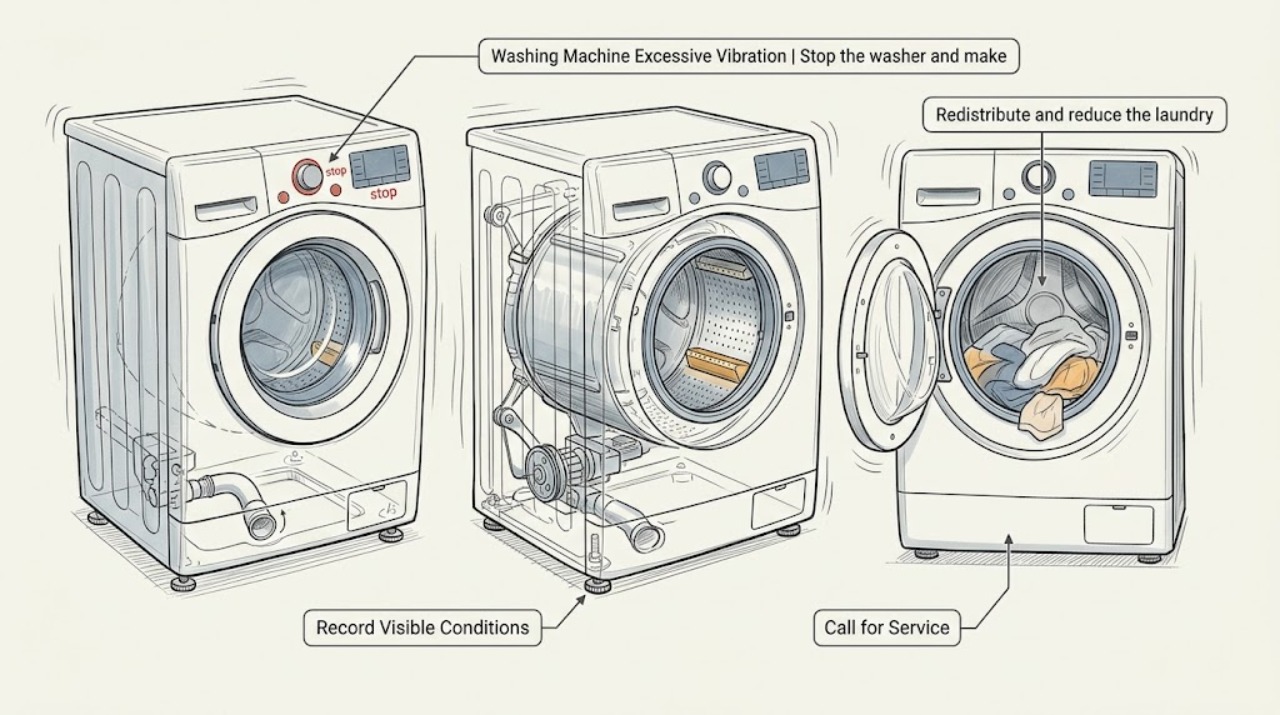
Bosch Washing Machine Excessive Vibration
Pause the cycle and keep clear of a washer that is walking, striking its cabinet, leaking, or producing a burning smell. Once the drum has stopped and the floor is safe, identify whether the vibration occurs only during spin, rebalance and reduce the load, and check from the outside that the washer is level on a solid floor with all feet firmly down.
-
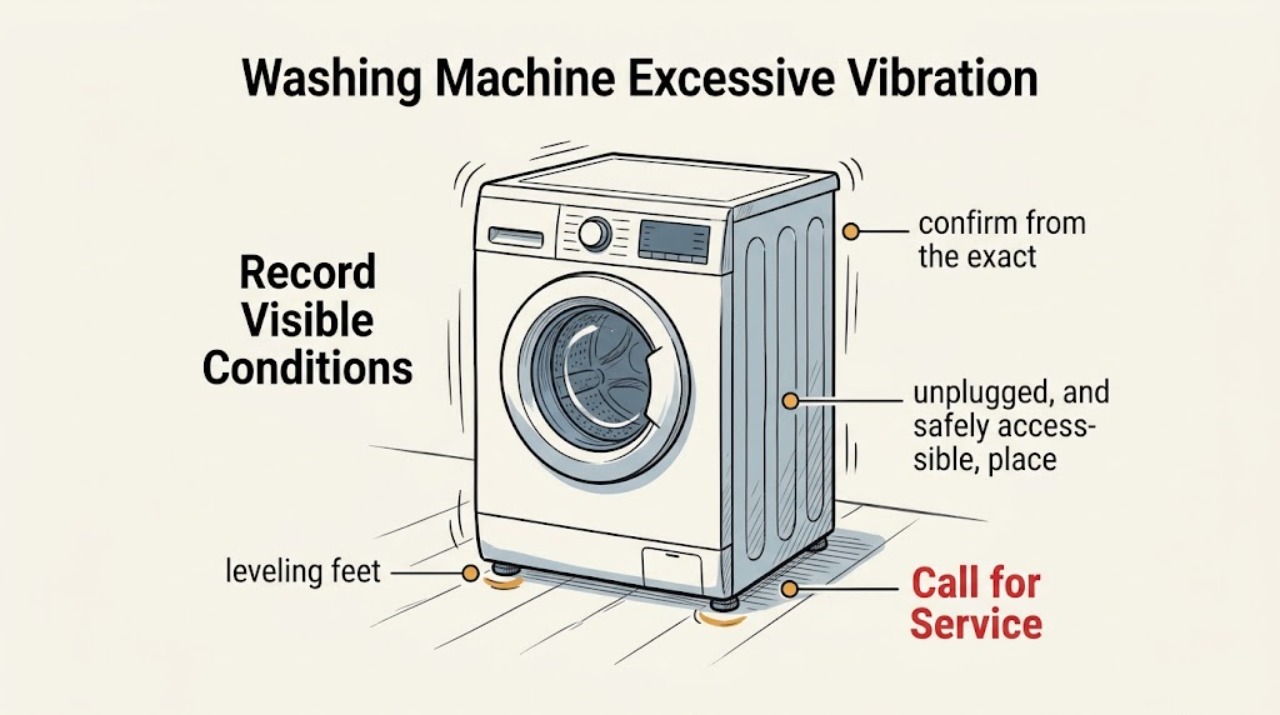
Crosley Washing Machine Excessive Vibration
A Crosley washer that shakes or walks during spin is most often reacting to an unbalanced load, feet that are not all firmly on the floor, a damaged or unsuitable floor, or installation hardware that was not removed. Pause the cycle, keep hands out of the moving basket, redistribute the load, and check the exact model's installation instructions before moving the machine.
-
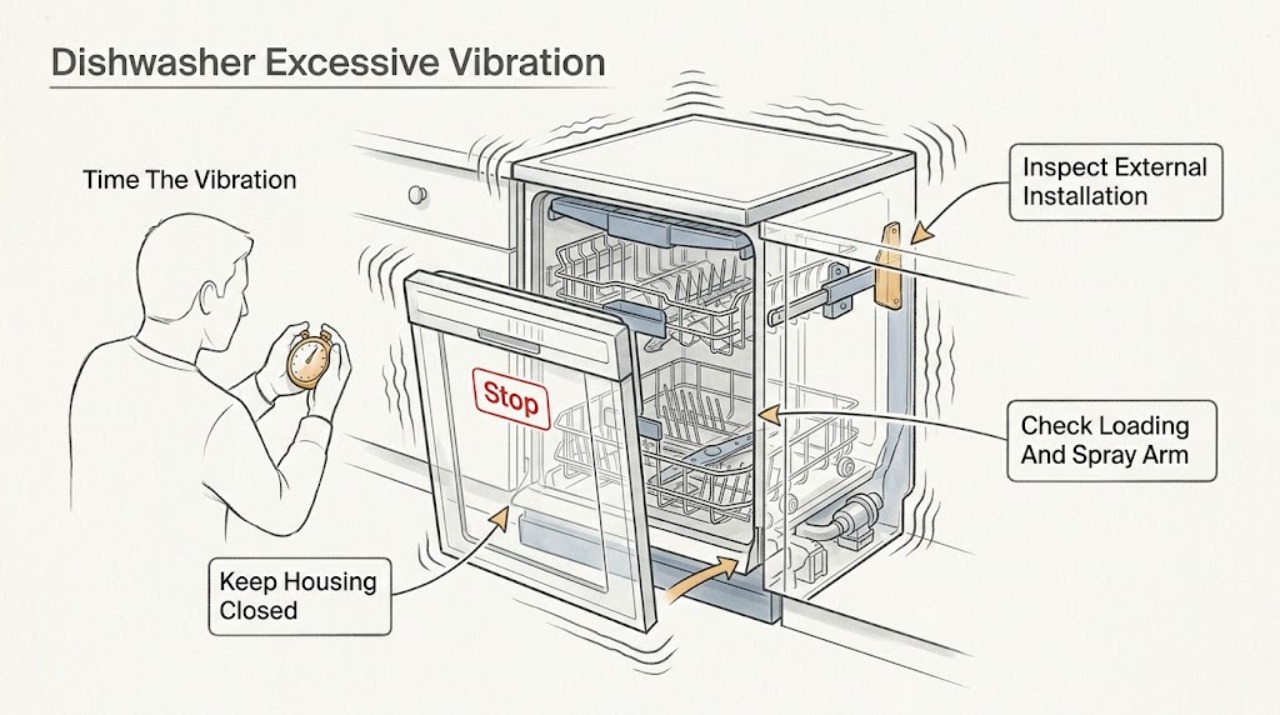
Frigidaire Dishwasher Excessive Vibration: Installation, Loading, and Pump Checks
First note when the Frigidaire dishwasher vibrates: during fill, when the wash pump starts, as the spray arms alternate, while draining, or throughout the cycle. Frigidaire describes water filling, water circulation, motor operation, wash-pump and drain-pump humming, spray-arm whooshing, and some fan operation as normal stage-related sounds; a tall dish, pan, or utensil striking a spray arm can cause knocking or banging.
-
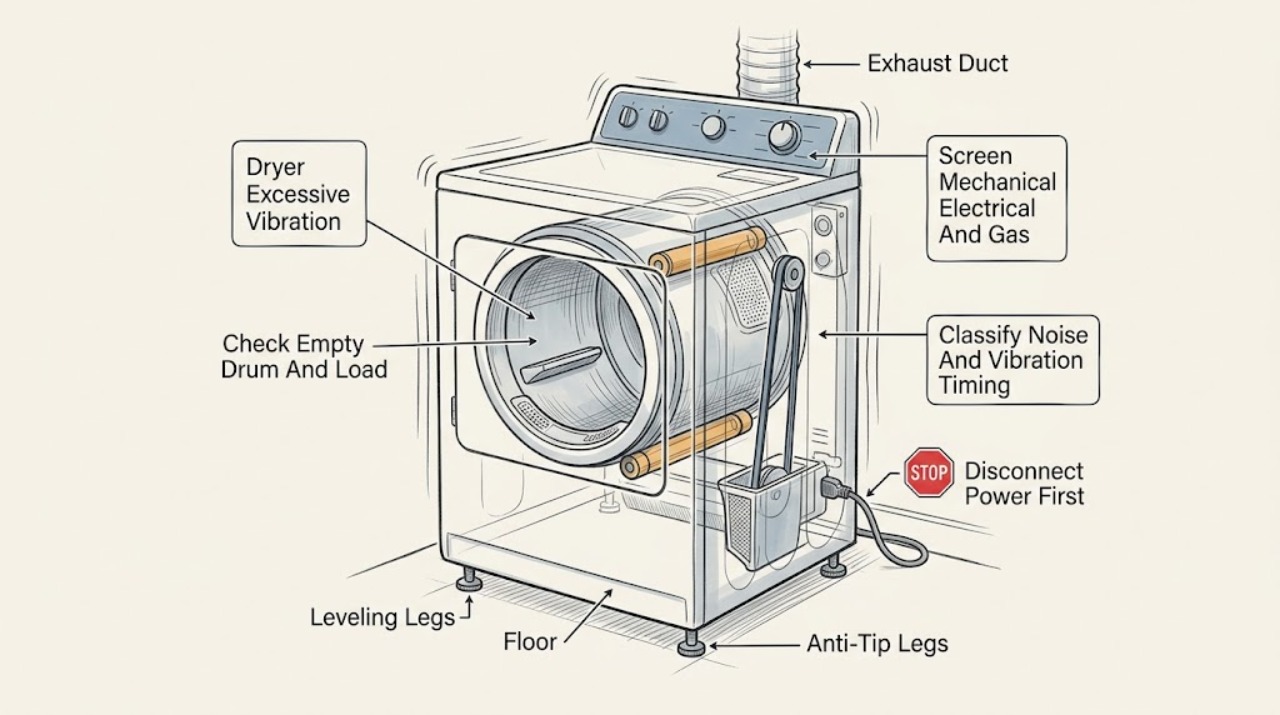
Ge Dryer Excessive Vibration
Excessive vibration from a GE dryer is most often caused by an unlevel dryer, a soft or uneven floor, a loose anti-tip or leveling leg, an uneven load, a foreign object, a loose cabinet fastener, or a worn belt, drum slide, or support component. Stop immediately for smoke, a burning or gas odor, sparks, a hot or damaged cord, a gas leak, scraping that worsens, a dryer that walks or tips, or a drum that binds; keep the dryer off and arrange qualified service.
-
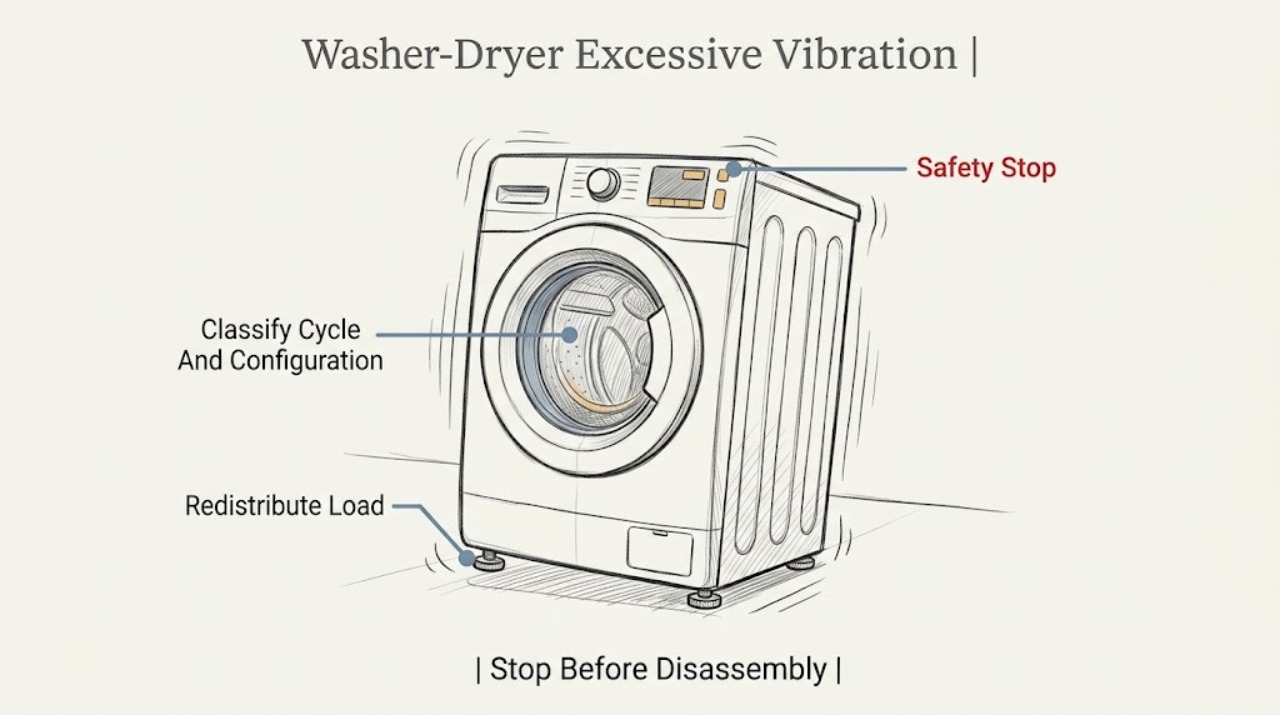
GE Washer-Dryer Excessive Vibration: Balance the Load, Level the Unit, and Check Installation
For a GE washer-dryer that vibrates excessively, first pause it and redistribute the load, then compare the behavior with an empty rinse-and-spin or other model-approved test. Check that the unit is level on a solid floor with every rubber leg firmly contacting the floor and its lock hardware secure.
-
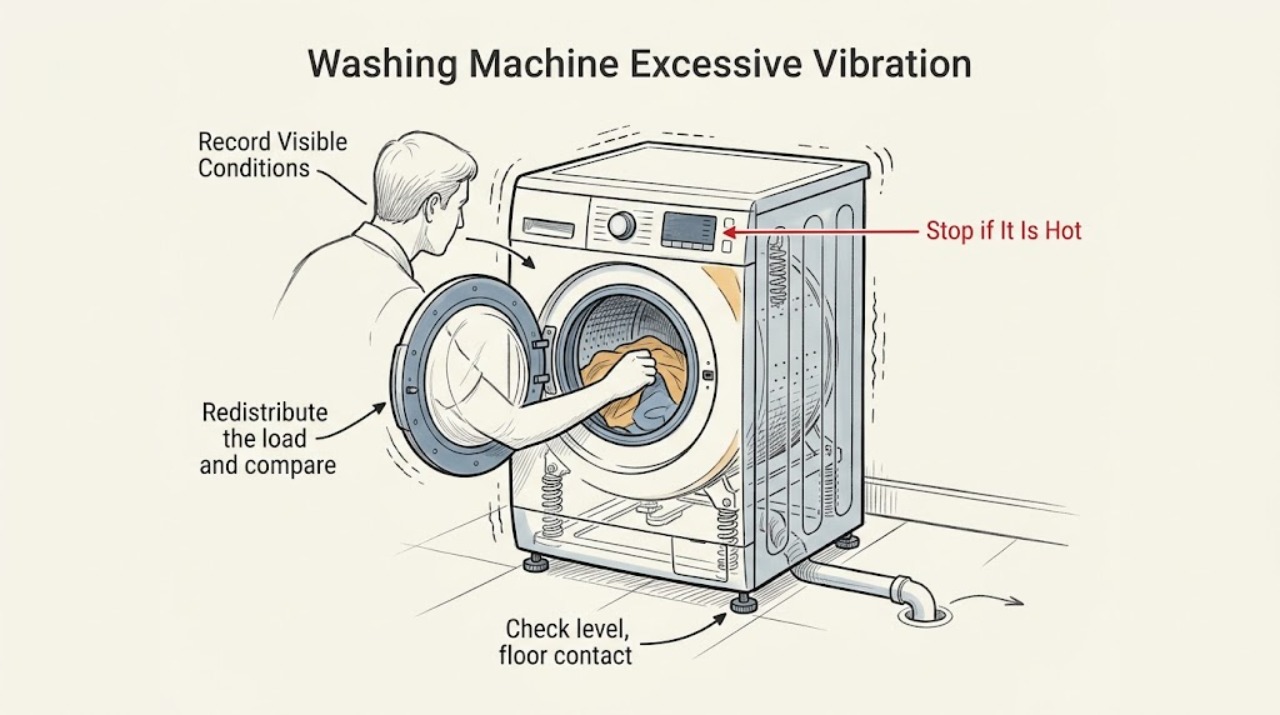
GE Washing Machine Excessive Vibration: Balance the Load, Level the Unit, and Check Shipping Hardware
When a GE washing machine shakes, walks, or vibrates excessively, stop the cycle and first determine whether the movement follows one load, started after installation or moving, or occurs with an empty drum. Redistribute an unbalanced load, then confirm the washer is level, all feet are firmly on a solid floor, and the leg lock nuts are secured as the model instructions require.
-
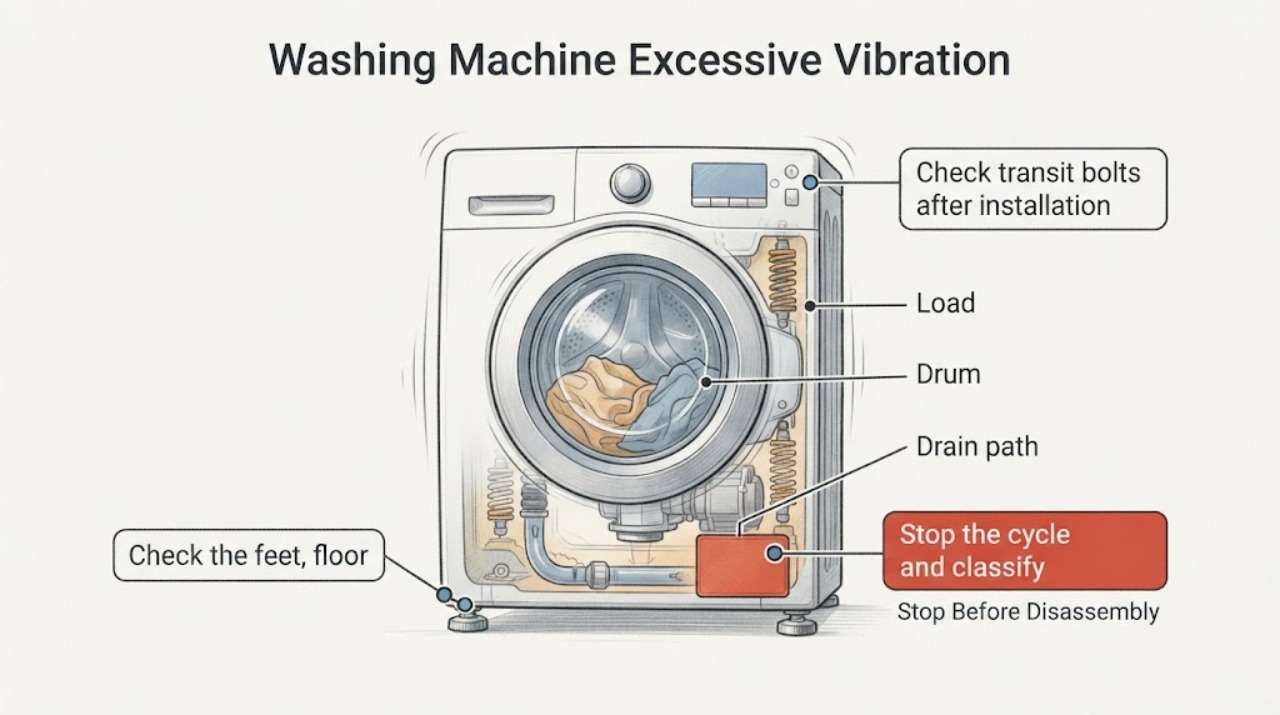
Hoover Washing Machine Excessive Vibration: Safe Checks Before Service
A Hoover washing machine that vibrates excessively during spin most often needs a load, installation, or floor check: a single bulky load can become unbalanced, all transit bolts must be removed after installation, and all feet must rest firmly on a stable level floor. The machine also needs clearance so its cabinet and plug are not touching surrounding objects, and a drain problem or foreign object can alter the spin.
-
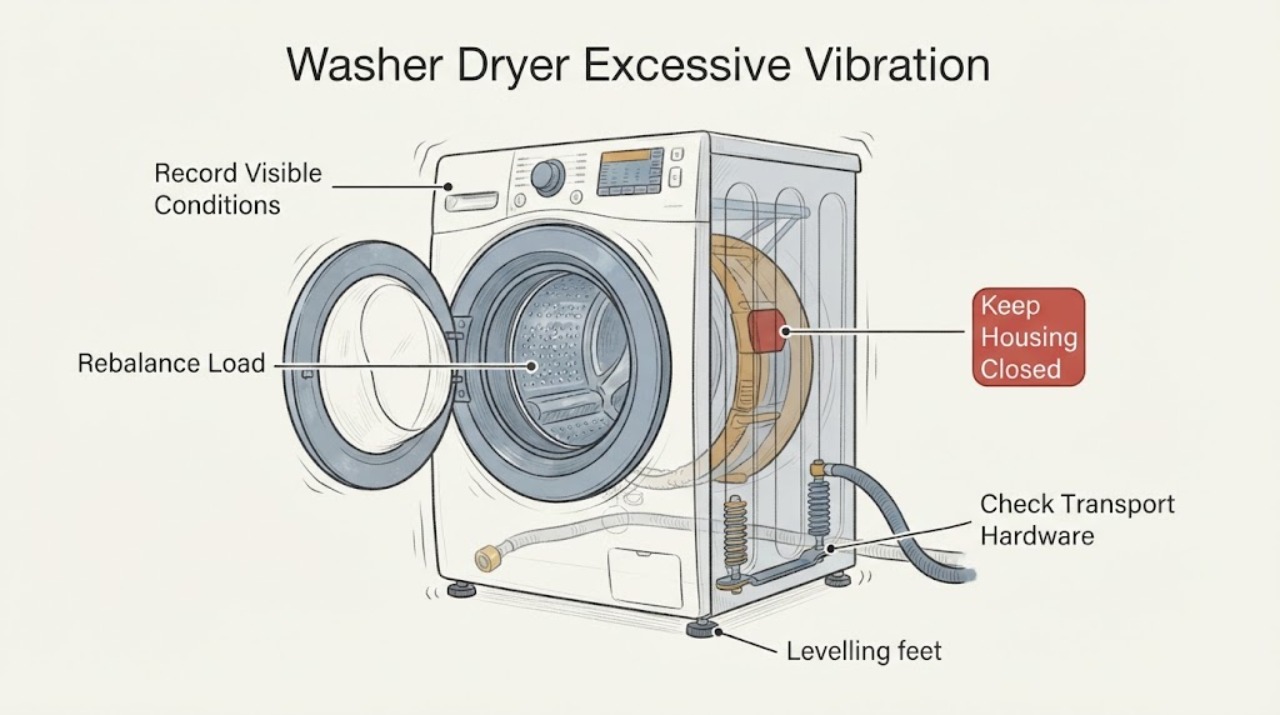
Hotpoint Washer Dryer Excessive Vibration: Stabilise the Spin Safely
Stop the programme if the Hotpoint washer dryer is walking, banging, or threatening to move. Excessive vibration is most often a load or installation issue: redistribute a heavy or single-sided load, avoid overloading, and check that the appliance is level and not squeezed against furniture or a wall.
-
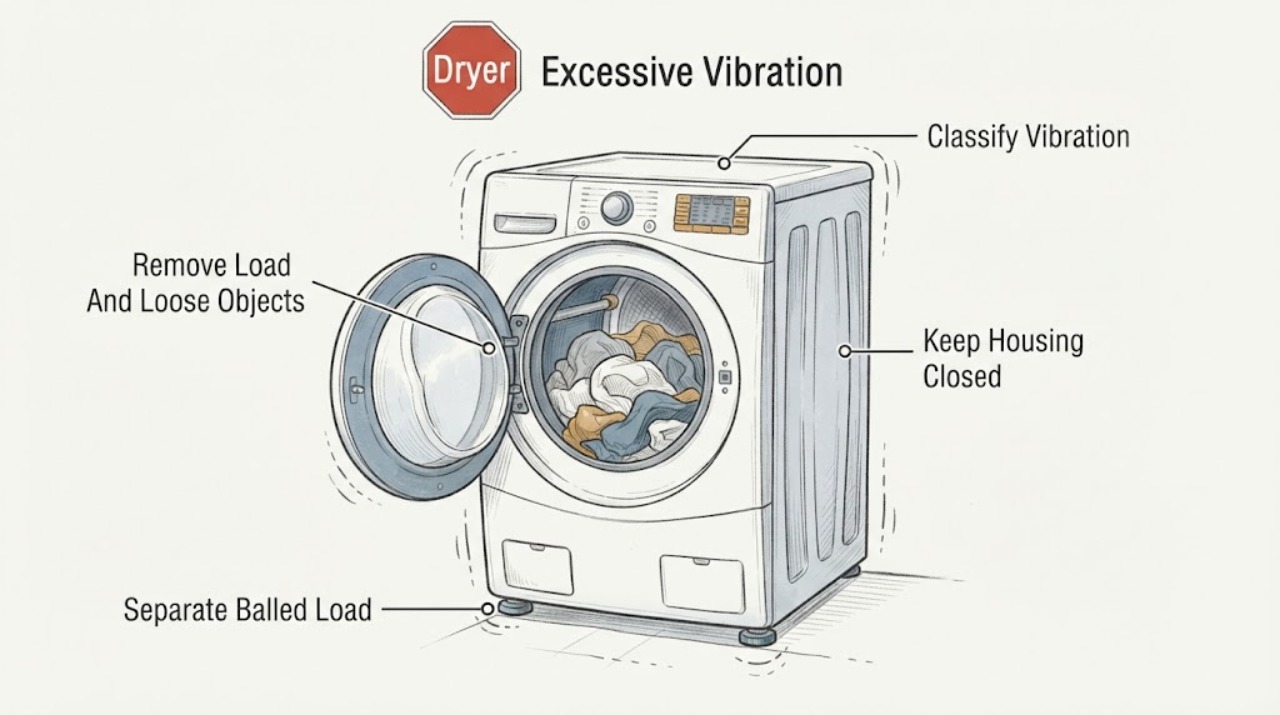
Kenmore Dryer Excessive Vibration
Stop the dryer and first separate a normal brief thump from a machine that rocks or walks. Empty loose objects, untangle a balled load, and check that the dryer sits on a solid floor with every leveling foot firmly contacting it.
-
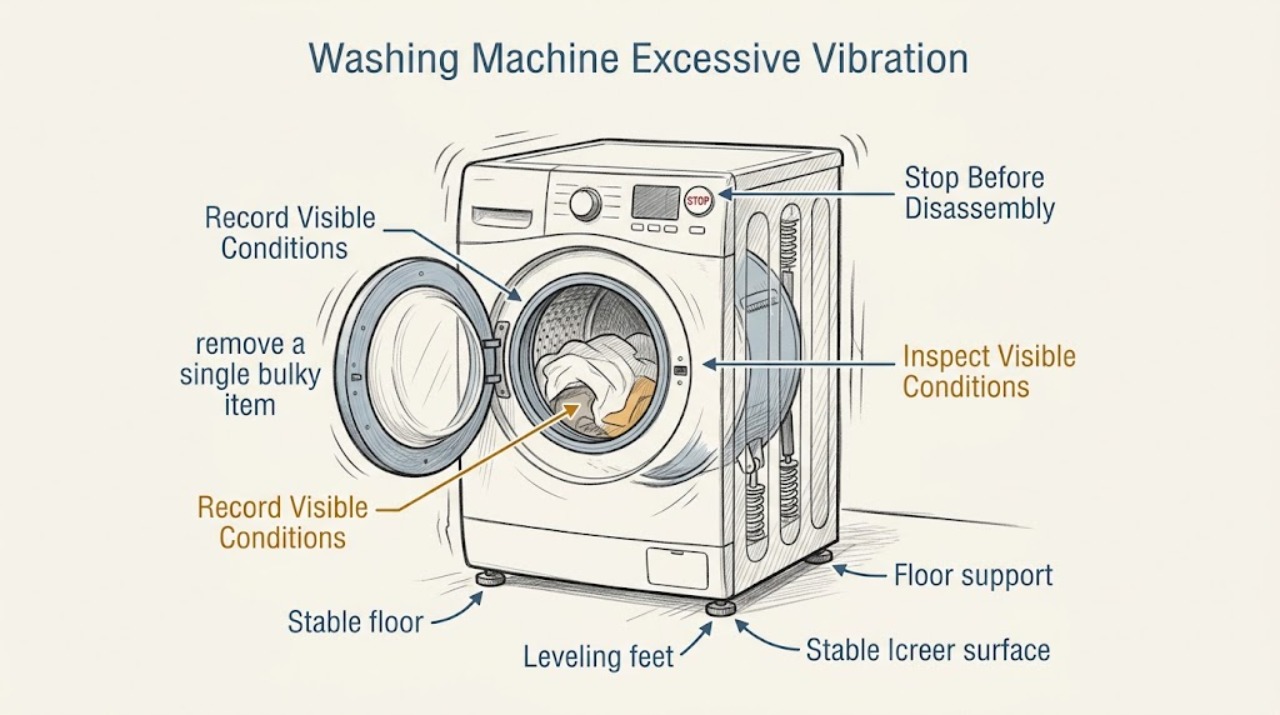
Kenmore Washing Machine Excessive Vibration: Balance, Leveling and Shipping-Bolt Checks
A Kenmore washer that vibrates excessively is most often reacting to an unbalanced load or an installation problem, but the correct check depends on whether it is a front-load or top-load model and whether it was just installed. Stop the cycle if the cabinet walks, slams violently, leaks, smells hot or electrical, sparks, shocks you, or trips the breaker.
-
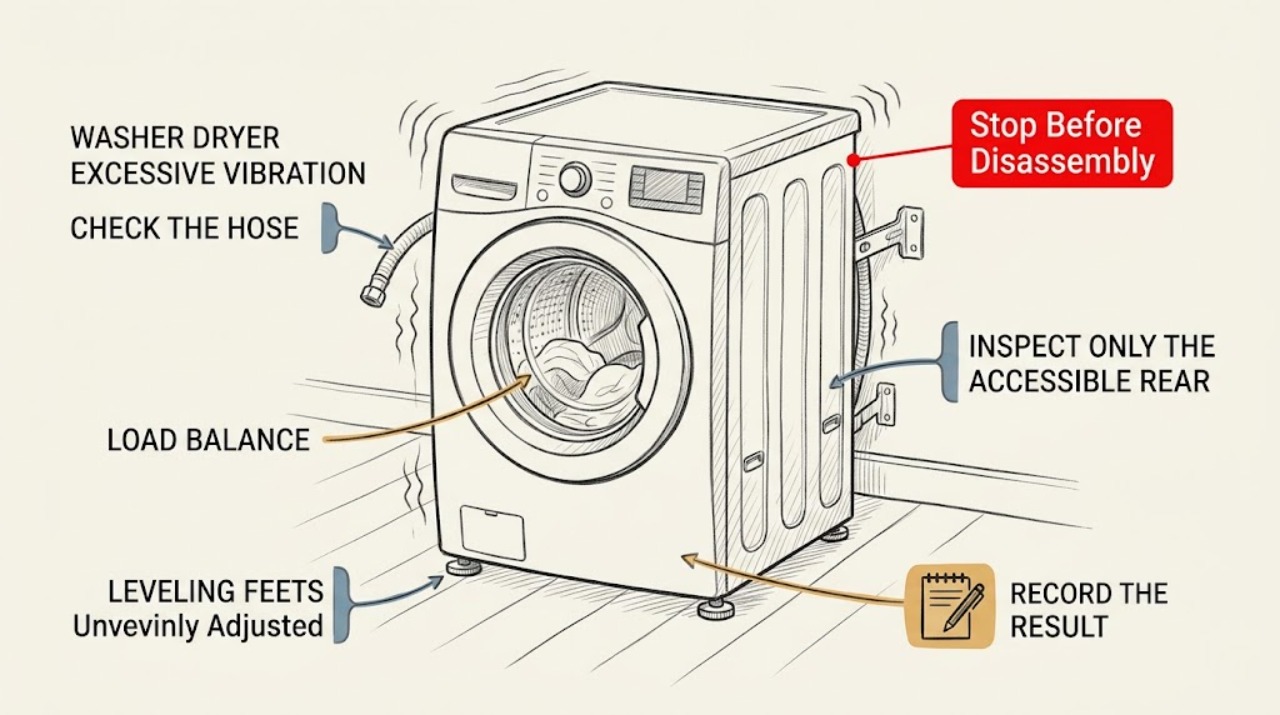
LG Washer Dryer Excessive Vibration: Safe Checks for Load, Level, and Shipping Hardware
An LG washer dryer can vibrate excessively when shipping hardware is still fitted after installation, laundry is uneven or bulky, the appliance is not level, the floor is unstable, or the cabinet is touching something nearby. Pause the cycle, keep clear of the moving drum, check for an immediate safety hazard, redistribute the load when the drum has stopped, and check stability and visible installation hardware from the outside.
-
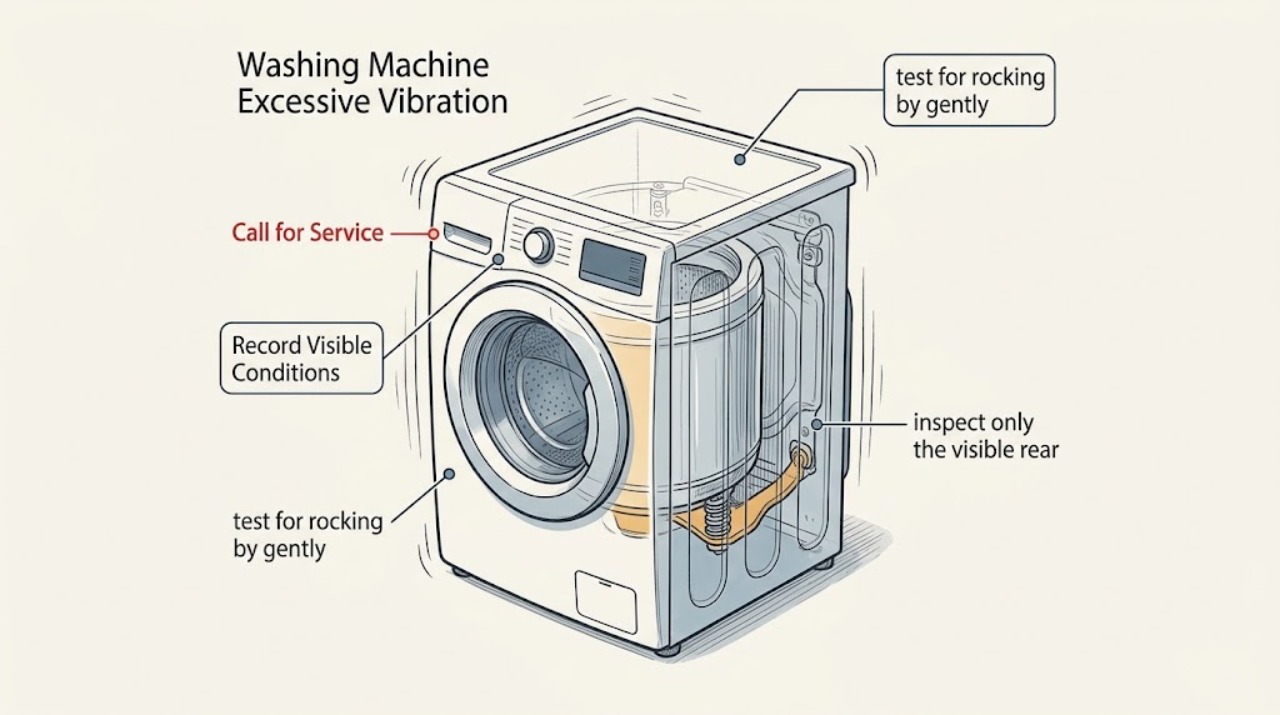
LG Washing Machine Excessive Vibration: Balance, Level, and Installation Checks
Pause the washer if it is walking, striking nearby objects, leaking, or making metal-on-metal noise. Keep hands away from a moving tub.
-
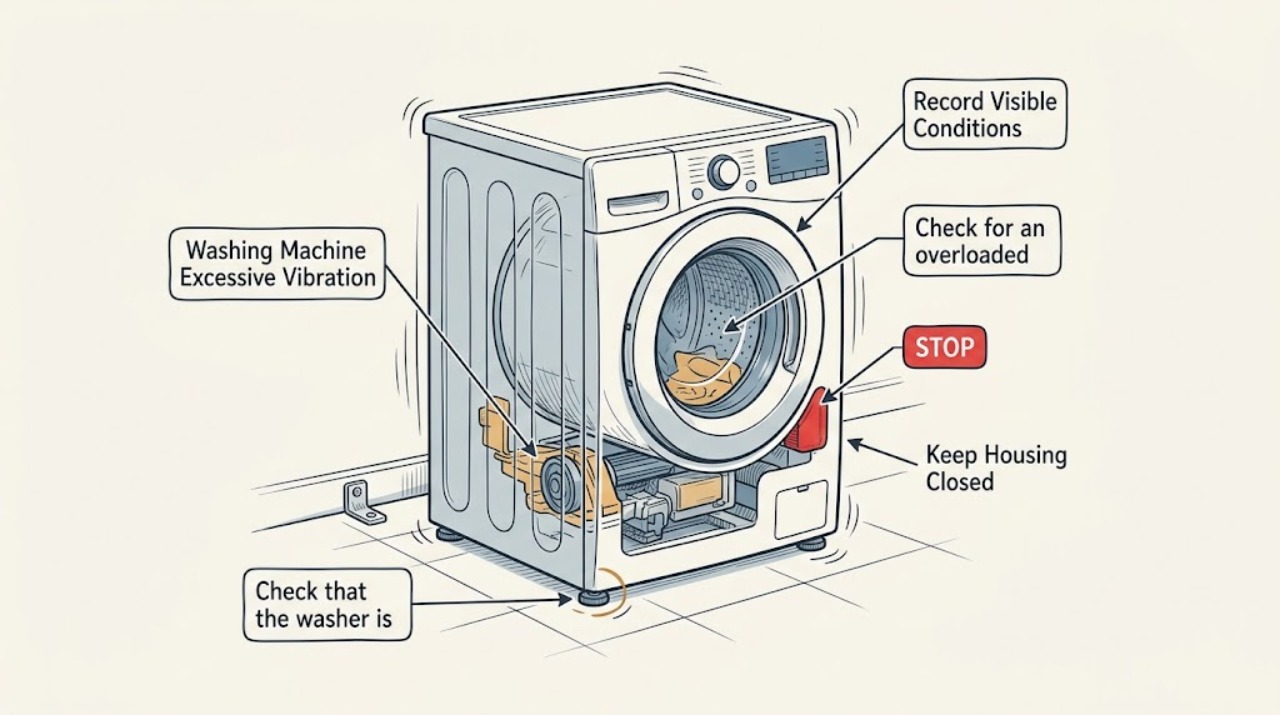
Maytag Washing Machine Excessive Vibration: Find the Safe Cause Before Service
A Maytag washer that shakes, walks, bangs, or vibrates excessively usually needs the spin load, installation, or floor separated from a possible internal fault. Stop the cycle if the cabinet is walking, striking nearby objects, leaking, producing metal-on-metal noise, smoke, a burning smell, or an electrical symptom.
-
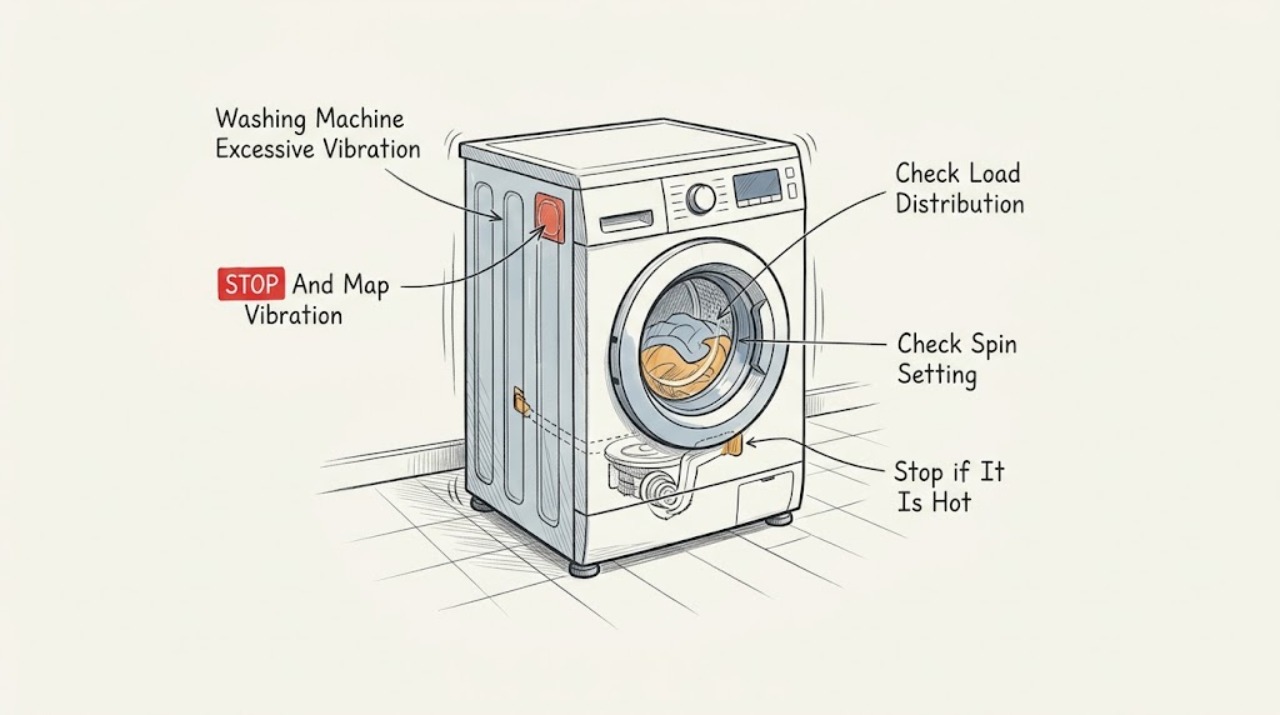
Miele Washing Machine Excessive Vibration: Find the Safe Cause
If a Miele washing machine is shaking, walking, or striking the cabinet, stop the cycle and keep people away until the drum is stationary. Miele identifies an installed transport safety device, an incorrectly aligned machine, loose foot locknuts, and an unsuitable or soft base as causes of spin vibration; it also says an uneven load can trigger imbalance control and reduced spin speed.
-
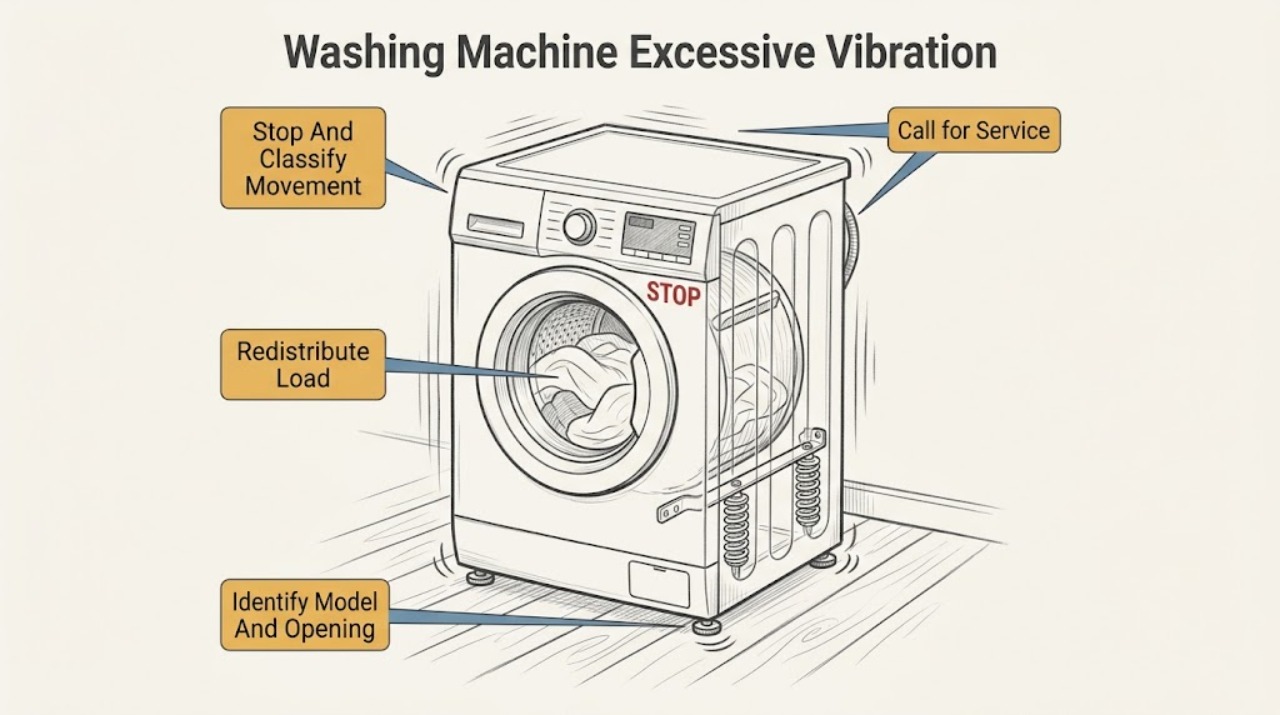
Roper Washing Machine Excessive Vibration: Check the Load, Floor, and Installation
Roper washer vibration is most often tied to a load that is too large or uneven, a washer that rocks on its feet or floor, or installation hardware that was not handled according to the exact model instructions. Start by stopping the cycle safely, noting whether the movement occurs during spin or throughout the cycle, and checking for water, impact, or unusual noise.
-
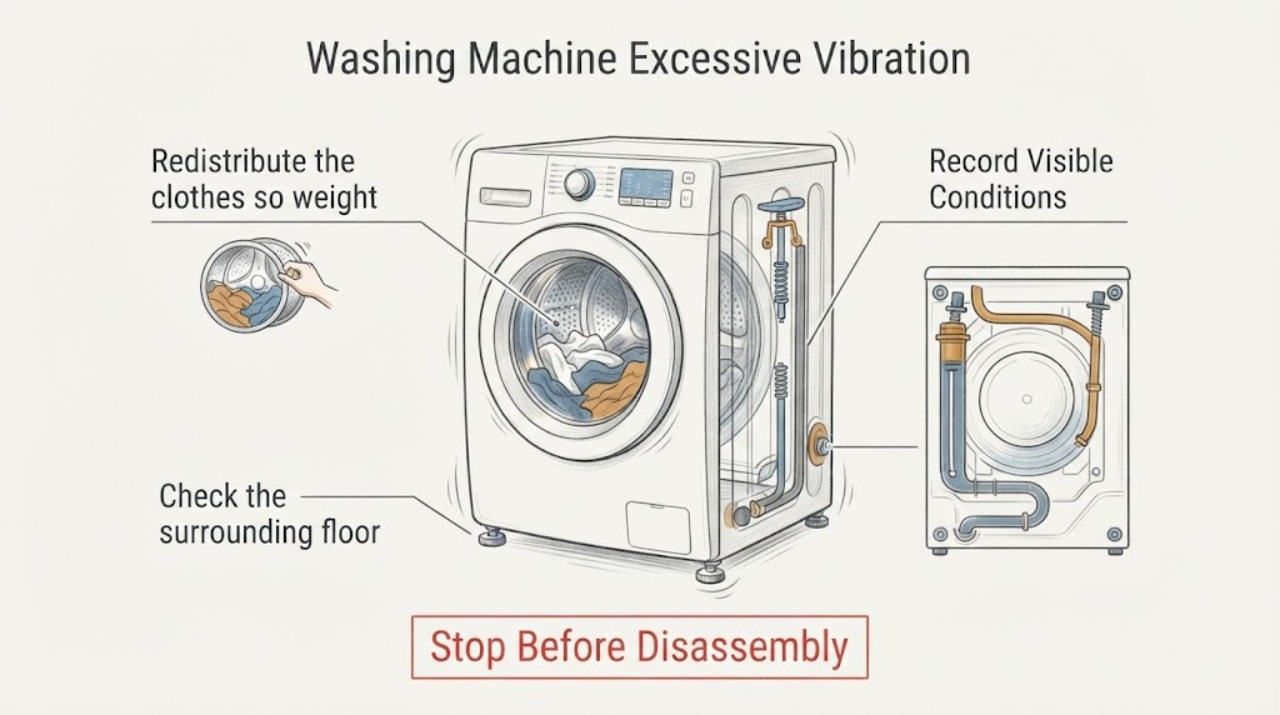
Samsung Washing Machine Excessive Vibration: Load, Level, and Shipping Checks
A Samsung washer may move briefly while it senses weight, but walking, repeated hard impacts, or severe shaking during spin is not something to ignore. Stop the cycle and first separate a tangled or very small load from an installation problem: confirm the load is distributed, the floor is solid, all feet contact the floor, and a new front-load machine has had its shipping bolts removed.
-
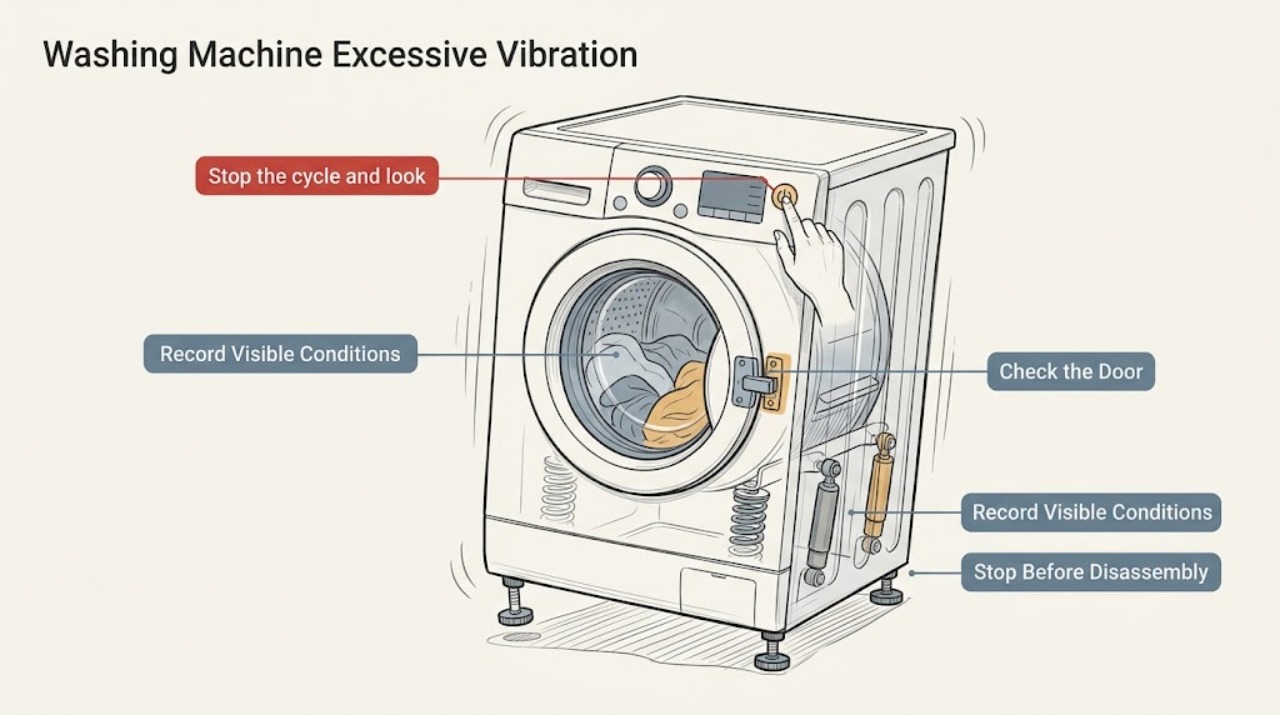
Speed Queen Washing Machine Excessive Vibration: Balance the Load and Level the Washer
Stop the cycle if the washer is walking, striking nearby objects, leaking, or making a new grinding or metallic sound. Once it is safe, note whether the movement occurs only during spin, redistribute the load without packing the tub, and check that the washer is level, stable, and on a solid floor with all intended rubber feet installed.
-
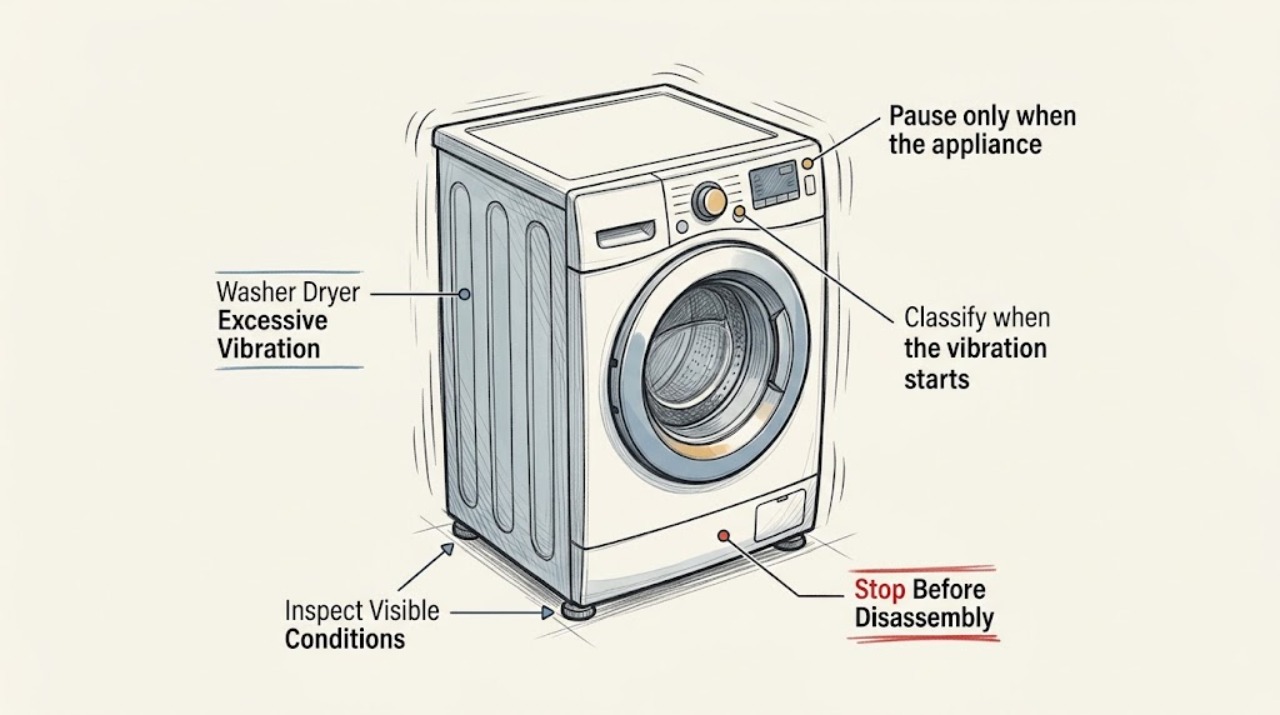
Washer Dryer Excessive Vibration: Balance the Load and Stabilize the Unit
Stop the cycle if the washer-dryer is walking, leaking, scraping, smoking, sparking, or producing a burning or electrical odor. When the area is safe, identify whether the vibration is load-related or present with an empty drum, then check load balance, shipping hardware after installation or moving, the floor and leveling feet, wall clearance, and any stacking kit.
-
Washing Machine Excessive Vibration
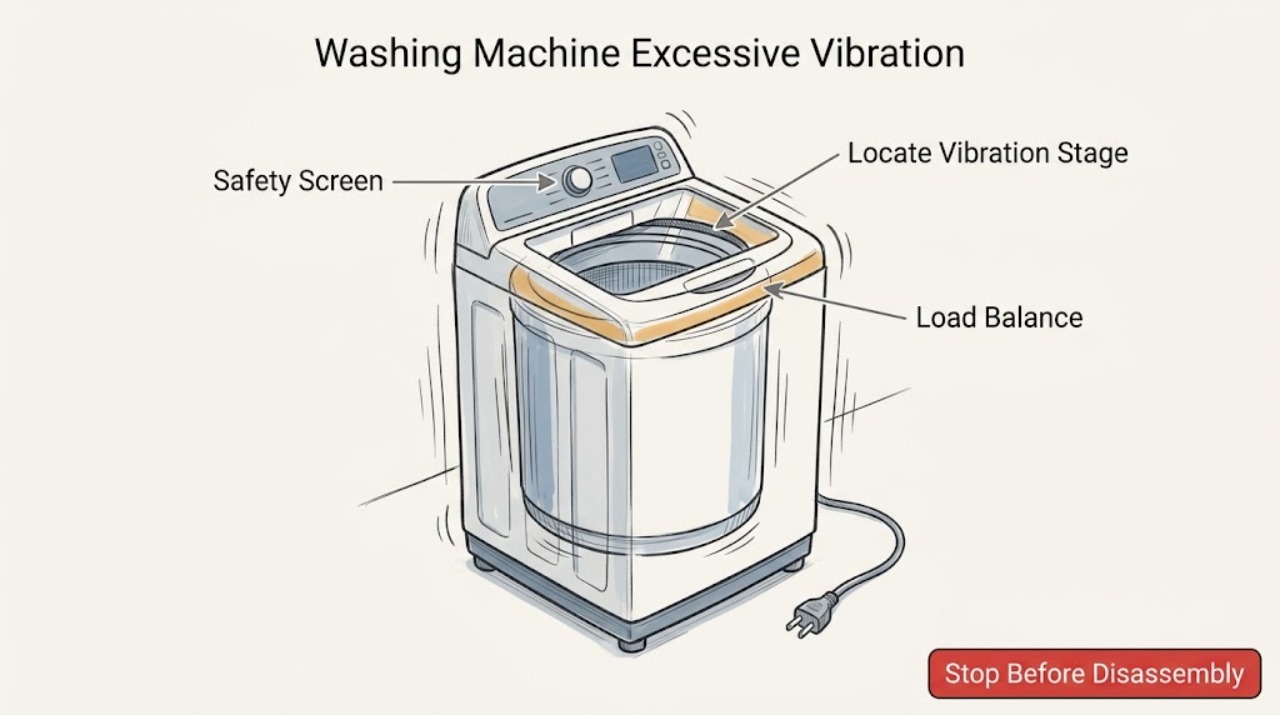
Excessive washing-machine vibration is usually decided by when it occurs and whether the machine stays stable. A single bulky or absorbent item, an overloaded or tangled load, an unlevel machine, an unsuitable floor, loose external hoses, or—only after a new installation or move and when the manual confirms it—transport hardware can cause shaking.
-
Whirlpool Dryer Excessive Vibration: Trace the Load, Level, and Cabinet
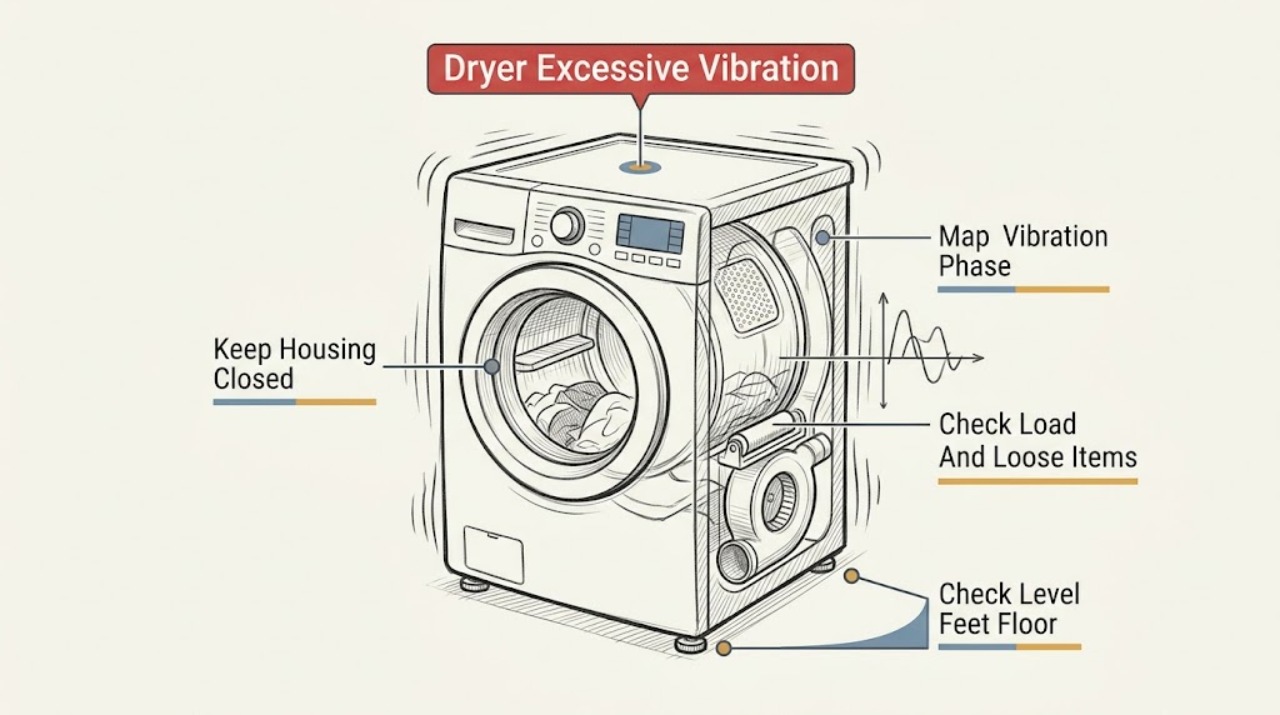
First decide whether the vibration follows a twisted load, a loose object, the dryer cabinet, or the drum. Whirlpool links thumping and shaking with balled or bulky items, shoes, loose hardware, missing or misadjusted legs, objects leaning on the cabinet, pedestal contents, and items in the lint chute.
-
Why Is My Electrolux Washing Machine Vibrating Excessively?
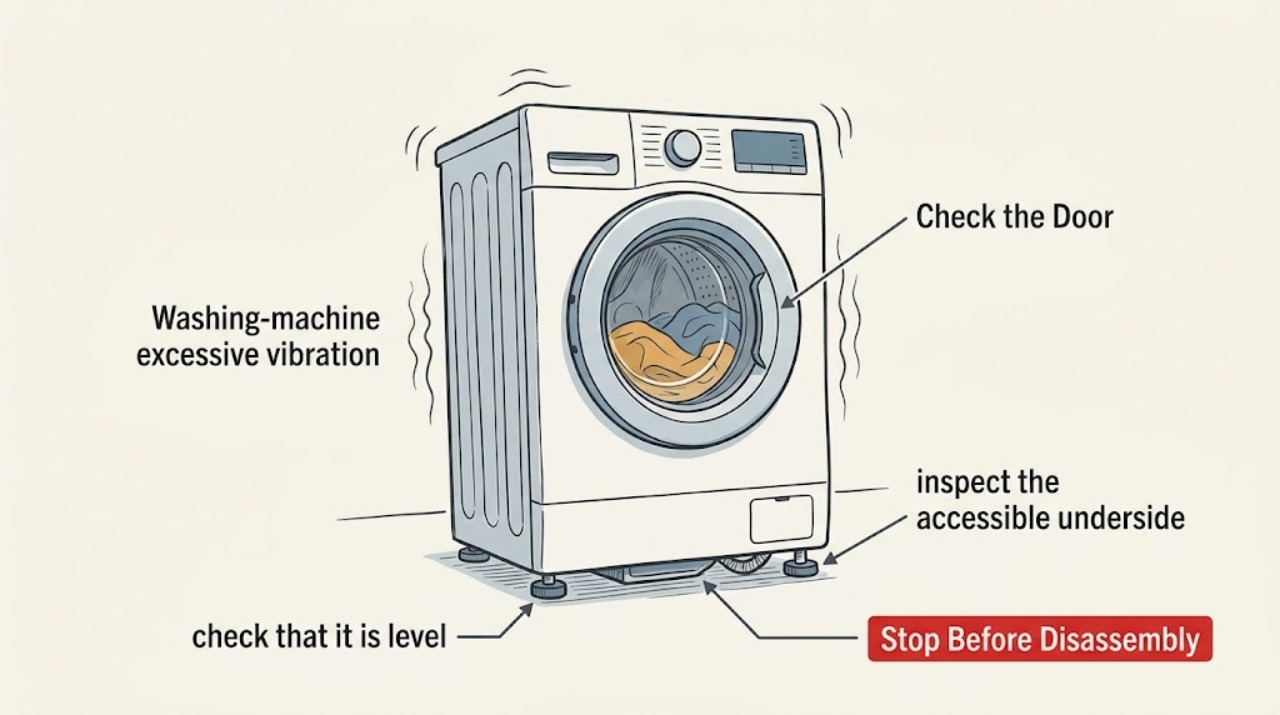
Excessive vibration during an Electrolux washer's spin is most often caused by an unbalanced load, an unlevel or unstable floor, or shipping material left after installation. Stop the cycle, switch the washer off, and wait for the lid or door to unlock before redistributing clothes.