
On this page
Start here
Quick answer
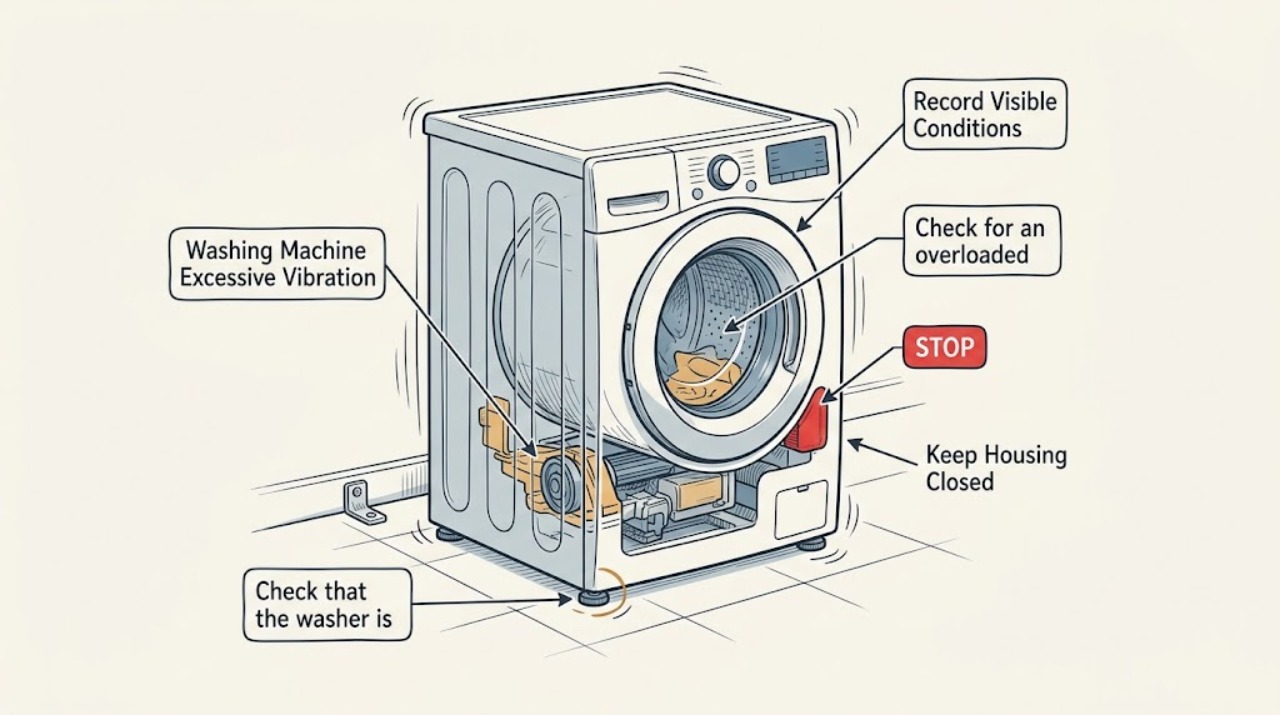
A Maytag washer that shakes, walks, bangs, or vibrates excessively usually needs the spin load, installation, or floor separated from a possible internal fault. Stop the cycle if the cabinet is walking, striking nearby objects, leaking, producing metal-on-metal noise, smoke, a burning smell, or an electrical symptom. After the drum has stopped and the area is safe, note whether the vibration occurs only in spin, whether the load is a single bulky item or tightly packed, whether all four feet are firmly on the floor, whether the washer is level, and whether a newly installed front-load model still has its model-specific shipping hardware. Maytag identifies unbalanced or overloaded loads, shipping materials, an unlevel washer, and a weak or flexing floor as common causes. Correct only the applicable external load or installation issue using the exact manual; persistent vibration with a balanced, level, correctly installed washer needs qualified appliance service.
Before you begin
Safety first
- This article supports stopped-machine observation and model-approved external load or installation checks only. Do not operate through violent vibration, reach into moving parts, force a lock, move the machine unsafely, open panels, remove unidentified shipping hardware, or perform internal tests.
Work through in order
Diagnostic checks
Use only checks that match the exact appliance or system and its official guide.
-
Stop safely and record when the vibration occurs
If the washer is walking, striking a wall or cabinet, or shaking violently, press the normal pause or stop control from a safe position and wait for the drum to stop and the lid or door to unlock. Do not reach into moving parts. Record whether the event occurred during fill, wash, drain, or spin and whether water, noise, or an error appeared.
Expected result: The vibration is limited to spin, occurs with every phase or an empty drum, or is accompanied by walking, impact, leaking, metal noise, or an error.
Next step: Keep people and objects clear, photograph the final position and any water or damage, and continue only with stopped-machine observations.
Stop if: Stop using the washer for violent movement, cabinet impact, a leak, metal-on-metal noise, smoke, burning smell, electrical arcing, a hot cord or outlet, or repeated breaker trips.
Why this matters
Why: Spin-only vibration often prioritizes load balance and leveling. Vibration in other phases, with an empty drum, or with impact, leaking, or harsh mechanical noise needs a broader installation or service assessment.
-
Check for an overloaded or one-sided load
After the drum has stopped and the lid or door is safely unlocked, inspect the load without forcing the door. Note whether it is tightly packed, a single bulky or absorbent item, several heavy items clumped together, or loose and distributed around the basket. Do not add water to counterbalance it.
Expected result: The load is single, bulky, tightly packed, heavily saturated on one side, or otherwise uneven; or the load is loose and reasonably balanced.
Next step: For a safe, unlocked washer, redistribute or reduce the load according to the exact manual and choose a cycle intended for that load type. If the same vibration occurs with a normal balanced load, stop repeated cycle tests and check installation.
Stop if: Do not reach into a moving drum, force a locked lid or door, wash a dangerous or damaged item, or keep testing when the machine is walking or leaking.
Why this matters
Why: Maytag says an uneven or overloaded load can create excessive shaking, reduced spin, longer cycles, wet clothes, and an off-balance message. A balanced load with the same vibration shifts attention to installation or service.
-
Check that the washer is stable and level
With the washer empty or stopped and no water hazard present, place it on its intended floor position and gently rock the cabinet diagonally from corner to corner using ordinary safe access. Observe whether all four feet or the applicable pedestal feet are firmly in contact and whether the washer rocks. If adjustment is allowed for the exact model, use the installation instructions; do not lift the cabinet or place loose shims under it.
Expected result: The cabinet rocks, one foot is visibly unloaded, the lock nuts are loose, the pedestal is not secure, or the washer is stable and level.
Next step: Correct the feet and lock nuts only as the exact Maytag installation instructions allow, then recheck stability before any normal use. If the cabinet cannot be leveled without moving, lifting, or dismantling it, arrange installation or appliance service.
Stop if: Do not climb, lift, tilt, drag across a wet floor, use an improvised platform, or continue if the cabinet or pedestal is damaged or unstable.
Why this matters
Why: Maytag says all four feet should be in firm contact and the washer should be level; an unlevel or rocking cabinet can create excessive spin vibration. A stable, level installation makes load or internal causes more likely.
-
Check the floor and nearby clearances
From a stable standing position, inspect the floor under and around the washer for flexing, sagging, damage, standing water, a raised platform, or loose flooring. Check that the cabinet is not pressed against a wall, appliance, or storage item that could transfer impact. Do not move the washer to inspect underneath unless the installation can be safely handled.
Expected result: The floor visibly flexes or slopes, the washer is on an unsuitable or damaged platform, a wall or object is being struck, or the floor and clearances appear sound.
Next step: Keep the washer out of use if the floor is wet, damaged, unstable, or cannot support it; arrange qualified installation or building/floor service. If the floor is sound, continue with the model-specific installation check.
Stop if: Stop for standing water near electrical equipment, structural movement, a damaged platform, a blocked route, or any need to move the washer through an unsafe space.
Why this matters
Why: Maytag says an uneven or insufficiently sturdy floor can amplify vibration and advises keeping the washer from walls or other appliances. A floor problem is not corrected by overloading, holding the cabinet, or adding random pads.
-
Check shipping hardware only for a recent front-load installation
If the excessive vibration began immediately after installation or relocation and the washer is a Maytag front-load model, read the exact installation instructions and look only at the specified visible shipping-bolt or shipping-material locations. Do not remove rear panels or hardware by guesswork, and do not treat top-load hardware instructions as interchangeable.
Expected result: The model instructions confirm shipping bolts or materials should have been removed and there is evidence they remain, or the hardware status is unknown or already correct.
Next step: Have the installer or a qualified technician complete or verify the exact removal and installation procedure; do not run the washer with shipping hardware suspected to remain.
Stop if: Do not remove unidentified bolts, open the cabinet, disconnect hoses, or move the machine to reach the rear when the floor is wet, the unit is stacked, or the installation is unstable.
Why this matters
Why: Maytag explains that shipping bolts secure a front-load drum for transport and are not permanent operating hardware. A recent-installation vibration with correct removal still needs leveling, floor, load, or service review.
-
Separate persistent vibration from an internal fault
With power off and the washer stopped, document any repeatable external signs without opening the cabinet: grinding or scraping, a loose or visibly damaged drum, unusual play, repeated thumping with an empty drum, oil or water evidence, or vibration that remains after a balanced load and confirmed installation.
Expected result: The sign disappears after a correct load and stable installation, or it persists with an empty drum or is accompanied by harsh noise, looseness, leakage, or visible damage.
Next step: Leave the washer out of service and give the technician the phase, load, installation status, sound, movement, and photos; do not remove panels or perform internal tests.
Stop if: Do not spin the drum by force, reach through openings, remove the cabinet, test energized parts, or continue operation with grinding, looseness, leaking, smoke, or burning odor.
Why this matters
Why: Improvement after correcting load or installation supports that branch. Persistent vibration with no load or a harsh mechanical symptom is not established as a user-level balance issue and may involve suspension, bearing, drive, cabinet, or another internal system.
-
Give service the evidence instead of repeating cycles
Prepare the model and serial information, front-load or top-load type, load description, cycle phase, error message, floor and leveling observations, shipping-material status, and any leak, impact, sound, or electrical evidence. Keep the washer stopped if the issue remains after safe external checks.
Expected result: The cause is resolved by a documented load or installation correction, or vibration persists, returns with a balanced load, or cannot be assessed safely.
Next step: Request qualified Maytag appliance service for persistent vibration, and qualified floor or installation service when the support surface or pedestal is involved.
Stop if: Do not run an empty-cycle test, keep the cabinet from walking by hand, bypass a lid or door lock, or continue if water, smoke, burning smell, arcing, or impact is present.
Why this matters
Why: A resolved load or installation issue can be monitored during normal use. A recurring or unsafe symptom needs qualified diagnosis, because repeated operation can worsen damage or create a water and electrical hazard.
Use your observations
Decision map
Find the observation that best matches what you see, then follow the next safe action.
-
PATH 01Safety boundary
What you see
Vibration is limited to spin and the stopped-machine inspection finds a single bulky or absorbent item, a clumped load, or a tightly packed basket.
Do this next
Redistribute or reduce the load only after the washer is stopped and unlocked, then use the exact cycle guidance for that load type.
Why this path and its safety boundary
Why it matters: Maytag identifies uneven, overloaded, or single bulky loads as common causes of excessive shaking and off-balance behavior.
Safety stop: Stop if the machine walks, strikes nearby objects, leaks, or vibrates after the load is corrected.
-
PATH 02Safety boundary
What you see
The washer rocks diagonally, one or more feet are not firm, or the pedestal or foot lock is loose.
Do this next
Level and secure the feet or pedestal only according to the exact Maytag installation instructions, then recheck stability before use.
Why this path and its safety boundary
Why it matters: The cabinet is not stable enough for high-speed operation, so load balance alone cannot solve the vibration.
Safety stop: Do not lift, tilt, drag, shim with loose material, or operate on a damaged or wet floor.
-
PATH 03Safety boundary
What you see
The washer is level but the floor flexes or sags, the installation uses an unsuitable raised platform, or the cabinet is contacting a wall or nearby appliance.
Do this next
Keep the washer stopped and arrange qualified installation or floor assessment; clear only loose nearby items that can be removed without moving the washer.
Why this path and its safety boundary
Why it matters: The support surface or clearance can amplify or transfer vibration even when the feet are adjusted.
Safety stop: Stop for structural movement, standing water, damaged flooring, or any need to move the unit through an unsafe route.
-
PATH 04Safety boundary
What you see
A front-load washer began vibrating after installation or relocation and the exact model instructions indicate transport bolts or materials may still be present.
Do this next
Have the installer or qualified technician verify and complete the model-specific installation before use.
Why this path and its safety boundary
Why it matters: Maytag says transport hardware secures the front-load drum and must be removed after installation; it is not a permanent operating component.
Safety stop: Do not remove unidentified hardware, open the rear cabinet, or run the washer while shipping hardware is suspected to remain.
-
PATH 05Safety boundary
What you see
The display shows an applicable off-balance message such as uL or OFb and the washer has stopped or is flashing indicators.
Do this next
Wait for the lid to unlock, redistribute or reduce the load as the model guidance allows, and stop if the message or vibration returns with a balanced load.
Why this path and its safety boundary
Why it matters: Maytag says the washer could not correct the unbalanced load automatically and needs the load redistributed after the lid unlocks.
Safety stop: Do not force the lid, add water to balance the basket, or continue if the washer is walking, leaking, or damaged.
-
PATH 06Safety boundary
What you see
Vibration persists with an empty or balanced load after the washer is level, stable, correctly installed, and clear of nearby contact.
Do this next
Leave the washer out of service and arrange qualified appliance diagnosis with the documented phase, sounds, movement, and installation evidence.
Why this path and its safety boundary
Why it matters: The problem is not established as a simple load or installation issue and may involve an internal suspension, bearing, drive, cabinet, or control fault.
Safety stop: Do not remove panels, spin the drum forcefully, run repeated tests, or continue with grinding, looseness, leaks, smoke, burning smell, or electrical symptoms.
Helpful context
Understand the symptom
First separate a load problem from an installation problem
Vibration limited to the high-speed spin phase, especially with one rug, blanket, or other absorbent item, points first to balance and loading. Vibration that begins from the first installation, occurs with an empty drum, or makes the whole cabinet walk points more toward shipping hardware, leveling, the floor, or a service issue. Maytag's top-load and front-load guidance differ, so identify the washer type before applying a step.
Use only safe, stopped-machine observations
Do not hold the cabinet, reach into a moving drum, or keep a cycle running while the washer walks. Wait for movement to stop and for the lid or door to unlock normally. The useful evidence is the phase, load, floor movement, visible water, and external stability. A washer that rocks diagonally by hand with all four feet apparently down still needs leveling or installation review; it does not need a heavier object placed on top.
Shipping hardware and internal damage have different boundaries
Maytag says shipping bolts or materials secure a front-load drum during transport and must be removed after installation. Confirm their status only against the exact model's installation instructions and visible access; do not dismantle the rear cabinet. If vibration continues after a correct load and installation check, or the drum has a grinding, scraping, repeated knocking, or loose-bearing quality, stop treating it as a balance adjustment and arrange service.
Safety boundary
Stop conditions
- Stop the cycle for violent walking, cabinet impact, a lid or door that will not unlock normally, or a load that cannot be safely reached.
- Stop for water on the floor or near the cord, outlet, cabinet base, hoses, or other electrical equipment.
- Stop for grinding, metal-on-metal scraping, a loose or visibly damaged drum, smoke, burning smell, sparking, a hot cord or outlet, or repeated breaker trips.
- Do not reach into a moving drum, hold the cabinet in place, force a lid or door, or add water to counterbalance a load.
- Do not lift, tilt, drag, shim, stack, or move the washer through an unsafe area; do not use an improvised platform.
- Do not remove shipping bolts or cabinet panels by guesswork, perform internal electrical or mechanical tests, or bypass a lid or door lock.
Only after diagnosis
Potential parts
- washer suspension or damper assembly
Consider this category only if a qualified technician confirms persistent movement or damping failure after load, leveling, floor, and shipping-material checks.
Confirm the exact Maytag model and technician diagnosis before ordering; do not replace suspension parts as a vibration test. - washer tub bearing or drive support
Consider this category only when model-specific diagnosis links empty-drum vibration, grinding, or looseness to a bearing or drive-support fault.
Confirm model-specific fitment and repair scope with qualified service; do not open the cabinet or force the drum to check it. - leveling foot or pedestal hardware
Consider this category only if the exact installation instructions and inspection identify a damaged foot, lock nut, pedestal pad, or mounting component.
Confirm the exact Maytag installation configuration and compatible hardware before ordering; do not use loose substitutes or improvised shims.
When checks do not resolve it
Need a professional?
Request qualified Maytag appliance service when vibration persists with a balanced load and a confirmed level installation, occurs with an empty drum, began after a move but shipping hardware status is uncertain, or is accompanied by grinding, looseness, leaks, error messages, impact, or damage. Arrange qualified installation or floor service when the pedestal, platform, floor, or clearances are unstable. Stop immediately for water near electrical equipment, smoke, burning smell, sparking, a hot connection, or repeated breaker trips.
Safety scope: This article supports stopped-machine observation and model-approved external load or installation checks only. Do not operate through violent vibration, reach into moving parts, force a lock, move the machine unsafely, open panels, remove unidentified shipping hardware, or perform internal tests.
Common questions
FAQ
Why does my Maytag washer shake violently only during spin?
A spin-only event often points first to an uneven, overloaded, or single bulky load, or to leveling and floor stability. Stop if the washer walks or strikes anything, wait for it to unlock, then inspect and redistribute the load safely. Persistent vibration with a balanced load needs service.
Can I wash one blanket or rug if my Maytag washer is vibrating?
A single bulky or absorbent item can be difficult to balance. Maytag advises using the applicable load and cycle guidance and avoiding tightly packed or unsuitable loads. Never keep the washer running when it is walking, banging, leaking, or damaging the surroundings.
How do I know whether my Maytag washer is level?
With the washer stopped and the area safe, check whether all applicable feet are firmly on the floor and gently rock the cabinet diagonally. If it teeters, use only the exact installation instructions to adjust and secure the feet or pedestal. Do not lift, tilt, drag, or improvise a platform.
Could shipping bolts cause a new Maytag front-load washer to vibrate?
Yes. Maytag says shipping bolts or materials secure the front-load drum during transport and must be removed after installation. Confirm their status only against the exact model instructions or have the installer verify it; do not remove unidentified hardware by guesswork.
When is washer vibration a service problem?
Arrange service when vibration persists with a balanced load and a level, stable installation, occurs with an empty drum, or comes with grinding, looseness, leaking, impact, smoke, burning smell, sparking, or electrical symptoms. Keep the washer out of service until it is assessed.
Read the exact guide
Official sources
- Washer is Vibrating, Walking or MovingMaytag Product Help · General Maytag washer guidance; exact model installation instructions control.
- High-Efficiency Washer Installation InstructionsMaytag · One Maytag high-efficiency installation family; exact model instructions control.
- uL - Error CodeMaytag Product Help · Applicable top-load Maytag models that display uL or OFb; do not generalize the code to other models.
- Top Load HE Washer is Unbalanced or OverloadedMaytag Product Help · Top-load Maytag HE washer guidance; exact model cycle names and lid behavior may differ.
- Vibration, Walking or Off Balance - Front Load WasherMaytag Product Help · Front-load Maytag washers; do not apply its shipping-hardware details to a top-load model.
- Leveling a Front Load WasherMaytag Product Help · Front-load Maytag washer installations, with separate pedestal instructions where applicable.
Community feedback
Share a repair observation
Share a plain-text repair observation. Accepted observations are published automatically; this page may take a moment to update.