
On this page
Start here
Quick answer
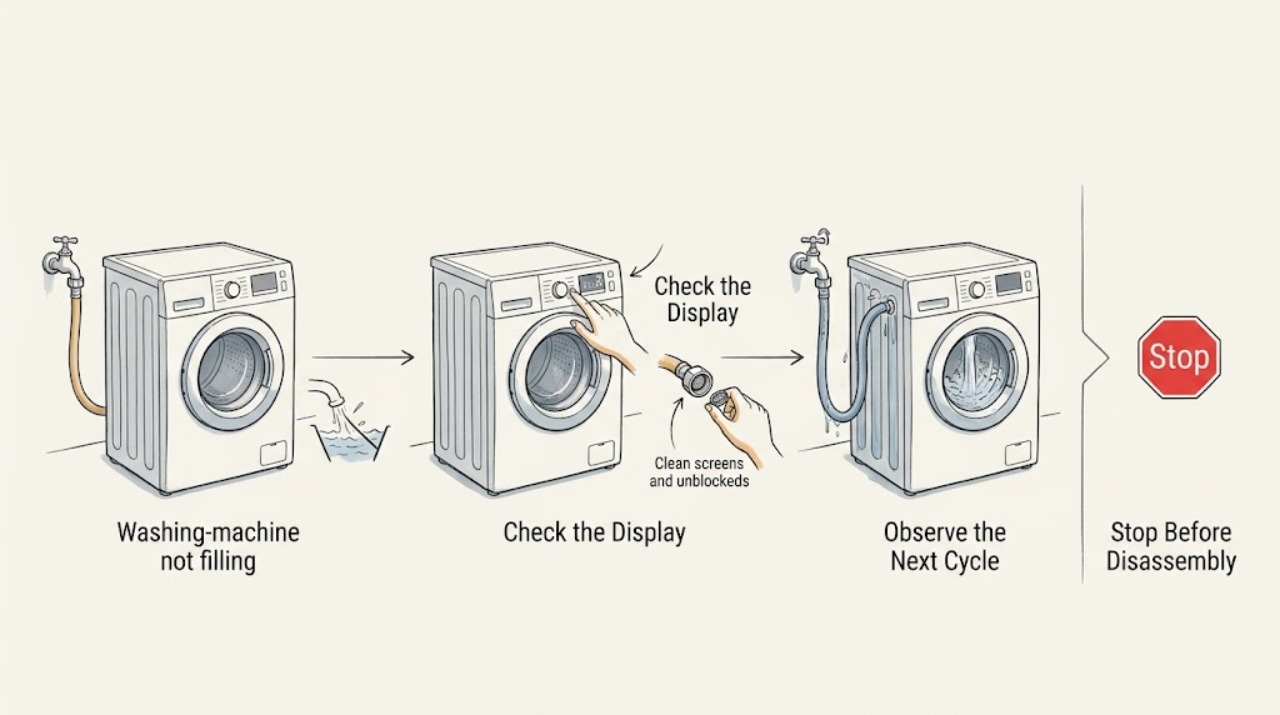
If an Electrolux washer is not filling, first verify that both water valves are open, the inlet hoses are connected to the correct hot and cold inlets, and neither hose is kinked or pinched. Electrolux says water should begin filling shortly after Start and that inlet screens and water pressure can affect filling. If the washer shows E11, it means the machine is not filling during the wash phase and may remain locked for several minutes. If the supply, hoses, and accessible screens are clear but the washer still will not fill, stop repeated resets and arrange service for the inlet valve, pressure-sensing, door-lock, wiring, or control system.
Work through in order
Diagnostic checks
Use only checks that match the exact appliance or system and its official guide.
-
Check 1
Close the door or lid fully, select a normal wash program, press Start, and listen and watch for the first fill. Note whether the display shows E11 or another code, whether the door locks, whether you hear water entering, and whether any water reaches the drum within the first couple of minutes. If a cycle is already locked, wait for it to finish its lock period rather than unplugging repeatedly.
Expected result: The washer fills normally, the door does not lock, the unit shows E11 or another code, or the machine stays silent and dry.
Next step: Record the code and timing, then continue with the external valve and hose checks. If the door cannot close or lock, follow the service branch rather than forcing it.
Why this matters
Why: A normal fill rules out a persistent supply failure at that moment. A door-lock problem can prevent a safe fill, while E11 identifies a no-fill condition during the wash phase; repeated unplugging can restart its temporary lock period.
-
Check 2
Check the household hot and cold water valves and the accessible inlet hoses. Confirm both valves are open, the hot hose goes to the hot inlet and the cold hose to the cold inlet, and neither hose is kinked, pinched, crushed, or loose. If the washer was installed or moved recently, compare the connections with the installation instructions or ask the installer to verify them.
Expected result: A valve is closed, hoses are reversed or restricted, a connection is loose, or the external supply setup appears correct.
Next step: Open the valves and correct only an obvious hose-routing or connection issue. If a connection leaks, turn the water off before handling it; if the setup is uncertain after a move, use the installer or service professional.
Why this matters
Why: A closed valve, restricted hose, reversed connection, or recent installation error can stop or delay filling even when the washer has power. A correct external setup shifts the check toward supply flow and inlet screens.
-
Check 3
With the washer stopped, water valves closed, and the hoses depressurized according to the user guide, check for water flow at the household valves and inspect the small inlet screens at the washer connections for visible sediment. Clean only an accessible screen as the model instructions allow; do not remove the washer's cabinet or inlet valve.
Expected result: Water flow from a valve is weak or absent, an inlet screen is visibly blocked, or the supply flow and screens appear clear.
Next step: Restore the hose connections without cross-threading and check for leaks after opening the valves. If flow is poor, involve a plumber or installer; if flow and screens are clear but the washer remains dry, arrange appliance service.
Why this matters
Why: Poor household flow or a blocked screen can prevent the inlet valve from admitting enough water. Clear supply and screens with continued no-fill suggest a valve, wiring, pressure-sensing, or control problem.
-
Check 4
Check the door or lid area from the outside for clothing, debris, or a damaged seal preventing full closure, and verify that Delay Start, Pause, or a control lock is not holding the cycle. If the washer recently moved, note whether the water lines were reversed or the appliance was left out of level. Do not bypass the door safety.
Expected result: The door cannot close or lock, a setting is delaying the cycle, the washer was recently moved, or the door and controls appear ready for a fill.
Next step: Remove only an accessible obstruction and cancel the delay or pause according to the model guide. If the lock still does not engage or the washer remains dry with correct settings, follow the service branch.
Why this matters
Why: Electrolux washers do not operate when the lid or door is not properly closed. A delayed or paused program can look like a fill failure, while a recent move makes hose routing and installation a stronger suspect.
-
Check 5
After the valves, hose routing, supply flow, accessible screens, door, and settings are correct, determine whether the washer begins filling on a suitable cycle. If it remains dry or repeats E11, record the exact code, delay before the code, door-lock behavior, and whether either valve makes a sound; do not keep unplugging and restarting it as a test.
Expected result: The washer fills after a supply or setting correction, or no-fill persists with no external explanation.
Next step: If no-fill persists, close the water valves when the appliance is unattended and arrange qualified service. Provide the model, code, installation history, and checks already completed.
Why this matters
Why: A corrected external issue explains the original no-fill. Persistent no-fill with a ready door and good water supply needs diagnosis of internal inlet, sensing, wiring, or control parts.
Use your observations
Decision map
Find the observation that best matches what you see, then follow the next safe action.
-
PATH 01Safety boundary
What you see
A water valve is closed, an inlet hose is kinked or reversed, or a connection is loose after installation or moving.
Do this next
Close the valves before handling hoses, correct the routing or connection according to the model instructions, then open the valves and check for leaks.
Why this path and its safety boundary
Safety stop: Stop if a fitting is cracked, the hose leaks, or the correct hot/cold connection is uncertain; involve the installer or service professional.
-
PATH 02Safety boundary
What you see
Household water flow is weak or an inlet screen is blocked.
Do this next
Restore household water service or clean the accessible screen as the model guide allows, reconnect without cross-threading, and check for leaks.
Why this path and its safety boundary
Safety stop: Do not use chemicals, sharp tools, or live electrical checks on the inlet assembly.
-
PATH 03Safety boundary
What you see
The door or lid does not close or lock, or Delay Start/Pause/control lock is active.
Do this next
Remove only an accessible obstruction and correct the setting using the model controls. If the safety lock still will not engage, arrange service.
Why this path and its safety boundary
Safety stop: Do not bypass, force, or dismantle the door or lid lock.
-
PATH 04Safety boundary
What you see
The washer remains dry with open valves, correct hose routing, adequate flow, clear accessible screens, and a closed door, or E11 repeats.
Do this next
Keep the water valves closed when unattended and arrange qualified appliance service for the inlet valve, pressure-sensing, wiring, door lock, or control system.
Why this path and its safety boundary
Safety stop: Do not open the cabinet, repeatedly reset the machine, or replace an internal part based only on a no-fill symptom.
Helpful context
Understand the symptom
A washer that stays dry after Start can have a closed valve, kinked hose, reversed hot and cold connections, low supply flow, a blocked inlet screen, or a door that never reaches its safe locked state. The location and age of the installation matter: Electrolux specifically asks owners to involve the installer when a filling problem follows a recent installation or move.
Start with water and door checks that can be made from the outside. Do not remove an energized panel or guess at an inlet-valve or pressure-sensor replacement. If water is flowing onto the floor, close the supply valves before inspecting hose connections.
Only after diagnosis
Potential parts
- water inlet valve
Consider this only after a qualified technician confirms that supply flow and screens are clear but the inlet valve does not admit water on the correct command.
Confirm the complete model number and manufacturer fit information before ordering; no-fill alone does not identify a valve failure. - inlet hose screen or sealing washer
Consider this only if an accessible screen or hose seal is damaged and service or the model guide confirms it is the cause of restricted flow or leakage.
Confirm the model-specific hose connection and sealing component before ordering; do not substitute a restrictive or incorrect fitting. - door-lock or pressure-sensing component
Consider internal lock or sensing parts only after service identifies the failed component when supply and external installation checks pass.
Use the exact model information and technician diagnosis to verify compatibility; do not bypass a safety lock or replace a sensor by symptom alone.
When checks do not resolve it
Need a professional?
Arrange service when an Electrolux washer still will not fill after the valves, hoses, water flow, accessible inlet screens, door, and settings are checked; when E11 repeats; or when diagnosis would require the inlet valve, pressure sensor, wiring, door-lock assembly, or control panel. Use the installer when the problem began after installation or moving. Call a plumber for poor household water flow or a supply-side leak.
Have this ready
- Electrolux model and serial information
- The exact error code, if shown, and how long the washer waits before displaying it
- Whether the door or lid locks and whether either inlet valve makes a sound
- Whether both water valves flow and whether the hoses were recently installed or moved
- Any inlet-screen blockage, leak, pressure issue, or control-lock/delay setting found
Common questions
FAQ
Why is my Electrolux washer not filling with water?
Check that both valves are open, hoses are not kinked or reversed, household flow is available, and inlet screens are clear. Also confirm the door or lid closes and locks.
What does E11 mean on an Electrolux washer?
For the front-load models covered by Electrolux's support article, E11 means the washer is not filling during the wash phase. Check supply and hose installation, and avoid repeated unplugging because it can restart the temporary lock period.
Can reversed hot and cold hoses stop a washer from filling?
Yes. Electrolux lists reversed hot and cold connections as a known installation issue. Close the valves before handling hoses and use the installation guide or installer if the washer was recently moved.
What if the valves and hoses are correct but the washer is still dry?
If flow and accessible inlet screens are also clear and the door locks, stop repeated resets and arrange service. An inlet valve, pressure-sensing system, wiring, door lock, or control may need diagnosis.
Read the exact guide
Official sources
- Laundry Water Supply GuideElectrolux · Electrolux front-load and top-load washers and water inlet troubleshooting
- Laundry front loading washer displaying Error Code E11 long fill time.Electrolux · Electrolux front-load washer E11 no-fill/long-fill troubleshooting
- What should I do if my washer does not start?Electrolux · Electrolux washer door, settings, water supply, and basic start checks
Community feedback
Share a repair observation
Share a plain-text repair observation. Accepted observations are published automatically; this page may take a moment to update.