
Repair problem
Not Filling Troubleshooting Guides
Published FixGraph guidance for diagnosing and responding to not filling.
Matching published guides
Choose a guide that matches the service, equipment, and conditions you are seeing.
-
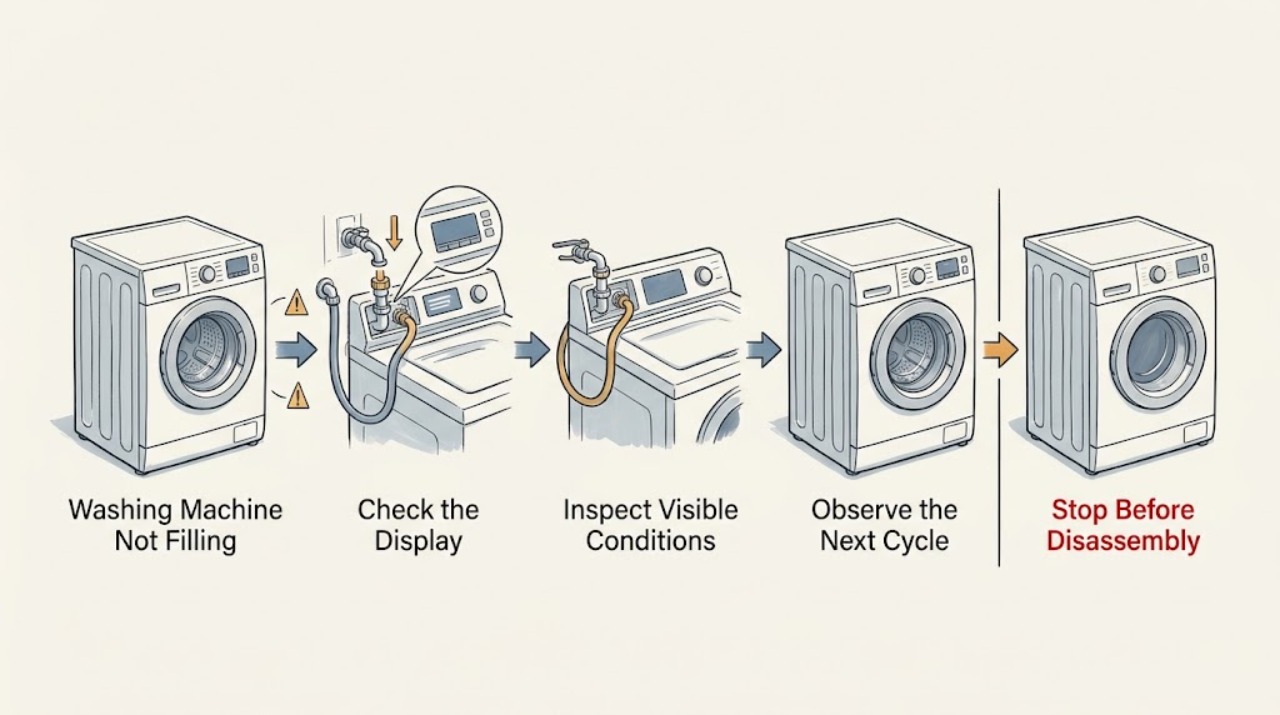
Aeg Washing Machine Not Filling: Safe Checks and Next Steps
If an AEG washing machine is not filling, first confirm that the water tap is open and the household supply is available, then inspect the visible inlet hose for kinks or leaks. If the tap and hose are sound, the inlet filters may be restricted; clean them only with the machine unplugged and the water tap closed, following the model manual.
-
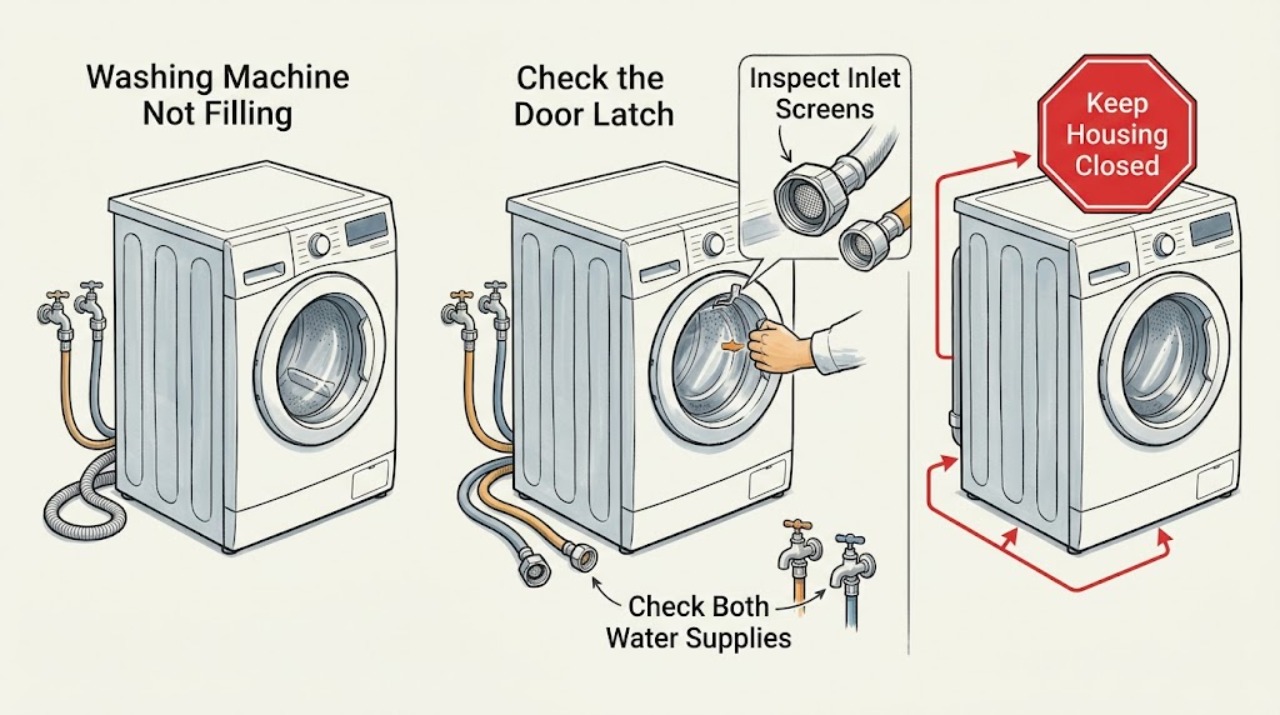
Amana Washing Machine Not Filling: Safe Checks and Next Steps
An Amana washer that is not filling should first be checked for both water supplies being on, connected hoses without kinks, an unobstructed closed lid or door, and a drain hose that is not siphoning water away. If the fill is only slow, consider the selected cycle because some top-load cycles can pause or take longer to fill.
-
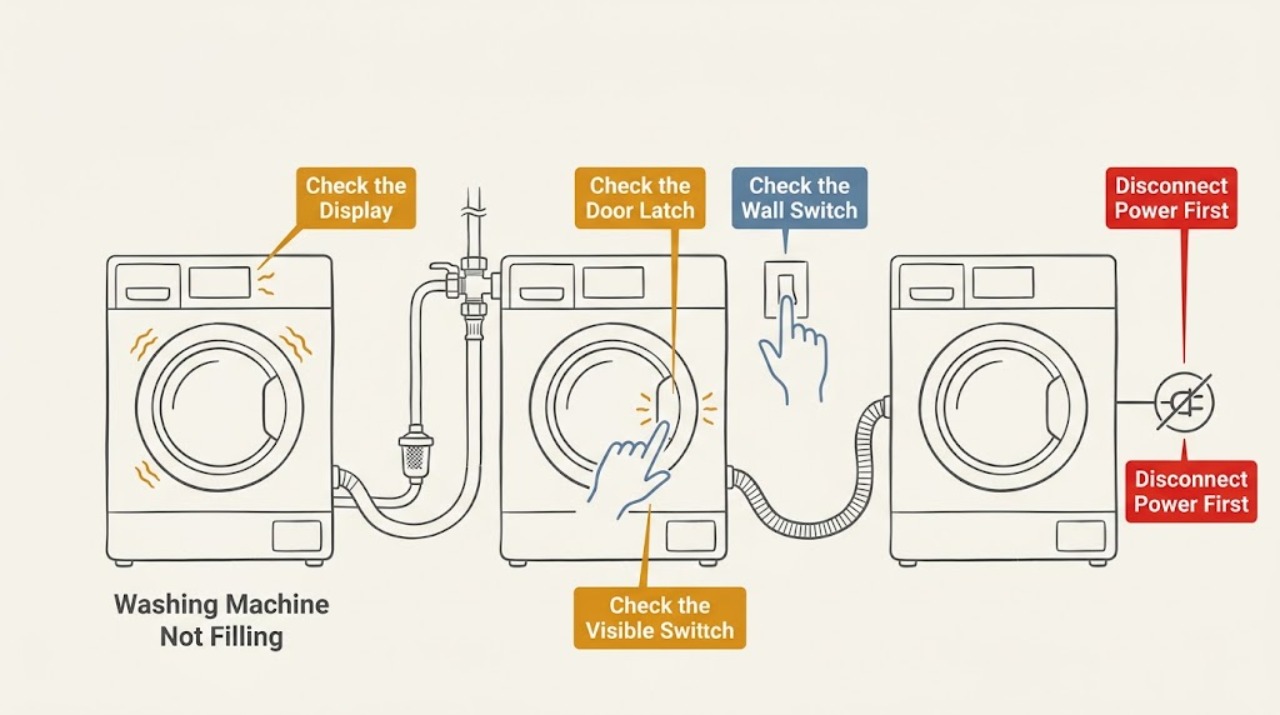
Bauknecht Washing Machine Not Filling: Check the Tap, Inlet Hose, and Start State
If a Bauknecht washing machine is not filling, first decide whether it takes no water at all or simply uses less water than expected. For a no-fill fault, switch the machine off, make sure the water tap is fully open, the inlet hose is connected and not kinked, the door is closed, a program is selected, and Start/Pause has been pressed.
-
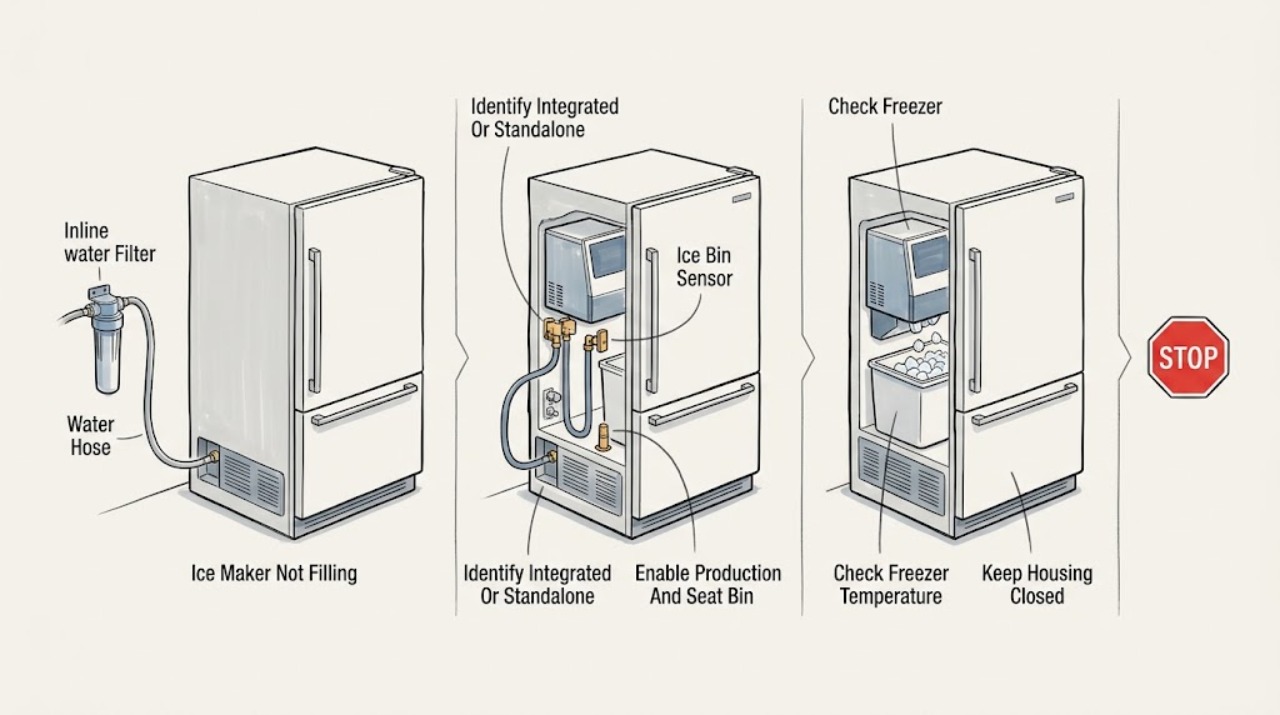
Bosch Ice Maker Not Filling
First establish the architecture. The Bosch sources reviewed here document ice makers integrated into Bosch refrigerator/freezer appliances, not a universal countertop or standalone ice-maker design.
-
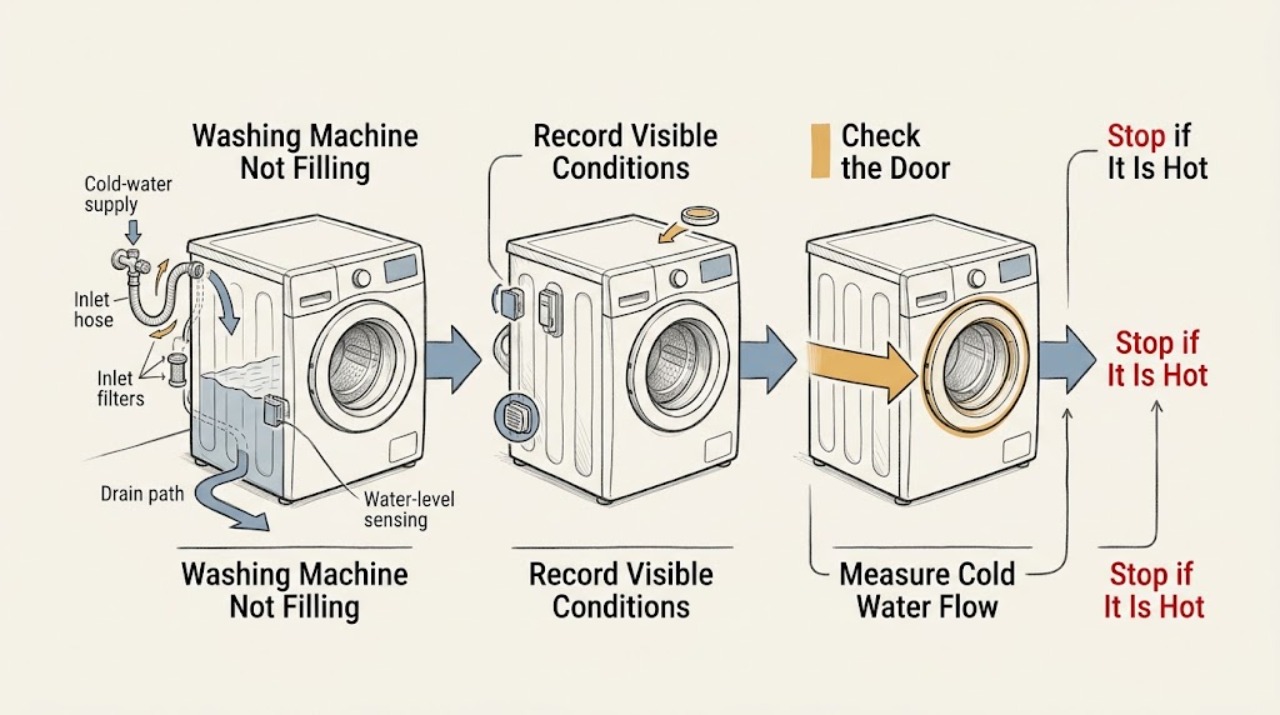
Bosch Washing Machine Not Filling: Check the Tap, Hose, Filter, and Water Pressure
If a Bosch washing machine starts but does not fill, first stop for any leak, damaged cord, or water near electrical parts. Then confirm the cold-water tap is fully open, the inlet hose is not kinked, the door is closed, and the selected program is actually waiting for water.
-
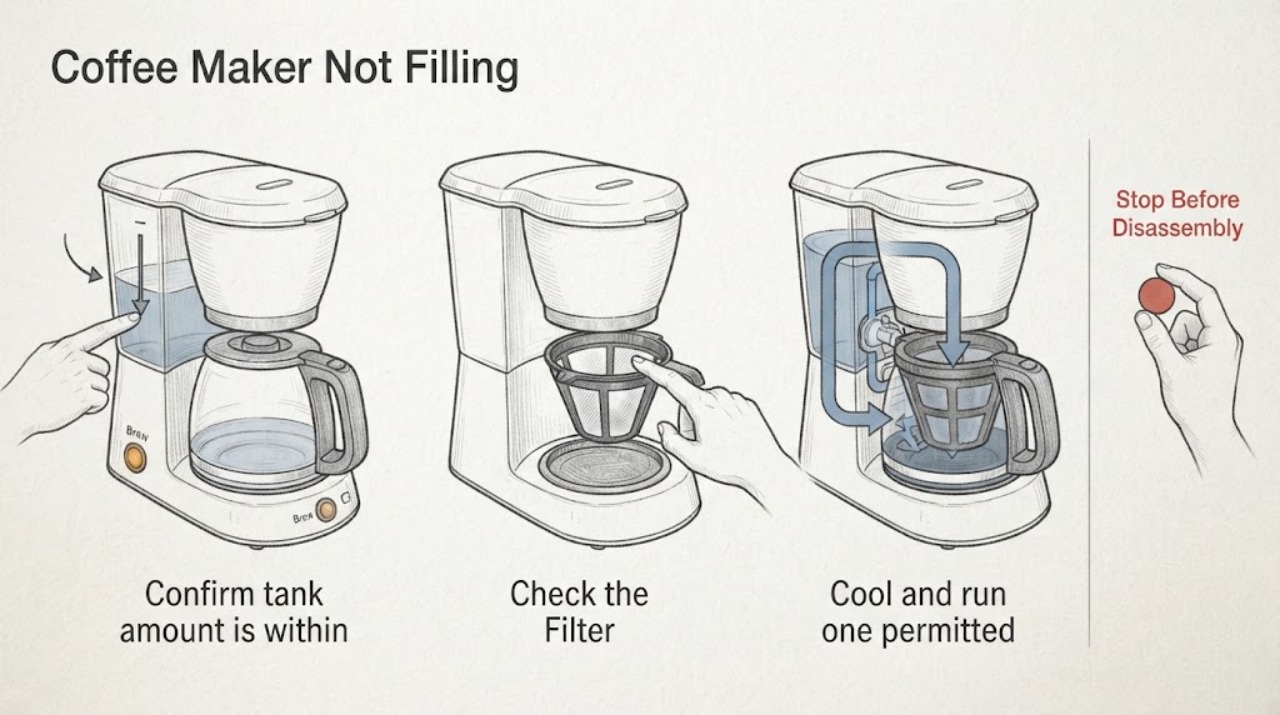
Coffee Maker Not Filling
Check a coffee maker at tank amount/seating, accessible mesh/filter, and one permitted cool-down or descaling path. A clear tank/filter with no flow points to an internal pump or valve.
-
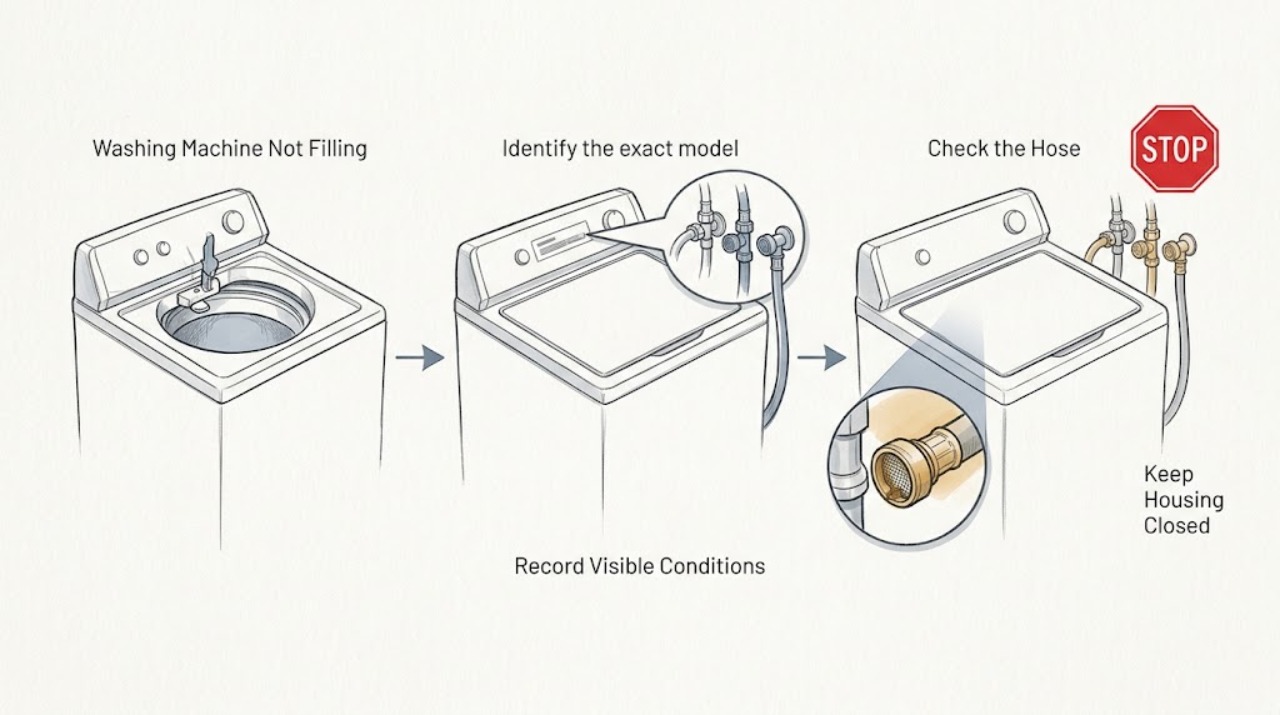
Crosley Washing Machine Not Filling: Check the Lid, Water Supply, and Inlet Path
First decide whether the washer truly receives no water or is simply sensing and using a lower high-efficiency water level. Keep the lid closed, cancel any pause or lockout shown on the display, and press Start/Pause once.
-
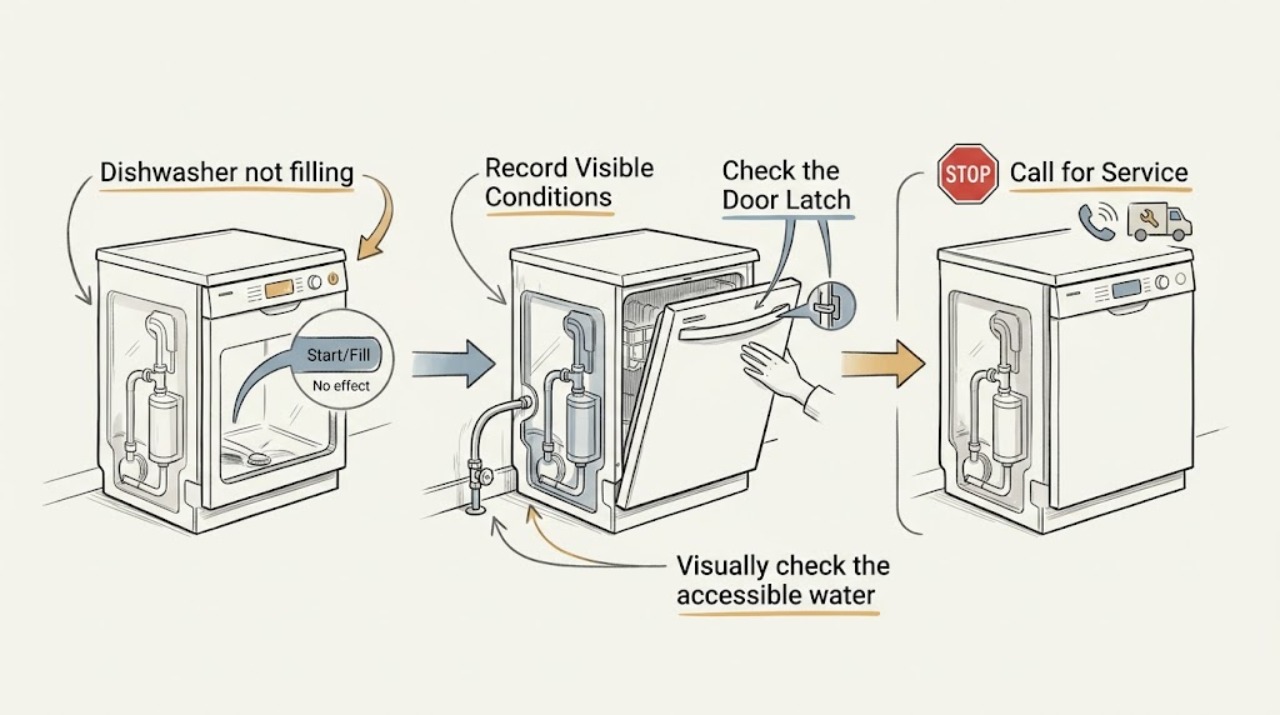
Dishwasher not filling: What to Check and What to Do Next
If a dishwasher runs without taking in water, first record the display or indicator state, confirm the door is fully latched without force, and visually check the accessible water-supply valve and hose for an obvious closed position, kink, or leak. A drain-hose routing issue can also make water siphon away, while a float, inlet valve, or door switch may require service.
-
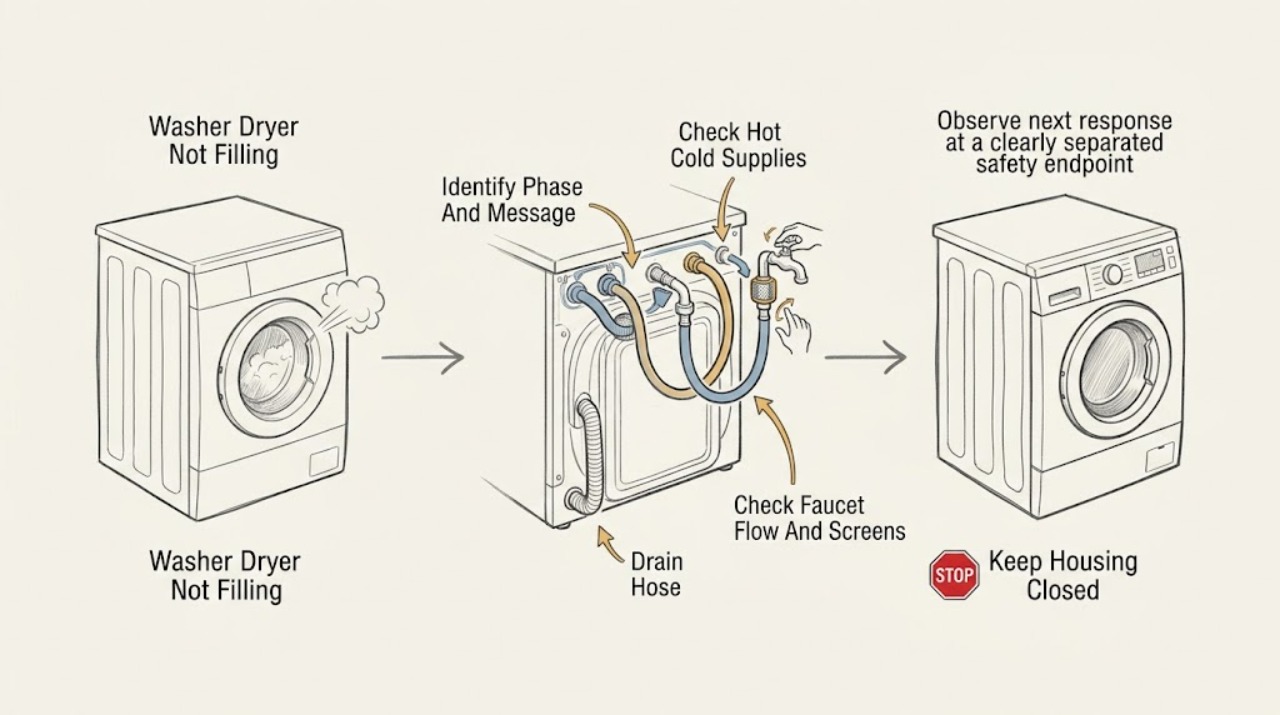
Electrolux Washer Dryer Not Filling: Safe Checks and Next Steps
An Electrolux washer-dryer that is not filling should first be separated by phase: no water during washing, no water during drying, a long or weak fill, or water that enters and then drains away. Record the exact model, phase, display message, and whether the door locks.
-
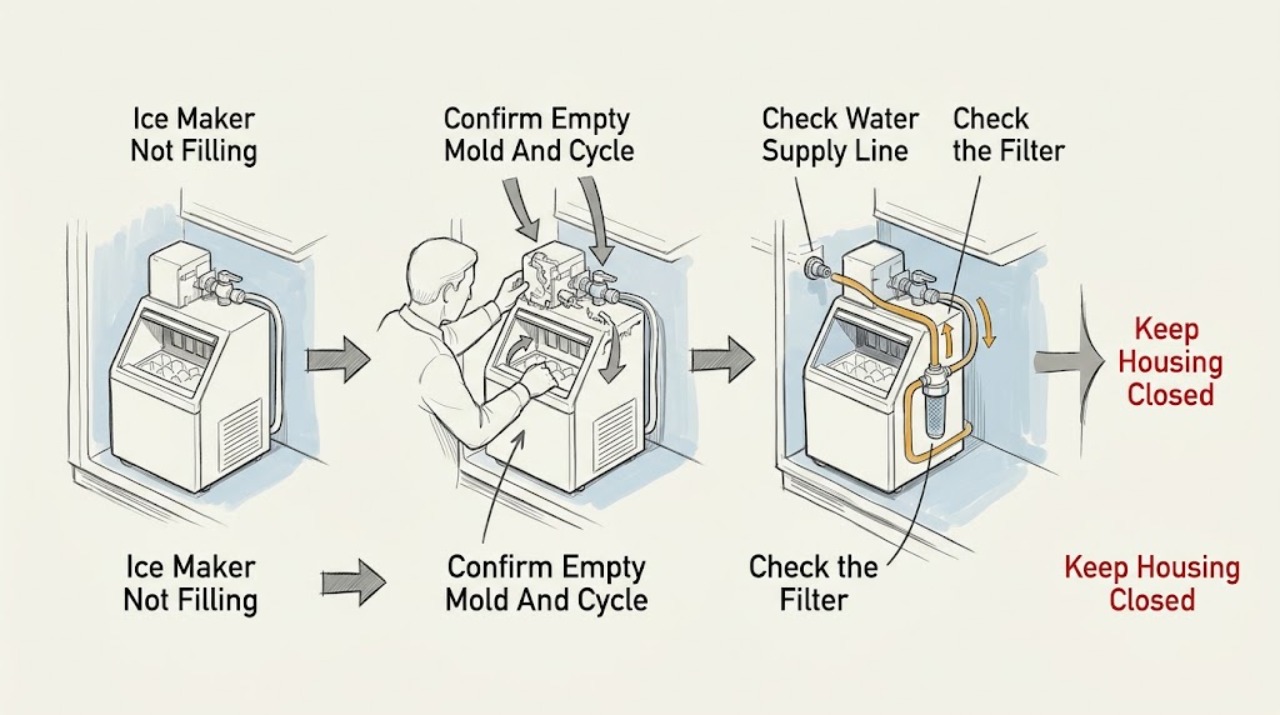
Frigidaire Ice Maker Not Filling: Check the Water Path and Fill Cycle
First confirm that this is the ice maker's fill problem, not a dispenser-flow problem: the ice mold is empty after a harvest or fill attempt, while the refrigerator may still dispense water. Verify the exact model's ice-maker On/Off state, water supply valve, and unobstructed supply line.
-
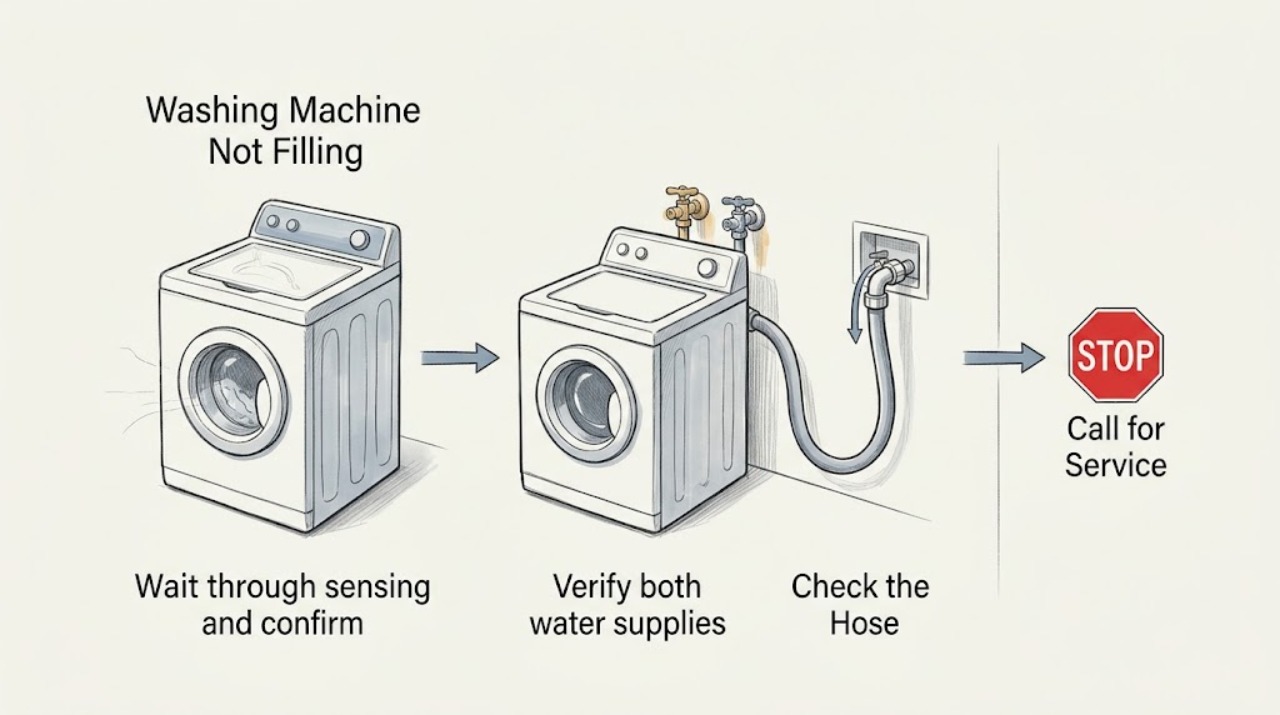
Frigidaire Washing Machine Not Filling: Check Water, Hoses, and Lid
If a Frigidaire washing machine is not filling, first allow the sensing portion of the cycle to finish, then confirm both water faucets are fully open, the inlet hoses are not kinked, the water pressure is adequate, and the lid or door is fully closed. Turn the water off before checking hose screens and look for leaks or a siphoning drain connection.
-
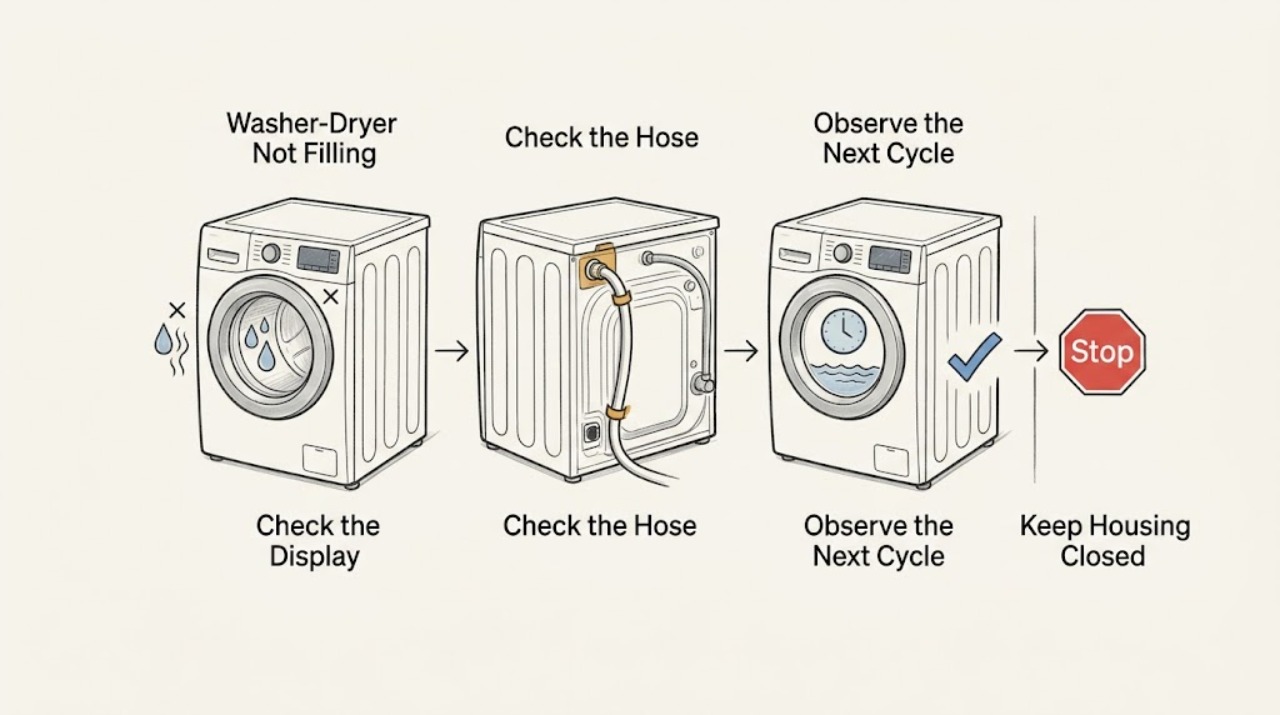
GE Washer-Dryer Not Filling
If a GE washer-dryer will not fill, first confirm that the appliance has power, the wash cycle is actually running, and both hot and cold supply valves are open. Then check for a kinked hose or blocked inlet screen with the appliance unplugged and the water turned off.
-
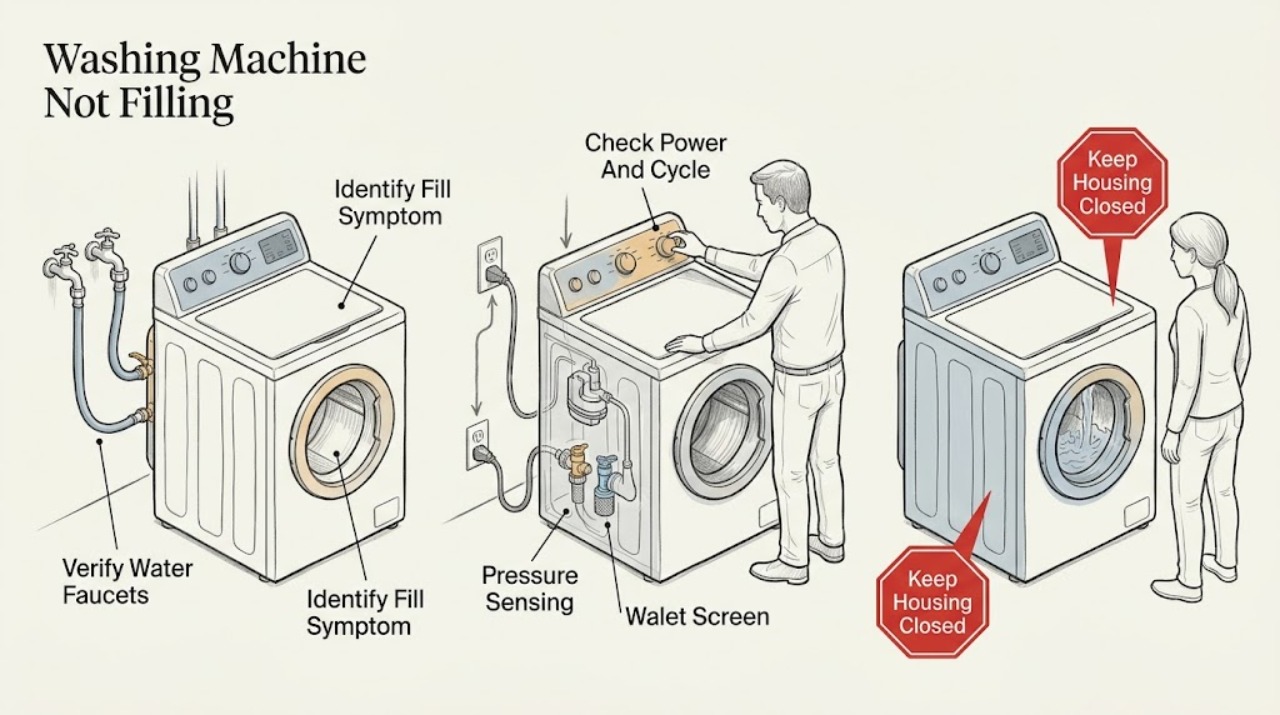
GE Washing Machine Not Filling: Check Water Supply, Controls, and Inlet Screens
If a GE washing machine does not fill, first check that power is present, the cycle was actually started, and both hot and cold supply faucets are fully open. If it fills slowly or shows a fill-related message, check the accessible inlet hoses and screens only after unplugging the machine and shutting off both faucets.
-
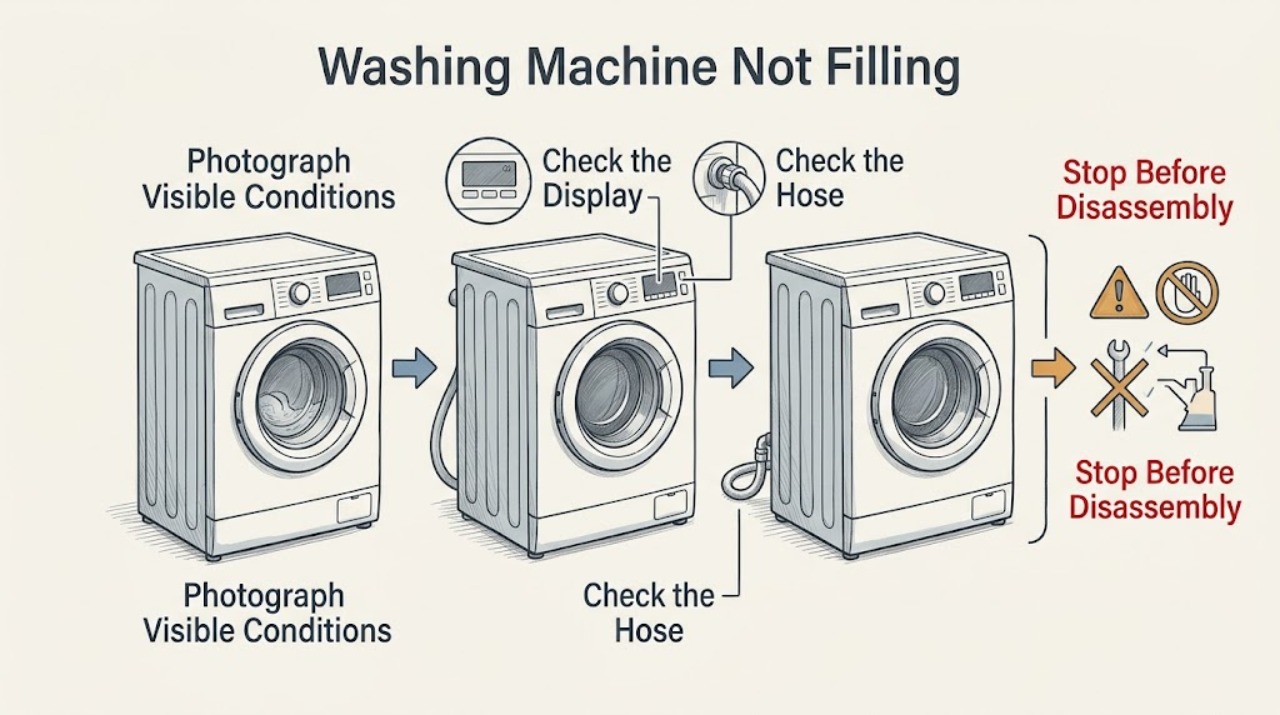
Gorenje Washing Machine Not Filling: Check the Water Path Before Replacing Parts
First record the exact model and display message, then check the selected program, door closure, open water inlet valve, accessible inlet hose, and inlet filter without opening the appliance. Gorenje manuals associate E:03, E3, or Er 03 with a water-filling error and direct the user to check the valve, inlet-hose filter, deformed or clogged supply hose, water pressure, and on some models the drain-hose height.
-
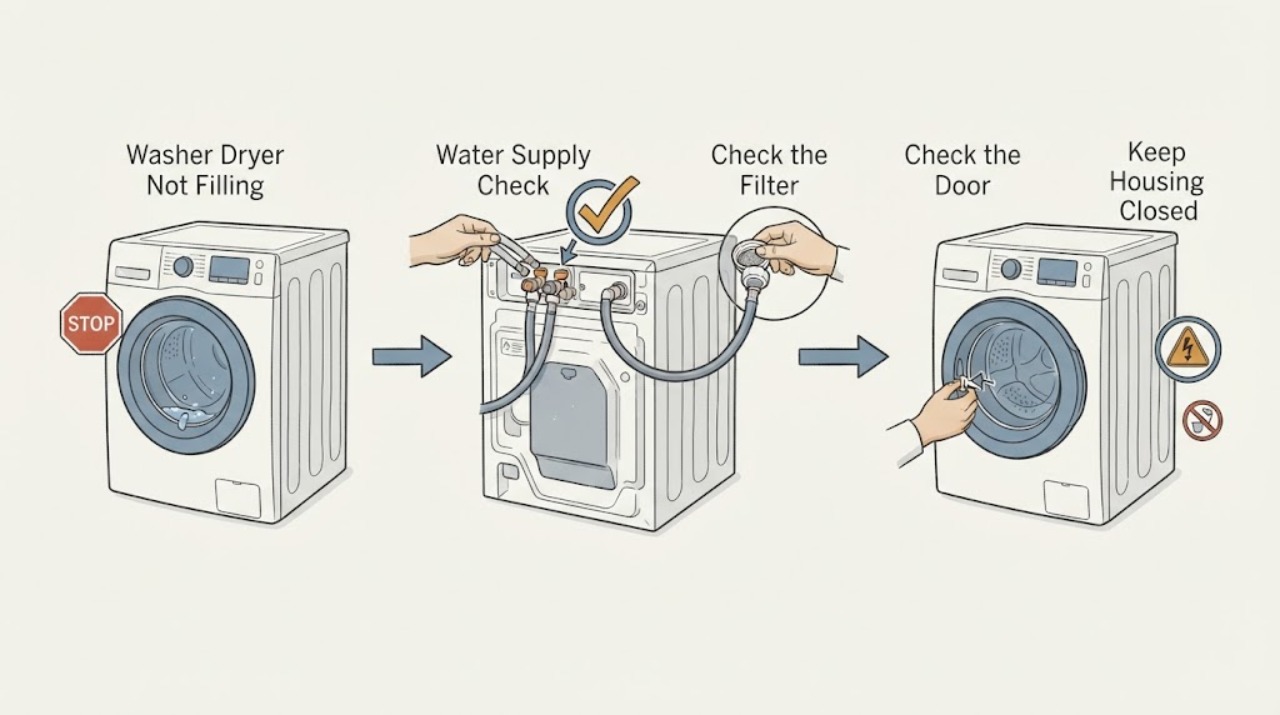
Haier Washer Dryer Not Filling: Check the Water Path and Door
If a Haier washer-dryer will not fill, first confirm that the selected cycle has been started and the door is fully closed and locked. Then open the water tap, check for a supply problem, and inspect the inlet hose and accessible inlet filter for a kink or blockage.
-
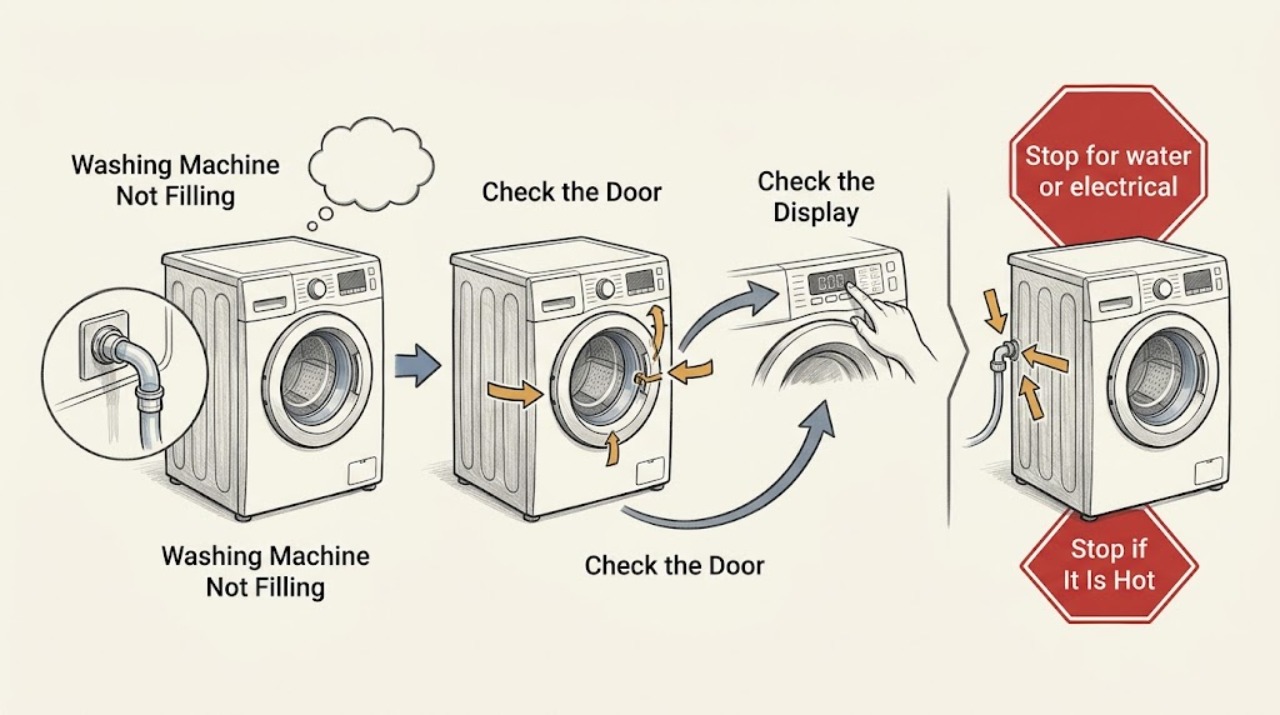
Hoover Washing Machine Not Filling
If your Hoover washing machine will not fill, first stop it if water is leaking, the floor or controls are wet, you smell burning, see sparks, or a breaker trips; close the water tap only if it is safely reachable and keep away from wet electrical areas. With no hazard, check that the door is closed, the selected programme has actually started, the delay or pause state is clear, and the cold-water tap is open.
-
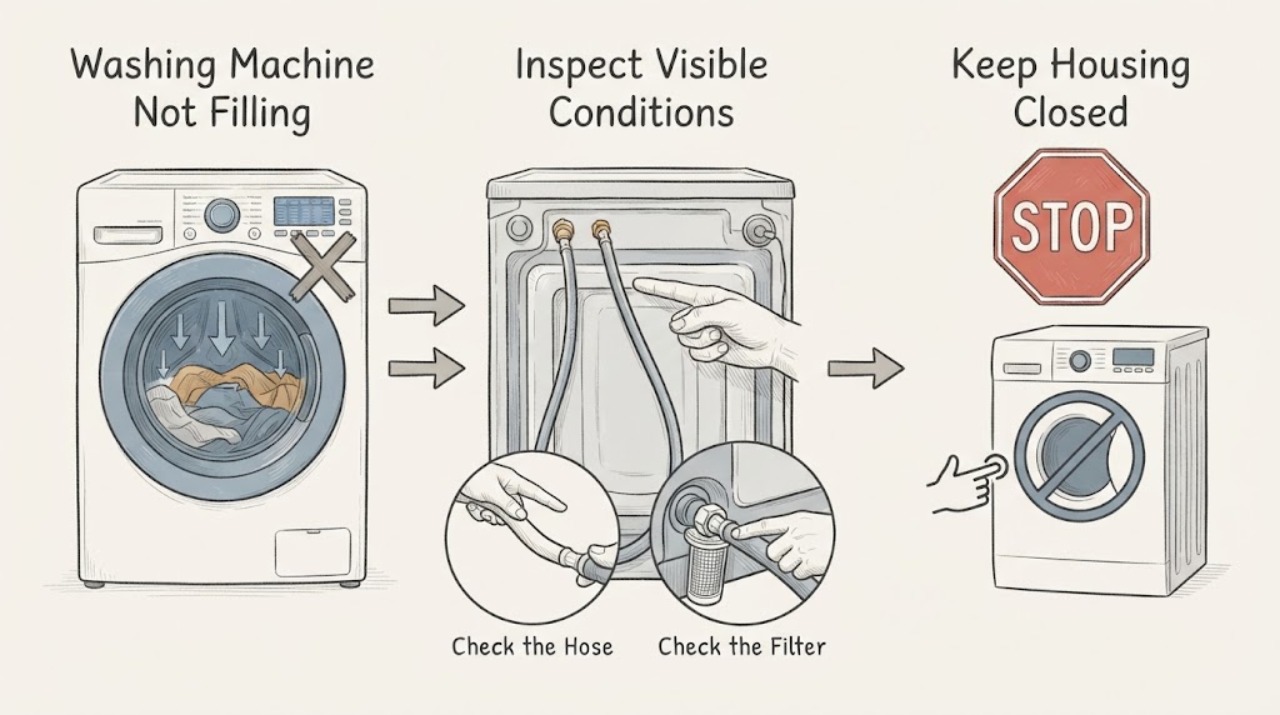
Hotpoint Washing Machine Not Filling: Check Water, Door, and Drain Paths
If a Hotpoint washing machine is not filling, first check whether the program actually starts and whether the door locks, then confirm the water taps are open and the inlet hoses are not kinked or leaking. If water enters and immediately disappears, inspect the drain hose routing against the exact model manual because an incorrectly positioned hose can cause a siphon-like symptom.
-
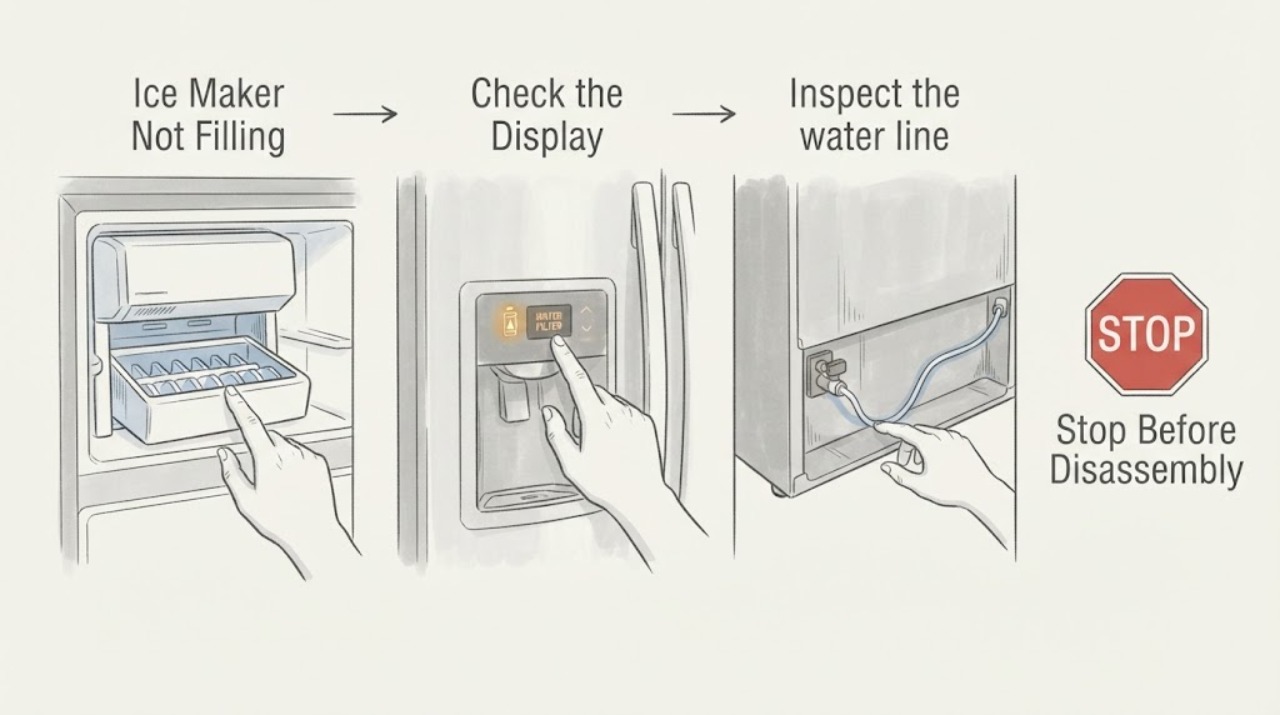
Ice Maker Not Filling
An ice maker that is not filling needs water-flow and operating-state checks before a part diagnosis. Confirm the supply valve is open and the line is not kinked, verify the freezer is cold enough, confirm the ice maker is on, and check a recently installed or clogged filter.
-
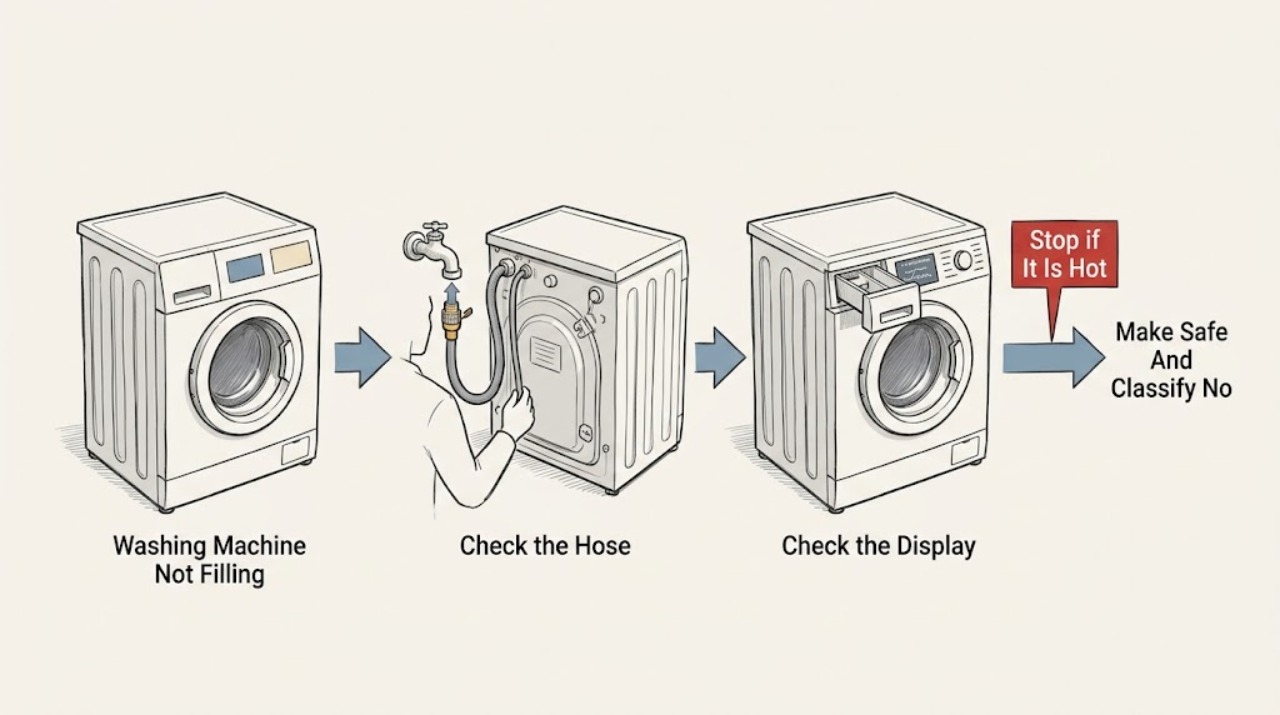
Indesit Washing Machine Not Filling: Trace the Water-Entry Failure Safely
If an Indesit washing machine will not fill, first note whether it has power, locks the door, makes an inlet sound, or starts draining instead. Confirm the programme is not paused and that the water tap is open, then inspect the visible inlet hose for a kink, leak, or crushed section.
-
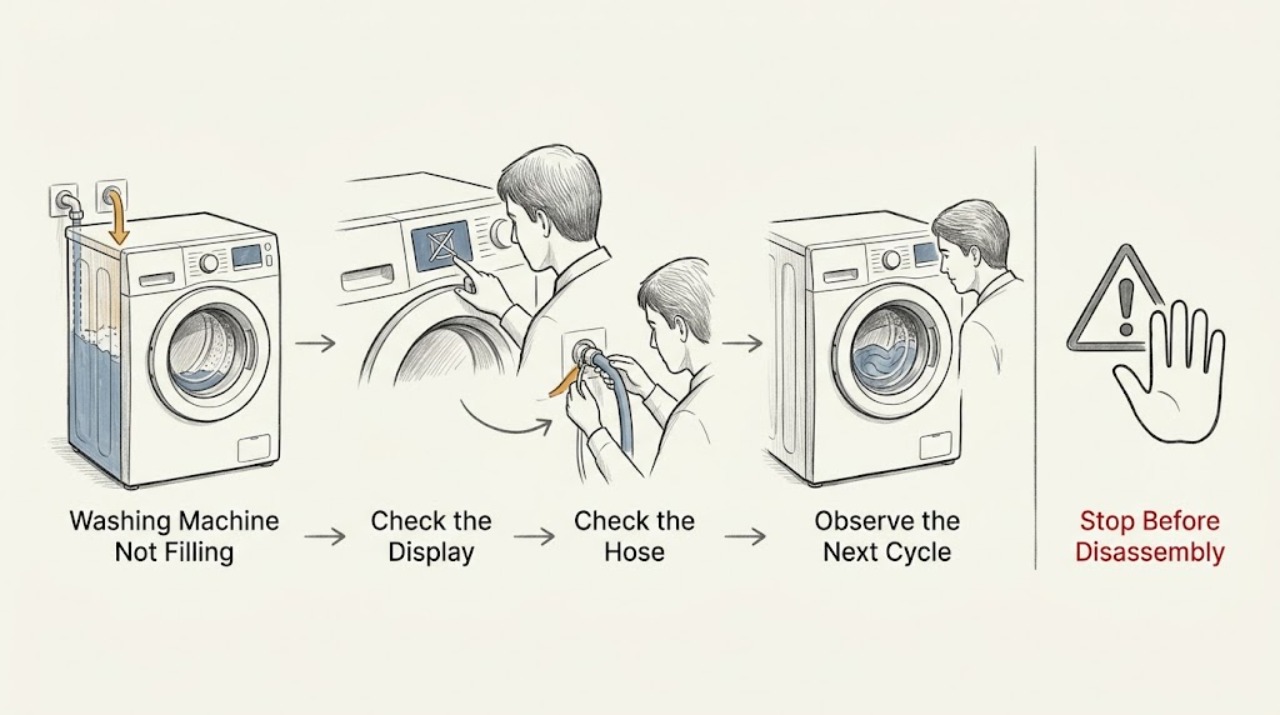
Kenmore Washing Machine Not Filling: Check Water Flow Before Parts
If a Kenmore washer will not fill, first verify that the required household water valves are fully open, the inlet hoses are connected and not kinked, and the accessible inlet screens are not blocked. Then confirm the selected cycle and lid or door state from the exact model manual. If there is still no water after those low-risk checks, stop before opening the cabinet: the inlet valve, lock or lid switch, pressure-sensing system, or control may need model-specific service.
-
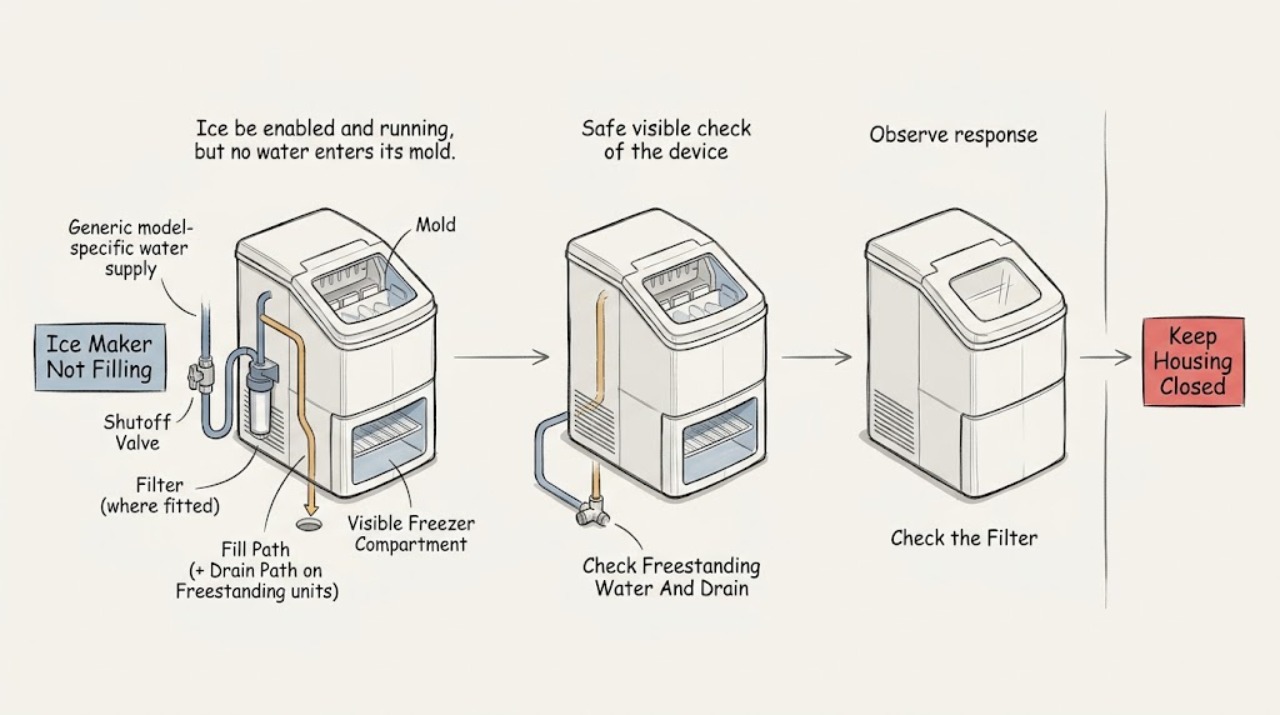
KitchenAid Ice Maker Not Filling: Check the Water Path for Your Architecture
First confirm that the symptom is truly a missing fill—no water enters the ice-maker mold or freestanding water pan—rather than ice being made but not dumped. Record the model and identify a freestanding KitchenAid ice maker versus one built into a refrigerator.
-
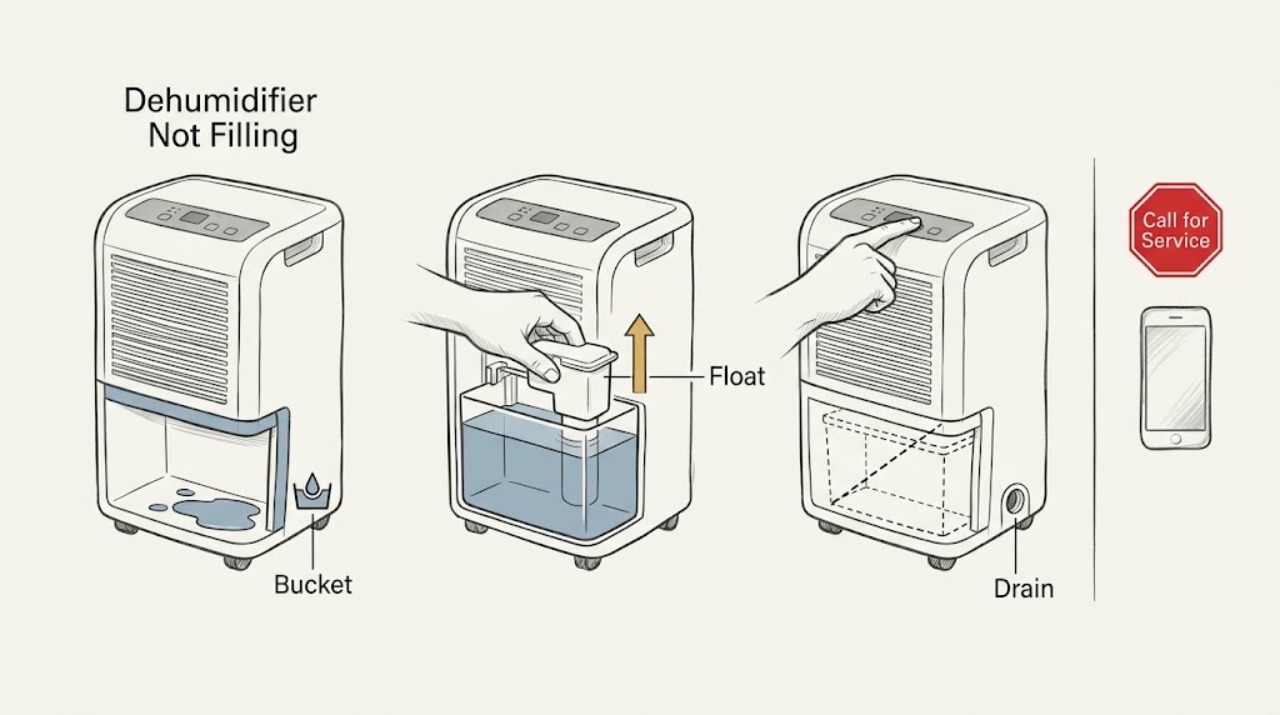
LG Dehumidifier Not Filling: Check the Bucket, Float, and Drain
If an LG dehumidifier runs but the bucket stays empty, confirm the bucket is fully seated, the float is not stuck in the full position, and any continuous-drain hose is clear. LG warns not to open the float cover. If collection does not resume, request service.
-
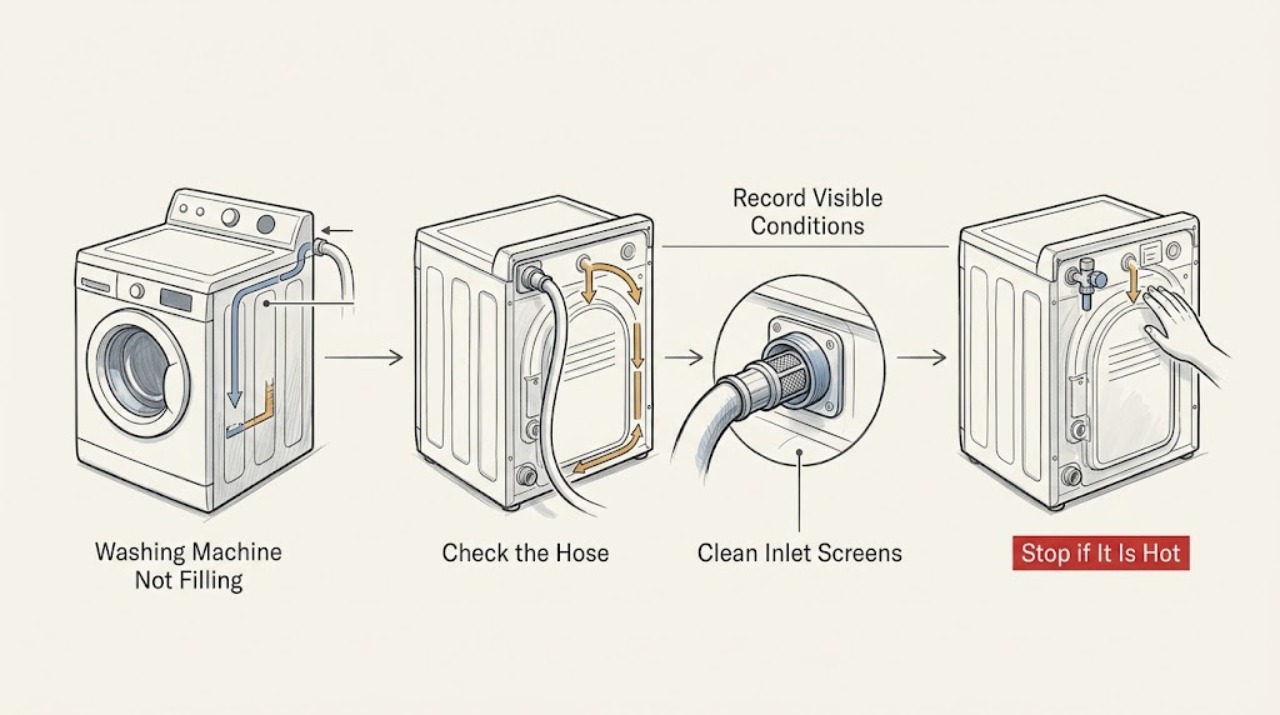
LG Washing Machine Not Filling: Check the Water Path Before Service
An LG washing machine that does not fill may have closed or weak supply valves, crossed or kinked hot and cold hoses, blocked inlet screens, a frozen supply, a door or lid that is not latched, or a drain hose installed so low or deep that incoming water siphons away. If the display shows IE, record the exact code and model first; LG describes IE as an inlet error when the tub does not reach an adequate level in the allowed time, but codes vary by model.
-
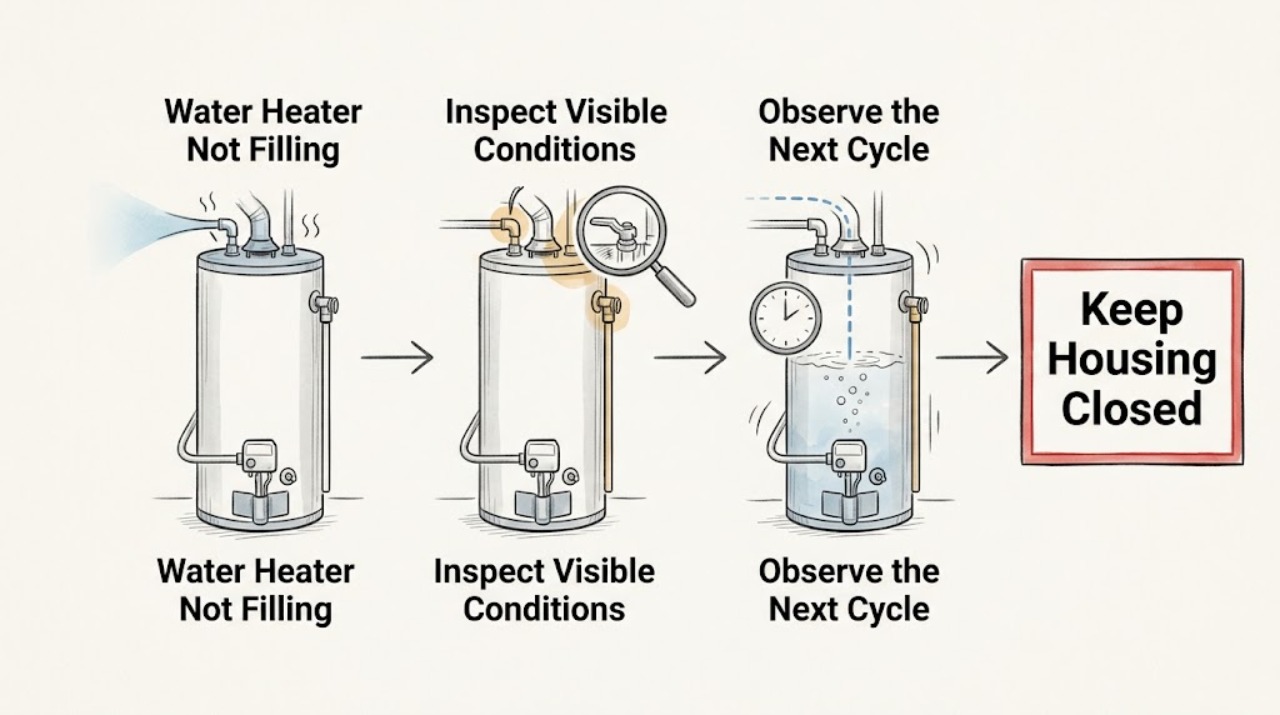
LG Water Heater Not Filling: Check the Inlet Before Power
If an LG heat-pump water heater is not filling, leave its electrical power off and check the cold-water shut-off valve, inlet piping, and trapped air first. The tank must be completely full before power is restored. If the inlet is open but water still will not enter, or a connection leaks, stop and have a qualified installer inspect the supply and tank.
-
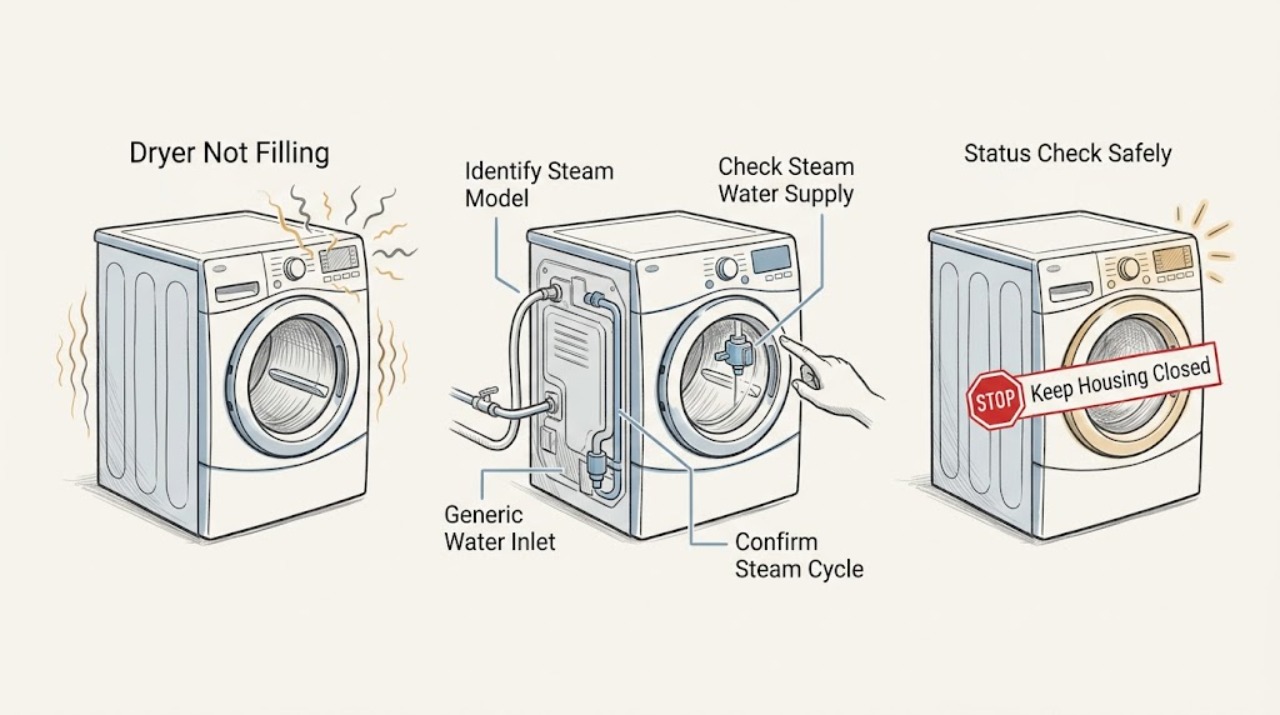
Maytag Dryer Not Filling: Check the Steam Water Path
A Maytag dryer does not normally fill like a washer. The word “filling” applies to a Maytag steam dryer: during a Steam cycle, it uses a cold-water connection and fill valve to spray water.
-
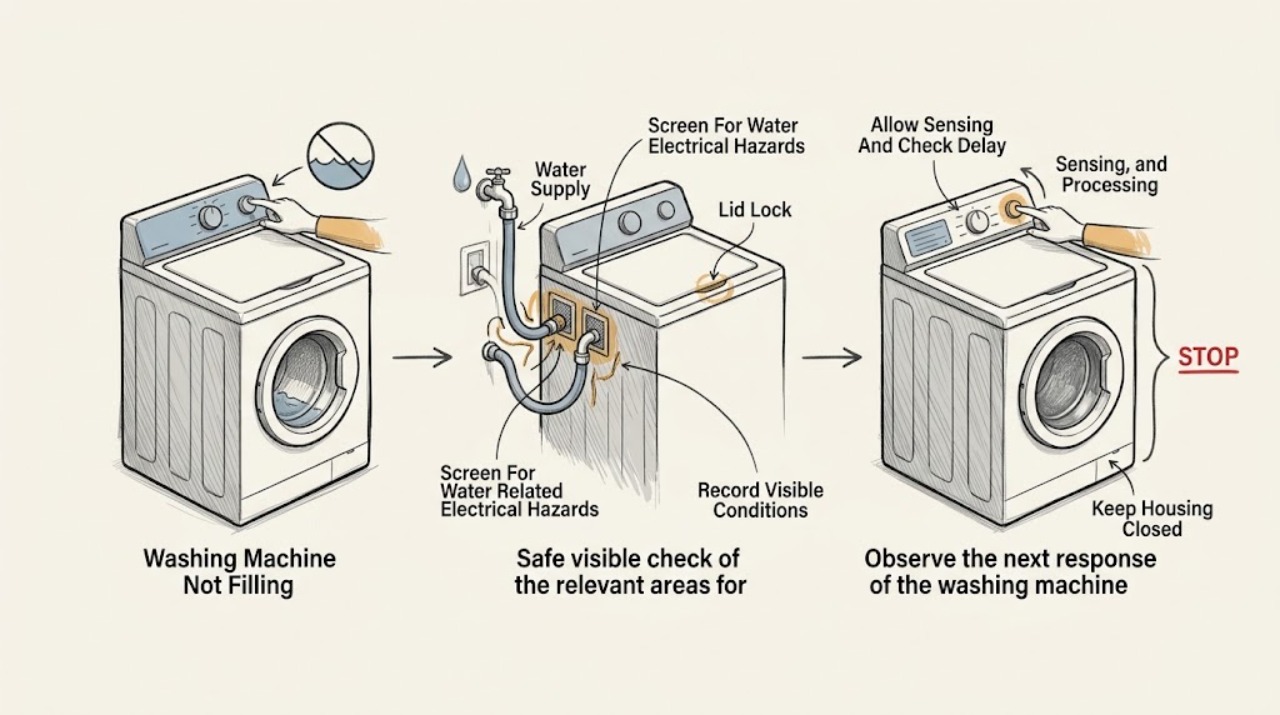
Maytag Washing Machine Not Filling: Check Water, Lid, and Cycle Signals
A Maytag washing machine that appears not to fill may be waiting for sensing, using a low-water cycle, paused by an open lid, or receiving too little water. Start by recording the cycle, delay or sensing status, exact display or fill code, and whether the tub is empty or slowly receiving water.
-
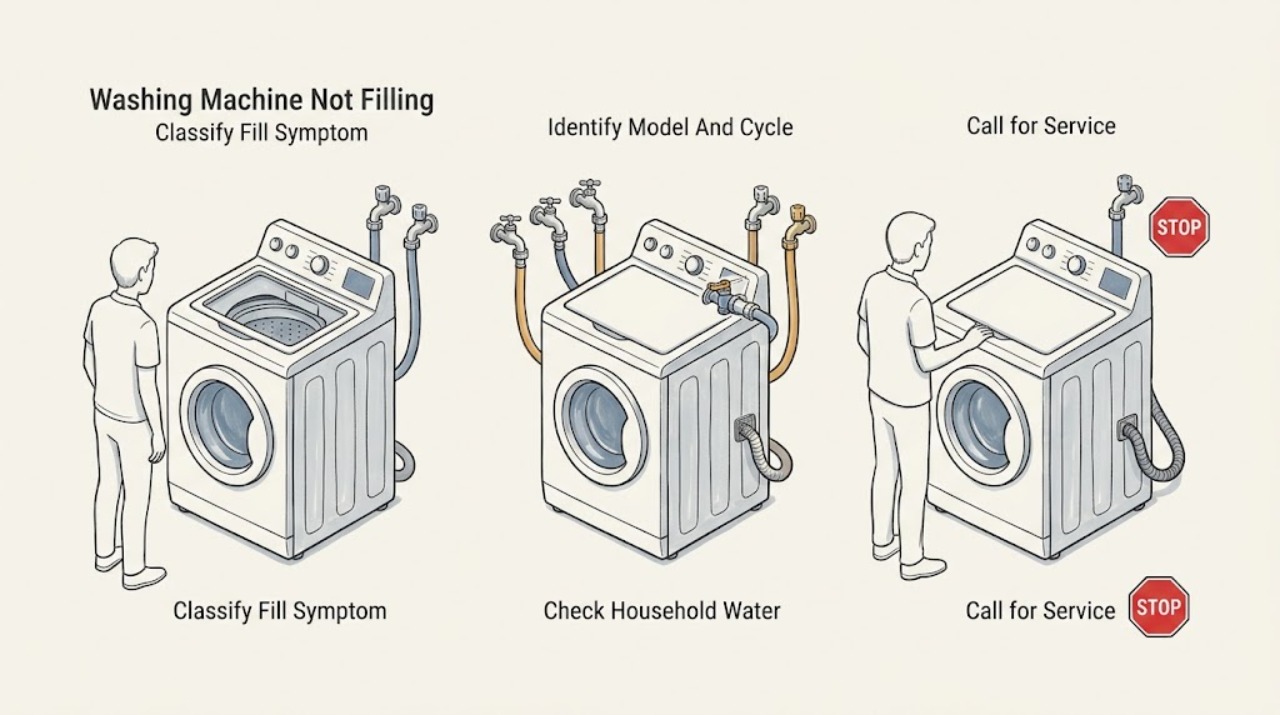
Roper Washing Machine Not Filling: Check Water, Lid, and Inlet Flow
A Roper washer that does not fill may have closed household water valves, kinked or restricted hot or cold hoses, sediment at an inlet screen, an unlatched lid or door, a program that is paused, an incorrectly installed drain hose that siphons water away, or a failed inlet valve or pressure-sensing system. First identify the exact Roper model and top-load or front-load design, confirm the required water supplies are available, and check the lid or door and controls.
-
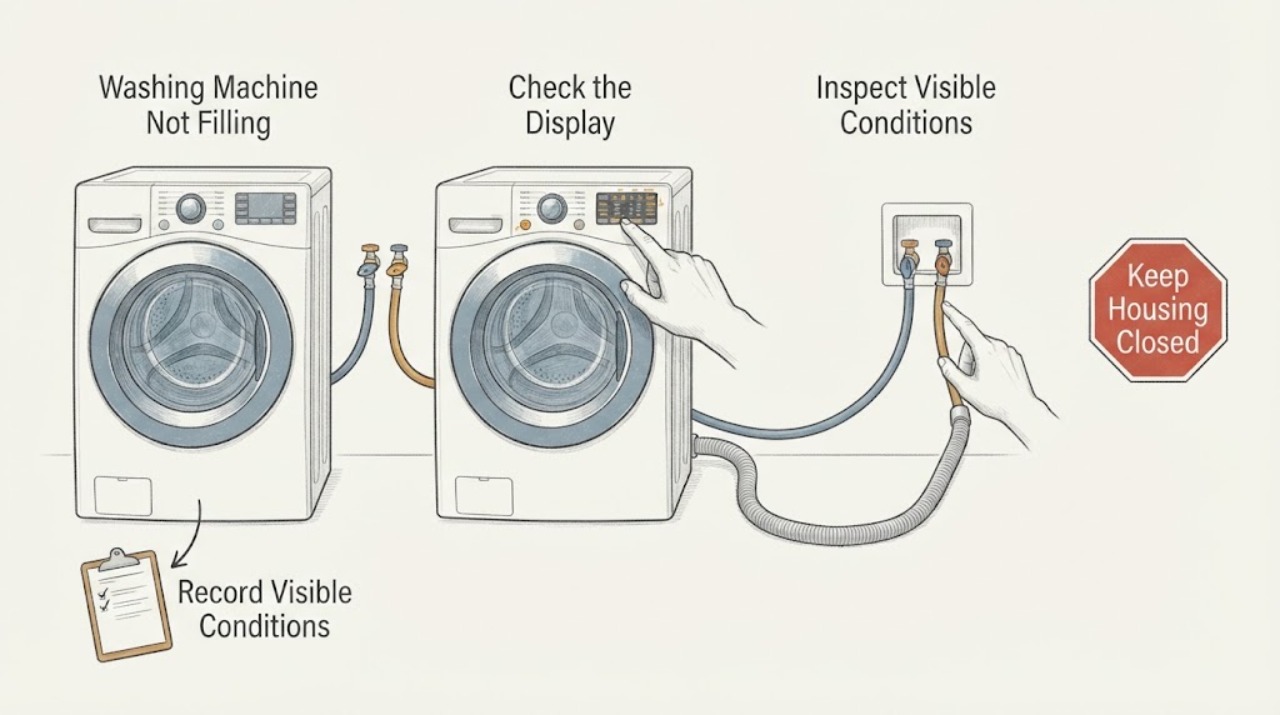
Samsung Washing Machine Not Filling: Check Water Supply, Drain Routing, and Cycle State
A Samsung washer may appear not to fill while it is sensing the load, but a true no-fill condition usually involves the home water supply, kinked or incorrectly connected hot and cold hoses, an installation-related drain siphon, a door or lid that is not latched, or a displayed code. Confirm whether water is entering at all and whether the washer is continuously filling.
-
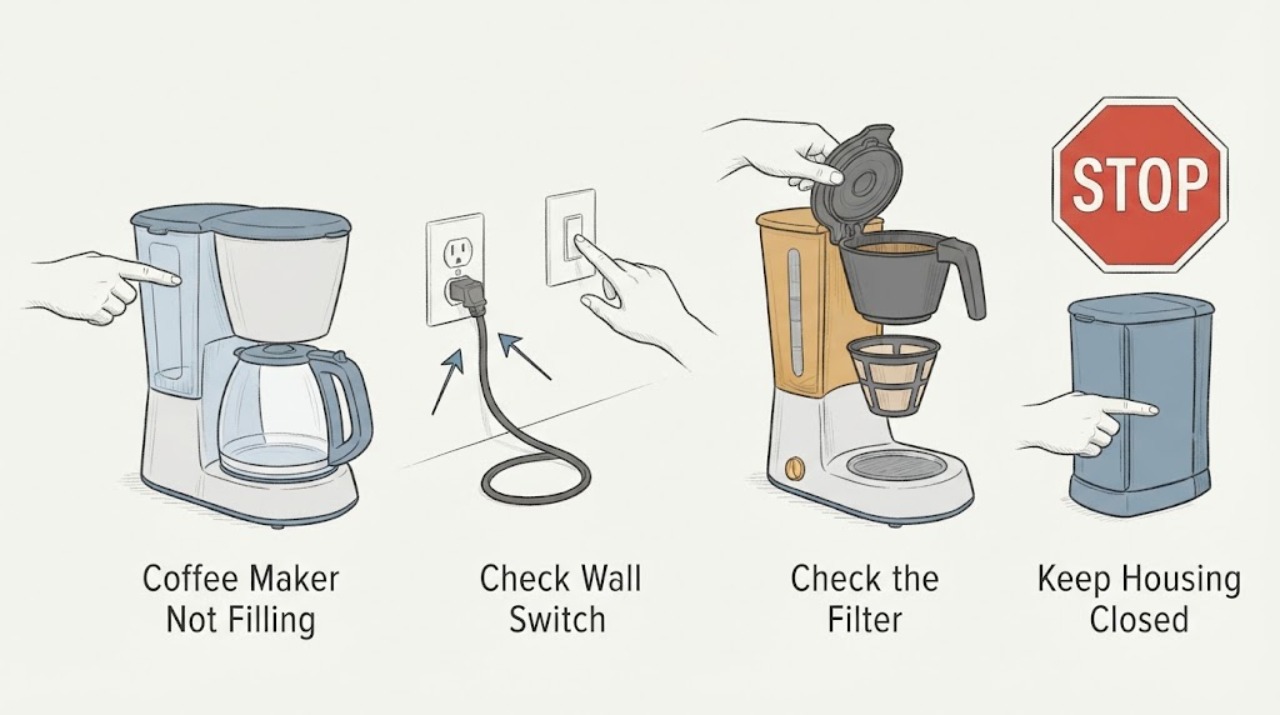
Siemens Coffee Maker Not Filling
First identify the Siemens EQ family and the exact symptom: a tank that will not seat, a “Fill water tank” message with a full tank, or a machine that starts but does not draw water. With the machine switched off, fill the tank with fresh still tap water, clean the tank and accessible float, and reseat the tank firmly.
-
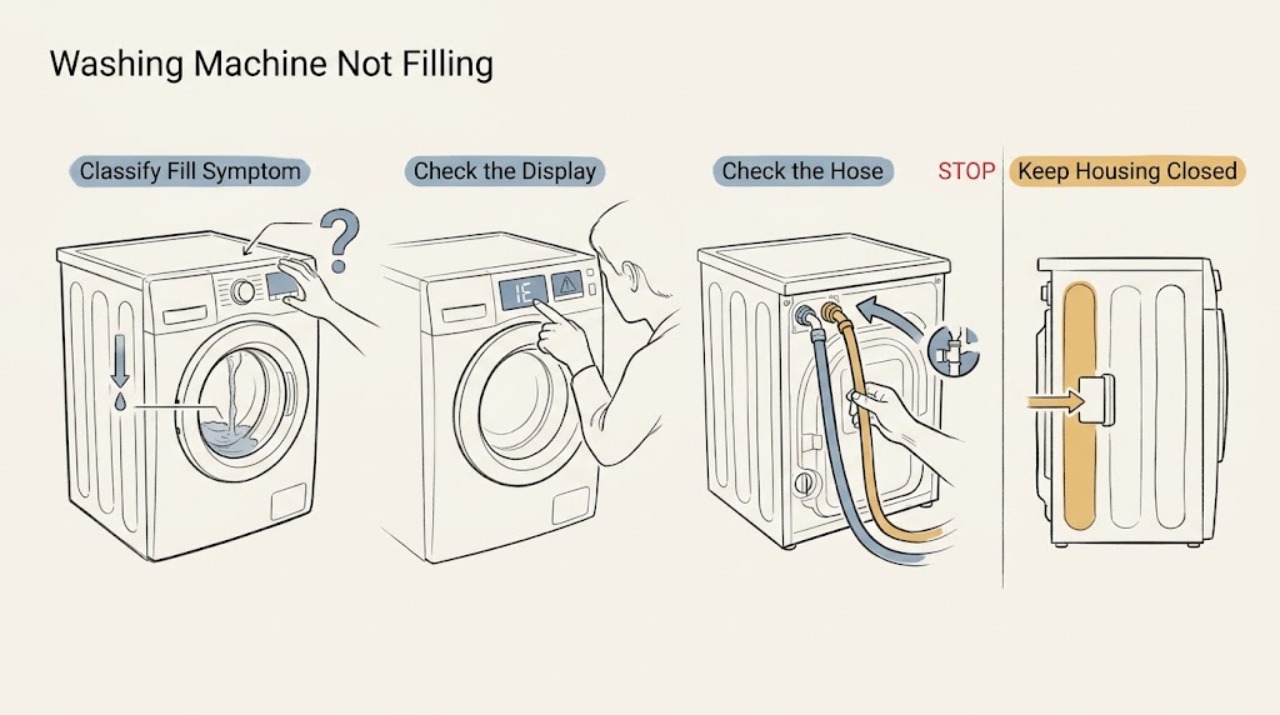
Speed Queen Washing Machine Not Filling: Check Water Supply, Door, Screens, and Siphoning
A Speed Queen washer that appears not to fill may have closed taps, kinked hoses, blocked inlet screens, an unlatched lid or door, a control state that was never started, a drain hose installed in a way that siphons water away, or a model-specific fill code. Some high-efficiency and automatic-fill cycles use less water than expected, so first watch whether the washer adds water and advances normally rather than judging the tub level alone.
-
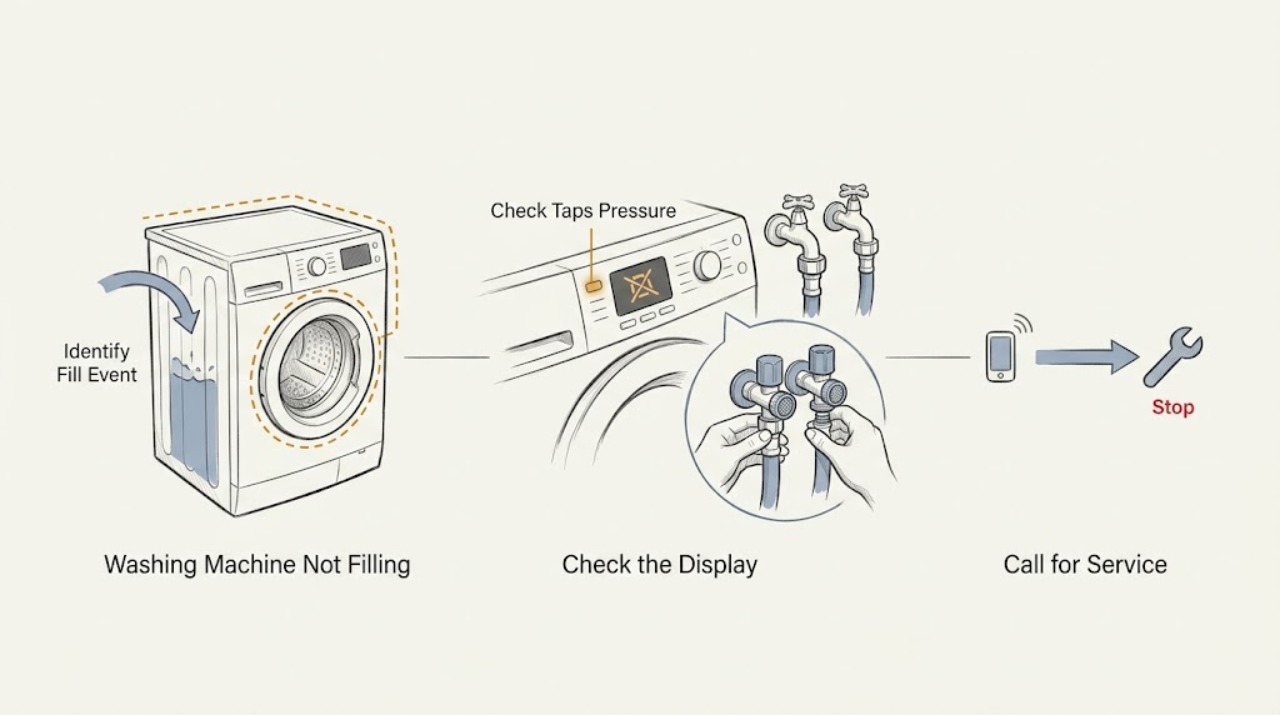
Toshiba Washing Machine Not Filling: Check Water Supply, Inlet Screens, and Lid Lock
If a Toshiba washing machine does not fill, first record the exact model, cycle stage, display code, and whether any water enters. Confirm the washer has power, the selected program is not preset or paused, the lid or door is fully closed, and the required water tap is open.
-
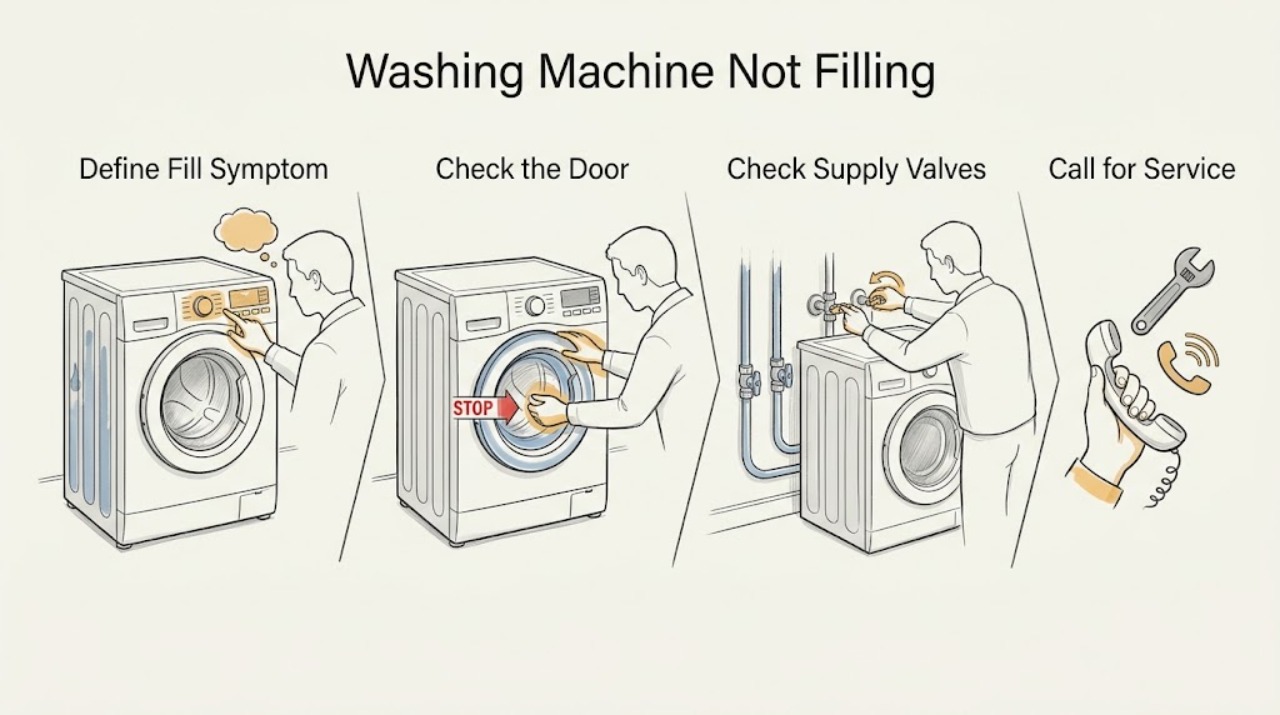
Washing Machine Not Filling: Check Water Supply, Door, and Inlet Path
A washing machine that does not fill is usually waiting for a valid start, a closed and locked door or lid, open water valves, an unrestricted inlet hose, or enough household water flow. First record any display code and confirm whether the machine is completely dry, filling slowly, or filling and then losing water.
-
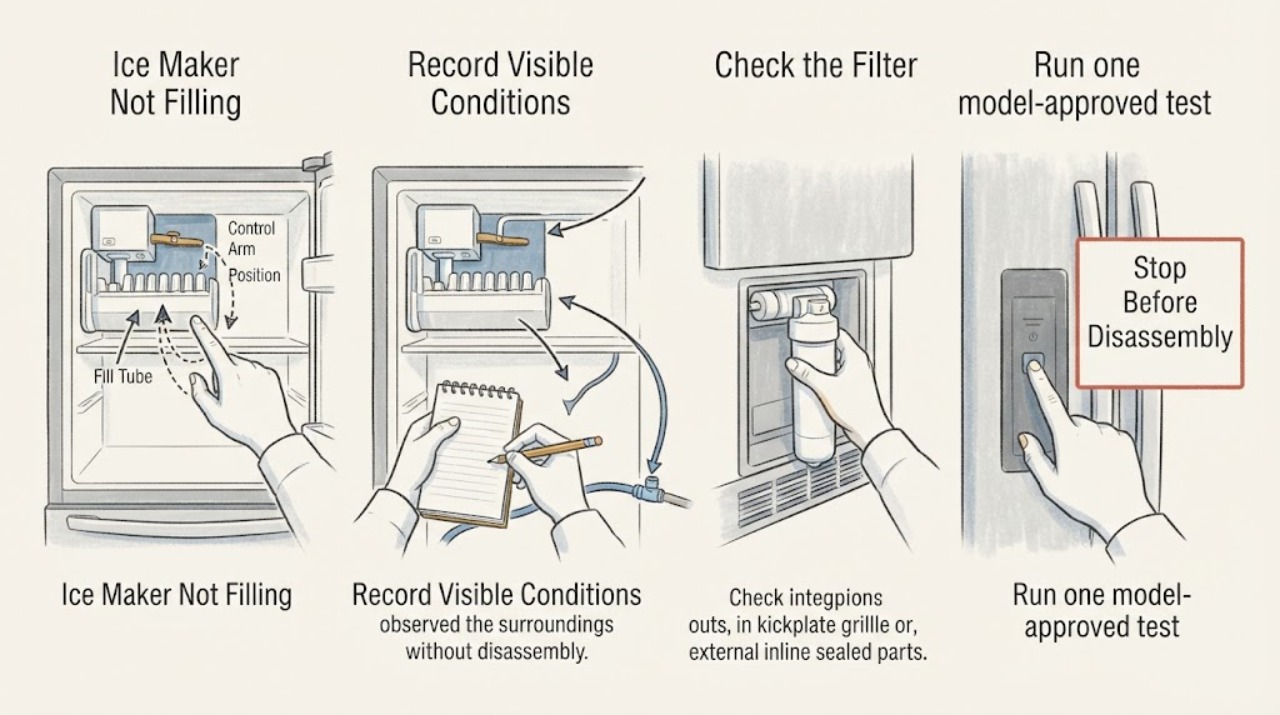
Whirlpool Ice Maker Not Filling
A Whirlpool ice maker that is not filling needs a water supply, filter, inlet, bin, and control check using the exact manual; a valve fault needs service.
-
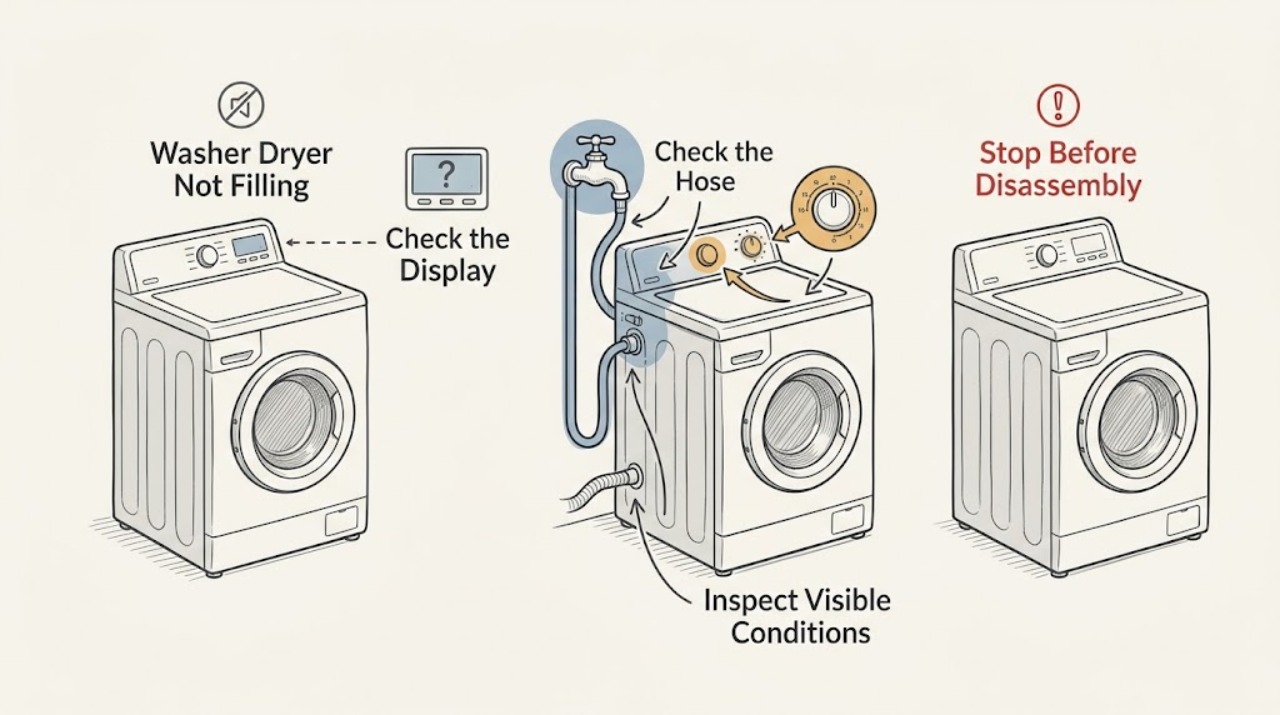
Whirlpool Washer Dryer Not Filling: Check Water, Controls, and Drain Setup
If the washer side of a Whirlpool washer-dryer is not filling, first confirm that the selected cycle has actually started, the lid or door is closed and latched, and the household water valves are fully open. Then inspect the inlet hoses for kinks and the inlet screens for sediment without disturbing the screens.
-
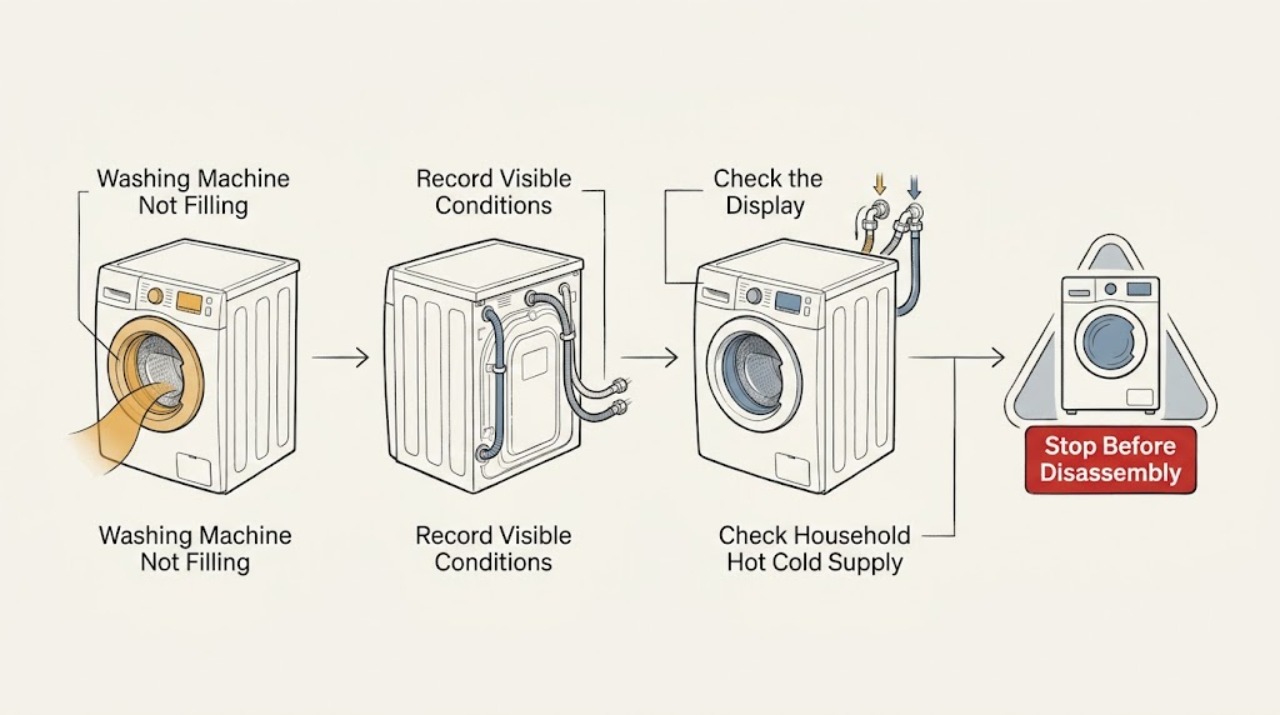
Whirlpool Washing Machine Not Filling: Check Water, Hoses, Lid, and Drain Setup
If a Whirlpool washer is not filling, first distinguish a normal low-water or sensing phase from no water entering at all. With the washer stopped and no leak, confirm the cycle, Start command, lid or door state, and whether the household hot and cold supplies are open.
-
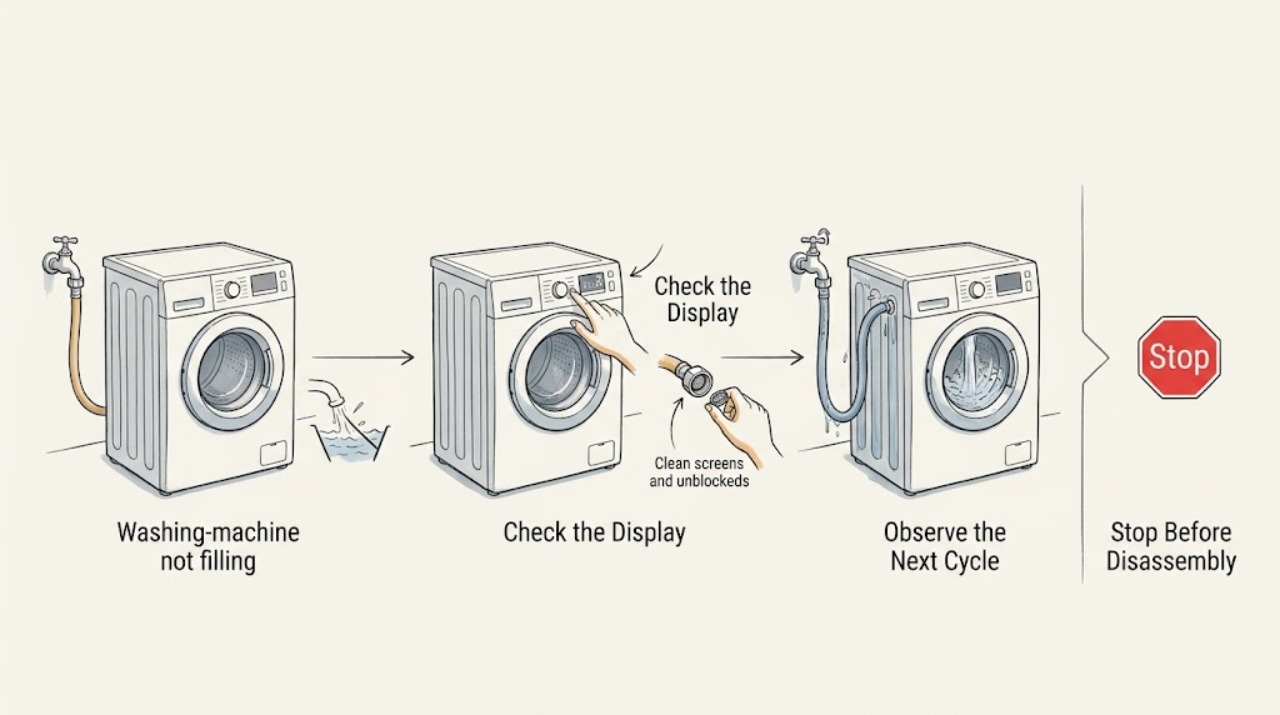
Why Is My Electrolux Washing Machine Not Filling?
If an Electrolux washer is not filling, first verify that both water valves are open, the inlet hoses are connected to the correct hot and cold inlets, and neither hose is kinked or pinched. Electrolux says water should begin filling shortly after Start and that inlet screens and water pressure can affect filling.
-
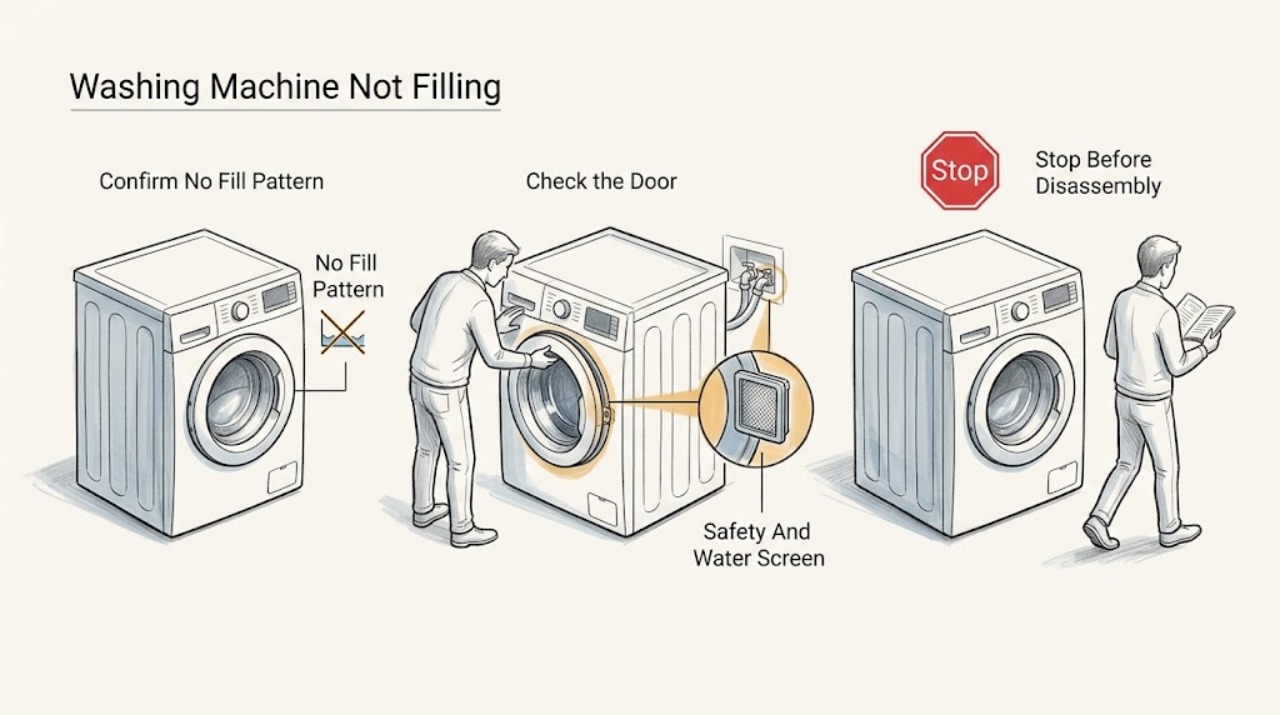
Zanussi Washing Machine Not Filling
If a Zanussi washing machine does not fill, first keep the drum and floor safe, then check whether the programme is waiting for a closed door, water supply, or an error state. From a dry, safe position confirm that the household water supply is on, the inlet hose is not visibly kinked, and the tap or hose connection is not leaking.