
On this page
Start here
Quick answer
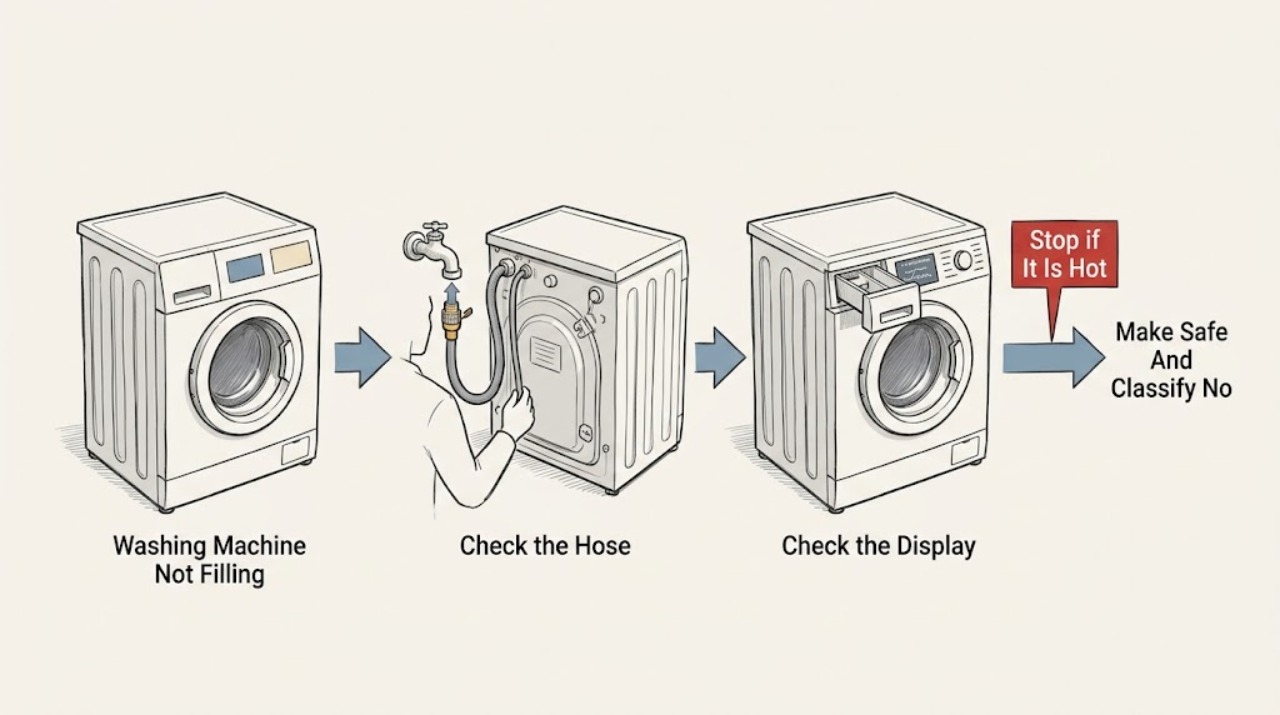
If an Indesit washing machine will not fill, first note whether it has power, locks the door, makes an inlet sound, or starts draining instead. Confirm the programme is not paused and that the water tap is open, then inspect the visible inlet hose for a kink, leak, or crushed section. Check only the filter or hose procedure allowed by the exact model manual; do not open a pressurized connection. A drain hose installed too low can make a machine lose water as it fills, while a clogged drain path can leave water inside and stop the programme. Record any tap symbol, flashing light, or exact code. Stop for leakage near electrical parts, standing water, burning smell, smoke, sparks, or repeated trips, and arrange qualified service rather than bypassing the door lock or replacing an inlet valve from the symptom alone.
Work through in order
Diagnostic checks
Use only checks that match the exact appliance or system and its official guide.
-
Check 1
Press stop and classify the symptom without opening the washer: note whether the display or lights have power, the door locks, the programme starts, the machine hums or clicks for an inlet, water enters briefly, or water remains in the drum. If there is water near electrics, isolate power only from a dry safe position and do not touch wet equipment.
Expected result: There is no power, the door does not lock, the programme runs with no water, water enters then disappears, or the drum retains water.
Next step: Record the symptom and select the matching branch. Keep the machine off for water near electricity, smoke, odor, sparks, a trip, rapid leakage, or a locked door with water inside.
Stop if: Stop for pooled or leaking water near electrical equipment, smoke, burning smell, sparks, repeated trips, a hot plug or socket, or any need to defeat the door lock.
Why this matters
Why: No-fill symptoms can start at power or door permission, the supply and inlet path, an inlet valve or water-level decision, or a drain route that removes water as it enters. Retained water changes the safe access boundary.
-
Check 2
With the washer cool and dry, check the selected programme, pause or delay status, start control, and visible door opening for clothing or debris that prevents the latch from closing. Record any flashing light or display code before clearing it; do not force the door or bypass the interlock.
Expected result: The door does not latch, a control or programme is paused or invalid, a pre-wash or tap indication flashes, a code is present, or the programme and latch appear normal.
Next step: Use the exact manual to correct only a clear programme or latch obstruction and then stop if the fault remains. Provide the code, model, and light pattern to service rather than guessing at a lock or control part.
Stop if: Stop for a damaged latch, locked door with water inside, smoke, odor, sparks, a trip, water in the control area, or any request to bypass the lock.
Why this matters
Why: The washer may withhold water until the programme and door conditions are satisfied. Indesit identifies a flashing pre-wash light as a possible fill failure, but light meanings and codes vary by model.
-
Check 3
Close the water tap if needed and inspect the visible inlet hose from tap to washer, both connections, and the nearby plumbing. Look for a closed tap, kink, crushing, split, leak, loose joint, or a hose routed under the appliance. Do not loosen a pressurized connection or use tools on a wet electrical area.
Expected result: The tap is closed, supply pressure is absent, the hose is kinked or damaged, a connection leaks, or the visible supply route is open, dry, and unobstructed.
Next step: Open the tap only when the hose and floor are dry and sound, following the exact manual. Leave a damaged or leaking hose unused; if the visible route is normal but no water enters, continue without opening the cabinet and arrange service if the next checks do not explain it.
Stop if: Stop for a split or bulging hose, water that cannot be isolated, rapid leakage, water near electricity, or any need to remove a pressurized hose or internal cover.
Why this matters
Why: A closed or restricted supply can prevent any fill. A split or leaking hose creates a flooding and electrical hazard. A clear external route does not prove that the inlet valve or internal filter is working.
-
Check 4
When the tap is closed, the area is dry, and the exact Indesit manual permits it, inspect or clean only the accessible inlet screen or filter using that manual's procedure. Do not dismantle the inlet valve, apply power to it, or remove the top or rear panel. Note whether the machine makes an inlet-valve sound without water entering.
Expected result: The manual identifies an accessible blocked screen, the valve is silent, the valve sounds but no water enters, or no safe filter procedure is provided.
Next step: Complete only the manual-approved accessible cleaning, then leave the washer off if the no-fill condition remains. Give the sound and water behavior to qualified service rather than testing live or opening the cabinet.
Stop if: Stop for retained pressure, leaks, wet electrical parts, exposed wiring, smoke, odor, sparks, a trip, or any need to test or replace the valve internally.
Why this matters
Why: A restricted inlet screen or supply path can limit flow. A silent valve may reflect supply, door, control, or valve permission; a valve sound without water can reflect restriction or valve failure. None of these observations alone identifies a replacement part.
-
Check 5
With power off and the drum safe, inspect the visible drain hose at the rear, standpipe or under-sink connection, and its height and insertion as shown in the exact manual. Look for a hose pushed too far into the waste, a low route, kink, blockage, or water leaving as soon as filling begins. Do not remove a pump filter with water still inside.
Expected result: Water runs away while the washer tries to fill, the drain hose is low or over-inserted, the hose is kinked or blocked, the drum retains water, or the drain path looks correctly installed.
Next step: Correct only an obvious external hose position shown by the manual and only when dry and safe. Keep the appliance off for retained water, an internal wet point, or a persistent no-fill condition.
Stop if: Stop for sewage-contaminated water, a full drum, a locked door, rapid leakage, water near electricity, or any need to open a wet filter, pump, hose, or cabinet.
Why this matters
Why: A low or incorrectly installed drain hose can siphon water away and make the washer appear unable to fill. A blocked path can leave water inside and stop the programme. An internal pump or pressure fault needs model-specific service.
-
Check 6
Record the exact model, every light sequence or display code, the water level, whether the machine drains, and whether the fill failure occurs on every programme or only one. Compare the indication with the exact Indesit manual; do not infer a water-level or pressure-system fault from a generic flashing pattern.
Expected result: A fill or tap indication appears, the machine stops with water inside, the drain pump runs, the code points to a door, pump, control, or other fault area, or no indication is present.
Next step: Follow only a model-approved reset or drain procedure and only when no hazard exists. If the indication persists or water remains, keep the washer off and provide the full record to qualified repair.
Stop if: Stop for a persistent code, a locked door with water, smoke, burning odor, sparks, a trip, leak, or any instruction that would bypass a safety device.
Why this matters
Why: Indesit links its documented light and code families to different supply, door, pump, control, motor, and water-level conditions. A code narrows the service conversation but does not prove a particular component is failed.
-
Check 7
Only when the washer is cool, dry, correctly connected, free of visible damage, and has no retained water or hazard sign, decide whether one brief, attended, model-approved fill check is appropriate. Skip it when the original symptom involved a leak, electrical warning, repeated fault, or internal access; stop at the first abnormal sound or water path.
Expected result: The washer fills and advances normally, fails again at the same stage, fills then loses water, or shows a new leak, code, noise, odor, heat, smoke, or electrical symptom.
Next step: Keep the washer out of service for any recurrence and arrange qualified appliance repair. Provide the model, programme, lights or code, water level, hose observations, and exact failure stage.
Stop if: Stop immediately for any leak, water near electrics, smoke, burning smell, sparks, trip, abnormal noise, uncontrolled filling, or a locked door with water.
Why this matters
Why: A normal brief check does not certify the washer. A repeatable failure helps service distinguish supply, door, inlet, drain, water-level, and control paths; any hazard means further operation is unsafe.
Use your observations
Decision map
Find the observation that best matches what you see, then follow the next safe action.
-
PATH 01Next step
What you see
Water is near the plug, socket, cord, wiring, or another electrical appliance, or there is smoke, burning odor, sparking, scorching, melting, or a repeated trip.
Do this next
Arrange qualified service and follow the exact model guidance.
Why this path and its safety boundary
Why it matters: Do not touch wet electrical equipment or reset protection again. Isolate power only from a dry safe position, keep clear, close the water supply when safe, and arrange urgent qualified help.
-
PATH 02Next step
What you see
The washer has no display, the door does not latch, or a door-related indication prevents the programme from starting.
Do this next
Arrange qualified service and follow the exact model guidance.
Why this path and its safety boundary
Why it matters: Keep the washer off and use the exact manual for a visible latch or programme check. Do not force or bypass the lock; persistent no-start or lock trouble needs qualified service.
-
PATH 03Next step
What you see
The programme and door are correct but no water enters, and the tap is closed, the inlet hose is kinked, leaking, or restricted, or the manual identifies an accessible inlet screen.
Do this next
Arrange qualified service and follow the exact model guidance.
Why this path and its safety boundary
Why it matters: Correct only a clear, dry, external setup issue or follow the exact manual's safe screen procedure. A damaged hose, absent supply, or persistent no-fill condition needs service before another cycle.
-
PATH 04Next step
What you see
Water leaves as filling begins, the drain hose is too low or over-inserted, the drain path is blocked, or water remains in the drum.
Do this next
Arrange qualified service and follow the exact model guidance.
Why this path and its safety boundary
Why it matters: Keep power off, correct only an obvious external drain-hose position under the manual, and do not open a filter against retained water. A persistent drain or pump issue needs qualified repair.
-
PATH 05Next step
What you see
The visible supply and drain routes are correct, but the valve is silent, water enters only briefly, or a model indication points to a water-level, control, or inlet fault.
Do this next
Arrange qualified service and follow the exact model guidance.
Why this path and its safety boundary
Why it matters: Do not apply power to the valve, open the cabinet, or replace a sensor or control from a symptom alone. Keep the washer off and arrange model-specific qualified diagnosis.
-
PATH 06Next step
What you see
A tap symbol, flashing light, or exact code appears, or the no-fill failure occurs only on one programme.
Do this next
Arrange qualified service and follow the exact model guidance.
Why this path and its safety boundary
Why it matters: Record the complete model, code or light sequence, programme, timing, and water level. Use only the matching Indesit manual; persistent indications require qualified service rather than a generic reset.
-
PATH 07Next step
What you see
The washer still does not fill after one safe external review, or the cause cannot be identified without internal access.
Do this next
Arrange qualified service and follow the exact model guidance.
Why this path and its safety boundary
Why it matters: Keep the appliance out of service and provide the model, programme, door status, tap and hose condition, drain routing, water level, sounds, lights, and codes to qualified appliance repair.
Helpful context
Understand the symptom
Make the no-fill fault safe
Press stop and keep the door closed if the drum contains water. If the floor is wet, do not touch the plug, socket, or washer while standing in water; isolate power only from a dry safe position. Smoke, a burning smell, sparks, a hot or damaged lead, repeated trips, or rapid leakage means no further test. Close the water tap if it is safe and leave the machine for qualified help.
No fill can mean no supply, no permission, or water leaving
A washer may not admit water because the programme has not started, the door has not locked, the tap or hose is restricted, the inlet valve is not opening, the machine is sensing a drain or water-level problem, or water is siphoning away through a low drain hose. The first sound and the first visible water location are more useful than guessing at a valve.
Use the exact Indesit manual
Indesit states that models vary and uses different light and code combinations. Record the complete model, every displayed code or flashing light, and whether water remains in the drum. Only follow a filter, hose, or drain procedure shown for that model. Do not bypass the door lock, remove a pressurized hose, or reach into a wet cabinet.
Stop after one safe external pass
A clear tap, correctly routed hose, dry electrical area, and correct programme may resolve a simple supply or setup issue. If the washer still does not fill, refills continuously, leaks, stops with water inside, or needs internal access, keep it out of service and arrange qualified appliance repair.
Safety boundary
Stop conditions
- Water is near a plug, socket, cord, wiring, or another electrical appliance, or the floor is wet enough to create a shock risk.
- Smoke, burning smell, sparks, scorching, melted plastic, a hot plug or socket, or a repeated circuit trip.
- A split, bulging, leaking, or pressurized inlet hose, rapid flooding, or water that cannot be isolated safely.
- A full or hot drum, locked door, sewage-contaminated water, or any need to open a wet filter, pump, hose, or cabinet.
- Any need to bypass the door lock, test a live inlet valve, open controls, alter wiring, or replace an internal part from a symptom alone.
- The no-fill fault, leak, code, or abnormal sound returns after one safe external review.
Only after diagnosis
Potential parts
- washing machine water inlet valve
Consider this category only when the exact model and qualified diagnosis link a clear supply path and no-fill symptom to a failed inlet valve.
Confirm the complete model, valve configuration, connector arrangement, and safe water and electrical isolation procedure before selecting a component. - washing machine water-level or pressure sensor
Consider this category only when the exact model indication and qualified diagnosis identify a water-level sensing fault after the supply and drain paths are clear.
Confirm the model, sensor arrangement, hose routing, and safe access procedure; do not infer fit from a generic no-fill symptom. - washing machine door-lock assembly
Consider this category only when the door cannot safely latch and the exact model guidance or qualified diagnosis confirms a lock fault.
Confirm the complete model and lock configuration; never bypass the door safety to make the washer fill.
When checks do not resolve it
Need a professional?
The washer has no power, the door will not lock, or a door or control indication persists., The tap and visible hose are correct but no water enters, the inlet valve is silent, or the washer needs an internal filter or valve check., Water siphons away, remains in the drum, the drain pump runs continuously, or a drain or water-level indication appears., The machine leaks, fills continuously, shows a recurring light or code, or stops at the same programme stage., There is water near electrics, smoke, burning smell, sparks, scorching, melting, abnormal heat, or a repeated circuit trip.
Common questions
FAQ
Why is my Indesit washing machine not filling with water?
Check the programme and door latch first, then the open tap and visible inlet hose for kinks, leaks, or restriction. Water that disappears as it enters can indicate incorrect drain-hose routing, while retained water points toward a drain or pump path. Record lights or codes and use the exact model manual before considering an inlet valve or water-level fault.
What does a flashing pre-wash light mean on an Indesit washer?
Indesit Service says a flashing pre-wash light can indicate a fill failure. Check that the supply is on and inspect the fill hose for a blockage, leak, or kink. Light meanings vary by model, so record the complete pattern and use the matching manual if it persists.
Can the drain hose stop an Indesit washer from filling?
Yes. A low or incorrectly inserted drain hose can let water siphon away as the machine tries to fill, and a blocked drain path can leave water inside and stop the programme. Check only the visible route against the exact manual and do not open a wet filter or pump path.
Should I replace the water inlet valve if no water enters?
Not from the symptom alone. First confirm the programme, door, tap, hose, and any manual-approved inlet screen. A silent valve or a valve sound without water can have different causes, including supply, control, or water-level decisions. Keep the washer off and arrange model-specific diagnosis before replacing an internal component.
When is an Indesit no-fill problem unsafe to test?
Stop for water near electrics, rapid leakage, a full or locked drum, smoke, burning smell, sparks, scorching, abnormal heat, or a repeated circuit trip. Do not bypass the door lock, reset protection repeatedly, remove a pressurized hose, or open the cabinet; isolate energy only from a dry safe position and arrange qualified help.
Read the exact guide
Official sources
- Indesit | Washing Machine Error Codes | Indesit ServiceIndesit Service · Indesit washing machine door, motor, temperature, pump, control, water, and model-specific error-code guidance
- Electrical Safety Advice for Washer Machines / Washing Machines SafetyElectrical Safety First · Washing machine plug, socket, lead, water-area, arcing, overheating, breaker, extension, and qualified repair safety guidance
- Indesit | Washing Machine Faq | Indesit ServiceIndesit Service · Indesit washing machine supply, fill-hose, drain-hose, programme, door, flashing-light, leak, and no-electrical-supply troubleshooting
Community feedback
Share a repair observation
Share a plain-text repair observation. Accepted observations are published automatically; this page may take a moment to update.