
On this page
Start here
Quick answer
Do not keep a new freezer running to reproduce a sound that resembles sparking. If there was a visible flash, smoke, burning odor, hot plug or outlet, water near the electrical connection, or a tripped breaker, stop using the freezer and keep it disconnected; use emergency help for smoke or fire and a qualified appliance or electrical professional for diagnosis. A sound described as a pop, crackle, hiss or sizzle can also come from normal cooling or automatic defrost, so sound alone cannot prove an electrical arc. GE lists popping, sizzling, crackling and hissing among normal freezer sounds during cooling or defrost, while CPSC guidance says smoke, sparks, overheating or burning odors require unplugging and stopping use.
Before you begin
Safety first
- Do not continue powering the freezer to reproduce the sound, touch a hot/wet/sparking connection, remove covers, probe live wiring, bypass a breaker or protective device, or attempt a compressor, defrost, relay or wiring repair yourself.
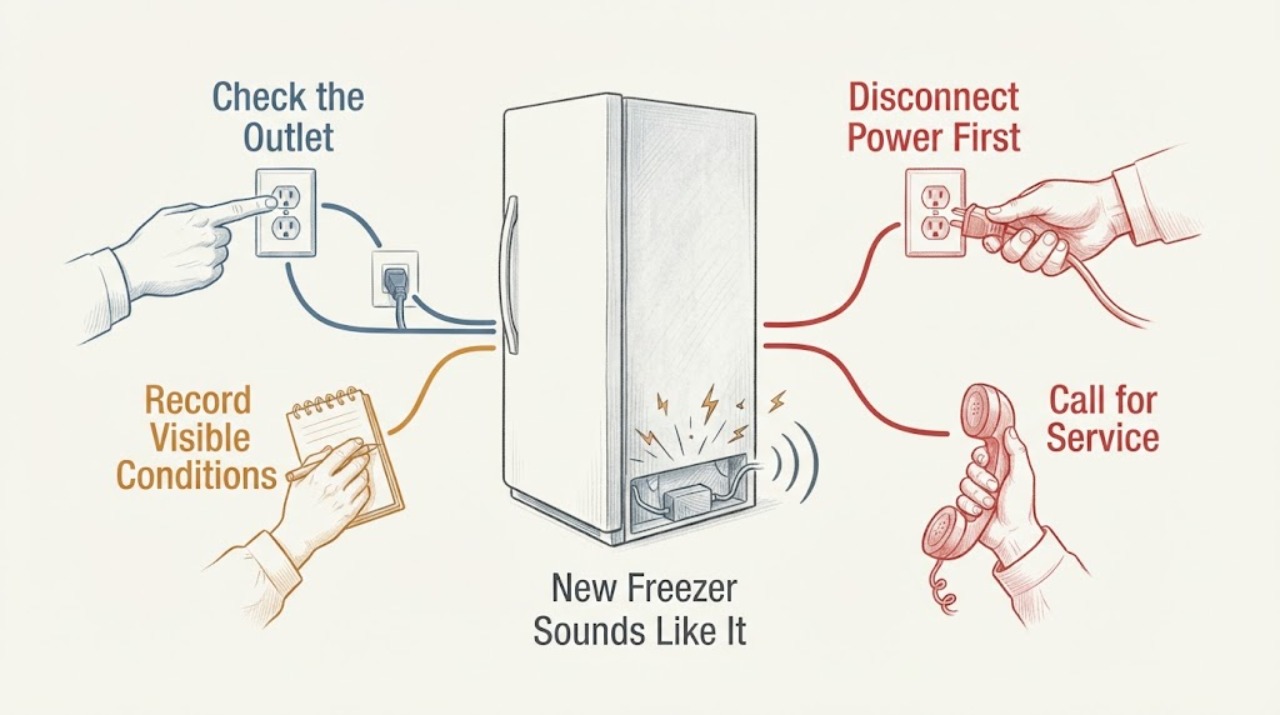
Work through in order
Diagnostic checks
Use only checks that match the exact appliance or system and its official guide.
-
Check 1
Stop trying to reproduce the sound. If there is no smoke, flame, water at the connection, visible arc or hot outlet and the plug is safe to reach, turn the freezer off and unplug it by the plug; otherwise move away and call emergency or qualified electrical help without touching the connection.
Expected result: The freezer is disconnected without an unsafe approach, or smoke, fire, water, visible sparking or heat makes the connection unsafe to reach.
Next step: Keep it out of service. Use emergency help for smoke or fire, and qualified appliance or electrical service for a suspected electrical fault.
Why this matters
Why: A safe disconnection removes the appliance from service while the cause is unknown. An active hazard is an electrical or fire-safety event rather than a noise-adjustment problem.
-
Check 2
From memory or from a safe distance before stopping use, record whether the sound was a one-time pop or crack during initial cooling, a sizzle or crackle during a defrost period, or a repeated snap accompanied by a flash, odor, smoke or breaker trip. Do not stand by the freezer or cycle it again just to collect a recording.
Expected result: The sound matches a cooling or defrost event without visible or smell-related warning signs, or it was accompanied by a visible flash, smoke, burning odor, hot connection or electrical interruption.
Next step: Use the normal-sound branch only when no hazard sign occurred; otherwise keep the freezer disconnected and arrange professional diagnosis.
Why this matters
Why: Cooling and automatic defrost can create sounds that resemble snapping or sparking. A visible or smell/heat/electrical warning cannot be cleared by the normal-sound explanation.
-
Check 3
Only after power is safely off and the area is dry and cool, look from outside at the visible cord, plug, receptacle face and the freezer cabinet. Do not remove panels, probe the outlet, or touch anything that is hot, wet, melted or actively sparking.
Expected result: There is no visible damage, or there is melting, charring, damaged insulation, looseness, heat, moisture or a mark around the plug or outlet.
Next step: Leave any damaged or suspect connection unused and have a qualified electrician or appliance professional assess it; do not substitute an extension cord or bypass a protective device.
Why this matters
Why: A damaged or overheated connection remains a stop-use condition even if the freezer still cools. A clean exterior does not prove that internal wiring, a defrost component or a control is safe.
-
Check 4
Find the freezer's exact model and consult its manufacturer noise guide without opening the cabinet. Compare the reported sound with the model's listed cooling, defrost, fan and pressure-equalization sounds; do not transfer a component diagnosis or service procedure from another brand.
Expected result: The exact guide describes a comparable sound and there were no hazard signs, or the guide does not cover the sound or the sound is becoming louder, more frequent or otherwise abnormal.
Next step: If the sound is unexplained or the freezer has any safety sign, keep it disconnected and schedule qualified service. Do not restore power repeatedly to test it.
Why this matters
Why: A matching normal-sound description supports monitoring under the manufacturer's instructions, not a conclusion that every spark-like sound is harmless. An unexplained or changing sound needs model-specific diagnosis.
Use your observations
Decision map
Find the observation that best matches what you see, then follow the next safe action.
-
PATH 01Next step
What you see
The report is only a pop, crackle, hiss or sizzle during cooling or automatic defrost, with no flash, smoke, burning smell, hot plug, water at the connection or breaker trip.
Do this next
Do not keep testing it. Use the exact model noise guide and arrange service if the sound changes, persists outside the listed cycle or remains concerning.
Why this path and its safety boundary
Why it matters: Those sounds can be normal freezer operation according to GE's generic freezer guidance, but the sound cannot be identified as normal without the exact model and its manual.
-
PATH 02Next step
What you see
There was a visible flash, smoke, burning odor, hot plug or receptacle, melted or charred material, water near the connection, or a breaker trip.
Do this next
Keep away from the freezer and connection, use emergency help for smoke or fire, and have qualified appliance/electrical service inspect it. Do not open panels or restore power for another test.
Why this path and its safety boundary
Why it matters: This is a potential electrical or fire hazard, not a normal-noise diagnosis. CPSC guidance directs users to unplug and stop using an appliance when smoke or sparks occur and to stop using overheated plugs.
-
PATH 03Next step
What you see
The sound is repeated or unexplained, the exact model guide does not list it, or cooling performance changes after the noise.
Do this next
Keep the appliance disconnected if any safety sign occurred and request model-specific qualified diagnosis; provide the model, timing, location as safely observed and any odor, heat, smoke or breaker event.
Why this path and its safety boundary
Why it matters: The available generic sound lists cannot establish whether the source is a fan, defrost system, compressor control or electrical connection on an unidentified freezer.
Helpful context
Understand the symptom
A spark-like sound is not a diagnosis
A new freezer can make unfamiliar sounds while it cools. GE's freezer guidance lists popping during cooling and sizzling, popping, crackling and hissing during automatic defrost as normal operating sounds. That guidance is about sound patterns, not visible electrical arcing. Treat a flash, smoke, burning smell, hot connection or breaker trip as a separate safety event even if the sound was brief.
Use the safest observation available
Do not open the cabinet, remove a rear cover, touch a suspected hot outlet, or repeatedly cycle the freezer to locate the noise. If there is no immediate smoke, fire, water or visible arc and the plug is safe to reach, switch the freezer off and disconnect it by the plug. If the area is unsafe, move away and get emergency or qualified electrical help instead of approaching the connection.
Keep the scope generic until the model is known
No brand or model was supplied, so this page cannot assign a sound to a particular relay, heater, compressor, fan or wiring part. Record the full model from the exterior rating label for the manufacturer manual or service request. A normal-sounds list from another brand cannot clear an actual flash, odor or overheating connection.
When checks do not resolve it
Need a professional?
Arrange qualified appliance or electrical service for any visible arc, smoke, burning smell, hot or damaged plug/outlet, breaker trip, repeated unexplained snapping, or a sound that remains abnormal after the exact model guide is checked. Use emergency help for active smoke or fire.
Safety scope: Do not continue powering the freezer to reproduce the sound, touch a hot/wet/sparking connection, remove covers, probe live wiring, bypass a breaker or protective device, or attempt a compressor, defrost, relay or wiring repair yourself.
Have this ready
- Provide the full exterior model number, when the sound occurred in relation to cooling or defrost, whether there was a flash, smoke, odor, heat, water or breaker event, and photographs of only safe, de-energized exterior damage if a professional requests them.
Common questions
FAQ
Can a new freezer make a sound that resembles sparking?
Yes. GE lists popping during cooling and sizzling, popping, crackling and hissing during automatic defrost as normal sounds for upright and chest freezers. That does not clear a sound accompanied by a flash, smoke, burning odor, hot connection or breaker trip.
Should I keep the freezer running so I can locate the noise?
No. Do not repeatedly cycle or stand near an appliance that may be arcing. If it is safe to do so, switch it off and unplug it by the plug; if the connection is hot, wet, smoking or visibly sparking, move away and get emergency or qualified electrical help.
Can I remove the back panel to see whether a wire is sparking?
No. The topic has no exact model and a freezer contains energized and hot components when operating. Leave panels and wiring closed and have qualified service diagnose an unexplained or hazardous sound.
Read the exact guide
Official sources
- CPSC Guide to Home Wiring HazardsU.S. Consumer Product Safety Commission · Opened the official CPSC PDF. It supports the stop-use boundary for smoke/sparks, damaged cords, hot plugs and qualified repair; it does not diagnose a freezer's internal cause.
- Refrigerator - Normal Sounds and Noises MadeGE Appliances · Opened GE's official normal-sounds support page for refrigerator-family appliances. It provides supporting context for clicks, defrost noises and the need for service when a sound is outside the listed patterns; no model-specific procedure is transferred.
- Refrigerator Noise - Popping or CrackingWhirlpool Product Help · Opened Whirlpool's official product-help article. It is used as corroboration that contraction/expansion during initial cooling or defrost can create popping or cracking; it is not used to make a model-specific claim for the unidentified freezer.
- Upright & Chest Freezer - Normal SoundsGE Appliances · Opened GE's generic upright/chest freezer support page. It is used only for family-level sound classification because the task has no brand or model; it does not diagnose an internal part or clear electrical warning signs.
Community feedback
Share a repair observation
Share a plain-text repair observation. Accepted observations are published automatically; this page may take a moment to update.