
On this page
Start here
Quick answer
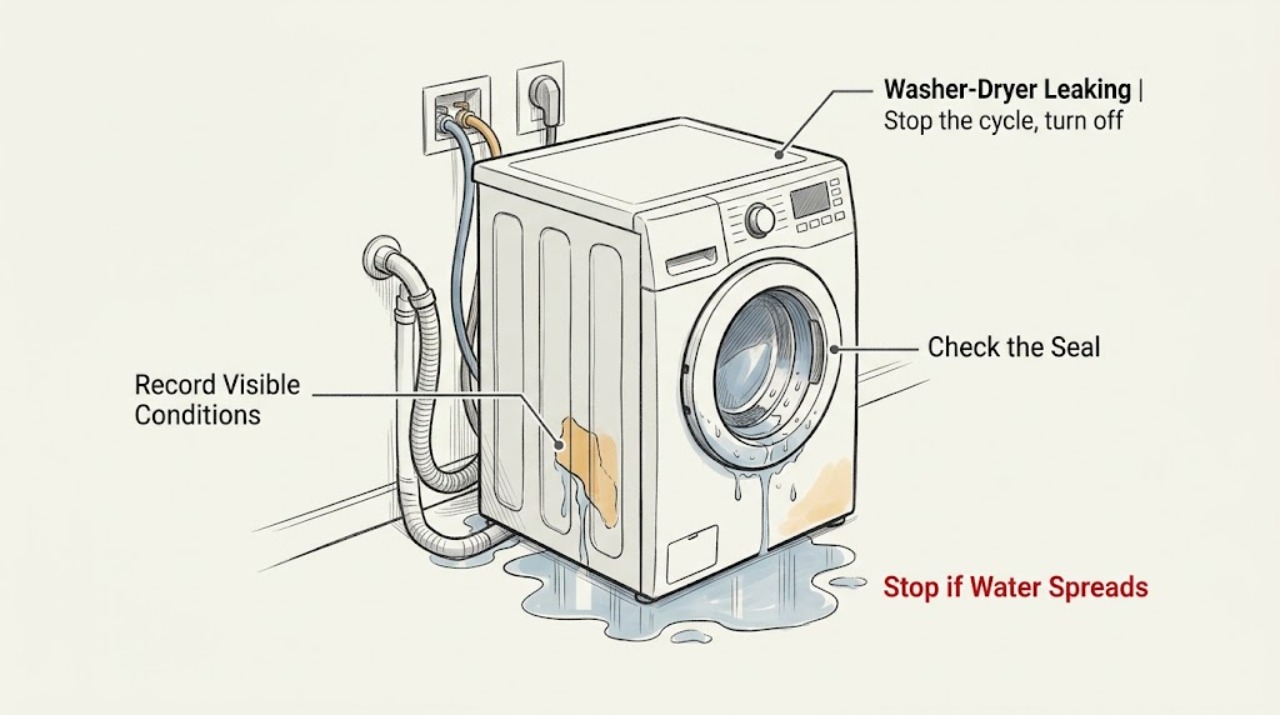
Stop the cycle, keep people away from standing water near the appliance, and turn off the washer water supply; disconnect power only if the plug and area are safe to reach. Then note whether water comes from the front, back, underneath, the drain, or suds, and whether it appears during fill, wash, drain, or spin. Frigidaire's Laundry Center guidance points first to a clogged or unsecured drain, loose or cross-threaded fill hoses, missing or damaged sealing washers, and excess or unsuitable detergent. If the leak is from inside the cabinet, returns after those checks, reaches electrical parts, or comes from the dryer side, stop using the unit and arrange appliance repair.
Work through in order
Diagnostic checks
Use only checks that match the exact appliance or system and its official guide.
-
Check 1
Stop the cycle, turn off the washer's accessible hot and cold water faucets, keep clear of standing water, and disconnect the power plug only if both the plug and floor area are dry and safe to reach.
Expected result: The leak stops when the cycle and water supply are stopped, or water continues from a trapped drain, cabinet, or dryer-side area.
Next step: Wipe up accessible water without moving a heavy stacked unit, then locate the source and cycle stage before any external adjustment.
Stop if: Do not touch the plug, outlet, or appliance controls while standing in water, and do not move the unit if hoses or wiring may be strained.
Why this matters
Why: Stopping the supply limits fresh fill water; continued leakage indicates water already in the drain or an internal source. Water and electricity together are a stop-use condition.
-
Check 2
Run no further cycle yet; inspect from a safe external position and record whether the first visible water is at the front, back, underneath, standpipe, or dryer side and whether it appears during fill, drain, or spin.
Expected result: The water starts at the rear inlet hoses, the drain hose or standpipe, the washer door or underside, as suds, or only while the dryer operates.
Next step: Follow only the matching location branch. If the source cannot be seen without removing panels, stop and arrange service.
Stop if: Do not place hands under a running appliance, remove panels, or use a cycle to reproduce a leak that has reached electrical areas.
Why this matters
Why: Frigidaire's troubleshooting path changes by leak location. A rear inlet leak, a drain-path overflow, and a cabinet or dryer-side leak do not share the same user check.
-
Check 3
For water at the back during fill, check the hot and cold inlet hoses for kinks, loose or cross-threaded connections, missing rubber sealing washers, and cracked connectors; keep the water supply off while inspecting.
Expected result: A hose is loose or mis-threaded, a rubber washer is missing or damaged, a connector is cracked, or the connections appear sound.
Next step: Realign the threads and seat an intact sealing washer, then hand-tighten only as the manufacturer's guidance permits. If a connector is cracked or the leak returns, arrange service.
Stop if: Do not over-tighten, use damaged hoses, or continue filling while a connector is cracked or spraying.
Why this matters
Why: Frigidaire identifies loose or cross-threaded fill connections and damaged sealing washers as leak causes. A cracked connector is not corrected by additional tightening and needs service.
-
Check 4
At the rear of the Laundry Center, verify that both the hot and cold inlet hoses are connected to the washer and that each hose has its sealing grommet seated against the valve.
Expected result: Only one supply hose is connected, a grommet is absent, or both hoses are correctly connected and sealed.
Next step: Restore the intended two-hose connection only if the model installation instructions support it and all parts are intact. If the installation is correct but the rear leak persists, arrange service.
Stop if: Do not alter plumbing or open the inlet valve assembly while water is connected.
Why this matters
Why: Frigidaire states that using only a hot or only a cold supply hose can cause backflow through the valve and onto the floor. Correct connections make that installation cause less likely.
-
Check 5
For water appearing during drain or spin, check that the drain hose is secured in the standpipe and that the household drain is not backing up; inspect the visible hose for kinks, splits, or a loose end.
Expected result: The hose is out of the standpipe, the standpipe backs up, the hose is restricted or damaged, or the drain path is secure and clear.
Next step: Secure the hose to the drainpipe as directed by the installation guidance and have a plumber clear a blocked household drain. Arrange appliance service for a damaged hose or continued overflow.
Stop if: Do not run another drain cycle while the standpipe is overflowing or the drain hose is split.
Why this matters
Why: Frigidaire links an unsecured drain hose to water missing the drain and identifies a clogged home drain as a plumbing issue. A damaged hose requires service rather than tape as a permanent repair.
-
Check 6
Check the detergent label and amount, and look for foam rather than clear water around the washer; use only the high-efficiency detergent and quantity specified for the model and water conditions.
Expected result: There is a large amount of suds or the detergent is not high-efficiency, or the floor water is clear and the detergent use is appropriate.
Next step: Correct detergent type and quantity for the model, clean up the spill, and monitor a later supervised cycle. If suds or leaking returns with correct detergent, arrange service.
Stop if: Do not add more detergent or keep running cycles to flush a heavy foam overflow.
Why this matters
Why: Frigidaire says unsuitable or excessive detergent, especially with soft water, can make suds overflow and look like a leak. Clear water shifts attention back to hoses, drains, or the cabinet.
-
Check 7
If water appears at the washer lid or underneath, check from the outside that the unit is level and that shipping materials have been removed, especially after a recent installation; do not dismantle the cabinet.
Expected result: The Laundry Center is unlevel or shipping material remains, or those installation conditions are correct and water still appears underneath.
Next step: Correct only the accessible leveling or installation condition described in the manual, then arrange service if the leak persists. For a newly installed unit, involve the installer.
Stop if: Stop if water is coming from the cabinet base, motor area, electrical area, or a stacked connection that cannot be safely inspected.
Why this matters
Why: Frigidaire identifies retained shipping material and an unlevel unit as possible causes for water from the lid or underneath. An unresolved underside leak may be internal.
-
Check 8
If the leak is accompanied by poor washer filling, check only the accessible water-supply conditions: fully open faucets, straight hoses, no unusual household water use, and a fully closed lid; do not remove valve screens unless the model manual permits it and the water is shut off.
Expected result: Water enters slowly or not at all while leaking occurs, or fill behavior is normal and the leak is independent of filling.
Next step: Correct an accessible closed faucet or kink only, then monitor for a leak without leaving the unit unattended. If filling remains abnormal or the leak returns, arrange service.
Stop if: Do not disconnect pressurized hoses, open a valve body, or keep operating with water spraying or reaching electrical parts.
Why this matters
Why: Frigidaire lists faucet position, hose condition, water pressure, lid closure, valve screens, and drain standpipe setup as fill-related checks. A fill problem with leakage needs careful supply isolation rather than a guessed valve replacement.
-
Check 9
If water appears only while the dryer side runs, or if the leak cannot be traced to the washer's inlet, drain, detergent, or installation conditions, stop using the combination unit and record the location and timing for service.
Expected result: The leak is dryer-side or internal, or it is resolved by a documented external washer correction.
Next step: Use the unit only after the external cause is corrected and a supervised check is dry. Otherwise arrange appliance repair with the model and leak record.
Stop if: Stop immediately for water near electrical controls, a burning smell, smoke, sparking, or a leak that grows while the appliance is off.
Why this matters
Why: The available Frigidaire Laundry Center leak guidance is centered on washer water paths. An untraced or dryer-side leak needs model-specific inspection rather than applying washer hose advice.
Use your observations
Decision map
Find the observation that best matches what you see, then follow the next safe action.
-
PATH 01Next step
What you see
Water is at the rear inlet connection during fill.
Do this next
Shut off water, inspect the seals and threads, and arrange service for cracks or a returning leak.
Why this path and its safety boundary
Why it matters: A hose connection, sealing washer, connector, or supply-hose installation is the first path.
-
PATH 02Next step
What you see
Only one hot or cold inlet hose is connected at the rear.
Do this next
Restore the model's intended two-hose installation with intact seals, or involve the installer or service if uncertain.
Why this path and its safety boundary
Why it matters: Frigidaire says a single supply hose can allow backflow through the valve.
-
PATH 03Next step
What you see
Water appears at the drain hose, standpipe, or floor during drain or spin.
Do this next
Secure the drain hose and have a plumber clear a blocked household drain; service a damaged appliance hose.
Why this path and its safety boundary
Why it matters: The drain hose may be unsecured or restricted, or the household drain may be clogged.
-
PATH 04Next step
What you see
The floor water is mostly suds and detergent use is excessive or not high-efficiency.
Do this next
Correct detergent type and amount, clean the spill, and supervise a later cycle.
Why this path and its safety boundary
Why it matters: Foam overflow can look like a water leak.
-
PATH 05Next step
What you see
Water appears at the lid or underneath after installation, and the unit is unlevel or shipping material remains.
Do this next
Correct only the external installation condition allowed by the manual, then escalate if water remains.
Why this path and its safety boundary
Why it matters: Frigidaire identifies those installation conditions as possible leak causes.
-
PATH 06Next step
What you see
The washer fills slowly or not at all while a leak is present.
Do this next
Check accessible faucets and hose kinks with water isolated; arrange service if the fill problem or leak remains.
Why this path and its safety boundary
Why it matters: Faucets, hoses, water pressure, valve screens, lid closure, or the drain standpipe may be involved.
-
PATH 07Next step
What you see
The source is inside the cabinet, under the stacked unit, or cannot be seen without removing panels.
Do this next
Keep the unit off and arrange appliance repair with the leak location and cycle timing.
Why this path and its safety boundary
Why it matters: The fault is beyond a safe external user check.
-
PATH 08Next step
What you see
Water appears only while the dryer side runs or reaches electrical controls.
Do this next
Stop using the Laundry Center, isolate power only if safe, and arrange qualified appliance service.
Why this path and its safety boundary
Why it matters: The washer leak path is not established and continued operation adds electrical risk.
-
PATH 09Next step
What you see
The external cause is corrected and a supervised later check remains dry.
Do this next
Keep the repair record and monitor the next cycle; arrange service if any water returns.
Why this path and its safety boundary
Why it matters: The event may have been caused by the documented hose, drain, installation, or detergent condition.
Helpful context
Understand the symptom
Locate the water before tightening anything
A leak at the back during fill points toward inlet connections, while water appearing during drain points toward the drain hose, standpipe, or household drain. Suds on the floor can look like a water leak. The same washer-dryer cabinet can also collect water from a different source, so timing and location are more useful than replacing a part by guesswork.
The washer and dryer sides are not interchangeable
The Frigidaire leak guidance is primarily for the washer and its water connections. If water appears only while the dryer runs, comes from the dryer compartment, or cannot be traced to the washer hoses or drain, stop using the combination unit and have the appliance inspected rather than moving water connections or opening the cabinet.
Only after diagnosis
Potential parts
- inlet-hose sealing washer or grommet
Consider this category only when a shut-off external inspection finds a missing or damaged sealing washer at a fill-hose connection and the exact model installation supports replacement.
Confirm the complete model and the manufacturer's fit information before selecting a seal. - washer inlet hose
Consider this category only when the visible hose is kinked, split, or leaking after the connection is correctly aligned and sealed.
Match the hose and connection type to the exact model and installation requirements. - drain hose or drain connection hardware
Consider this category only when the drain hose is damaged or cannot remain securely positioned after the household standpipe is confirmed clear.
Verify the exact model and installation configuration; a household drain blockage may instead require plumbing service. - water inlet valve or internal hose
Consider this category only when a qualified technician isolates an internal fill-path leak after external hoses, seals, and supply connections are sound.
Do not infer part fit from leak location alone; confirm the exact model and technician diagnosis.
When checks do not resolve it
Need a professional?
Arrange appliance repair when a leak returns after external hose, drain, detergent, and installation checks; water comes from underneath or inside the cabinet; a connector or hose is cracked; the dryer side is involved; the unit is newly installed and still leaks; or water reaches electrical parts. Have a plumber clear a blocked household drain. Stop immediately for standing water near the plug or controls, spraying water, smoke, sparking, burning smell, or a leak that continues while the appliance is off.
Common questions
FAQ
What should I check first when my Frigidaire Laundry Center leaks?
Stop the cycle, turn off the washer water supply if safe, and identify whether the water comes from an inlet hose, drain path, underside, or suds. Frigidaire's checks then separate drain, fill-hose, detergent, and installation causes.
Why is water leaking from the back of my Frigidaire Laundry Center?
Check that both hot and cold inlet hoses are connected, their sealing grommets are present, and the threads are aligned and tight. Frigidaire says using only one supply hose can cause backflow through the valve.
Could too much detergent look like a leak?
Yes. Frigidaire says non-high-efficiency detergent or too much detergent, especially with soft water, can create suds that overflow onto the floor. Correct the detergent type and amount, then monitor a supervised cycle.
What if the leak happens during draining?
Check whether the drain hose is secured in the standpipe and whether the household drain backs up. A blocked household drain may need a plumber; a damaged appliance hose needs service.
Should I use the dryer if the washer-dryer is leaking?
Do not use the dryer side when the source is untraced, water is inside the cabinet, or water is near electrical controls. Keep the unit off and arrange appliance repair for a dryer-side or internal leak.
Read the exact guide
Official sources
- Laundry top load washer is leaking water.Frigidaire · Leak-location method, hose and drain checks, underside or lid conditions, leveling, and service escalation.
- What do I do if water is leaking from the back of my Laundry Center?Frigidaire · Rear inlet-hose seals, hot and cold hose connection, and backflow guidance.
- What should I do if my Frigidaire Laundry Center is leaking?Frigidaire · Drain, drain-hose, fill-hose, detergent, and apparent-leak checks for washer leakage.
- What should I do if my Frigidaire Laundry Center is not filling with water properly?Frigidaire · Accessible fill-supply, hose, water-pressure, lid, valve-screen, and standpipe checks when leakage accompanies filling symptoms.
Community feedback
Share a repair observation
Share a plain-text repair observation. Accepted observations are published automatically; this page may take a moment to update.