
On this page
Start here
Quick answer
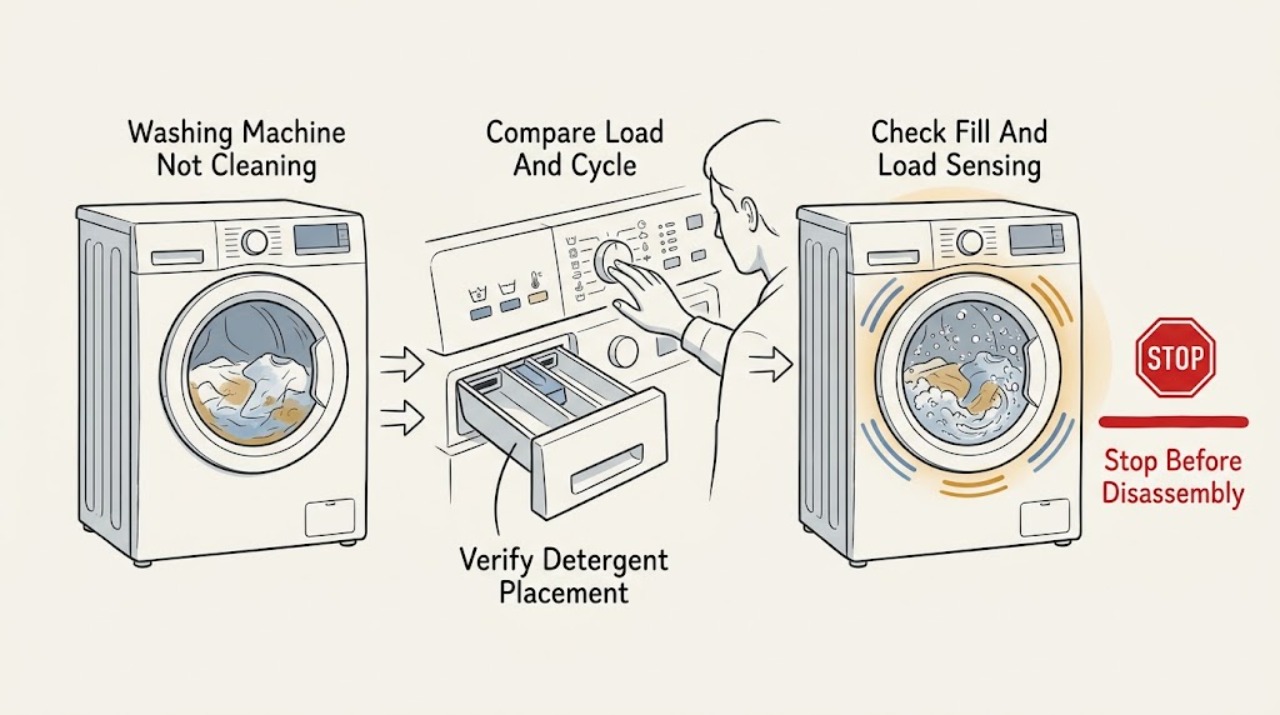
When a Frigidaire washing machine leaves clothes dirty, first check whether the load, cycle, detergent, water level, or tub condition matches the model's instructions. Use the cycle and options intended for the fabric and soil, avoid overloading, use the recommended high-efficiency detergent without exceeding the dispenser line, and place detergent packs directly in the drum when the guide requires it. Make sure laundry is in the tub before the cycle begins, especially on high-efficiency laundry centers whose sensors set water and agitation for the load. Run the model's Tub Clean or Clean Washer cycle when residue is present. If the washer does not fill, agitate, drain, or rinse correctly, or cleaning remains poor after these checks, stop repeated testing and arrange qualified service.
Work through in order
Diagnostic checks
Use only checks that match the exact appliance or system and its official guide.
-
Check 1
Review one unsatisfactory load: note fabric type, soil level, load size, whether items were sorted, and the selected cycle, temperature, and options. Compare those choices with the exact Frigidaire owner's manual or cycle guide; do not use a short or gentle cycle as a substitute for a documented heavy-soil setting.
Expected result: The load is tightly packed, mixed in a way the manual discourages, heavily soiled but assigned a light cycle, or the cycle and load match the model guidance.
Next step: Reduce or sort the load and select the documented cycle for the fabric and soil, then compare one similar load. If cleaning remains poor with the correct cycle, continue to the detergent and fill checks.
Why this matters
Why: Frigidaire says cycle descriptions, options, and stain-removal suggestions are model-specific and should be taken from the owner's manual. A mismatch can explain poor cleaning without a failed component; a correctly selected cycle with poor results points to detergent, water, tub, or mechanical checks.
-
Check 2
Check the detergent label and the dispenser or drum placement against the Frigidaire detergent guide and the model manual. Use high-efficiency detergent where required, keep liquid or powder below the main-wash maximum line, and place a detergent pack directly in the drum before laundry when that guide applies; do not put a pack in a dispenser that the guide says it can clog.
Expected result: The detergent is not high-efficiency where required, exceeds the marked maximum, is in the wrong compartment, a pack is in the dispenser, or the placement and amount match the model instructions.
Next step: Correct the detergent type, amount, and location using the exact manual, then run one comparable load. If residue or poor cleaning remains with correct detergent use, inspect the tub and water delivery rather than increasing the dose.
Why this matters
Why: Frigidaire says high-efficiency detergent reduces suds and supports cleaning, that liquid or powder belongs in the main-wash cup below the maximum line, and that detergent packs can clog a dispenser when placed there. Excess or misplaced detergent can leave residue and does not compensate for an unsuitable cycle or load.
-
Check 3
Observe the beginning of a normal cycle from outside the washer: confirm that the laundry was placed in the tub before starting and that water enters as the model describes. Do not open a locked door or reach into moving parts; do not judge a high-efficiency laundry center solely by whether water covers the clothes.
Expected result: The laundry was loaded after the cycle began, the visible water level looks low but the washer senses and agitates normally, or the washer does not fill, barely wets the load, or fails to move to agitation or rinse.
Next step: For a sensor-controlled model, load everything before starting and compare one correctly loaded cycle. If fill, agitation, or rinse behavior is abnormal, stop repeated cycles and use the model troubleshooting instructions or arrange service.
Why this matters
Why: Frigidaire says sensor-controlled high-efficiency laundry centers may show a lower water level and use the load to tune water and agitation. Loading at the wrong time can affect that decision, while no fill or failed agitation indicates a separate operating fault.
-
Check 4
Inspect the accessible tub, lid opening, dispenser area, and visible seals for residue or buildup after the washer is idle. If the model provides Tub Clean, System Clean, or Clean Washer, run that documented maintenance cycle without laundry and follow its manual for the required cleaner; never mix cleaning chemicals or use an abrasive cleaner on accessible surfaces.
Expected result: Residue or odor is visible, the model has a documented cleaning cycle, or the tub and dispenser are clean but clothes still emerge dirty or coated.
Next step: Remove loose accessible residue as the manual permits and run the documented cleaning cycle. If residue returns quickly or cleaning remains poor, do not disassemble the washer; record the result for qualified service.
Why this matters
Why: Frigidaire says residue can remain in the tub after heavily soiled loads and that many models have a tub-cleaning cycle, with frequency depending on the model. A clean tub with persistent poor results makes load, detergent, fill, agitation, drain, or service causes more likely.
-
Check 5
After one correctly loaded cycle with the documented cycle and detergent, check whether the washer fills, agitates or tumbles, drains, and rinses without stopping, leaking, or leaving detergent on the fabric. Record any display message and model information; do not open panels, bypass a lid or door lock, or make live electrical measurements.
Expected result: The cycle completes normally and cleaning improves, detergent remains after a correct setup, the tub does not agitate or tumble, water does not drain or rinse, or a leak, smoke, burning odor, damaged cord, or repeated breaker event occurs.
Next step: Keep the corrected settings if they resolve the problem. Otherwise stop using the washer, protect the area from water, disconnect power and water only when safe, and arrange qualified service with the recorded cycle behavior.
Why this matters
Why: A setup correction that restores cleaning points away from a failed part. Persistent residue with correct detergent can reflect inadequate water action or rinsing; failure to fill, move, drain, or complete the cycle requires internal diagnosis rather than more detergent or repeated loads.
Use your observations
Decision map
Find the observation that best matches what you see, then follow the next safe action.
-
PATH 01Next step
What you see
The load was too large or the cycle and options did not match the fabric or soil.
Do this next
Reduce or sort the load and use the exact model manual's documented cycle and options for that fabric and soil, then compare one similar load.
-
PATH 02Next step
What you see
Detergent is non-high-efficiency where required, over the marked maximum, in the wrong compartment, or a detergent pack is in the dispenser.
Do this next
Correct detergent type, amount, and placement using the model guide, then run one comparable load. Do not keep increasing detergent to compensate for poor cleaning.
-
PATH 03Next step
What you see
A high-efficiency laundry center shows less visible water but senses and agitates the load normally.
Do this next
Treat the lower visible level as potentially normal, make sure laundry was added before starting, and evaluate the finished result rather than water height alone.
-
PATH 04Next step
What you see
The tub, dispenser, or lid area has residue or odor and the model provides a Tub Clean, System Clean, or Clean Washer cycle.
Do this next
Follow the exact maintenance-cycle instructions with an empty tub and clean only accessible surfaces as the manual permits. Request service if buildup or poor cleaning quickly returns.
-
PATH 05Next step
What you see
Correct load, cycle, detergent, and tub-care checks do not improve cleaning, or the washer fails to fill, agitate, tumble, drain, or rinse normally.
Do this next
Stop repeated testing and arrange qualified service with the model information, selected cycle, detergent details, fill behavior, and result from the comparable load.
-
PATH 06Next step
What you see
There is a water leak near electrical parts, smoke, burning odor, a damaged cord or wiring, repeated breaker operation, or unsafe movement.
Do this next
Stop immediately, disconnect power and water only when safe, keep clear of the appliance, and arrange qualified service. Do not remove panels or make live electrical measurements.
Helpful context
Understand the symptom
Poor cleaning is often a setup mismatch
A washer can complete a cycle while still leaving soil or residue when the load is too large, the selected cycle does not match the fabric or soil, the detergent is used in the wrong place or amount, or the machine's tub needs cleaning. Frigidaire's performance guidance points owners to the exact manual for cycle settings, options, stain suggestions, and model-specific care, so the first diagnosis is to compare the result with that model's instructions rather than add more detergent blindly.
A low-looking water level is not automatically a fault
Some Frigidaire high-efficiency laundry centers intentionally use less visible water and sense the load to set water and agitation. Add laundry before starting so the sensing decision includes the load. If the washer is not filling, leaves detergent undissolved, or fails to complete agitation or rinsing, that is different from an efficient low water level and needs its own diagnosis.
Clean the washer without creating a new problem
Remove finished laundry promptly and follow the model's Tub Clean, System Clean, or Clean Washer procedure when available. Use only the detergent and cleaning instructions specified for the appliance. Stop and arrange service for a leak, smoke, burning odor, damaged cord, repeated breaker operation, or a machine that cannot fill, agitate, drain, or spin safely. Do not remove panels or make live electrical measurements.
Only after diagnosis
Potential parts
- water inlet valve
Consider this category only if qualified service confirms inadequate or abnormal water entry after the correct cycle, load-before-start procedure, and supply checks are completed.
Confirm the complete Frigidaire model information and authorized fitment before ordering or installing any valve component. - wash plate or agitator assembly
Consider this category only if qualified service confirms insufficient agitation or tumbling with correct water entry and cycle selection, rather than a load or detergent mismatch.
Agitation components differ by model and washer design; verify the full model information and installation procedure before replacement. - drain pump
Consider this category only if qualified service links detergent residue or poor cleaning to incomplete draining or rinsing after the hose and accessible drain path are checked.
Confirm model-specific fitment and have a qualified technician handle pump diagnosis or replacement; do not open the cabinet while energized.
When checks do not resolve it
Need a professional?
Arrange qualified service when a Frigidaire washing machine still cleans poorly after a model-appropriate load, cycle, detergent, fill, and tub-care check, or when it cannot fill, agitate, tumble, drain, or rinse normally. Stop immediately for a leak near electrical parts, smoke, burning odor, damaged cord or wiring, repeated breaker operation, or unsafe movement. Disconnect power and water only when safe; do not remove panels, bypass a lid or door lock, or make live electrical measurements.
Common questions
FAQ
Why are my Frigidaire washer clothes still dirty after a cycle?
Check load size, soil-appropriate cycle, detergent type and placement, water entry, and tub condition. Frigidaire directs owners to the exact manual for cycle and stain guidance; persistent poor cleaning after those checks needs qualified service.
Can too much detergent make a Frigidaire washer clean worse?
Using the wrong detergent or exceeding the dispenser line can contribute to suds or residue. Follow the Frigidaire guide and the model manual for high-efficiency detergent, amount, and placement rather than adding more detergent.
Why does my Frigidaire washer use so little visible water?
Some high-efficiency laundry centers intentionally show a lower water level and sense the load to set water and agitation. Add laundry before starting and judge the completed wash; a failure to fill or agitate is a separate fault.
How can I clean the inside of a Frigidaire washer?
Use the model's Tub Clean, System Clean, or Clean Washer cycle if provided, and follow the exact owner's manual. Clean only accessible surfaces as directed; request service if residue or poor cleaning returns quickly.
Read the exact guide
Official sources
- Laundry Washers - Detergent GuideFrigidaire · Frigidaire high-efficiency detergent, detergent amount, dispenser, detergent-pack, bleach, and softener placement
- Top Load Washers - How do I care and clean my Frigidaire Top Load washer?Frigidaire · Frigidaire washer tub residue, cleaning-cycle, accessible care, and model-manual maintenance guidance
- How can I improve the washing performance of my Frigidaire Top Load washer?Frigidaire · Frigidaire washer cycle, option, stain, and model-manual washing-performance guidance
- Laundry Centers - Why does the water level seem low in my Laundry Center Washer?Frigidaire · Frigidaire high-efficiency laundry-center water-level sensing and load-before-start guidance
Community feedback
Share a repair observation
Share a plain-text repair observation. Accepted observations are published automatically; this page may take a moment to update.