
On this page
Start here
Quick answer
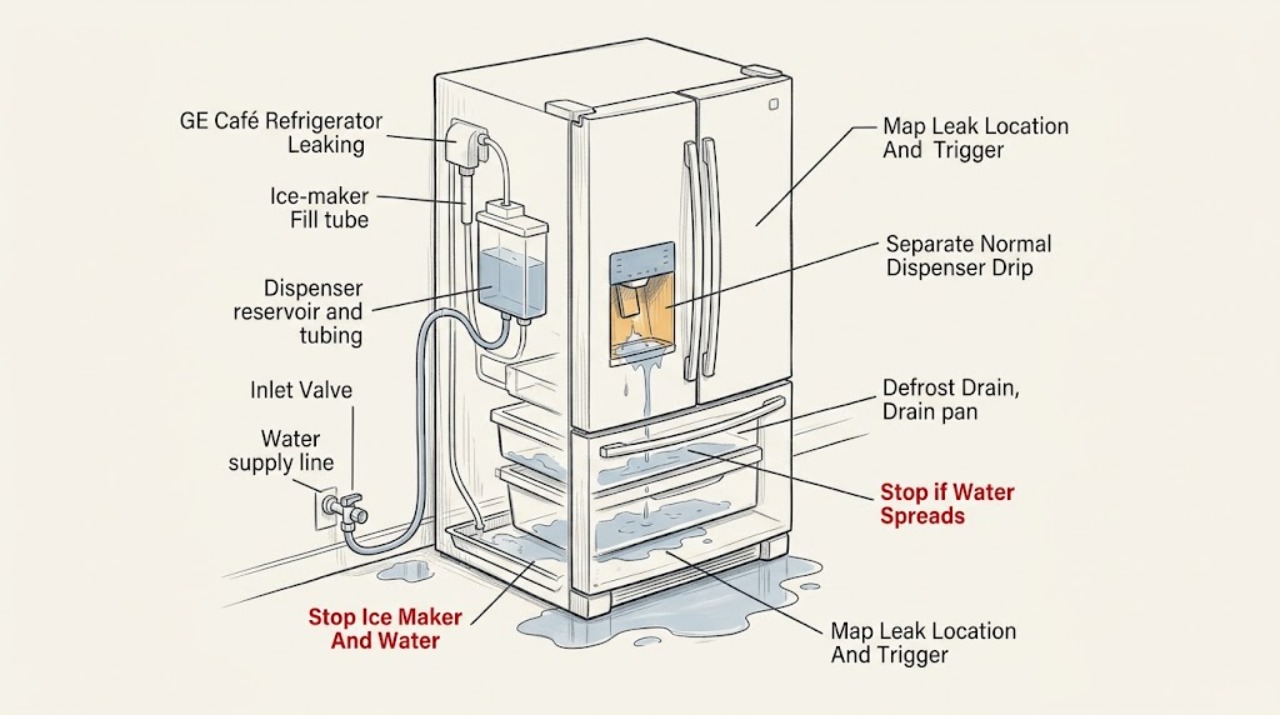
Trace the water to its highest visible point and note whether it appears after dispensing, ice making, defrost, or door opening. A few drops from a dispenser immediately after use can be normal, but dripping that continues long after the glass is removed needs service. For a floor puddle, GE says to check the accessible household water line, the refrigerator water valve, and the plastic fill line to the ice maker; if a line is split or the valve is flooding, turn off the ice maker first, shut off the refrigerator water supply if safely accessible, and arrange appliance or plumbing service. Ice or water under the freezer or fresh-food drawers can indicate a clogged defrost drain, while water under the fresh-food drawers can indicate a leaking reservoir or tube. The exact Café structure matters: GE's verified CWE19SP2NS1 Café model is a French-door bottom-freezer refrigerator, so do not apply side-by-side drain steps unless the exact manual supports them. Water and electricity are a hazard together; stop using the appliance and disconnect power from a dry, safe position before maintenance or cleaning, and stop immediately for water near electrical parts, flooding, a damaged cord, smoke, sparking, or a hot cabinet. Do not open sealed panels, work on an energized appliance, disconnect pressurized tubing, or replace a valve, reservoir, drain, or control without qualified diagnosis.
Before you begin
Safety first
- The user may identify the model, trace water from a dry safe position, wipe an accessible drip tray, turn off the ice maker, close a safely accessible water shutoff, and follow an exact model manual. Cabinet removal, pressurized tubing work, water-valve or reservoir replacement, hidden drain access, electrical testing, wiring work, and sealed-system work belong to qualified service.
Work through in order
Diagnostic checks
Use only checks that match the exact appliance or system and its official guide.
-
Check 1
From a dry, safe position, map the highest visible wet point and record whether water appears on the floor, under fresh-food drawers, under the freezer, in the ice bucket, at the dispenser, or behind the appliance. Note whether it follows water dispensing, ice making, defrost, or door opening, and record the exact GE Café model.
Expected result: Water is only a few drops after dispensing, water returns at a recurring cycle, ice is present under a compartment, the ice maker is flooding, or a line or valve is visibly wet.
Next step: Continue to the matching branch and use the exact model manual. If water is near electrical parts, flooding, or a cord is hot or damaged, stop using the refrigerator and isolate power only from a dry safe position.
Stop if: Do not pull a built-in unit, remove panels, or reach behind wet electrical areas.
Why this matters
Why: Location and timing separate normal dispenser residual water from a dispenser, ice-maker, fill-line, reservoir, water-valve, or defrost-drain branch. The model and French-door/bottom-freezer architecture determine which drain and access instructions apply.
-
Check 2
If the water is at the dispenser, wipe the accessible drip tray or surface and observe one ordinary dispensing event without removing panels. Record whether the drops stop promptly after the glass is removed or continue long afterward.
Expected result: Only a few immediate drops appear and stop, the tray is full or wet, water continues to drip, or water appears below the dispenser or under drawers.
Next step: Keep the tray clean and dry if the drops stop promptly. Arrange service for continuing drips, cabinet wetness, or water under drawers; do not disassemble the dispenser.
Stop if: Do not remove dispenser panels, probe the nozzle, or work on wet electrical controls.
Why this matters
Why: GE says a few immediate drops can result from residual pressure and condensation. Continued dripping or water below the dispenser points to a service branch rather than normal residual water.
-
Check 3
If the ice maker is leaking into the bin or onto the floor, turn the ice maker off using the exact model's documented control. If flooding continues, close the refrigerator water shutoff only when it is safely accessible and the line is not under an unsafe condition.
Expected result: The leak stops when the ice maker and water supply are off, flooding continues with the ice maker off, or the visible leak is from a house line, appliance valve, or fill line.
Next step: Keep the ice maker and water supply off until the source is repaired. Arrange appliance service or plumbing help based on the highest visible wet point and provide the model and leak timing.
Stop if: Do not tighten or disconnect pressurized fittings, remove the ice maker, or touch wet electrical parts.
Why this matters
Why: Stopping the flow supports an ice-maker fill, water-valve, or fill-line branch. Continued flooding with the ice maker off suggests a valve or plumbing fault; a split house line belongs to a plumber, while an appliance valve or fill line needs appliance service.
-
Check 4
From outside the cabinet, inspect only accessible portions of the household water line, the connection at the refrigerator, and any visible plastic fill line for a split, loose connection, or active wetness. Do not move a built-in Café refrigerator or remove a rear cover to reach a fitting.
Expected result: The house line is split or loose, the appliance water valve area is wet, the plastic fill line is wet or split, or all accessible lines are dry.
Next step: Close the accessible water shutoff and arrange a plumber for the house line or appliance service for the valve/fill line. Do not select a replacement line or valve from appearance alone.
Stop if: Do not pull a heavy refrigerator, loosen a pressurized fitting, or work where water can contact power, controls, or wiring.
Why this matters
Why: A split house line is a plumbing problem. Wetness at the appliance valve or ice-maker fill line makes an appliance water-path fault more likely; dry accessible lines shift attention to a dispenser reservoir, defrost drain, drain pan, or concealed connection.
-
Check 5
If water or ice is under fresh-food drawers, under the freezer, or on the floor once or twice a day, observe the compartment location and recurrence without removing interior panels. Compare the pattern with the exact Café model manual and do not substitute side-by-side drain procedures for a French-door bottom-freezer model.
Expected result: Ice is under a freezer basket, water is under fresh-food pans, water recurs after defrost, the model manual documents a user-clearing drain, or no drain access is documented.
Next step: Arrange service for a Café French-door/bottom-freezer drain, reservoir, or tubing issue unless the exact manual explicitly provides a safe user procedure. If a documented drain opening exists, follow only that model-specific procedure and stop if it is not visible.
Stop if: Do not remove panels, pour water into an unseen opening, use boiling water, or probe a drain with wire.
Why this matters
Why: GE associates ice under a freezer basket plus a floor puddle with a possible clogged defrost drain and water under fresh-food drawers with a possible reservoir or tubing leak. Built-in and most freestanding models require service for a clogged drain unless the exact manual says otherwise.
-
Check 6
If the source remains unresolved, document the model, leak location, amount and timing, ice-maker and water-supply state, dispenser use, drawer/freezer ice, visible line condition, and any cooling or electrical symptom. Stop using the refrigerator for flooding, water near electrical parts, smoke, sparking, a burning odor, or a hot or damaged cord.
Expected result: The leak stops with the water supply off, continues with water off, returns after defrost, is associated with a dispenser or reservoir, or is accompanied by an electrical or cooling hazard.
Next step: Keep the ice maker and water supply off as appropriate and arrange qualified GE Café appliance service; use a plumber for a leaking household line. Disconnect power only from a dry safe position when water or electrical hazard is present.
Stop if: Do not open the cabinet, live-test, reset a wet appliance, or handle refrigerant or sealed-system components.
Why this matters
Why: A controlled stop can help the technician separate a supply-side leak from an internal drain, reservoir, valve, or ice-maker fault. A hazard is a stop-use condition, not a reason to keep testing or to identify a part from the puddle.
Use your observations
Decision map
Find the observation that best matches what you see, then follow the next safe action.
-
PATH 01Safety boundary
What you see
Only a few drops appear immediately after dispensing and stop promptly, with no water under drawers, inside compartments, or near electrical parts.
Do this next
Wipe the accessible drip tray or surface and monitor. Arrange service if dripping continues long after dispensing or spreads below the dispenser.
Why this path and its safety boundary
Why it matters: GE describes a few immediate dispenser drops as possible residual pressure or condensation rather than a continuing leak.
Safety stop: Do not disassemble the dispenser or work near wet controls.
-
PATH 02Safety boundary
What you see
Water appears at the ice maker, fill line, valve, or floor and changes when the ice maker or water supply is turned off.
Do this next
Turn off the ice maker first and then the accessible refrigerator water shutoff. Use a plumber for a split house line and qualified appliance service for the valve, fill line, or ice maker.
Why this path and its safety boundary
Why it matters: An ice-maker fill, appliance valve, fill tube, or household supply line is more likely than a defrost drain.
Safety stop: Do not disconnect pressurized water fittings, remove the ice maker, or touch wet electrical areas.
-
PATH 03Safety boundary
What you see
Water or ice is under the fresh-food drawers, or the leak becomes apparent when an internal or external dispenser is used.
Do this next
Turn off the water supply if safely accessible and arrange service for the reservoir, tubing, dispenser, or concealed connection. Provide the exact Café model.
Why this path and its safety boundary
Why it matters: GE identifies a water storage tank or tubing leak as a likely branch; it is not corrected by changing temperature settings.
Safety stop: Do not expose or splice tubing, remove liner panels, or operate a wet appliance.
-
PATH 04Safety boundary
What you see
A puddle recurs on the floor with ice under a freezer basket or water under pans, especially after a defrost cycle, and no supply line is visibly wet.
Do this next
For a Café French-door bottom-freezer model, use the exact owner manual or arrange service; do not borrow side-by-side instructions. If the exact manual documents an accessible drain, follow only that procedure and stop if access is not shown.
Why this path and its safety boundary
Why it matters: A clogged or overflowing defrost drain is more likely. GE says drain access differs by style: built-in and most freestanding models generally need service, while some side-by-side models have a manual procedure.
Safety stop: Do not remove panels, probe hidden drains, pour boiling water, or force a drain opening.
-
PATH 05Safety boundary
What you see
Water continues with the supply off, flooding reaches electrical areas, a cord is hot or damaged, smoke or sparking occurs, or the leak remains unexplained after safe external checks.
Do this next
Stop using the refrigerator, keep people away from the wet area, isolate power only from a dry safe position, and arrange qualified appliance service or plumbing help as appropriate.
Why this path and its safety boundary
Why it matters: The appliance is not in a safe user-diagnosis state; a concealed water path, valve, drain, pan, wiring, or other internal fault is possible.
Safety stop: Do not reset power on a wet appliance, open panels, live-test, or attempt an internal repair.
Helpful context
Understand the symptom
Trace the leak before moving the refrigerator
Dry visible water only if you can do so without reaching near electrical parts, then look for the highest wet point. Record whether water appears at the front, under fresh-food drawers, beneath the freezer, inside the ice bucket, at the dispenser, or behind the cabinet. Note whether it follows ice making, water dispensing, defrost, or door opening. Café models are not all built the same; the official CWE19SP2NS1 model page is a French-door bottom-freezer example, so use the complete model number and manual before applying an access or drain instruction.
Make the water supply safe
If an ice maker is flooding or a supply line is visibly leaking, turn the ice maker off first, then close the refrigerator's household water shutoff only if it is safely accessible. GE notes that the connection is often under the sink or in another accessible plumbing location. A split household line is a plumbing issue; an appliance valve or fill line needs appliance service. Do not pull a built-in Café refrigerator, loosen a pressurized fitting, or work close to wet electrical components.
Distinguish normal dispenser drips from a leak
A few drops immediately after dispensing can be normal because pressure and temperature changes leave condensation or residual water at the dispenser. Wipe the accessible drip tray if the model has one and observe whether water stops promptly. Water that continues long after the glass is removed, appears under the drawers, or wets the cabinet is not explained by a normal dispenser drip and should be serviced.
Use the correct defrost-drain scope
Water recurring on the floor, ice under the freezer basket, or water under fresh-food pans can indicate a clogged defrost drain. GE says some side-by-side models have a drain opening that can be flushed with hot—not boiling—water, but built-in and most freestanding models require service, and the exact owner manual controls the exception. A Café French-door bottom-freezer refrigerator must not be treated as a side-by-side: do not remove interior panels or pour water into an unseen drain unless the exact manual explicitly supports it.
Treat water under drawers as a tubing branch
GE says water or ice under the fresh-food drawers may come from the water storage tank or tubing. If the model has an accessible water dispenser, note whether the leak changes during an ordinary dispense, but do not remove panels or handle tubing to perform that check. A leak under the drawers, water that returns after dispensing, or a leak with the water supply off requires service rather than a filter or temperature adjustment.
Keep electrical and internal work out of the owner check
Water and electricity do not mix. Disconnect power from a dry, safe position before maintenance or cleaning, and keep the refrigerator out of service for flooding, water near outlets or controls, a damaged or hot cord, smoke, sparking, or a burning smell. A valve, fill tube, reservoir, drain, drain pan, control, or internal harness cannot be identified safely from a puddle alone. Do not open the cabinet, live-test, bypass a water valve, or handle refrigerant or sealed cooling parts.
Only after diagnosis
Potential parts
- refrigerator water inlet valve
Consider this category only after service confirms that the appliance valve leaks, floods, or fails to shut off after the water supply and visible line condition are checked.
Valve fittings and electrical connections vary by Café model; verify the complete model and diagnosis before selecting a component. - ice-maker fill tube or fill-line assembly
Consider this category only when a qualified inspection confirms a split, frozen, loose, or misdirected fill path associated with ice-maker leakage.
French-door, bottom-freezer, and other Café layouts use different routing; do not infer fit from the symptom or a different model. - water reservoir or dispenser tubing
Consider this category only when water under the fresh-food drawers or a dispense-linked leak is traced to the reservoir or internal tubing.
Reservoir presence and tubing layout vary by model; confirm the exact model and service finding before ordering or opening the liner. - defrost drain or drain-pan component
Consider this category only after service confirms a clogged, damaged, or overflowing drain or pan after supply-line and reservoir causes are ruled out.
Drain access differs by French-door, bottom-freezer, side-by-side, and built-in designs; use the exact manual and professional diagnosis.
When checks do not resolve it
Need a professional?
Arrange qualified GE Café appliance service for a continuing dispenser drip, water under fresh-food drawers, a leak from the appliance valve, fill line, reservoir, drain, or pan, flooding that continues after the ice maker and water supply are off, or any issue requiring panels or pressurized tubing access. Use a plumber for a split household water line. Stop using the refrigerator immediately for flooding, water near electrical parts, smoke, sparking, a burning odor, or a hot or damaged cord. Disconnect power only from a dry, safe position and never open panels or work on an energized or pressurized appliance.
Safety scope: The user may identify the model, trace water from a dry safe position, wipe an accessible drip tray, turn off the ice maker, close a safely accessible water shutoff, and follow an exact model manual. Cabinet removal, pressurized tubing work, water-valve or reservoir replacement, hidden drain access, electrical testing, wiring work, and sealed-system work belong to qualified service.
Common questions
FAQ
Why is my GE Café refrigerator leaking water onto the floor?
Trace the wettest point first. GE identifies the household water line, refrigerator water valve, ice-maker fill line, and clogged defrost drain as possible causes. Turn off the ice maker and close the accessible refrigerator water shutoff if a supply-side leak is suspected. A split household line needs plumbing help; a valve, fill line, or drain problem needs appliance service.
Is a few drops from the GE Café dispenser normal?
A few drops immediately after dispensing can be normal from residual pressure and condensation. Wipe the accessible tray and observe whether it stops promptly. Dripping that continues long after the glass is removed, or water below the dispenser or under drawers, needs service.
What should I do if the GE Café ice maker is flooding?
Turn the ice maker off first. If flooding continues, turn off the refrigerator water supply if it is safely accessible. Keep both off and arrange qualified service for an appliance valve, fill tube, or ice-maker fault. Do not disconnect pressurized tubing or work near wet electrical parts.
What does water under the fresh-food drawers mean?
GE says water or ice under the fresh-food drawers may indicate a leaking water storage tank or tubing. If the leak changes when the dispenser is used, turn off the water supply if safely accessible and arrange service; do not remove liner panels or splice internal tubing.
Can I clear the defrost drain on my GE Café refrigerator?
Only if the exact Café model manual documents an accessible user procedure. GE limits its flushing guidance to certain side-by-side models and says built-in and most freestanding models require service. The verified CWE19SP2NS1 Café example is a French-door bottom-freezer refrigerator, so do not transfer side-by-side drain steps to it.
Read the exact guide
Official sources
- Refrigerator - Dripping or Leaking Water from DispenserGE Appliances · GE refrigerators with internal or external water dispensers
- Refrigerator - Icemaker Leaking or Dripping WaterGE Appliances · GE refrigerators equipped with an automatic ice maker
- Refrigerator - Water Leaking Onto The FloorGE Appliances · GE refrigerators with household water connection, ice maker, or dispenser
- Refrigerator - Water on FloorGE Appliances · GE refrigerators; drain access depends on side-by-side, bottom-freezer, top-freezer, freestanding, or built-in design
- User Manual & Care for CWE19SP2NS1GE Appliances · GE Café CWE19SP2NS1 18.6 Cu. Ft. counter-depth French-door refrigerator; use as model-structure evidence and defer all controls and access to the exact model
- Refrigerator - Water Under the Fresh Food DrawersGE Appliances · GE refrigerators with a water reservoir or tubing behind fresh-food drawers
- Side-by-Side Refrigerator - Water on Floor, Repairing a Clogged Defrost DrainGE Appliances · GE side-by-side refrigerators with a documented accessible defrost-drain opening; not a universal instruction for Café French-door models
Community feedback
Share a repair observation
Share a plain-text repair observation. Accepted observations are published automatically; this page may take a moment to update.