
On this page
Start here
Quick answer
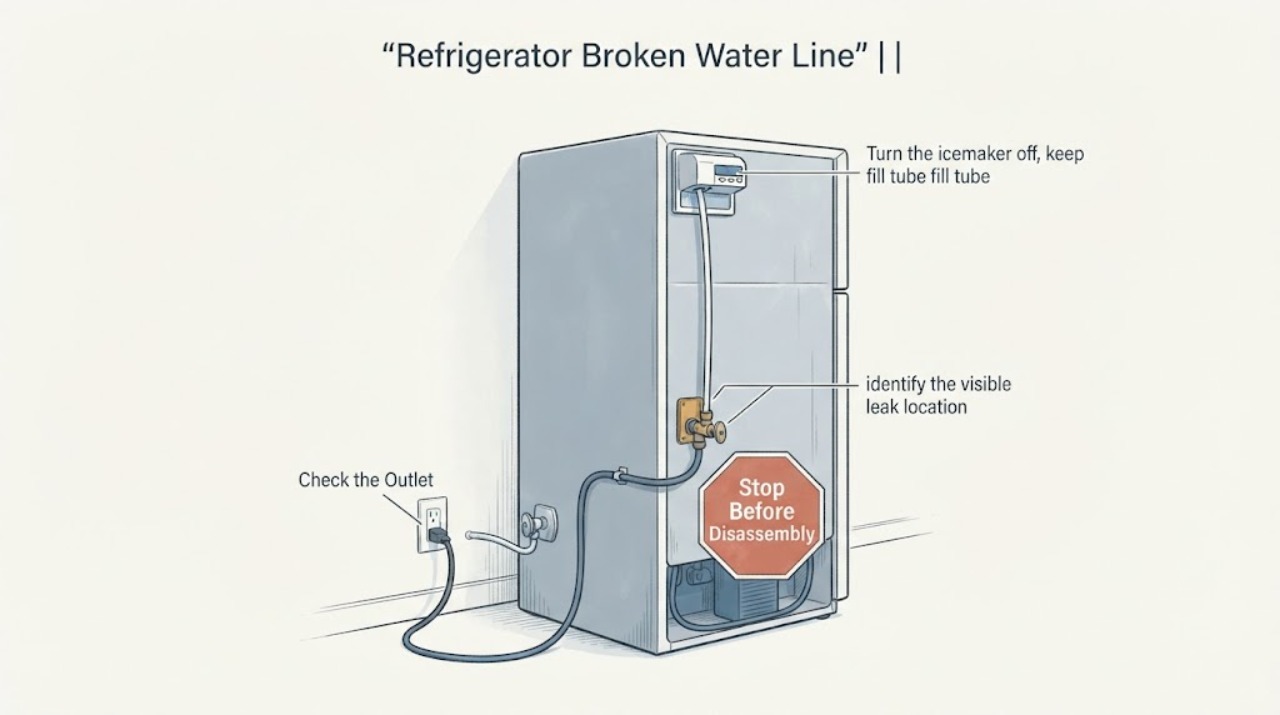
Treat a broken GE refrigerator water line as an active water and electrical safety problem. Turn the icemaker off, unplug the refrigerator only from a dry and safe position, and close the refrigerator's cold-water shut-off valve before touching a connection. GE says the shut-off is commonly under the sink, in a basement, crawl space, or a cabinet next to the refrigerator; its support guidance separates a split household copper or plastic line from a leaking refrigerator valve or internal fill line. Do not reconnect, cut, splice, clamp, or test a pressurized line. If the damaged line is the household plumbing line, contact a plumber; if the leak is at the refrigerator valve or fill line, arrange GE/Bodewell service. Protect the floor and keep the refrigerator unplugged if water is near the outlet or cord.
Work through in order
Diagnostic checks
Use only checks that match the exact appliance or system and its official guide.
-
Check 1
Turn the icemaker off, keep the refrigerator and dispenser from calling for water, and close the dedicated refrigerator water shut-off valve clockwise.
Expected result: Water flow stops, slows but continues, or the shut-off cannot be located or operated safely.
Next step: Keep the water isolated. If flow continues or the valve is inaccessible, leave the area dry and arrange a plumber or qualified service rather than opening a pressurized connection.
Why this matters
Why: A stopped leak indicates the refrigerator supply has been isolated; continuing flow suggests another upstream valve or household plumbing source, while an inaccessible valve is a service/plumbing boundary.
-
Check 2
From a dry, safe position, disconnect refrigerator power before maintenance; if the floor, cord, plug, or outlet is wet, do not touch the plug and keep clear until qualified help can isolate power safely.
Expected result: The electrical connection is dry and reachable, or water is near the cord, outlet, or appliance electrical area.
Next step: Unplug only when it can be done without contact with water. Otherwise keep clear, isolate power through a safe qualified route, and arrange service or electrical help.
Why this matters
Why: GE's guidance calls for unplugging before maintenance, but a wet electrical area creates a shock hazard that cannot be solved by handling the plug.
-
Check 3
With water isolated and power safe, identify the visible leak location without loosening any fitting: follow the line from the household cold-water connection to the rear refrigerator valve and note whether the damage is a split, loose connection, valve leak, or appliance-side fill-line leak.
Expected result: The split is in the household copper/plastic line, at the rear refrigerator connection or valve, or in the plastic line running toward the icemaker; the source remains hidden.
Next step: Photograph the isolated source and provide the exact model and region to the appropriate plumber or GE/Bodewell service. Do not remove an access cover or test the line under pressure.
Why this matters
Why: GE routes a household-line split to a local plumber and treats a leaking refrigerator valve or fill line as an appliance service issue; a hidden source is not safe to infer.
-
Check 4
Protect the floor and nearby cabinets with absorbent material from a dry position, and keep the refrigerator's icemaker and dispenser unused while the line remains isolated.
Expected result: Water continues to pool, the leak has stopped, or water has reached an electrical area or food-storage compartment.
Next step: Do not restart or repeatedly test the refrigerator. Keep people away from wet electrical areas and arrange qualified service; protect or relocate food if cooling is interrupted.
Why this matters
Why: Containment reduces secondary damage, but standing water or water near electrical parts changes this from a routine line question to a safety/service event.
-
Check 5
Before service, record the full model and serial information, purchase region, whether the refrigerator has an icemaker/dispenser, the exact leak location, and whether closing the shut-off stopped it.
Expected result: The source and region are documented; or the model/source cannot be identified.
Next step: Use the exact model documentation and send the notes/photos to GE/Bodewell or a local plumber. If identity remains uncertain, keep water and power isolated until a professional identifies the line.
Why this matters
Why: Water-line routing and the service owner depend on the appliance configuration and whether the damaged section belongs to the building plumbing or refrigerator.
Use your observations
Decision map
Find the observation that best matches what you see, then follow the next safe action.
-
PATH 01Next step
What you see
The leak stops after the refrigerator shut-off valve is closed, and the visible split is in the household copper or plastic line before the refrigerator.
Do this next
Leave the refrigerator water isolated and contact a local plumber. Do not cut, splice, or reopen the line under pressure.
Why this path and its safety boundary
Why it matters: GE identifies a line from the house plumbing to the refrigerator as a plumbing issue when it is loose or split.
-
PATH 02Next step
What you see
The leak is at the refrigerator water valve or the plastic fill line leading from the valve toward the icemaker.
Do this next
Keep the water off and arrange GE/Bodewell service. Do not remove the valve, access cover, or fill line or pressurize the connection to retest it.
Why this path and its safety boundary
Why it matters: This is on the appliance side of the water system; GE directs a leaking valve or fill-line condition to appliance service after shutting off water.
-
PATH 03Next step
What you see
Water continues after the refrigerator valve is closed, the shut-off cannot be found, or the source is hidden behind a wall, cabinet, or wet electrical area.
Do this next
Keep clear, do not move or dismantle the refrigerator, and arrange a plumber/electrician or qualified appliance service to isolate the supply safely.
Why this path and its safety boundary
Why it matters: The visible appliance checks do not establish a safe isolated line, and the remaining source may be household plumbing or an electrical hazard.
-
PATH 04Next step
What you see
The line is isolated and dry, but the refrigerator has lost cooling, food is warming, or the cord/outlet was exposed to water.
Do this next
Keep power isolated when safe, move perishable food to a suitable cooler or working refrigerator, and arrange qualified service before using the appliance again.
Why this path and its safety boundary
Why it matters: The line issue now includes food-safety or electrical risk; repeated restart testing is not a safe diagnostic.
Helpful context
Understand the symptom
Isolate water before diagnosing the line
A split supply line can continue leaking even when the refrigerator is not dispensing water. GE says to turn off the icemaker, locate the dedicated refrigerator shut-off, and close it before addressing a leak. The shut-off is commonly near the cold-water connection under the sink, in a basement, crawl space, or an adjacent cabinet. Do not reach through standing water or touch a wet electrical connection.
Separate the house line from the refrigerator line
GE's support guidance distinguishes the copper or plastic water line running from the house to the refrigerator, the rear refrigerator water valve, and the plastic fill line leading from the valve toward the icemaker. A split line at the house-plumbing side is a plumbing repair; a leaking valve or appliance-side fill line is an appliance service issue. The visible location can route the call, but it does not authorize a repair under pressure.
Do not substitute tubing or reopen the supply casually
GE says the refrigerator line is under pressure and recommends its approved SmartConnect tubing or 1/4-inch copper tubing, with the correct fittings. It warns that other plastic tubing can crack or rupture. Without the exact model and a dry, isolated work area, do not cut, splice, clamp, reconnect, or pressurize a damaged line to see whether it holds.
When checks do not resolve it
Need a professional?
Arrange a local plumber for a split household supply line and GE/Bodewell service for a leaking refrigerator valve, appliance-side fill line, hidden leak, or any repair requiring an access cover. Use electrical help if water reached the cord, outlet, or electrical area. Do not cut, splice, clamp, reconnect, or test a pressurized line, and do not restart the refrigerator while water or electrical hazards remain.
Common questions
FAQ
Where is the GE refrigerator water shut-off valve?
GE says it is commonly under the kitchen sink, in a basement, crawl space, or cabinet next to the refrigerator, on the cold-water supply line. Turn the icemaker off first, then close the dedicated shut-off clockwise if it can be reached safely.
Should I repair or splice a broken refrigerator water line myself?
Do not repair a pressurized line from generic instructions. GE says the water line is under pressure and warns that unapproved plastic tubing can crack or rupture. Isolate water and have a plumber or qualified appliance service match the line and fittings to the installation and model.
Who should handle a GE refrigerator water leak?
Use a local plumber when the split is in the household supply line before the refrigerator. Use GE/Bodewell appliance service for the refrigerator water valve or appliance-side fill line. Use electrical help when water reached a cord, outlet, or electrical area.
Read the exact guide
Official sources
- Refrigerator - Icemaker Installation TubingGE Appliances · Opened GE Appliances' official installation-tubing guidance. It states that the line is under pressure, identifies approved tubing categories, and warns against other plastic supply lines; it is not used as a universal repair recipe.
- Refrigerator - Water on FloorGE Appliances · Opened GE Appliances' official support page. It gives general refrigerator leak guidance and requires the exact owner manual for model-specific icemaker controls.
- Refrigerator - Locating the Water Line ValveGE Appliances · Opened GE Appliances' official valve-location page. It describes the rear water-line connection and notes that valve position varies by model.
- Refrigerator - Locating Water Supply Shut-Off ValveGE Appliances · Opened GE Appliances' official shut-off-location page. It identifies common shut-off locations and directs the owner to turn off the icemaker before closing the valve.
- Refrigerator - Water Leaking Onto The FloorGE Appliances · Opened GE Appliances' official leak support page. It directs the owner to turn off the icemaker and close the dedicated water valve, then routes a household-line split to a plumber and appliance-side issues to service.
Community feedback
Share a repair observation
Share a plain-text repair observation. Accepted observations are published automatically; this page may take a moment to update.