
GE appliance guidance
GE Refrigerator Repair Guides
Troubleshooting and repair guidance for published GE Refrigerator problems, symptoms, and maintenance questions.
Published GE Refrigerator guides
Choose the guide whose symptom or condition most closely matches what you are seeing.
-
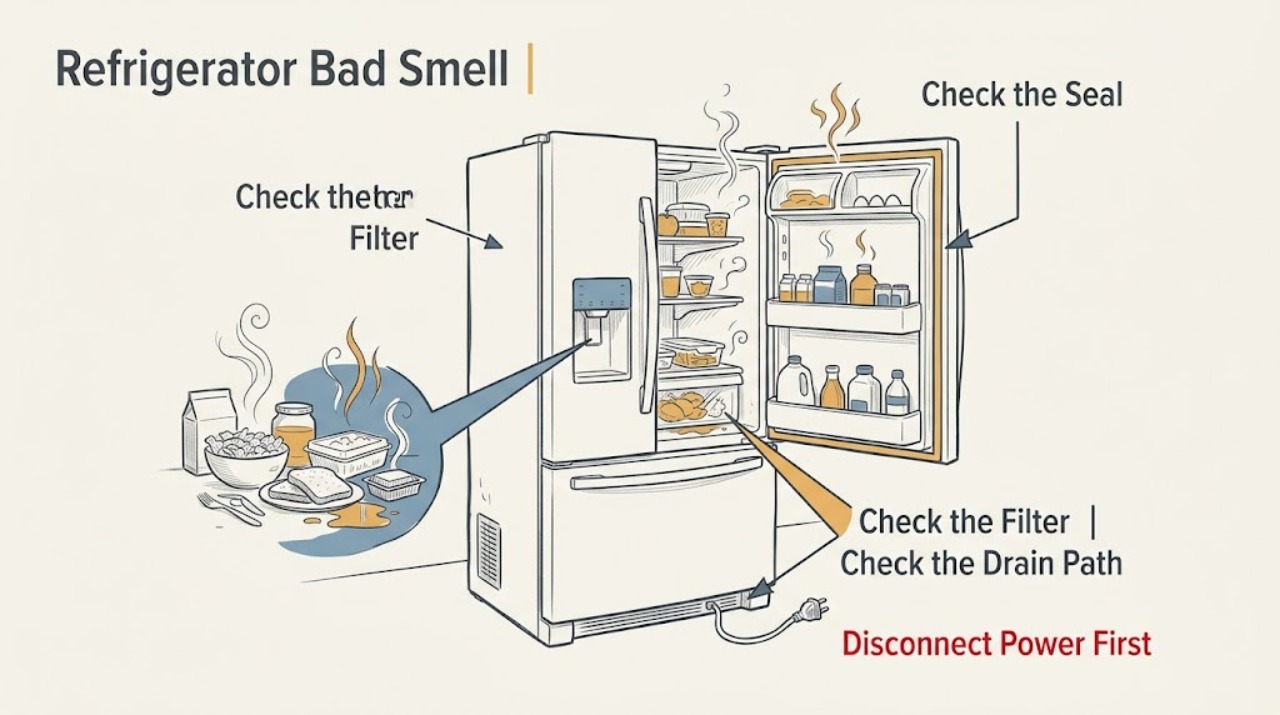
GE Refrigerator Bad Smell: Find the Food, Gasket, Ice, or Drain Source
Start by deciding whether the odor is coming from food or ice, the gasket and interior, a drain or moisture path, or the outside of the appliance. GE says refrigerators do not contain mechanical parts that normally create a food odor, and lists unwrapped or spoiled food, spills, old ice, water quality, and an old water filter as common odor or taste sources.
-
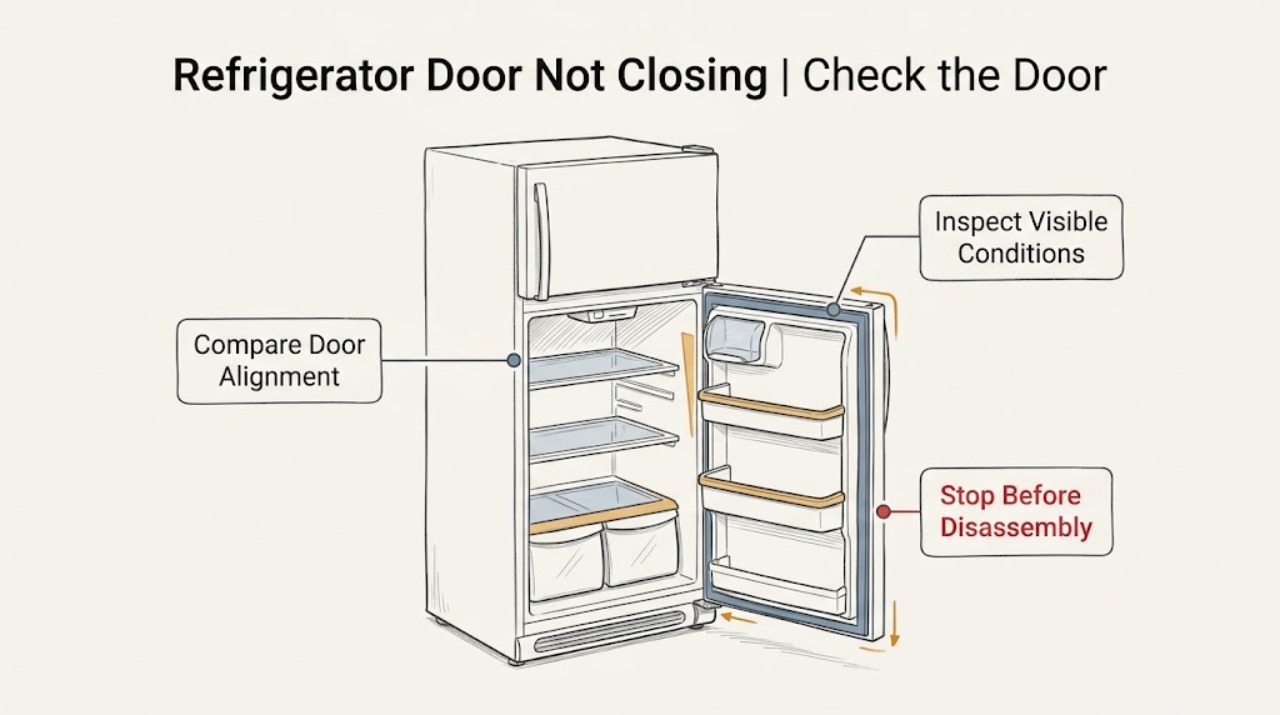
GE Refrigerator Door Not Closing
If a GE refrigerator door will not close, first remove anything physically blocking it: protruding food, an open bin, a heavy door item falling forward, an ice cube, shipping foam, or a freezer basket that is not seated. Then check whether the refrigerator is level, the doors are aligned, and the magnetic gasket touches the cabinet evenly without a tear or section pulled from its groove.
-
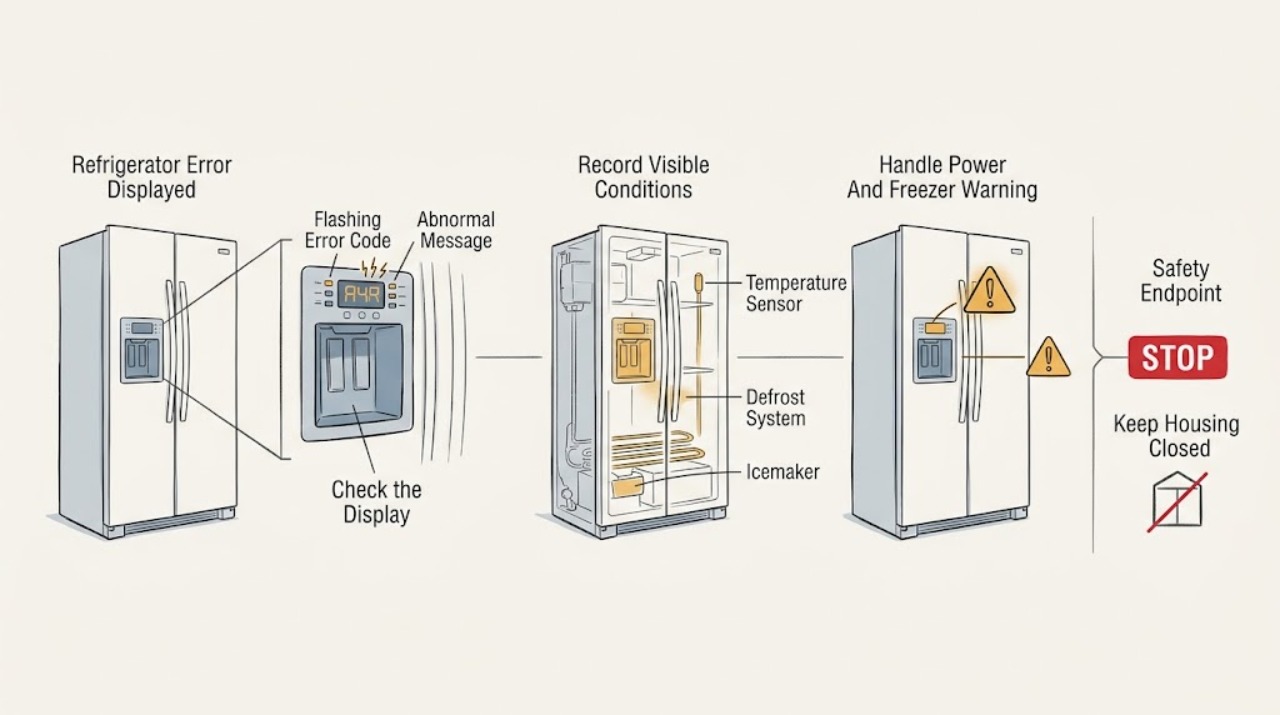
GE Refrigerator Error Displayed: Read the Exact Code and Model
Do not use a universal GE refrigerator error-code chart without first recording the exact model, display characters and whether the code is flashing or accompanied by beeps. GE says its published list contains only common codes for many refrigerators with electronic dispenser controls, not every possible code.
-
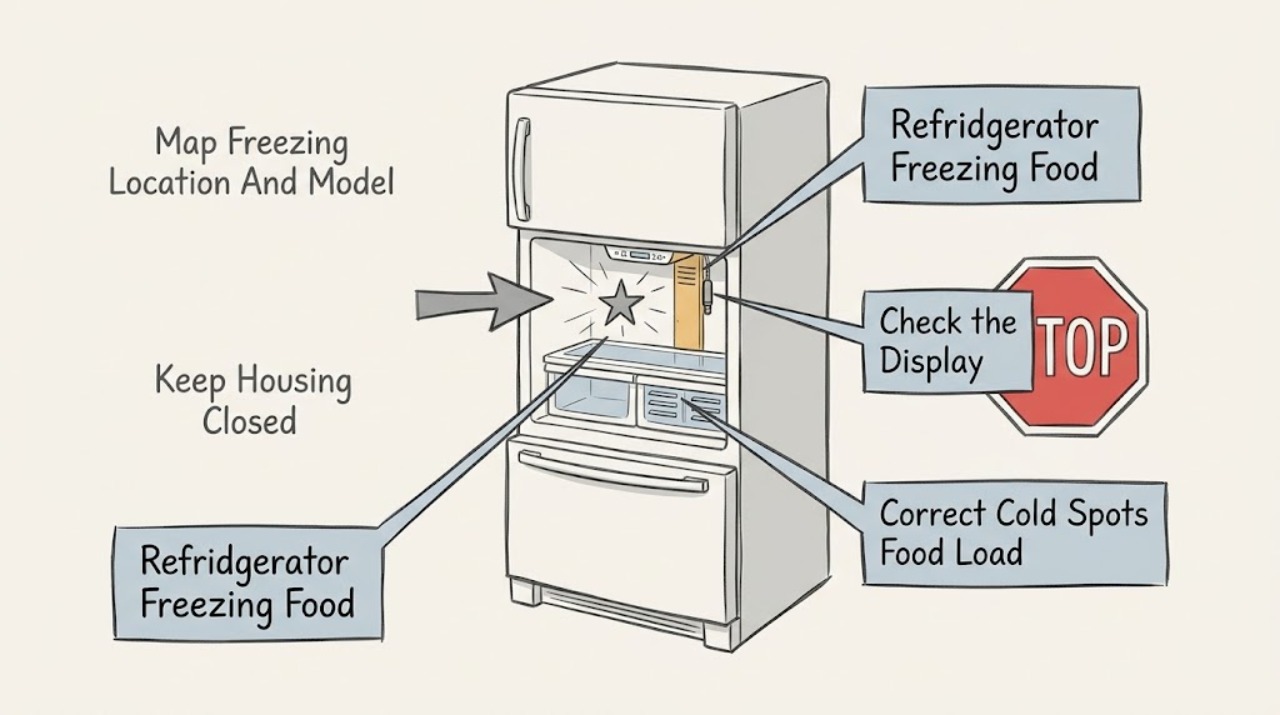
GE Refrigerator Freezing Food: Check Temperature, Airflow, and Cold Spots
First identify where the food freezes and record the GE model and refrigerator style. For a fresh-food compartment, GE's style-specific guidance generally targets about 37–42°F in the fresh-food section and 0–8°F in the freezer, but the exact owner's manual controls.
-
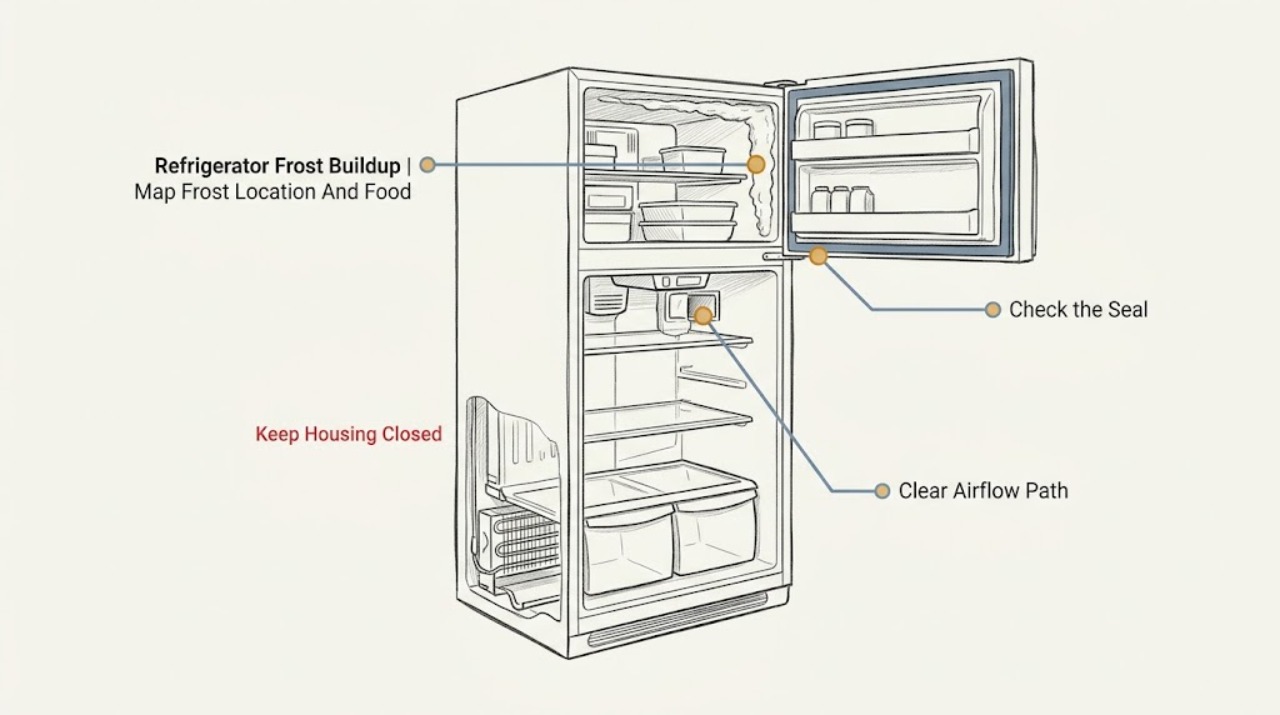
GE Refrigerator Frost Buildup: Find the Air, Door, or Defrost Branch
On a GE frost-free refrigerator, first map the frost: a light film on packages after humid weather or frequent door opening can be an air-intrusion or loading issue, while a growing sheet on the freezer wall, a blocked air duct, ice on the freezer floor, or water below the refrigerator needs a different branch.
-
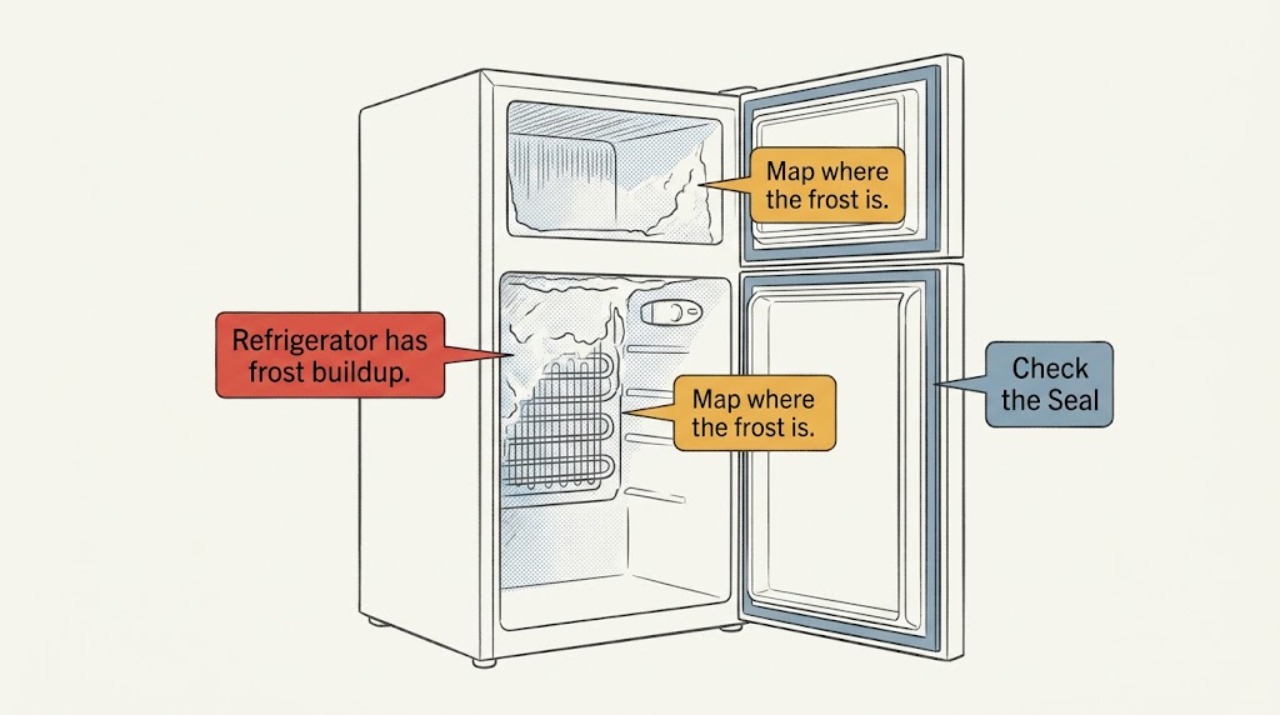
GE refrigerator has frost buildup: What to Check and What to Do Next
Frost in a GE refrigerator most often starts when warm, humid air enters through a door or drawer that is left open, blocked, misaligned, or not sealing; food or packaging against the rear wall can also restrict airflow. GE says ice accumulating on the wall of a frost-free refrigerator is not expected.
-
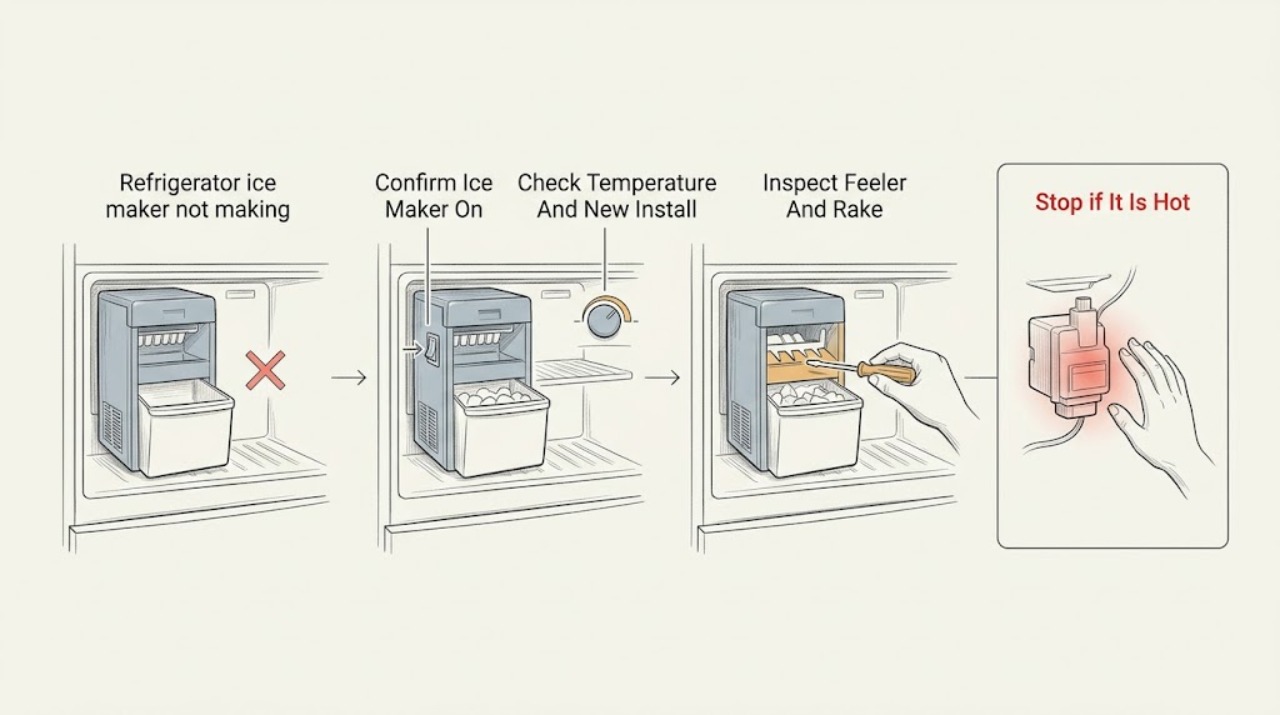
GE refrigerator ice maker not making ice: What to Check and What to Do Next
When a GE refrigerator ice maker stops making ice, first confirm that the ice maker is turned on for the exact model, the feeler arm or paddle can move, the freezer is cold enough for an ice-making cycle, and the water supply and filter are not restricting fill. A stuck rake or clumped ice can stop a cycle, while a frozen fill tube, weak water flow, or a water-valve problem needs service-level diagnosis.
-
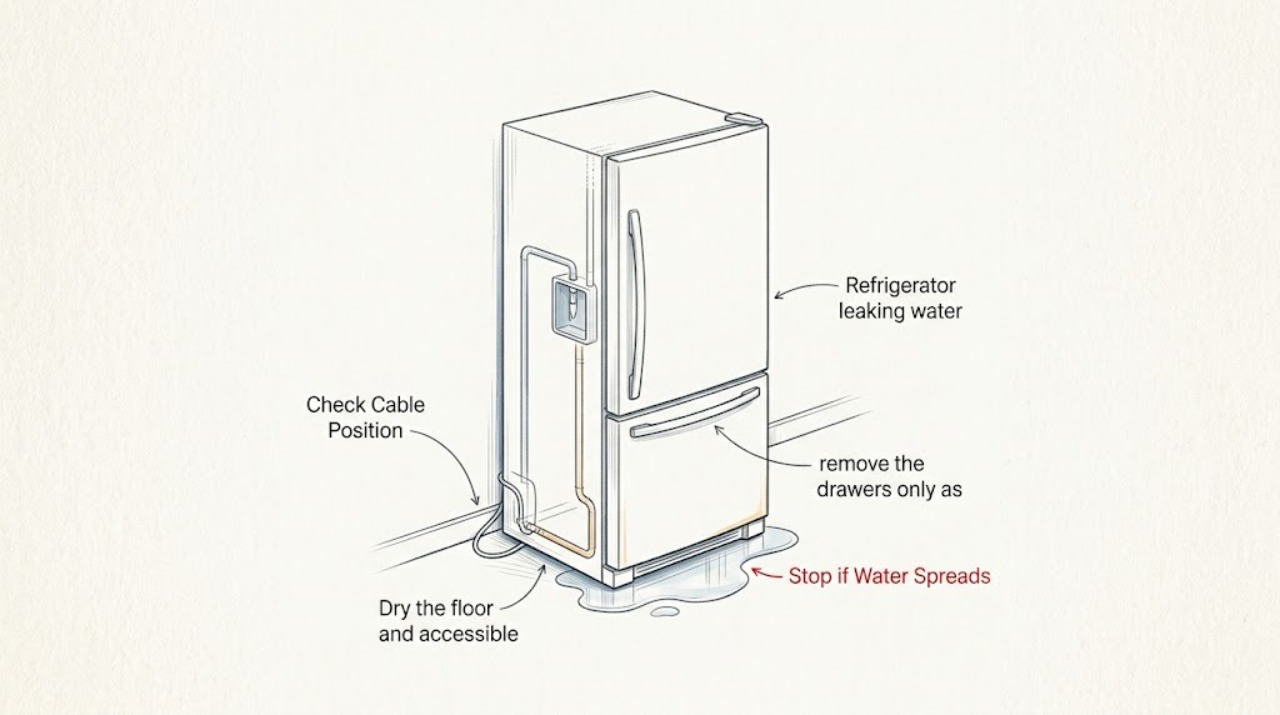
GE refrigerator leaking water: What to Check and What to Do Next
Start by identifying where the water appears: on the floor, under the fresh-food drawers, around the filter, in the ice bucket, or at the rear water connection. Turn off the icemaker and refrigerator water supply before moving a leaking unit or inspecting a loose line.
-
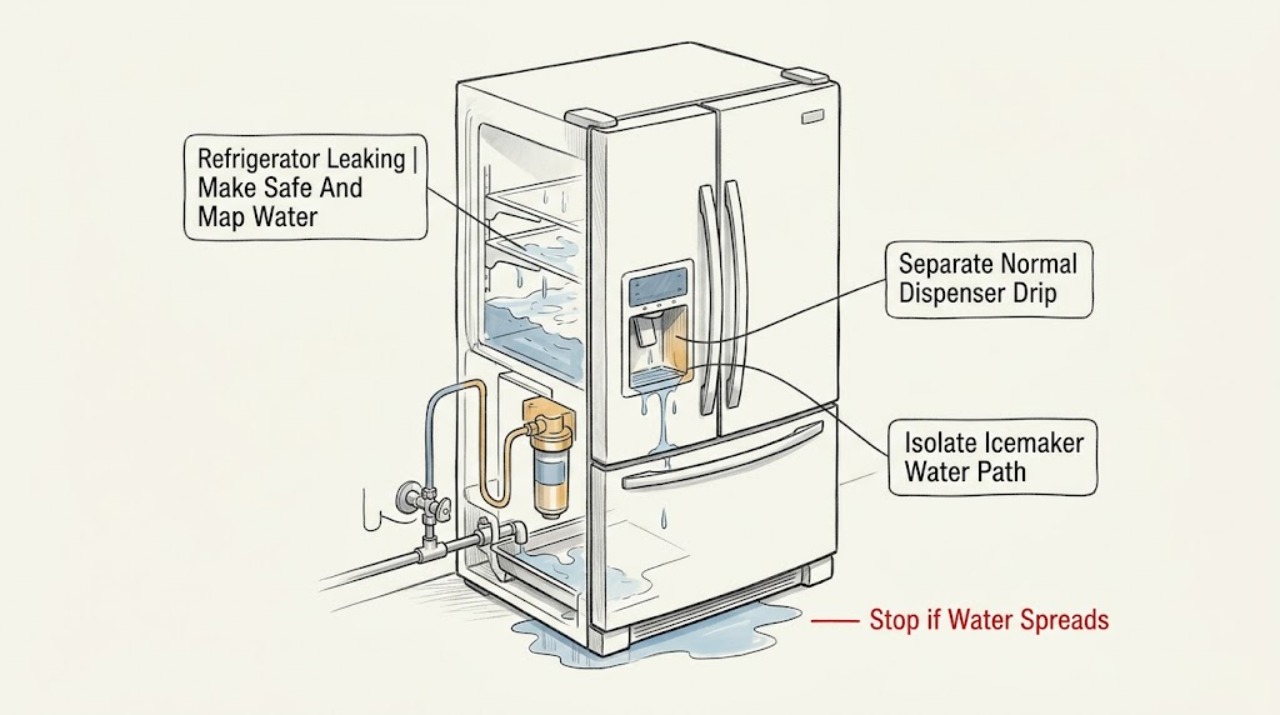
GE Refrigerator Leaking: Trace the Water Before It Reaches the Floor
First dry the visible water and trace where it appears: a few drops at the dispenser immediately after filling a glass can be normal, while water that continues long after dispensing is not. Ice on the freezer floor or under fresh-food vegetable pans points toward a clogged defrost drain, but GE says the owner-cleanable procedure is model and architecture dependent and most models need service.
-
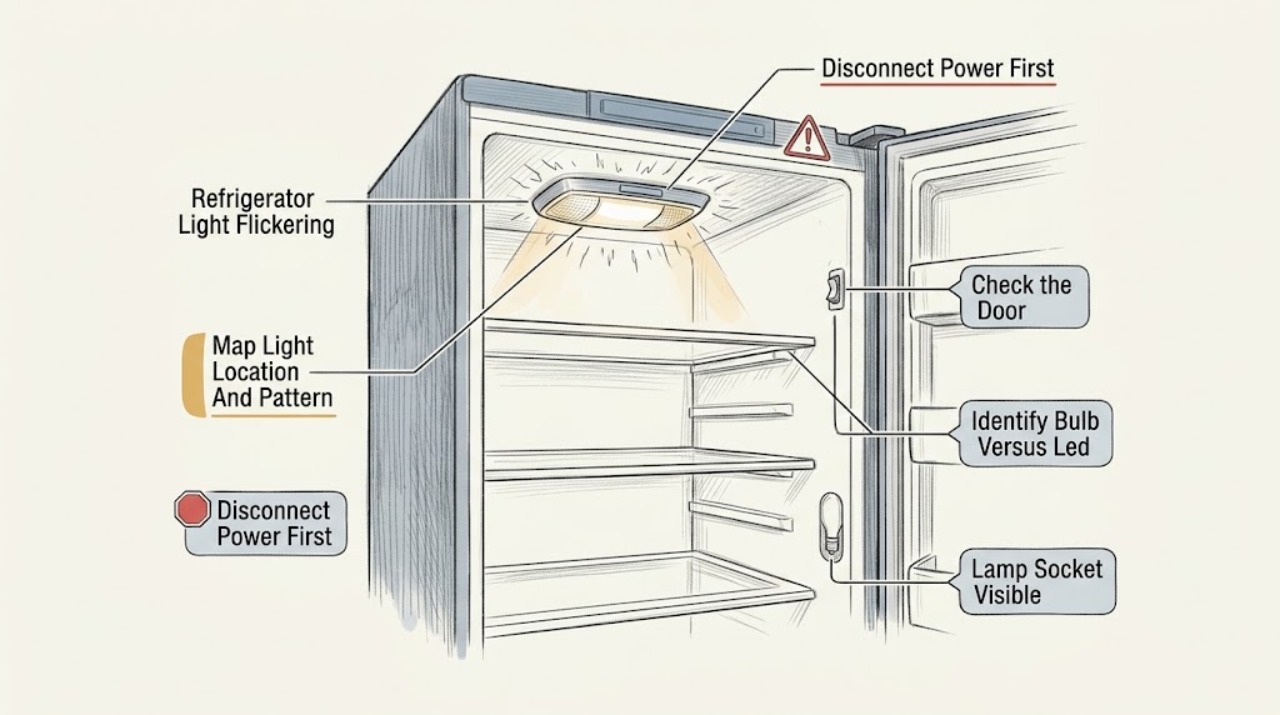
GE Refrigerator Light Flickering: Isolate the Bulb, Door, or LED Assembly
First determine whether the flicker is an interior lamp, a dispenser lamp, a drawer light, or the refrigerator's external control display, and whether the appliance uses a screw-in incandescent bulb or an LED assembly. Open and close the door slowly: GE says that on most models the interior light should go out when the door is nearly closed, and a misaligned door can leave the light on.
-
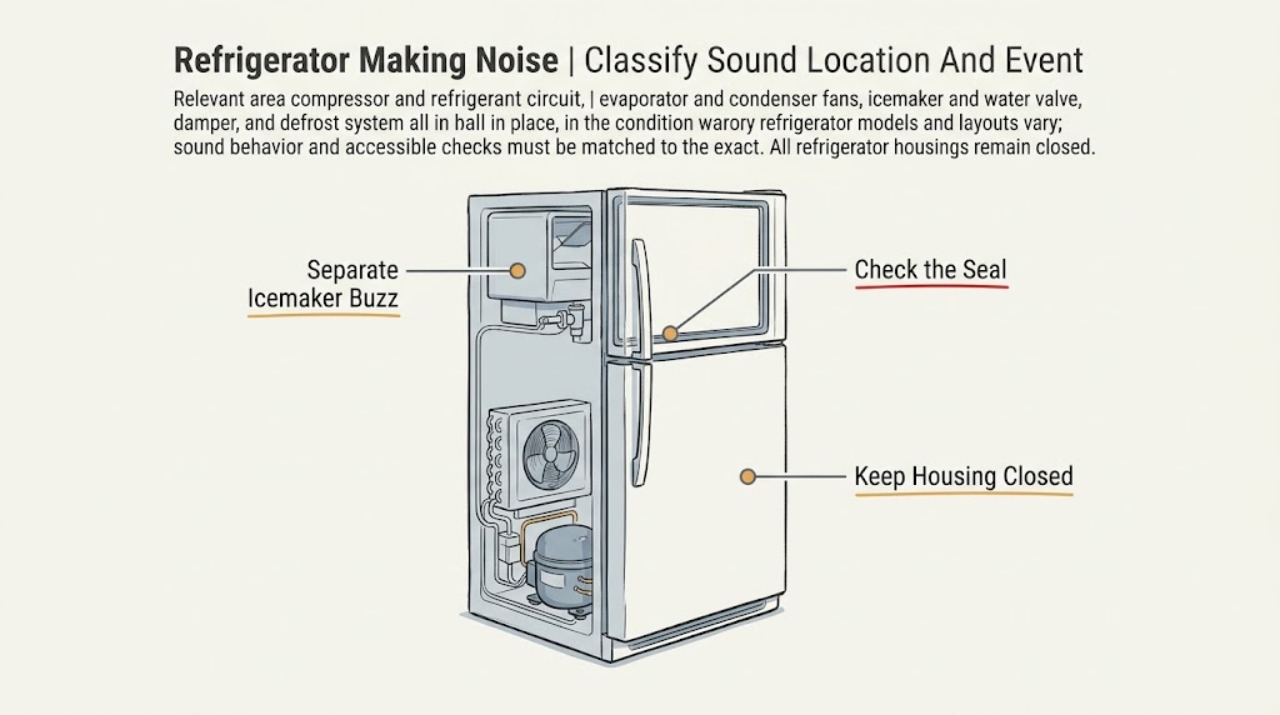
GE Refrigerator Making Noise: Normal Sounds and Safe Checks
Many GE refrigerator sounds are normal: refrigerant can gurgle or knock, fans can change speed, the defrost timer or temperature control can click, an icemaker can hum while filling or thump as cubes drop, and a new door gasket can whistle or squeak briefly. First record where and when the sound occurs—freezer, fresh-food section, underneath, water dispenser, icemaker, or plumbing—and whether cooling is normal.
-
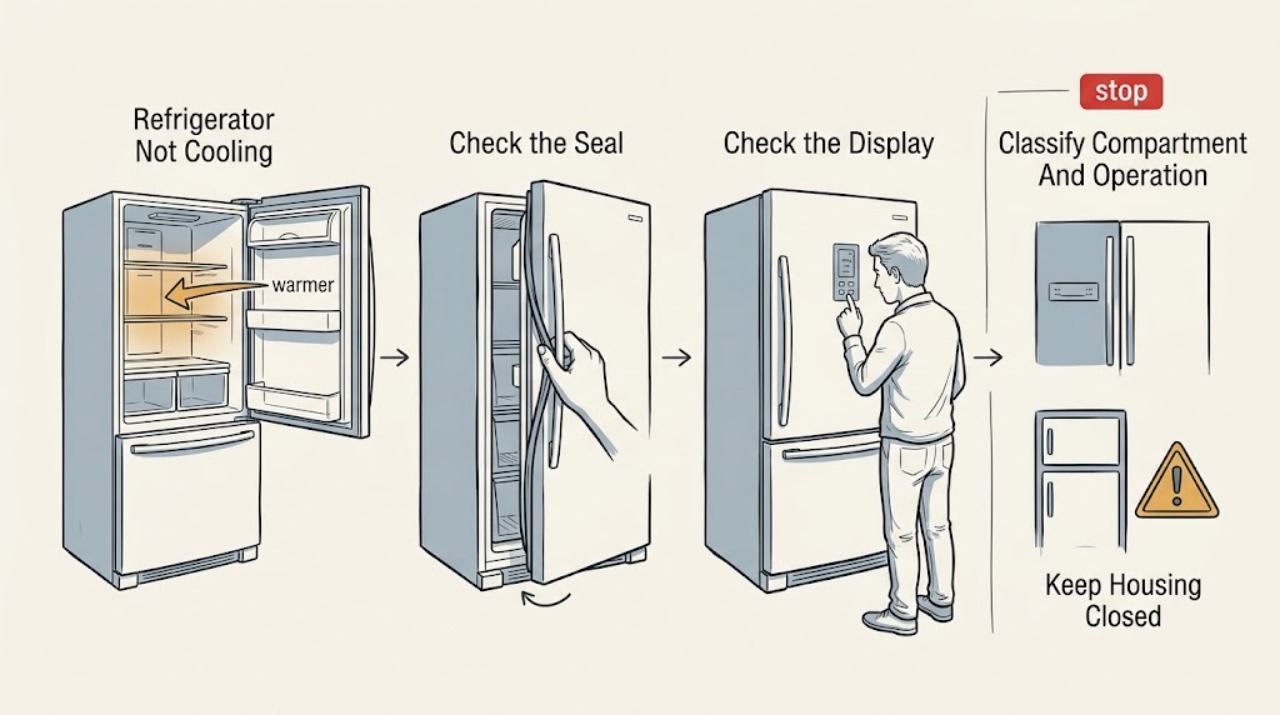
GE Refrigerator Not Cooling
When a GE refrigerator is not cooling, first record whether the refrigerator section, freezer section, or both are warm, and whether the interior light, fans, or compressor seem to run. Confirm the temperature controls were not turned off and use the exact model manual for the control style.
-
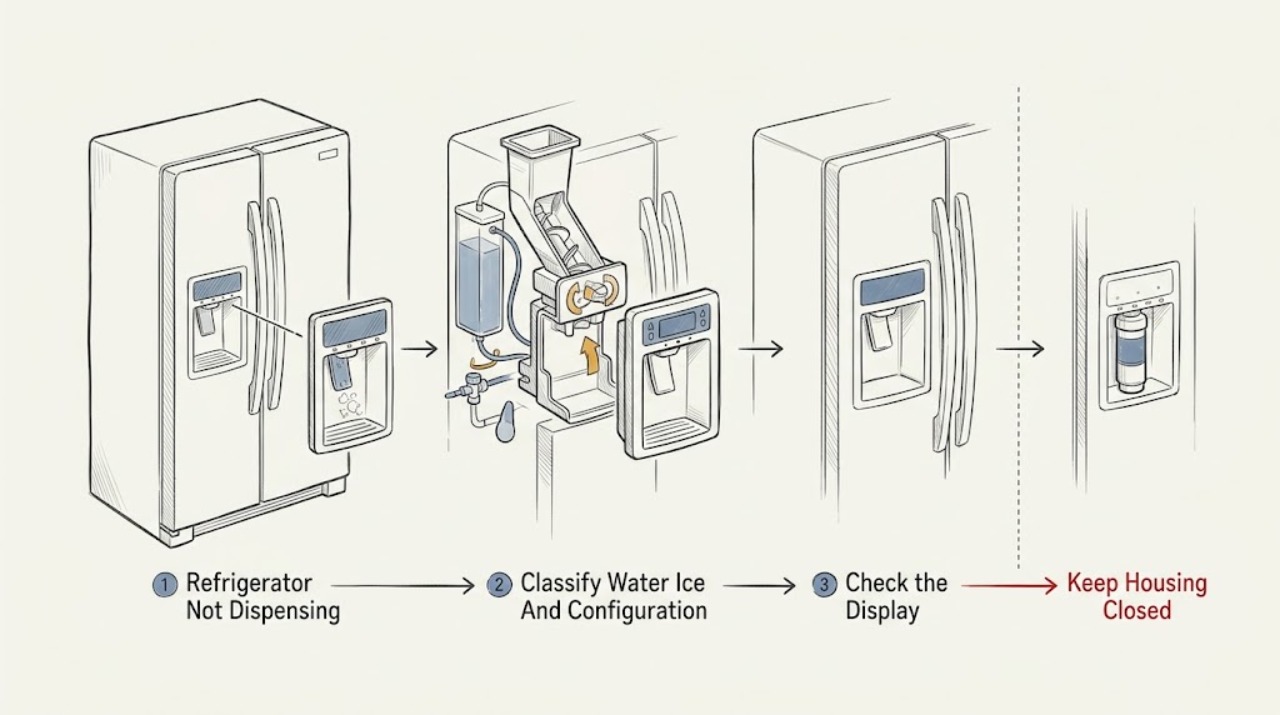
GE Refrigerator Not Dispensing: Separate Water, Ice, and Filter Paths
First specify what is missing: water, cubed ice, crushed ice, or both water and ice. GE refrigerator configurations differ—some have an external dispenser, some have an internal water dispenser, some have no built-in filter, and some use a chilled reservoir that can freeze.
-
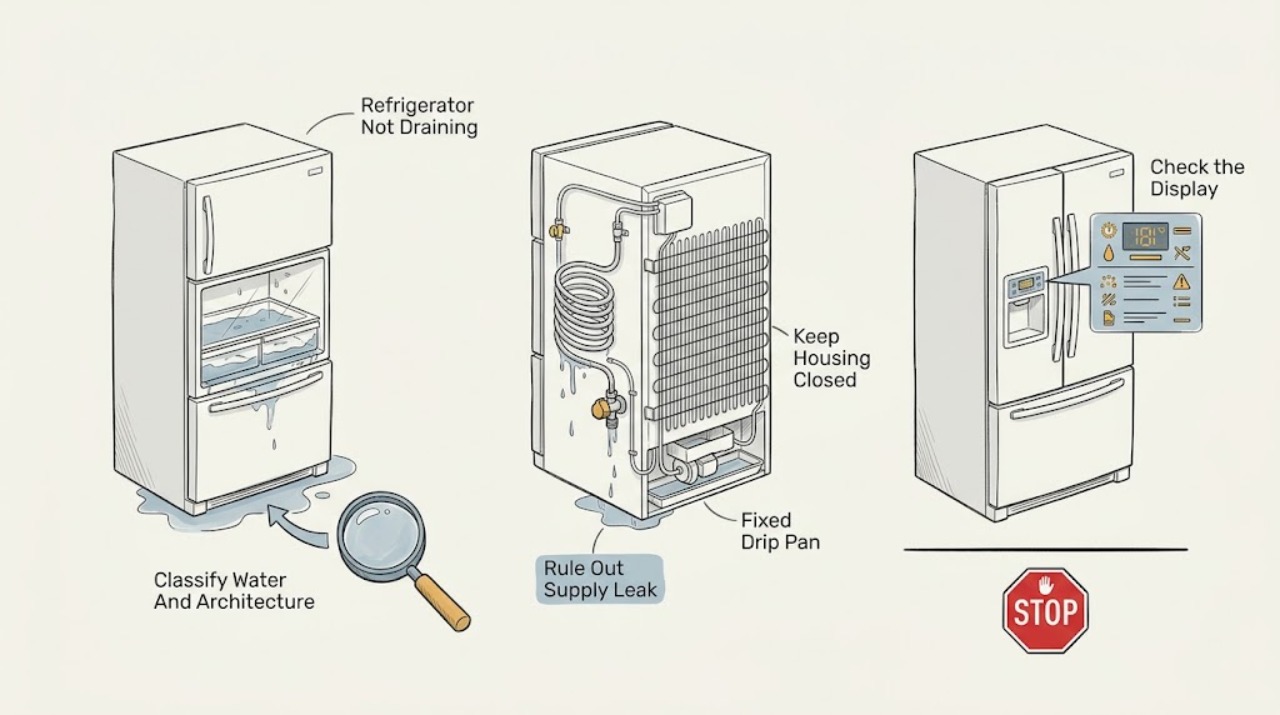
GE Refrigerator Not Draining: Identify the Defrost Drain Before Cleaning
First confirm that “not draining” means defrost water is pooling or freezing, rather than a supply-line, water-valve, icemaker fill-line, or dispenser leak. GE says a full-size self-defrost refrigerator sends melted frost through a drain tube to a fixed drip pan; ice on the freezer floor, water under fresh-food drawers, or a recurring puddle can indicate a clogged defrost drain.
-
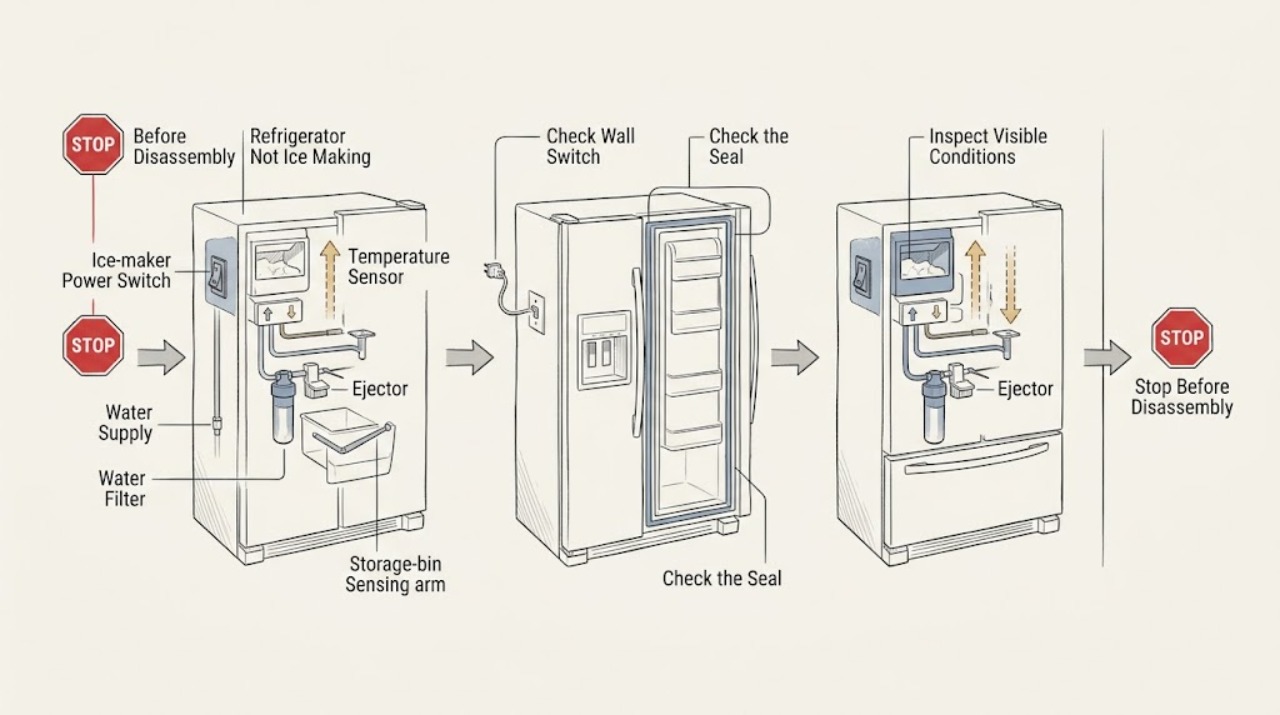
GE Refrigerator Not Ice Making
If a GE refrigerator is not making ice, first confirm which ice maker is affected and whether it is turned on at the ice maker or refrigerator controls. Then check that the freezer is cold enough, the water supply is on, and a water filter is not restricting flow.
-
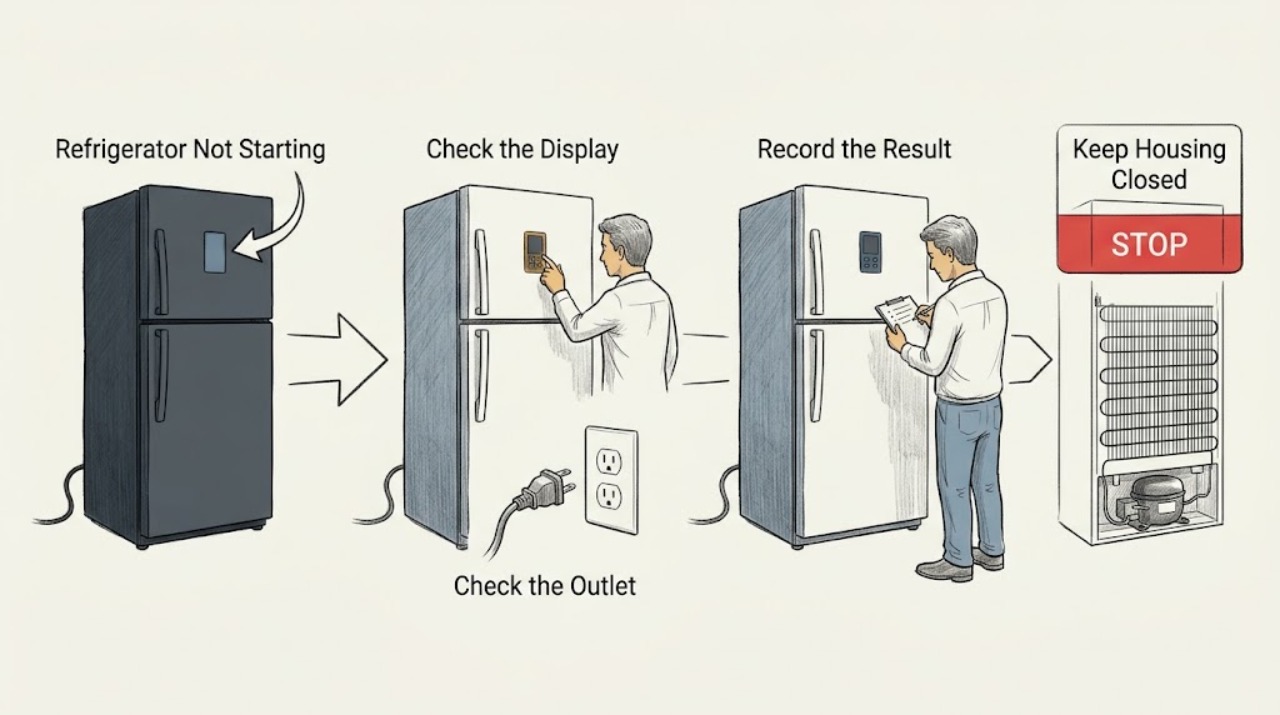
GE Refrigerator Not Starting: Separate Power, Modes, and Normal Pauses
First open the fresh-food door and note whether the interior light and any control or dispenser display are working. No light can mean the refrigerator is not receiving power; a lit refrigerator with a quiet compressor can instead be in automatic defrost or waiting after a power interruption.
-
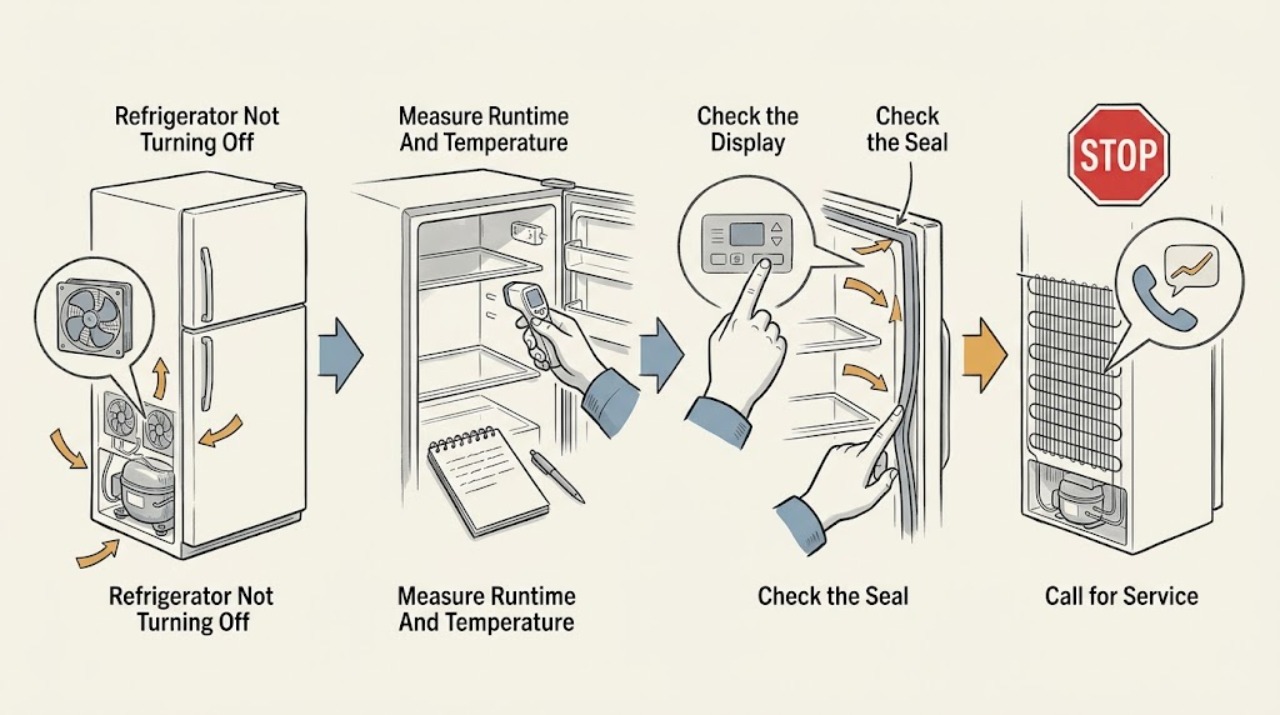
GE Refrigerator Not Turning Off: Separate Normal Long Runs from Cooling Problems
A GE refrigerator that seems not to turn off is often running within its design range: GE says modern compressors may run 80% to 90% of the time and can approach 100% in hot, humid conditions. First check whether the cabinet is actually holding temperature and whether the display shows TurboCool; on applicable models TurboCool runs the compressor and high-speed fans for up to 8 hours.
-
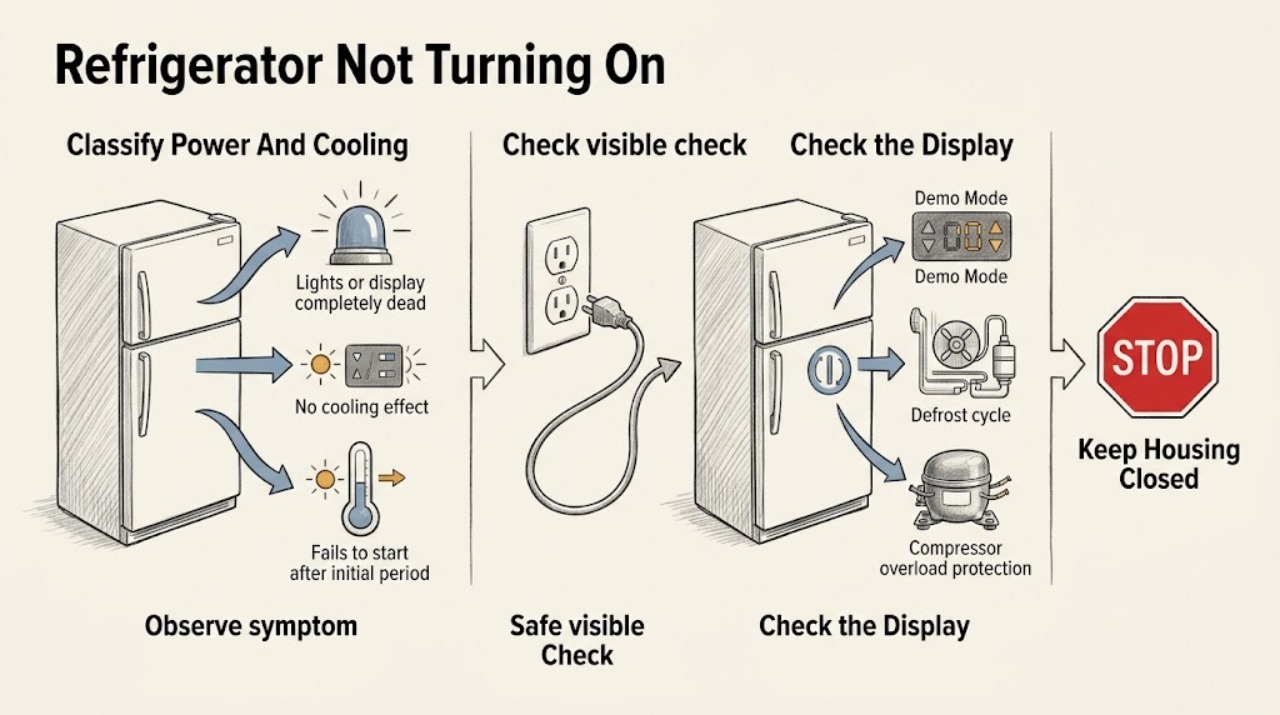
GE Refrigerator Not Turning On: Check Power, Mode, and Defrost State
First separate “no power” from “no cooling.” If the fresh-food light and display are both dark, check that the plug is secure and the outlet has power, then check the household breaker or fuse without opening electrical covers.
-
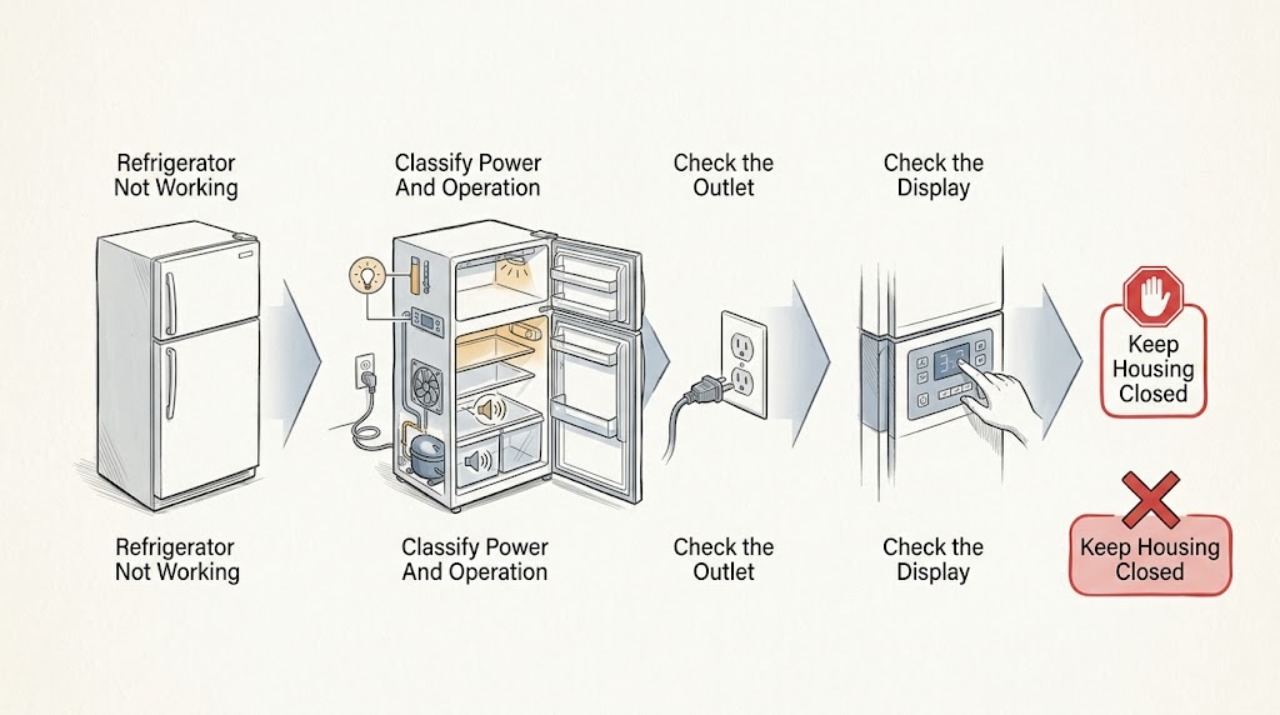
GE Refrigerator Not Working
When a GE refrigerator is not working, first check whether the interior light/display is completely dead or whether the refrigerator has power but is not running or cooling. Confirm the plug is fully inserted and the outlet has power, then verify the temperature controls were not turned off and the refrigerator is not in Demo Mode.
-
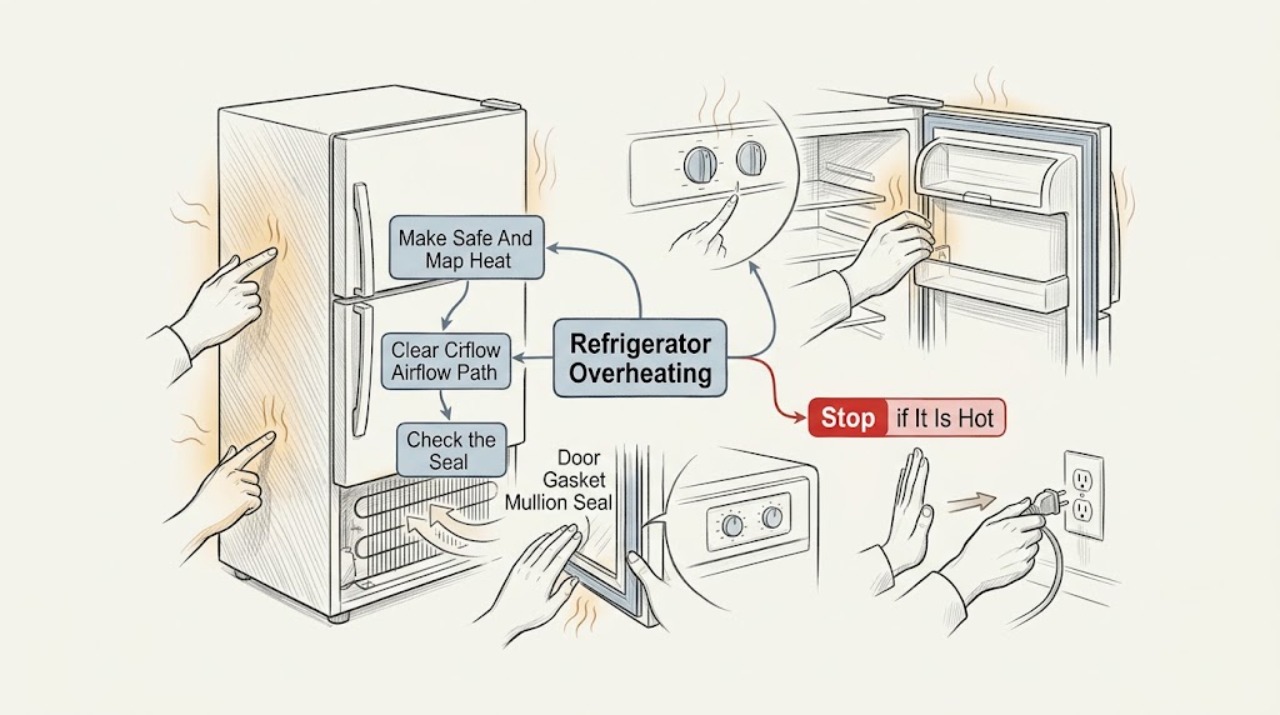
GE Refrigerator Overheating: Separate Normal Warmth from a Cooling or Electrical Problem
Warm or hot air at the bottom, sides, or rear of a GE refrigerator, and warmth at the front edge or between the doors, can be normal because the appliance rejects heat and may use a warm mullion to prevent condensation. GE also says compressors are designed to run much of the time and may approach continuous operation in hot or humid conditions.
-
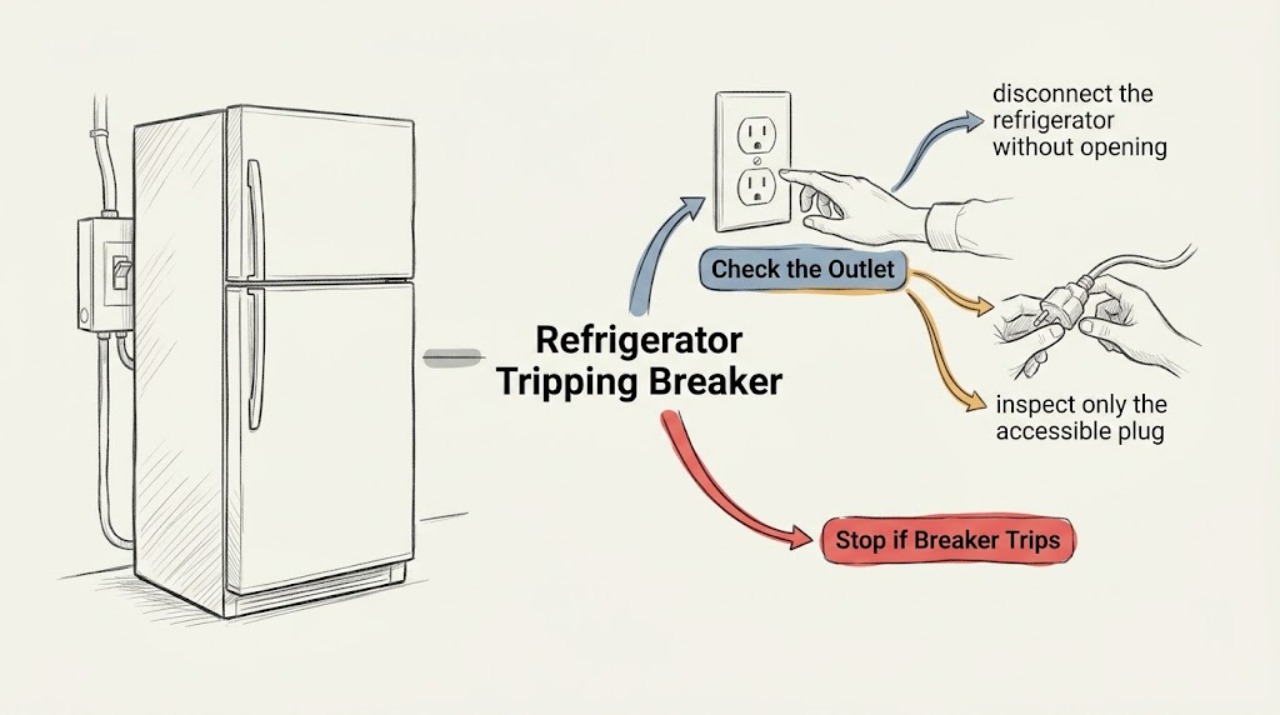
GE Refrigerator Tripping Breaker
If a GE refrigerator trips a breaker, stop resetting it repeatedly. Note whether the trip happened as soon as the refrigerator was connected, when a motor started, or after it had been running, then look for a hot or discolored plug, damaged cord, buzzing, burning odor, water near the receptacle, or other visible damage without opening the appliance.