
On this page
Start here
Quick answer
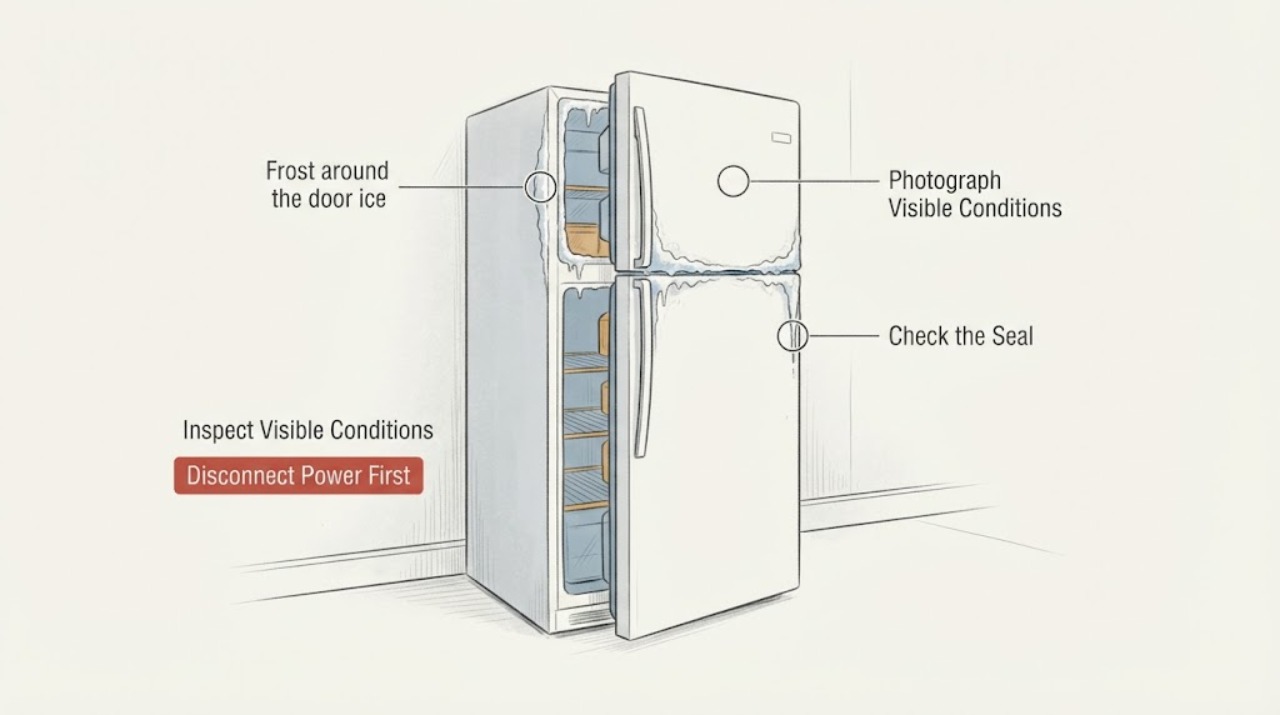
A frost problem on the GE GYE22HSKNSS does not establish that all refrigerators with a door ice maker are unreliable. This exact model is a 22.1 cu. ft. counter-depth French-door refrigerator, and GE's model record provides its owner's manual and installation instructions. First photograph where the frost is: inside the door ice compartment, around the ice-bin door or gasket, on the freezer wall, on packages, or in the fresh-food section. A door-ice compartment has a cold-air supply and return path, so keep those visible passages and the ice-bin door seal unobstructed; do not force the bin or remove the ice-maker cover. Also check ordinary warm-air entry: a package holding a door open, a torn or uneven gasket, frequent openings, high humidity, or warm food. GE says frost on a frost-free freezer wall is not expected. Remove only accessible frost with the model-approved method; never use a knife, sharp tool, heat gun, hair dryer, or improvised heat. If frost returns in the same area, blocks a vent or fan, prevents the door from sealing, or is accompanied by temperature or water concerns, protect food and arrange qualified GE service.
Before you begin
Safety first
- Disconnect power before any model-permitted wiping or maintenance, and only from a safe, dry position. Do not chip ice, apply a heat source, touch fan blades, remove an ice-maker or interior cover, pull or tilt the refrigerator, or alter sealed-system or electrical components.
Work through in order
Diagnostic checks
Use only checks that match the exact appliance or system and its official guide.
-
Check 1
Read the rating label and record the complete model and serial information without moving the refrigerator. Photograph the frost before removing it and identify its exact location: inside the left-door ice compartment, around the ice-bin door/gasket, at the fresh-food door edge, on the freezer wall or ceiling, on packages, or in the fresh-food compartment.
Expected result: Frost is limited to the door ice compartment or ice-bin seal, or it is on a freezer wall, gasket edge, packages, or a fresh-food area.
Next step: Use the matching location branch below and the exact GE manual. Keep the doors closed and protect food while documenting any recurring pattern.
Stop if: Do not scrape the frost, force an ice bin or drawer, pull the refrigerator out, or remove an interior cover to identify the source.
Why this matters
Why: The GYE22HSKNSS model record identifies a French-door refrigerator with an ice-maker/dispenser assembly and model-specific owner and installation documents. Location determines whether to examine the door ice-compartment air path, warm-air entry, load placement, or a model-specific service path; it does not establish a general reliability verdict.
-
Check 2
For frost in or beside the door ice compartment, open the ice-compartment door normally and inspect only the visible perimeter: check that the ice-bin door closes fully, its visible gasket meets the frame, no ice or package holds it open, and no visible air passage is covered. Do not remove the ice maker, cover, chute, or bin if it is frozen in place.
Expected result: The ice-bin door or gasket is uneven, obstructed, or visibly damaged, or the door closes evenly and the visible passages are clear.
Next step: Remove only a plainly visible obstruction without force. Leave the unit in service only if the door seals normally and no fan/vent is contacted; arrange service for a damaged seal, frozen-in bin, recurring frost, or unclear internal passage.
Stop if: Do not pry the ice bin, chip ice around the door, touch a fan, bypass a door switch, or use heat to free the compartment.
Why this matters
Why: GE explains that an in-door icemaker needs cold-air supply and return vents through the door interface. A gap or blocked passage can allow moisture or disrupt the ice compartment, but a clear exterior view cannot rule out an internal fan, duct, or defrost issue.
-
Check 3
Close the fresh-food doors and freezer drawer slowly and look for a package, bin, basket, ice buildup, or shipping material holding any closure open. Inspect the visible gasket for a tear, fold, loose section, or uneven contact; do not reshape it with heat or remove its retainer.
Expected result: A package or bin prevents closure, the gasket is damaged or uneven, or all door and gasket contact appears even.
Next step: Rearrange only the obstruction and apply only a gasket or door adjustment expressly permitted by the exact GYE22HSKNSS instructions. Do not use the refrigerator normally with a torn gasket or a door that will not seal; arrange qualified repair.
Stop if: Do not force a hinge or door, remove a gasket retainer, use a hair dryer or heat gun, or pull the refrigerator to adjust the rear.
Why this matters
Why: GE lists frequent or prolonged openings, packages holding a door open, and damaged or uneven gaskets as causes of frost. A sound closure makes repeated humid-air entry less likely and shifts attention toward airflow, temperature, or defrost behavior.
-
Check 4
Move accessible food and containers away from the freezer rear wall, vents, and door edge. Record whether frost followed a warm load, frequent openings, a humid period, or an installation/moving event; keep packages from touching air passages or holding a door open.
Expected result: The frost followed warm or humid air exposure or blocked loading, or it is concentrated on a frost-free wall with none of those conditions.
Next step: Correct the accessible loading/closure cause and monitor without repeatedly opening the door. If the same frost returns after the cause is corrected, move to the service branch.
Stop if: Do not overpack the compartment, block vents, or keep reopening the door to inspect recovery.
Why this matters
Why: GE lists high humidity, frequent openings, warm food, packages against the rear wall, and packages holding a door open as contributors. Frost that returns on a frost-free wall after those causes are corrected is not expected and is more concerning for an appliance-side issue.
-
Check 5
Without touching a fan or opening a panel, note whether frost contacts a visible vent or whether the freezer fan is absent, unusually noisy, or obstructed during normal operation. Check the temperature display and note any rise, soft food, water, or ice-melt pattern; do not change settings repeatedly.
Expected result: A vent or fan is blocked/contacted by ice, the fan is not running or noisy, temperatures are unstable, or airflow and temperature appear normal.
Next step: Move only an accessible package obstruction. If ice contacts a fan/vent, the fan is abnormal, or food temperature is unsafe, keep the refrigerator out of normal use as needed and arrange qualified service; use the exact model manual for any low-risk setting check.
Stop if: Do not remove fan covers, touch blades, use a sharp tool or heat source, or attempt sealed-system or electrical diagnosis.
Why this matters
Why: GE says a freezer fan that is not running is a service clue when wall frost persists, and its moisture guidance says startup or defrost moisture can be temporary. Airflow that appears normal does not prove the defrost, sensor, control, or sealed system is healthy.
-
Check 6
If the exact GE instructions permit maintenance, disconnect power before wiping only accessible frost with a dry towel and restore the documented normal setup. Photograph the affected area and monitor whether frost returns in the door ice compartment, around a gasket, on the same freezer wall, or in the fresh-food compartment.
Expected result: Frost does not return after a clear warm-air or loading cause is corrected, or it returns in the same spot, blocks airflow/closure, or is accompanied by temperature or water concerns.
Next step: Keep food protected and schedule qualified GE service for recurring or obstructive frost. Give the provider the exact model, frost photos, location, closure/gasket findings, temperature observations, and any ice-bin air-path observations.
Stop if: Do not use knives, picks, screwdrivers, hair dryers, heat guns, boiling water, or interior-panel removal to speed defrosting.
Why this matters
Why: No recurrence supports a temporary humidity, loading, or closure event. Recurrence in a frost-free compartment, the same door-ice area, or beside a fan/vent requires model-specific diagnosis; it is not proof that every door ice maker has the same failure rate.
Use your observations
Decision map
Find the observation that best matches what you see, then follow the next safe action.
-
PATH 01Next step
What you see
Frost is confined to the door ice compartment or ice-bin perimeter, and the bin door does not seal evenly or a visible passage is blocked.
Do this next
Remove only a plainly visible obstruction without force. If the seal is damaged, the bin is frozen in place, or frost returns, keep the compartment closed and arrange GE-qualified service; do not pry, heat, or remove covers.
Why this path and its safety boundary
Why it matters: A local door-ice seal or supply/return-air problem is more likely than a general refrigerator reliability issue, but the external check cannot identify an internal fan or duct fault.
-
PATH 02Next step
What you see
Frost is on packages or near a door opening after frequent openings, a warm load, high humidity, or a package holding a door open, and the gaskets close evenly.
Do this next
Rearrange the load, close doors fully, limit openings, and remove only accessible frost using the exact GE-approved method. Monitor for several days without repeated door opening.
Why this path and its safety boundary
Why it matters: Warm humid air entry or restricted loading is more likely than a defrost failure.
-
PATH 03Next step
What you see
Frost forms as a sheet on the freezer wall or returns in the same frost-free location after closure, gasket, loading, and airflow checks are correct.
Do this next
Protect food, keep doors closed, and schedule qualified appliance diagnosis rather than repeatedly defrosting or changing settings.
Why this path and its safety boundary
Why it matters: GE says ice on a frost-free freezer wall is not expected; an appliance-side fan, defrost, sensor, control, or other fault is more likely than a normal characteristic of door ice makers.
-
PATH 04Next step
What you see
Frost is in the fresh-food compartment, contacts a fan or vent, prevents a door/drawer from sealing, or is accompanied by rising temperature, leaking water, or unsafe food.
Do this next
Keep food safely cold, avoid forcing doors or removing panels, and arrange qualified GE service with the model number and frost/temperature photos.
Why this path and its safety boundary
Why it matters: The condition is interfering with operation or food safety and is outside a simple door-ice explanation.
Helpful context
Understand the symptom
The title question is broader than the evidence. One exact-model Reddit post reports frost around the ice-maker bin on a GE GYE22HSKNSS, but a single owner's experience cannot establish that all door-ice refrigerators fail frequently. For this appliance, the useful decision is location: frost inside the door ice compartment follows a door-bin seal and ice-compartment airflow path, while a freezer-wall sheet, gasket-edge frost, or fresh-food frost follows different checks.
GE's model record lists the GYE22HSKNSS owner's and installation documents. Use those documents for any temperature, door-adjustment, leveling, or ice-bin procedure; do not transfer a generic refrigerator or another GE family's instructions. The visible checks below are limited to closure, gaskets, accessible air passages, load placement, and frost observation.
If ice contacts a fan or vent, the ice-bin or refrigerator door cannot seal, temperatures rise, water leaks, or frost keeps returning after the external causes are corrected, stop treating it as a normal design characteristic. Keep perishable food safely cold and arrange qualified appliance service rather than chipping, heating, or removing internal panels.
When checks do not resolve it
Need a professional?
Call GE-qualified appliance service for recurring frost, a damaged or nonsealing door/ice-bin gasket, blocked or abnormal fan/air path, frost in the fresh-food compartment, rising temperatures, water, or food-safety concerns. Use the exact model owner and installation documents for any door/leveling procedure.
Safety scope: Disconnect power before any model-permitted wiping or maintenance, and only from a safe, dry position. Do not chip ice, apply a heat source, touch fan blades, remove an ice-maker or interior cover, pull or tilt the refrigerator, or alter sealed-system or electrical components.
Have this ready
- Provide the full GYE22HSKNSS model and serial information, market, frost location and photos, whether it is around the door ice compartment or freezer wall, door/gasket and package observations, fan/vent observations, temperature trend, water or melt pattern, and any recent move, installation, or warm/humid event.
Common questions
FAQ
Does frost around the GYE22HSKNSS door ice maker prove that all door-ice refrigerators fail frequently?
No. One exact-model owner report cannot establish a failure rate. GE's own guidance points first to the location and conditions: door/ice-bin sealing and air passages, warm humid air, packages holding doors open, gasket condition, airflow, and frost recurrence on a frost-free wall.
Why can a door ice maker frost even when the freezer seems cold?
GE explains that an in-door icemaker depends on a cold-air supply and return path through the door interface. A door-bin gasket gap, ice obstruction, or blocked visible passage can admit moisture or disturb local airflow; an apparently cold freezer does not by itself clear the door-ice compartment.
Can I melt or chip the frost away?
Do not use a knife, pick, screwdriver, hair dryer, heat gun, boiling water, or another improvised heat source. Disconnect power before any model-permitted wiping, use only the exact GE instructions, and arrange service if frost is stuck around the bin, contacts a fan or vent, or returns.
Read the exact guide
Official sources
- Model Search | GYE22HSKNSSGE Appliances Parts · Official GE Appliances Parts model record for the exact GYE22HSKNSS. It identifies the 22.1 cu. ft. counter-depth French-door refrigerator and links the owner's manual and installation instructions; it is not used to infer a reliability rate or diagnose an internal part.
- Refrigerator - Interior MoistureGE Appliances · Official GE guidance used for startup/moving moisture, humidity, door closure, leveling, defrost-cycle moisture, and service boundary. It is not used to diagnose the GYE22HSKNSS sealed system.
- Refrigerator - Frost in FreezerGE Appliances · Official GE support article used for dry-towel, door/gasket, alignment, and leveling checks; it directs users to the owner's and installation instructions for their exact model.
- Do all refrigerators with ice makers on the door fail frequently at frost build-up?Reddit r/Appliances · Exact Reddit post opened for a lived-experience report. It is not treated as a manufacturer diagnosis, confirmed repair, or evidence of a general failure rate.
- French Door Refrigerator - Cold Air Only Coming Through One VentGE Appliances · Official GE guidance for French-door models that have an icemaker compartment in the door. The exact GYE22HSKNSS model record confirms the product family and ice-maker/dispenser assembly, but this article does not claim every variant has identical vent geometry.
- Refrigerator & Freezer - Ice on Freezer WallGE Appliances · Official GE frost guidance used for frost-free wall expectations, humidity/load/door causes, fan clue, and service boundary. Exact GYE22HSKNSS manual remains controlling for model-specific adjustments.
Community feedback
Share a repair observation
Share a plain-text repair observation. Accepted observations are published automatically; this page may take a moment to update.