
On this page
Start here
Quick answer
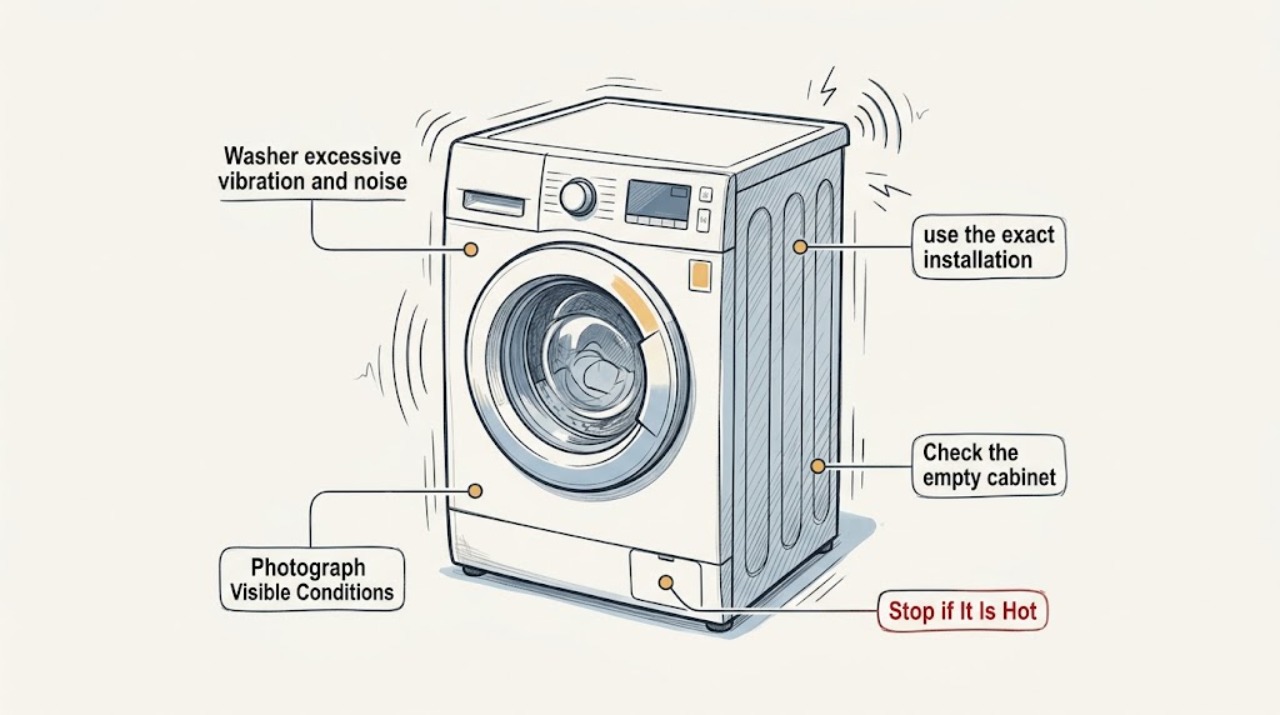
For a new GE GTW680BMMWS that vibrates or makes a lot of noise during spin, treat delivery and installation as the first branch, not an internal mechanical diagnosis. Confirm the full model and region, keep the receipt and delivery date, and check the exact GE installation guide for the shipping foam or other transport material, level, solid floor, four-foot contact, and hose/drain setup. GE says a new top-load washer can vibrate when shipping material remains, when it is not level, or when the load is unbalanced. Stop repeated high-speed tests if the washer walks, bangs, scrapes, leaks, smells hot, or threatens to overturn. If the installation checks are correct and an empty or normal balanced load still vibrates, document it and use the new-purchase installer, retailer, or applicable warranty path before authorizing internal repair; the opened GTW680BMMWS guide is a GE Appliances Canada document, so confirm the country and rating-label variant before applying warranty or manual details.
Work through in order
Diagnostic checks
Use only checks that match the exact appliance or system and its official guide.
-
Check 1
Photograph the rating label and write the full GTW680BMMWS model, serial, country, delivery date, floor surface, and whether the symptom appeared on the first load. Save a short video from a safe distance showing the movement and sound without opening the lid while the basket is moving.
Expected result: The label and region match GTW680BMMWS, the code or suffix differs, the vibration began on the first use, or the symptom began after the washer was moved.
Next step: Keep the records with the receipt and contact the installer, retailer, or GE support under the applicable regional process if the identity or delivery condition is uncertain.
Why this matters
Why: The exact model and region determine which installation guide and warranty terms apply. A first-use or post-move symptom raises installation and transport handling before internal failure.
-
Check 2
With the washer off and stable, use the exact GTW680BMMWS installation guide to check whether the tub shipping foam or other transport material remains. Do not guess which packing piece is removable and do not tip the washer alone.
Expected result: Required shipping material remains, the installation guide for the exact region is different, all identified material was removed, or the shipping material is damaged or inaccessible.
Next step: Stop using the washer until the installer or qualified service confirms the transport setup. Preserve the material and photos for a new-purchase remedy; do not run more spin tests with it in place.
Why this matters
Why: GE says top-load transport systems vary and that operating with the required material in place can make a washer noisy and vibrate. A mismatch or inaccessible material is an installer/service issue, not permission to dismantle the cabinet.
-
Check 3
Check the empty cabinet from a safe position: place a level on the flat top as the installation guide directs, test whether the cabinet rocks when off, and verify that all four leveling legs firmly contact the hard floor with their lock settings secure. Do not use loose shims or adjust legs while running.
Expected result: The washer rocks empty, one foot is not firm, the floor flexes or is sloped, the cabinet is out of level, or all four legs and the floor are stable.
Next step: Have the installer correct leveling or floor support using the exact guide. If stable setup does not change the symptom, stop repeated testing and use the new-purchase service or exchange path.
Why this matters
Why: A rocking cabinet or poor floor contact can create high-speed vibration without an internal failure. A stable, correctly leveled installation makes a persistent empty-load symptom more appropriate for warranty/service assessment.
-
Check 4
After the installation checks are confirmed, use one normal, loosely and evenly loaded cycle rather than a single heavy item or overloaded basket. Watch from a safe position and pause before opening if the washer begins to walk, bang, scrape, or leak.
Expected result: The vibration occurs only with a one-sided or heavy load, it occurs with a balanced load, it occurs with the basket empty, or the washer leaks or makes a new mechanical or burning sound.
Next step: Redistribute one plainly unbalanced load only once. Stop for empty-load vibration, banging, scraping, movement, leaking, odor, or heat and arrange installer/retailer/GE service rather than continuing cycles.
Why this matters
Why: GE identifies unbalanced loads as a common cause of shaking and walking. Persistence with a balanced or empty basket, or a safety symptom, moves the case beyond load correction but does not name the internal component.
-
Check 5
If the machine still vibrates after shipping material, level, floor, and balanced-load checks, record whether the symptom is movement, a rhythmic knock, scraping, or a leak and contact the installer, retailer, or applicable GE warranty service before opening the cabinet or ordering parts.
Expected result: The symptom stops after setup correction, returns with correct setup, or is joined by leaking, exposed wiring, burning odor, smoke, or movement that could overturn the unit.
Next step: Keep the washer out of use for persistent or hazardous symptoms and submit the photos, video, serial, receipt, and installer details for a new-unit remedy or qualified diagnosis.
Why this matters
Why: A corrected setup supports an installation cause. A persistent or hazardous symptom is service evidence, but the observation does not distinguish suspension, tub support, motor, bearing, pump, or cabinet damage without a qualified inspection.
Use your observations
Decision map
Find the observation that best matches what you see, then follow the next safe action.
-
PATH 01Next step
What you see
The vibration began on the first use or immediately after delivery, and shipping material is present, unidentified, or was removed without the exact guide.
Do this next
Stop running the washer and have the installer or qualified service verify the GTW680BMMWS transport setup using the regional installation guide.
Why this path and its safety boundary
Why it matters: Transport/installation handling is the leading branch for a new top-load washer; GE states that the material varies by model and can cause noise or vibration when left in place.
-
PATH 02Next step
What you see
The empty washer rocks, a leg is not firmly planted, the cabinet is out of level, or the floor flexes or is damaged.
Do this next
Ask the installer to correct the feet and floor support using the exact guide; do not use loose blocks, tip the washer alone, or keep testing an unstable unit.
Why this path and its safety boundary
Why it matters: Leveling, foot contact, and floor support can explain spin vibration without an internal mechanical defect.
-
PATH 03Next step
What you see
The cabinet is stable and correctly installed, but one heavy or one-sided load causes the movement and redistribution stops it.
Do this next
Use balanced, loosely distributed loads and the proper cycle. If the washer vibrates with balanced or empty loads, use the new-unit service or exchange route.
Why this path and its safety boundary
Why it matters: The load pattern is the immediate trigger, consistent with GE's guidance for unbalanced loads; it does not establish a damaged suspension or drive system.
-
PATH 04Next step
What you see
The washer remains stable and correctly installed but vibrates empty or with balanced loads, or produces scraping, repeated banging, leaks, or a hot/burning odor.
Do this next
Stop use and submit the new-purchase documentation for installer, retailer, or warranty service. Request a qualified inspection rather than ordering suspension, motor, bearing, or pump parts by symptom.
Why this path and its safety boundary
Why it matters: An installation-only explanation is no longer sufficient, but the pattern still does not identify a particular internal component.
-
PATH 05Next step
What you see
The country, rating-label model, installation guide, receipt, or warranty region does not match the assigned GTW680BMMWS information.
Do this next
Stop model-specific adjustment and ask the retailer/installer or GE support to confirm the regional model and applicable remedy before further testing or repair.
Why this path and its safety boundary
Why it matters: The exact installation and remedy boundary is unresolved; the opened guide is a GE Appliances Canada document and cannot silently establish another region's terms.
Helpful context
Understand the symptom
Why installation comes before internal parts
A top-load washer that vibrates on its first spin can be reacting to shipping material left in place, a cabinet that rocks, a flexible or sloped floor, extended or unlocked legs, or a load that collects on one side. GE's exact GTW680BMMWS installation guide says to remove the tub shipping material, level the washer left-to-right and front-to-back, make all four legs firm on the floor, and then run a complete cycle while checking operation and leaks. Those checks are higher-value evidence for a new purchase than guessing at a suspension, motor, bearing, or transmission fault.
What the sound and movement pattern can tell you
A one-sided load that settles after pausing and redistributing points first to load balance. Rocking when the machine is empty points to leveling or floor contact. A symptom present from the first use with transport material not handled points to installation. Persistent banging, scraping, leaking, or movement with an empty, correctly installed basket is service evidence, but still does not identify a failed internal part without testing.
Protect the new-purchase remedy
Before dismantling anything, photograph the rating label, installation, shipping material, floor, leg contact, and the first failed spin. Record the delivery date and whether the installer performed the final checklist. The opened exact-model guide is a GE Appliances Canada document; warranty terms and the retailer or installer remedy can vary by country and order, so keep the paperwork and ask the seller or installer to correct an installation issue or document a defective unit. Do not let an unverified internal repair erase a possible delivery, exchange, or warranty route.
Only after diagnosis
Potential parts
- shipping or leveling installation hardware
Consider replacement or correction only when the exact installation guide or installer identifies missing, damaged, or misadjusted hardware; a vibration symptom does not select a part.
Confirm the complete regional model and use the exact installation guide. Do not substitute rods, foam, braces, feet, or shims from another GE washer. - suspension, tub support, motor, bearing, or pump component
Consider an internal component only after correct shipping-material handling, level, floor, and balanced-load checks and a qualified diagnosis of persistent empty or balanced-load vibration.
Do not order an internal part from the noise description alone. Verify the full rating-label model, region, and technician's confirmed failed component.
When checks do not resolve it
Need a professional?
Call before further use if shipping material is unresolved, the washer walks or rocks empty, the floor is unstable, or the vibration persists with a balanced load. Stop immediately for smoke, burning odor, exposed wiring, a damaged cord, uncontrolled water, scraping, or movement that could overturn the washer.
Have this ready
- Provide the full rating-label model and serial, country, purchase and delivery date, receipt, installer details, floor type, shipping-material photos, level/foot observations, load used, movement/noise video, and whether the symptom changes when empty or redistributed.
Common questions
FAQ
Is a new GE GTW680BMMWS that shakes necessarily defective?
No. GE's first checks are shipping material, level and solid floor, four-foot contact, and load balance. If it still vibrates empty or with a balanced load after correct installation, use the new-purchase installer, retailer, or warranty route for a qualified assessment.
Can I keep running it to see whether the vibration improves?
Do not keep running an unstable machine. Stop for walking, banging, scraping, leaks, hot or burning odor, smoke, or movement that could overturn it. A single supervised balanced-load check is enough after installation is verified.
Should I order suspension rods or a motor for a new washer?
Not from the symptom alone. First document installation and use the delivery, installer, retailer, or applicable warranty process. An internal part should be considered only after a qualified diagnosis confirms it.
Read the exact guide
Official sources
- Washer - Leveling the LegsGE Appliances · Opened official GE leveling guidance for the setup branch; it states that a properly leveled washer should not rock when idle and that exact-model instructions govern the procedure.
- Frequently Asked Questions About GE WashersGE Appliances · Opened official GE FAQ for the new-washer branch; it supplies general top-load guidance and does not diagnose GTW680BMMWS internal parts.
- Top Load Washer - Shipping RodGE Appliances · Opened official GE support page to distinguish transport systems; it explicitly requires the exact model installation instructions to determine which material and removal method apply.
- Top Load Washer - Walking or VibratingGE Appliances · Opened official GE support page for top-load vibration decisions; it provides general model-bounded guidance and directs owners to the exact installation instructions for the specific model.
- 233D2523P002.pdfGE Appliances Canada · Opened the GE Appliances Canada PDF whose filename identifies GTW680BMMWS. It covers transport material, hard-floor requirements, water/drain installation, four-leg leveling, final checks, and regional warranty wording; confirm the rating-label country and variant before applying it outside Canada.
Community feedback
Share a repair observation
Share a plain-text repair observation. Accepted observations are published automatically; this page may take a moment to update.