
GE appliance guidance
GE Washer Repair Guides
Troubleshooting and repair guidance for published GE Washer problems, symptoms, and maintenance questions.
Published GE Washer guides
Choose the guide whose symptom or condition most closely matches what you are seeing.
-
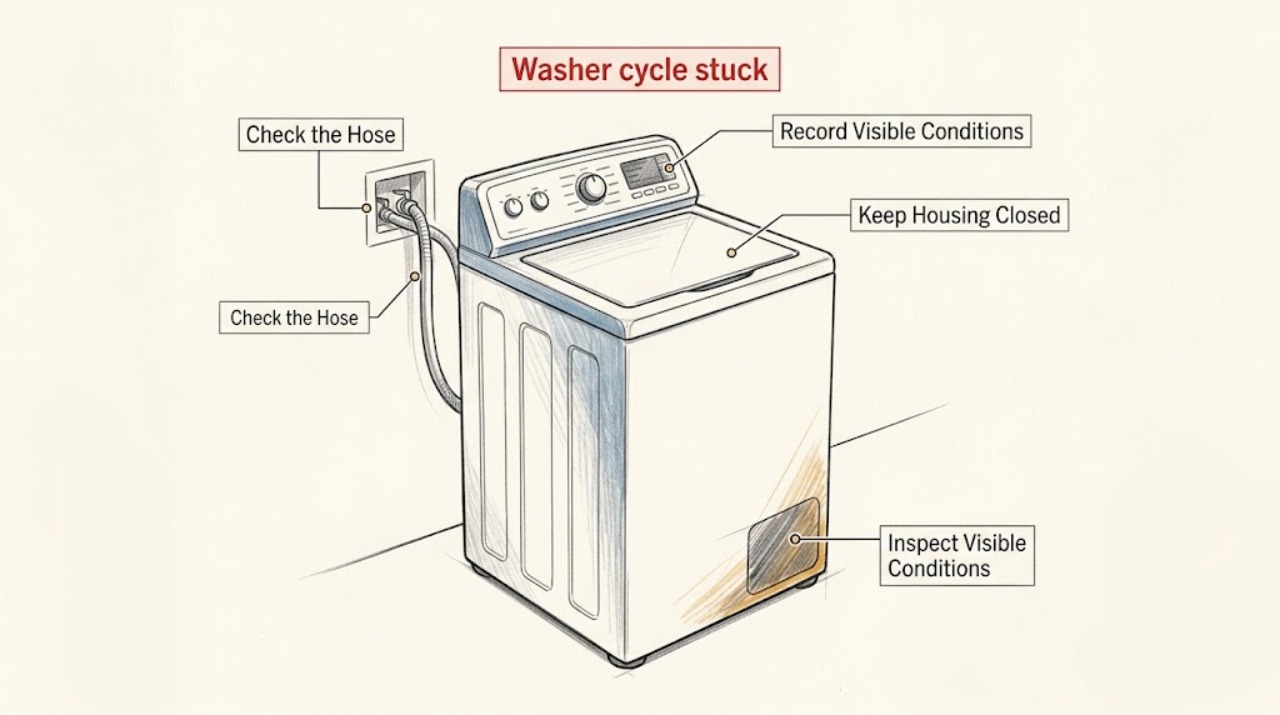
GE washer cycle stuck: What to Check and What to Do Next
A GE washer that appears stuck may be in a normal pause, sensing or soak period, waiting for a closed lid or door, unable to fill or drain, correcting an unbalanced load, or locked up after an interrupted cycle. First stop and record the exact stage—fill, wash or agitate, rinse, drain, spin, or door-lock state—along with any display text and whether water remains.
-
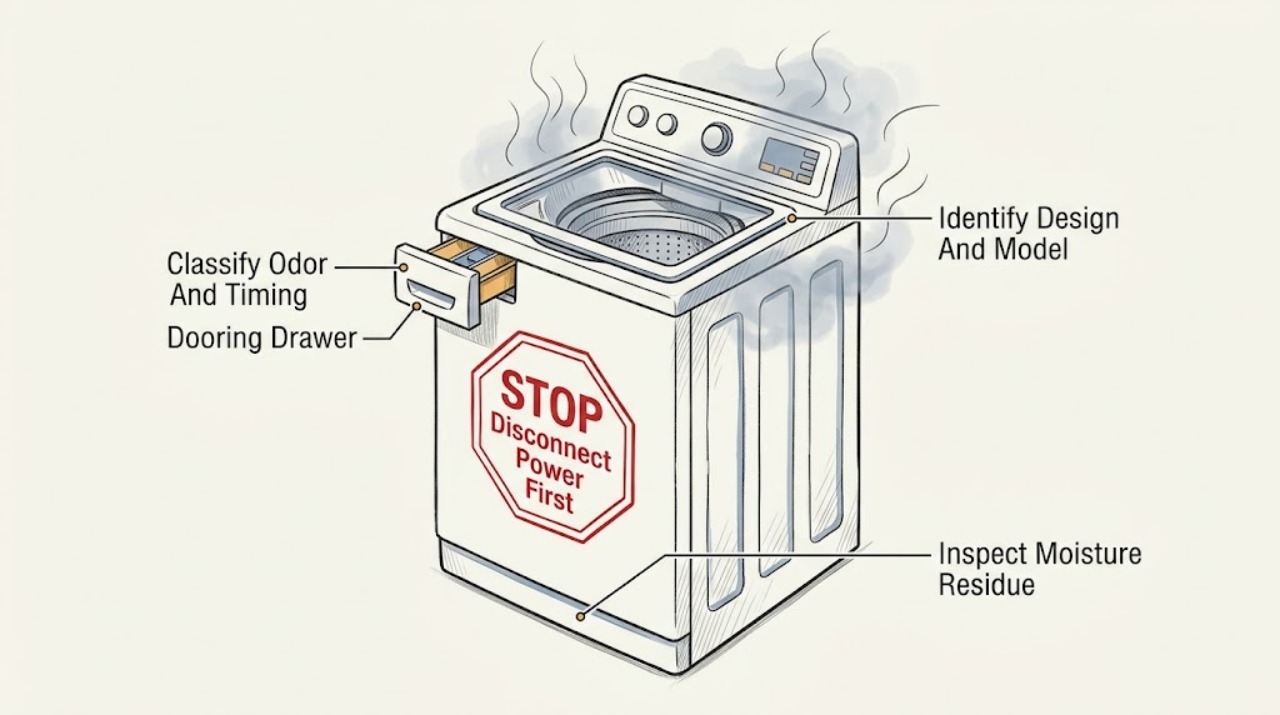
GE washer has a bad smell: What to Check and What to Do Next
First classify the odor before cleaning a GE washer. A musty or mildew smell usually points to retained moisture, detergent or fabric-softener residue, a dirty gasket or dispenser, a restricted pump filter, or drain-hose siphoning; GE's top-load and front-load guidance uses different access and cleaning procedures.
-
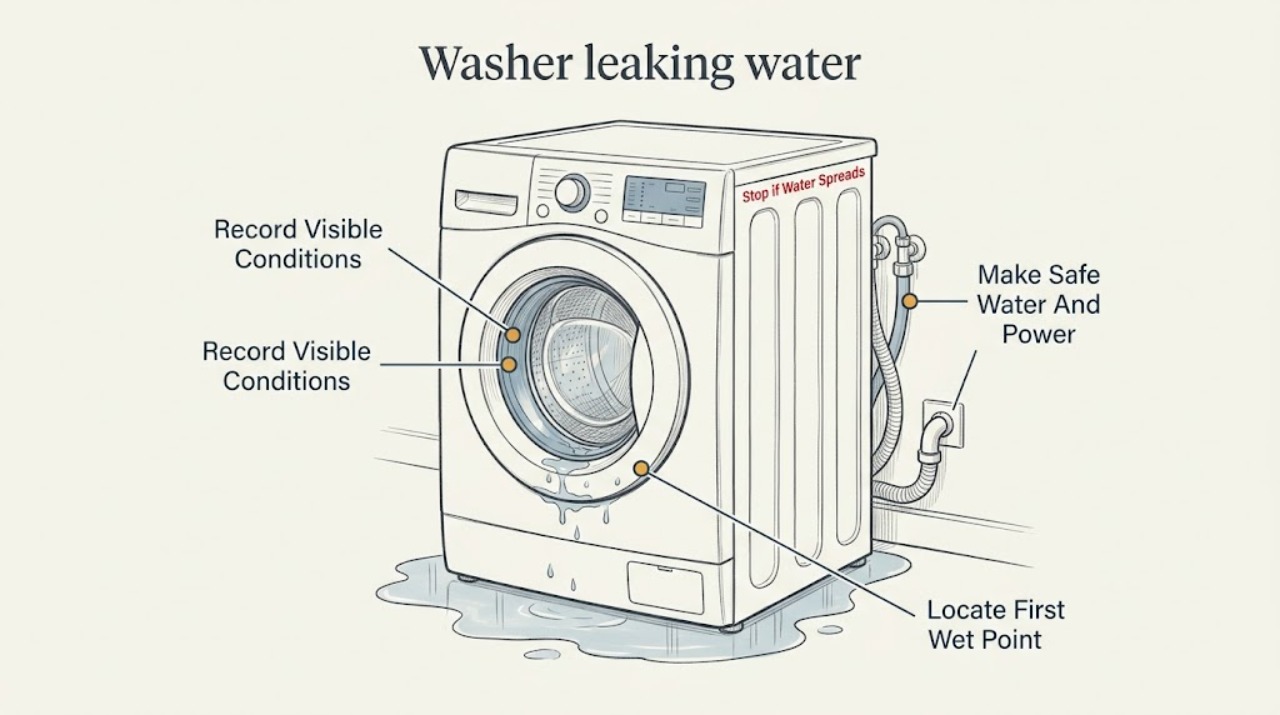
GE washer leaking water: What to Check and What to Do Next
Stop the GE washer and locate the first wet point before replacing anything. Record whether water appears while the washer is idle, filling, washing, draining, or spinning; then distinguish a front-load door gasket or dispenser leak from a top-load overflow or suds leak and a rear hose, drain, or household-plumbing leak.
-
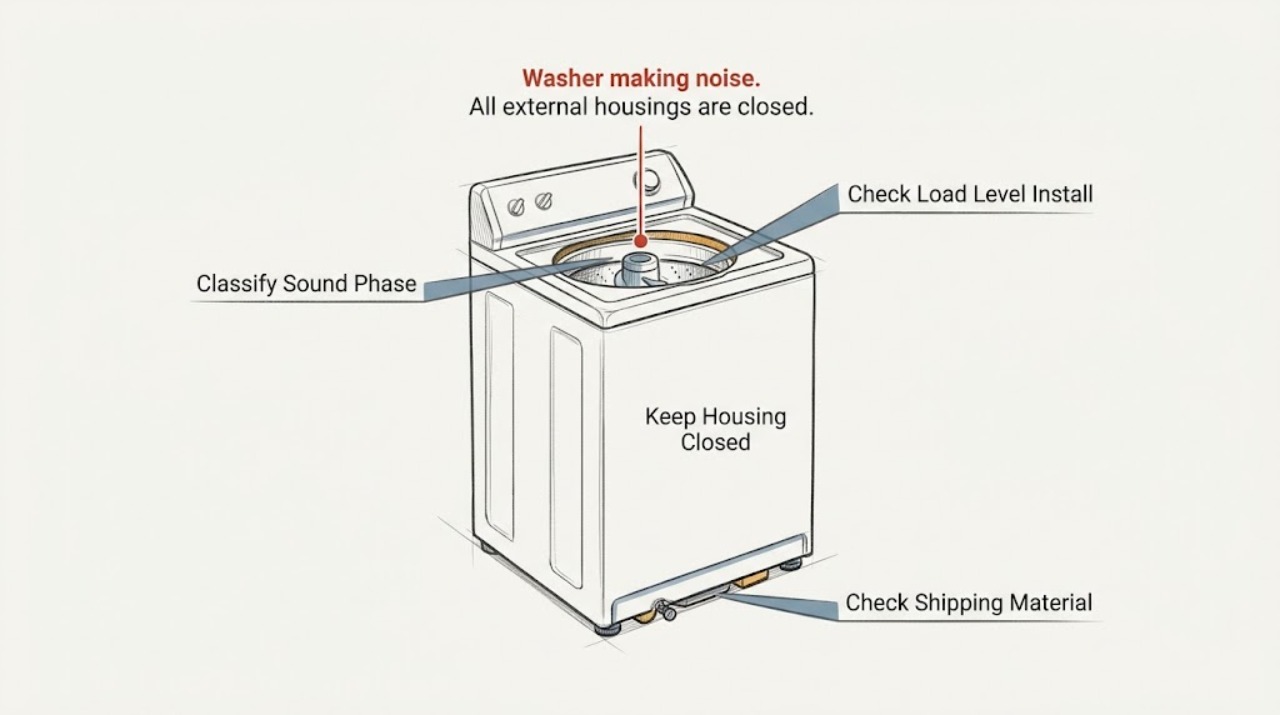
GE washer making noise: What to Check and What to Do Next
A GE washer can make normal clicks, water sounds, humming, short grinding or pulsing during fill, agitation, drain, or spin, but a new or worsening noise must be matched to its phase, sound, and model. Record whether the noise is a click, gurgle, bang, squeak, scrape, roar, or electrical sound; check that the load is not badly unbalanced, the washer is level, shipping material was removed after installation or moving, and accessible hoses are secured.
-
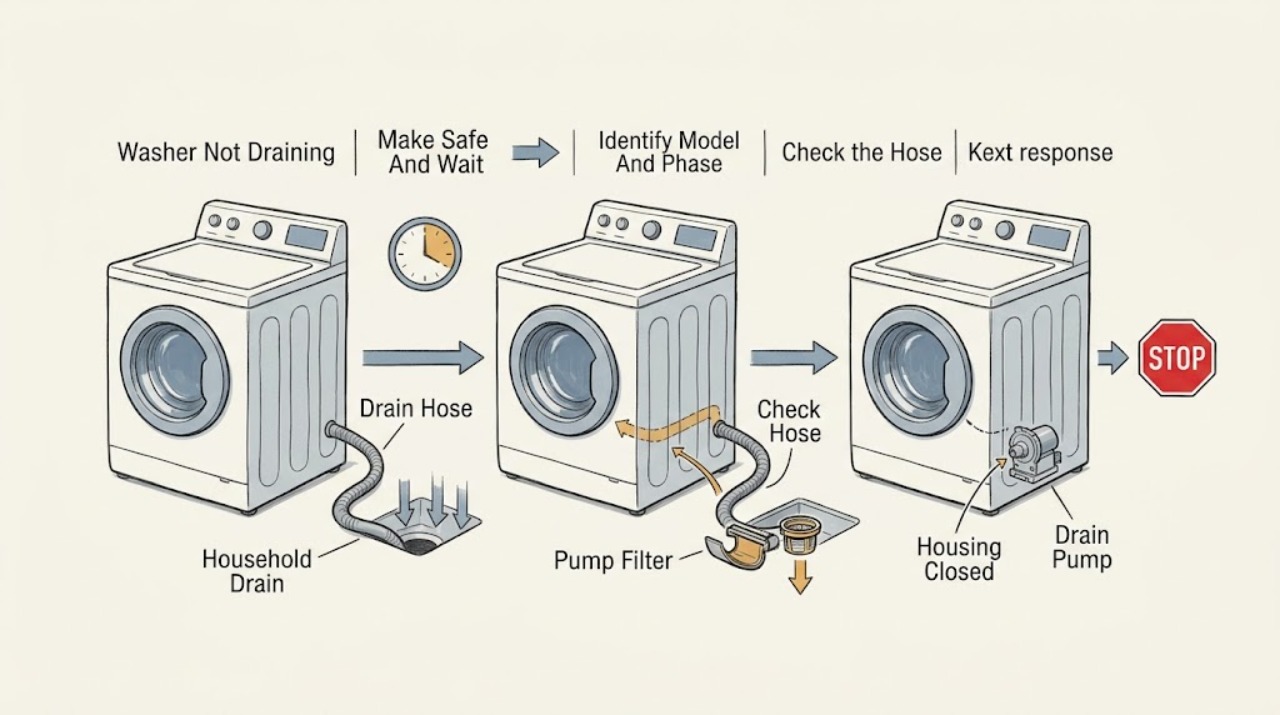
GE Washer Not Draining: Find the Blockage Safely and Choose the Next Step
A GE washer that is not draining may be paused between cycle stages, blocked at the drain hose or household standpipe, siphoning because of incorrect hose installation, restricted by a pump filter on models that have one, or unable to run the pump. Wait through the model's normal pause before changing a dial, then check the visible drain hose and household drain without moving a wet machine.
-
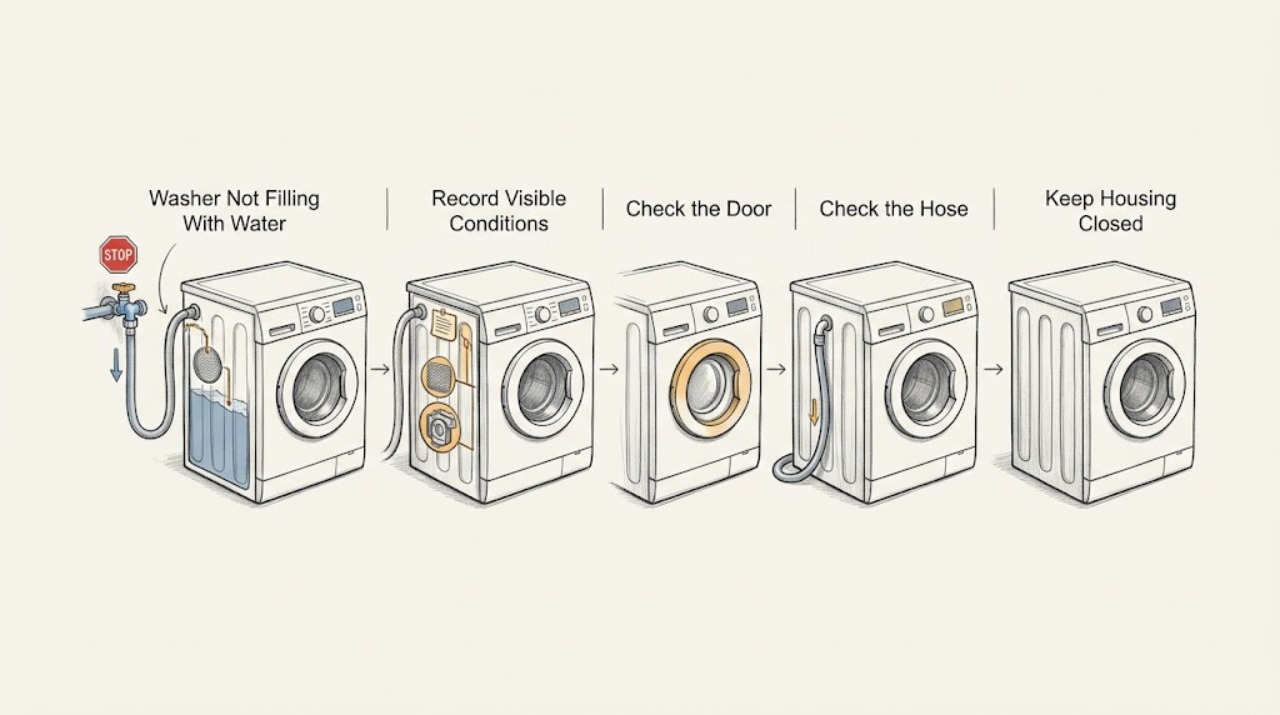
GE Washer Not Filling With Water: What to Check and What to Do Next
When a GE washer will not fill, first identify whether it is completely dry, filling slowly, filling and immediately siphoning away, or showing a water-supply or lid message. From a dry position confirm the cycle is not paused, both household water valves are open, and the hot and cold hoses are connected to the correct marked ports.
-
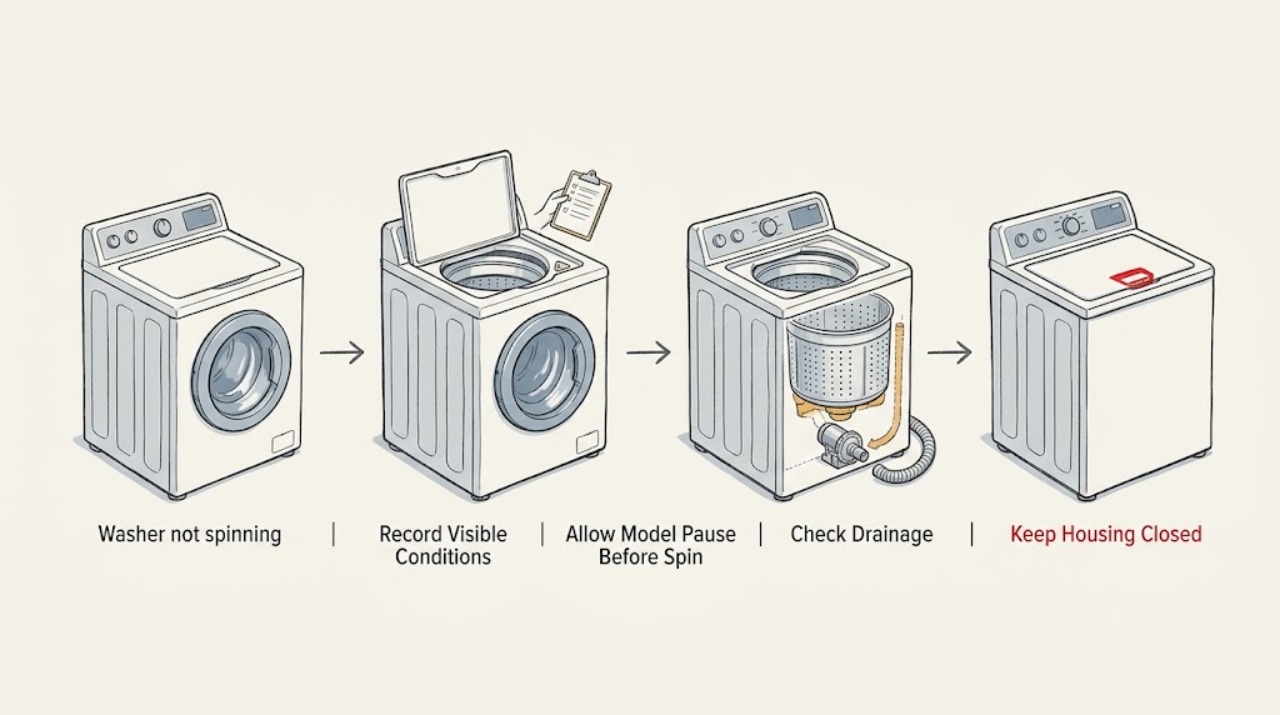
GE washer not spinning: What to Check and What to Do Next
Record the GE model, top-load or front-load configuration, display code, and whether the tub is full of water, the load is simply wet, or the basket never moves. A washer may pause before pumping out and spinning, and a top-load washer may stop for an unbalanced load or an open lid.
-
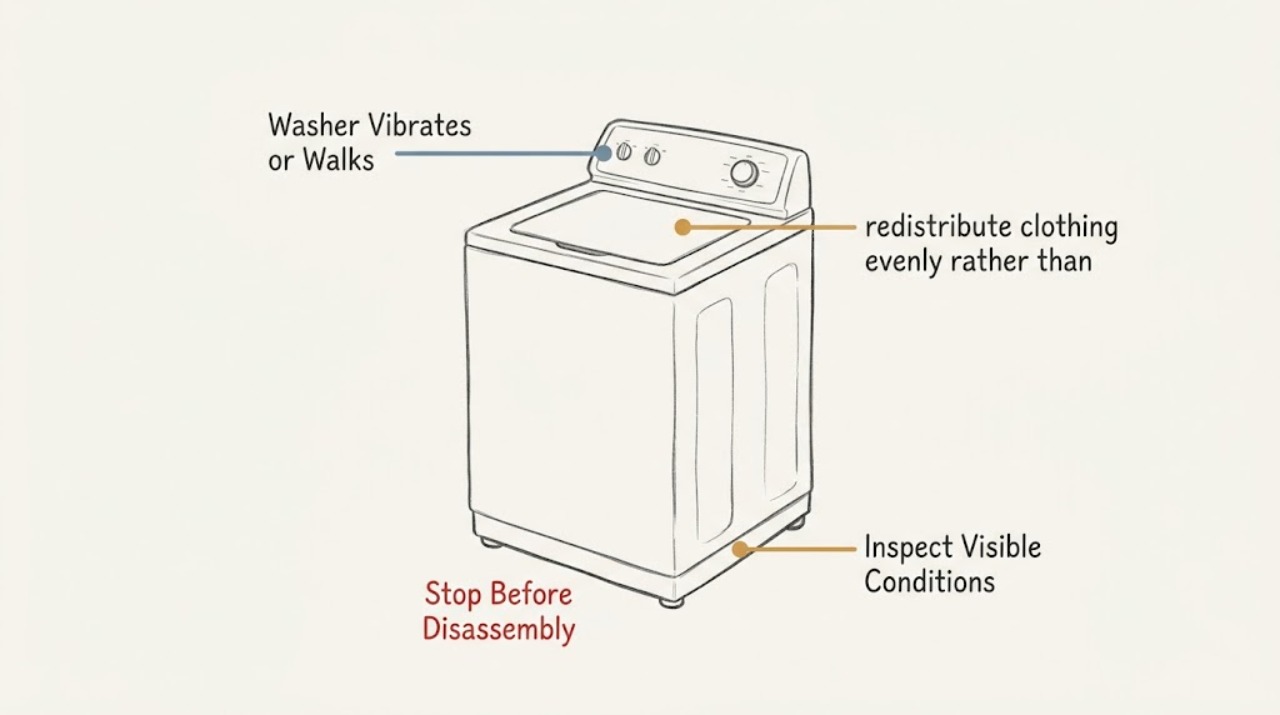
GE Washer Vibrates or Walks: What to Check and What to Do Next
A GE washer that vibrates or walks most often needs its load, level, legs, floor, or installation checked before an internal part is blamed. Stop the cycle, wait for the basket to stop, and redistribute a bunched or single heavy load.