
On this page
Start here
Quick answer
A GE washer tub or basket can move by design, so movement alone does not prove a broken suspension. GE says top-load tubs float within a rod-and-spring balance system, while front-load machines can move during an out-of-balance event. First identify the washer type, stop and unplug it before maintenance, then check the load, floor level, shipping material or bolts, and visible cabinet contact. If the empty machine still bangs, rubs, leaks, or the basket strikes the cabinet, stop using it and arrange model-specific service instead of assuming a suspension part is broken.
Before you begin
Safety first
- Unplug before maintenance, do not reach into a moving basket, do not force or restrain the tub, do not remove cabinet panels, and keep the washer off for persistent empty-load impact, rubbing, leaks or electrical damage.
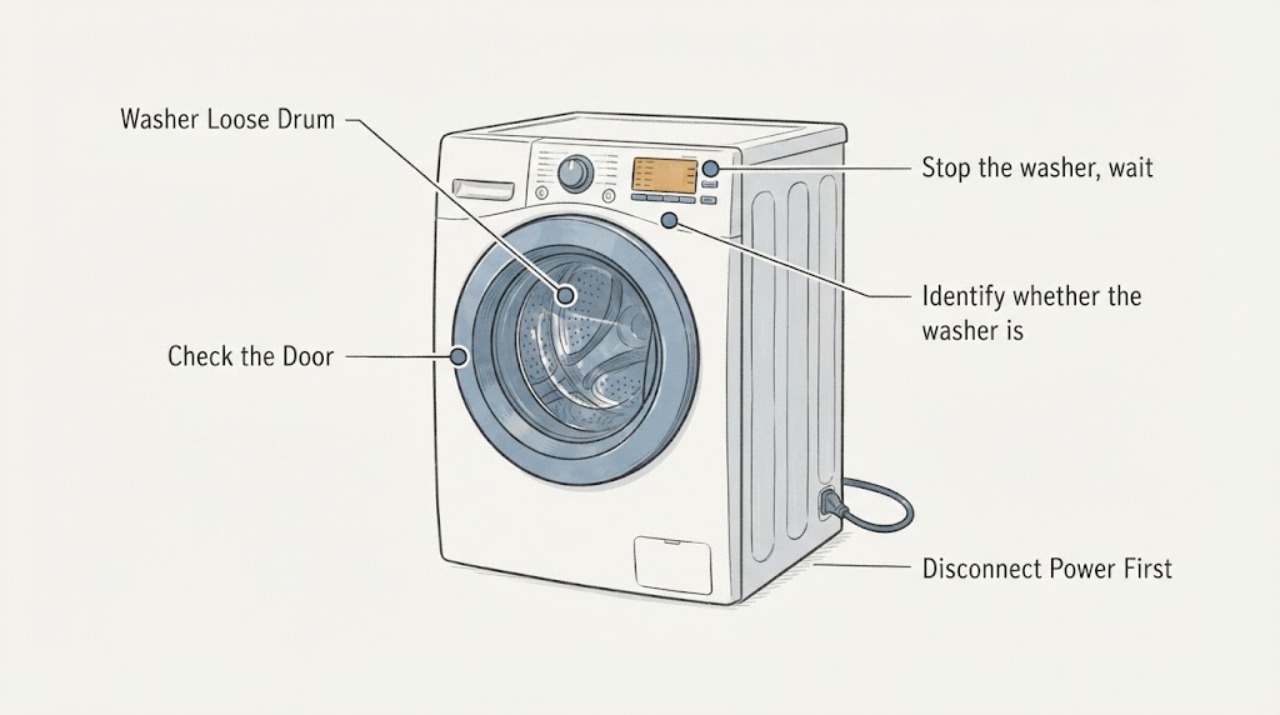
Work through in order
Diagnostic checks
Use only checks that match the exact appliance or system and its official guide.
-
Check 1
Stop the washer, wait for the basket or drum to stop, and unplug it before maintenance, cleaning, leveling or moving checks.
Expected result: The washer has stopped safely, or it is still moving, leaking, rubbing, sparking, or showing exposed damage.
Next step: Keep the washer out of service for the hazardous result and arrange qualified service. Do not reach into a moving basket or remove panels to inspect suspension parts.
Why this matters
Why: External checks are appropriate only with the machine stopped and disconnected. Persistent impact, a leak or electrical damage is beyond a casual loose-drum check.
-
Check 2
Identify whether the washer is top-load or front-load, then inspect the accessible installation: solid level floor, all feet firmly contacting the floor, and no obvious cabinet contact or retained shipping material/bolts.
Expected result: The washer is top-load or front-load, is visibly unlevel, has extended or unlocked legs, was recently moved/installed, or has no obvious installation issue.
Next step: Use the exact model installation instructions to correct leveling or shipping material/bolt issues. Do not improvise a bolt-removal location or force the tub.
Why this matters
Why: GE gives different shipping and movement checks for top-load and front-load designs. An installation issue can make a tub feel loose or cause walking without proving an internal suspension failure.
-
Check 3
Redistribute the load evenly and remove a single heavy or tangled item; for a top-load washer, keep the load below the model's stated capacity, and for a front-load washer, close the door and use the model's normal balance procedure.
Expected result: The movement occurs only with one heavy/small load, clothing collects on one side, or the washer remains unstable with a reasonably balanced load.
Next step: Run only the model-appropriate cycle after the load is corrected. If movement, cabinet impact or rubbing persists with a balanced load, stop testing and arrange service.
Why this matters
Why: A load-dependent event supports an out-of-balance condition. Instability that continues with a balanced load is not explained by the load alone.
-
Check 4
For a front-load washer, after the load is removed and the door is closed, use the model-approved empty rinse-and-spin check; for a top-load washer, observe the machine during a normal empty or small balanced cycle from outside without touching the tub.
Expected result: The empty check is stable, or the empty machine still bangs, rubs, walks, leaks or stops with a movement-related symptom.
Next step: Stop using the washer for the persistent abnormal result and provide the model, cycle, location of contact, and video or sound description to qualified service.
Why this matters
Why: A stable empty check makes the load or installation more likely. Persistent empty-machine movement raises the need for model-specific service but does not identify a particular suspension or bearing part.
-
Check 5
Prepare a service handoff with the full GE model, washer type, installation/move history, load type, empty-check result, level/foot condition, shipping-material status, cabinet contact point, and any leak or electrical symptom.
Expected result: The drum still feels loose or strikes after external load and installation checks, or the machine cannot be safely tested.
Next step: Keep the washer off and arrange GE or qualified appliance service. Do not order or install a suspension, bearing, basket or tub part without model-matched diagnosis.
Why this matters
Why: The remaining issue requires model-specific inspection. A loose feel alone does not establish a failed suspension, bearing, basket, tub or support part.
Use your observations
Decision map
Find the observation that best matches what you see, then follow the next safe action.
-
PATH 01Next step
What you see
The washer is top-load, the tub moves freely by design, does not strike the floor or cabinet, and the movement is not accompanied by persistent noise or walking.
Do this next
Continue with load distribution and level checks. Use the model manual before any maintenance or service decision.
Why this path and its safety boundary
Why it matters: GE describes free movement within the automatic balance suspension as normal on top-load washers; movement alone is not proof of a broken suspension.
-
PATH 02Next step
What you see
The washer becomes unstable only with one heavy or shifted load, after moving, or while visibly unlevel or standing on unlocked/extended legs.
Do this next
Redistribute the load and correct the level or shipping-material issue using the exact GE installation instructions. Stop if impact or leakage remains.
Why this path and its safety boundary
Why it matters: The pattern is consistent with out-of-balance loading or installation rather than a confirmed loose drum assembly.
-
PATH 03Next step
What you see
A front-load drum will not move as GE describes after installation, or an empty rinse-and-spin still causes severe movement, rubbing or cabinet impact.
Do this next
Check only the matching installation instructions for shipping hardware. If the empty check remains abnormal, leave the washer off and arrange qualified service.
Why this path and its safety boundary
Why it matters: Shipping bolts/braces may still be present, or the machine needs model-specific service; the symptom does not prove which internal part is defective.
-
PATH 04Next step
What you see
The washer leaks, sparks, smells burned, exposes a moving or damaged part, or the drum strikes the cabinet even after the load and installation are corrected.
Do this next
Keep the washer disconnected and obtain qualified appliance service. Do not run repeated tests or open the cabinet.
Why this path and its safety boundary
Why it matters: The condition exceeds safe external troubleshooting and could cause further damage or injury.
Helpful context
Understand the symptom
The word loose can describe normal suspension travel, a load that has shifted to one side, a washer that is not level, shipping material left in place, or a genuine mechanical problem. GE's top-load guidance says its basket can float forward, backward, side to side and up and down within the automatic balance system. That movement should not be confused with the basket striking the cabinet or a machine that continues to shake when empty.
Identify the washer type before checking the drum
A top-load washer has a lid and an accessible basket; a front-load washer has a door and a horizontal drum. The safe checks differ. Turn the washer off and unplug it before maintenance or cleaning. Do not reach into the basket while it is moving and do not pull panels to look for a suspension failure.
Correct the external causes first
GE identifies an unbalanced load, an unlevel floor, excessive leg extension and retained shipping material or bolts as common vibration paths. A single heavy item can shift the load dramatically. Check that the machine sits firmly on a solid floor, the legs are locked according to the model instructions, and the installation material was removed or retained correctly for the washer's type and date.
Use an empty check to separate load imbalance from machine movement
For a front-load model, GE recommends a rinse-and-spin check with no load after redistributing clothing. For a top-load model, first redistribute the load and verify leveling rather than trying to restrain the floating tub. If the empty machine is quiet and stable but a particular load causes movement, the load or installation is more likely than a proven broken suspension. If the empty machine still bangs or rubs, stop and arrange service.
Escalate persistent impact or inaccessible movement
Record the model, washer type, whether the problem started after moving or installation, whether the basket is empty, where it contacts the cabinet, and whether there is water or electrical damage. A service technician can then match the installation instructions and inspect the suspension, tub, basket, bearings or other parts without the reader guessing which component has failed.
When checks do not resolve it
Need a professional?
Call GE or qualified appliance service when the empty washer still bangs, rubs, walks, leaks or exposes damage after the load, level and model-matched shipping checks, or whenever the symptom cannot be checked safely.
Safety scope: Unplug before maintenance, do not reach into a moving basket, do not force or restrain the tub, do not remove cabinet panels, and keep the washer off for persistent empty-load impact, rubbing, leaks or electrical damage.
Have this ready
- Full GE model, top-load/front-load type, move or installation history, load and empty-cycle behavior, level/feet condition, shipping hardware status, cabinet contact location, and any leak, smell or electrical symptom.
Common questions
FAQ
Does a moving GE washer tub mean the suspension is broken?
No. GE says top-load tubs can move freely within the automatic balance suspension, and front-load washers can move during an out-of-balance event. Check load, level, shipping hardware and an empty cycle before concluding that an internal part failed.
What should I check first when the washer drum feels loose?
Identify the washer type, stop and unplug it, then check whether the load is shifted, the washer is level and firm, and whether shipping material or bolts are still present after a recent installation or move. Use the exact model instructions for corrections.
Can I keep running the washer to see whether the loose drum settles?
Do not keep testing a machine that strikes the cabinet, rubs, leaks, smells burned or remains unstable when empty. Stop and arrange service; a symptom does not identify a safe DIY suspension repair.
Read the exact guide
Official sources
- Top Load Washer - Walking or VibratingGE Appliances · Applies specifically to GE top-load washers; used for unplug-before-maintenance, shipping material, level, load redistribution and service escalation.
- Front Load Washer - Walking, Vibrating, Shaking, or MovingGE Appliances · Applies specifically to GE front-load washers; used for empty-cycle distinction, shipping-bolt boundary, leveling and service escalation.
- Top Load & Unitized Washers - Moving InstructionsGE Appliances · Applies to GE top-load and unitized washers; used only for safe unplugging, water shutoff, moving and shipping-material context, not for internal suspension diagnosis.
- Top Load Washer - Tub Movement / Auto Balance SystemGE Appliances · Applies specifically to GE top-load washers; used to distinguish normal floating tub movement from a confirmed loose or broken part.
Community feedback
Share a repair observation
Share a plain-text repair observation. Accepted observations are published automatically; this page may take a moment to update.