
On this page
Start here
Quick answer
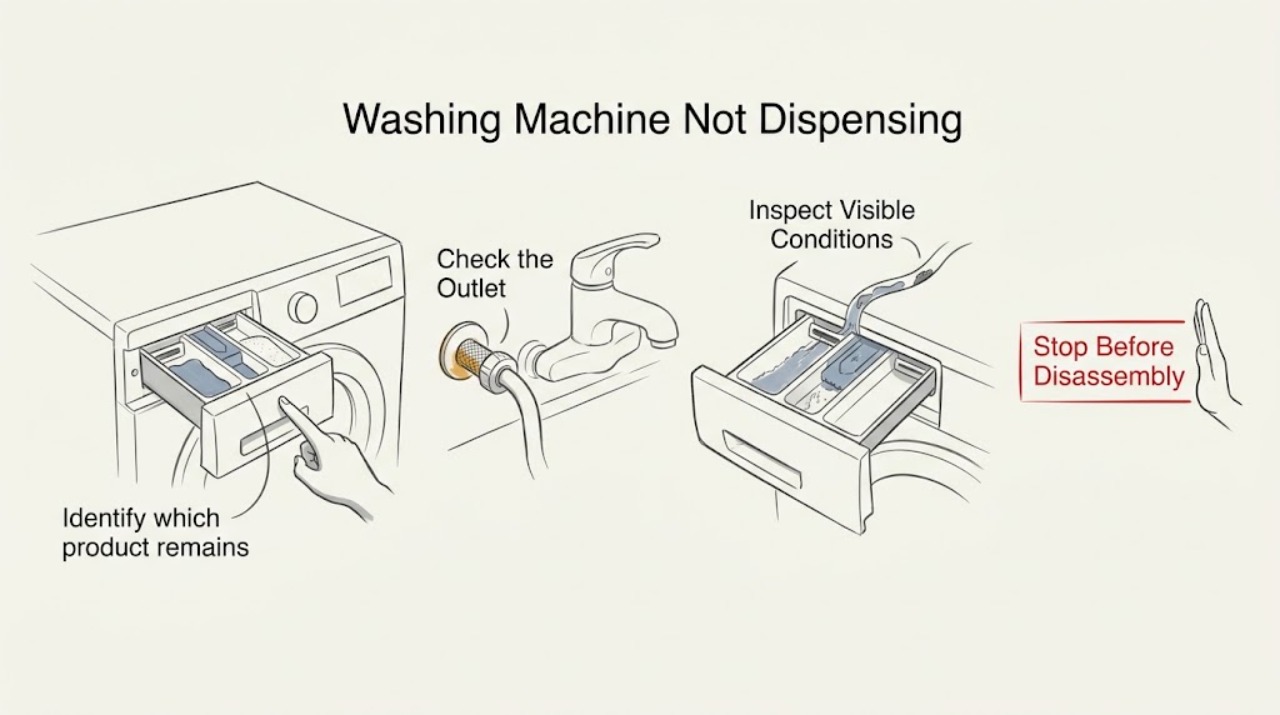
If a Haier washing machine leaves detergent or softener in the drawer, first confirm the product is in the correct compartment and the cycle actually calls for that product. With the machine stopped and dry around the controls, check that the tap is open, the inlet hose is not kinked, and water pressure is adequate. Remove the drawer only as the model instructions allow, flush residue with water, and check the inlet screen without forcing or puncturing it. Too much or unsuitable detergent, a thickened residue, low inlet flow, a blocked screen, or a siphon insert that is not seated can prevent flushing. If water leaks, reaches electrical parts, the machine smells hot, trips a breaker, or the drawer remains full after low-risk checks, stop using it and arrange Haier service.
Work through in order
Diagnostic checks
Use only checks that match the exact appliance or system and its official guide.
-
Check 1
Stop the washer and check whether water is leaking, standing near the plug or outlet, entering the control panel, or accompanied by a hot smell, smoke, spark, or a tripped breaker.
Expected result: Any leak reaches electrical areas, or there is a hot smell, smoke, spark, damaged cord, or repeated breaker trip.
Next step: Stop using the washer. Do not touch wet electrical parts; isolate power only if it is safe to do so, close the water tap if safely accessible, and arrange qualified service.
Why this matters
Why: This is an electrical or water-safety condition, not a routine dispenser blockage.
-
Check 2
Identify which product remains and compare its location with the exact drawer labels or manual: prewash detergent, main-wash detergent, softener, or an automatic dosing chamber.
Expected result: The product is in a compartment not used by the selected cycle, or the drawer layout does not match a generic diagram.
Next step: Move only fresh product to the compartment named by the model manual and select the corresponding cycle option. If the correct compartment still remains full, continue with the residue and water checks.
Why this matters
Why: A correct product can remain untouched when its option is not selected, and Haier drawers differ by model; a generic compartment assumption can create the symptom.
-
Check 3
Check the detergent and softener amount against the product label and the washer manual, then look for a thick gel, dried powder, or a skin of residue blocking the drawer outlet.
Expected result: The compartment is overfilled, the product is outside the recommended type or amount, or residue forms a physical plug; or the product is correctly dosed and the channel is clear.
Next step: Remove excess product without mixing chemicals, use only the recommended machine-wash product and amount, and continue to drawer cleaning. If the clean product still is not flushed, check water entry.
Why this matters
Why: Haier notes that excess detergent is difficult to flush and that a clogged detergent box can stop the product reaching the drum.
-
Check 4
With the washer stopped, remove the drawer using the model's release method, rinse it with clean water, and inspect the siphon cover or insert for residue; reinstall it fully without forcing it.
Expected result: Residue or a blocked siphon path is found and the drawer moves or seats normally after rinsing, or the drawer is cracked, warped, missing an insert, or will not seat.
Next step: Use clean water and a soft cloth only, let the drawer drain, and reinstall it as the manual shows. If it is damaged or will not seat, leave the washer off and request model-specific service or a confirmed replacement drawer.
Why this matters
Why: A residue plug can prevent the flush or siphon action. Damage or incorrect seating can leave a gap or block the water path and is not corrected by adding more detergent.
-
Check 5
Check the water tap, inlet hose and accessible inlet filter or screen with the tap closed; look for a kink, crushed hose, visible debris, or a frozen connection, and do not remove sealed valve parts.
Expected result: The tap is closed, pressure is low, the hose is kinked, or the inlet screen is visibly dirty; or the supply is open and unobstructed.
Next step: Open the tap fully, straighten an accessible hose, and clean only a removable screen as the exact manual permits. If pressure remains low or the screen is inaccessible, contact the water provider or Haier service rather than modifying the valve.
Why this matters
Why: Haier identifies inadequate pressure and a blocked or kinked inlet path as causes of insufficient filling and detergent flushing. Pressure references can vary by model and region.
-
Check 6
Confirm the selected cycle, prewash option, delay setting, and water-temperature selection, then compare the detergent type with the product label and Haier's model guidance before starting a rinse or wash test.
Expected result: The cycle does not use the compartment, a delay or automatic dosing mode changes the expected path, or the product and temperature are incompatible with the label or model instructions.
Next step: Choose a cycle that uses the intended compartment and follow the manual's temperature and dosing instructions. Do not add bleach, solvents, or other cleaners to force a flush.
Why this matters
Why: A compartment may remain untouched by design, and detergent behavior changes with product type and water temperature; extra detergent will not fix a selection mismatch.
-
Check 7
Run one short, supervised cycle or rinse with the drawer correctly seated and no extra chemicals, observing whether water enters the washer and whether the affected compartment empties without leaking.
Expected result: Water enters normally and the compartment empties, or the washer has little/no fill, the compartment remains full, or water spills from the drawer.
Next step: If the test succeeds, use the manual's dosage and cleaning routine. If it fails or leaks, stop the washer, close the tap if safe, and arrange service; do not run repeated tests.
Why this matters
Why: A successful flush supports a corrected drawer, product, setting, or supply issue. Continued failure points to an inlet valve, dispenser jet, siphon assembly, control timing, or another model-specific fault.
-
Check 8
Document the model, product compartment affected, amount and type of residue, water-flow symptom, cycle and temperature, and any leak or display behavior for Haier support.
Expected result: The pattern is repeatable with one compartment or cycle, or the issue is intermittent or paired with a safety symptom.
Next step: Give the technician the model and the saved observations. If the problem is intermittent, stop using the affected dosing path until support confirms it is safe.
Why this matters
Why: These details distinguish a cycle-selection or product issue from a supply, dispenser, sensor, or control fault without internal disassembly.
Use your observations
Decision map
Find the observation that best matches what you see, then follow the next safe action.
-
PATH 01Next step
What you see
Water reaches electrical parts, or there is a hot smell, smoke, spark, damaged cord, or repeated breaker trip
Do this next
Stop immediately, avoid wet electrical areas, isolate power only if safe, and arrange qualified service.
-
PATH 02Next step
What you see
The product is in a compartment not used by the selected cycle
Do this next
Use the exact manual's compartment and cycle option; do not treat an untouched prewash or automatic chamber as a fault.
-
PATH 03Next step
What you see
Excess, unsuitable, or dried product blocks the drawer
Do this next
Remove residue safely, rinse with clean water, and use only the specified product and amount.
-
PATH 04Next step
What you see
The drawer or siphon path is dirty but intact
Do this next
Flush the removable drawer and siphon parts with clean water as the model instructions allow, then seat the drawer fully.
-
PATH 05Next step
What you see
The drawer is cracked, warped, missing an insert, or will not seat
Do this next
Do not force it or run the washer; arrange model-specific service or confirmed replacement.
-
PATH 06Next step
What you see
The tap is closed, inlet pressure is low, or the hose or accessible screen is restricted
Do this next
Open the tap or correct an accessible hose/screen issue safely; escalate persistent pressure or valve problems.
-
PATH 07Next step
What you see
The drawer remains full or leaks after cleaning and normal water supply checks
Do this next
Stop repeated testing and request service for the inlet valve, dispenser jets, siphon assembly, control timing, or another model-specific fault.
-
PATH 08Next step
What you see
One supervised test flushes the correct compartment without leaks
Do this next
Resume normal use with the manual's cycle selection, product type, temperature and dosage guidance, and clean the drawer routinely.
Helpful context
Understand the symptom
What not dispensing usually means
The dispenser is normally flushed by incoming water. A drawer that is dry can point to little or no inlet flow; a drawer with a wet cake or pooled liquid more often points to residue, an incorrect compartment, excess product, or a blocked siphon path. The right diagnosis depends on whether the detergent, softener, or both remain and whether the washer fills normally during the selected cycle.
Compartments and products are model-specific
Traditional drawers commonly separate prewash detergent, main-wash detergent, and softener, but Haier's model-specific instructions can use automatic dosing or different drawer layouts. Use the labels in the exact manual. Do not pour detergent, softener, bleach, or disinfectant into a compartment that the manual does not identify for it, and do not combine cleaning chemicals in the drawer.
Pressure and temperature affect the result
Low water pressure or a restricted inlet screen can prevent the jets from flushing the drawer. The selected cycle also controls when and how a compartment is used; a prewash compartment may remain untouched when prewash is not selected. Detergent performance depends on product and temperature, so follow the detergent label and the washer manual rather than adding extra product to compensate for residue.
Keep the check safe
Stop the washer before removing the drawer or checking the inlet connection. Keep water away from the plug, outlet, and control panel. Do not use a needle or sharp object to enlarge a jet, mix bleach with other cleaners, reach into a running washer, or remove panels to test an inlet valve. Persistent leakage, a hot smell, smoke, a spark, or a repeat breaker trip needs service.
Only after diagnosis
Potential parts
- washing machine detergent drawer or siphon insert
Only consider this part if cleaning does not restore the path and the exact model drawer or siphon insert is cracked, missing, warped, or confirmed faulty.
Confirm the complete model and manufacturer's fit information before ordering. - washing machine water inlet valve
Only consider this part after normal tap pressure, hose routing and accessible inlet-screen checks are passed and service diagnosis confirms inadequate valve flow.
Do not infer compatibility from the symptom; verify the model and have water connections serviced safely. - washing machine dispenser housing or water jet assembly
Only consider this part when the drawer is intact, supply flow is normal, and a qualified diagnosis finds a blocked or damaged dispenser channel.
Confirm model-specific fit and repair procedure before ordering; do not enlarge jets or remove panels as a user check.
When checks do not resolve it
Need a professional?
Call Haier or a qualified appliance technician when the drawer remains full after correct placement, cleaning and normal water-supply checks; the drawer is damaged or will not seat; water spills or leaks; pressure remains low; or the washer shows a fill, valve, sensor or control fault. Stop immediately if water reaches electrical parts, the cord is damaged, there is a hot smell, smoke, spark, or a breaker trips again. Do not open panels, puncture jets, modify the inlet valve, or mix cleaning chemicals.
Common questions
FAQ
Why is my Haier washing machine not dispensing detergent?
Check the selected cycle and compartment, dosage, drawer residue, water tap, inlet hose, pressure and accessible inlet screen.
Which Haier drawer compartment should hold detergent?
Layouts vary, but Haier commonly separates prewash detergent, main-wash detergent and softener. Use the labels and manual for your exact model.
Can too much detergent stop a Haier washer from dispensing?
Yes. Excess product can be difficult to flush and can leave a plug or residue. Use only the label and model-recommended amount.
How do I clean a Haier detergent drawer?
Stop the washer, remove the drawer using its model-specific release, rinse it with clean water, clear residue without sharp tools, and reinstall it fully.
Can low water pressure cause a Haier dispenser problem?
Yes. Haier identifies low pressure and a blocked inlet hose or filter as causes of inadequate filling and detergent flushing.
Does the wash temperature affect detergent dispensing?
The selected cycle and temperature affect how a product behaves and when a compartment is used. Follow the detergent label and exact Haier manual.
When should I stop using the washer and call service?
Stop for leaks near electrical parts, a hot smell, smoke, sparks, a damaged cord, repeated breaker trips, persistent no-fill, or a drawer that still will not empty after safe checks.
Read the exact guide
Official sources
- The washing machine no washHaier India · Haier washing-machine water supply, dispenser, controls and service escalation
- Common problem trouble shooting for top load washing machineHaier India · Haier washing-machine unplug-before-checking and service boundary guidance
- Detergent and Softener use instructions for model HWD240-BD12LGNU1Haier Malaysia · Haier model-specific manual and automatic dosing compartment distinctions
- Washing machine can not be filled with waterHaier India · Haier washing-machine water tap, pressure, inlet hose and inlet filter checks
- The detergent in the detergent box can not be swilled into the drum.Haier India · Haier washing-machine detergent flushing, pressure, inlet filter, compartment, dosage and residue troubleshooting
- Cleaning the detergent drawerHaier Malaysia · Haier washing-machine detergent drawer removal, water rinse and reinsertion
- About selecting detergent for washing machineHaier Malaysia · Haier washing-machine detergent type, label, delay and temperature guidance
- How to adding Detergent?Haier India · Haier washing-machine drawer compartments, product placement and dosage guidance
- How can I clean siphon tube at the rear of the dispenser drawer?Haier Tanzania · Haier washing-machine dispenser siphon tube cleaning
Community feedback
Share a repair observation
Share a plain-text repair observation. Accepted observations are published automatically; this page may take a moment to update.