
On this page
Start here
Quick answer
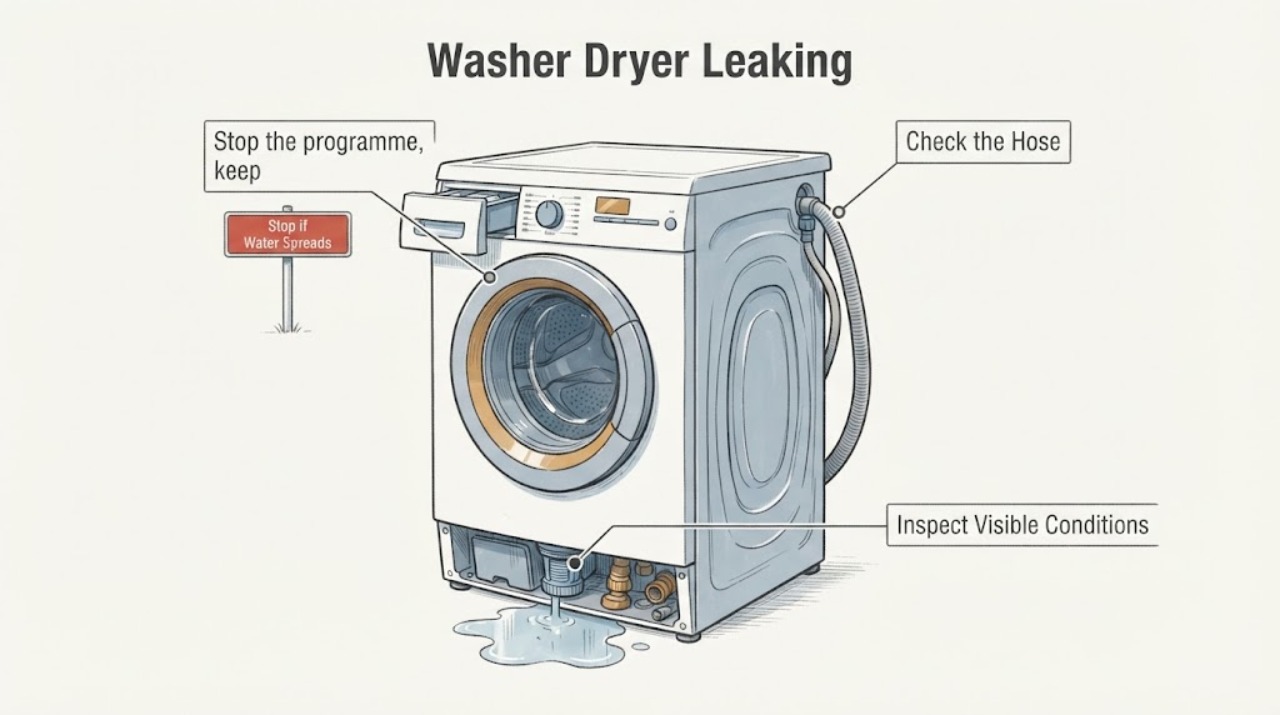
If a Hoover washer dryer is leaking, stop the programme, keep hands and the floor dry, and disconnect power from a safe dry position before examining anything. Close the water tap, then identify whether water is coming from the rear inlet connection, door glass or seal, detergent drawer, drain hose, or pump-filter area. Hoover advises checking hose washers and connections, cleaning residue from the door glass, and refitting a pump filter with its seals clean and fully seated. Do not run another cycle while a leak reaches electrical parts, a hose is split, the filter cannot seal, or the source is inside the cabinet; arrange qualified service.
Work through in order
Diagnostic checks
Use only checks that match the exact appliance or system and its official guide.
-
Check 1
Stop the programme, keep the floor and hands dry, and close the water tap if it is reachable without stepping through water. Disconnect mains power only from a dry, safe position; do not move the machine or open its cabinet while water is present.
Expected result: Water is near electrical parts, the hose continues to flow with the tap closed, or the leak is small and fully stopped.
Next step: For any electrical exposure, steady flow, split hose, or unsafe access, leave the washer dryer disconnected and arrange qualified service. If the area is safe and dry, trace the external source without running the machine.
Why this matters
Why: Water and electricity create an immediate safety boundary, while a stopped small leak can be traced externally after the appliance is isolated. A continuing flow or inaccessible source needs service rather than another test cycle.
-
Check 2
With water and power isolated, inspect the visible cold-water hose at the machine and tap. Check whether a connection is loose, a washer is missing, or the hose is cracked or damaged; do not loosen a connection that is still pressurized.
Expected result: The leak begins at the tap or rear inlet connection, or both connections and the hose appear dry and intact.
Next step: If the leak is only a safely accessible loose connection, hand-tighten it as Hoover directs and verify the washer is present; replace a damaged hose with the model-specified supplied type. If it still leaks, keep the tap closed and request service.
Why this matters
Why: Hoover identifies the tap and machine-end hose connections as common external leak points and notes that a missing washer can prevent a seal. A dry inlet path shifts attention to the door, dispenser, drain, or an internal hose.
-
Check 3
Wipe the visible door glass and the accessible edge of the door seal with a soft cloth after the machine is isolated. Look for fibres, limescale, debris, a torn seal, or laundry caught between the glass and gasket; do not force the door or pull the seal out.
Expected result: Residue or an obstruction is present at the glass/seal, the seal is visibly damaged, or the door area is clean and intact.
Next step: Remove only loose residue or a visible item, close the door normally, and do not run a cycle until the area is dry. A damaged or displaced seal, or a repeated front leak, requires service.
Why this matters
Why: Hoover says deposits on the door glass can prevent a tight seal and cause water to leak during the wash cycle. A tear, displaced gasket, or clean door area with a front leak points to a repair or another source.
-
Check 4
Inspect the detergent drawer, its outlet, the visible drain hose, and the floor drain for residue, a kink, a loose connection, or a blockage. Clean only the accessible drawer or reposition a visible hose as the manual allows; do not remove a rear hose or run a test with a blocked drain.
Expected result: Water starts at the drawer, the drain hose or house drain is blocked/misrouted, or the accessible dispenser and drain path look normal.
Next step: Clear only accessible residue or a visible kink, dry the area, and check that the drain connection is secure. If the leak repeats during filling or draining, keep the machine off and request service.
Why this matters
Why: Hoover's washer-dryer manual lists a soap drawer with residues, a blocked house drain, and a kinked discharge hose among causes of water on the floor. A normal visible path makes an internal pump, hose, or tub seal more likely.
-
Check 5
If your model has an accessible pump filter and the manual permits owner cleaning, disconnect mains power, close the tap, allow hot water to cool, place absorbent towels and a suitable container, and follow the manual's drain procedure. Inspect the filter seal for lint or debris and refit it fully; do not remove the filter if retained water cannot be controlled.
Expected result: The leak began after filter cleaning, the filter seal or cap is dirty/not seated, or the filter area is dry and secure.
Next step: Clean the accessible seal and refit the cap exactly as the model guidance shows, then keep the washer dryer off until the area is dry. If the filter still leaks or water comes from behind the panel, arrange service.
Why this matters
Why: Hoover says a filter leak after refitting can result from dirty seals or an incompletely seated cap, while the manual identifies foreign bodies in the filter as a drain problem. A secure filter with a continuing leak points to a pump or internal hose issue.
Use your observations
Decision map
Find the observation that best matches what you see, then follow the next safe action.
-
PATH 01Next step
What you see
Water is near the plug, socket, cord, or controls, the hose is split, or water continues after the tap is closed.
Do this next
Do not touch wet electrical parts or move the machine through water. Disconnect power only from a dry, safe position, keep the tap closed, and arrange qualified service.
-
PATH 02Next step
What you see
Water appears at the tap or rear cold-water connection.
Do this next
Keep the tap closed. Hand-tighten only a safely accessible connection as Hoover directs and verify the washer; replace a damaged hose with the model-specified type or request service if leakage continues.
-
PATH 03Next step
What you see
Water appears at the front of the door during filling or washing.
Do this next
Clean only accessible glass and seal residue after isolating the appliance. Do not force or replace the gasket yourself; a repeated or damaged-seal leak needs service.
-
PATH 04Next step
What you see
Water appears below the detergent drawer or at the rear/drain side during filling or draining.
Do this next
Clear only accessible residue or a visible hose kink, keep the machine off if the leak repeats, and request service for an internal or persistent leak.
-
PATH 05Next step
What you see
The pump-filter area leaks after cleaning, or the source is behind a panel or cannot be safely reached.
Do this next
Keep water and power isolated. Clean and refit the accessible seal only as the model guidance allows; if the leak continues or the source is internal, arrange qualified service.
Helpful context
Understand the symptom
A leak from a Hoover washer dryer may appear only while filling, during washing, while draining, or during a later drying phase. The puddle may not be directly below the source. First stop the cycle and protect the floor, then use the timing and location of the water to separate an inlet, door, dispenser, drain, or internal leak. Model access and filter procedures vary, so keep the full model number available.
Do not reach behind a wet appliance, pull off a pressurized hose, force a door, or open the cabinet. If water is near a socket, plug, cord, or control, disconnect power only from a dry, safe position. A split hose, steady flow after the tap is closed, repeated leak, or leak from inside the cabinet is a stop-use condition.
Only after diagnosis
Potential parts
- Hoover washer-dryer inlet hose and sealing washer
Consider this only when the leak is confirmed at the tap or machine-end inlet connection and the hose or washer is damaged or missing.
Confirm the complete Hoover model and the manufacturer's specified hose before ordering any component. - Hoover washer-dryer door gasket
Consider this only when service confirms a torn, displaced, or hardened door seal after glass and obstruction checks.
Match the exact model and authorized parts information; do not infer fit from a similar-looking gasket. - Hoover washer-dryer pump filter seal or drain pump
Consider this only when the filter is correctly seated but service confirms a failed seal, pump, or drain path rather than a loose cap or blockage.
Use the complete model identification and authorized parts information before replacement.
When checks do not resolve it
Need a professional?
Request Hoover-authorized or otherwise qualified appliance service when the washer dryer leaks after the accessible inlet, door, drawer, drain, and filter checks, or whenever water and electricity cannot be safely separated.
Have this ready
- Provide the full model number, when the leak occurs, where the first water appears, whether the tap was closed, hose and washer condition, door-glass or seal condition, drawer and drain observations, filter history, and whether water reached the plug, socket, or controls.
Common questions
FAQ
Why is my Hoover washer dryer leaking?
Check the inlet hose and tap, door glass and gasket, detergent drawer, drain hose, and pump-filter seal. The timing and location of the first water usually indicate which area to inspect.
Should I keep running a Hoover washer dryer with a small leak?
No. Stop the cycle, close the water tap, and disconnect power only from a dry, safe position. A leak near electrical parts or a repeated leak needs qualified service.
Why does my Hoover washer dryer leak from the door?
Hoover says limescale, fibres, and debris on the door glass can stop the door sealing tightly. Clean only accessible residue after isolating the appliance; a damaged seal requires service.
Why does the pump filter leak after I cleaned it?
Hoover identifies dirty filter seals or an incompletely seated cap as possible causes. Isolate the appliance, follow the exact manual's drain procedure, and request service if the filter still leaks.
Read the exact guide
Official sources
- Clean the filter sealHoover · Hoover models listed by the Advice Centre; use the exact manual for filter access
- Leaking - Hoover Advice CentreHoover · Hoover washing machines and washer dryers; model applicability varies by listed product
- Hoover Washer Dryer VisionHD 8+5 VHW854D-80 Instruction ManualHoover · Hoover VHW854D-80 washer dryer; use the matching manual for another model
- Make sure the door glass is cleanHoover · Hoover washing machines and washer dryers listed by the Advice Centre
Community feedback
Share a repair observation
Share a plain-text repair observation. Accepted observations are published automatically; this page may take a moment to update.