
On this page
Start here
Quick answer
Treat a Hotpoint oven gas smell as a gas-safety event until a qualified gas professional clears the appliance. Stop using the oven, do not try to light it again, do not operate electrical switches or create a flame, and leave the area. From outside the affected area, use the local gas emergency or fire-service route and then arrange qualified appliance service. A brief new-oven or combustion odor can have a different explanation, but a rotten-egg or unburned-gas smell, a smell that persists, a delayed ignition, a boom, an abnormal flame, or any visible damage is not a user troubleshooting situation.
Before you begin
Safety first
- Do not try to light the oven, repeat ignition, operate electrical switches, use a flame to find a leak, move the cooker, open gas compartments, disconnect a hose, adjust gas controls, or perform a repair. Leave the area and seek qualified help from a safe location.
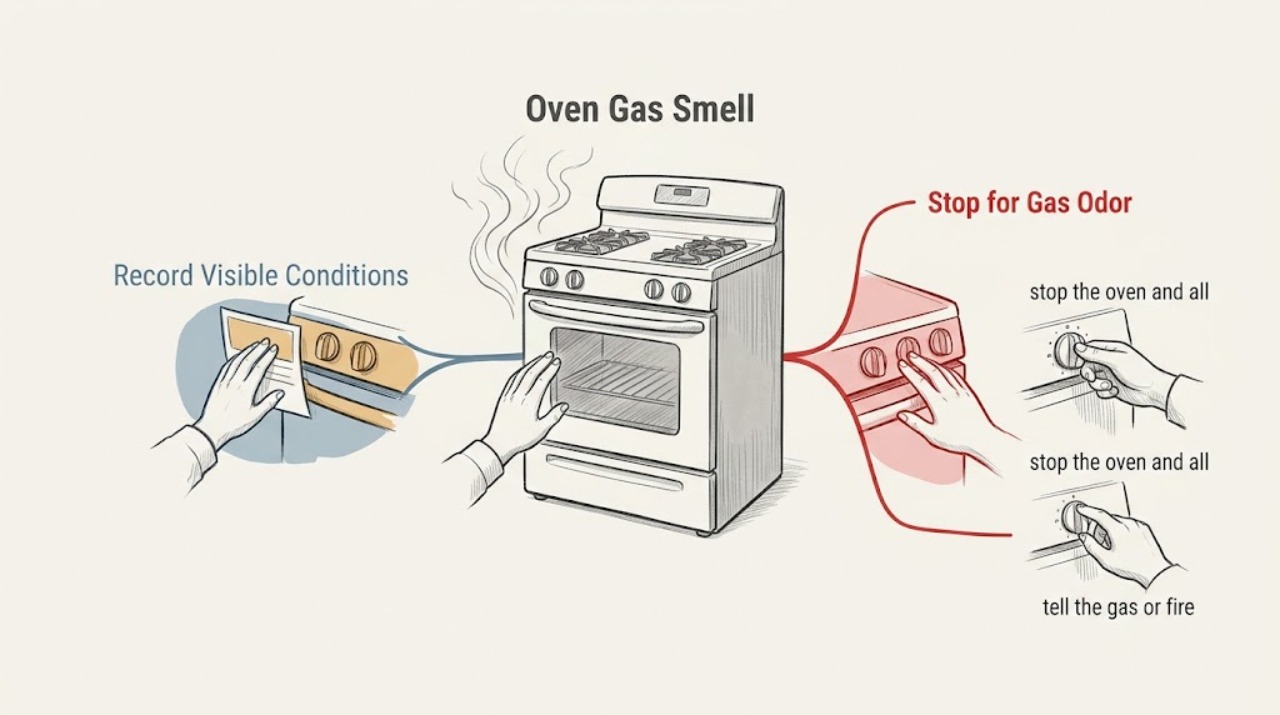
Work through in order
Diagnostic checks
Use only checks that match the exact appliance or system and its official guide.
-
Check 1
If you smell gas now, stop the oven and all troubleshooting immediately; leave the kitchen and building by the safest available route without trying another ignition or heat cycle.
Expected result: A rotten-egg or unburned-gas odor, a strong or spreading smell, or an odor present while the oven is off is an active gas-safety symptom. Smoke, flames, a boom, or an abnormal flame makes the situation more urgent.
Next step: From outside the affected area, use the local gas emergency or fire-service route. Keep the Hotpoint appliance off and do not re-enter to operate controls until the area has been declared safe.
Stop if: Do not touch electrical switches, use a flame, operate the oven controls, or search for the leak.
Why this matters
Why: Unburned gas is not a normal condition to troubleshoot at home. A gas leak can ignite and cause fire, burns, or other harm.
-
Check 2
Once everyone is in a safe place, tell the gas or fire responder whether the smell began during startup, continued after the oven was turned off, or was present with the oven unused; do not return to inspect the appliance for this information.
Expected result: A smell that continues after shutdown or occurs while unused supports a possible unburned-gas or connection problem. A smell only noticed briefly at startup may be combustion odor, but it is not cleared solely by that timing.
Next step: Follow the responder's instructions and arrange a qualified gas-appliance inspection before using the oven again, even if the smell has faded.
Stop if: Do not re-enter to close a valve, move the cooker, relight a pilot, or check a burner unless directed and equipped by a qualified professional.
Why this matters
Why: Timing helps the responder prioritize the assessment; it does not justify a second ignition attempt or a user leak test.
-
Check 3
After the immediate safety response, record from a safe location whether there was a delayed ignition, boom, door movement, yellow or orange flame, smoke, soot, unusual heat, or a recent installation or move.
Expected result: A boom or door movement is consistent with delayed ignition; a completely yellow or orange flame, smoke, soot, or unusual heat indicates an abnormal combustion or overheating concern; a recent move or installation provides important service context.
Next step: Give the observation and its timing to the gas responder or qualified Hotpoint service provider. Keep the appliance out of use until it is assessed.
Stop if: Do not look inside the oven while it is operating, relight it to watch the flame, adjust air or gas controls, or clean a suspected leak area while gas odor remains.
Why this matters
Why: These observations change the professional-service boundary but do not identify a part. Gas pressure, airflow, ignition, installation, and appliance safety systems require qualified assessment.
-
Check 4
Only when the area and appliance have been declared safe, read the Hotpoint model and serial information from its normal label location without moving the cooker or opening a gas compartment.
Expected result: The model and serial information allow a professional to check the correct manual, installation requirements, and any Hotpoint safety notice. A missing or unreadable label is a service-information issue, not a reason to dismantle the appliance.
Next step: Check the official Hotpoint safety-notice information or provide the model to qualified service. If the model is listed in a safety notice, do not use it until the stated corrective action is completed.
Stop if: Do not approach or handle the appliance for label access if gas odor, heat, smoke, water, or electrical damage is still present.
Why this matters
Why: Hotpoint's safety-notice process uses the model number to determine whether a product is affected, and the UK product-safety report lists specific Hotpoint gas-cooker models subject to corrective action.
-
Check 5
Before service arrives, write down whether the odor came from the oven cavity, around the cooker, or from the room generally, and whether anyone experienced headache, dizziness, breathing difficulty, or other symptoms; do not attempt to identify the source by smell or touch.
Expected result: A location that cannot be safely confirmed, a smell present away from the oven, or health symptoms increases the need for emergency and professional assessment rather than appliance testing.
Next step: Tell the emergency or gas professional exactly what was observed, keep people and pets away as directed, and do not use the oven until cleared.
Stop if: Do not return to collect items, ventilate by operating electrical equipment, or restart the appliance to reproduce the smell.
Why this matters
Why: A gas odor may involve the appliance, its connection, or another gas source. Health symptoms can also indicate a combustion or carbon-monoxide concern that cannot be diagnosed by the appliance user.
-
Check 6
At handoff, provide the model, fuel type if known, when the odor began, whether the oven was running, any delayed ignition or abnormal flame observation, and whether the smell returned after shutdown.
Expected result: A complete timeline helps the qualified professional separate a reported startup odor from a suspected leak, delayed ignition, ventilation issue, or product-safety concern without asking the user to reproduce the event.
Next step: Leave diagnosis, leak testing, parts selection, repair, and return-to-use approval to the qualified gas professional or authorized Hotpoint service channel.
Stop if: Do not order or install a gas component based on the odor description alone.
Why this matters
Why: The information supports safe triage but cannot confirm a gas valve, igniter, regulator, hose, or burner fault without professional inspection.
Use your observations
Decision map
Find the observation that best matches what you see, then follow the next safe action.
-
PATH 01Safety boundary
What you see
Gas odor is present now, especially with the oven off, or there is smoke, fire, a boom, delayed ignition, or an abnormal flame.
Do this next
Leave the area, avoid switches and flames, and from outside the affected area use the local gas emergency or fire-service route. Keep the oven off until qualified responders clear it.
Why this path and its safety boundary
Safety stop: Do not re-enter to inspect, close a valve, relight, or reproduce the event.
-
PATH 02Safety boundary
What you see
The odor was noticed briefly when a gas oven first started, with no continuing smell, abnormal flame, smoke, boom, or health symptom.
Do this next
Do not assume it is safe from timing alone. Keep use paused and have qualified service or the gas provider assess the appliance before further operation, especially if the odor is unfamiliar or stronger than expected.
Why this path and its safety boundary
Safety stop: Do not run another cycle to see whether the smell disappears.
-
PATH 03Safety boundary
What you see
The model matches a Hotpoint gas-cooker safety notice or the appliance has a recent installation, move, or known connection concern.
Do this next
Do not use the cooker. Follow the official notice and arrange the stated corrective action or qualified inspection.
Why this path and its safety boundary
Safety stop: Do not attempt a temporary seal, hose adjustment, or self-repair.
-
PATH 04Safety boundary
What you see
The smell source, timing, model, or appliance state cannot be confirmed safely.
Do this next
Treat it as a possible gas leak, keep the oven off, leave if odor returns, and ask the gas provider or qualified gas professional to assess the area and appliance.
Why this path and its safety boundary
Safety stop: Do not use smell, flame, electrical equipment, or panel removal to locate the source.
Helpful context
Understand the symptom
Stop first; diagnose later
Do not keep preheating a Hotpoint gas oven to see whether the smell goes away. A gas odor can be unburned fuel, combustion by-products, or a product-specific safety issue, and the distinction cannot be made safely by repeated home tests. Turn the appliance off if that is immediately safe, leave the area, and get help from outside the affected area.
Why the timing matters without making it safe
Official gas-range guidance says a brief odor when a burner first starts may come from combustion and should disappear as the oven heats. It also says unburned gas has a different odor, often compared with rotten eggs, and is not normal in a home. Timing alone does not clear a Hotpoint oven: persistent smell, delayed ignition, a boom, a door pushed open, yellow or orange flames, or smoke requires service.
Do not perform a leak test yourself
Do not use a match, lighter, candle, electrical switch, appliance control, or other ignition source to locate gas. Do not pull the cooker out, open panels, disconnect a hose, adjust a regulator, or relight the oven. A qualified gas professional must determine whether the appliance, connection, ventilation, or a safety notice is involved.
When checks do not resolve it
Need a professional?
Use the local gas emergency or fire-service route immediately from outside the affected area for a current gas odor, smoke, fire, delayed ignition, a boom, an abnormal flame, or symptoms that could indicate unsafe combustion. Arrange qualified gas-appliance service before any further use for a persistent or unexplained odor, an odor that returns after shutdown, a recent move or installation, visible damage, or a model covered by a Hotpoint safety notice.
Common questions
FAQ
Is a gas smell when a Hotpoint oven starts normal?
A brief combustion odor can occur when a gas oven first starts, according to official gas-range guidance, but timing alone does not clear a Hotpoint appliance. A rotten-egg or unburned-gas smell, persistent odor, delayed ignition, boom, abnormal flame, or smoke requires immediate stop and qualified assessment.
What should I do if I smell gas from my Hotpoint oven?
Stop using the oven, do not operate electrical switches or create a flame, leave the area, and from outside the affected area use the local gas emergency or fire-service route. Do not return to relight or inspect the oven until qualified responders clear it.
Can I check the Hotpoint oven gas valve or hose myself?
No. Do not move the cooker, open a gas compartment, disconnect a hose, adjust a valve, or perform a leak test. A qualified gas professional must assess the appliance and its connection.
How do I know whether my Hotpoint cooker is covered by a safety notice?
Only check the model information when the appliance and area are safe to approach. Use the official Hotpoint safety-notice process or the relevant government report; if the model is listed, do not use it until the stated corrective action is complete.
Read the exact guide
Official sources
- Gas Range - What is Normal Operation vs What Requires ServiceGE Appliances · Official gas-range normal-versus-service boundaries for delayed ignition, abnormal flames, and gas odor
- Hotpoint Appliances Safety Notices - Hotpoint - HotpointHotpoint · Hotpoint product safety notices, model lookup, and refrain-from-use instructions
- Gas Range - Gas OdorsGE Appliances · Official gas-range distinction between brief combustion odor and unburned-gas odor and immediate safety response
- Product Safety Report: Hotpoint and Indesit Freestanding Gas Cooker (2412-0075)Office for Product Safety and Standards · UK government product-safety report for listed Hotpoint freestanding gas cookers
Community feedback
Share a repair observation
Share a plain-text repair observation. Accepted observations are published automatically; this page may take a moment to update.