
On this page
Start here
Quick answer
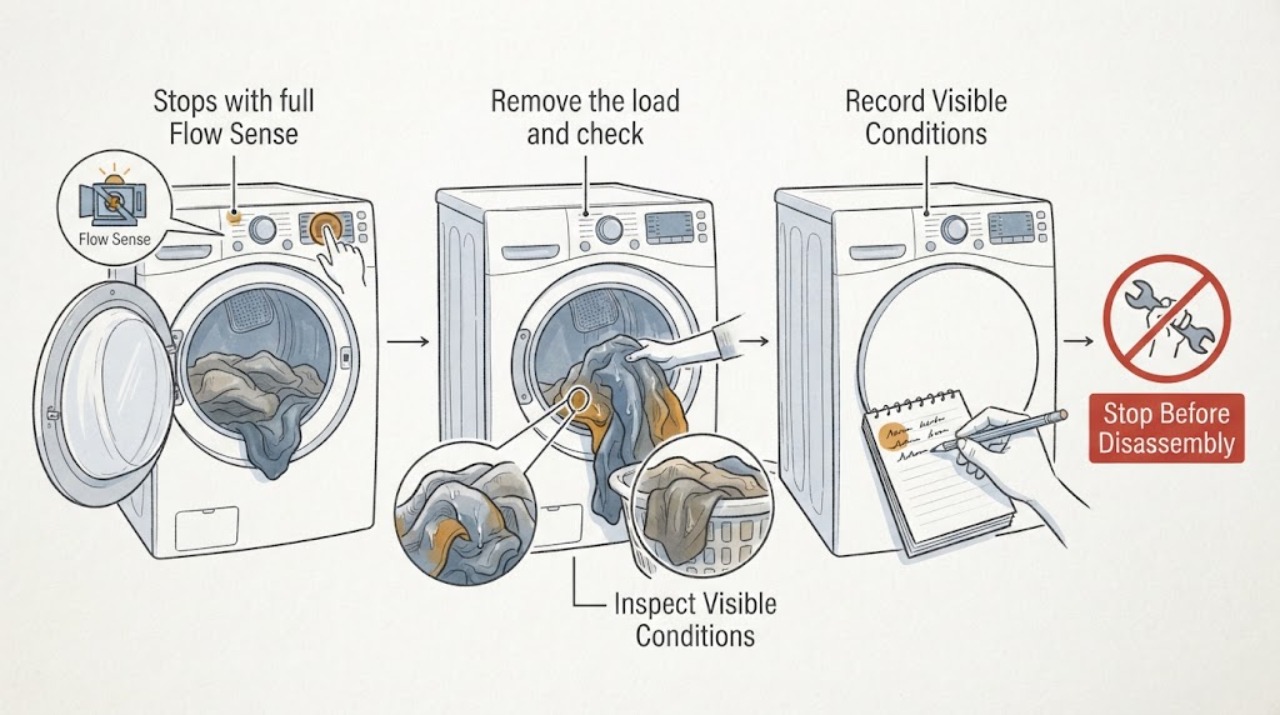
Do not keep running the LG DLE2050W after it stops with full Flow Sense bars and leaves clothes soaked. LG's exact DLE2050W specification identifies this as an electric dryer with FlowSense, Sensor Dry, Manual Dry programs, and a 240 V/30 A electrical requirement. Full bars are an airflow-warning observation, not proof that a roller, heater, sensor, or control board has failed. With the dryer off and cool, clean and reseat the lint filter, inspect the visible exhaust hose for crushing or kinks, and check the outside flap for lint or blockage. Do not bypass the vent warning, disconnect the duct to run a test, open the cabinet, or test energized wiring. If the accessible path is clear but the warning, mid-cycle stopping, no-heat symptom, unusual heat, burning odor, smoke, or breaker problem remains, keep the dryer off and arrange qualified vent or LG appliance service.
Work through in order
Diagnostic checks
Use only checks that match the exact appliance or system and its official guide.
-
Check 1
Stop the dryer, leave the controls alone, and let the load and appliance cool. Record whether the drum stopped while clothes were soaked, whether any heat was felt before stopping, whether full Flow Sense bars remained on the display, and whether there was smoke, a burning odor, scorching, unusual heat, a spark, or a breaker trip.
Expected result: The dryer is merely stopping with wet clothes, or there is a safety sign such as smoke, burning odor, scorching, abnormal heat, sparking, damaged cord or outlet, or a repeated breaker trip.
Next step: For smoke, fire, burning odor, sparking, damaged electrical parts, or a repeated breaker trip, keep clear and arrange qualified emergency, electrical, or appliance help from a safe location. Otherwise continue only with cool, external checks.
Why this matters
Why: A repeated stop with full bars is not a reason to run more cycles. A safety sign changes the case to an immediate stop-use event rather than an airflow adjustment.
-
Check 2
Remove the load and check that every item completed the washer's final spin. Separate thick towels or bedding from light items, avoid a tightly packed drum, and note whether the load was unusually wet before drying. Do not use another large or soaked load to reproduce the stop.
Expected result: The load was normally spun and moderate, or it was dense, tightly packed, mixed in thickness, or unusually wet before entering the dryer.
Next step: Correct the washer spin and load arrangement, but do not resume heated operation while the full airflow warning remains. Give the load details to the technician if the warning or stopping recurs.
Why this matters
Why: Excess water and a poor load can lengthen drying or leave thick items wet, but they do not explain away full Flow Sense bars or a repeated stop. A suitable load is needed before considering a load-related explanation.
-
Check 3
With the dryer off and cool, remove lint from the filter and reseat the clean, dry filter. Inspect only the visible exhaust hose and its connections for crushing, sharp bends, loose separation, holes, or lint, and look at the outside exhaust flap for a visible blockage. Do not disconnect the hose, bypass Flow Sense, or open a wall or cabinet.
Expected result: The filter is coated, the hose is crushed or kinked, a joint is loose, the outside flap is blocked, or the accessible path appears clear but the warning was full.
Next step: Correct only loose lint or an obvious accessible hose-position problem without dismantling anything. If the full bars remain or the concealed duct needs cleaning, keep heated operation off and arrange qualified vent service or LG appliance service.
Why this matters
Why: A restriction in the filter, hose, termination, or concealed duct can keep moist air from leaving and can make the dryer stop before clothes are dry. A clear visible section does not clear a wall duct or an internal fault.
-
Check 4
From a dry position, inspect only the plug seating, visible cord, outlet face, and clearly labeled dryer breaker for obvious damage or a breaker that will not stay on. The DLE2050W specification lists a 240 V/30 A electric supply. Do not measure voltage. Do not remove a terminal cover, reset a repeatedly tripping breaker, or touch wiring.
Expected result: The cord or outlet is hot or damaged, the breaker trips again, the dryer has no normal heat, or the visible supply appears intact and the breaker remains on.
Next step: Leave the dryer off and arrange licensed electrical service for outlet, cord, or breaker evidence, or qualified LG appliance service for no heat with a sound household supply. Do not keep resetting or testing.
Why this matters
Why: The DLE2050W is an electric dryer, so loss of one supply leg, a damaged connection, or an internal electrical fault can produce no heat; the specification does not make an energized diagnosis safe for a homeowner.
-
Check 5
Do not run another heated cycle while full Flow Sense bars, a mid-cycle stop, or abnormal heat is present. If a qualified technician has cleared the exhaust path and the appliance is cool and free of safety symptoms, record whether the problem differs between the DLE2050W Sensor Dry and Manual Dry settings without opening the cabinet or changing a safety control.
Expected result: After the vent path is professionally cleared, Sensor Dry ends early while Manual Dry produces normal heat and tumbling, or both settings leave a suitable load wet or fail to heat normally.
Next step: Stop testing and arrange LG or qualified appliance service for a repeated warning, mid-cycle stop, no heat, or wet load after a cleared vent path. Do not bypass Flow Sense or run an extended cycle to force a result.
Why this matters
Why: A difference between settings can guide a service conversation about load moisture sensing versus airflow or heating, but neither result selects a sensor, heater, motor, or board. Persistent failure in both settings points beyond load arrangement.
-
Check 6
Prepare a service note with the complete DLE2050W model and serial information, full-bar display, cycle and time of the stop, load size and washer-spin result, filter and hose observations, outside-flap observation, heat or odor, breaker behavior, and any safe-distance photos. Do not choose a roller, heater, thermistor, sensor, or control part from the symptom.
Expected result: The warning clears only after an external or professional vent correction, returns with a clear path, or is accompanied by no heat, abnormal heat, clothing scorching, noise, or a repeated stop.
Next step: Give the record to an LG or qualified appliance technician. Keep the dryer off whenever the warning returns, clothes remain soaked after a suitable load, heat is abnormal, or any fire or electrical symptom appears.
Why this matters
Why: This record separates a vent restriction from load moisture and from a remaining heating, sensing, motor, or electrical service issue without pretending that Flow Sense identifies the failed component.
Use your observations
Decision map
Find the observation that best matches what you see, then follow the next safe action.
-
PATH 01Next step
What you see
Full Flow Sense bars remain, the visible hose or outside flap is restricted, or the dryer stops while clothes remain wet.
Do this next
Keep heated operation off, correct only safe visible lint or hose-position issues, and arrange qualified vent or LG service for the concealed or persistent restriction.
Why this path and its safety boundary
Why it matters: Restricted exhaust is the first unresolved decision; repeated heated cycles can worsen heat and lint risk, and the display does not name a failed part.
-
PATH 02Next step
What you see
The load was unusually wet, dense, tightly packed, or mixed with heavy items, but the accessible vent path is clear and no safety symptom occurred.
Do this next
Use correct washer spin and load arrangement only after the airflow warning is cleared; if the warning or stopping returns, stop and arrange service.
Why this path and its safety boundary
Why it matters: Load moisture and tumbler contact may contribute to wet clothes, but they do not by themselves explain a recurring full-bar warning or mid-cycle stop.
-
PATH 03Next step
What you see
The visible vent path is clear but the dryer has no normal heat, the breaker trips, the cord or outlet is damaged, or the display and stop recur.
Do this next
Leave the dryer off and arrange licensed electrical service for household supply evidence or qualified LG appliance service for an appliance fault.
Why this path and its safety boundary
Why it matters: An electrical or internal appliance fault remains possible. The exact specification confirms an electric supply, but it does not authorize live testing or identify a component.
-
PATH 04Next step
What you see
Clothes, the drum, or the cabinet are unusually hot, scorched, smoky, or accompanied by a burning odor, spark, or visible damage.
Do this next
Stop using the dryer, keep people away, do not restore power or restart it, and use local emergency guidance for smoke or fire before arranging qualified service.
Why this path and its safety boundary
Why it matters: This is an immediate fire or electrical safety boundary, not a Flow Sense troubleshooting branch.
-
PATH 05Next step
What you see
A qualified vent inspection clears the restriction, but a correctly spun moderate load still remains wet or the dryer stops in both Sensor Dry and Manual Dry.
Do this next
Keep the dryer off and provide the technician with the cycle comparison, full-bar history, heat observation, and exact DLE2050W identity.
Why this path and its safety boundary
Why it matters: The safe airflow and load checks are exhausted; heating, sensing, motor, control, or another internal issue needs model-specific diagnosis, not a guessed replacement.
Helpful context
Understand the symptom
The important new decision here is the combination of full Flow Sense bars, a mid-cycle stop, and clothes that remain soaked after repeated cycles. That pattern makes continued heated operation unsafe to use as a diagnostic experiment: resolve the accessible exhaust path first, then separate load moisture from loss of heat or a service fault.
The DLE2050W specification confirms an electric LG dryer with both Sensor Dry and Manual Dry programs. It does not authorize cabinet disassembly or live electrical testing, and a Flow Sense indication does not by itself identify a failed heater, sensor, motor, or control.
When checks do not resolve it
Need a professional?
Keep the dryer off and arrange service when full Flow Sense bars persist, the accessible vent path is clear but clothes remain soaked, the appliance stops repeatedly, no normal heat is present, a breaker or electrical connection is abnormal, or the concealed duct needs inspection. Stop immediately for smoke, burning odor, scorching, sparking, unusual heat, or a repeated breaker trip.
Common questions
FAQ
Do full Flow Sense bars prove the heater or sensor has failed?
No. They are an airflow-warning observation in this symptom report, not a component diagnosis. Clear the safe, accessible filter and exhaust path first; persistent bars need qualified vent or LG service rather than a guessed part.
Should I keep restarting the DLE2050W until the clothes dry?
No. Repeated cycles after a mid-cycle stop and full airflow warning can increase heat and lint risk. Stop, let the dryer cool, record the display and load details, and resolve the exhaust or service issue first.
Can a smaller load alone fix soaked clothes after several cycles?
A dense or unusually wet load can make drying worse, but it does not clear a recurring full Flow Sense warning or repeated stop. Correct the washer spin and load only after the warning is addressed, then arrange service if the symptom returns.
Read the exact guide
Official sources
- DLE2050W DLG2051WLG Electronics U.S.A., Inc. · LG DLE2050W exact electric-dryer specification, including FlowSense, Sensor Dry, Manual Dry programs, 240 V/30 A electric requirement, and model identity.
Community feedback
Share a repair observation
Share a plain-text repair observation. Accepted observations are published automatically; this page may take a moment to update.