
Repair problem
Not Drying Troubleshooting Guides
Published FixGraph guidance for diagnosing and responding to not drying.
Matching published guides
Choose a guide that matches the service, equipment, and conditions you are seeing.
-
AEG Dryer Not Drying: Safe Checks for Filters, Load, and Heat
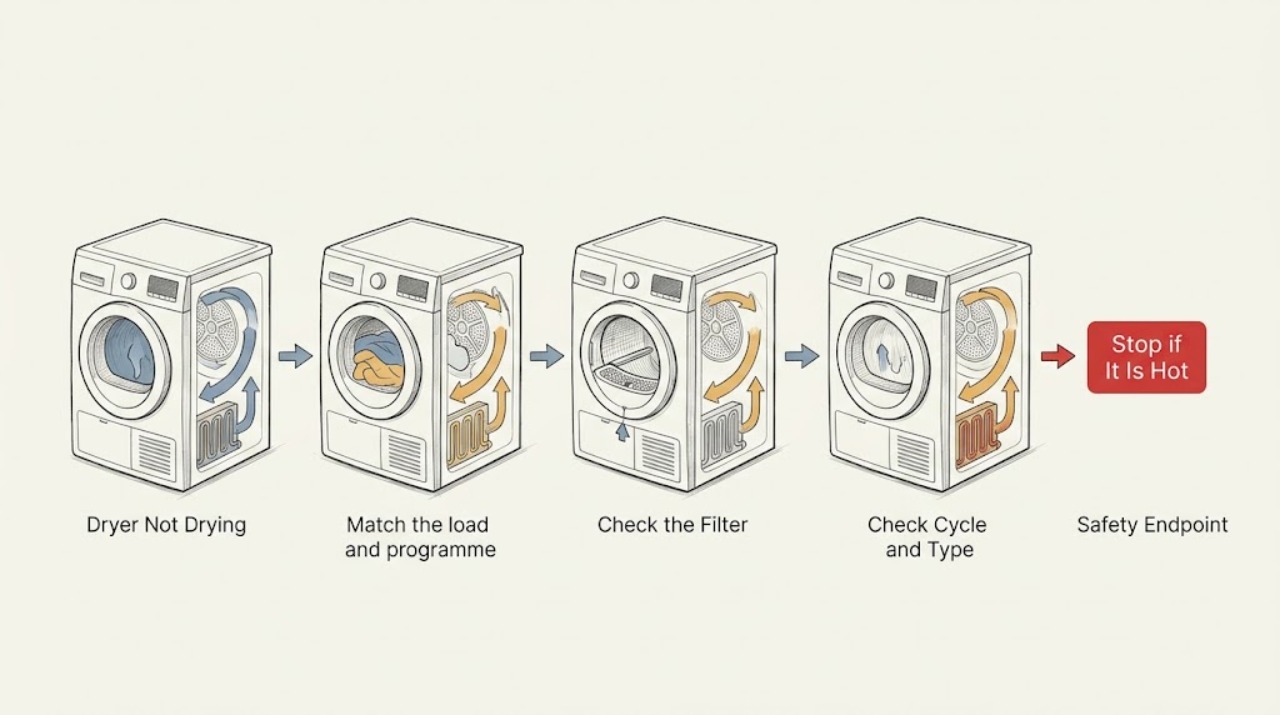
If an AEG dryer leaves clothes damp, start with the load and airflow: spin the laundry well, do not overload it, choose a programme that matches the fabric and care label, and clean the lint filters carefully after each cycle. For a condenser or heat-pump dryer, clean the condenser and compartment as the model manual allows; for a vented dryer, check that the exhaust hose is not blocked or folded.
-
AEG washing machine not drying: distinguish wet spin results from washer-dryer faults
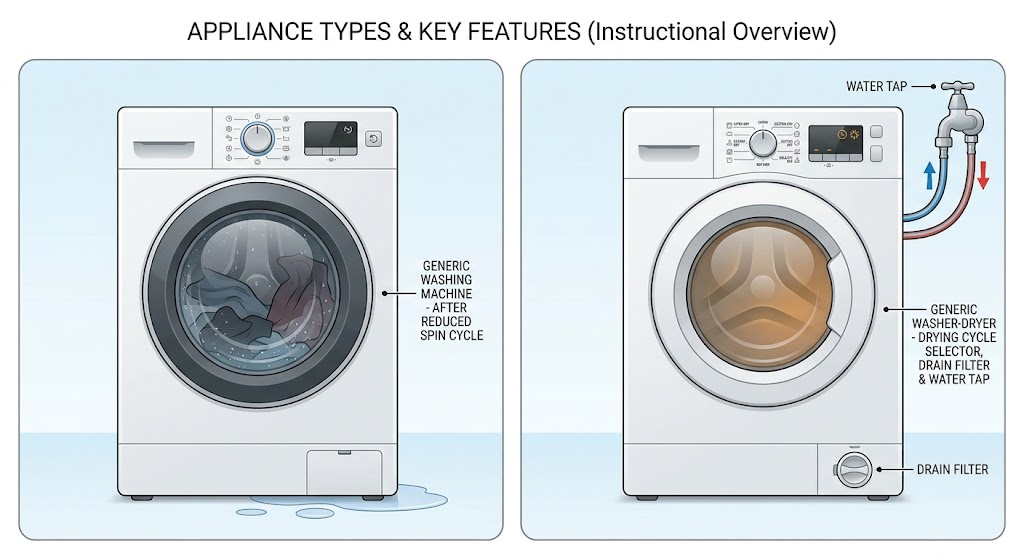
An AEG washing machine normally washes and spins; if clothes are wet at the end, the first question is whether the machine skipped or reduced its final spin, not whether a dryer heater failed. AEG lists load imbalance, Rinse Hold, levelling, a blocked drain filter, and installation issues as causes of wet laundry after washing.
-
Amana Dryer Not Drying: Check Heat, Airflow, and the Selected Cycle
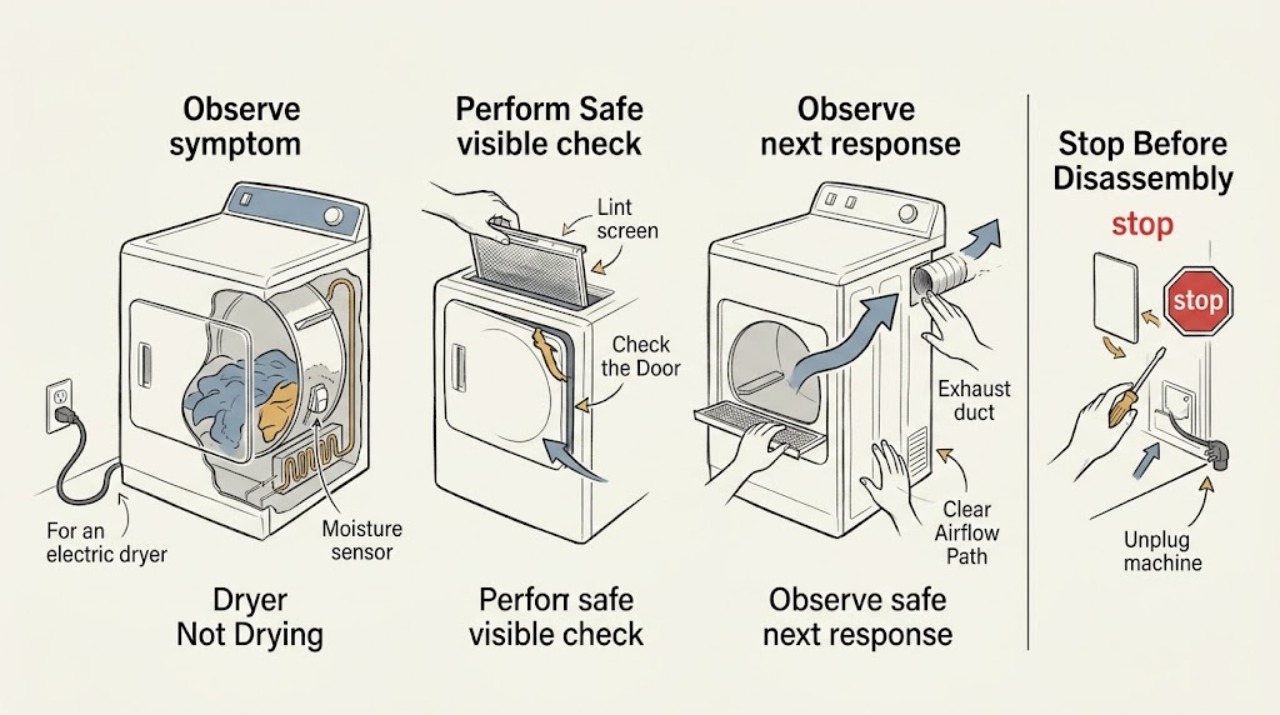
First separate a no-heat problem from a warm-but-damp problem. Run the empty dryer on a heated timed cycle for five minutes and feel inside when you open the door.
-
ASKO Dryer Not Drying: What to Check and What to Do Next
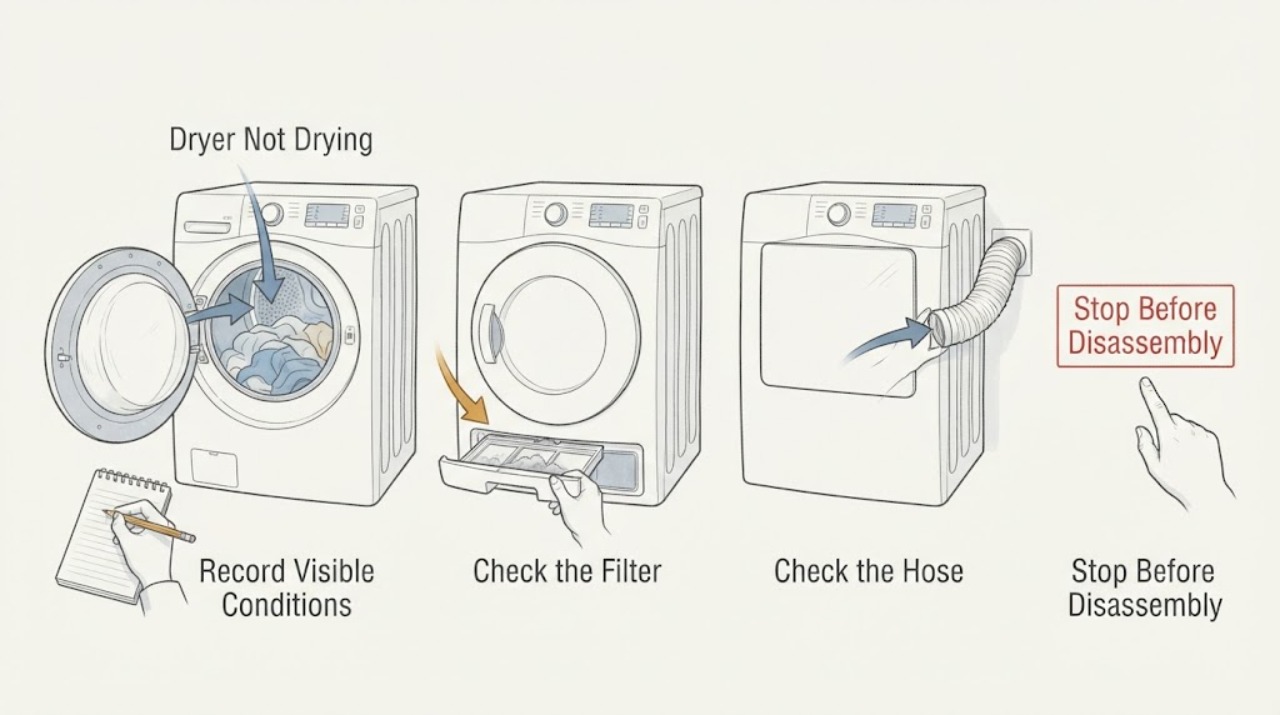
If an ASKO T208CW condenser dryer warms but the clothes remain damp, treat it first as a drying-result problem rather than assuming the heater has failed. Use a suitable Auto drying program and an appropriate load, then switch the dryer off and clean the door net filter.
-
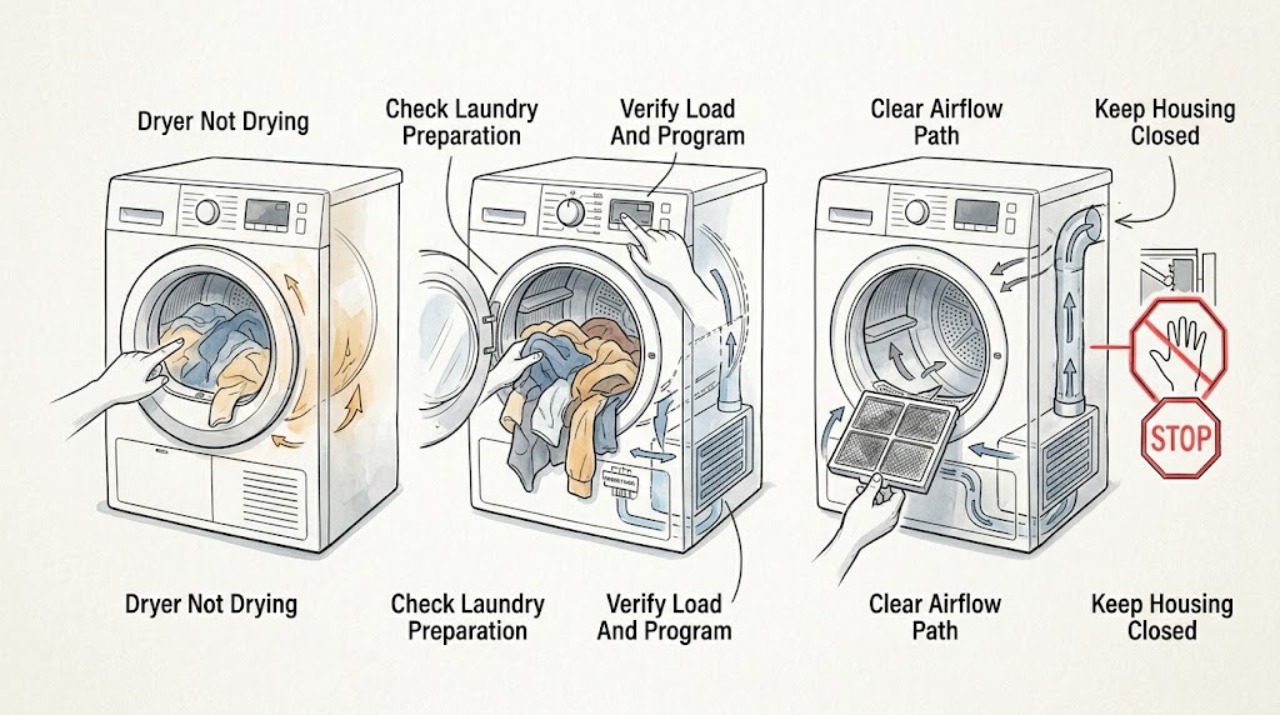
Beko Dryer Not Drying: Check the load, airflow, filters, and moisture path
If a Beko dryer leaves clothes damp after a full cycle, begin with the load and airflow rather than replacing a part. Check that the clothes were spun adequately, the program matches the fabric, the drum is neither overloaded nor so lightly loaded that the sensor cannot read it, and wet items were not added mid-cycle.
-
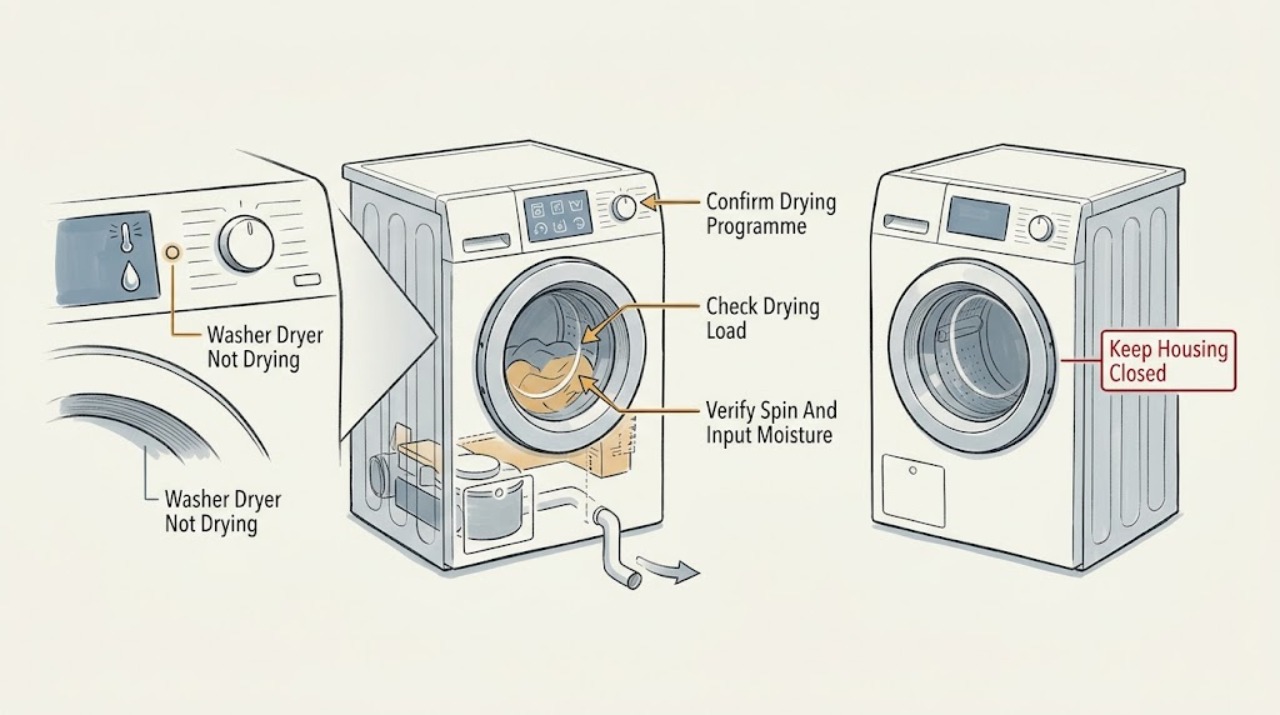
Beko Washer Dryer Not Drying
For a Beko washer-dryer that leaves clothes damp, first confirm the appropriate drying programme and care label, use no more than the model's drying capacity, and make sure the load has been spun. A blockage in the appliance can also affect the result, so inspect the drain-pump filter only as your model manual permits.
-
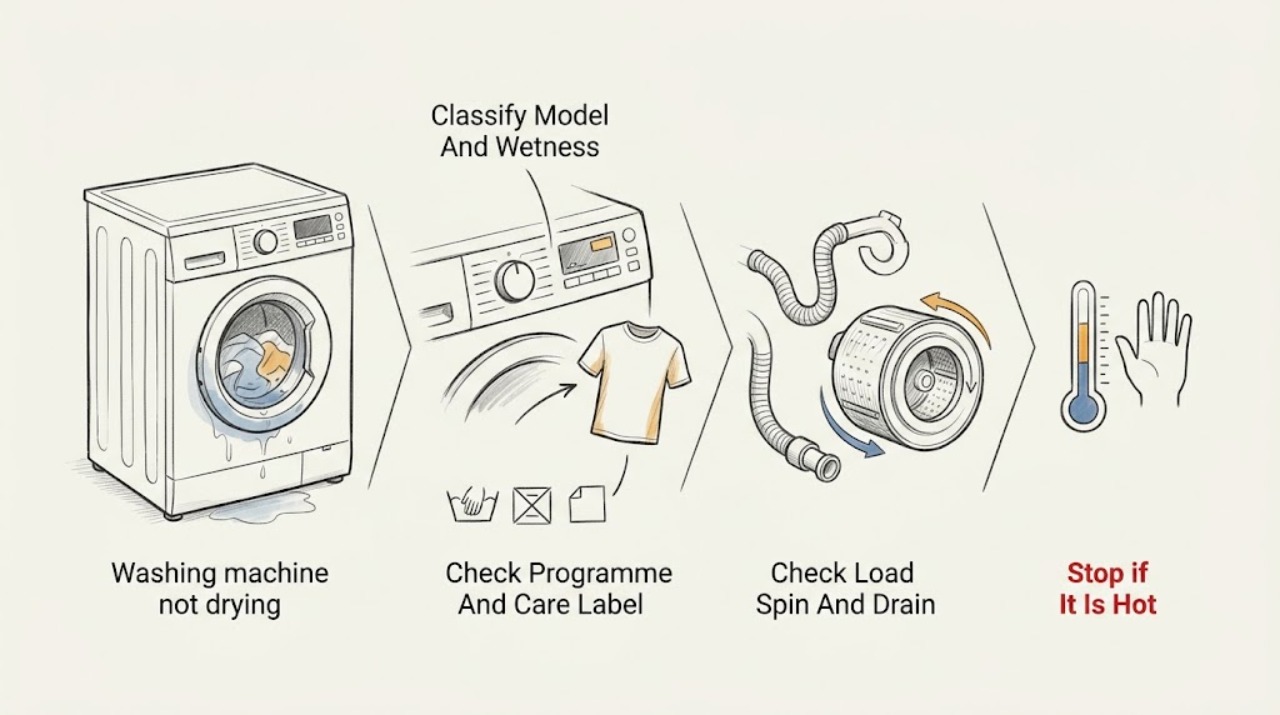
Beko washing machine not drying: Separate wet spin results from washer-dryer faults
First determine whether this Beko is a washer only or a washer-dryer, and whether the clothes are merely wet after spin or still wet after a completed drying programme. For wet clothes after washing, check that the machine drained, the load was balanced, the selected spin speed was allowed, and excess foam or an overloaded drum did not prevent effective extraction.
-
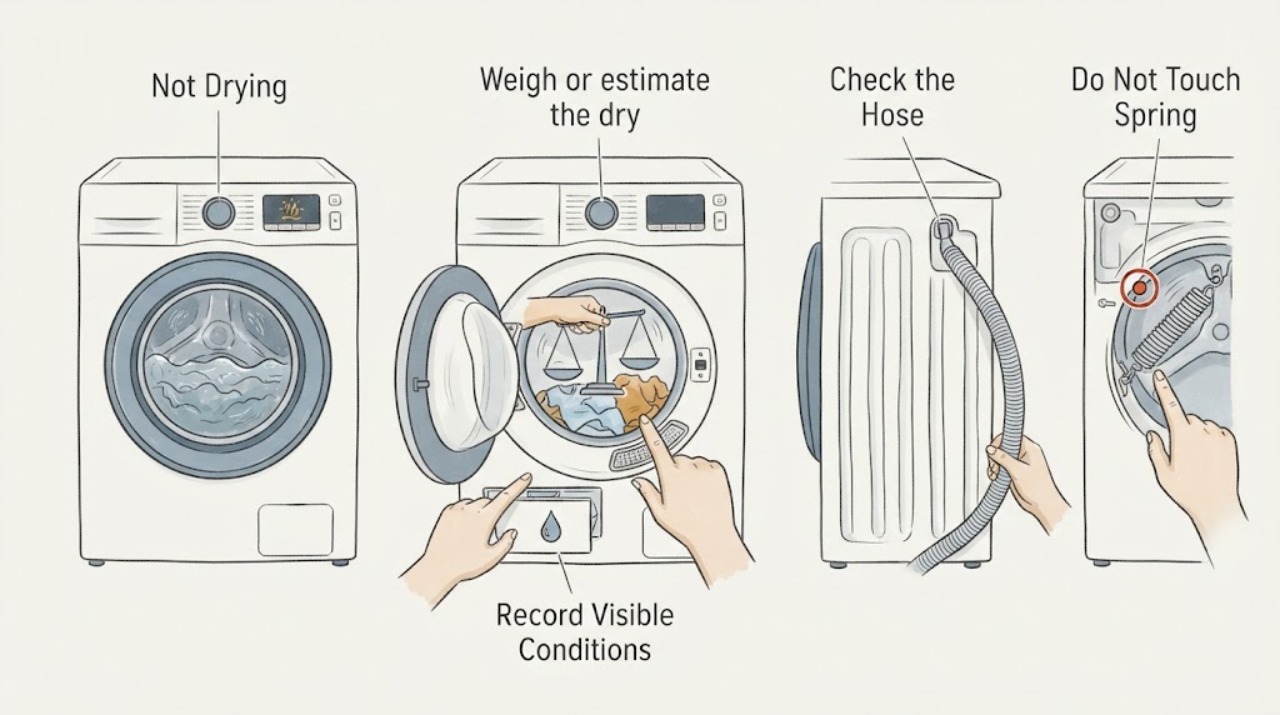
Beko WDR8540141G Not Drying: Check Load, Water Supply, and Sensor Settings
For a Beko WDR8540141G that leaves laundry damp, first decide whether the machine stopped at its selected sensor dryness level or whether the drying stage never produced a normal result. This model is rated for 8 kg washing but 5 kg drying, and Beko says its sensor programmes stop when the selected moisture level is reached.
-
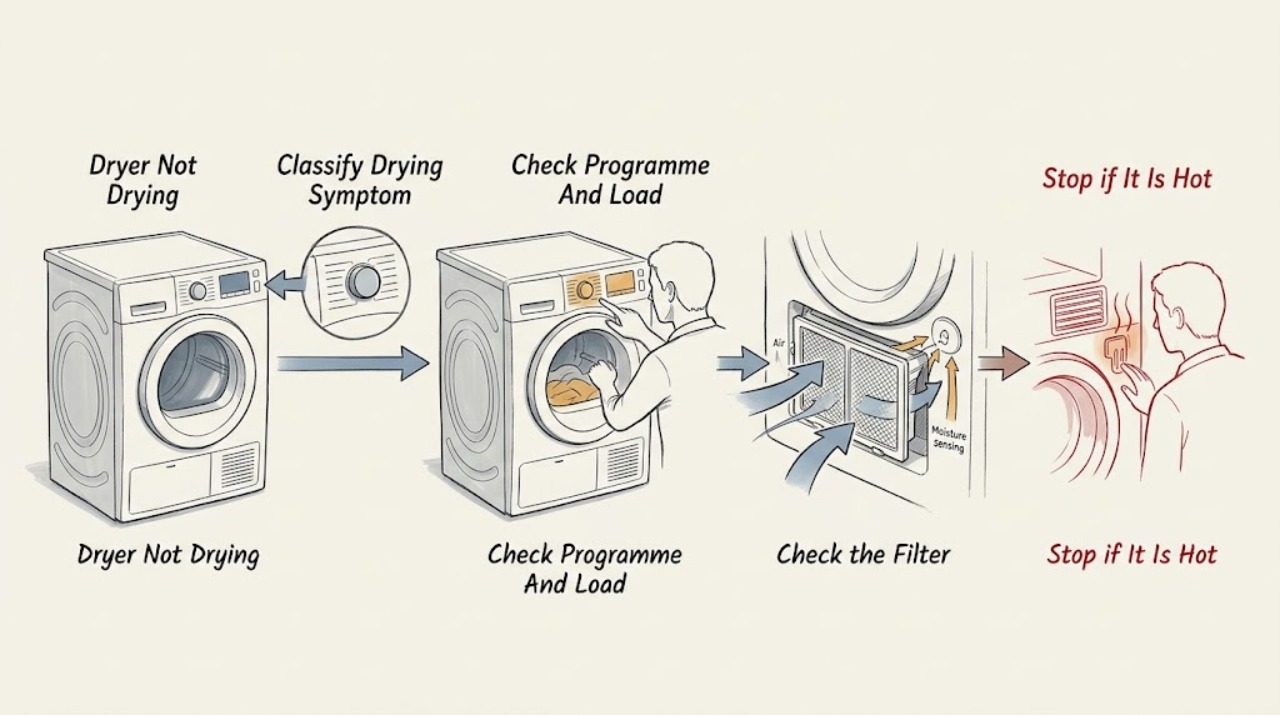
Bosch Dryer Not Drying: Safe Checks Before Service
If a Bosch dryer is running but leaves clothes damp, first use the programme intended for the fabric and load. Switch the dryer off before cleaning the lint filter, then inspect the moisture sensor near the filter and wipe away residue with a damp cloth; Bosch also identifies blocked vents or air inlets as causes of long drying times.
-
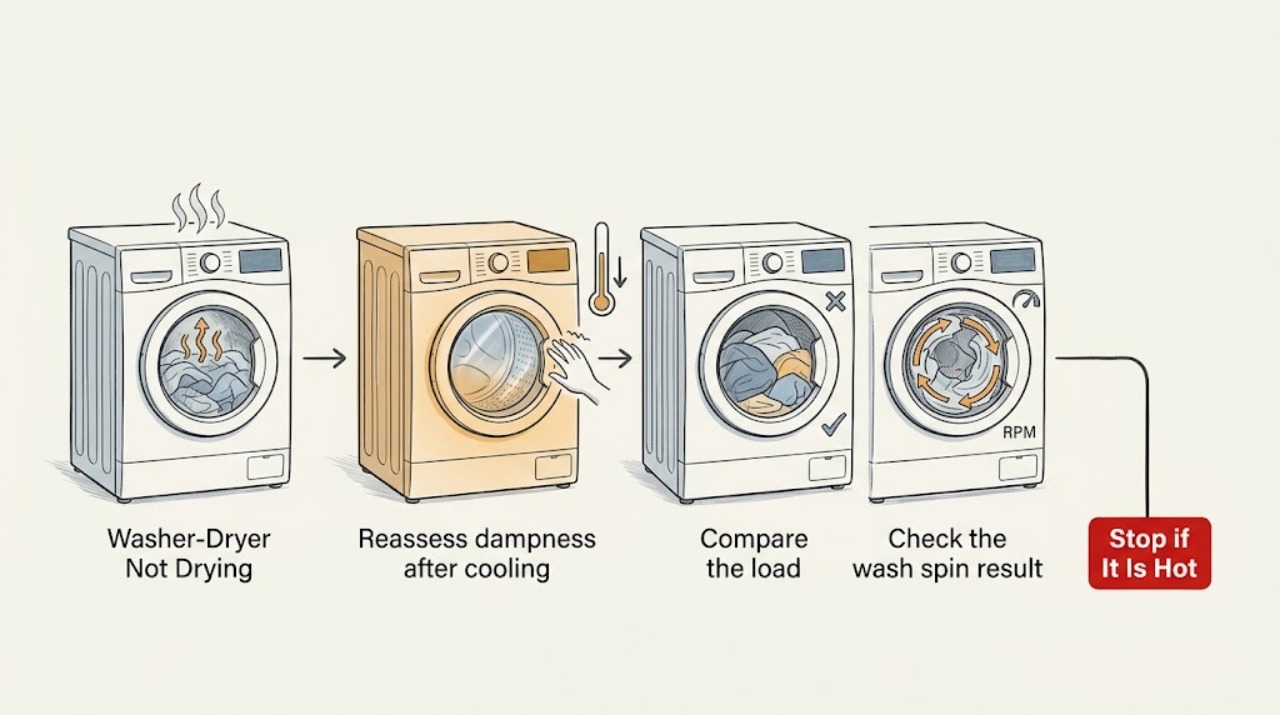
Bosch Washer-Dryer Not Drying: Safe Checks and Next Steps
If a Bosch washer-dryer is not drying, first let the warm laundry cool and spread it out before judging the result. Then check that the drying load is within the model's lower drying capacity, the load was spun sufficiently, the water tap is open for a condensing dryer, and visible airflow or filter areas are not blocked.
-
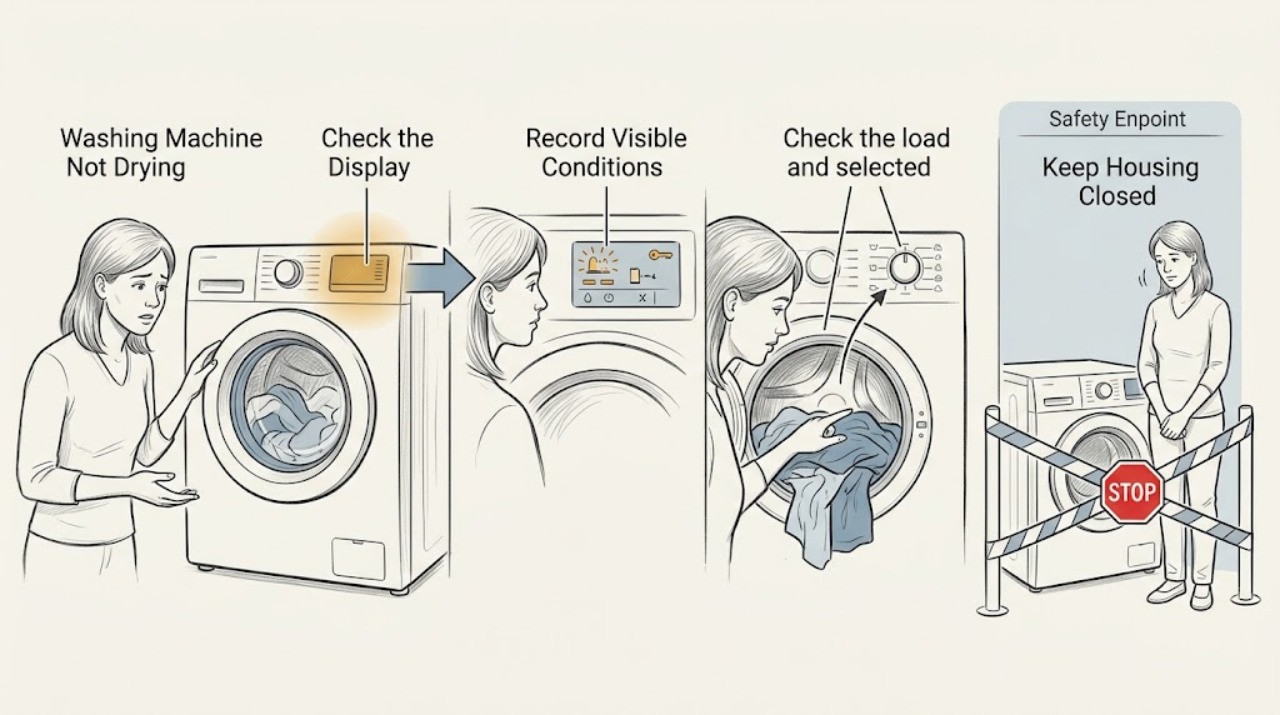
Candy Washing Machine Not Drying: Separate Spin Problems From Washer-Dryer Faults
A Candy washing machine normally removes water by spinning; it does not dry clothes with heat unless the exact model is a washer-dryer. First confirm whether the appliance has a drying program in the model manual.
-
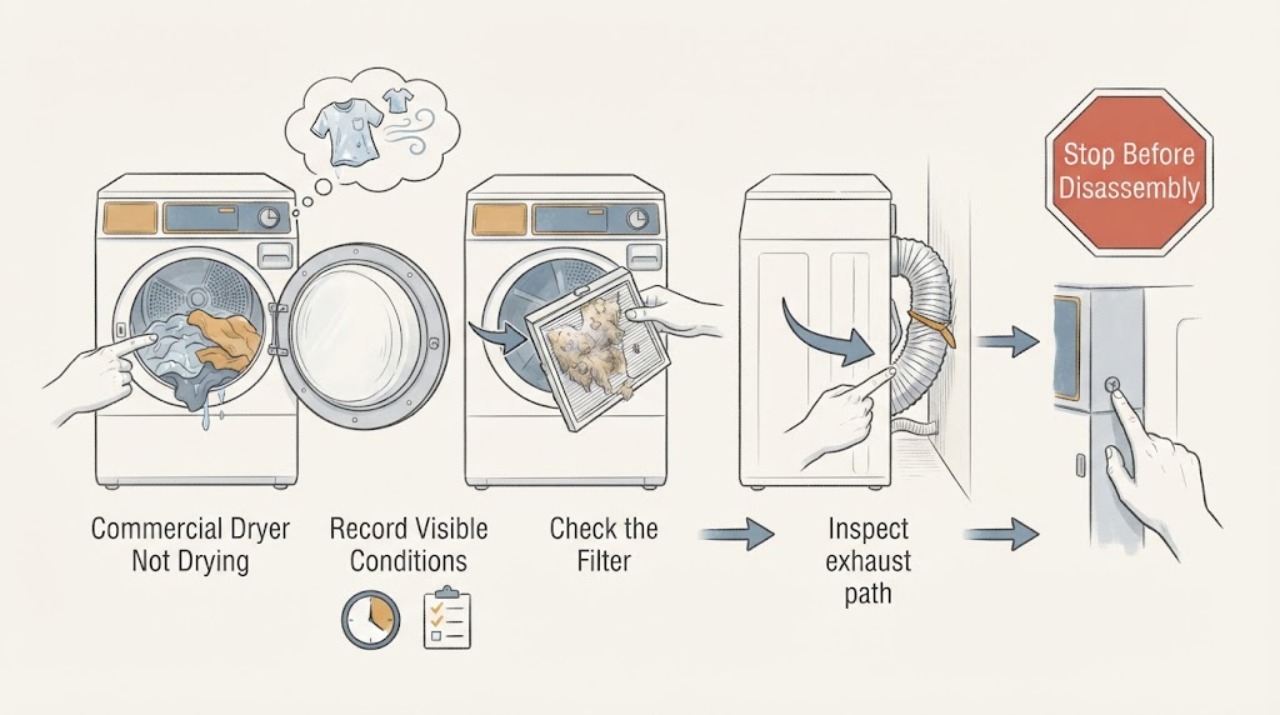
Commercial Dryer Not Drying
A commercial dryer that is not drying needs an airflow and heat check: clean the lint filter, inspect the exhaust path for bends or blockage, verify the selected cycle and load, and confirm the drum tumbles. A returning ventilation or heat code, gas odor, or failed heater requires qualified service.
-
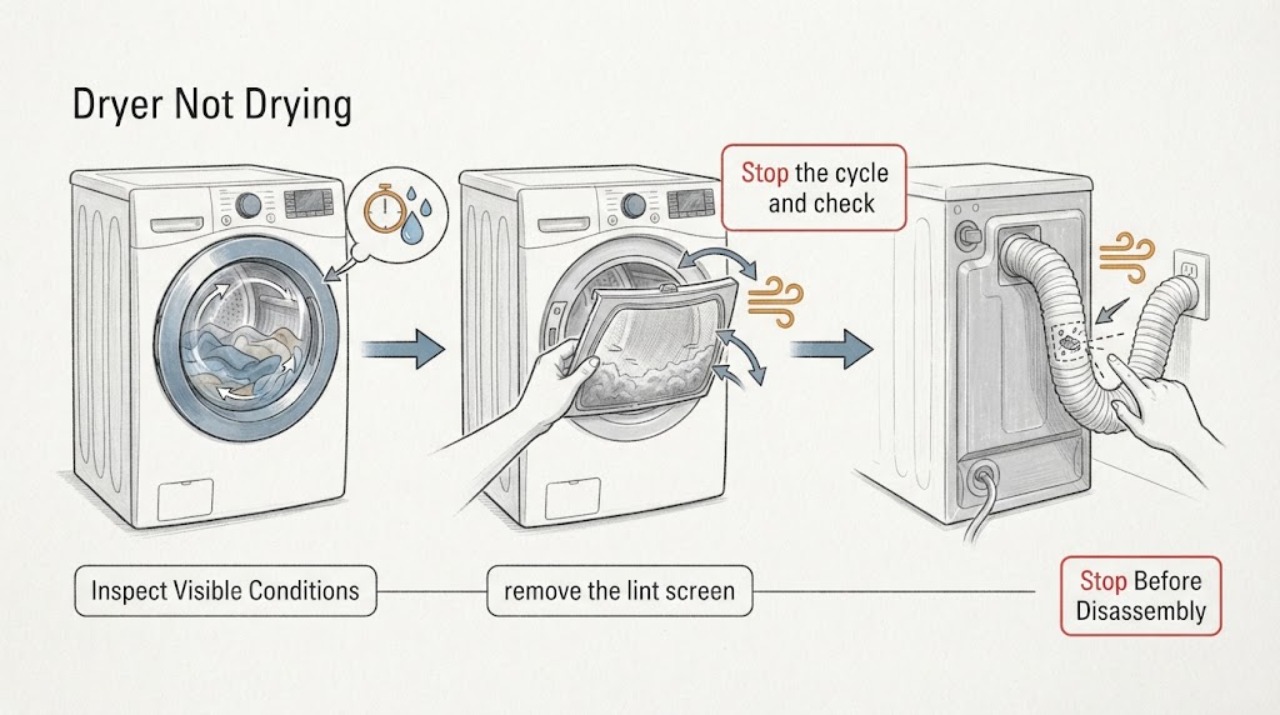
Crosley Dryer Not Drying: What to Check and What to Do Next
If your Crosley dryer drum runs but clothes stay damp or the cycle takes too long, check the selected cycle and temperature first, then the load, lint screen, and exhaust airflow. Crosley’s opened guide says a clogged screen or blocked or crushed vent reduces drying performance, while a large or tangled load can dry slowly.
-
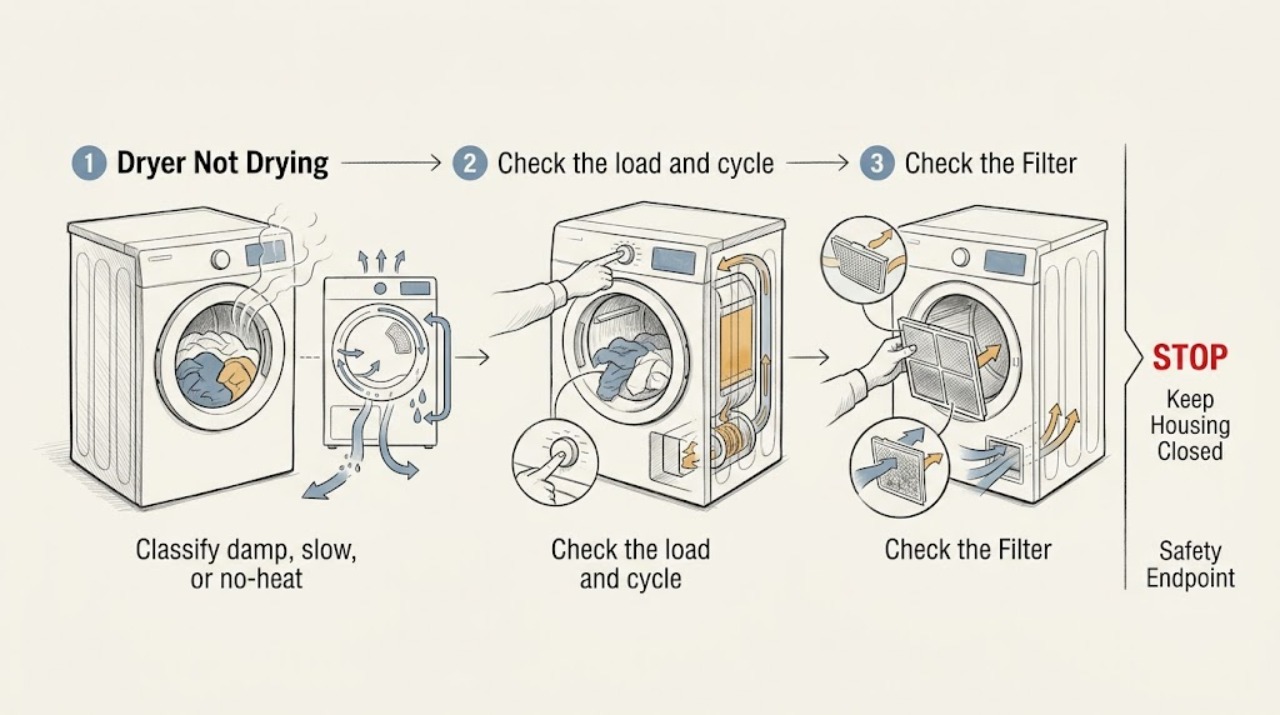
Dryer Not Drying: Separate Damp Loads, Long Cycles, and No Heat
If a dryer is not drying, first separate clothing that is still damp from a cycle that runs too long and from a dryer that produces no heat. Stop using it for smoke, a burning or gas smell, sparking, an unusually hot cabinet or connection, repeated breaker trips, or clothes that show scorching.
-
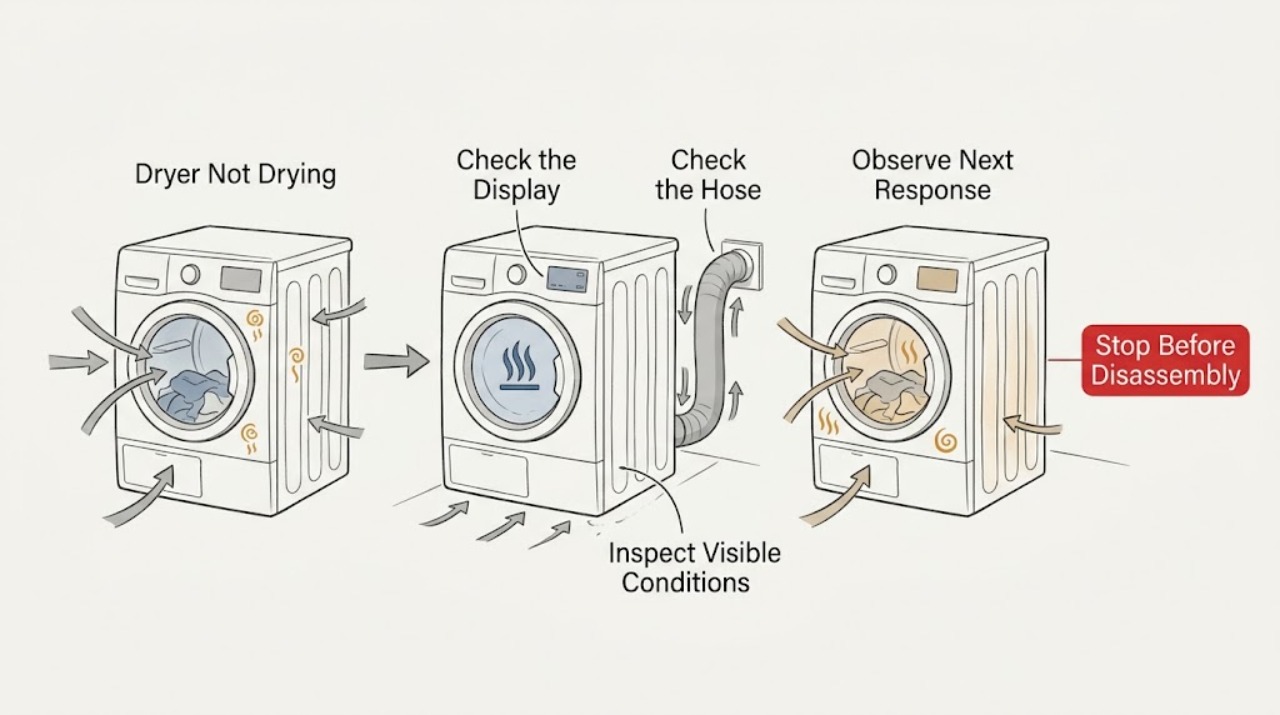
Electrolux Dryer Not Drying: Safe Checks That Isolate the Cause
An Electrolux dryer that tumbles but leaves clothes damp usually needs an airflow, cycle, load, moisture-sensing, or heat-supply check. Start with a clean, dry lint screen and the selected cycle, then check that the load can tumble freely and that the exhaust path and outside hood are clear.
-
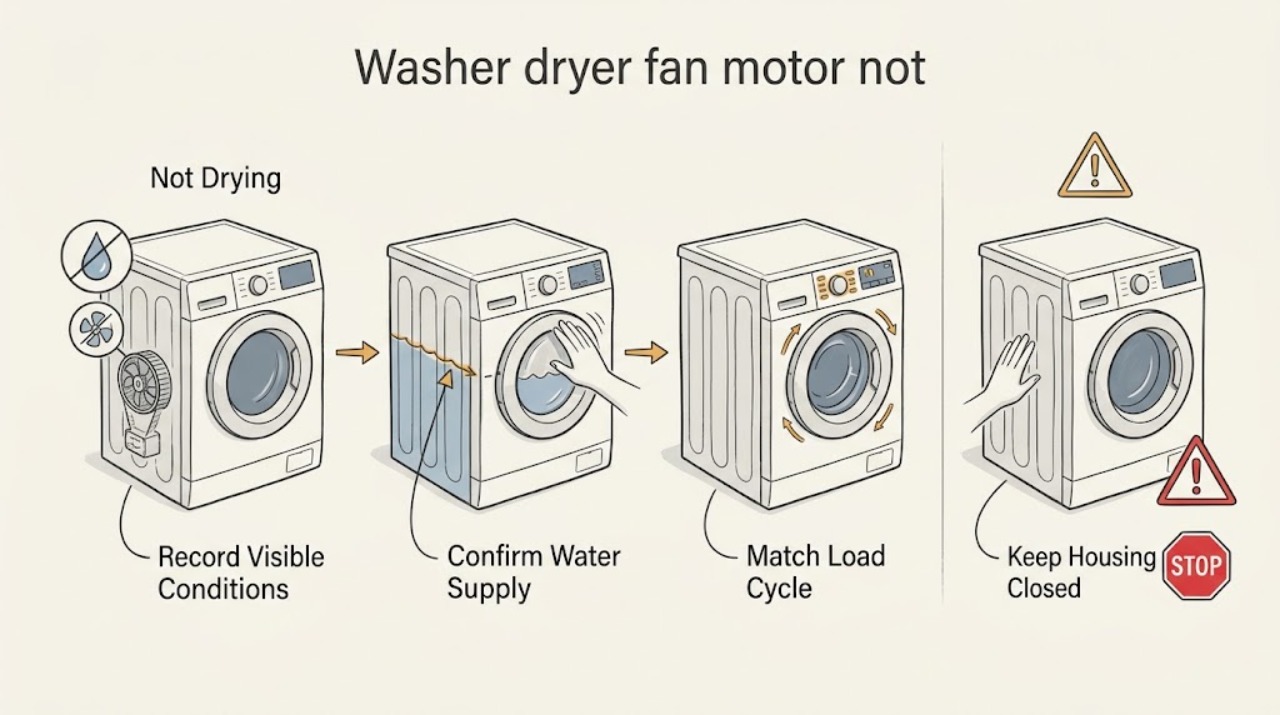
Electrolux washer dryer fan motor not drying: What to Check and What to Do Next
If an Electrolux washer-dryer is not drying, first record the exact model, code, cycle stage, load size, and whether the fan can be heard from outside. Confirm the water tap is on, use the correct drying program and a smaller drying load, and clean only the air or drain filters that the exact manual identifies as user-accessible.
-
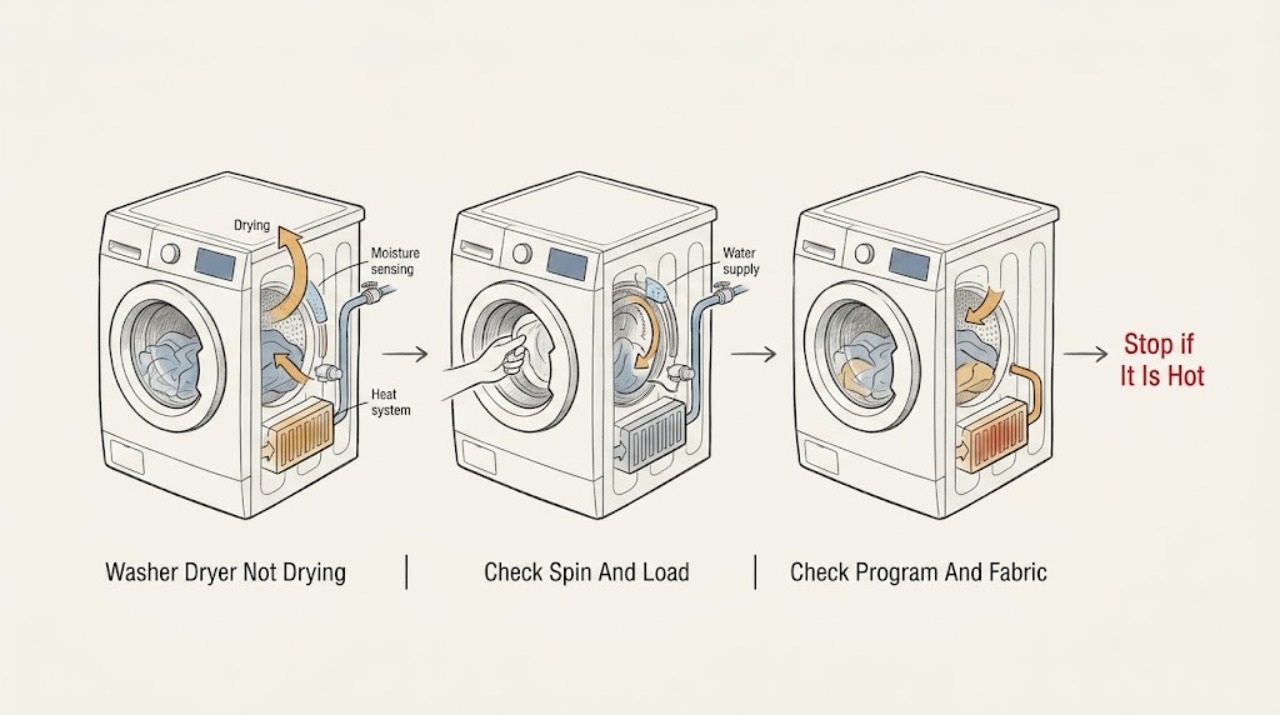
Electrolux Washer Dryer Not Drying: Check Water, Load, Filters, and Cycle
When an Electrolux washer-dryer leaves clothes damp, first confirm that the water tap is open and that the load is not larger than the drying capacity. Then check the selected drying program and care labels, clean the drain filter, and clean and fully dry the air filters if the model uses them.
-
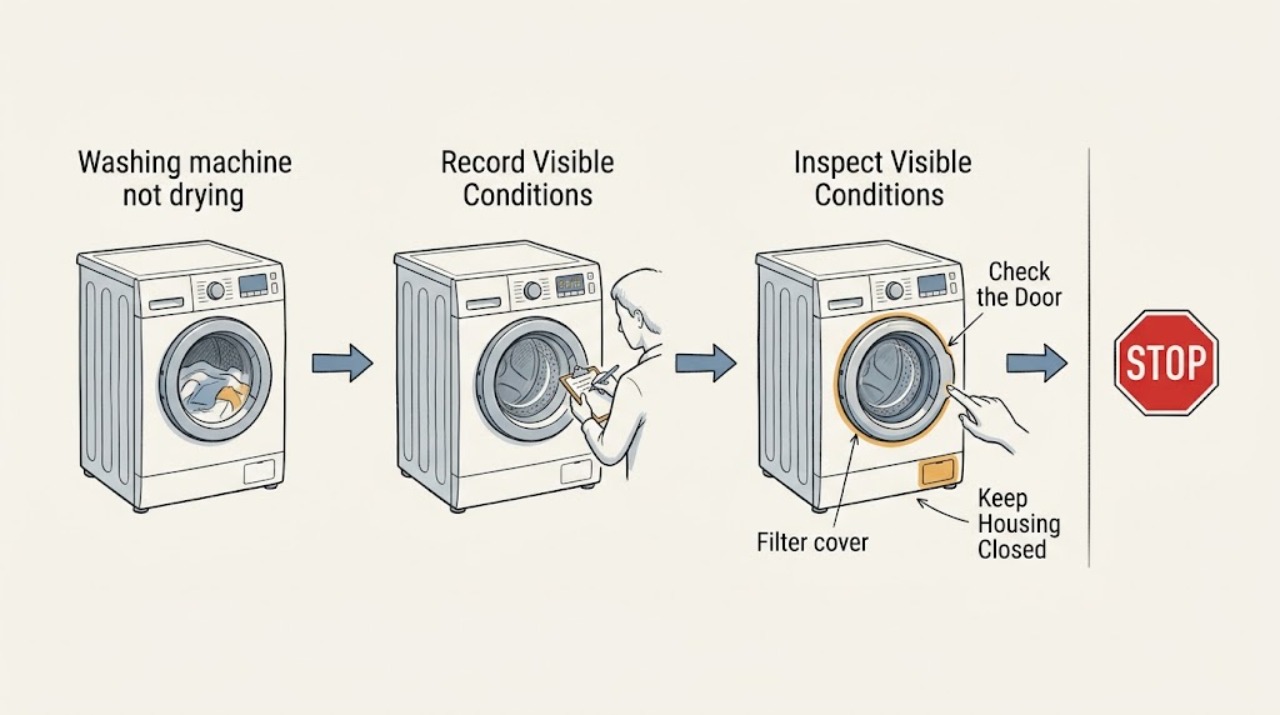
Frigidaire washing machine not drying: check spin, drain, and model type
A Frigidaire washing machine without a drying programme cannot dry clothes; clothes that are wet after a wash are usually a final-spin or drain issue. First confirm the exact model and whether the programme was wash-only or a true wash-and-dry cycle.
-
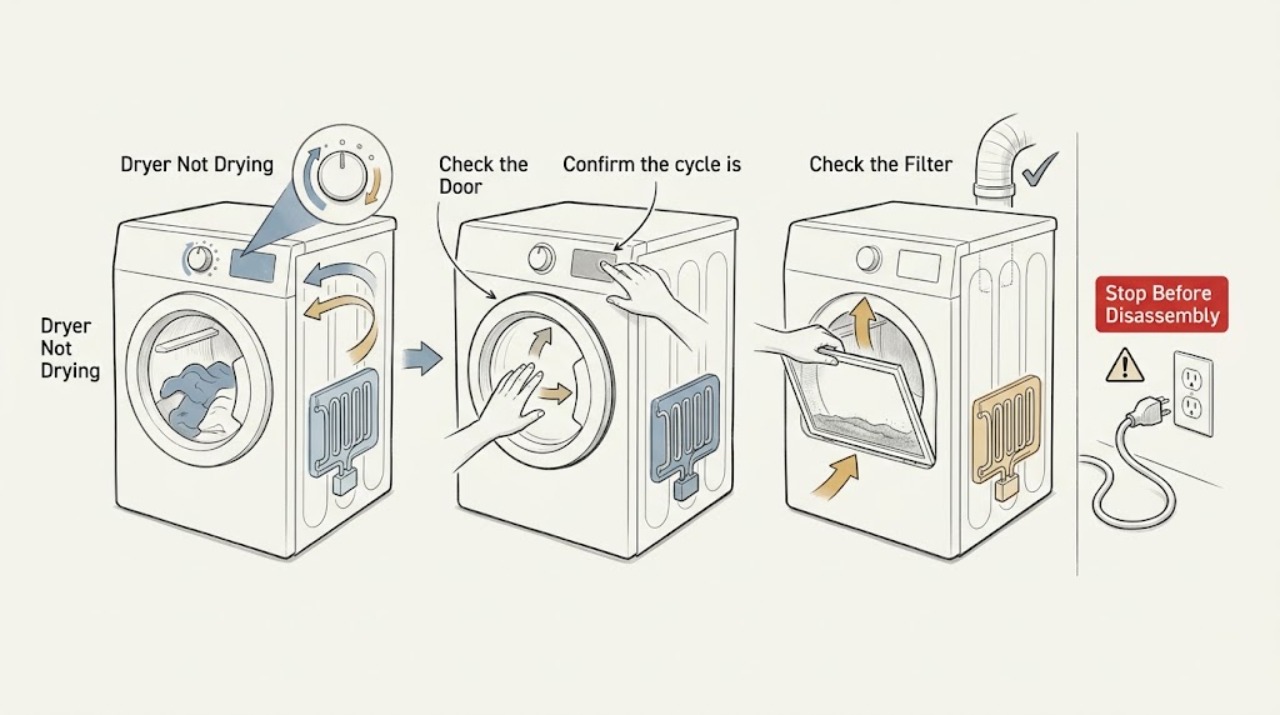
GE Dryer Not Drying: Check the Cycle, Airflow, Load, and Heat Safely
A GE dryer that leaves clothes damp may be using a cool or low-dry setting, overloaded or poorly sorted, receiving clothes that are too wet from the washer, or losing airflow through a kinked, crushed, dirty, or blocked vent. A lint filter, sensor-dry load, power supply, gas supply, heating system, or condenser can also affect drying.
-
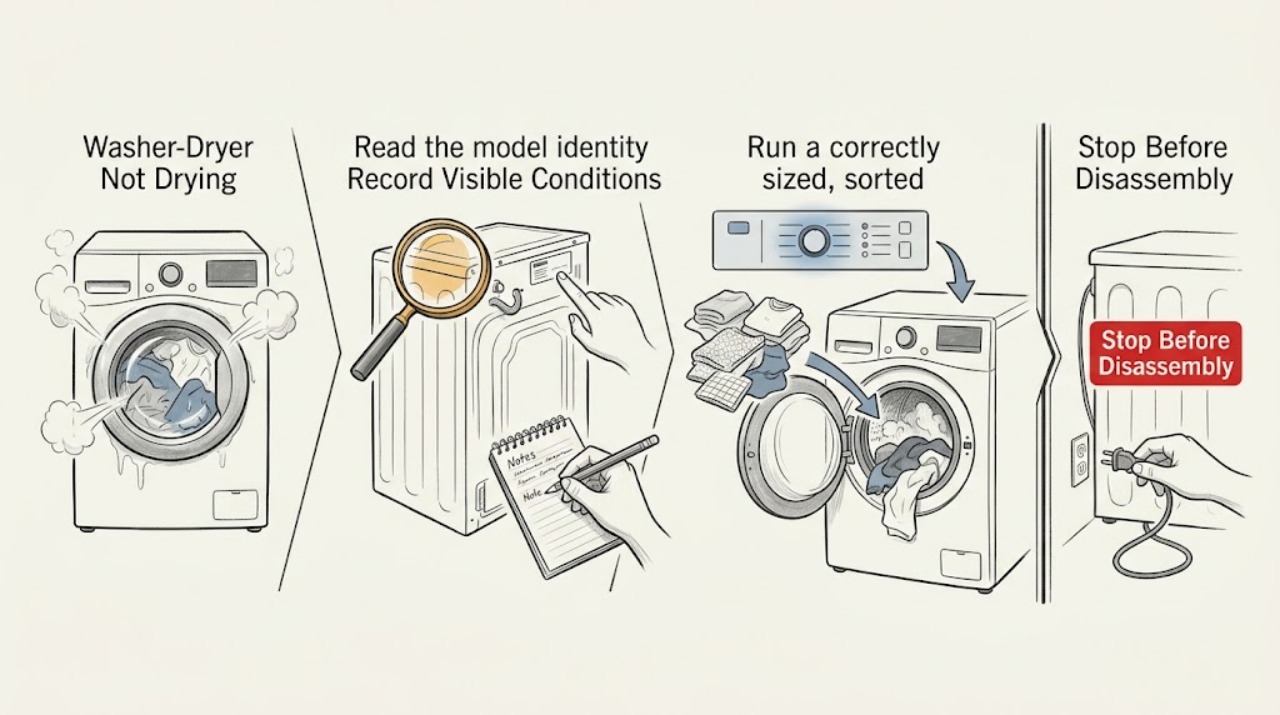
GE Washer-Dryer Not Drying: Check Moisture, Airflow, and Drainage
When a GE washer-dryer leaves clothes wet, first identify whether it is a vented dryer, a stacked washer-dryer, or a ventless combo, then check the load, selected dry setting, lint filter, airflow, and the washer's final spin.
-
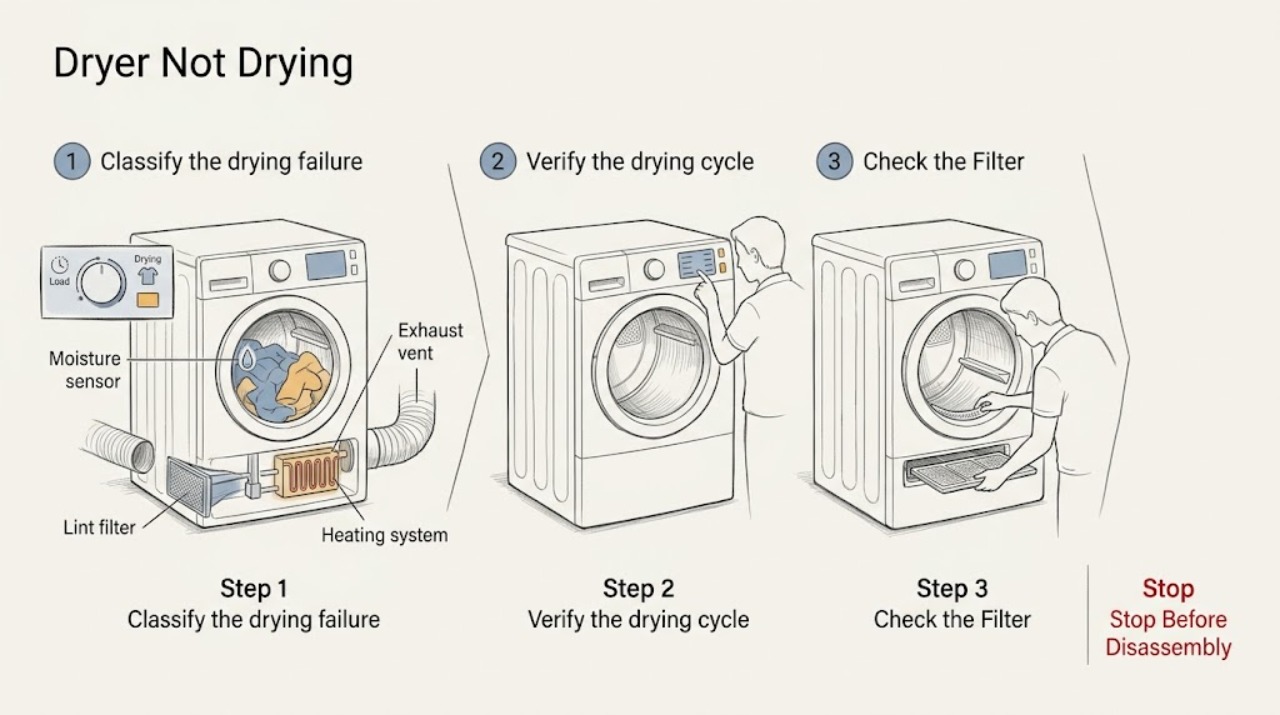
Haier Dryer Not Drying: Check the Cycle, Load, Lint, and Heat
If a Haier dryer leaves clothes damp, first determine whether the drum tumbles and whether the load is warm at all. Check that the selected cycle is intended to heat, the drum is not overfilled, the lint filter is clean, and the visible external vent is not blocked.
-
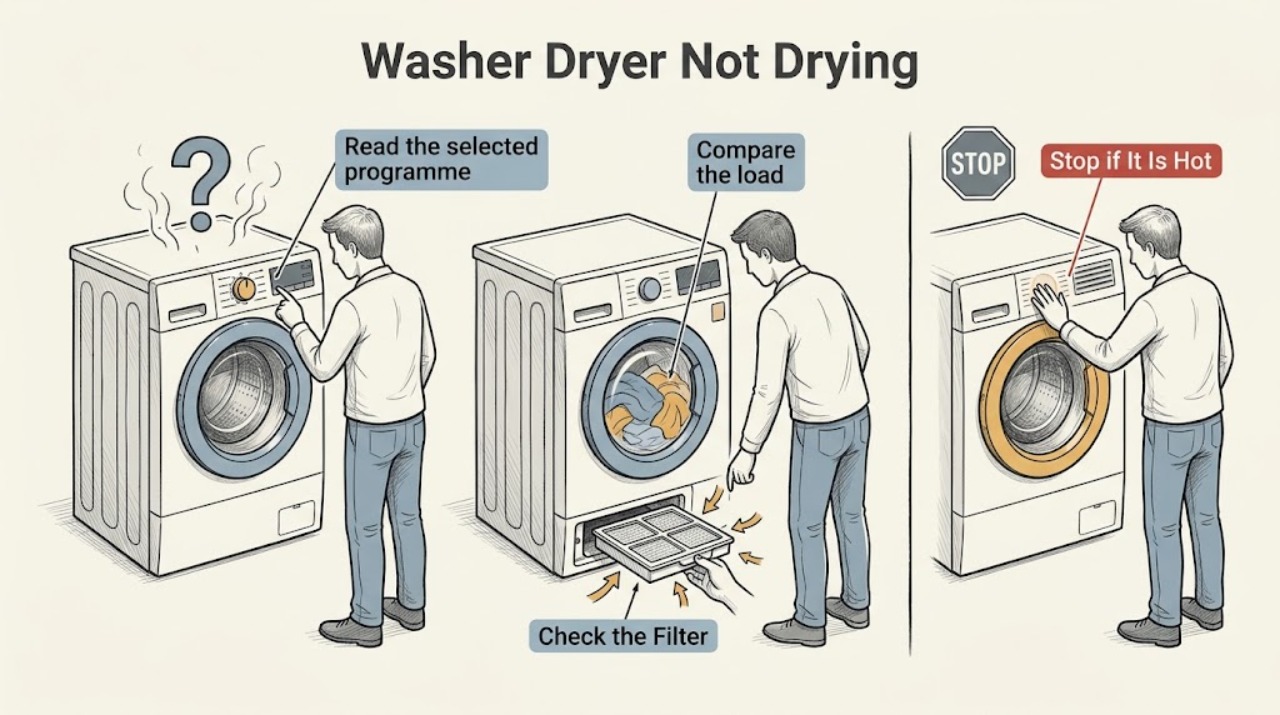
Haier Washer Dryer Not Drying
If a Haier washer-dryer finishes with damp clothes, first check whether the drying programme and level were selected, whether the load is within the model's drying capacity, and whether the clothes are bunched against the drum wall. Clean the model's accessible lint or drying filter and keep its filter surface dry before reinstalling it.
-
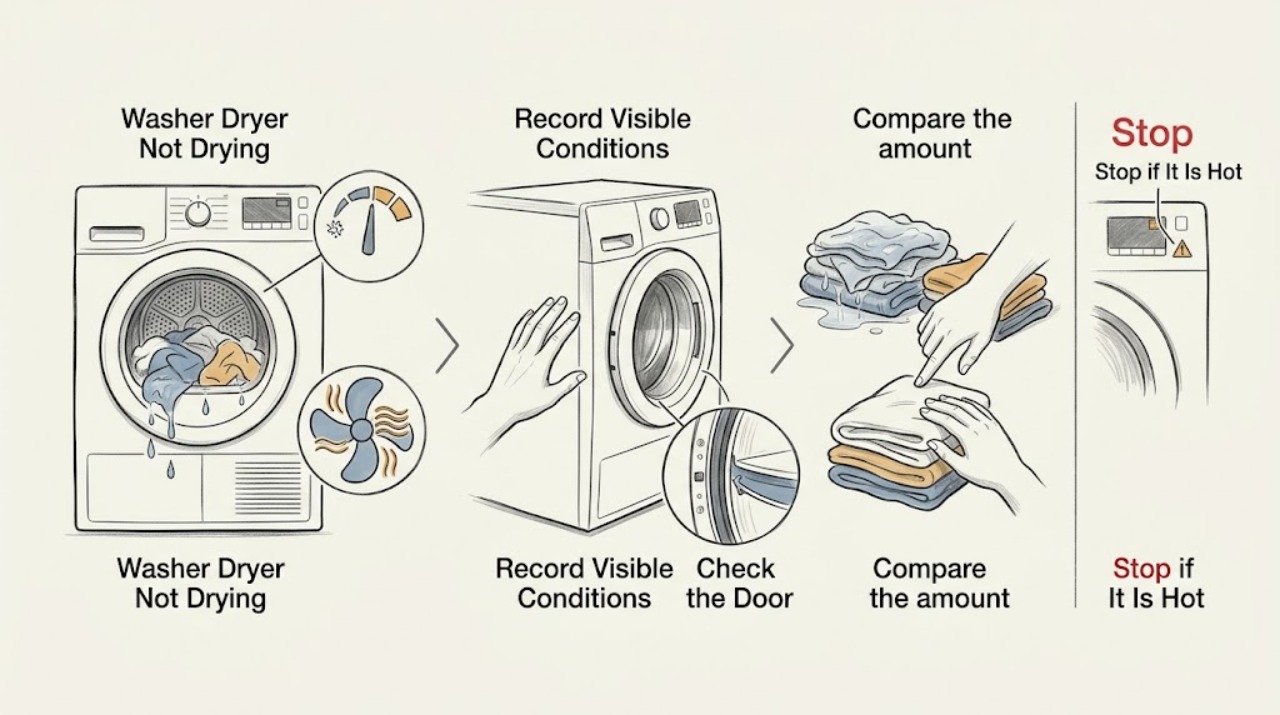
Hoover Washer Dryer Not Drying: Checks That Change the Diagnosis
Start by reducing the load: a Hoover washer dryer can wash more laundry than it can dry, so a full wash load may have too little room to dry efficiently. Check that a drying programme and suitable time or automatic setting were actually selected, and that the load was spun well before drying.
-
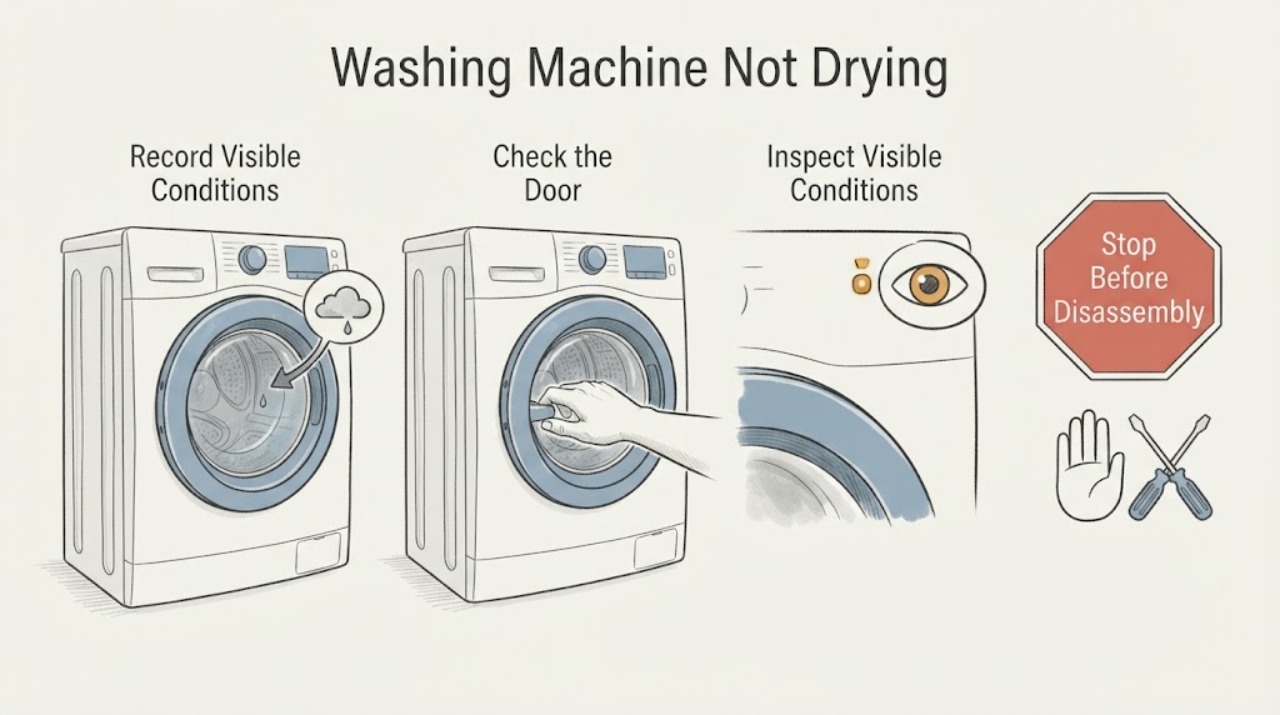
Hoover Washing Machine Not Drying
First confirm that the Hoover appliance is a washer-dryer and that a drying programme is selected; a washing-only model cannot dry clothes. On a Hoover washer-dryer, the drying load is smaller than the wash load, so remove part of a full drum, use a fabric-appropriate programme, and make sure the wash has spun the water out.
-
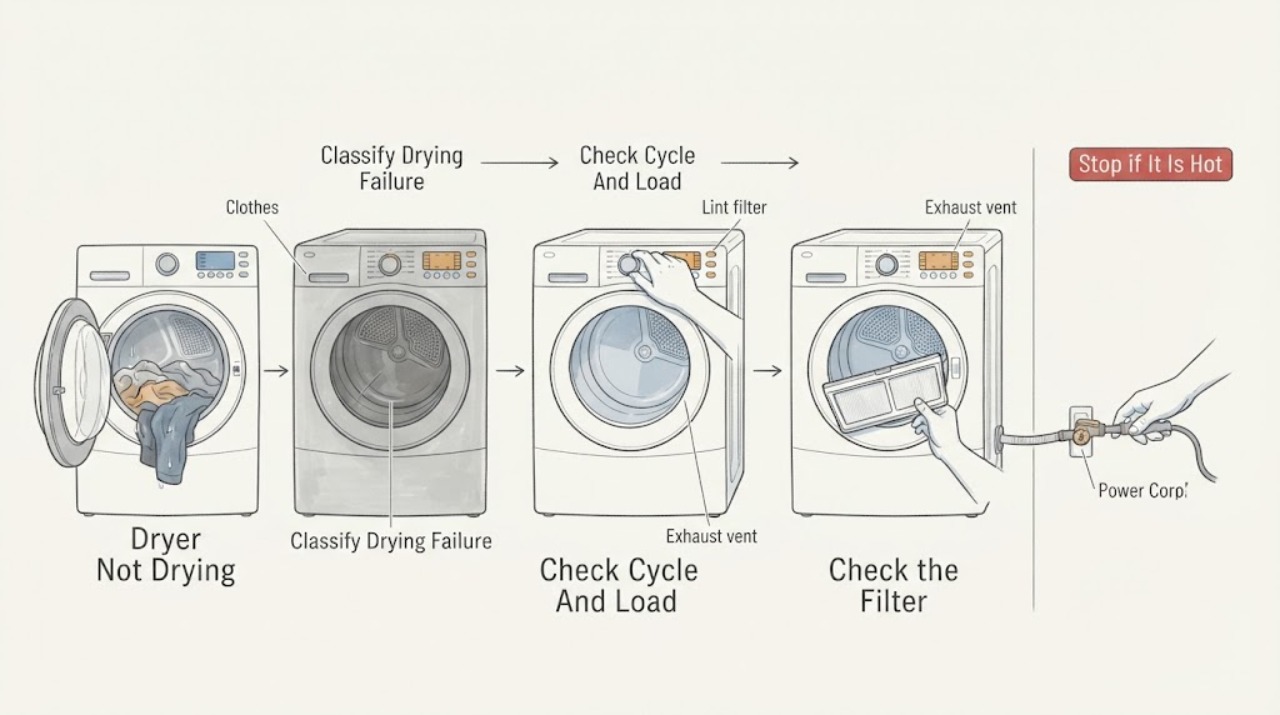
Hotpoint Dryer Not Drying: check heat, airflow, settings, and load moisture
When a Hotpoint dryer is not drying, first separate a long cycle from a no-heat problem: note whether the drum tumbles, whether the load is warm, and whether clothes leave the washer unusually wet. Use the correct dry cycle and load size, clean the lint filter, and inspect the exhaust path and outside wall cap for kinks or blockage.
-
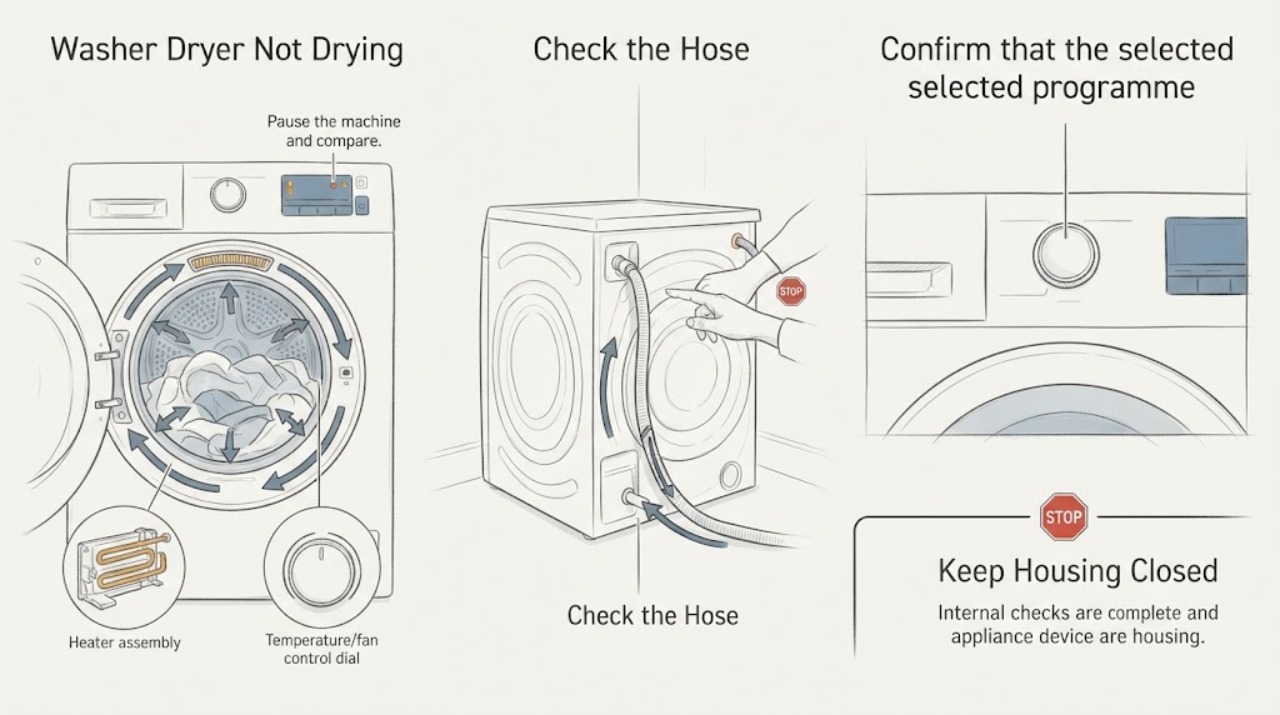
Hotpoint Washer Dryer Not Drying
Start with the dry-load capacity, not the wash capacity: Hotpoint says washer-dryers can have a lower drying limit, and an overloaded drum restricts air circulation and spinning. Remove excess laundry, separate tangled items, and confirm that the selected cycle is actually a drying cycle rather than a short low-temperature or non-drying option.
-
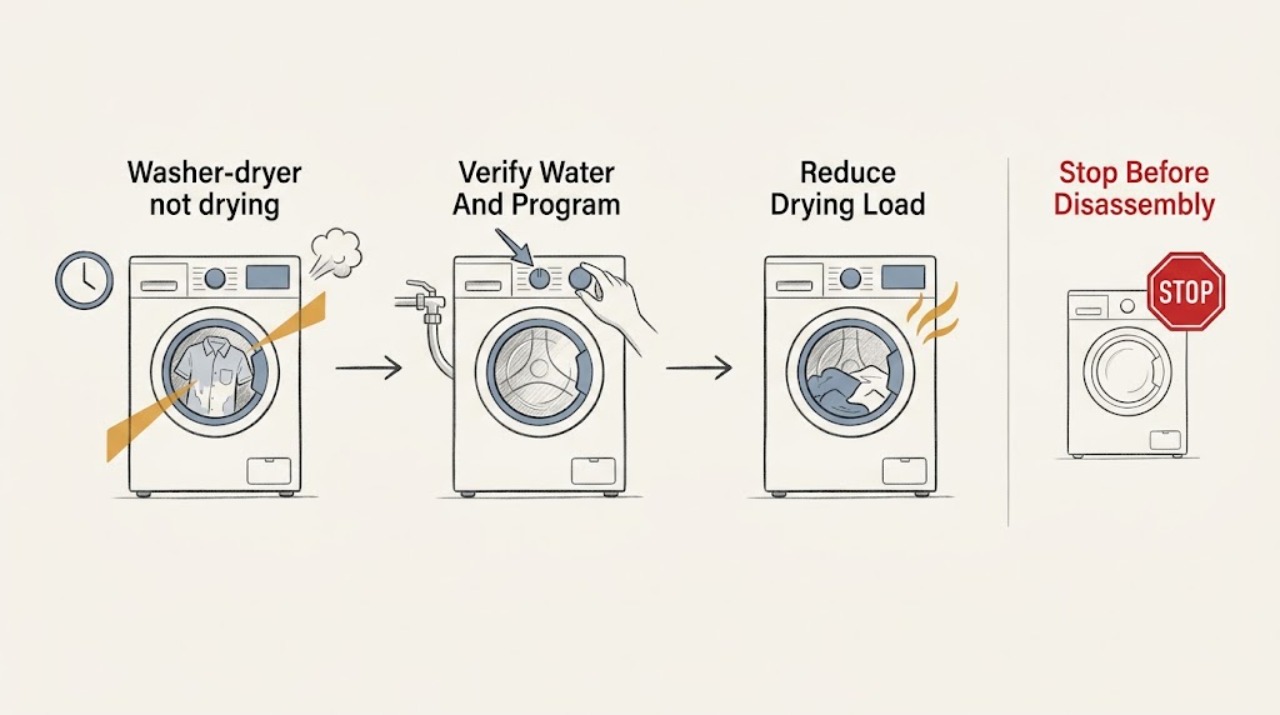
How to troubleshoot an AEG washer-dryer that is not drying
Start with the checks that affect every AEG washer-dryer drying cycle: turn on the water tap, clean any air filters required by your model, clear the drain filter according to the user manual, use a drying load smaller than the wash load, and select a program and dryness level that match the fabric. A very small load may finish early on an automatic sensor program, while a heat-pump model may take longer by design.
-
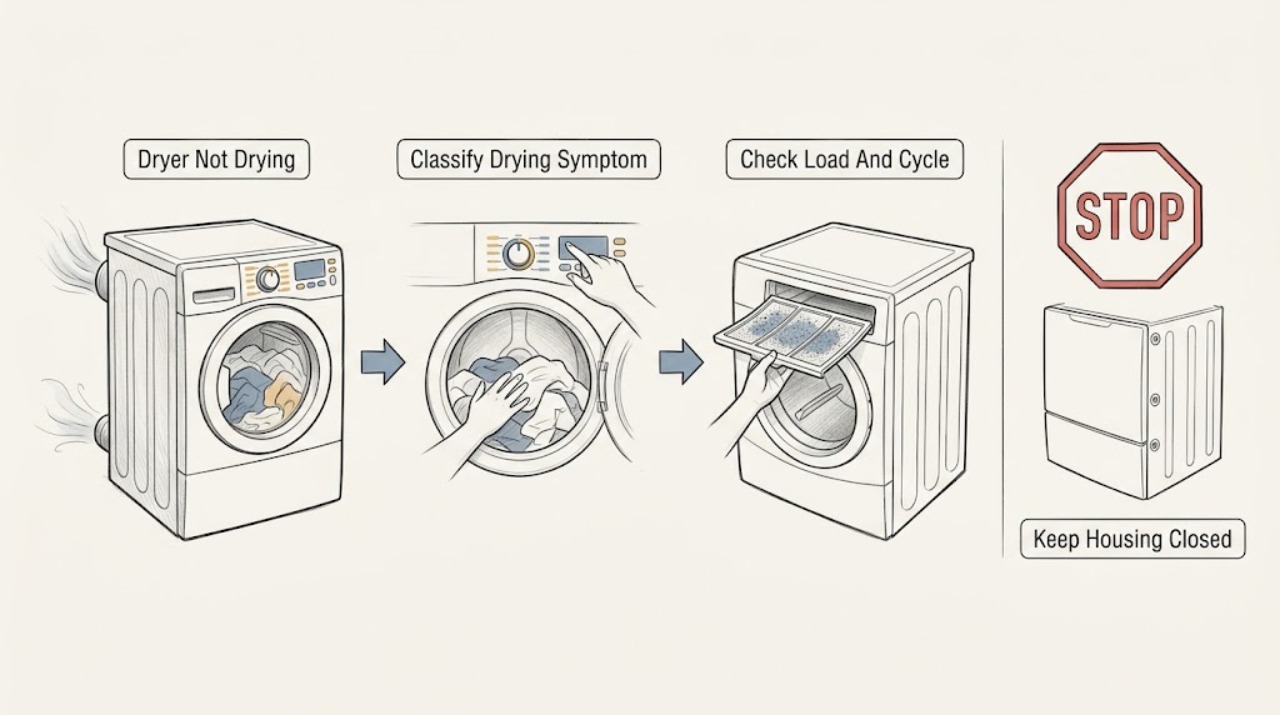
Kenmore Dryer Not Drying: Check the Load, Filter, Vent, and Heat Path
A Kenmore dryer that leaves clothes damp usually has a cycle or load problem, restricted airflow, or a heat or supply fault. First compare the result with a correctly sized load on a heat cycle, then clean and reseat the lint filter and check the complete exhaust route from the outside without opening the cabinet.
-
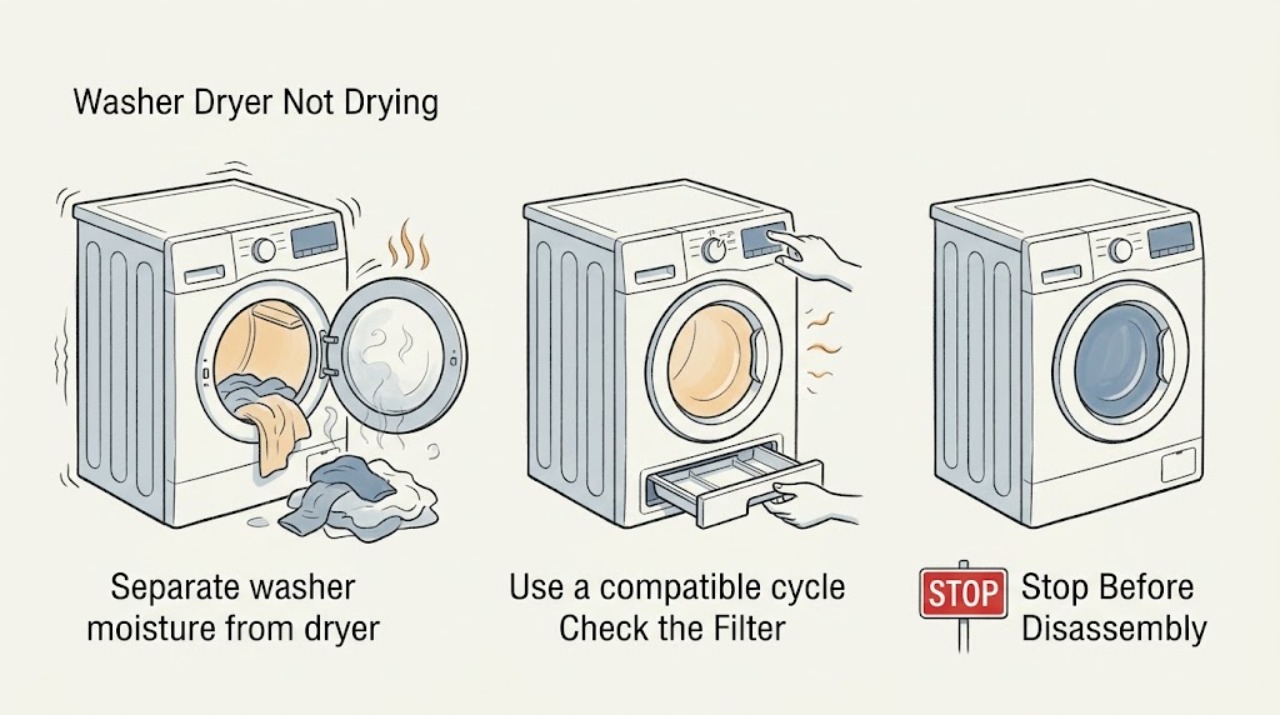
Kenmore Washer Dryer Not Drying: Trace the Moisture and Airflow
Start by deciding whether the clothes enter drying already waterlogged, whether the dryer tumbles without heat, or whether heat is present but moisture cannot leave. Use a correctly sized load and the intended heated or sensor cycle; Air Dry and other no-heat settings will not dry normally.
-
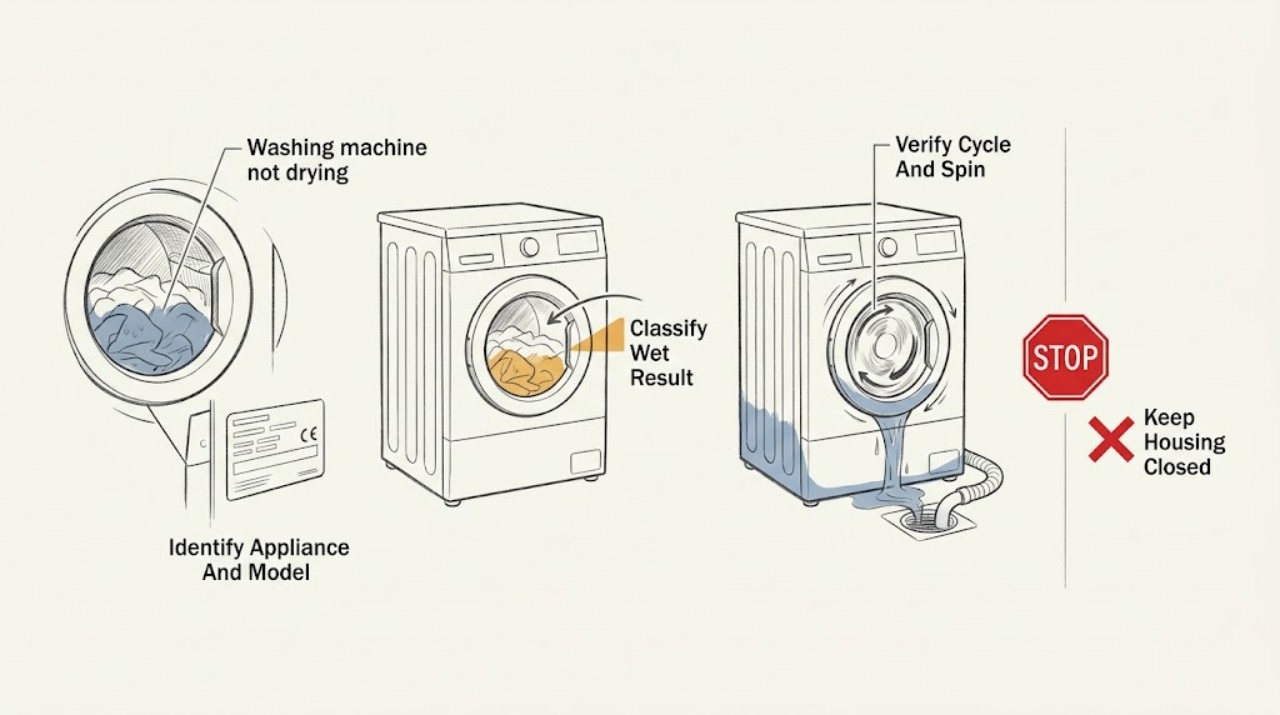
Kenmore washing machine not drying: separate wet-spin and dry-cycle problems
A Kenmore washer normally removes water by spinning; it does not heat-dry clothing unless the appliance is a Kenmore laundry center or washer-dryer with a documented dry cycle. First identify the exact model and decide whether clothes are merely left wet after wash and spin or whether a separate dry cycle is failing.
-
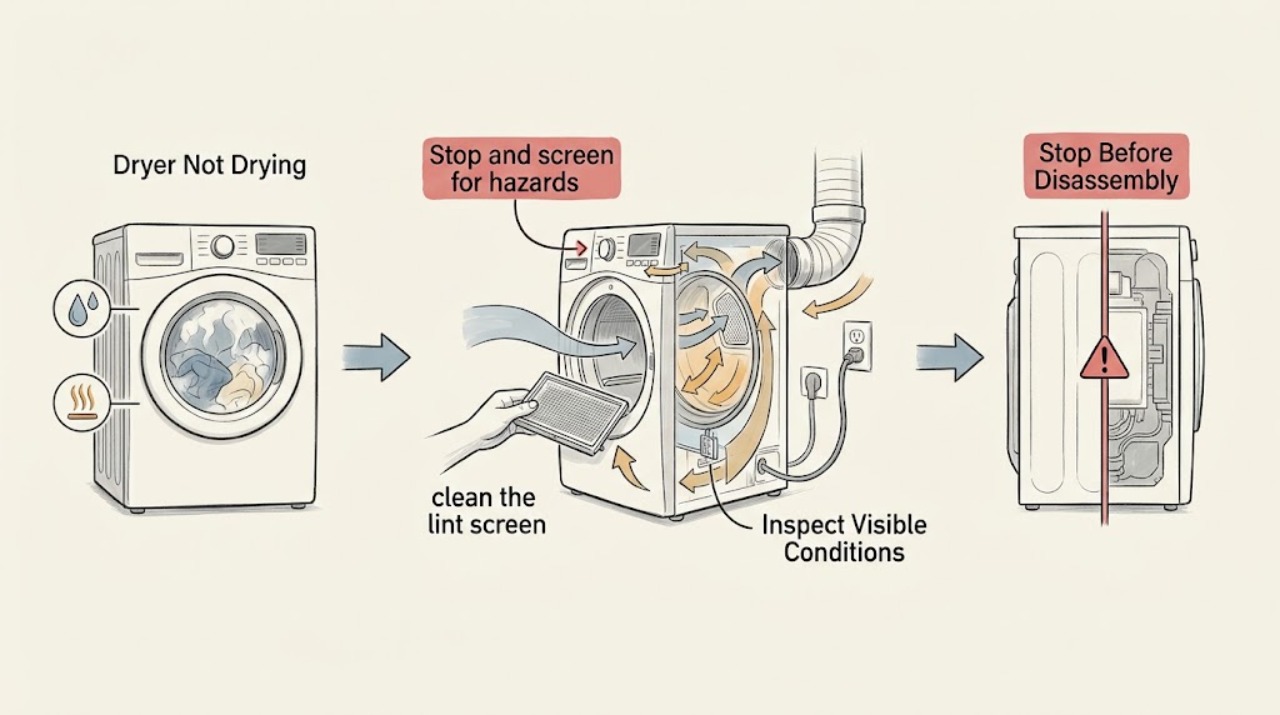
KitchenAid Dryer Not Drying: Find the Cause Safely
If a KitchenAid dryer runs but clothes stay damp, first note whether the drum tumbles, whether the air becomes warm, and whether the cycle ends normally. Clean the lint screen, use a cycle suited to the load, and check the outside exhaust for strong airflow only when there is no gas odor, smoke, scorching, sparking, overheating, or repeated tripping.
-
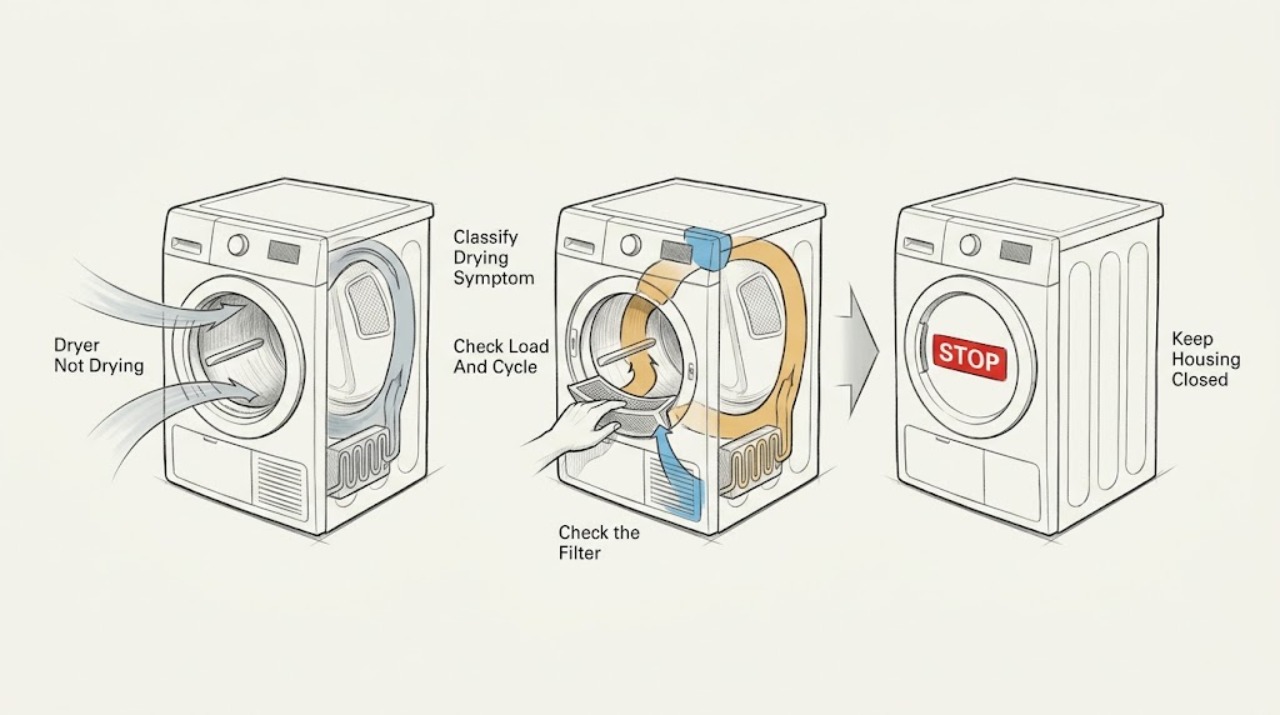
LG Dryer Not Drying
If an LG dryer leaves clothes wet, first separate a load problem from no heat, an early sensor-cycle stop, or a long cycle. Use laundry that has completed its washer spin, reduce a bulky load to about half the drum, separate thick and thin items, and choose a cycle that fits the fabric.
-
LG Washer Dryer Not Drying
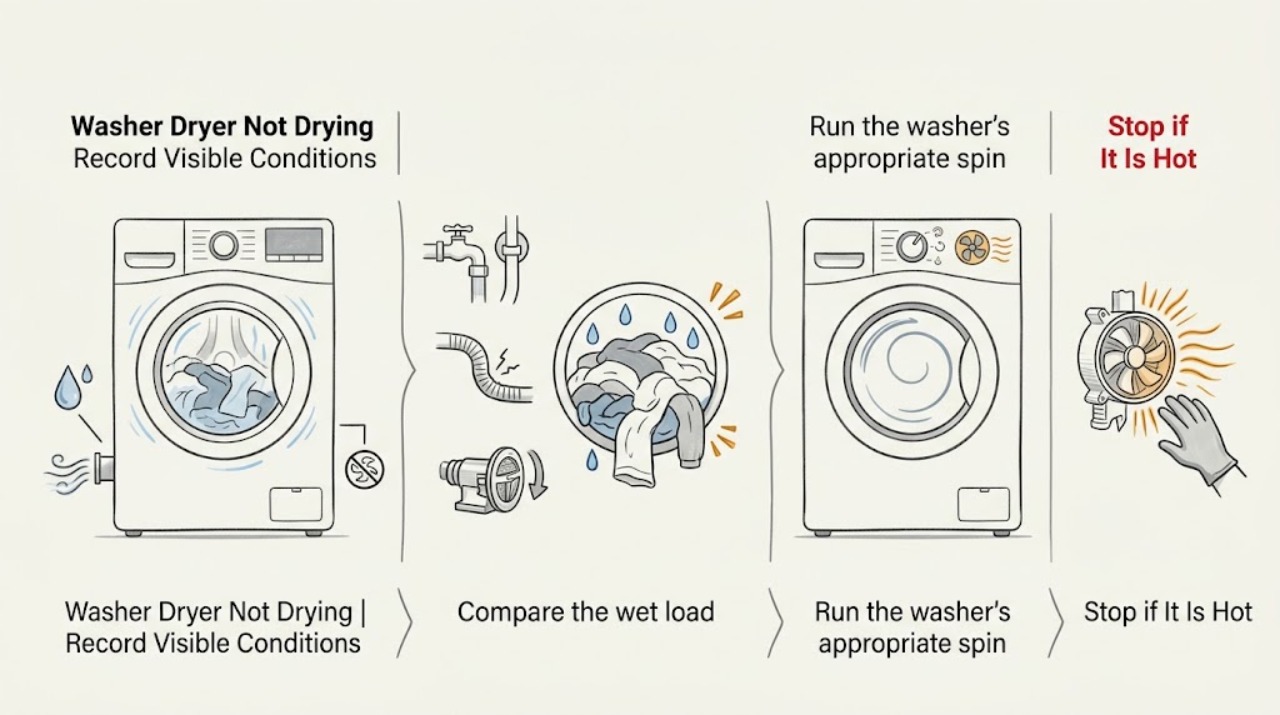
An LG washer-dryer combo that leaves clothes wet usually has one of several different conditions: the load is too large for the dry capacity, the clothes did not spin enough water out, the combo lacks the water it uses to condense moisture, the drain hose is kinked or holding water, the drain-pump filter is restricted, or a model-specific drying fault is active.
-
LG washing machine not drying: separate wet-after-spin from combo drying problems
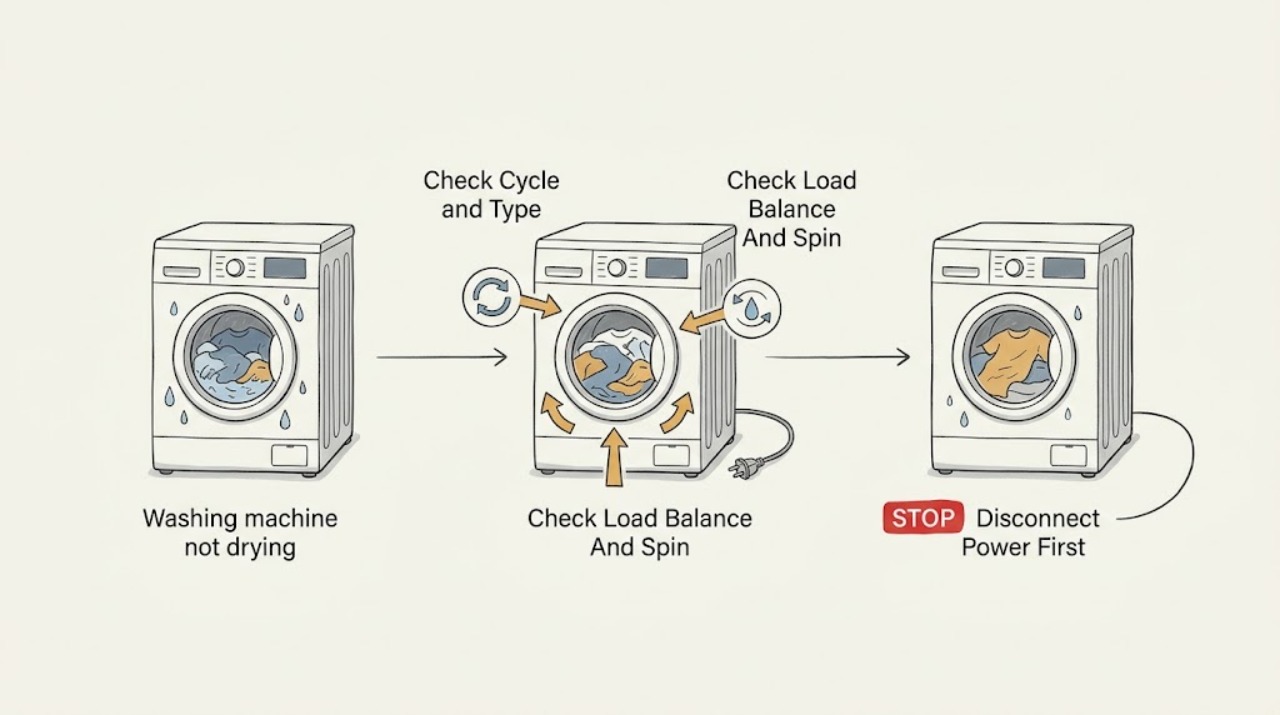
First decide whether this is a standard LG washer leaving clothes wet after the final spin or an LG washer-dryer combo failing during its drying function. A standard washer does not dry clothes with heat: wet laundry usually means the load did not drain or spin effectively, often because of an unbalanced load, drain restriction, excess suds, low spin selection, or leveling/floor movement.
-
Magic Chef Washer Dryer Not Drying
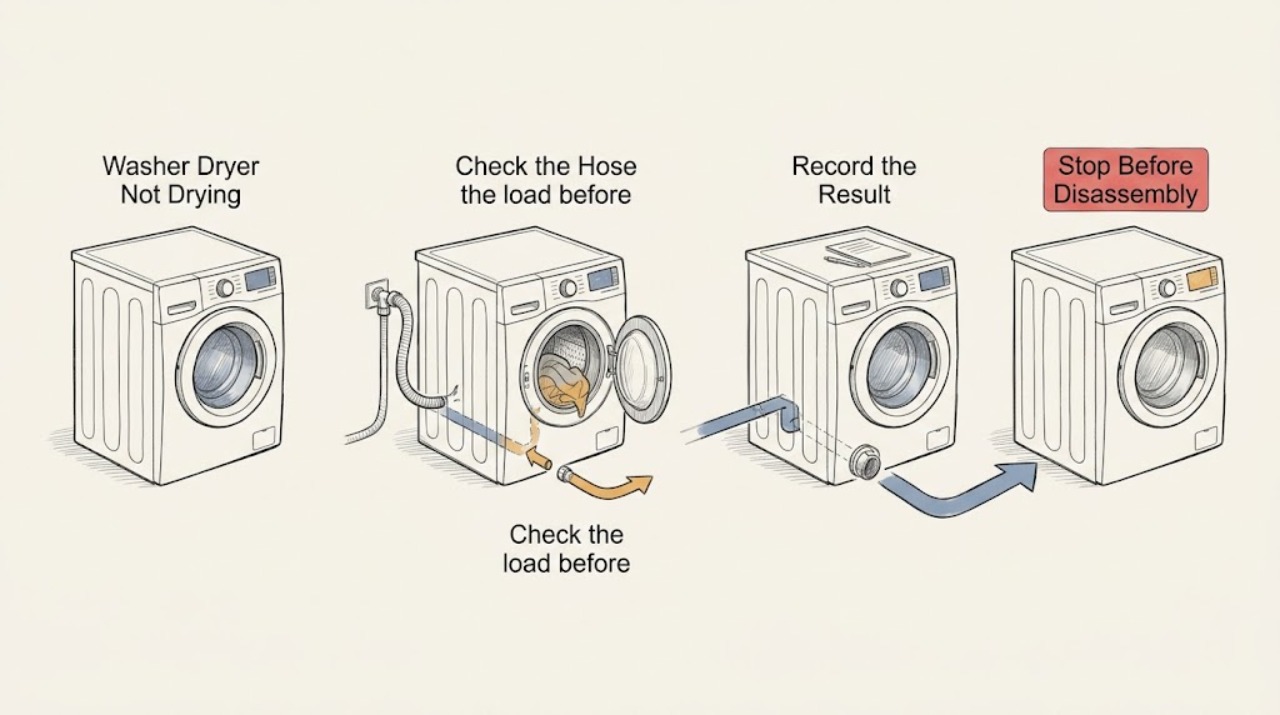
If a Magic Chef washer dryer finishes with wet clothes, first confirm that a Dry option is selected and the dry indicator is actually running. Reduce the load below the washer's capacity, use a complete spin, and check that the water supply and drain path remain connected and clear because this is a ventless combo.
-
Maytag Dryer Not Drying
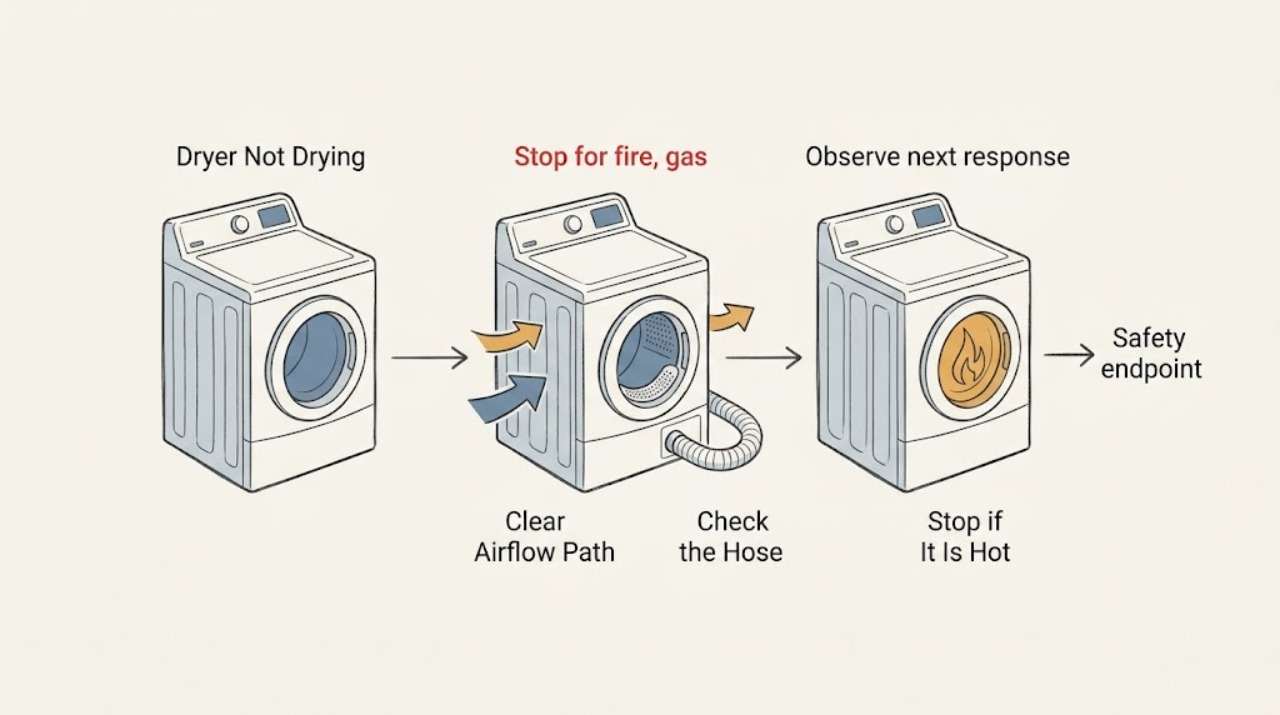
Start by separating a cycle or load issue from a heat or airflow fault. Clean and fully dry the lint screen, use a suitable heated or automatic cycle, avoid packing the drum, and check that the vent path is not kinked, crushed, blocked, or venting weakly outside.
-
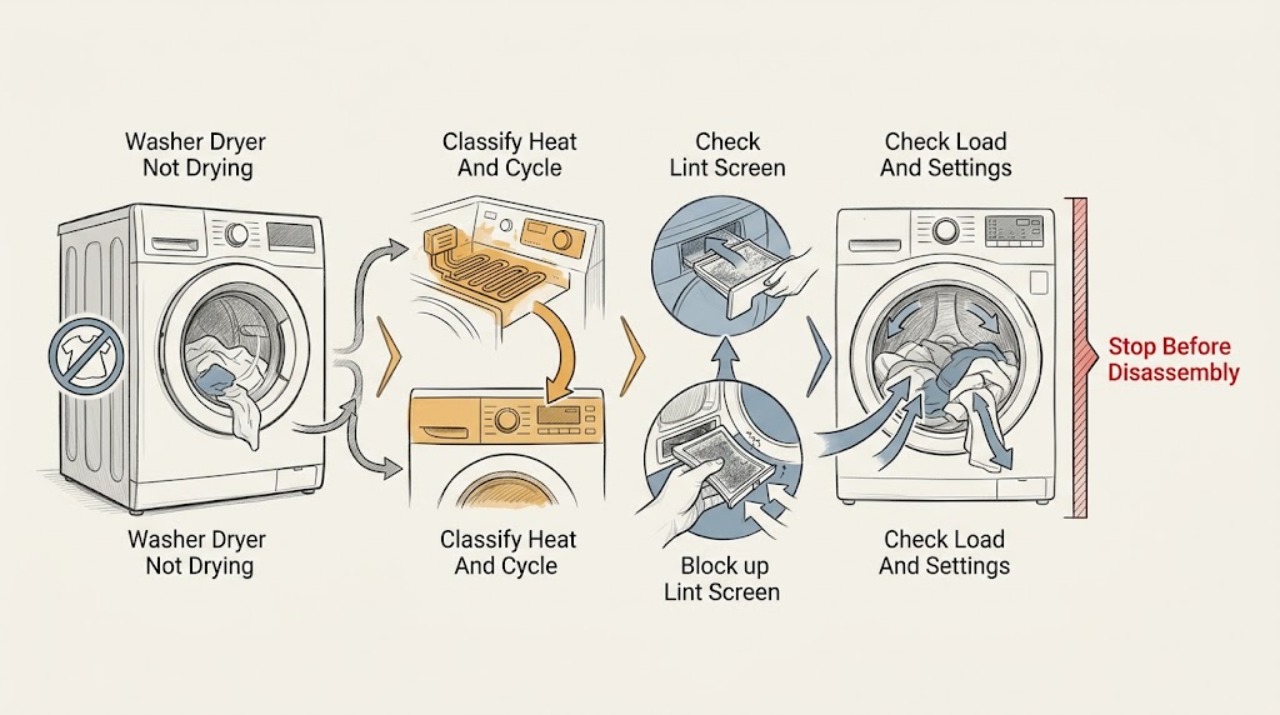
Maytag Washer Dryer Not Drying: Check Heat, Airflow, Load, and Cycle Settings
First separate a washer-dryer that is not heating from one that is heating but leaving clothes damp. Check that the selected program actually includes heat, the load is not tightly packed or mixed with heavy items, the lint screen is clean, the door is latched, and the appliance is level if its drying system uses moisture sensors.
-
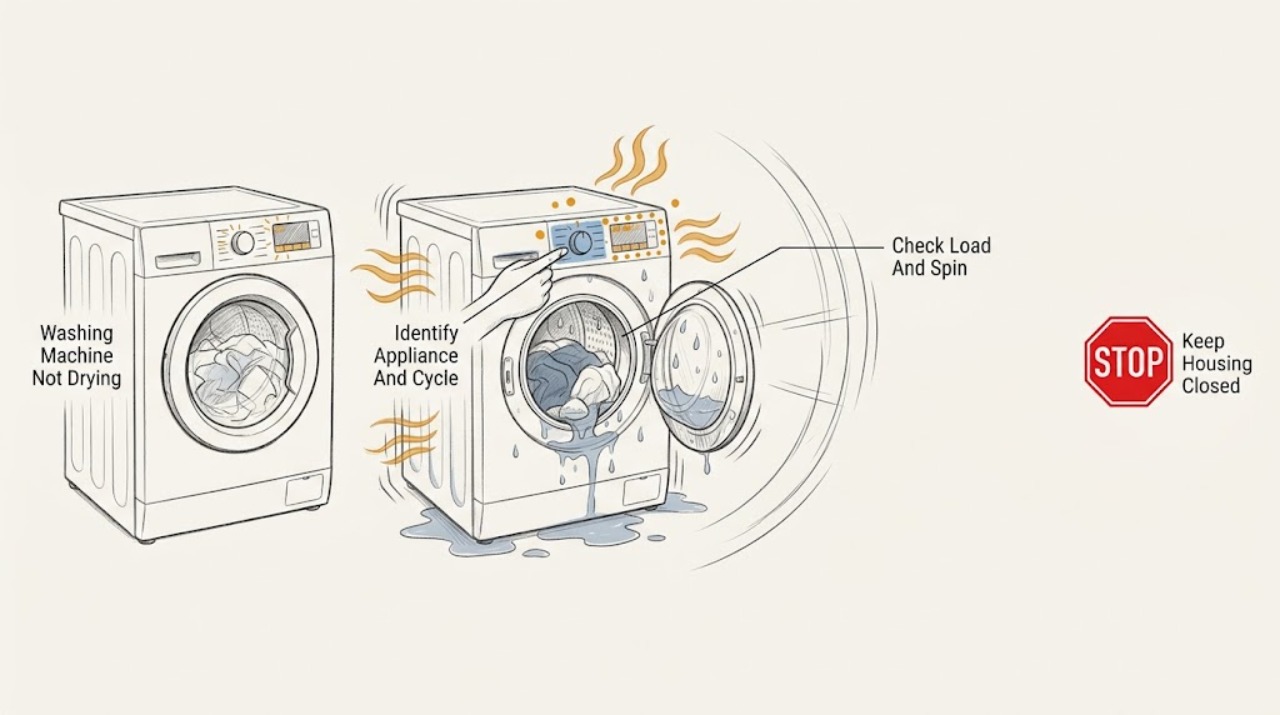
Maytag Washing Machine Not Drying: Clothes Still Wet After the Cycle
A standalone Maytag washing machine does not heat-dry clothes; clothes that come out wet usually point to water left in the tub, an incomplete or low-speed spin, an unbalanced load, or excess suds. Stop the cycle safely, note whether water remains, then use the model-approved Drain & Spin or Spin cycle after checking the load, spin setting, detergent, and accessible drain path.
-
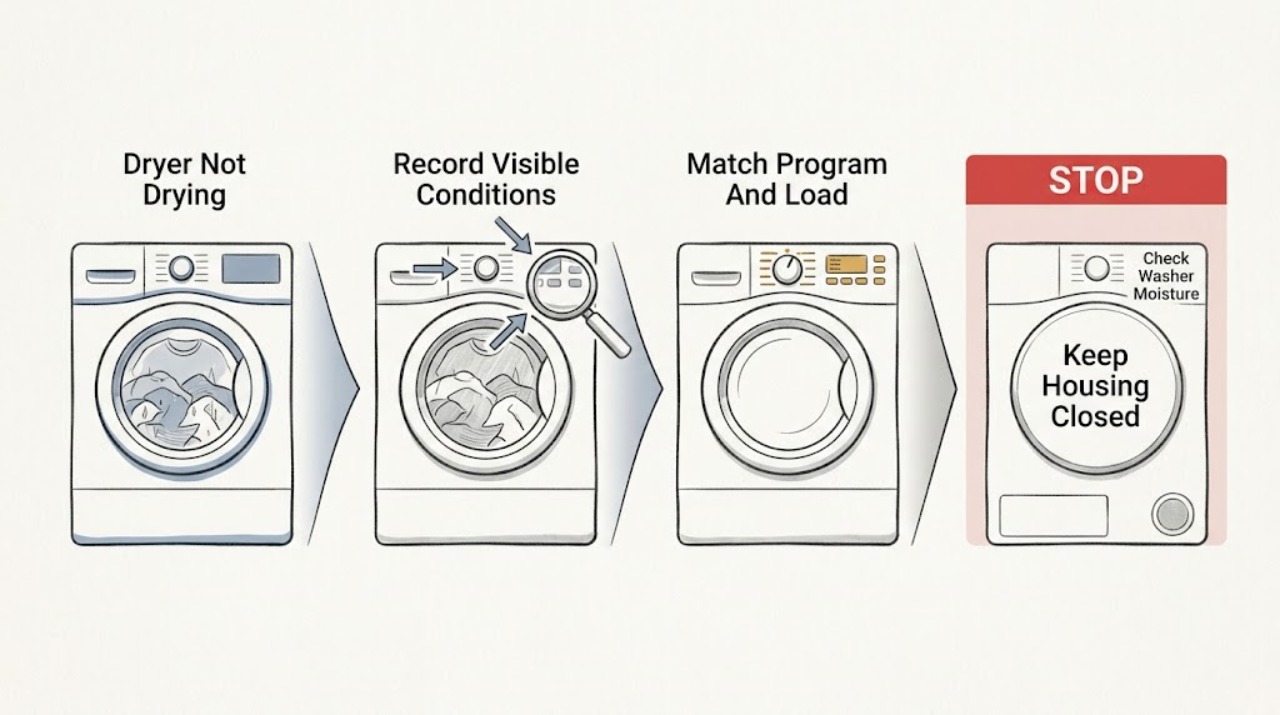
Miele Dryer Not Drying: Check the Program, Filters, Airflow, and Moisture Sensing
When a Miele dryer leaves laundry damp, first identify whether the load is mixed, overloaded, still too wet from the washer, or ending early because the moisture sensor sees little moisture. Select the program that matches the fabric and load, then clean the door lint filters and the plinth filter exactly as the model instructions describe.
-
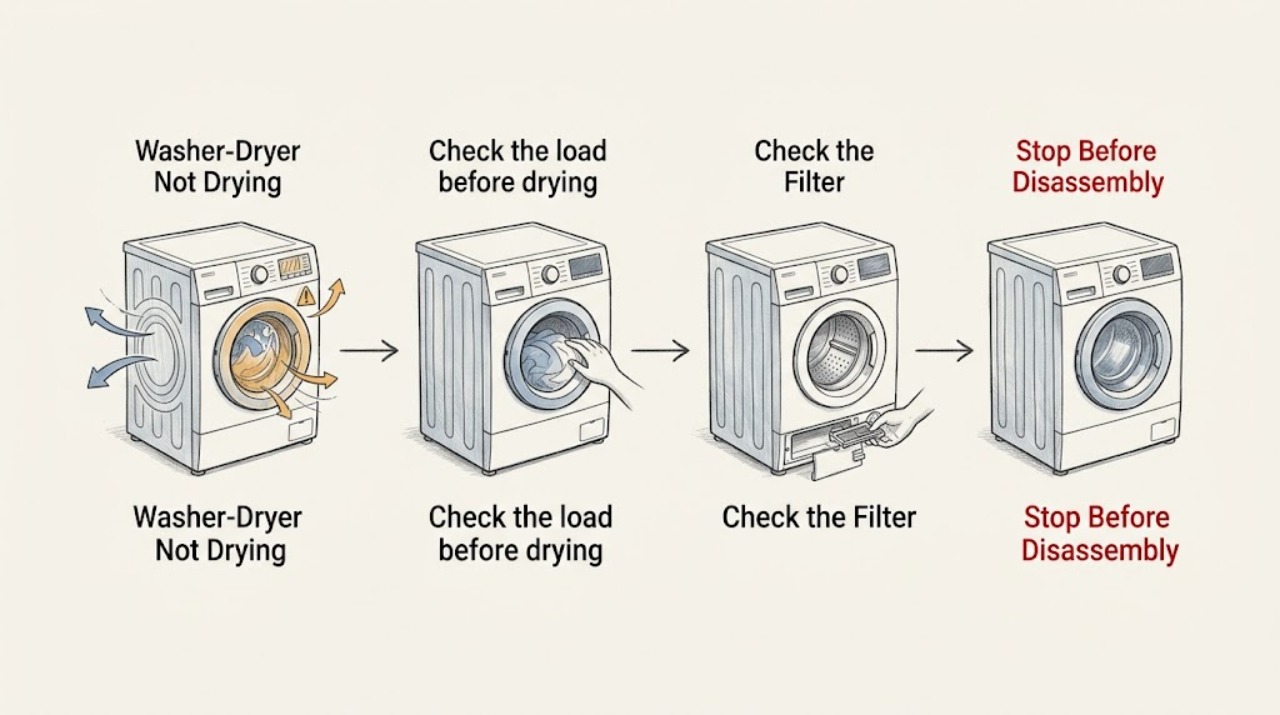
Miele Washer-Dryer Not Drying: Safe Checks Before Service
If a Miele washer-dryer leaves clothes damp, first separate a normal moisture-sensing decision from a true drying fault. Check that the load was spun adequately, the drying program matches the fabric mix and load size, and the lint or plinth filters and visible airflow path are clean and completely dry.
-
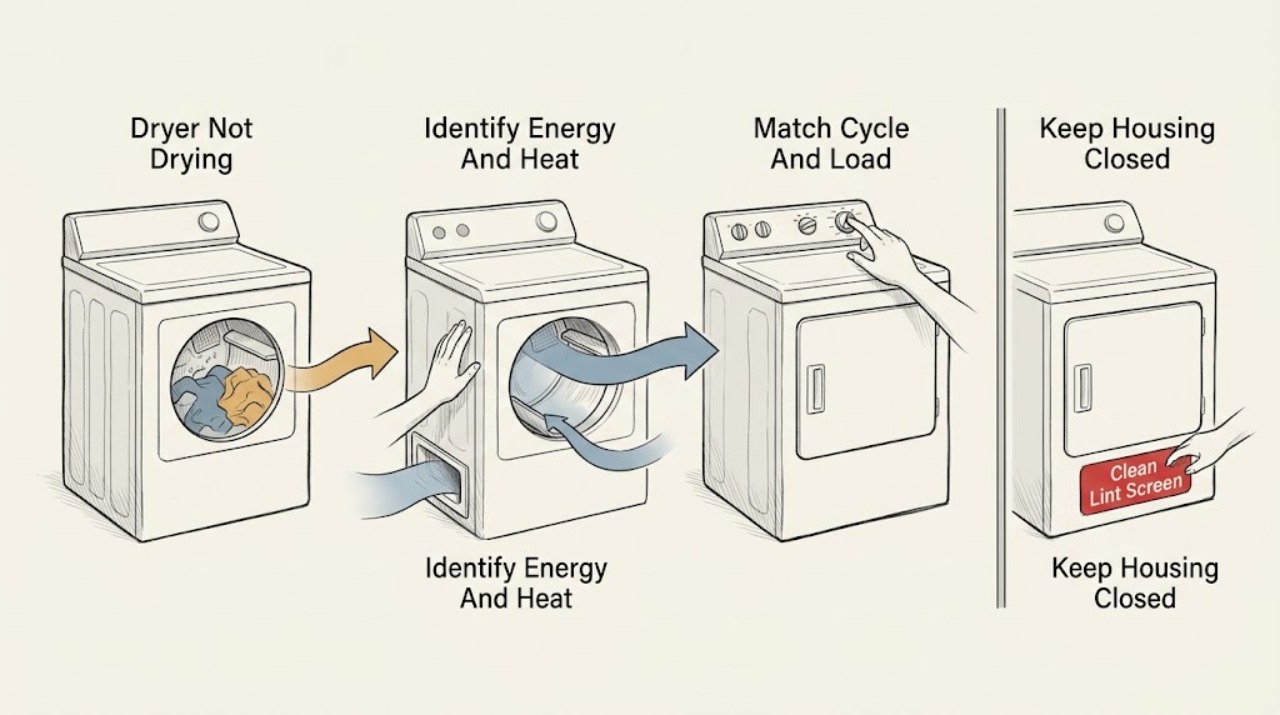
Roper Dryer Not Drying: Check the Cycle, Lint Screen, Vent, and Heat
When a Roper dryer leaves clothes damp, first identify whether it is electric or gas and whether the drum heats, tumbles, and exhausts air. Match the cycle and temperature to the fabric, do not pack the drum, and clean the lint screen before every load.
-
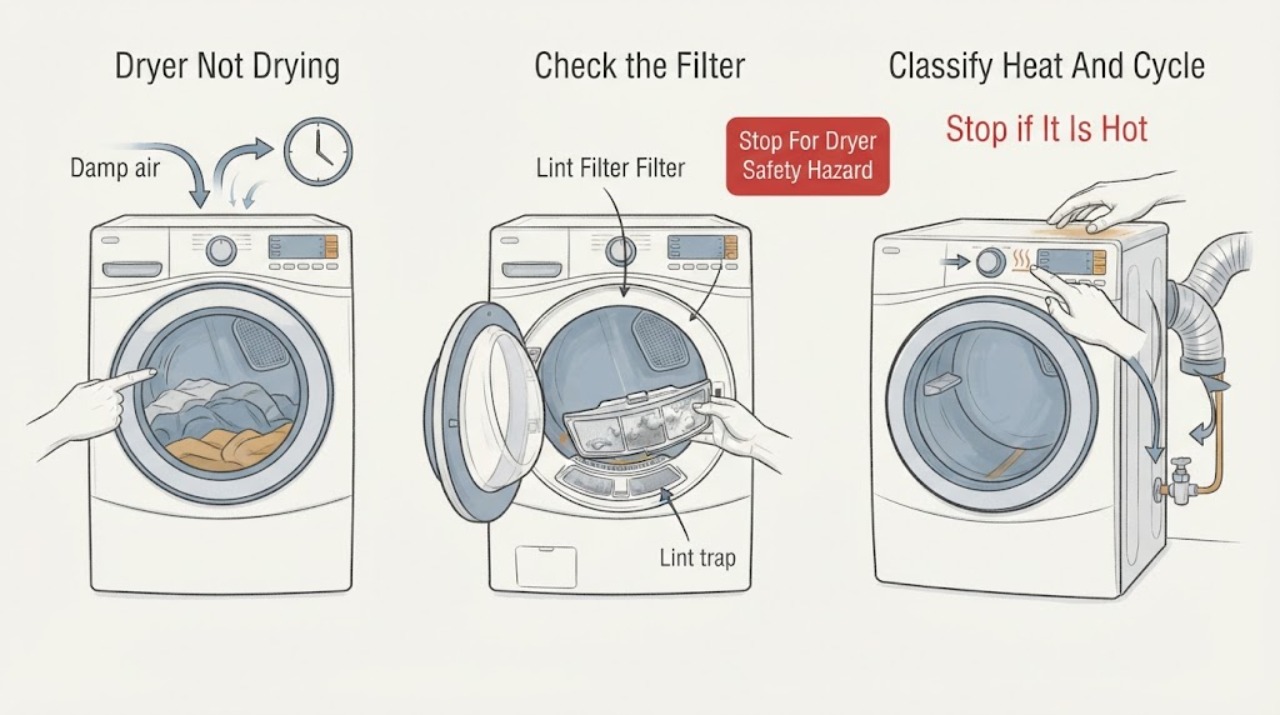
Samsung Dryer Not Drying: Check Heat, Airflow, and the Cycle
If a Samsung dryer leaves clothes damp, first decide whether it has no heat, weak heat with a long cycle, or normal heat but an early Sensor Dry stop. Use the correct cycle, turn off Eco Dry only if the model has it and you need more heat, clean the lint filter, and check the exhaust path or heat exchanger according to the model.
-
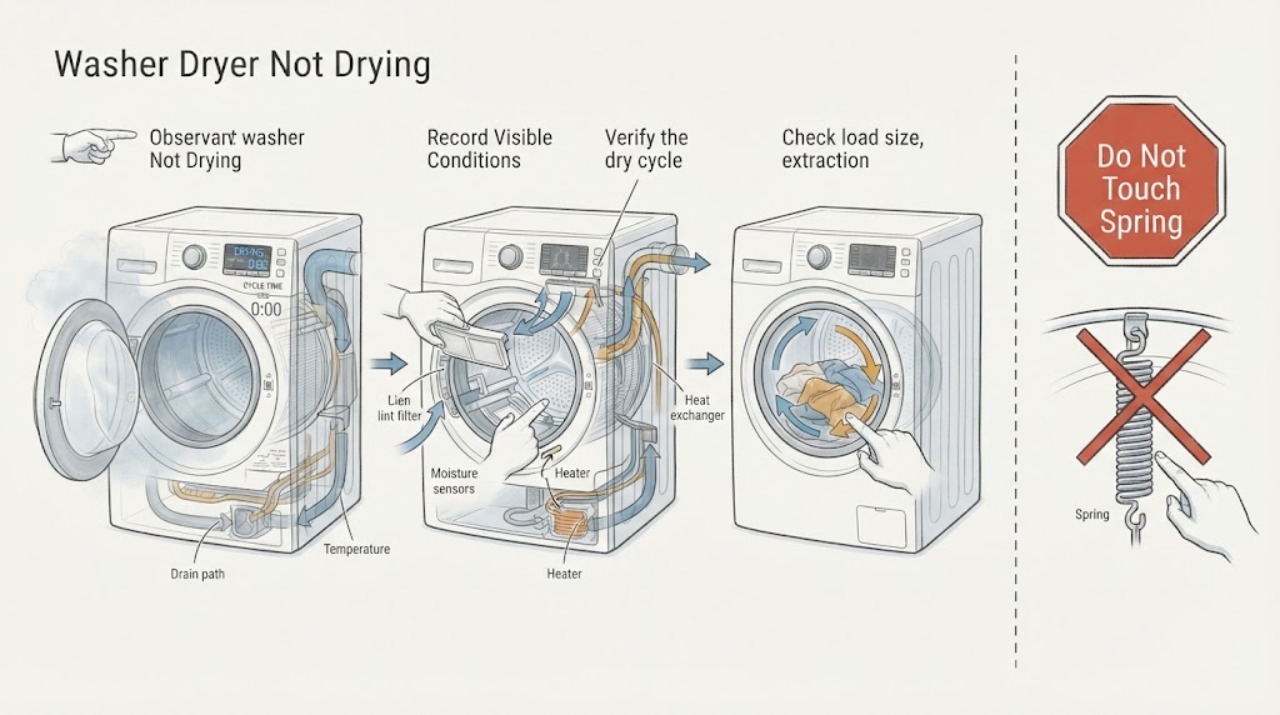
Samsung Washer Dryer Not Drying
First identify whether the Samsung washer-dryer has no heat, weak heat, a cycle that ends too quickly, a cycle that takes too long, or clothes that were still soaking wet after the wash. Check that the selected cycle actually heats, turn off Eco Dry when an applicable model intentionally reduces heat, and use the correct Dry Level.
-
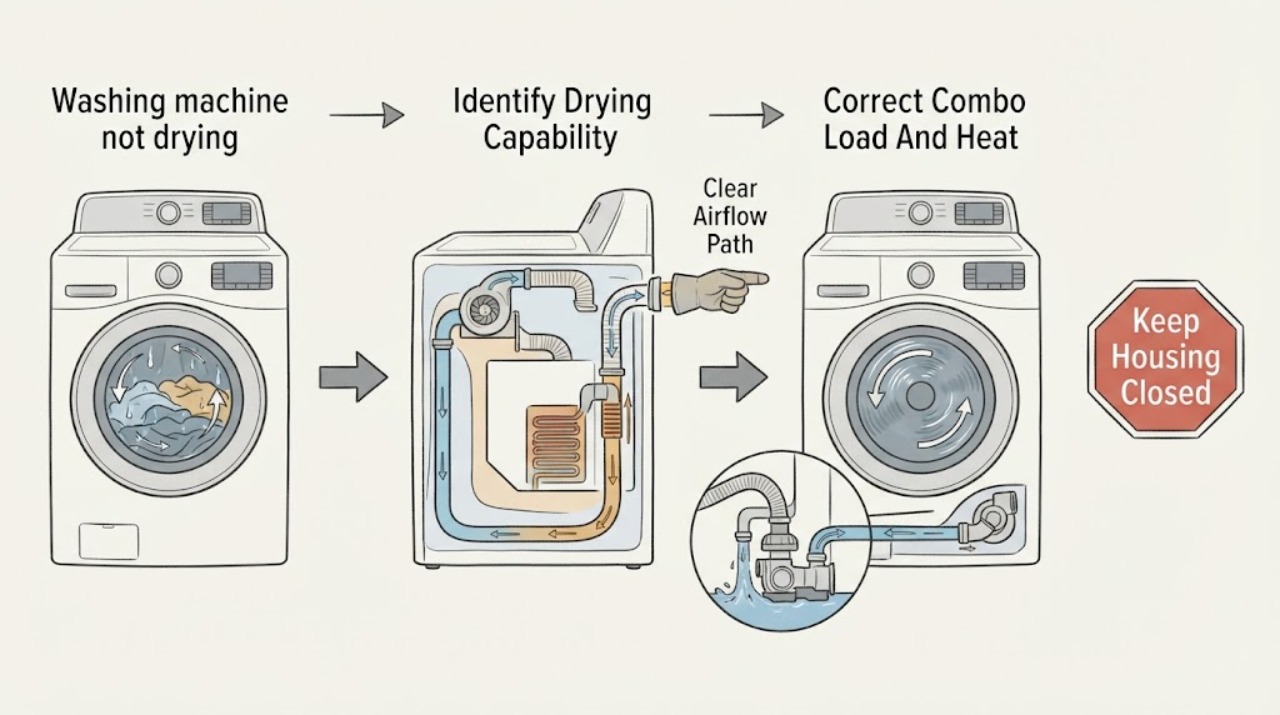
Samsung washing machine not drying: separate combo drying from wet-spin problems
First determine whether the Samsung appliance is a washer-dryer combo or a washer that only washes and spins. A washer without a Dry or drying cycle cannot heat-dry clothes; if the clothes are wet after washing, troubleshoot the final spin and drain instead.
-
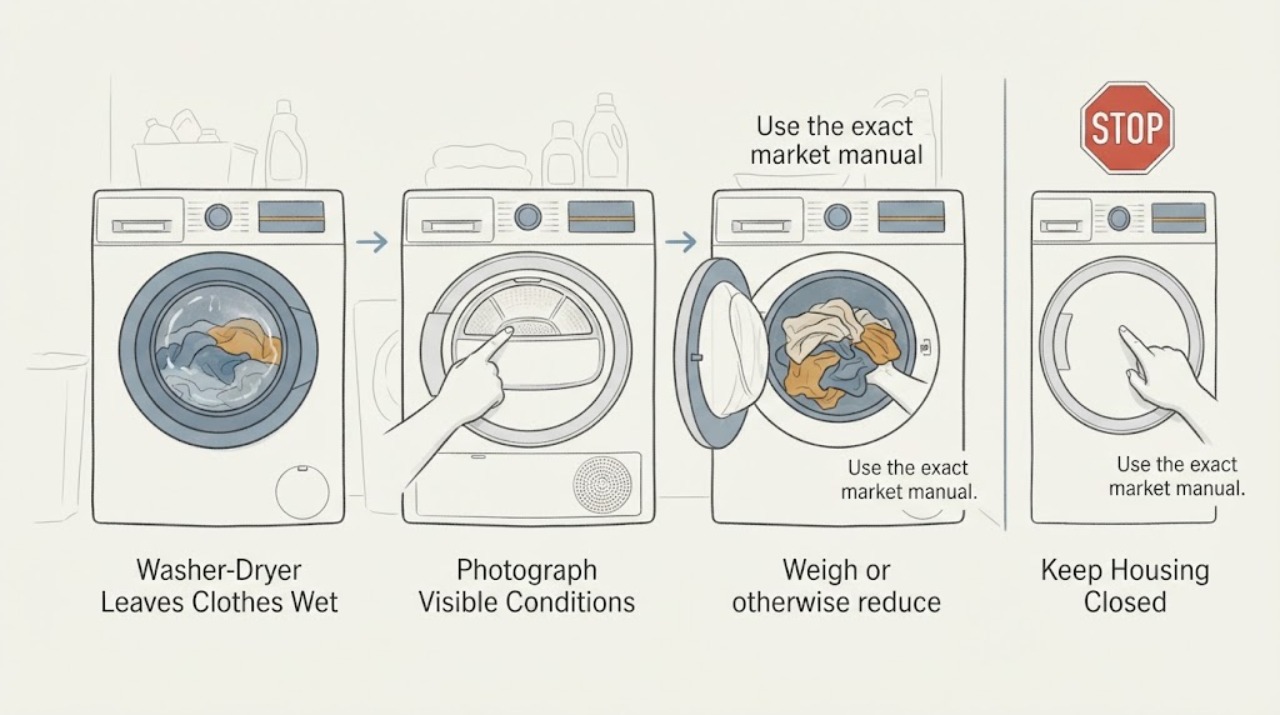
Samsung WD80J5A10AW Washer-Dryer Leaves Clothes Wet: Load, Water, and Drying Checks
For a Samsung WD80J5A10AW washer-dryer that leaves laundry damp or wetter after drying, first confirm the market suffix and separate the 8 kg wash capacity from the 5 kg drying capacity documented for the WD80J5A10AW EU variant. A load that is acceptable for washing can still be too large for drying.
-
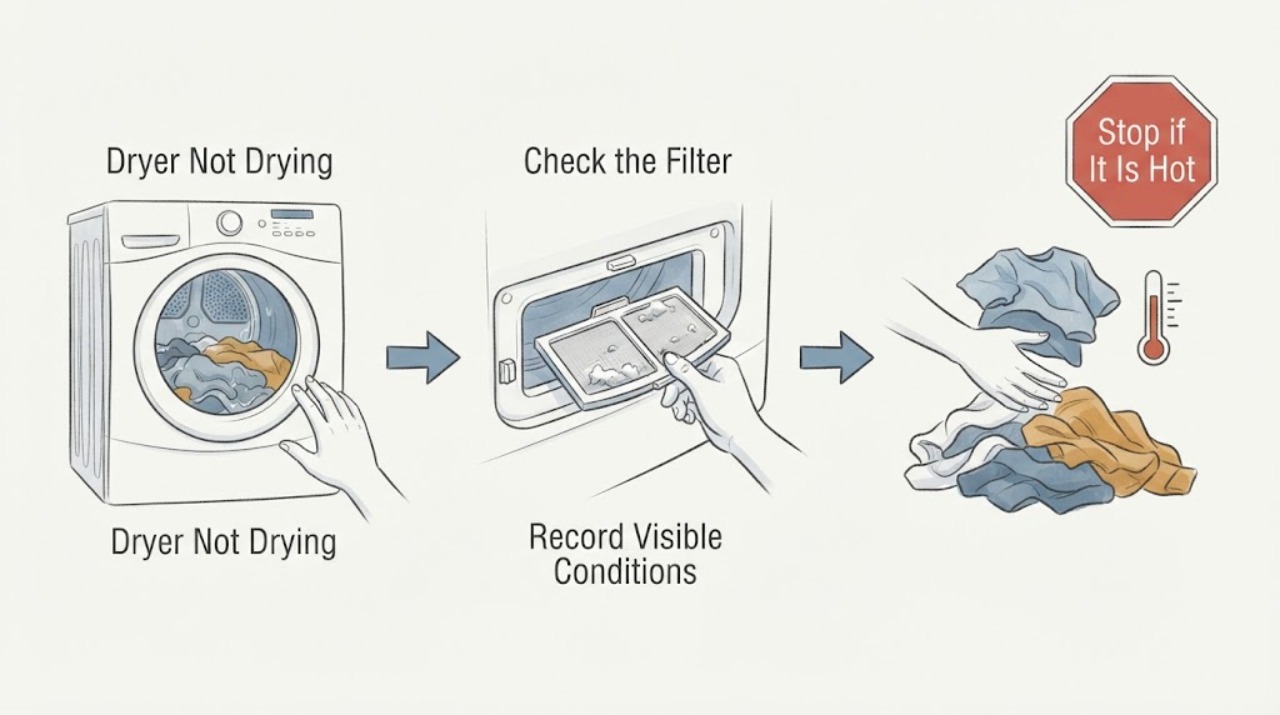
Siemens Dryer Not Drying: Check Heat, Airflow, and the Drying Program
If a Siemens dryer leaves clothes damp, first separate a warm load from a true no-heat fault: warm laundry can feel wetter immediately after the programme, while a cold drum or a programme that stops early needs a different check. Stay within the load limit for the selected programme, use the correct dryness level or a longer time, clean the lint filter, keep the air inlet clear, and clean the moisture sensor as described for the exact model.
-
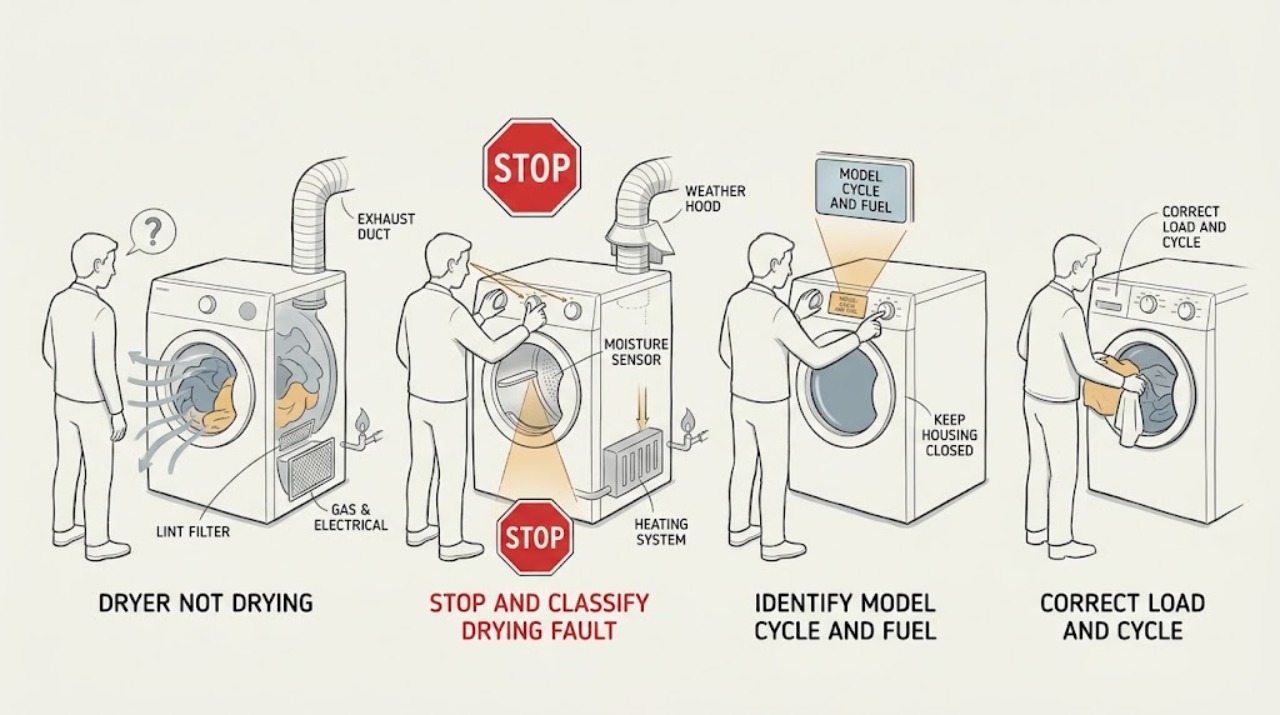
Speed Queen Dryer Not Drying: Check Loads, Airflow, and Heat Safely
First decide whether clothes remain damp, the automatic timer advances slowly, the dryer has no heat, or the cycle ends with heat but wet items. Use the exact Speed Queen manual for the model, cycle, and fuel type.
-
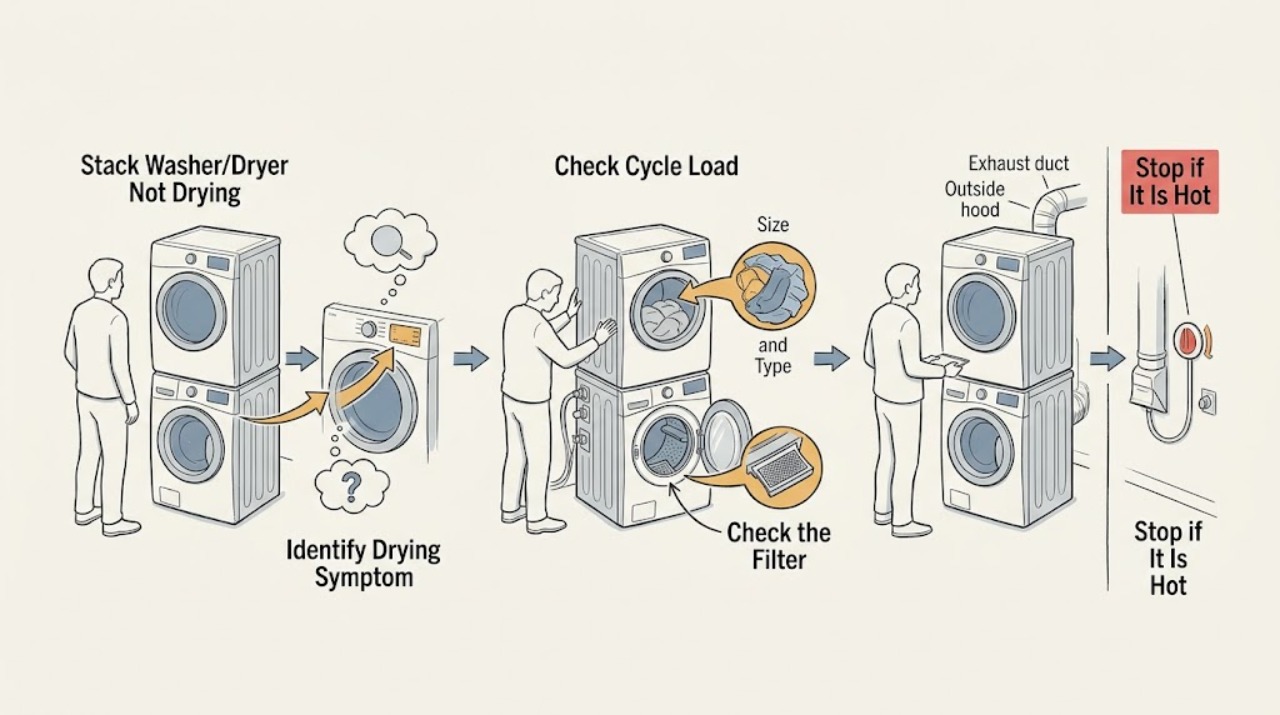
Speed Queen Stack Washer/Dryer Not Drying: Check Load, Heat, Lint, and Venting
Start by separating a dryer that runs but leaves clothes damp from a dryer that does not start or heat. Check the selected cycle and temperature, load size and fabric mix, the user-accessible lint filter, and the external exhaust duct and weather hood for restriction.