
Repair problem
Not Drying Troubleshooting Guides – Page 2
Published FixGraph guidance for diagnosing and responding to not drying.
Matching published guides
Choose a guide that matches the service, equipment, and conditions you are seeing.
-
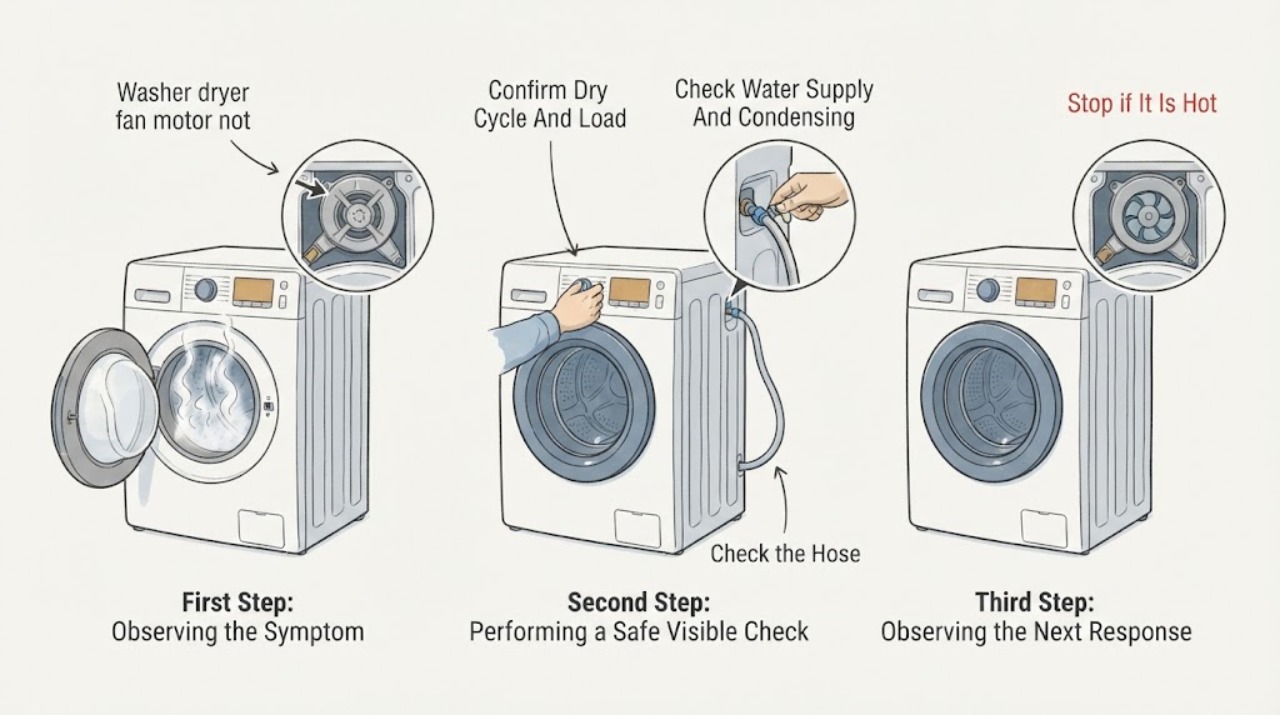
Washer dryer fan motor not drying: What to Check and What to Do Next
Damp clothes do not prove that the washer-dryer fan motor has failed. In a combo appliance, drying depends on heat circulation, the drain path, and—on many condensing designs—water or air movement through the drying system.
-
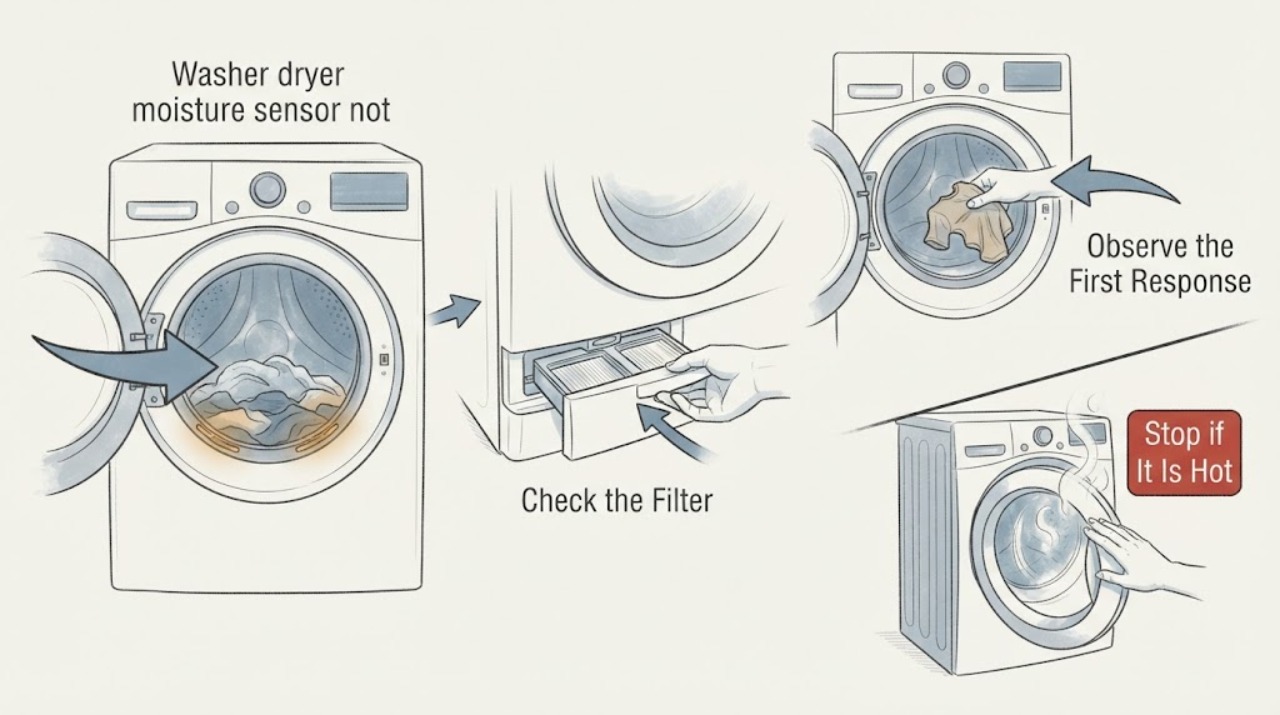
Washer dryer moisture sensor not drying: What to Check and What to Do Next
If a washer-dryer sensor cycle ends with damp clothes or seems not to dry, first separate a sensing decision from a heat or airflow problem. Clean and fully dry the lint filter and accessible moisture-sensor bars, use a load that can contact the sensors, select a cycle and dryness level suited to the fabric, and avoid mixing thin and bulky items.
-
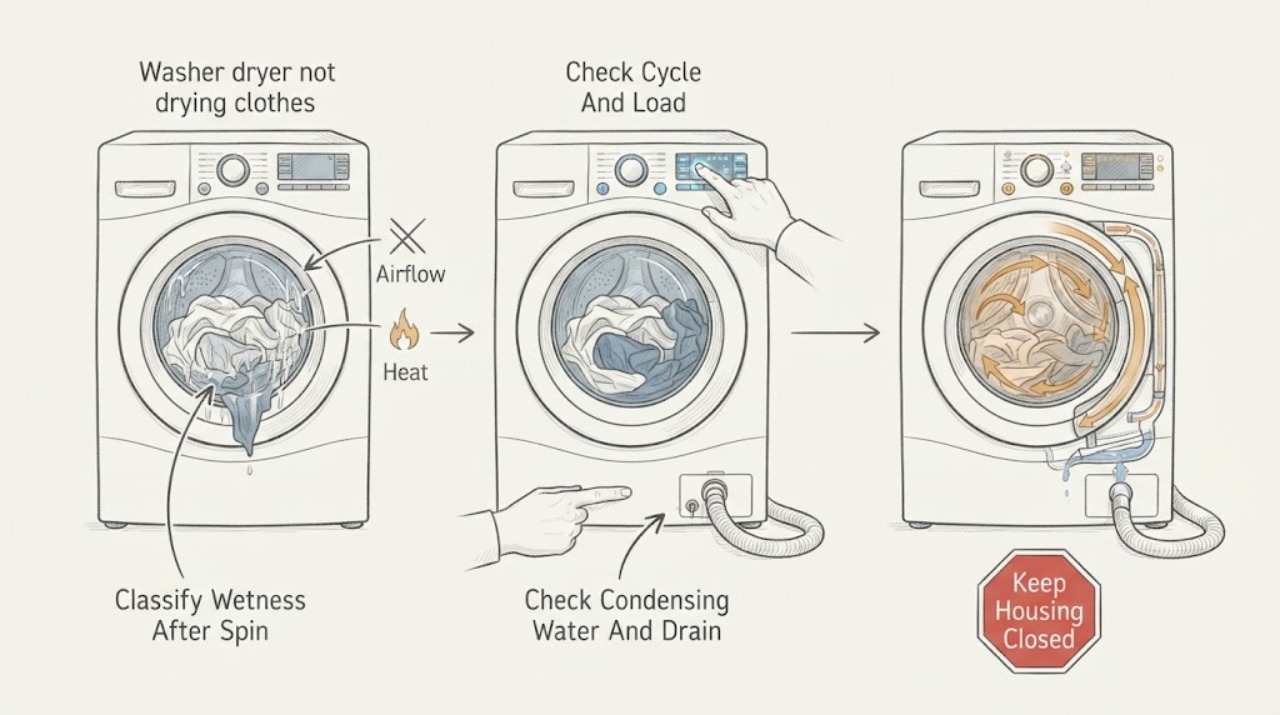
Washer dryer not drying clothes remain wet: What to Check and What to Do Next
Clothes that remain wet in a washer-dryer may have entered the drying phase with too much water, exceeded the smaller drying capacity, used an unsuitable cycle, or encountered a blocked filter, heat exchanger, drain hose, water supply, airflow path, heater, or sensor. First check whether the load spun out, whether the dry cycle actually ran, and whether the load is within the model's drying limit and sorted by fabric thickness.
-
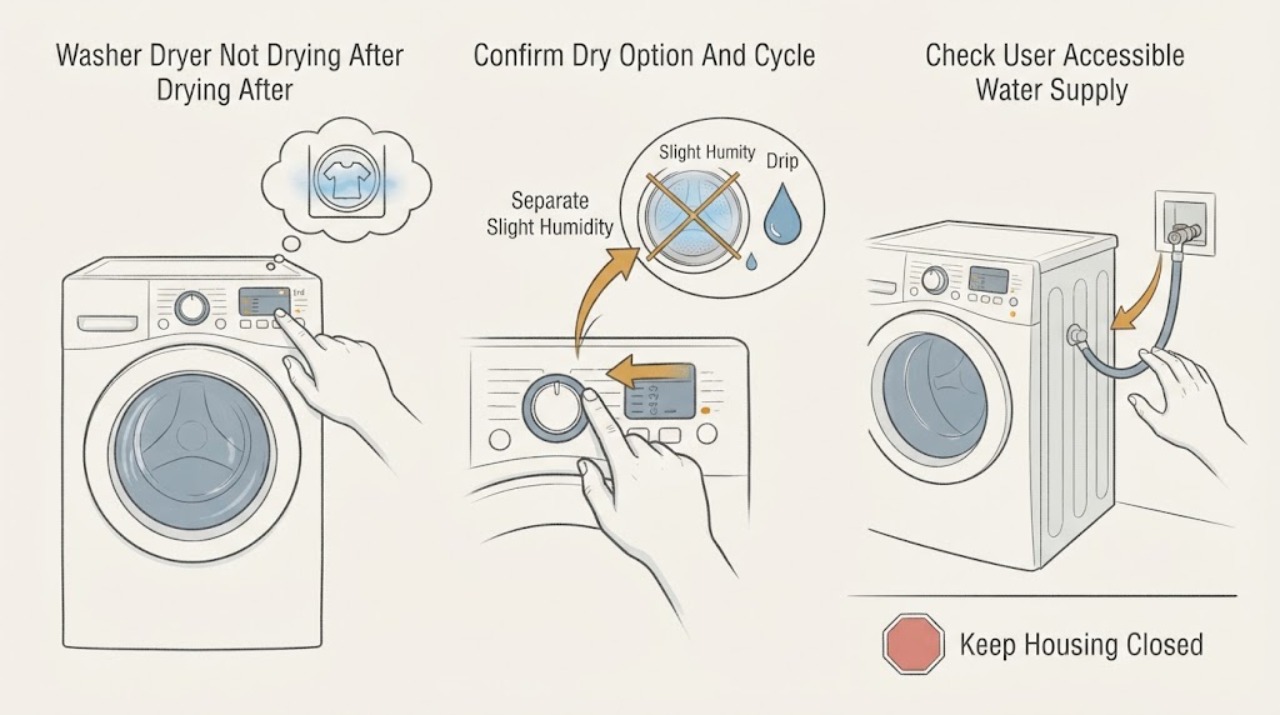
Washer Dryer Not Drying After the Wash Cycle Completes: What to Check and What to Do Next
A completed wash cycle does not prove that the drying portion ran or that the load reached its intended dryness. Washer-dryer combos may use a low-heat, sealed, or water-assisted drying process, and the dryer capacity is usually lower than the wash capacity.
-
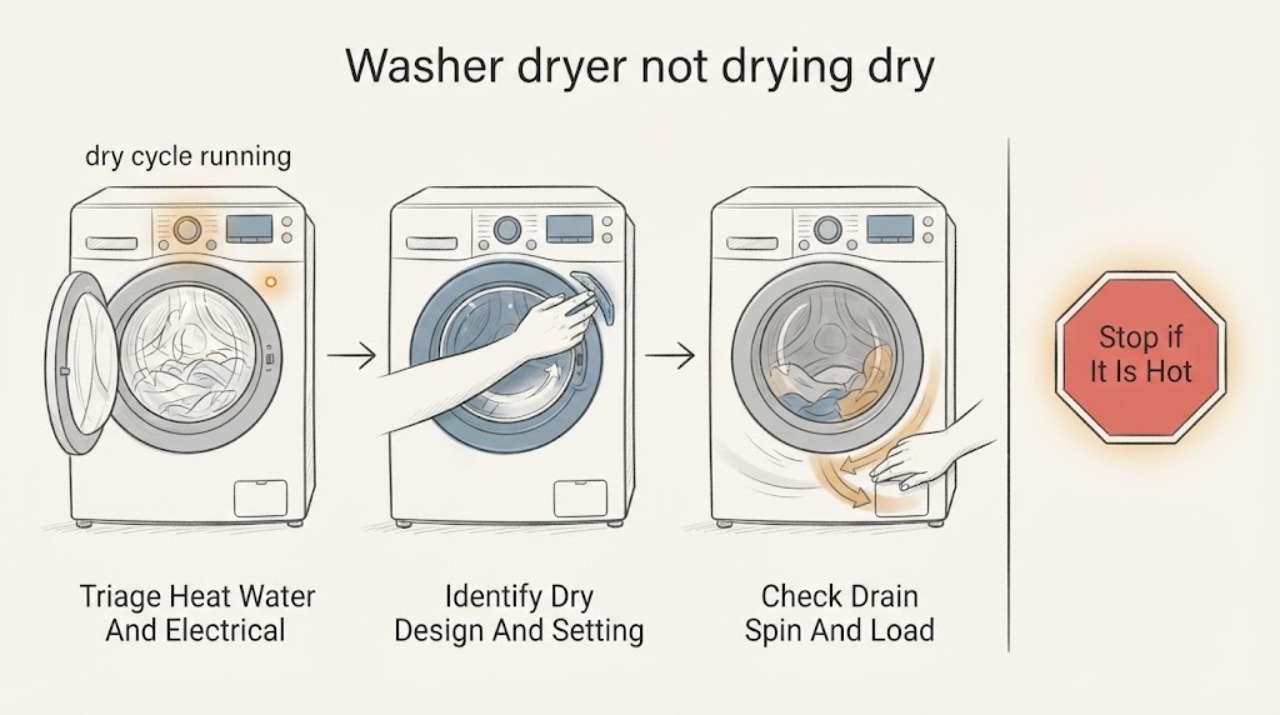
Washer dryer not drying dry cycle runs: What to Check and What to Do Next
If a washer dryer completes or runs its dry cycle but clothes stay wet, first confirm that the load is draining and spinning, the dry setting and load size match the exact manual, and the appliance has the water supply or airflow that its combo design requires. Some washer-dryer combos use water during drying to condense moisture, so a closed water tap or poor drain path can affect drying.
-
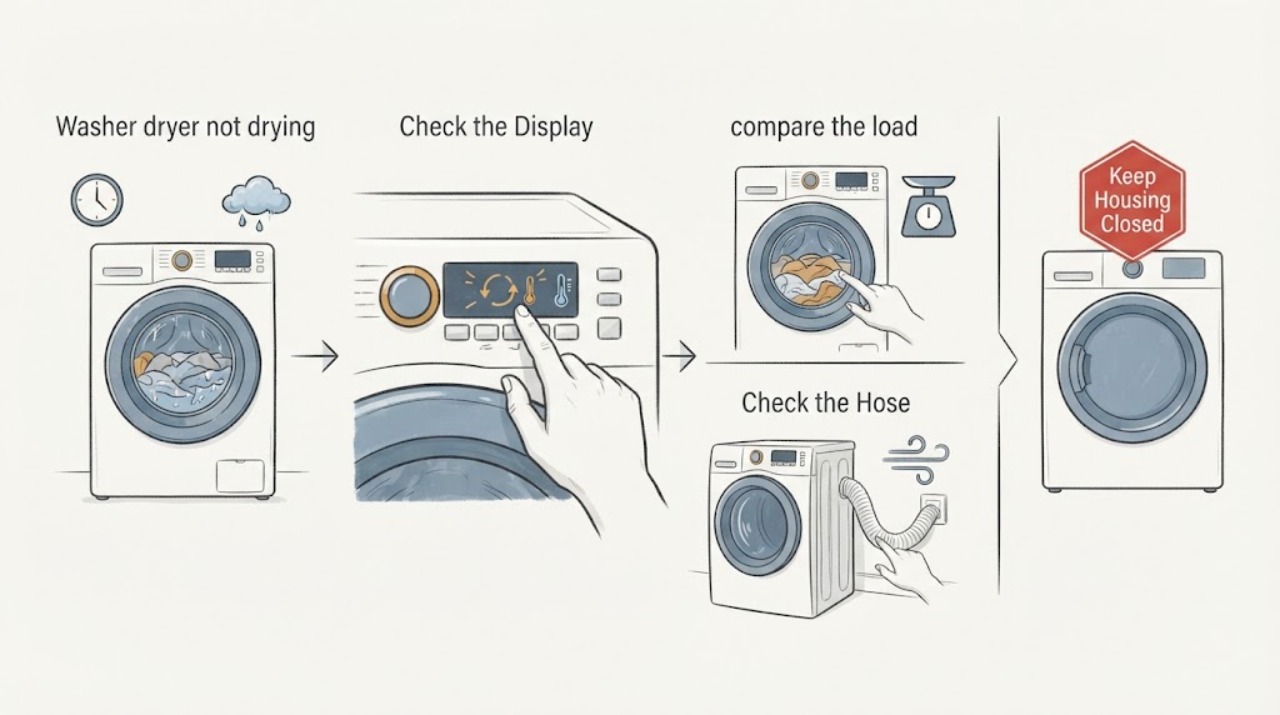
Washer dryer not drying: What to Check and What to Do Next
Washer-dryer combos often dry differently from vented dryers: they may use condensation or a water-assisted process, take longer, and have a smaller drying capacity than washing capacity. First check that a real dry mode is selected, the load is below the model's drying limit, the required water supply is on, and the drain hose is not kinked or holding water.
-
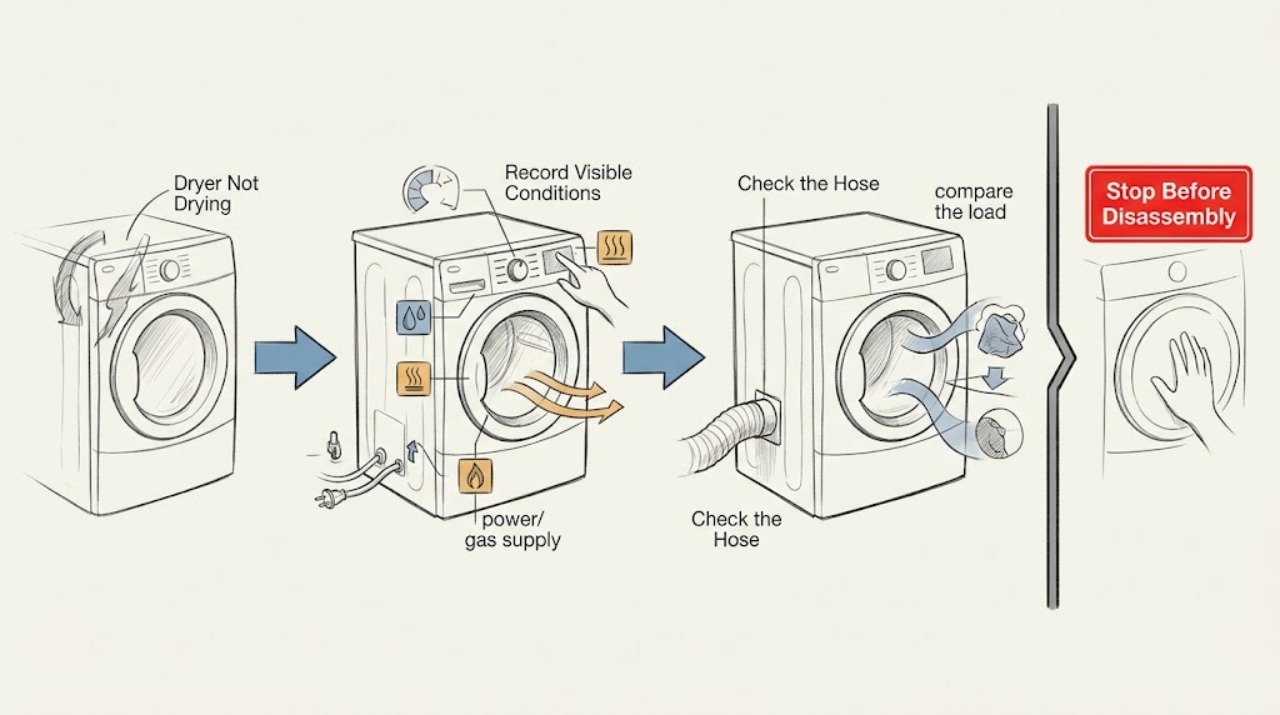
Whirlpool Dryer Not Drying: Find the Cause of Damp or Long Cycles
A Whirlpool dryer that is not drying should be separated into clothes that remain damp, a cycle that runs unusually long, and a dryer with little or no heat. Record the complete model, whether it is electric, gas, vented, or a model-specific ventless or condensing design, then check the selected cycle, load size, lint screen, moisture-sensing surfaces, visible vent path, and supply conditions only as the model guide allows.
-
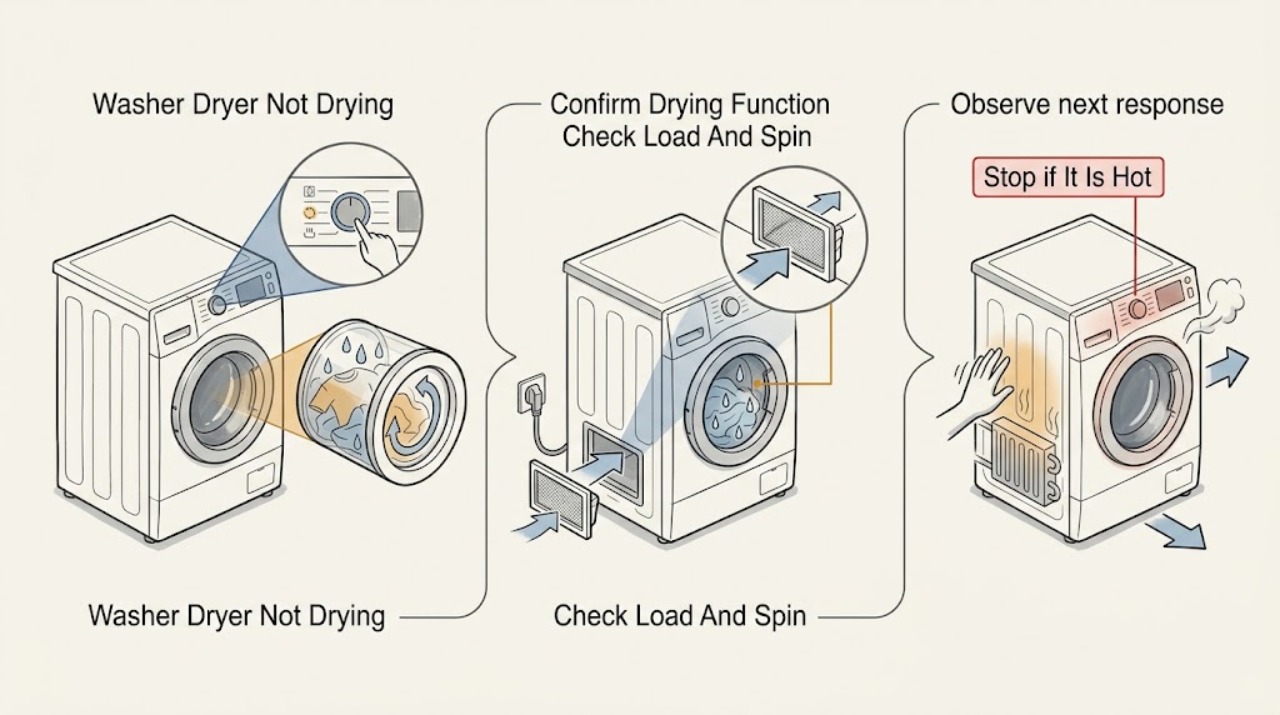
Whirlpool Washer Dryer Not Drying: Check the Cycle, Load, Airflow, and Heat
For a Whirlpool washer-dryer that leaves clothes wet, first verify that a drying function and a dryness level were actually selected, then reduce the load and run the washer's fastest practical spin before drying. Whirlpool all-in-one models use ventless condensing drying, so longer cycles are normal; the drum should be no more than about half full for best results.
-
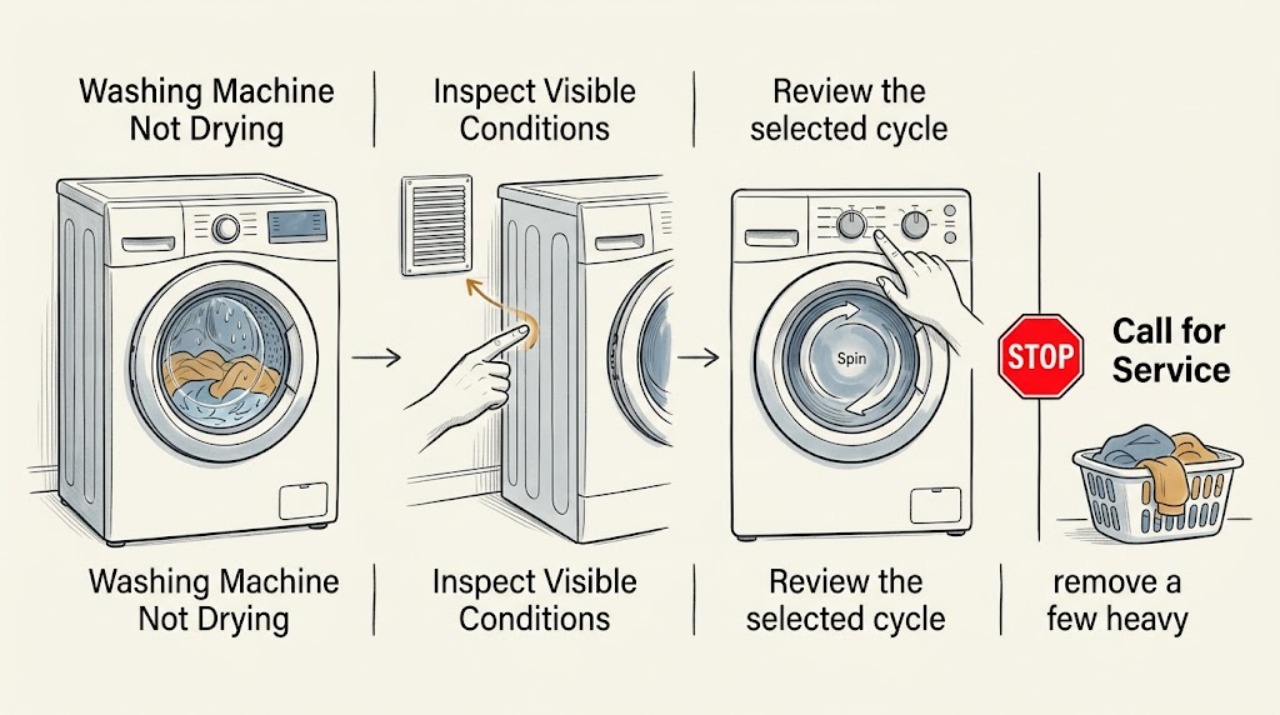
Whirlpool Washing Machine Not Drying: Clothes Still Wet After a Cycle
A Whirlpool washer does not normally dry laundry with heat; it removes moisture during drain and spin. If clothes are wetter than expected at the end, first check whether water remains in the tub, whether the selected cycle used a low or no spin, and whether the load was tightly packed or unbalanced. Then check the visible drain path and excess suds. This guidance is for a washer whose clothes remain wet after washing, not for a washer-dryer combo's heated drying function.
-
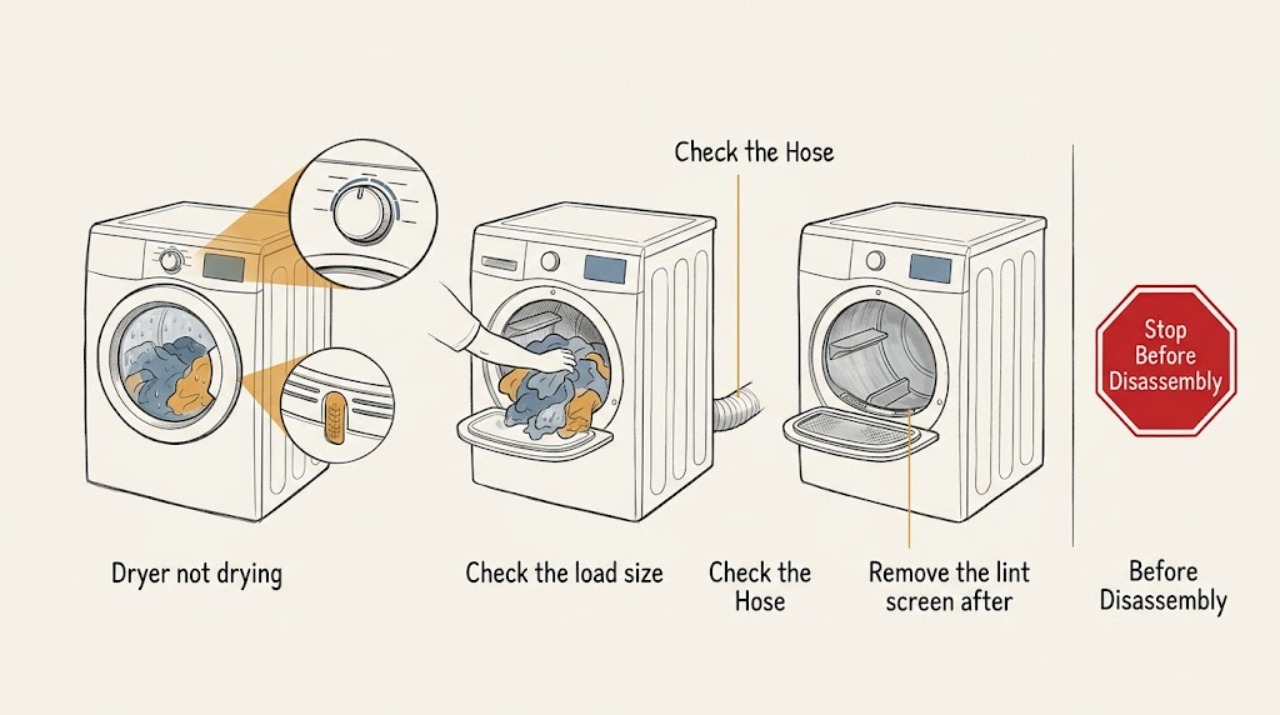
Why a Frigidaire Dryer Is Not Drying Clothes
A Frigidaire dryer that runs but does not dry is most often affected by the selected cycle or temperature, a coated or blocked lint screen, an overloaded or poorly tumbling load, a dirty moisture sensor, restricted exhaust, or inadequate room ventilation. Start with the cycle and load, then clean and reseat the lint screen, inspect the sensor bars, and check that the exhaust hood opens and the duct is clear.
-
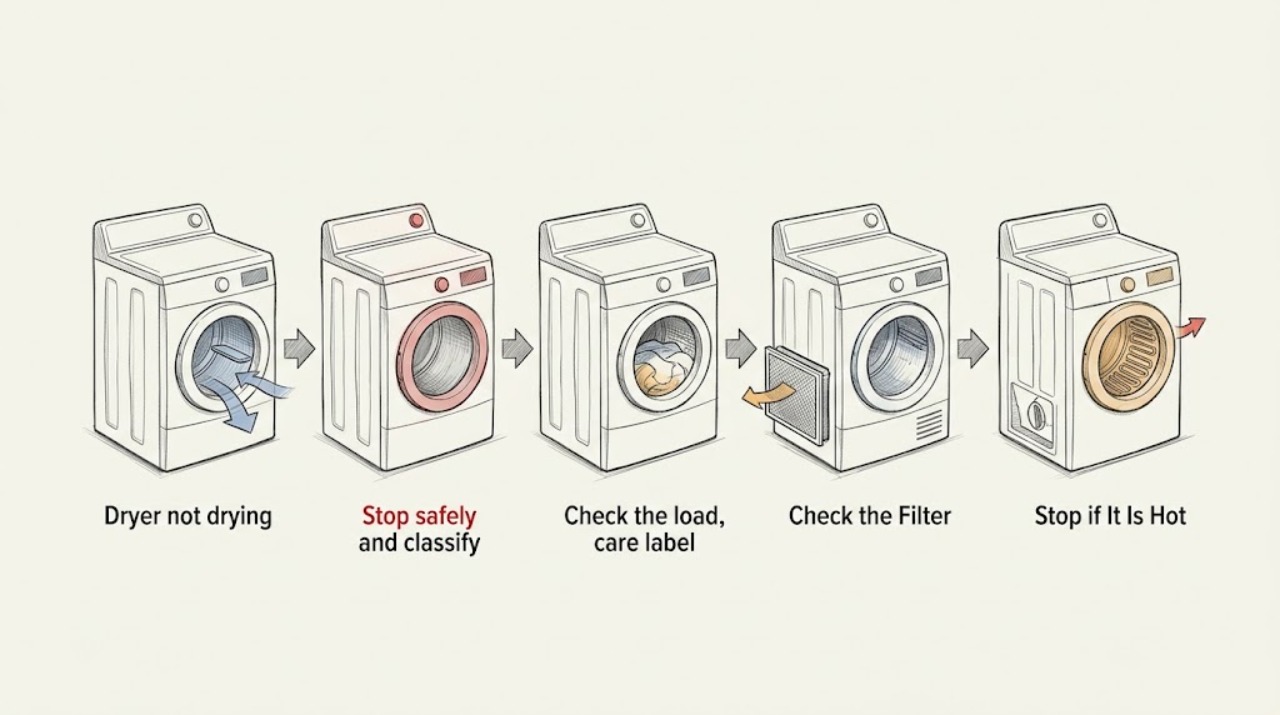
Why Is My Hoover Dryer Not Drying?
A Hoover dryer that leaves clothes damp most often has restricted airflow, a blocked filter or condenser, an unsuitable load or programme, or (on heat-pump models) an unsuitable room temperature. First stop the cycle and disconnect the mains before examining the appliance.