
On this page
Start here
Quick answer
An LG washer-dryer combo that leaves clothes wet usually has one of several different conditions: the load is too large for the dry capacity, the clothes did not spin enough water out, the combo lacks the water it uses to condense moisture, the drain hose is kinked or holding water, the drain-pump filter is restricted, or a model-specific drying fault is active. Reduce the load, run a suitable spin first, confirm the water valves are open, straighten the drain hose, and clean only the model-approved pump filter. Use the exact manual for cycle and filter steps. Stop using the machine for smoke, burning odor, abnormal heat, a damaged cord, water near electrical parts, repeated breaker trips, or a drying-system code such as dHE until it has been inspected.
Work through in order
Diagnostic checks
Use only checks that match the exact appliance or system and its official guide.
-
Check 1
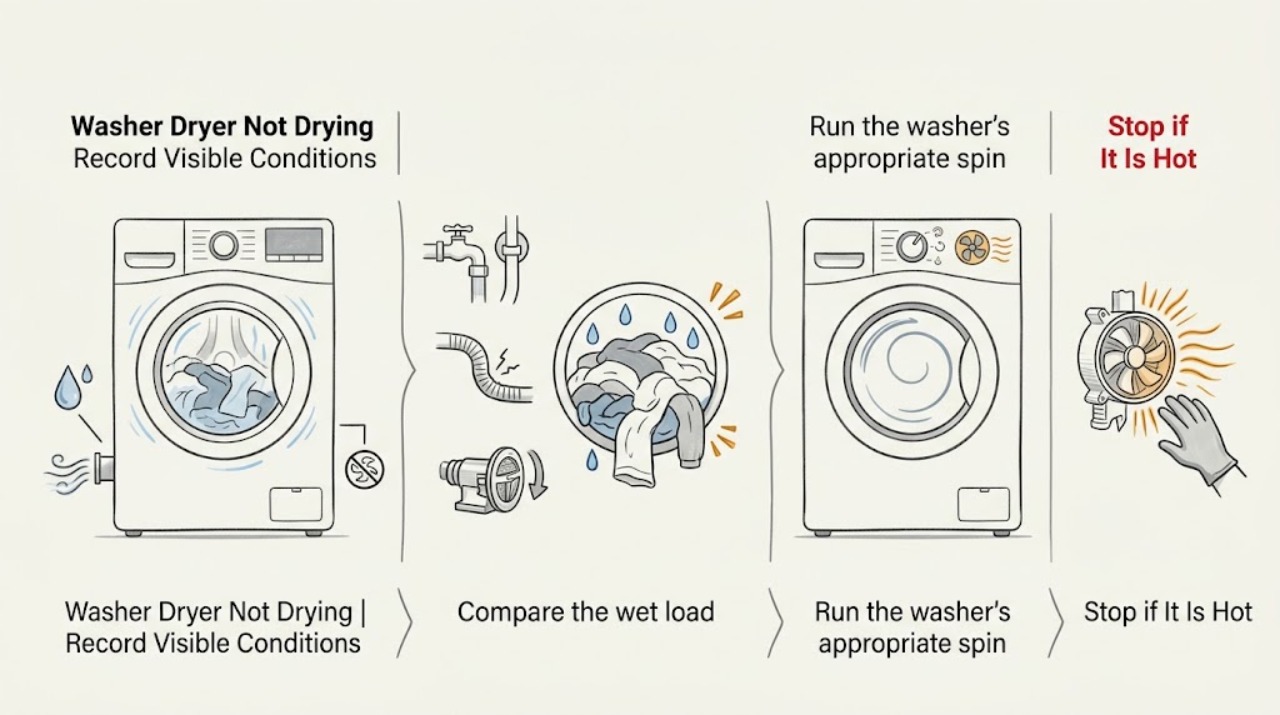
Record the dry programme, displayed time, fabric types, approximate load size, final-spin result, drum temperature, water entering during drying, drain behavior, and any code or indicator. Do not open the door repeatedly while the cycle is trying to dry.
Expected result: The cycle is still progressing slowly, clothes are cool and soaked, the load is warm but damp, water is not entering or draining, or a drying code appears.
Next step: Follow the matching branch and keep the model number available. Do not keep restarting a cycle with a recurring code or unsafe symptom.
Why this matters
Why: Slow drying can be load- or fabric-related, while cool soaked clothes point to water, drainage, spin, or drying-system checks. A code changes the path and must be interpreted for the exact model; a dHE indication is associated with a drying fan problem in LG support guidance.
-
Check 2
Compare the wet load with the washer's maximum drying capacity shown on the appliance or in the exact manual. Remove part of a full wash load, separate thick or bulky items, and ensure the remaining articles can tumble freely.
Expected result: The drum is tightly packed, contains thick or bulky items, or the load is small and similar in fabric and still remains wet.
Next step: Dry a smaller balanced load using the model-approved dry option. If a small suitable load still remains wet, continue with spin, water, drain, and filter checks rather than adding more heat or time blindly.
Why this matters
Why: LG states that a combo's drying capacity is lower than its washing capacity and that large or thick loads reduce drying performance. Similar material and thickness help the sensors and condenser process the load consistently.
-
Check 3
Run the washer's appropriate spin cycle before drying, or check whether the preceding wash finished with a high residual-water load. Do not add detergent or fabric softener to a dry-only cycle.
Expected result: The clothes are dripping after wash, the spin was skipped or weak, the load is unbalanced, or a full spin completed but drying remains poor.
Next step: Redistribute the load and run one suitable spin, then retry with a reduced dry load. If the spin is normal but drying still fails, move to water and drainage checks.
Why this matters
Why: LG explains that combos need water removed by spin before drying; a poorly spun load starts with too much moisture. An unbalanced load can prevent effective spin even though the wash programme appears complete.
-
Check 4
Confirm both household water valves are open and that the inlet hoses are not kinked. If the exact manual permits access, inspect the inlet screens for visible blockage after shutting off the water; do not disconnect a pressurized hose or alter the supply.
Expected result: A valve is closed, a hose is kinked, an inlet screen is obstructed, water pressure is abnormal, or the supply path is normal.
Next step: Restore only an obvious external supply condition and retry once. If water does not enter normally or the issue returns, arrange service rather than opening the valve assembly.
Why this matters
Why: LG combo drying uses water to condense moisture, so restricted or absent water can leave clothes wet even while the drum turns and warms. A normal supply shifts attention to drainage, load, or the drying system.
-
Check 5
Inspect the drain hose routing and the model-approved drain-pump filter procedure. Straighten a kinked hose and ensure it is not holding a pocket of water; if the filter is accessible, turn the unit off and cool, control residual water, and clean lint or debris only as the manual directs.
Expected result: The hose is kinked or water is pooling, the pump filter contains lint or debris, the filter is clear, or residual water cannot be controlled safely.
Next step: Refit the filter and access cover securely and run one supervised dry or rinse-and-spin test. If the water cannot be controlled, the cover leaks, the pump remains abnormal, or drying remains poor, stop and call service.
Why this matters
Why: LG says hot, humid air is expelled through the drain hose during combo drying and that standing water or a restricted pump filter can reduce drying efficiency. A clear filter does not prove the pump, fan, heater, or control is working.
-
Check 6
After the load, spin, water, hose, and permitted filter checks, run one short supervised dry test with a small suitable load. Stop immediately if a drying fan or heater code returns, the drum becomes abnormally hot, smoke or burning odor appears, the cord heats, water leaks, or the breaker trips.
Expected result: The small load dries normally, remains wet with normal water and drainage, or the same code or unsafe symptom returns.
Next step: Use the combo only when it completes normally without warning signs. Otherwise unplug when safe, protect the wet laundry, and arrange LG or qualified appliance service with the model and test results.
Why this matters
Why: Improvement after reducing the load or correcting spin, water, or drainage supports that condition as the immediate cause. Persistent failure with normal external conditions can involve the drying fan, heater, sensor, pump, wiring, or control and cannot be safely confirmed by a homeowner.
Use your observations
Decision map
Find the observation that best matches what you see, then follow the next safe action.
-
PATH 01Next step
What you see
The load exceeds the dry capacity or contains bulky, thick, or mixed-material items.
Do this next
Reduce the load, separate unsuitable fabrics, and run one supervised dry cycle with room to tumble. Persistent poor drying with a small suitable load needs service.
-
PATH 02Next step
What you see
The clothes are dripping because the preceding spin was skipped, weak, or unbalanced.
Do this next
Redistribute the load and run a suitable spin before drying. Escalate if a balanced load cannot spin normally.
-
PATH 03Next step
What you see
The water valve is closed, an inlet hose or screen is restricted, or water pressure is abnormal.
Do this next
Restore the external supply safely and retry once. Arrange service if water does not enter normally or the drying symptom returns.
-
PATH 04Next step
What you see
The drain hose is kinked or holds water, or the model-approved pump filter contains lint or debris.
Do this next
Correct the hose routing and clean the accessible filter only with the machine off, cool, unplugged as safe, and residual water controlled. Stop if the cover leaks or the problem persists.
-
PATH 05Next step
What you see
A dHE or other drying-system code returns, or a small suitable load remains wet after normal water, spin, and drainage checks.
Do this next
Stop using the drying function and arrange LG or qualified appliance service. Do not open the cabinet or replace a fan, heater, sensor, or control based on a generic diagnosis.
-
PATH 06Next step
What you see
Smoke, burning odor, abnormal heat, sparks, a hot or damaged cord, water near electrical parts, or repeated breaker trips occurs.
Do this next
Stop immediately, disconnect power only if safe, keep clear of water and damaged wiring, and seek qualified electrical or appliance service. Do not run another test.
Helpful context
Understand the symptom
First decide whether the problem is time, load, or a fault
Note whether the clothes are warm and damp, cool and wet, or the cycle stops with an error. Record the selected dry option, the load material and size, whether a full spin completed first, and whether water enters and drains during drying. LG combo units can use sensors and may take longer for thick fabrics; a longer display time is not the same as a dead heater or fan.
Use the heat, water, and fire stop boundary
Do not bypass a door lock, open the cabinet, probe a heater, or reach into a hot drum. Stop immediately for smoke, a burning smell, a hot or damaged cord, sparks, a leak near electrical parts, repeated breaker trips, or a drying fault code. Unplug only when safe and arrange qualified service; lint or airflow work should follow the exact model guide because LG combo models do not all use the same filter arrangement.
When checks do not resolve it
Need a professional?
Book service for recurring poor drying, a returning dHE or other drying code, failure with normal load and water supply, abnormal fan or heater behavior, leaks, or any repair beyond the exact LG user guide.
Common questions
FAQ
Why is my LG washer-dryer leaving clothes wet?
Check the dry load size, run a proper spin first, confirm water enters during drying, and inspect drain-hose routing and the model-approved pump filter. A small suitable load that remains wet after these checks needs service.
Does an LG washer-dryer combo need water to dry clothes?
Yes. LG explains that combo units use water to condense moisture during drying. A closed valve, restricted inlet, or abnormal water supply can reduce drying performance.
Should I run a spin cycle before drying in an LG combo?
Yes, when clothes remain heavily wet. LG recommends spinning first so much of the water is removed before the dry process; redistribute an unbalanced load before retrying.
When should I stop using an LG washer-dryer that will not dry?
Stop for a returning drying-system code, smoke, burning odor, abnormal heat, sparks, a hot or damaged cord, water near electrical parts, or repeated breaker trips. Disconnect power only if safe and arrange qualified service.
Read the exact guide
Official sources
- LG Washer/Dryer Combo Unit - How to Use Dry Only CyclesLG USA Support · Official LG combo-unit operating guidance; available dry selections vary by model.
- Combo Unit - Lint IssuesLG USA Support · Official LG combo-unit maintenance guidance; use the exact model manual for filter location and safe access.
- Long Dry Time - Washer / Dryer Combo UnitLG USA Support · Official LG combo-unit guidance; exact model manual controls filter access and cycle behavior.
- LG Washer Dryer Performance TroubleshootingLG USA Support · Official LG combo-unit guidance; model-specific settings and service limits take priority.
- Why the dHE Error Code Appears During a Dry Cycle on Your LG Washer Dryer ComboLG USA Support · Use only when the exact model displays dHE or a matching drying-system alert; settings and codes vary by model.
Community feedback
Share a repair observation
Share a plain-text repair observation. Accepted observations are published automatically; this page may take a moment to update.