
On this page
Start here
Quick answer
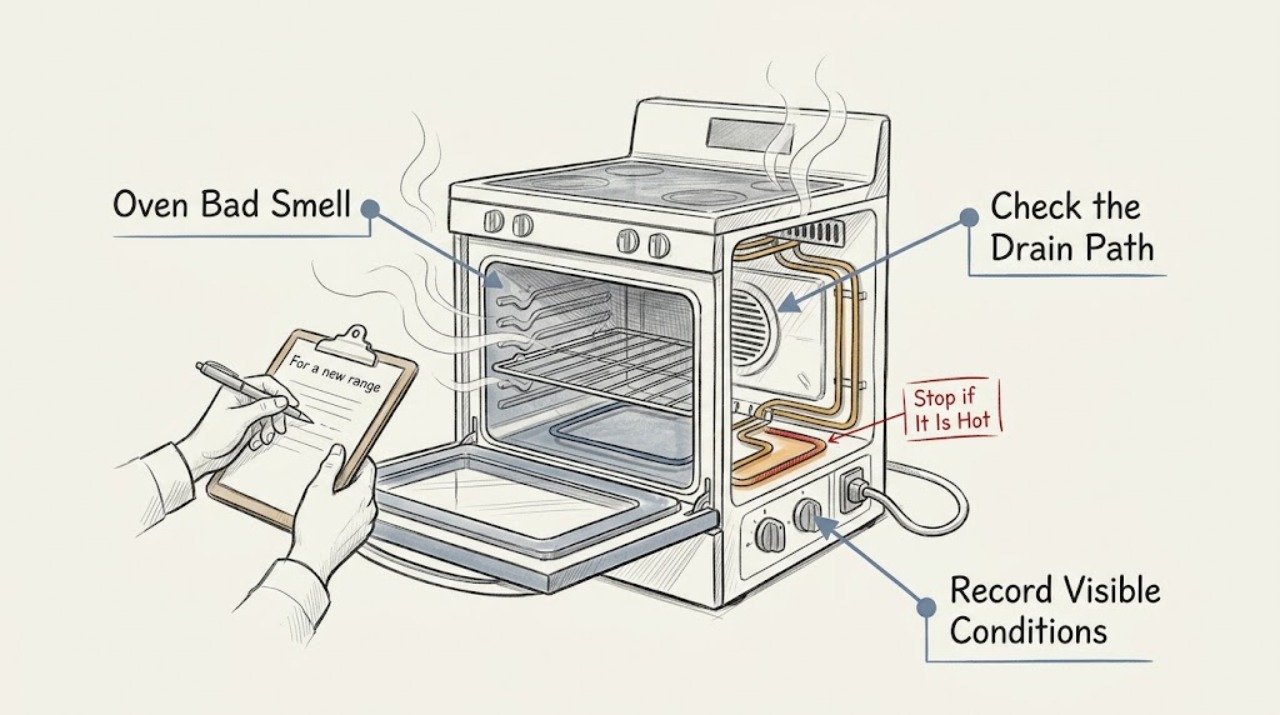
Stop and let the oven cool before identifying the odor. A food or grease smell usually follows a visible spill or residue and can be addressed with the exact model's safe cleaning method. A new LG range can temporarily smell or smoke as packaging residue, insulation, or factory oil heats, but remove all film, cardboard, ties, and packing material and ventilate as LG directs. A sharp electrical or plastic smell, smoke, arcing, uncontrolled heat, or an odor that grows stronger is not a normal break-in symptom: stop heating, isolate power only if safe, and arrange qualified service. On a gas model, any gas odor, delayed ignition, abnormal flame, or combustion concern requires immediate cessation, avoidance of ignition sources, and appropriate gas-safety help. Do not keep heating to test a dangerous smell or mix cleaning chemicals.
Work through in order
Diagnostic checks
Use only checks that match the exact appliance or system and its official guide.
-
Check 1
Turn the oven off and allow it to cool enough for a safe visual check. Record the full model number, electric or gas configuration, exact odor description, when it starts, whether smoke is visible, and whether the smell comes from the cavity, vent, control area, or outside the appliance.
Expected result: The odor is food-like or greasy, appears only during first use, smells like plastic or electrical insulation, smells of gas or combustion, or is accompanied by smoke, sparks, abnormal heat, or an error.
Next step: Use the food, new-range, electrical, or gas branch below. Keep the exact model and configuration with any service request; do not run another heating cycle to identify a hazardous odor.
Why this matters
Why: A food or first-use residue path is different from an energized electrical or fuel hazard. Smoke, arcing, an escalating sharp odor, uncontrolled heating, or a gas odor ends user testing regardless of the suspected cause.
-
Check 2
For a new LG range or oven, with power and fuel safely off, inspect the exterior and cavity for remaining plastic film, cardboard, ties, shipping material, or other packaging. Ventilate the room and remove only loose, visible material that the installation and owner instructions identify as packaging.
Expected result: Packing material is present, the odor is mild and decreases after removal and ventilation, or the smell is strong, persistent, or accompanied by smoke or heat outside the expected break-in behavior.
Next step: Do not place food inside during the model-approved break-in procedure. Follow only the exact LG manual for the model and stop immediately if odor intensifies, smoke remains unexplained, or any electrical, gas, or overheating sign appears.
Why this matters
Why: LG identifies insulation, packaging, and factory oil as possible temporary new-range sources. Material left on the appliance can continue to smoke, but persistent strong odor or a hazard cannot be assumed to be normal.
-
Check 3
If the odor follows cooking and the appliance is cool, inspect the cavity, racks, tray, door edge, and visible vent area for spilled food, grease, or residue. Remove loose residue with a non-abrasive method permitted by the exact LG manual; do not scrape a hot surface or spray liquid into controls, vents, burners, or elements.
Expected result: A visible food or oil residue matches the odor, no residue is found, or cleaning reveals smoke, damaged enamel, a melted item, exposed wiring, or a smell that is sharp rather than food-like.
Next step: Use the model's approved cleaning path only when no hazard is present. Stop and arrange qualified service for damaged parts, exposed wiring, melting, repeated smoke, or an odor that remains after safe residue removal.
Why this matters
Why: LG notes that food debris and oil stains can burn and produce odor or smoke. A sharp chemical or electrical smell, visible damage, or unexplained smoke is outside a routine residue cleanup.
-
Check 4
If the model has EasyClean, verify that the feature is available for that exact model and that the cavity is cool. Remove racks and accessories, follow the model instructions for water and a non-abrasive tool, keep water away from doors and controls, and do not open the door during the cycle unless the manual permits it.
Expected result: The odor is reduced after a completed model-approved cleaning cycle, only water vapor appears from the vent, or smoke, burning smell, abnormal heat, leakage, or the original odor persists.
Next step: Wipe the cavity dry as instructed and do not repeat cleaning indefinitely. If odor or smoke persists, stop heating and arrange service; never substitute unapproved chemicals or combine cleaning products.
Why this matters
Why: LG describes EasyClean as a model-dependent method for loosening light soils and says vapor during the cycle can look like smoke. It is not a universal remedy for electrical, plastic, gas, or heavy-soil hazards.
-
Check 5
For an electric or dual-fuel oven with a sharp plastic or electrical smell, look only for visible melted packaging, a discolored plug or outlet, smoke, arcing, an element that stays on unexpectedly, or heat from the control area. Do not remove panels, probe live parts, or continue a bake test.
Expected result: The odor is strongest near a control, cord, outlet, or element; smoke or arcing is present; the heating stays on unexpectedly; or no visible electrical symptom is found.
Next step: Stop use and isolate power only from a dry, safe position without touching damaged equipment. Arrange qualified appliance or electrical service and report smoke, arcing, abnormal heat, or an operated circuit.
Why this matters
Why: A localized sharp odor or visible electrical symptom can indicate overheating insulation, a connection, element, relay, or control fault. Lack of visible damage does not make repeated energized testing safe.
-
Check 6
For a gas model, do not relight or repeatedly test an oven that smells of gas, has delayed ignition, an abnormal flame, or a combustion-like odor. Move away from the appliance, avoid flames and electrical switching, and use the appropriate local gas-safety or emergency procedure; for a non-gas model, do not interpret a different odor as a gas fault without evidence.
Expected result: A gas odor is present, ignition is delayed or abnormal, the flame is unstable or sooty, combustion products are suspected, or the smell is absent and the model is electric.
Next step: Keep the appliance off and seek appropriate gas-safety help for any gas or combustion concern. Do not operate the oven again until the qualified professional says it is safe.
Why this matters
Why: Fuel-side symptoms can create fire or combustion risk and are not corrected by cavity cleaning. LG's gas-range guidance treats fuel supply and ignition as model-specific and directs owners to the exact manual; dangerous fuel symptoms require service rather than repeated ignition.
Use your observations
Decision map
Find the observation that best matches what you see, then follow the next safe action.
-
PATH 01Next step
What you see
The oven is new and the odor is mild, temporary, and linked to first use
Do this next
Remove visible packaging, ventilate, and follow the exact model's break-in instructions without food. Stop if the smell worsens, remains unexplained, or is accompanied by hazardous smoke or heat.
-
PATH 02Next step
What you see
The smell follows a food spill, grease, or residue and there are no electrical or fuel warnings
Do this next
Let the oven cool and use the model-approved non-abrasive cleaning method. Do not use unapproved chemicals or heat a heavily soiled cavity to test the smell.
-
PATH 03Next step
What you see
EasyClean is available and the odor appears to come from light cavity soil
Do this next
Use EasyClean only as described for the exact model, keeping water away from controls and following the safe cooling and drying steps. Persistent odor or smoke requires service.
-
PATH 04Next step
What you see
The odor is sharp plastic or electrical, or smoke, arcing, abnormal heat, or an operated circuit occurs
Do this next
Stop using the oven, isolate power only if safe, and arrange qualified appliance or electrical service. Do not continue a heating test or open the cabinet.
-
PATH 05Next step
What you see
A gas odor, delayed ignition, abnormal flame, or combustion concern occurs on a gas model
Do this next
Stop ignition attempts, avoid flames and electrical switching, move to a safe location, and seek appropriate gas-safety help. Do not restart until cleared by a qualified professional.
-
PATH 06Next step
What you see
The odor disappears after safe residue removal or a model-approved first-use procedure
Do this next
Return to use only within the model manual's limits and monitor from a safe distance. Stop and arrange service if the odor returns or changes character.
Helpful context
Understand the symptom
Classify the odor before choosing a remedy
Record when the smell appears: immediately on a new appliance, only after food spills, during a cleaning cycle, when an electric element heats, or when a gas burner attempts ignition. Note whether there is visible smoke, a glowing or sparking area, abnormal heat, a flame problem, or only a familiar food odor. The smell's timing and safety signs determine whether cleaning is reasonable or all use must stop.
Smoke is not automatically harmless
LG distinguishes water vapor during its model-specific EasyClean cycle from smoke, but ordinary smoke, a sharp electrical odor, melting plastic, or a worsening smell is not a reason to continue testing. Keep the oven off and do not touch hot surfaces, wiring, a wet control, or a gas connection.
Safety boundary
Stop conditions
- Do not continue heating to test a sharp, worsening, electrical, plastic, or gas odor.
- Do not open the cabinet, probe live wiring, bypass a safety control, or handle a damaged plug or outlet.
- Do not relight or repeatedly test a gas oven with gas odor, delayed ignition, or abnormal flame.
- Do not spray water into controls, vents, burners, or heating elements, and do not mix cleaning chemicals.
- Do not restart after smoke, arcing, fire, abnormal heat, suspected combustion products, or a repeated power trip.
Only after diagnosis
Potential parts
- heating element or element connection
Consider only when qualified service confirms a localized electrical odor, visible element damage, or an element fault after the appliance is safely isolated.
Confirm the complete model and cavity configuration before ordering; do not treat a visual similarity as fitment evidence. - electronic oven control or relay assembly
Consider only when service confirms that a control or relay is keeping a heating circuit energized or is producing an electrical odor.
Control assemblies are model- and revision-specific and require qualified diagnosis and installation. - oven temperature sensor or safety thermostat
Consider only when service confirms abnormal temperature control or a safety cutout condition after ruling out residue and user settings.
Verify exact model, fuel type, and approved replacement rating. Never bypass a safety device.
When checks do not resolve it
Need a professional?
Use qualified appliance service for persistent or unexplained odor, visible damage, overheating, smoke, arcing, a recurring electrical smell, a control or element that stays energized, or any unresolved gas ignition or combustion concern. Provide the exact model and fuel configuration.
Have this ready
- complete model number
- electric, gas, or dual-fuel configuration
- exact odor description and where it is strongest
- whether the oven is new or recently cleaned or moved
- selected mode and whether the smell starts during preheat or cooking
- visible residue, packaging, smoke, melting, arcing, or flame behavior
- whether a circuit operated or the smell returned after one safe correction
Common questions
FAQ
Is a burning smell from a new LG oven normal?
LG says temporary odor or smoke can occur during first use from packaging, insulation, or factory oil. Remove visible packing material, ventilate, and follow the exact model's break-in instructions. Stop if the smell worsens, remains unexplained, or comes with hazardous smoke, heat, or electrical symptoms.
Can food residue cause an LG oven to smell bad?
Yes. Food debris and oil residue can burn when heated. Let the oven cool and use only the exact model's safe cleaning method. A sharp electrical or plastic odor, smoke, arcing, or visible damage is not a routine food-residue problem.
Can I use EasyClean to remove an oven odor?
Only if EasyClean is available for the exact LG model and the odor is consistent with light cavity soil. Follow the model instructions for cooling, water, non-abrasive tools, and drying. Do not use it to investigate a gas, electrical, melting-plastic, or uncontrolled-heating smell.
What should I do if my LG gas oven smells like gas?
Stop ignition attempts and leave the appliance off. Avoid flames and electrical switching, move to a safe location, and seek appropriate local gas-safety help. Do not restart until a qualified professional has cleared the appliance.
Read the exact guide
Official sources
- Oven Not Heating - Gas RangesLG USA Support · LG gas-range model-dependent gas supply, control, and igniter guidance.
- LG Range - Troubleshooting a Burning Smell From My OvenLG USA Support · LG range and oven burning-smell guidance about food or oil residue; images and details can vary by model.
- LG Range – How to Clean Your Oven Using EasyClean™LG USA Support · LG Range EasyClean model-dependent instructions for light food and grease soil.
- LG New Range - Strong Odor or SmokeLG USA Support · LG new-range and new-oven first-use odor or smoke guidance.
Community feedback
Share a repair observation
Share a plain-text repair observation. Accepted observations are published automatically; this page may take a moment to update.