
LG appliance guidance
LG Oven Repair Guides
Troubleshooting and repair guidance for published LG Oven problems, symptoms, and maintenance questions.
Published LG Oven guides
Choose the guide whose symptom or condition most closely matches what you are seeing.
-
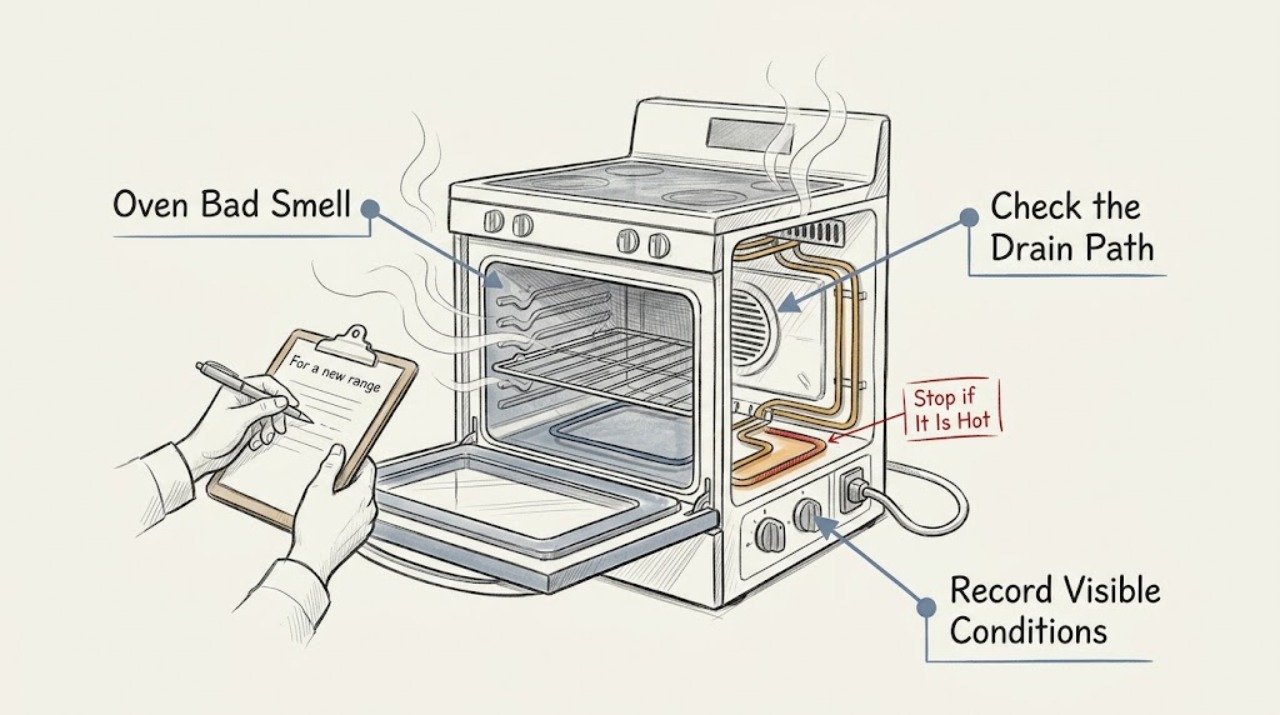
LG Oven Bad Smell: Separate Food, New-Range, Gas, and Electrical Odors
Stop and let the oven cool before identifying the odor. A food or grease smell usually follows a visible spill or residue and can be addressed with the exact model's safe cleaning method.
-
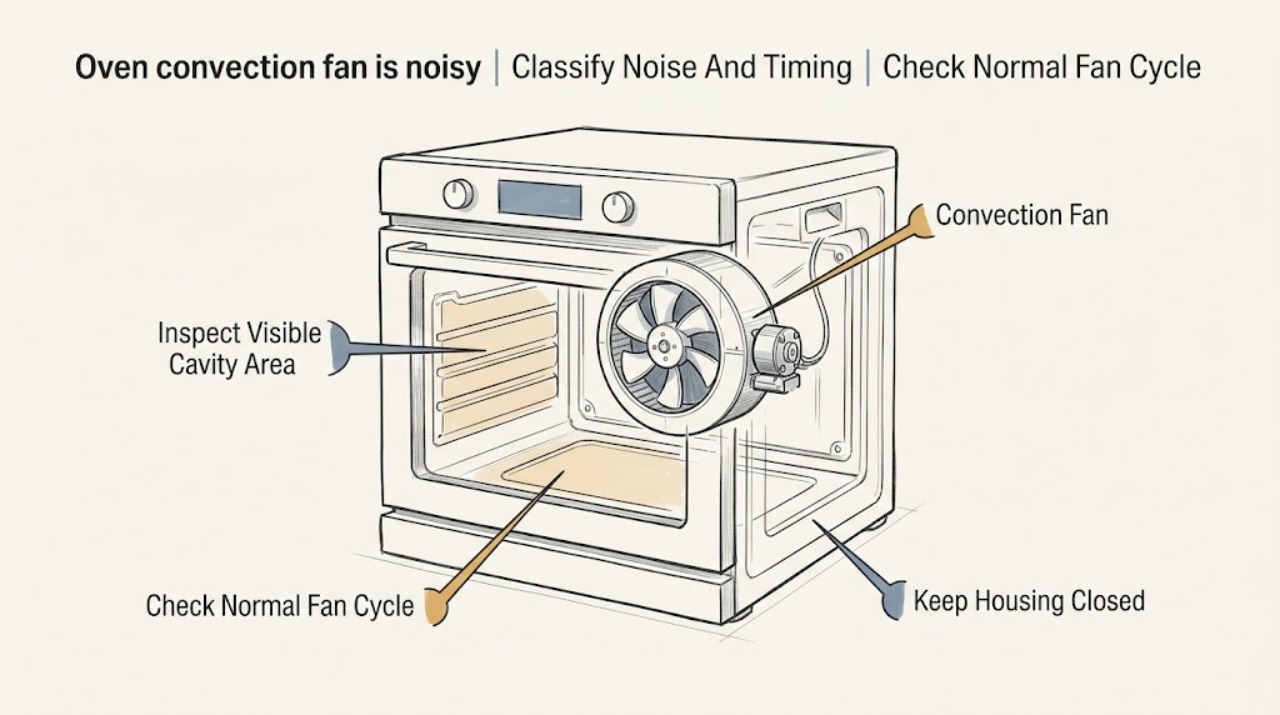
LG oven convection fan is noisy: What to Check and What to Do Next
A soft hum and periodic cycling from an LG oven convection fan can be normal during convection bake, convection roast, or a cool-down period. A new rattle points toward the fan motor or housing; scraping or clanking points toward a blade that is damaged or contacting its chamber.
-
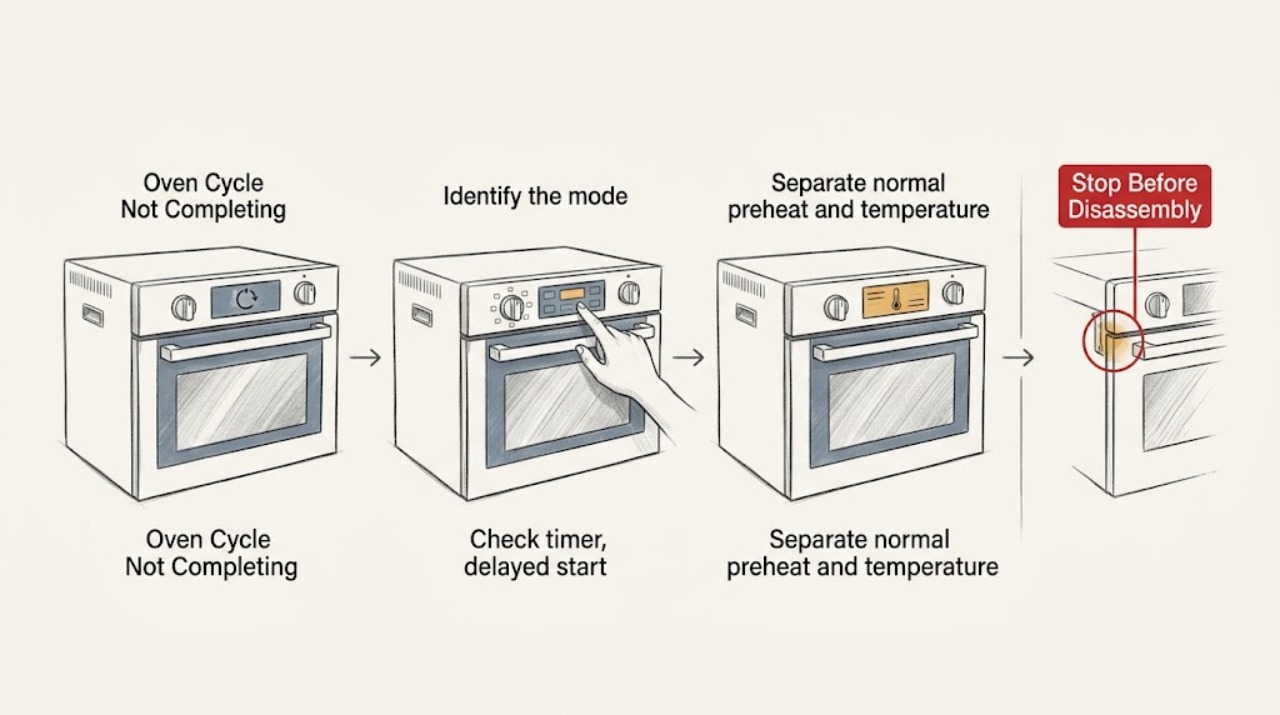
LG Oven Cycle Not Completing: Check the Mode, Timer, and Safety Lock
When an LG oven cycle does not complete, first record the exact mode, whether a cook-time or delayed-start setting is active, what the display shows, and whether heat is still present. A delayed or timed cycle can look inactive, a self-clean cycle can keep the fan running and the door locked while the oven cools, and Sabbath mode changes normal off behavior on supported models.
-
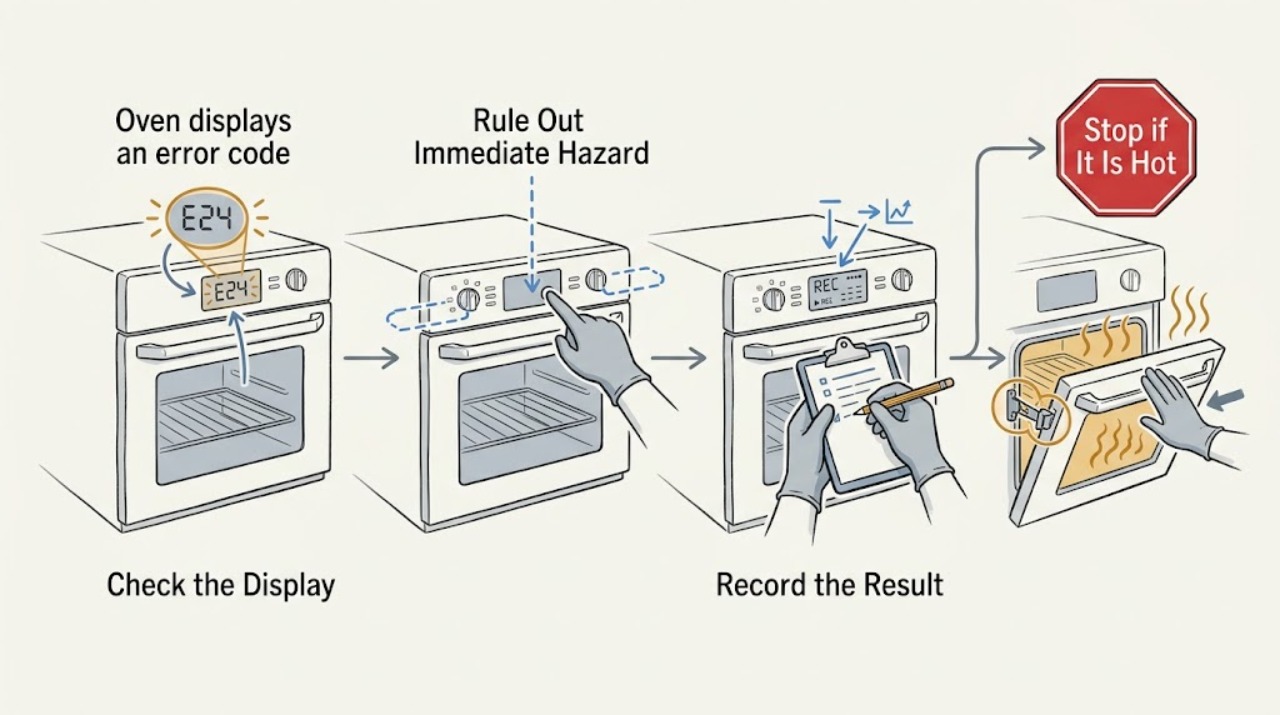
LG oven displays an error code: What to Check and What to Do Next
An LG oven error display is a diagnostic clue, not a universal fault code: the same-looking display can indicate a sensor, heating, convection fan, door-lock, communication, power, or other model-specific issue, while PF, Sb, or a lock indication may describe a power interruption or operating mode rather than a failed part.
-
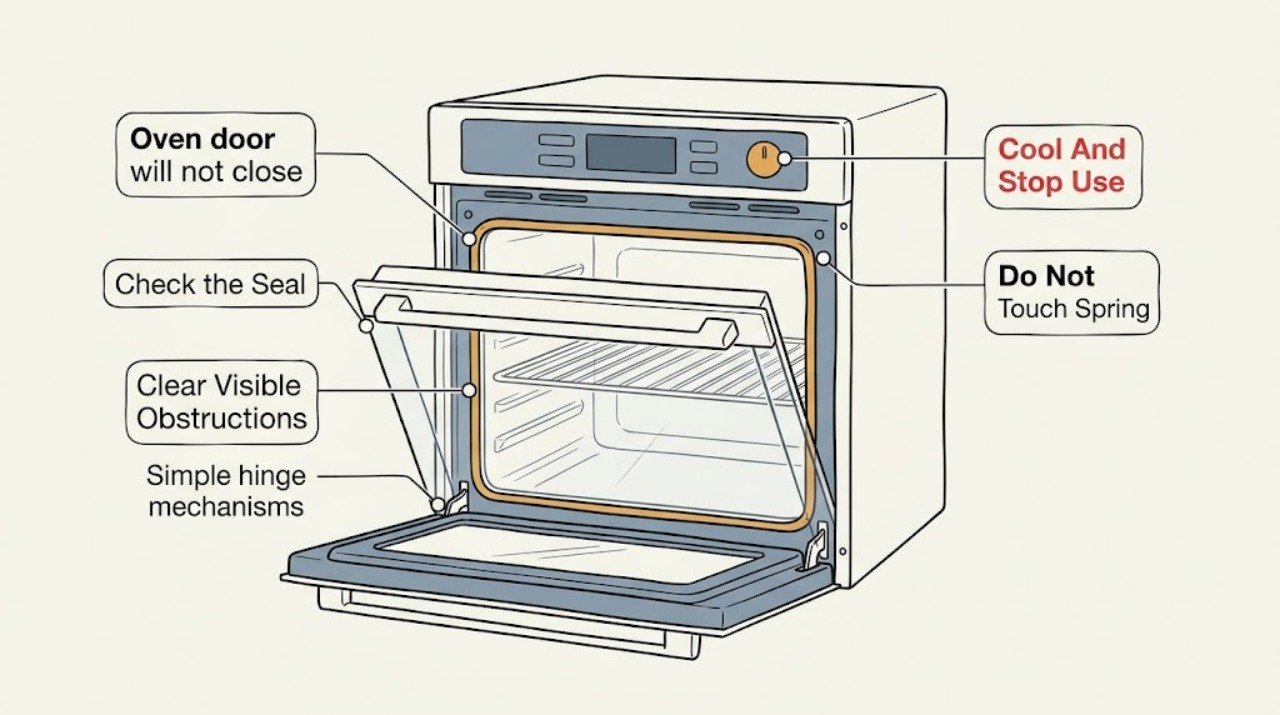
LG oven door will not close: What to Check and What to Do Next
Turn the LG oven off and let it cool completely; do not force the door or run the oven with a gap. With the cavity and hinges cool, look for an extended rack, tray, foil, food, spill, or other visible obstruction, then inspect the door gasket and frame without pulling or damaging the gasket.
-
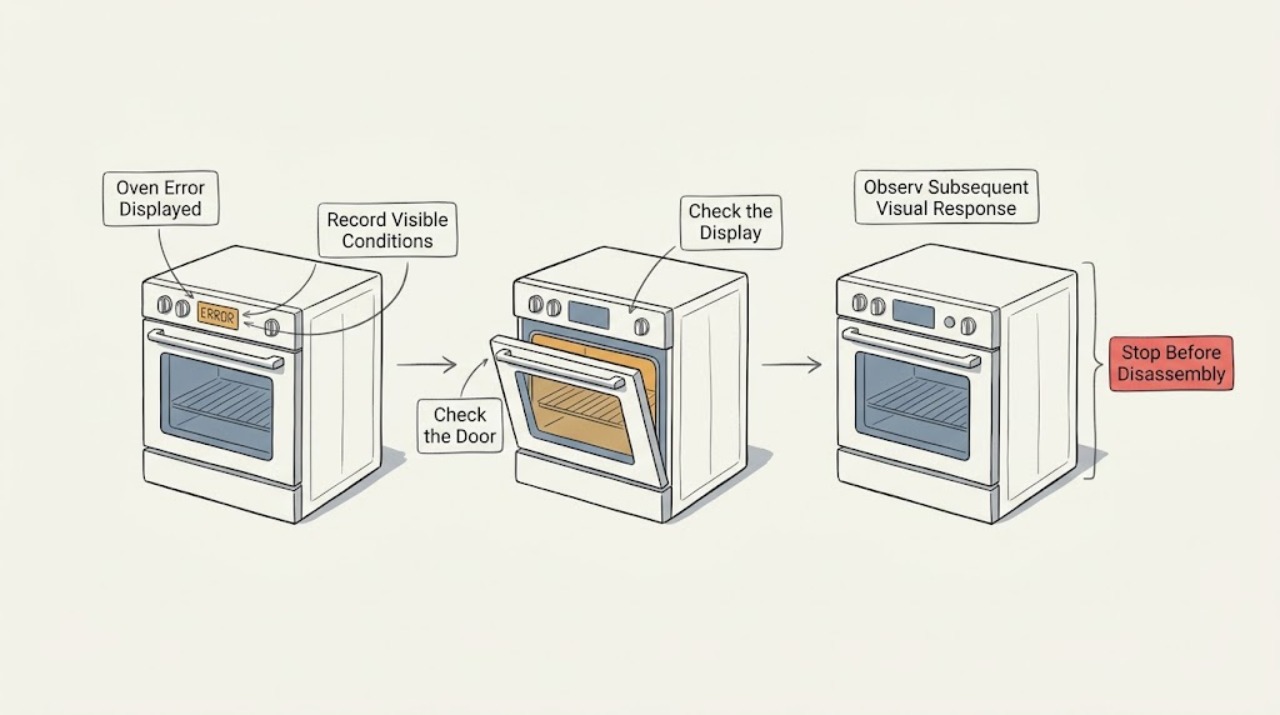
LG Oven Error Displayed: Record the Code Before Resetting
When an LG oven displays an error, photograph or write down the complete code, the exact model, whether the appliance is electric or gas, the cooking mode and what happened immediately before the message. Do not interpret a code from another LG model or from a cooktop as an oven diagnosis.
-
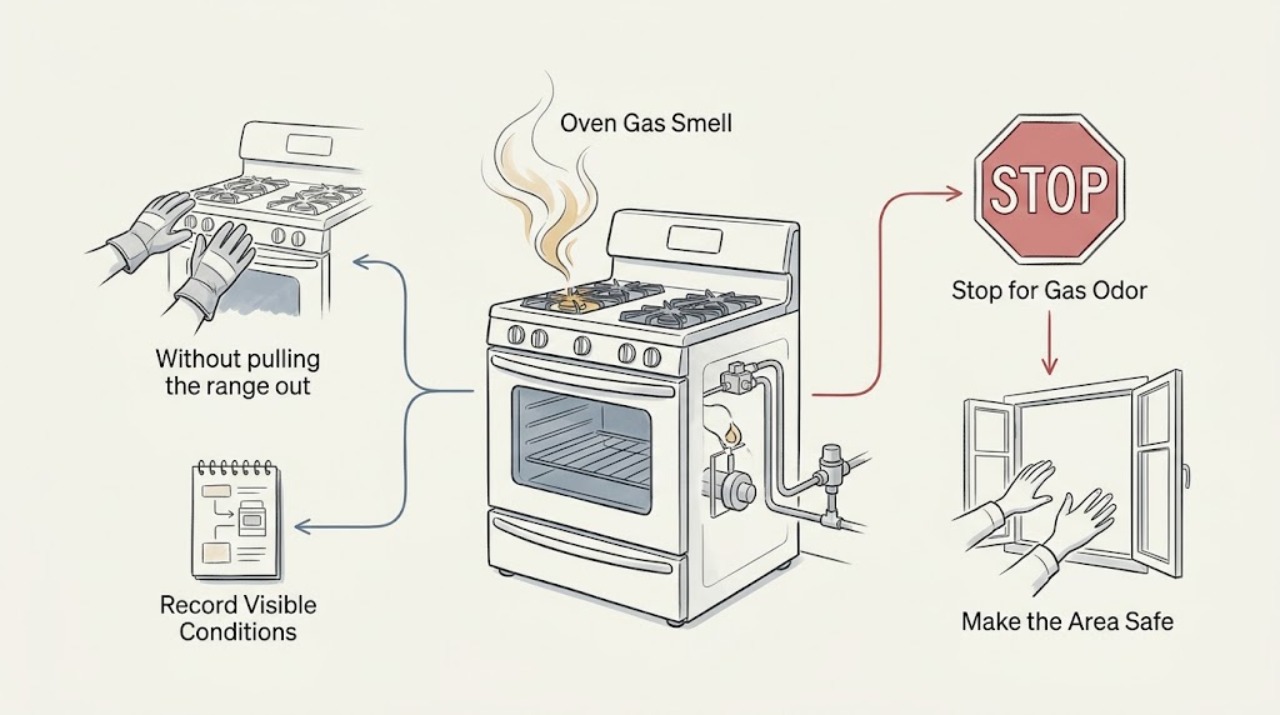
LG Oven Gas Smell: Stop, Identify the Source Safely, and Do Not Re-Test
If an LG oven smells of gas, turn the oven controls off and stop using it. Do not light a burner, switch electrical equipment, or search for the leak.
-
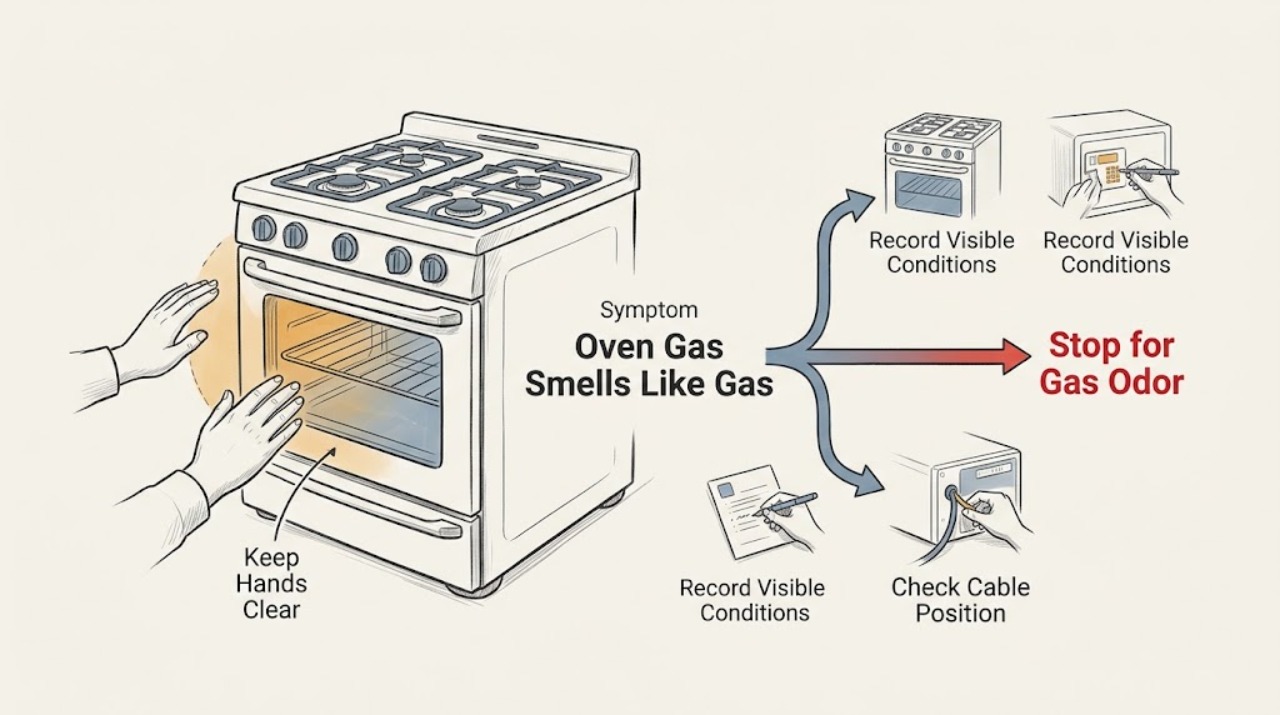
LG Oven Gas Smells Like Gas: What to Check and What to Do Next
Treat a gas-like smell from an LG gas oven as a possible gas leak until a qualified gas supplier or appliance professional says otherwise. Turn the oven and burners off if they are already within reach, do not try to relight anything, do not touch electrical switches or use a phone inside, and leave the building.
-
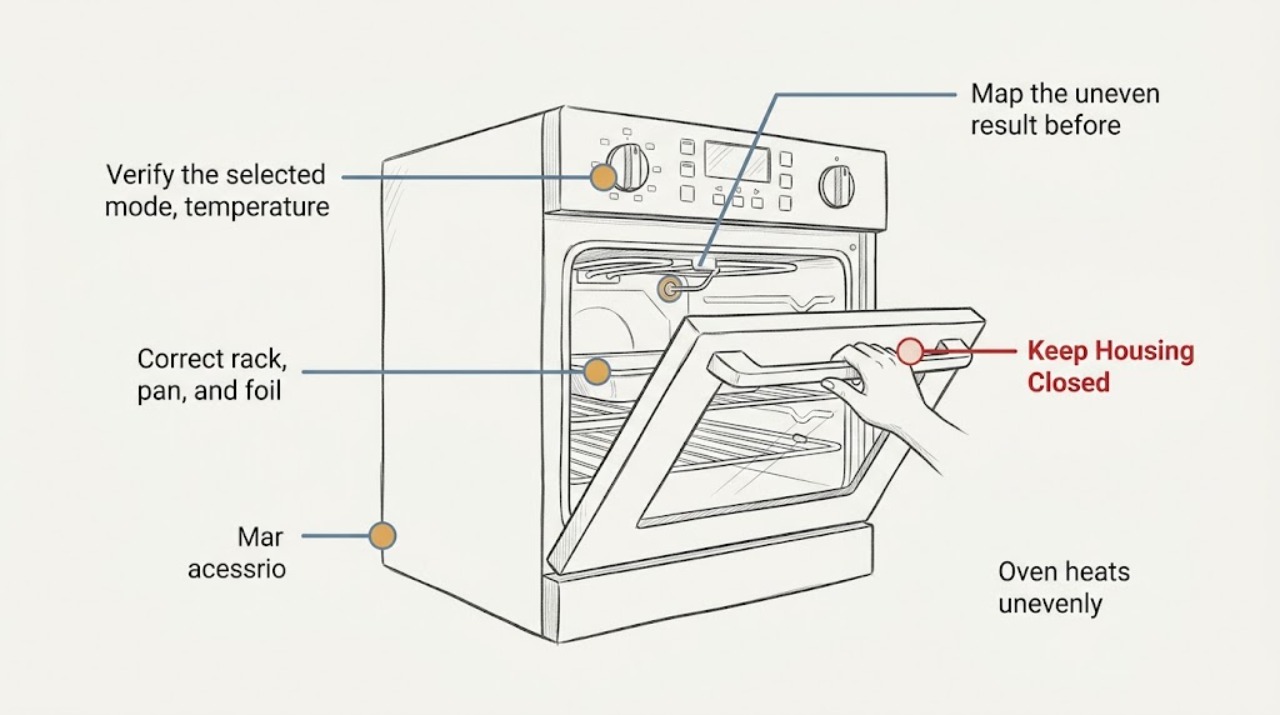
LG oven heats unevenly: What to Check and What to Do Next
An LG oven that heats unevenly is often affected by the selected cooking mode, incomplete preheating, rack position, pan placement, blocked airflow, or a temperature setting that needs model-specific calibration. First describe whether one side browns faster, the top and bottom differ, or the whole cavity runs consistently hot or cool.
-
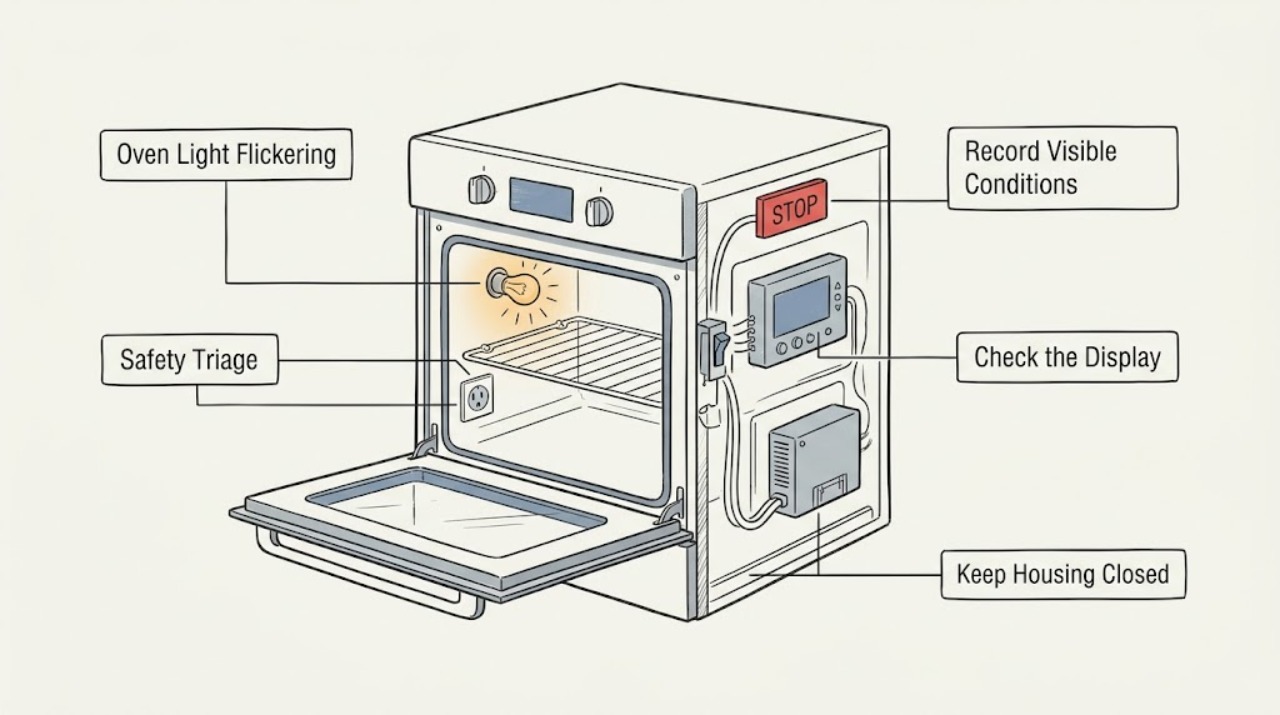
LG Oven Light Flickering: Tell Normal Cooking Behavior From a Fault
An LG oven light that blinks only at a documented cooking event may be normal: LG describes the light blinking when some ranges reach the set temperature during bake or convection operation. Flicker that follows the door, occurs randomly while the oven is steady, affects the display or other lights, or continues after a cool-down points instead to a loose or failing bulb, socket, door switch, wiring, control, or power problem.
-
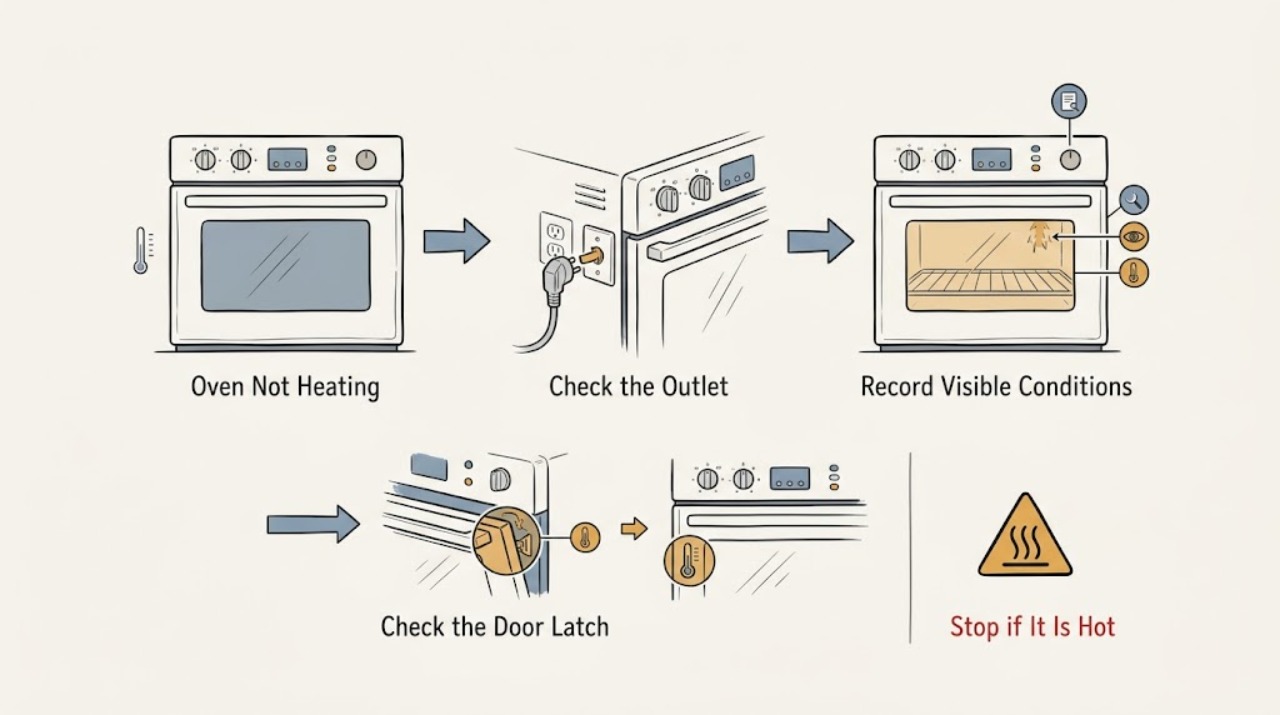
LG Oven Not Heating: Check Settings, Power, and Fuel Type Safely
First determine whether the oven has no power, has a working display but does not start, or starts without producing heat. Confirm the exact LG model and whether it is electric, gas, or dual-fuel, then check the selected cooking mode, temperature, START confirmation, delay start, lockout, door, and any displayed error.
-
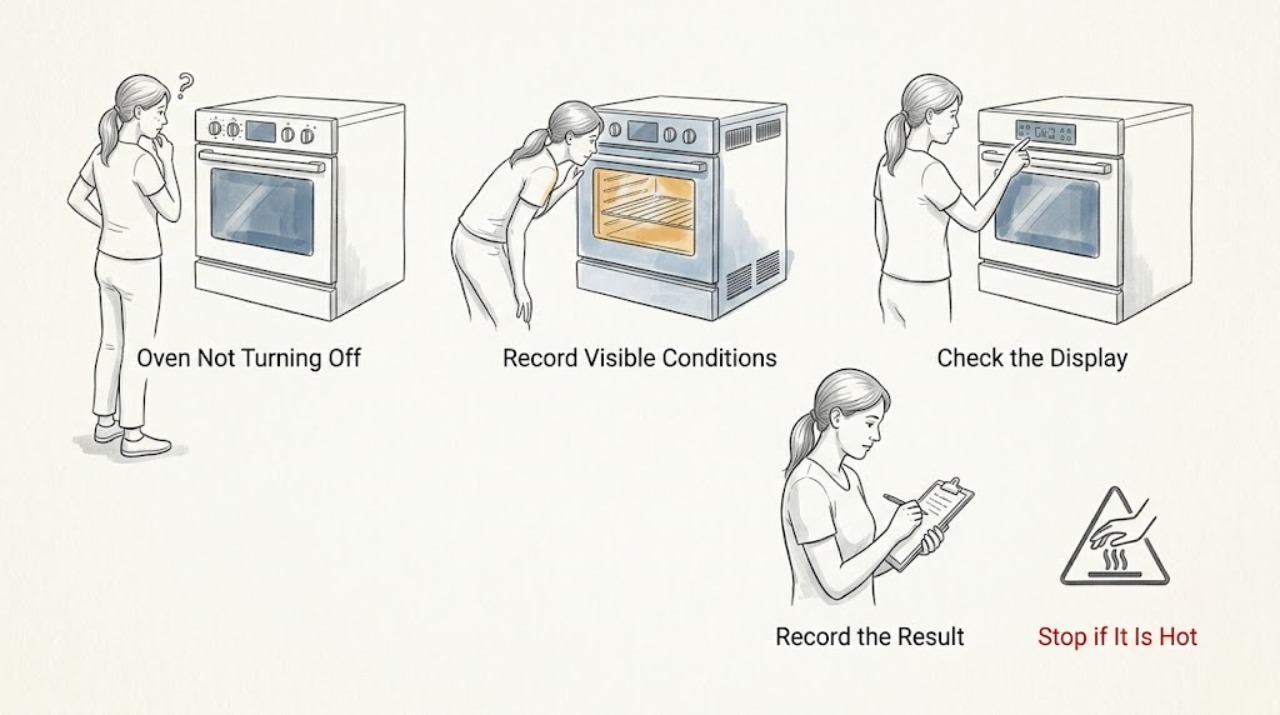
LG Oven Not Turning Off: Tell Cooling From Uncontrolled Heating
First identify what is still operating. A cooling fan, display, or hot-surface indicator can remain active after an LG oven is turned off while the cavity or surface cools.
-
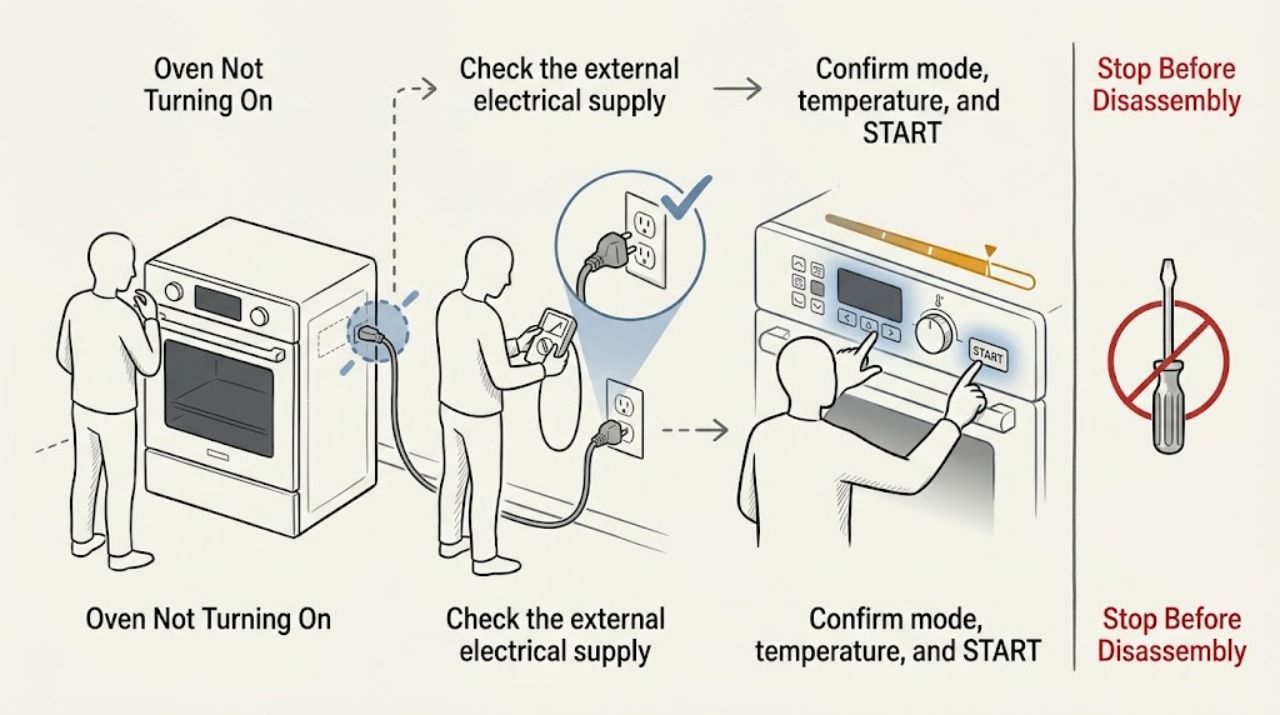
LG Oven Not Turning On: Separate Power, Settings, and Fuel-Specific Checks
First decide whether the LG oven has no display at all or has power but will not begin a selected cycle. For a blank display, check the range's dedicated breaker and the dry, accessible plug connection without opening the appliance or repeatedly resetting a trip.
-
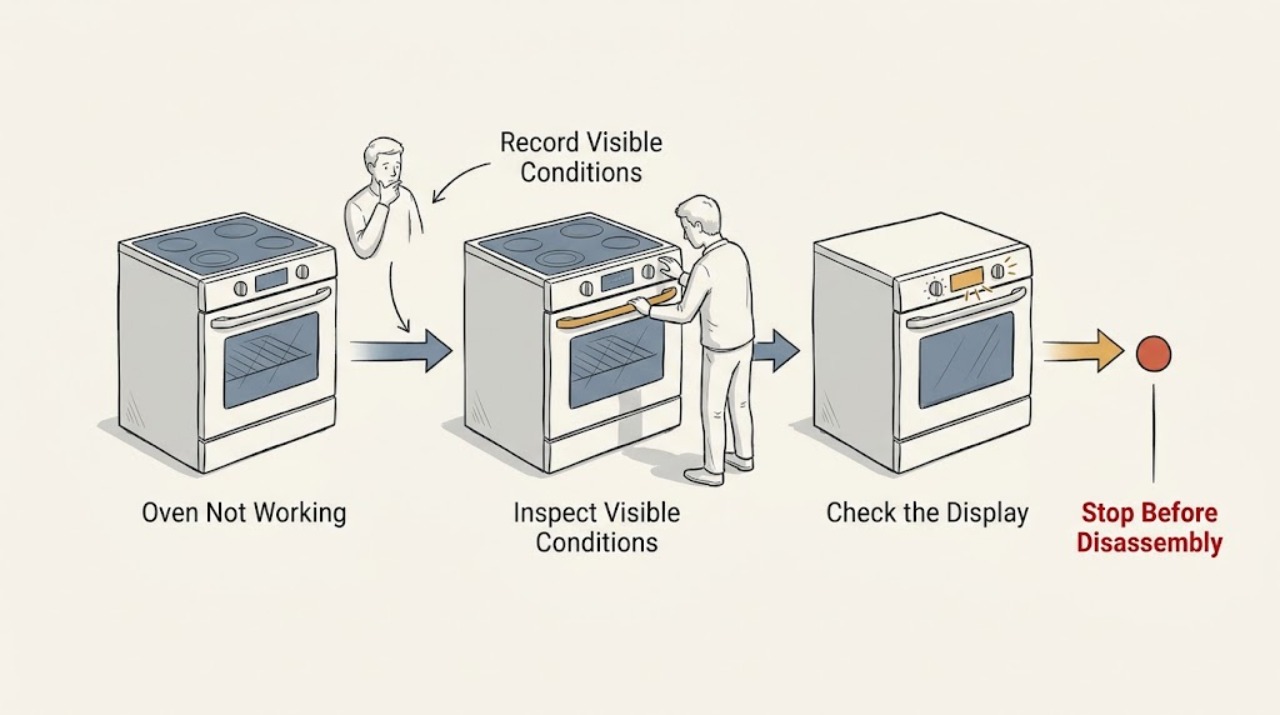
LG Oven Not Working: Separate Power, Controls, Heating, and Error Codes
An LG oven that is not working can have no incoming power, power with a locked or delayed control, a model-specific error, or a heating or ignition problem. First identify whether the display is completely blank or responds to controls.
-
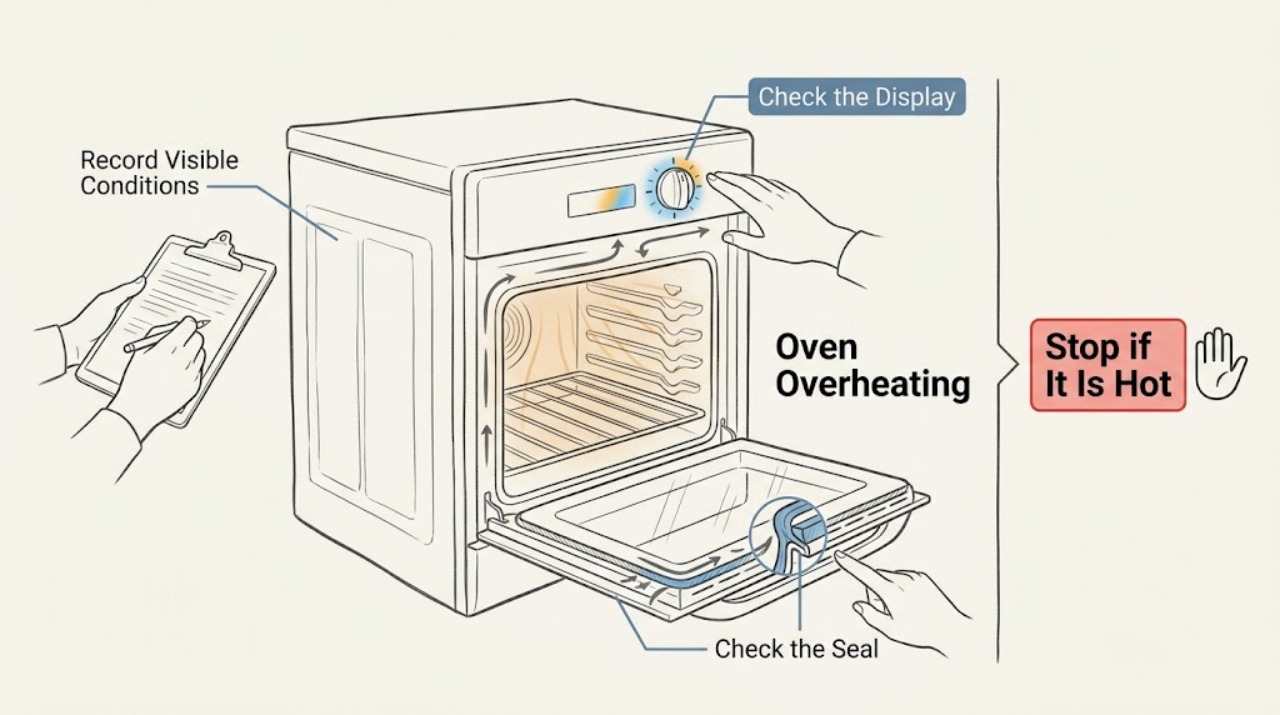
LG Oven Overheating: Separate Normal Cycling From a Temperature Fault
An LG oven that seems too hot should first be separated into normal preheating or element cycling, a setting or rack problem, a thermostat calibration issue, and true uncontrolled heating. Record the complete model, mode, setpoint, display or error, and whether the temperature is high only during preheat or remains high during cooking.
-
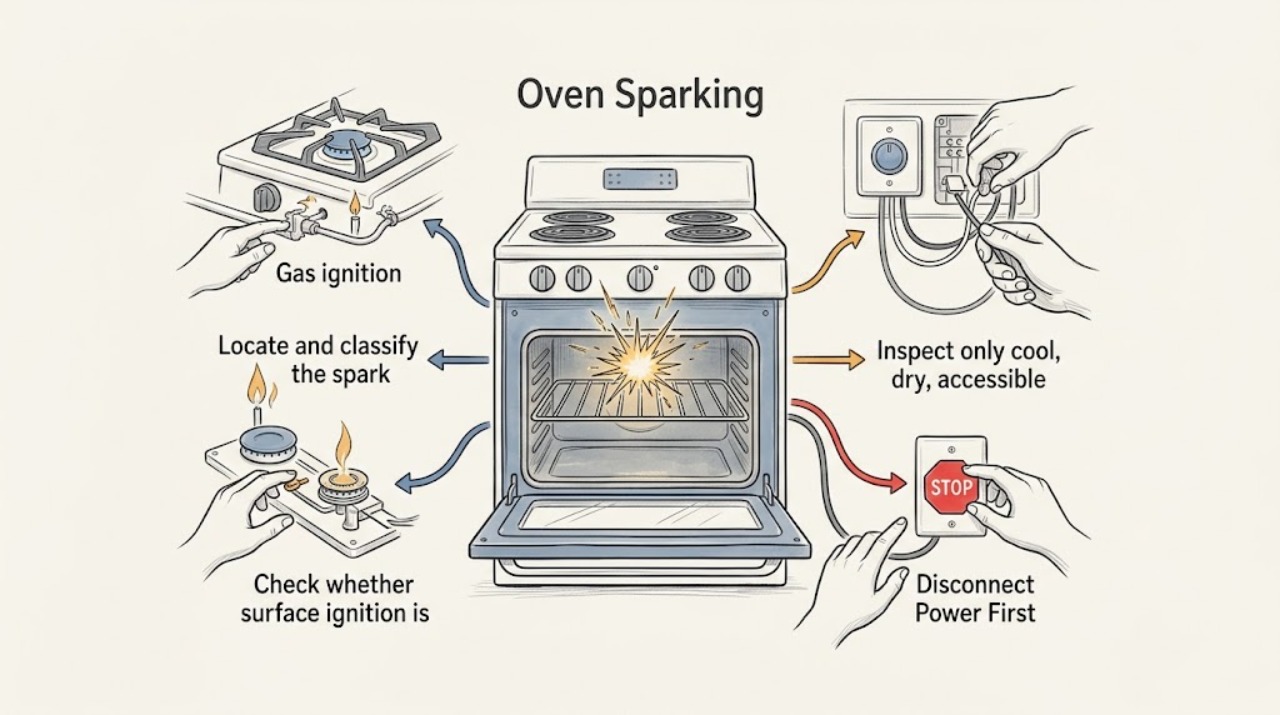
LG Oven Sparking: Tell Normal Gas Ignition from a Dangerous Arc
First locate the spark. On an LG gas range, a brief click and spark at a surface-burner electrode while a knob is turned to LITE can be normal ignition behavior; it should stop after the burner lights and the control is returned from LITE.