
On this page
Start here
Quick answer
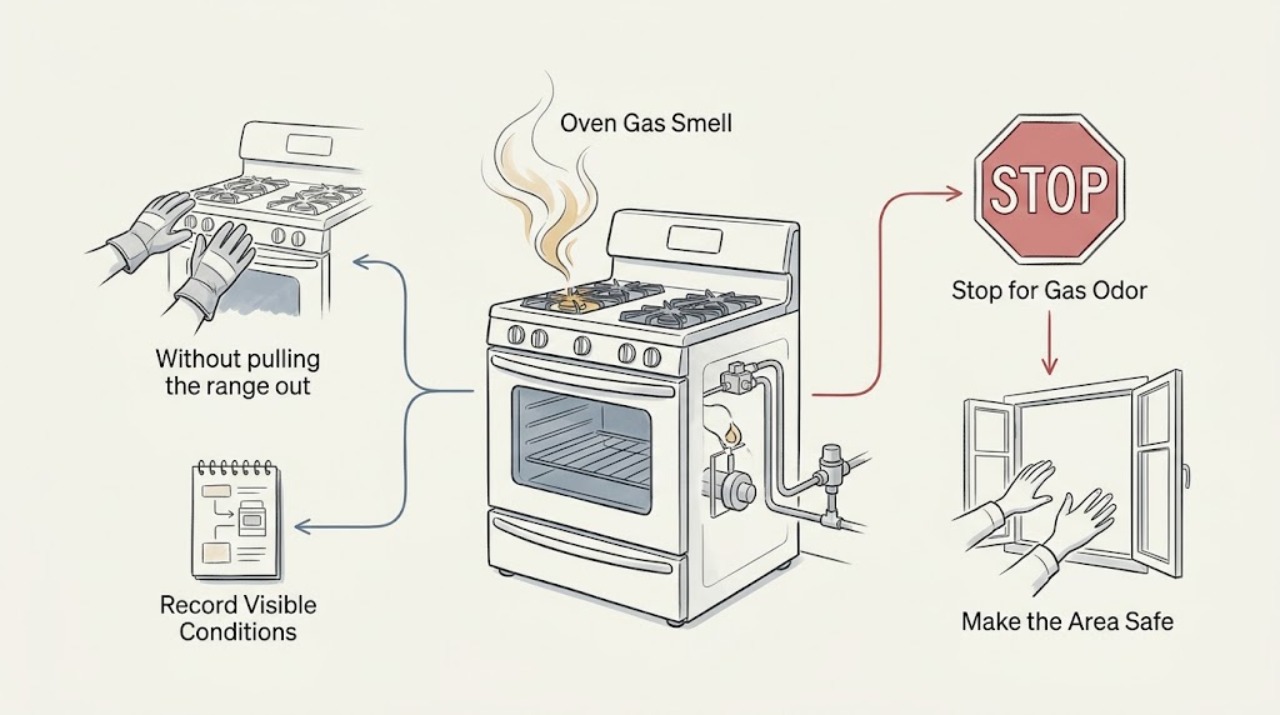
If an LG oven smells of gas, turn the oven controls off and stop using it. Do not light a burner, switch electrical equipment, or search for the leak. From a safe location, determine whether the appliance is a gas, dual-fuel, or electric model: a pure electric oven has no oven gas supply, but a gas odor nearby is still an emergency. A brief click during normal surface-burner ignition is different from a persistent or strong odor, delayed ignition, an abnormal flame, smoke, or a carbon-monoxide alarm. Leave the area when the smell is strong or unexplained, contact gas-emergency or emergency help from outside, and do not reuse the oven until qualified personnel clear it.
Work through in order
Diagnostic checks
Use only checks that match the exact appliance or system and its official guide.
-
Check 1
Stop the oven and all surface-burner controls, avoid flames and electrical switches, and from a safe position note whether the odor is strong or persistent, whether anyone feels unwell, and whether smoke, a flame, or a carbon-monoxide alarm is present.
Expected result: There is a strong or continuing gas odor, an alarm or symptom, smoke or flame, a faint odor that disappears with controls off, or no odor now but an unexplained event was noticed.
Next step: For an emergency, leave the area and contact emergency or gas-emergency help from outside or another safe location. For a faded or uncertain odor, keep the oven off and continue only with non-invasive identification before arranging service.
Stop if: Do not relight, sniff around the appliance, operate switches, use a phone near the odor, or re-enter an evacuated area until it is cleared.
Why this matters
Why: Strong or continuing odor, combustion symptoms, smoke, and alarms are emergency conditions. An odor that has faded is not proof that the appliance is safe to use again.
-
Check 2
Without pulling the range out, read the complete LG model number and determine from the label or manual whether it is gas, dual-fuel, or electric, noting whether the smell is near the oven, cooktop, rear connection, or elsewhere in the room.
Expected result: The model is a gas or dual-fuel appliance, the model is pure electric, or the type and odor location cannot be confirmed safely.
Next step: Keep all cooking appliances off and provide the model and location to qualified service or gas-safety responders. Do not disconnect a connector or inspect behind the range yourself.
Stop if: Do not move the appliance, remove a rear cover, handle a regulator or connector, or assume an electric model makes a room-wide gas smell harmless.
Why this matters
Why: A gas or dual-fuel model has fuel and combustion paths; a pure electric oven has no oven gas supply, but a gas odor nearby can come from another appliance or the household line. An uncertain location cannot be resolved by moving the range.
-
Check 3
Record when the odor first appeared and whether it followed a normal surface-burner ignition, oven start, cleaning or spill, recent installation or movement, a power interruption, or a failed ignition; do not recreate the event.
Expected result: The odor was brief and limited to a controlled ignition attempt, appeared after cleaning, continued after the control was off, or occurred without any ignition action.
Next step: Keep controls off and use the timing as evidence for service. If the odor followed cleaning, wait for qualified or exact-manual guidance rather than relighting to see whether residue dried.
Stop if: Do not repeat a failed ignition, turn a valve on and off for a test, or use a flame or leak-search method near the appliance.
Why this matters
Why: LG identifies incorrect burner-cap or head assembly and contamination as causes of ignition difficulty and gas smell, while an odor without an ignition action or one that persists suggests an uncontrolled fuel or combustion issue.
-
Check 4
With all controls off and the appliance cool, make only a dry external visual check for soot, yellow or unstable flame residue, spilled cleaner, wet control areas, damaged cord, or a hot or discolored outlet; do not touch suspected gas connections.
Expected result: Residue or moisture is visible, a flame was yellow or unstable, the power connection is hot or damaged, or there is no visible external clue.
Next step: Leave the oven off and provide the observation to qualified gas-appliance and electrical service as appropriate. Do not clean, wipe, or move a component if gas odor remains or if doing so requires opening the appliance.
Stop if: Do not spray cleaner, use water, touch wet electrical equipment, remove burner parts, or attempt to correct a flame while gas odor or smoke is present.
Why this matters
Why: Contamination can disturb ignition, while soot or abnormal flame can indicate combustion trouble. Electrical heat or moisture adds a separate shock or fire hazard. No visible clue does not exclude a leak or internal fault.
-
Check 5
Check the control display from a safe distance for a model-specific error, lock, or power-interruption indication, and note whether the oven was started with the correct mode and temperature confirmed; do not clear a code by relighting.
Expected result: An error or lock state is shown, the display indicates a recent power interruption, or no display message is present.
Next step: Record the exact code and model for LG service. If gas odor, delayed ignition, smoke, or abnormal flame occurred, leave the appliance off regardless of what the display says.
Stop if: Do not repeatedly reset the controls, operate the oven to clear a code, or continue a cycle after an odor or combustion warning.
Why this matters
Why: LG says error codes and controls vary by model, and settings or power events can affect operation. A control message does not make a gas odor safe or explain away a leak.
-
Check 6
If the appliance is gas or dual-fuel and there is no active odor, note from the model manual whether the home gas shutoff or regulator position was changed during installation or cleaning; do not inspect or adjust the valve, regulator, connector, or gas line.
Expected result: The range was recently moved or installed, the gas supply history is unknown, or no gas-side change is known.
Next step: Keep controls off and arrange a qualified gas-appliance inspection. If the odor returns or grows, leave immediately and follow the gas-emergency branch.
Stop if: Never tighten fittings, adjust pressure, convert fuel, remove a connector, or test for leaks with a flame or by repeated ignition.
Why this matters
Why: LG identifies the home shutoff and appliance regulator as model- and installation-specific. A disturbed or unknown gas connection needs qualified inspection, not a user leak test.
-
Check 7
Prepare a service report containing the model, appliance type, odor location, duration, trigger, control state, flame or smoke observations, recent cleaning or movement, and any CO alarm or electrical symptom.
Expected result: The odor is persistent or unexplained, the oven has delayed or abnormal ignition, the appliance has a gas-side or electrical warning, or the issue cannot be reproduced safely.
Next step: Leave the oven unused until qualified personnel inspect and clear it. If a CO alarm sounded or anyone has symptoms, follow emergency guidance and do not re-enter until responders permit it.
Stop if: Do not resume use because the smell faded, because another burner works, or because a reset temporarily changed the display.
Why this matters
Why: These symptoms require a professional combustion, gas-path, ignition, or electrical assessment; safe documentation is more useful than another ignition attempt.
Use your observations
Decision map
Find the observation that best matches what you see, then follow the next safe action.
-
PATH 01Next step
What you see
A brief odor occurred only during a controlled ignition attempt and is completely gone with all controls off, with no delayed ignition, abnormal flame, smoke, or symptoms.
Do this next
Use the exact LG manual and arrange service if the odor recurs or the ignition is not prompt and stable; keep the controls off until then.
Why this path and its safety boundary
Why it matters: The event may be associated with ignition, but it is not a reason to repeat the test or assume the appliance is safe.
-
PATH 02Next step
What you see
Gas odor continues, grows stronger, occurs when no burner or oven is being lit, or returns after controls are off.
Do this next
Do not operate electrical switches or flames. Leave the area, contact gas-emergency or emergency help from outside, and do not re-enter or reuse the appliance until cleared.
Why this path and its safety boundary
Why it matters: Treat the situation as a possible gas leak or uncontrolled fuel condition.
-
PATH 03Next step
What you see
The appliance is pure electric, but a gas odor is present in the room or near another appliance.
Do this next
Do not energize or investigate the electric oven. Leave the area and contact gas-safety or emergency help from a safe location.
Why this path and its safety boundary
Why it matters: The oven itself has no gas source, but the room may still contain a gas leak from another appliance or line.
-
PATH 04Next step
What you see
The odor followed cleaning, a spill, or incorrect burner-component seating and there is visible moisture or residue.
Do this next
Keep controls off and follow only the exact manual's cool, dry, accessible-care guidance; request service if the odor or ignition issue persists.
Why this path and its safety boundary
Why it matters: Contamination can disrupt ignition, but wet or contaminated gas equipment must not be relit as a drying test.
-
PATH 05Next step
What you see
The oven has delayed ignition, a yellow or unstable flame, soot, smoke, a bang, or a carbon-monoxide alarm or symptoms.
Do this next
Stop immediately, leave the area, avoid switches and ignition sources, and contact emergency help. Do not operate or re-enter until trained personnel clear the appliance and space.
Why this path and its safety boundary
Why it matters: There may be a combustion, fire, explosion, or carbon-monoxide hazard.
-
PATH 06Next step
What you see
The plug, cord, outlet, or control area is wet, hot, scorched, cracked, buzzing, or arcing.
Do this next
Avoid contact and switches, leave the appliance off, and have power isolated and inspected by a qualified person from a dry, safe location.
Why this path and its safety boundary
Why it matters: An electrical shock or fire risk exists in addition to any gas concern.
-
PATH 07Next step
What you see
The smell has faded but its source is unknown or the symptom returns after a code reset or one normal cycle.
Do this next
Do not use the oven again; preserve the event record and arrange qualified LG gas-appliance service.
Why this path and its safety boundary
Why it matters: A temporary absence of odor does not establish a safe gas or combustion system.
Helpful context
Understand the symptom
Gas smell is a safety decision first
Do not use an oven cycle to determine whether an odor is harmless. A short, controlled click while a surface burner is being lit is normal ignition behavior, but an unexplained odor after controls are off, delayed ignition, or an odor that grows stronger means the gas appliance must remain off. A burnt-food or cleaner smell is not the same as gas, yet uncertainty is a reason to stop rather than sniff, search, or relight.
Confirm the appliance type without moving it
LG sells gas ranges, dual-fuel configurations, and electric cooking appliances. Read the rating label or exact owner manual from a dry, safe position instead of pulling the range out. A pure electric oven does not create oven gas, but a nearby gas appliance, connector, or household line can still be the source of an odor. The appliance type changes who should inspect it, not the need to avoid ignition tests.
Do not confuse carbon monoxide with gas odor
Carbon monoxide cannot be seen or smelled. A carbon-monoxide alarm, headache, dizziness, nausea, shortness of breath, confusion, or unusual fatigue during or after gas-appliance use requires fresh air and emergency help, not a search for the source. Do not re-enter or operate the oven until responders and trained service personnel say it is safe.
Only after diagnosis
Potential parts
- LG gas-oven ignitor
Consider this only after qualified diagnosis identifies an ignitor fault; an odor or delayed ignition alone does not establish the correct component.
Confirm the complete LG model number and manufacturer documentation; installation is gas-appliance work. - LG gas-range burner cap or head
Consider this only if the exact model's accessible burner inspection finds a damaged or missing cap or head and service confirms replacement is needed.
Match the complete model and burner position; do not use a substitute or alter the gas port. - LG gas ignition module or control component
Consider this only after qualified electrical and gas-appliance diagnosis links persistent or unscheduled sparking or ignition failure to that component.
Exact model fit and safe installation are required; do not replace an ignition component from odor timing alone.
When checks do not resolve it
Need a professional?
Arrange qualified LG gas-appliance service when a gas odor is persistent or unexplained, ignition is delayed, a flame is abnormal, a code returns, or the odor follows cleaning or movement. Use a qualified electrician for a suspect plug, outlet, cord, or circuit, and emergency gas or fire assistance for strong odor, smoke, flame, or a carbon-monoxide alarm. Provide the complete model, appliance type, odor location, timing, controls, and any visible findings.
Common questions
FAQ
Is a short gas smell from an LG oven normal?
Do not assume an unexplained smell is normal. Turn controls off and do not relight; persistent, strong, delayed, or recurring odor requires leaving the area and gas-safety or qualified service help.
What if my LG oven is electric but I smell gas?
A pure electric oven has no oven gas supply, but the odor may come from another appliance or the household line. Avoid switches and flames, leave the area, and contact gas-safety or emergency help from a safe location.
Can cleaning cause an LG gas oven or range to smell of gas?
Moisture, debris, or incorrect burner-cap or head assembly can interfere with ignition, but do not relight to test whether it dried. Keep controls off and follow only exact model guidance or qualified service.
What is the difference between gas odor and carbon monoxide?
Carbon monoxide has no smell. A CO alarm or symptoms such as headache, dizziness, nausea, or confusion requires moving outside and emergency help; do not operate the appliance until trained personnel clear it.
Can I check the gas valve or regulator myself?
Do not inspect, adjust, disconnect, or test gas connections or a regulator. LG says gas installation and service require qualified personnel; record the model and history for the technician instead.
Read the exact guide
Official sources
- LG Range, Oven, Electric Cooktop: Powers On, Won't RunLG Electronics · LG gas and electric cooking-appliance type, setting, power, lock, and service distinctions
- Oven Not Heating - Gas RangesLG Electronics · LG gas-oven settings, error, gas-valve, hot-surface ignitor, and service guidance
- LG Range – How to Install a Gas RangeLG Electronics · LG gas-range installation, gas-connection, ignition, and flame-safety boundaries
- LG Range - Troubleshooting a Burner Not Igniting After CleaningLG Electronics · LG gas-range post-cleaning burner-cap and head alignment and gas-odor warning
- Carbon Monoxide Fact SheetU.S. Consumer Product Safety Commission · U.S. carbon-monoxide alarm and fuel-burning-appliance safety
- LG Range - Why Won't My Burner LightLG Electronics · LG gas-range burner ignition, gas supply, moisture, debris, cap, and head guidance
- Problems with your gas supply and heatingOxford City Council · Public gas-leak emergency guidance
Community feedback
Share a repair observation
Share a plain-text repair observation. Accepted observations are published automatically; this page may take a moment to update.