
On this page
Start here
Quick answer
Stop an LG washer with cracked, chipped, shattered, or loose door glass. Unplug it when safe, close the water supply if water is leaking, keep people and pets away from shards, and do not run a rinse or spin test. LG says a front-load door has inner and outer glass, and impacts, thermal shock, or metal objects can damage the glass and create a leak risk; the exact model is needed before selecting a door or glass assembly.
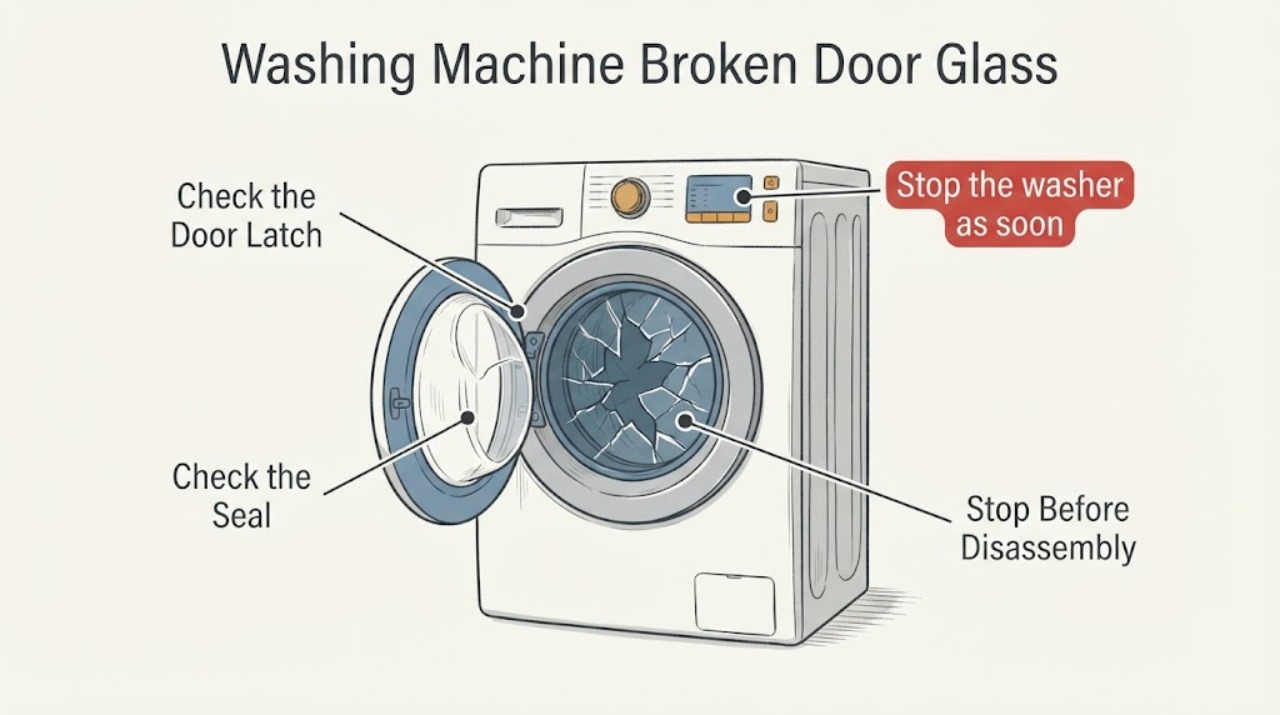
Work through in order
Diagnostic checks
Use only checks that match the exact appliance or system and its official guide.
-
Check 1
Stop the washer as soon as broken, cracked, chipped, loose, or missing glass is seen; unplug it only if the plug and floor are dry and reachable, and close the household washer water valves if water is escaping.
Expected result: Record whether fragments are inside the drum, whether the door is loose, and whether water is present at the door or on the floor.
Next step: Keep people and pets away, do not restart any cycle, and arrange model-specific repair. If water is near electrical parts or cannot be controlled safely, leave the area and use qualified service.
Why this matters
Why: Door-glass damage can expose sharp fragments and remove the door's normal containment; a wet floor or active leak adds an electrical and water-damage hazard.
-
Check 2
From a safe position, document the damage without touching shards: photograph the inner and outer door surfaces, hinge and latch area, gasket, drum, and any visible leak path.
Expected result: LG identifies inner and outer glass as separate door surfaces; note which surface is cracked or missing and whether the gasket is torn, displaced, or visibly contaminated.
Next step: Keep the door closed if it is stable, protect the opening from contact, and send the photos with the full model and serial information to LG or a qualified appliance technician.
Why this matters
Why: The location helps a technician distinguish glass, gasket, hinge, or latch damage, but a photograph cannot establish that a generic glass panel or complete door assembly will fit.
-
Check 3
If the door area is intact enough to inspect and there are no loose shards, look only for hair, fabric, or another visible object trapped between the gasket and glass; do not spray water into the door or wipe across broken edges.
Expected result: LG says foreign material between the gasket and glass can create a gap and leak, while a torn gasket is a reason to request repair.
Next step: If the glass is intact and the obstruction is loose and reachable, remove it without tools and dry the accessible seal; if glass is damaged, leave the area alone and request service.
Why this matters
Why: A visible obstruction can explain a seal gap, but it does not explain or repair cracked glass, and clearing it is unsafe when fragments are present.
-
Check 4
Check the rating label and record the complete LG model number, serial number, and country or region before asking for a glass or door replacement.
Expected result: The task has only the LG brand and washer category, not a model number; LG notes that its general door and leak guides cover standard or all models but that images, settings, and content can vary.
Next step: Use the exact model in LG support or give it to the technician; do not order a generic panel based only on appearance or washer size.
Why this matters
Why: A model-matched parts lookup is necessary to determine whether the service part is inner glass, outer glass, a door assembly, gasket, hinge, or another model-specific component.
-
Check 5
Do not run a rinse, spin, or empty-cycle test while the glass is cracked, loose, or missing, and do not force a locked door or pull it with excessive force.
Expected result: LG states that the door can remain locked when the washer is hot, contains water, or is spinning, and warns against forcing a locked door; its leak guide uses a rinse test only for a normally intact washer.
Next step: Wait for the machine to cool without forcing it, keep power and water isolated, and have a technician handle any locked-door access or damaged-door repair.
Why this matters
Why: A test cycle can move fragments, spray water through a damaged seal, or worsen a latch or hinge problem; a locked door may be a normal safety state rather than permission to force it.
Use your observations
Decision map
Find the observation that best matches what you see, then follow the next safe action.
-
PATH 01Next step
What you see
If the glass is shattered, fragments are loose, the door does not sit squarely, or the gasket is visibly torn
Do this next
Keep the washer out of service, isolate power and water when safe, avoid handling fragments, and arrange model-matched repair.
Why this path and its safety boundary
Why it matters: The door cannot be treated as a cosmetic issue and may not contain water or moving parts safely.
-
PATH 02Next step
What you see
If there is a crack but no visible leak and the door still appears closed
Do this next
Do not operate the washer; photograph the damage, record the exact model, and request a technician or LG-authorized repair assessment.
Why this path and its safety boundary
Why it matters: The absence of a current leak does not show that the damaged glass will remain safe during spinning or that the seal is intact.
-
PATH 03Next step
What you see
If water is leaking from the door or is collecting on the floor
Do this next
Close the washer water valves and unplug only when safe, contain water without contacting shards, and leave the appliance off for service.
Why this path and its safety boundary
Why it matters: LG identifies debris, seal damage, and door-area gaps as possible leak paths, but the damaged glass itself still requires model-specific inspection.
-
PATH 04Next step
What you see
If the door is locked because the washer is hot, contains water, or is still spinning
Do this next
Do not force or pry the door; wait for safe cooling and have service handle access if the damaged door remains locked.
Why this path and its safety boundary
Why it matters: LG says those conditions can keep the safety lock engaged, and forcing the door can cause additional damage or burns.
Helpful context
Understand the symptom
Treat broken washer door glass as a safety and containment problem rather than a cosmetic defect. LG describes the front-load door as having inner and outer glass and warns that impacts, scratches, thermal shocks, and metal objects can damage it. Its leak guidance says debris can create a gap at the door seal and that a damaged seal needs repair service. With no model number supplied here, this guide stays at safe external checks and does not identify a replacement part or give door disassembly steps.
When checks do not resolve it
Need a professional?
Request qualified LG or appliance service for any cracked, shattered, loose, or missing door glass, a damaged gasket or hinge, a door that will not close or unlock, or any leak at the door. Unplug and close the water valves when safe; do not run a cycle, force the door, tape or glue the glass, drill the door, or open the cabinet to improvise a repair.
Common questions
FAQ
Can I keep using the washer if only the outer glass is cracked?
No. LG describes inner and outer door glass and warns that glass can be damaged by impact or thermal shock. A crack can worsen during spinning and the exact model is needed to determine the correct repair; keep the washer off and request service.
Can I tape, glue, or replace the glass with a generic panel?
Do not improvise a door repair. The available LG guidance supports inspection and repair escalation for door-area damage, while this task has no exact model evidence for a compatible part or replacement procedure.
What if the broken-glass washer door is locked?
Do not pull or pry it. LG says heat, water remaining in the drum, or spinning can keep the door locked and warns that excessive force can damage internal parts. Isolate the washer when safe and have service handle access.
Read the exact guide
Official sources
- LG Washer - Troubleshooting Leaks On A Front Load WasherLG USA Support · Official LG USA troubleshooting for front-load washer leaks; exact procedures and images can vary by model.
- Why won't my LG front-load washer door open?LG USA Support · Official LG USA guidance for standard front-load washer door-lock conditions; it does not authorize forcing or bypassing a damaged door.
- [LG Front Load Washing Machine] Troubleshooting LeaksLG USA Support · Official LG USA front-load washer leak guidance; its rinse-cycle test is not applicable when the door glass is damaged, so this article uses it only for the intact-door distinction and service boundary.
- [LG Front Load Washing Machiner] Door Maintenance GuideLG USA Support · Official LG USA guidance for front-load washers; it states the guide is for all models while warning that images and content may differ.
- LG Washer - Why is Water Leaking From My Front Load Washing Machine?LG USA Support · Official LG USA front-load washer leak guidance without a supplied model number.
Community feedback
Share a repair observation
Share a plain-text repair observation. Accepted observations are published automatically; this page may take a moment to update.