
On this page
Start here
Quick answer
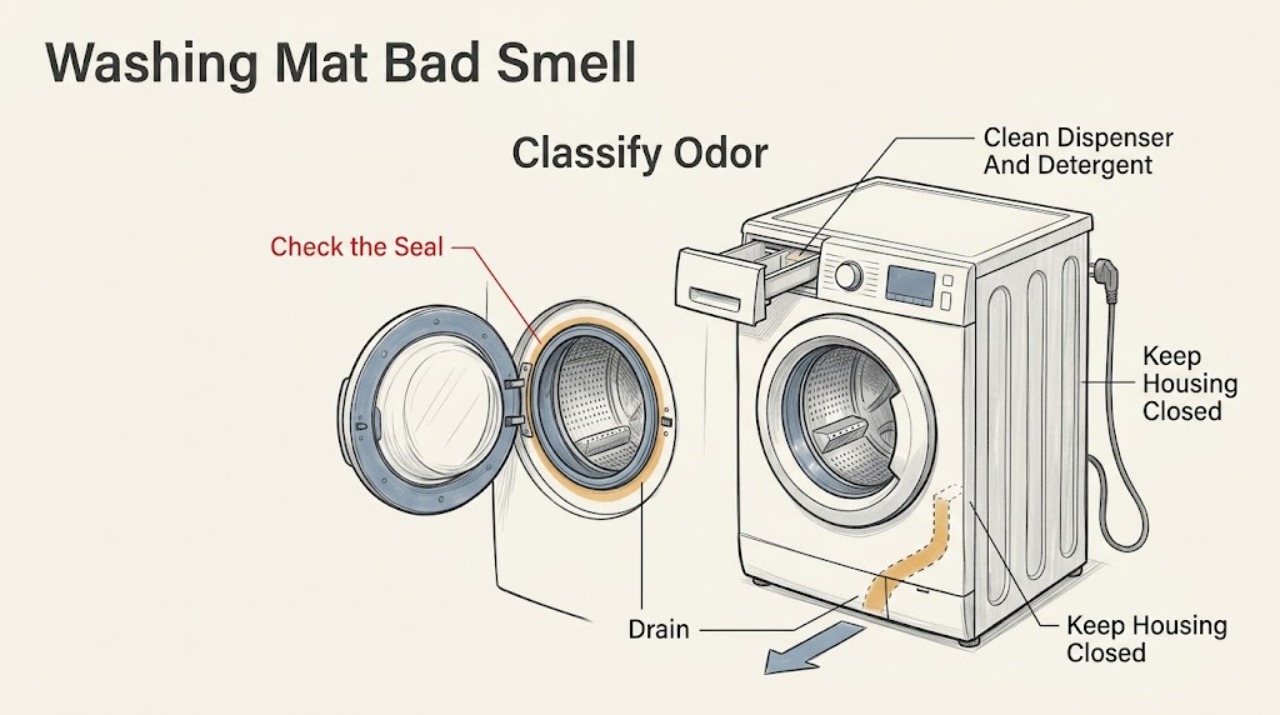
First classify the odor and when it appears. A musty or mold-like smell usually points to moisture, residue, closed ventilation, the door gasket, dispenser, or a drain path that retains water; remove laundry promptly, dry accessible areas, clean the dispenser, and use the LG Tub Clean guidance only when that cycle and cleaner suit the exact model. A sewage-like smell needs a safe drain-path and plumbing check rather than more detergent. A burning rubber or electrical smell is a stop-use decision when it is strong, worsening, or accompanied by smoke, sparks, a hot cord or outlet, water near electricity, or a breaker trip. Do not mix cleaners, work on live wiring, open the cabinet, or keep testing a hazardous washer. Persistent odor after the model-appropriate cleaning routine needs qualified service.
Before you begin
Safety first
- This article covers odor classification and ordinary-access cleaning or observation only. Do not open the cabinet or pump, touch wiring, disconnect wet or pressurized hoses, force a filter, or perform live electrical checks.
Work through in order
Diagnostic checks
Use only checks that match the exact appliance or system and its official guide.
-
Check 1
From a dry position with the washer stopped, identify the odor as musty or mold-like, detergent or sour, sewage-like, burning rubber, or electrical; note the cycle phase and the strongest accessible location without putting your face near the opening.
Expected result: The smell is strongest around the gasket or dispenser, inside the drum after a cycle, at the lower drain area, near a drain connection, or near the cord and outlet; smoke, sparks, heat, or a leak may also be present.
Next step: Use the musty, drain, or burning branch below. Stop immediately for smoke, sparks, a hot cord or outlet, water near electricity, repeated breaker trips, or a rapidly worsening odor.
Stop if: Do not sniff closely, run another cycle to reproduce a burning smell, or touch a hot, wet, scorched, or sparking connection.
Why this matters
Why: Location and timing separate moisture or residue from drain conditions and from an electrical or overheating event. A hazard symptom overrides routine odor cleaning.
-
Check 2
For a musty odor, remove any laundry, wipe the accessible door gasket and its folds with a suitable model-approved cleaner, remove plainly visible lint or residue, and leave the door and dispenser open so the interior can dry; supervise children around an open door.
Expected result: Lint, hair, detergent film, pooled moisture, or mold-like residue is present, or the gasket and drum are clean and dry but the odor remains.
Next step: If residue was found, dry the area and monitor one normal use without leaving wet laundry inside. If there is no improvement, continue to the dispenser and drain checks rather than repeatedly scrubbing the gasket.
Stop if: Do not use straight bleach, mix cleaners, tear the gasket, or continue if the gasket is damaged and water can escape.
Why this matters
Why: LG explains that retained water and debris at the gasket, plus closed ventilation, can support mold and odor. A clean dry gasket with persistent odor shifts attention to the dispenser, drain path, or tub-clean branch.
-
Check 3
Remove the dispenser tray only as the LG model instructions allow, rinse accessible parts with warm water, brush away softened residue, and review whether the detergent or softener type and amount match the model guidance; do not pour mixed chemicals into the drawer.
Expected result: The tray or housing contains wet detergent, softener film, mold-like residue, or a restricted channel, or it is clean but the smell returns from the drum or drain area.
Next step: Dry the cleaned tray and keep it ventilated. If the smell is sewage-like or water remains after a cycle, proceed to the drain-path branch; if it is musty, use the model-appropriate Tub Clean branch once ordinary cleaning is complete.
Stop if: Do not mix chlorine, acidic, oxygen, or other cleaners, force a stuck tray, or reach into an inaccessible channel or cabinet.
Why this matters
Why: LG lists detergent misuse, incomplete dissolving, and dispenser buildup as odor contributors. A clean tray with a recurring odor makes retained drum or drain moisture more likely.
-
Check 4
For a sewage-like odor, check from outside whether water remains in the drum, whether the visible drain hose connection is wet or displaced, and whether the model has an accessible drain-pump filter; follow that exact LG manual before opening any filter area and keep the floor and outlet dry.
Expected result: Water remains, draining is slow, the visible hose or household drain smells or leaks, the filter area is dirty, or the washer drains normally with no visible water or connection issue.
Next step: If water is retained, flow is weak, or a connection leaks, stop and arrange qualified washer or plumbing service. If the exact manual permits a safe owner-accessible filter clean, follow only that procedure; otherwise do not open the service area.
Stop if: Do not disconnect a wet hose, reach into standing water near electricity, force a filter cap, or run another cycle with a leak.
Why this matters
Why: LG connects poor draining, retained water, and a dirty drain-pump filter with odor over time. A smell at the household drain with normal washer drainage may be a plumbing issue instead of a washer part.
-
Check 5
If the exact LG washer has a Tub Clean cycle, empty the drum, use a dedicated washer tub cleaner according to its label and the LG model instructions, select Tub Clean, and ventilate the washer afterward; do not add laundry or an excessive foaming product.
Expected result: The cycle completes without a leak or unusual odor and the musty smell improves, or the smell remains after the model-appropriate cleaning routine or returns quickly.
Next step: Keep the drum, door, and dispenser dry between uses. If the odor persists after the supported cleaning routine, stop adding more chemicals and request qualified LG washer service.
Stop if: Stop the cycle for leaking, overflow, smoke, burning odor, unusual heat, or a breaker trip; never mix cleaners or use a cleaner not supported by the model instructions.
Why this matters
Why: LG describes Tub Clean as a way to remove detergent residue and recommends repeated maintenance for an established musty odor, while excess or unsuitable cleaner can create foam and leakage. Persistent odor after the supported routine needs service diagnosis.
-
Check 6
For a burning rubber or electrical smell, turn the washer off from a safe position and leave it off; once there is no immediate hazard, record whether the smell came from the door area, motor side, cord, or outlet without opening the cabinet or touching wiring.
Expected result: The odor is faint and limited to a new unit with no smoke, heat, sparks, cord damage, water, or trip, or it persists, grows stronger, or is paired with one of those hazards.
Next step: For any persistent or hazardous odor, keep the washer out of use and arrange qualified appliance or electrical service. Give the technician the model, cycle phase, odor type, location, and any trip or leak history.
Stop if: Do not reset a tripped breaker repeatedly, use the washer with a scorched or hot cord or outlet, remove covers, or perform live electrical checks.
Why this matters
Why: LG describes a limited new-unit odor scenario, but persistent burning or electrical odor can indicate a condition requiring repair. Smoke, heat, sparks, water near electricity, or a trip is an immediate stop-use event.
Use your observations
Decision map
Find the observation that best matches what you see, then follow the next safe action.
-
PATH 01Next step
What you see
The odor is musty, mold-like, sour, or detergent-like and is strongest at the gasket, dispenser, or drum, with no electrical or water hazard.
Do this next
Dry the gasket and drum, clean the accessible dispenser, leave the door and drawer open, and use the model-appropriate Tub Clean routine if needed. Escalate if the odor persists.
Why this path and its safety boundary
Why it matters: Retained moisture, residue, closed ventilation, or excess detergent is the leading supported branch.
-
PATH 02Safety boundary
What you see
The odor resembles sewage or stagnant water, water remains after a cycle, draining is weak, or the smell is strongest at the lower drain or hose.
Do this next
Keep water away from electricity, inspect only visible connections, and follow the exact LG manual or arrange qualified washer or plumbing service for a persistent drain condition.
Why this path and its safety boundary
Why it matters: A retained-water, drain-pump filter, hose, or household plumbing condition is more likely than surface gasket residue.
Safety stop: Stop for pooling water, a wet outlet, a leaking hose, or any need to open a wet service area.
-
PATH 03Next step
What you see
The smell is musty, the drum is empty, and the exact LG model supports Tub Clean without a current leak or electrical hazard.
Do this next
Use the model and cleaner instructions, ventilate afterward, and stop the cycle for leakage, overflow, smoke, heat, or an electrical trip. Persistent odor needs service.
Why this path and its safety boundary
Why it matters: A supported Tub Clean cycle can address detergent residue and odor buildup, but excess cleaner or foam can cause leakage.
-
PATH 04Next step
What you see
The odor returns after the gasket, dispenser, ventilation, drain-path, and model-supported tub-clean checks.
Do this next
Keep the washer out of use if the smell is worsening and request qualified LG washer service with the odor type, timing, location, and cleaning steps already completed.
Why this path and its safety boundary
Why it matters: A hidden drain, internal residue, seal, pump, or other model-specific condition may remain; adding more cleaner is not a diagnosis.
-
PATH 05Safety boundary
What you see
The smell is burning rubber or electrical, or it is accompanied by smoke, sparks, heat, a damaged cord or outlet, water near electricity, or a breaker trip.
Do this next
Turn the washer off from a safe position, keep clear, and obtain qualified appliance or electrical help. If there is active smoke or fire, leave the area and use local emergency procedures.
Why this path and its safety boundary
Why it matters: This is a fire or electrical safety branch, not a routine washer-maintenance problem.
Safety stop: Do not keep cycling, repeatedly reset protection, touch a hot connection, remove panels, or work on live wiring.
-
PATH 06Next step
What you see
A cleaning cycle leaks, foams excessively, overflows, or leaves water where it can reach the outlet or controls.
Do this next
Stop the cycle if safe, keep away from standing water and electricity, and arrange qualified help. Do not add another product or force a drain component.
Why this path and its safety boundary
Why it matters: The immediate risk is water and electrical safety, and the cleaner amount or drain condition may be unsuitable.
Helpful context
Understand the symptom
The odor type changes the diagnosis
Musty, mold-like, sour, or soapy smells usually follow retained moisture or residue around the gasket, dispenser, drum, or drain path. A sewage-like smell points more toward stagnant water, a drain filter or hose condition, or household plumbing. A hot rubber, electrical, or sharp burning smell is different: stop and assess for a safety hazard before cleaning or starting another cycle. Note whether the odor begins during fill, wash, drain, spin, or after the door is opened, and whether it is strongest at the door, drawer, lower front, rear hose, cord, or outlet.
Ventilation and residue are common musty-smell triggers
LG advises removing laundry promptly, leaving the empty drum and dispenser open to dry, and cleaning residue from the dispenser and door gasket. Use only a cleaner and amount supported by the exact LG model and its product instructions. Never combine chlorine, acidic products, oxygen products, or other cleaners. A clean gasket does not prove the drain path is clear, so a smell that returns with standing water needs a separate drain branch.
Burning or electrical odor is not a routine cleaning branch
LG notes that a new front-load washer can have a temporary motor or insulation odor under its model-specific guidance, but a persistent or worsening burning smell needs service. Smoke, visible arcing, a hot or damaged cord or outlet, water near electricity, repeated tripping, or an odor that grows stronger makes the washer unsafe to keep operating. Turn it off, keep clear, and arrange appropriate qualified help; do not remove panels or make a live electrical test.
Safety boundary
Stop conditions
- Stop use for smoke, sparks, visible arcing, a burning smell that persists or worsens, a hot or damaged cord or outlet, or a breaker trip.
- Stop for water leaking or pooling where it can reach a plug, outlet, controls, or wiring; do not reach into standing water near electricity.
- Do not mix chlorine, acidic, oxygen, or other cleaners, and do not add more product to chase a persistent smell.
- Do not remove cabinet panels, touch wiring, force a filter, disconnect a wet or pressurized hose, or perform live electrical checks.
- Use only ordinary-access and exact model-manual checks; persistent odor after supported cleaning or any internal fault needs qualified service.
Only after diagnosis
Potential parts
- washer door gasket
Consider this category only when inspection confirms a torn, deformed, persistently contaminated, or leaking gasket after safe cleaning.
Confirm the exact LG model and gasket design through qualified diagnosis before ordering; do not remove the seal as an odor test. - washer drain pump or drain hose
Consider this category only when a qualified technician confirms retained water, weak draining, a blockage, or a damaged pump or hose after the visible drain path is checked.
Confirm exact model fit and drain arrangement; keep water away from electricity and do not open a wet pump area as an owner test. - washer dispenser assembly
Consider this category only when the accessible tray and housing are clean but a qualified diagnosis finds a damaged or restricted dispenser that is causing recurring residue.
Confirm exact LG model and dispenser layout; use ordinary-access cleaning first and do not force a stuck tray.
When checks do not resolve it
Need a professional?
Arrange qualified LG washer service when the odor persists after the model-supported gasket, dispenser, ventilation, drain, and Tub Clean checks; when water remains, draining is weak, a leak recurs, or the source seems internal. Stop immediately and seek appropriate appliance or electrical help for smoke, sparks, visible arcing, a hot or damaged cord or outlet, a worsening burning smell, water near electricity, or a breaker trip.
Safety scope: This article covers odor classification and ordinary-access cleaning or observation only. Do not open the cabinet or pump, touch wiring, disconnect wet or pressurized hoses, force a filter, or perform live electrical checks.
Common questions
FAQ
Why does my LG washing machine smell musty?
Moisture and residue can remain in the door gasket, dispenser, drum, or drain path, especially when wet laundry stays inside or the door and drawer stay closed. Remove laundry promptly, dry accessible areas, ventilate the washer, clean the dispenser, and use the exact model's Tub Clean guidance if the odor persists.
Can a drain problem cause a bad smell in an LG washer?
Yes. LG connects poor draining, retained water, and a dirty drain-pump filter with odor over time. Check only visible hose and water conditions, follow the exact model manual for any owner-accessible filter procedure, and arrange qualified service for standing water, weak flow, or a leak.
How should I use Tub Clean for an LG washer odor?
Use Tub Clean only when the exact model supports it. Empty the drum, use a dedicated washer tub cleaner according to the product label and LG instructions, do not add laundry or excessive foam, and ventilate afterward. Stop for leaking, overflow, smoke, unusual heat, or a breaker trip.
What should I do if my LG washer smells like burning rubber?
Turn it off and do not keep cycling it. LG describes a limited new-unit odor context, but a persistent or worsening smell needs repair. Smoke, sparks, visible arcing, a hot or damaged cord or outlet, water near electricity, or a breaker trip is an immediate stop-use event.
Should I add more detergent or cleaner to remove the odor?
No. Excess detergent and unsuitable or excessive tub cleaner can add residue, foam, or leakage. Clean the accessible dispenser and gasket, use only the exact model and product instructions, and never mix cleaning products. Persistent odor needs service rather than more chemicals.
When does an LG washer bad smell need service?
Request qualified service when the smell remains after supported ventilation, gasket, dispenser, drain, and Tub Clean checks, or when water remains, draining is weak, a leak recurs, or the source seems internal. Stop immediately for smoke, sparks, electrical heat, a worsening burning smell, water near electricity, or a breaker trip.
Read the exact guide
Official sources
- LG Washer – Troubleshooting an Electrical or Burning Rubber SmellLG · Official LG US support guidance for applicable LG front-load washer odor symptoms; model and age affect the diagnosis.
- LG Washer - How to Clean the Tub of Your LG Washing MachineLG · Official LG US cleaning guidance; Tub Clean availability and access steps must be confirmed for the exact washer model.
- [LG Washing Machine] Troubleshooting Musty OdorsLG · Official LG support guidance for musty odors; exact maintenance controls and cleaner compatibility vary by model.
- LG Washer - Troubleshooting Odor / BuildupLG · Official LG US support guidance for LG washing machines; controls, filter access, and cycles vary by model.
- [LG front load washing machine leakage] There are leaks when using the Tub Clean cycleLG · Official LG US support guidance for front-load models that support Tub Clean; exact cycle and cleaner instructions vary by model.
Community feedback
Share a repair observation
Share a plain-text repair observation. Accepted observations are published automatically; this page may take a moment to update.