
On this page
Start here
Quick answer
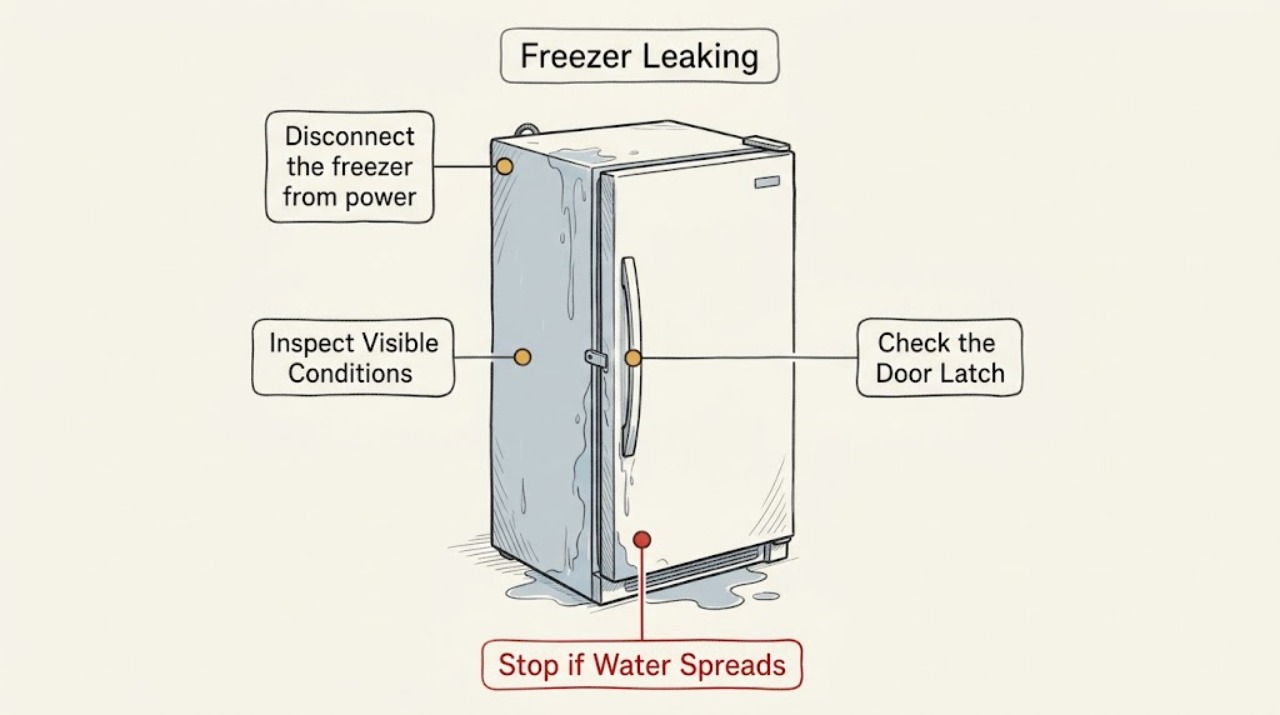
Find the first wet location before trying to fix a Magic Chef freezer leak. On a manual-defrost model, water near a model-specific defrost drain may be handled by that drain, while water at the door, inside the cabinet, or on the floor can point to a poor seal, blocked drainage, ice melt, a cabinet problem, or an outside source. Protect the floor and food, unplug the freezer before cleaning accessible areas, and use the model's manual for any drain location or defrost procedure. Stop if water reaches electrical parts, the liner is cracked, the freezer is warming, or the leak continues after the accessible checks; arrange qualified appliance service.
Work through in order
Diagnostic checks
Use only checks that match the exact appliance or system and its official guide.
-
Check 1
Disconnect the freezer from power if it is safe to reach the plug, place an absorbent towel around it, and trace the water back to its first wet point rather than wiping only the puddle.
Expected result: Record whether the first moisture is on the interior floor, at the door gasket or frame, beneath the cabinet, or beside the appliance; also note whether the leak is active.
Next step: Use the matching checks below. If water is reaching an outlet, cord, control, or other electrical part, leave the appliance disconnected and stop for professional help.
Why this matters
Why: The starting location separates an internal defrost or melt-water path from a door-seal problem, a cabinet problem, or water that did not come from the freezer.
-
Check 2
Check the food condition and recent events: look for softening food, a recent power interruption, a door left open, or a manual-defrost cycle that could have melted accumulated ice.
Expected result: Separate a one-time puddle after a known defrost or warming event from water that returns while the freezer is operating normally; note any unusual warming or loss of freezing performance.
Next step: Move food to a safe cold location if it is warming, keep the freezer closed, and stop using it if the temperature does not recover or the leak is active.
Why this matters
Why: Melted ice can create water without a failed drain, but recurring water together with warming needs an appliance diagnosis rather than repeated cleanup.
-
Check 3
Inspect the door gasket, mating cabinet surface, hinge side, and latch or lid closure with the appliance disconnected; clean only accessible dirt with a soft cloth and let the seal sit flat.
Expected result: Look for a torn, flattened, displaced, or visibly iced gasket, a door or lid that does not close evenly, or a gap where the seal meets the cabinet.
Next step: After the seal is clean and the closure is even, dry the area and monitor for recurrence. Do not remove the door or adjust concealed hinges unless the model manual explicitly directs it.
Why this matters
Why: A gap allows humid air in; the resulting frost and melt can run toward the door or floor. A gasket that remains damaged or a door that is misaligned needs model-specific service or replacement guidance.
-
Check 4
If the model manual identifies a defrost-water drain or drain path, inspect only the accessible opening and surrounding channel after unplugging and safely allowing ice to soften; remove loose debris without sharp tools or force.
Expected result: A clear path should not hold standing water after the accessible ice or debris is gone; water that backs up, disappears into an inaccessible area, or returns quickly indicates a restriction or concealed problem.
Next step: Use the exact model manual from Magic Chef's Manual Downloads page for any permitted defrost or drain procedure. If the path is not accessible, or the leak returns, stop disassembly and request service.
Why this matters
Why: Magic Chef documents a defrost-water drain on at least one chest-freezer product, but the location and service method vary by model. A blocked or hidden path can redirect melt water onto the floor.
-
Check 5
Inspect the cabinet base, drain area, and nearby floor after drying them; look for a cracked liner or pan, a damaged cabinet, an uneven stance, or water tracking from a nearby appliance or wall.
Expected result: If the freezer remains dry while the nearby source is isolated, the water may be external. If moisture reappears from a crack, base, or drain area, the leak is appliance-originated.
Next step: Photograph the source location and model label, then keep the freezer disconnected if water is near electrical parts or the cabinet is damaged; arrange qualified service.
Why this matters
Why: A cabinet or liner defect is not a routine cleaning issue, and an external source should not be mistaken for a failed freezer component.
-
Check 6
After an accessible seal or drain cleanup supported by the manual, reconnect only when the area and cord are dry, keep the door or lid closed, and observe whether water returns during normal operation.
Expected result: No recurring moisture supports a resolved surface or drainage issue; recurring water, renewed frost at the seal, unusual noise or smell, or worsening temperature shows that the fault remains.
Next step: Stop and use Magic Chef's service portal when the leak recurs, the freezer warms, any electrical damage is visible, or the cause cannot be identified without panels or refrigeration work.
Why this matters
Why: A temporary dry floor is not proof of repair. A repeat leak or loss of cooling can involve a concealed drain, door alignment, control, or sealed-system issue that requires model-specific diagnosis.
Use your observations
Decision map
Find the observation that best matches what you see, then follow the next safe action.
-
PATH 01Next step
What you see
Water appears only after a known manual-defrost or warming event and the model-specific drain path is open.
Do this next
Dry the area, follow the model manual's defrost guidance, and monitor; treat a recurring puddle as unresolved rather than repeatedly mopping it.
-
PATH 02Next step
What you see
Water is inside the cabinet or backs up at an identified drain opening.
Do this next
Disconnect power, use only the manual-supported accessible thaw or cleaning method, and request service if the path is hidden, blocked again, or cannot be safely reached.
-
PATH 03Next step
What you see
Moisture or frost is concentrated at the door gasket, frame, hinge side, or lid edge.
Do this next
Clean and reseat the accessible gasket and verify even closure; if it is torn, misshapen, or still leaks, obtain model-specific service guidance.
-
PATH 04Next step
What you see
Food is warming, the leak is active, or water is approaching an outlet, cord, control, or other electrical part.
Do this next
Keep the freezer disconnected, protect or relocate food, avoid touching wet electrical areas, and arrange qualified appliance service.
-
PATH 05Next step
What you see
The freezer stays dry but a nearby appliance, wall, or floor source is wet.
Do this next
Isolate the outside source and recheck the freezer after the area is dry; call the appropriate professional if the source is plumbing, structural, or electrical.
Helpful context
Understand the symptom
A leak is easier to diagnose when you follow the water backward. Dry the surrounding floor, then note whether the first wet spot is on the freezer floor, around the door gasket, under the cabinet, or beside the appliance. Magic Chef's product range includes both upright and chest freezers, so do not assume that a drain or access point on one model exists on another.
Do not chip ice with a sharp tool, remove sealed panels, or work on wiring or refrigeration components. A small accessible cleanup is reasonable only after the appliance is disconnected and the model instructions support it.
Safety boundary
Stop conditions
- Stop immediately if water is near electrical parts, the power cord or outlet is damaged, or the area cannot be made dry and safe.
- Stop if the liner, cabinet, drain pan, cord, or door hardware is cracked or damaged; do not remove sealed panels or work on refrigeration components.
- Stop and arrange qualified appliance service if the freezer is warming, the leak is active or recurring, or the cause is not found after the accessible checks.
Only after diagnosis
Potential parts
- door gasket or lid seal
Consider this only when the gasket is visibly torn, flattened, displaced, or unable to close evenly after cleaning.
Confirm the exact freezer model and the manufacturer's fit information before ordering any part. - defrost drain component
Consider this only when the model manual identifies a drain component and service diagnosis confirms damage or a failed accessible part rather than a simple blockage.
Drain layouts and parts vary by model; use the model documentation and service diagnosis to confirm fit.
When checks do not resolve it
Need a professional?
Call qualified appliance service when the leak recurs after a manual-supported accessible cleanup, the freezer is warming, a gasket or cabinet is damaged, water reaches electrical parts, or diagnosis would require removing panels, working on wiring, or opening the refrigeration system.
Common questions
FAQ
Why is my Magic Chef freezer leaking water?
Start at the first wet location. Possible paths include melt water after defrosting or warming, a model-specific defrost drain restriction, a door or lid seal that is not closing evenly, cabinet damage, or water from nearby. The model manual determines which drain and defrost checks apply.
Can I clear a Magic Chef freezer drain myself?
Only inspect or clear an accessible path when the exact model manual supports the procedure and the freezer is disconnected and safely thawed. Do not chip ice with sharp tools, remove sealed panels, or continue when the path is hidden or the leak returns.
When should I stop using a leaking freezer?
Stop and arrange qualified service for water near electrical parts, a damaged cord or cabinet, an active or recurring leak, warming food, or any diagnosis that requires wiring, panels, or refrigeration-system work.
Read the exact guide
Official sources
- 7.0 cu. ft. Chest Freezer in WhiteMagic Chef · Magic Chef chest freezer product features and defrost-water drainage
- Service Center PortalMagic Chef · Magic Chef service, parts, manuals, and repair escalation
- 3.0 cu. ft. Manual Defrost Upright Freezer in BlackMagic Chef · Magic Chef upright freezer product features and manual-defrost care
- Manual DownloadsMagic Chef · Magic Chef model-specific manuals and documentation
Community feedback
Share a repair observation
Share a plain-text repair observation. Accepted observations are published automatically; this page may take a moment to update.