
On this page
Start here
Quick answer
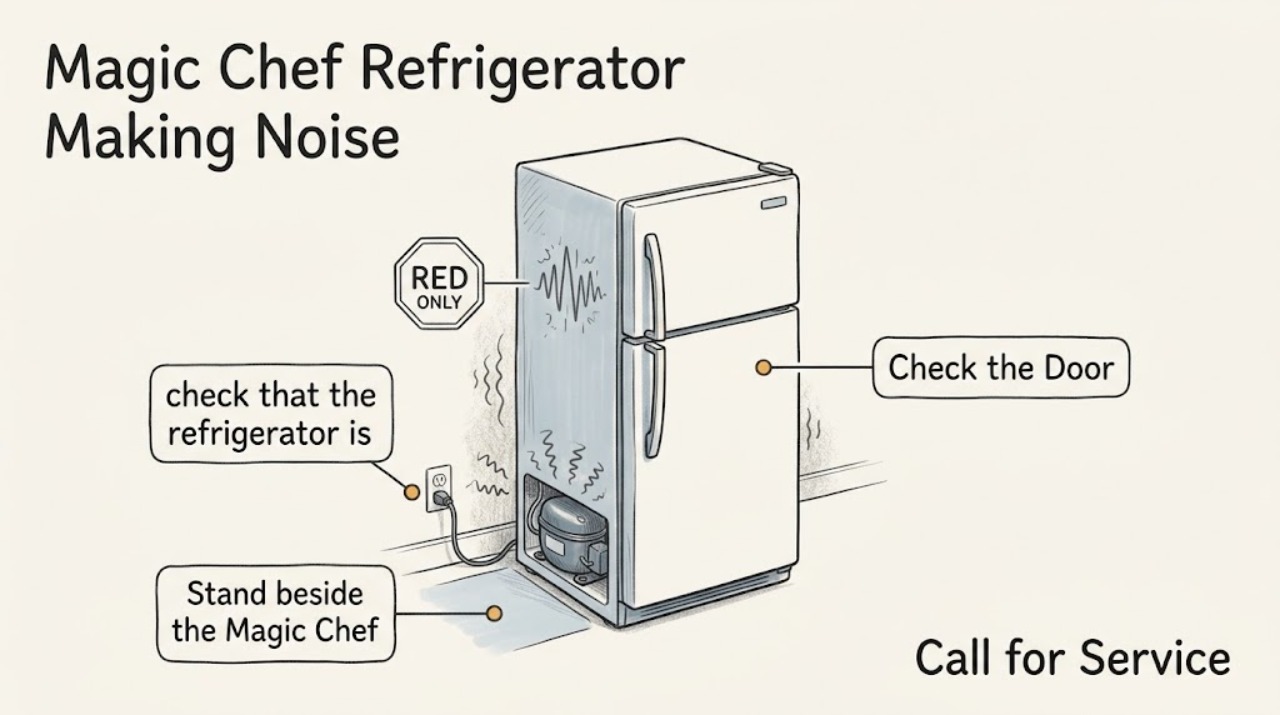
Some Magic Chef refrigerator sounds come from normal compressor or refrigerant operation, but a new rattle, scrape, or vibration deserves a location check. Record whether the sound follows a cooling cycle, then level the cabinet and separate bottles or shelves that are touching. If the noise is accompanied by heat, a burning smell, a repeated breaker trip, or a refrigerator that is no longer cooling, stop using it and arrange service.
Work through in order
Diagnostic checks
Use only checks that match the exact appliance or system and its official guide.
-
Check 1
Stand beside the Magic Chef refrigerator for one complete cooling cycle and note whether the sound is a hum, click, liquid-flow sound, rattle, or scrape and whether it starts when the compressor or fan starts.
Expected result: A brief hum, click, or liquid-flow sound occurs during cycling and the cabinet keeps cooling normally.
Next step: Keep monitoring it; move to the installation and vibration checks if it is unusually loud or newly changed.
Stop if: If the sound is a scrape, repeated hard knock, or is paired with warming, continue with the stop-and-service boundary.
Why this matters
Why: The sound may be part of normal refrigeration operation rather than a failed part.
-
Check 2
With power left connected, check that the refrigerator is standing level on a firm floor and that it is not touching a wall, cabinet, or adjacent appliance.
Expected result: The cabinet rocks or a side/back panel touches another surface.
Next step: Correct the clearance or leveling using the model's installation instructions, then listen again.
Stop if: Continue by isolating loose items inside the cabinet.
Why this matters
Why: A small installation contact can amplify compressor or fan vibration into a rattle.
-
Check 3
Open the doors and inspect shelves, bins, bottles, and containers near the rear wall; gently separate anything that can touch or vibrate against another item.
Expected result: The noise changes when an item, shelf, or bin is held still or moved.
Next step: Re-seat the item or shelf and recheck during the next cooling cycle.
Stop if: If the sound remains at the cabinet or rear machinery area, do not remove sealed-system covers; arrange service if it is persistent.
Why this matters
Why: The sound is likely an interior vibration rather than a sealed-system diagnosis.
-
Check 4
Look and listen without removing covers for smoke, a burning odor, a hot plug, damaged cord, water at an electrical connection, or a breaker that trips when the refrigerator runs.
Expected result: Any electrical warning, repeated trip, or loss of cooling accompanies the noise.
Next step: Leave the refrigerator off if safe to do so and request qualified appliance or electrical service.
Stop if: Use the recorded sound pattern and timing when requesting service if the noise persists.
Why this matters
Why: The noise is no longer an isolated sound issue and may indicate an electrical or refrigeration fault.
Use your observations
Decision map
Find the observation that best matches what you see, then follow the next safe action.
-
PATH 01Next step
What you see
The sound is brief and occurs with normal cooling while temperatures remain stable
Do this next
Monitor it and confirm the cabinet remains level and clear of surrounding surfaces.
-
PATH 02Next step
What you see
The noise changes when the cabinet, shelf, bottle, or bin is stabilized
Do this next
Correct the contact and reassess during a later cooling cycle.
-
PATH 03Next step
What you see
The noise is a scrape or hard repeated knock, or cooling and electrical symptoms are also present
Do this next
Keep the refrigerator off when safe and arrange qualified service.
Helpful context
Understand the symptom
Start with the sound and timing
A refrigerator can hum, click, or make a liquid-flow sound while the cooling system operates. The useful distinction is whether the sound is a steady operating noise, a cabinet vibration, or a new mechanical sound that coincides with a cooling problem.
When checks do not resolve it
Need a professional?
Use qualified service when the noise remains after safe leveling and vibration checks or is paired with a safety or cooling symptom.
Common questions
FAQ
Is every Magic Chef refrigerator hum or click a failure?
No. A brief operating hum, click, or liquid-flow sound can occur during normal refrigeration. A changed scrape or hard knock, especially with warming or an electrical warning, needs service.
What should I record before calling for service?
Record where the sound is loudest, when it starts in the cooling cycle, whether leveling or moving an interior item changes it, and whether temperatures remain normal.
Read the exact guide
Official sources
- 17.6 cu. ft. Top-Mount Refrigerator in BlackMagic Chef · Magic Chef refrigerator design, temperature control, shelves, doors, and installation context
- 4.5 CU.FT. REFRIGERATOR INSTRUCTION MANUALMC Appliance / Magic Chef · Magic Chef compact refrigerator installation, operation, maintenance, and troubleshooting
Community feedback
Share a repair observation
Share a plain-text repair observation. Accepted observations are published automatically; this page may take a moment to update.